Portable Material Lifts
A portable material lift is a wheel-around lifter you push to the load instead of bringing the load to a fixed station, and this collection gathers the Vestil units built for exactly that: hand-winch and powered straddle stackers, screw-column box lifters, mobile work positioners, and the DC Hefti-Lift line. Prices run from an $820 hand winch lifter up past $8,000 for a counterbalanced 880 lb Hefti-Lift, with rated capacities from a 220 lb positioner to 1,000 lb Hydra Carts. The point of every one of them is reach without a crane, a rack, or a fixed table: roll the lift to a machine, a mezzanine edge, or a delivery truck, raise the load, and move on. Four things decide the buy: capacity, lift height, whether the base straddles or counterbalances the load, and whether you crank it or push a button. This page works through each, and flags where OSHA operator rules start to apply.
Compare Portable Load Lifters
| Model | Price | Capacity | |
|---|---|---|---|
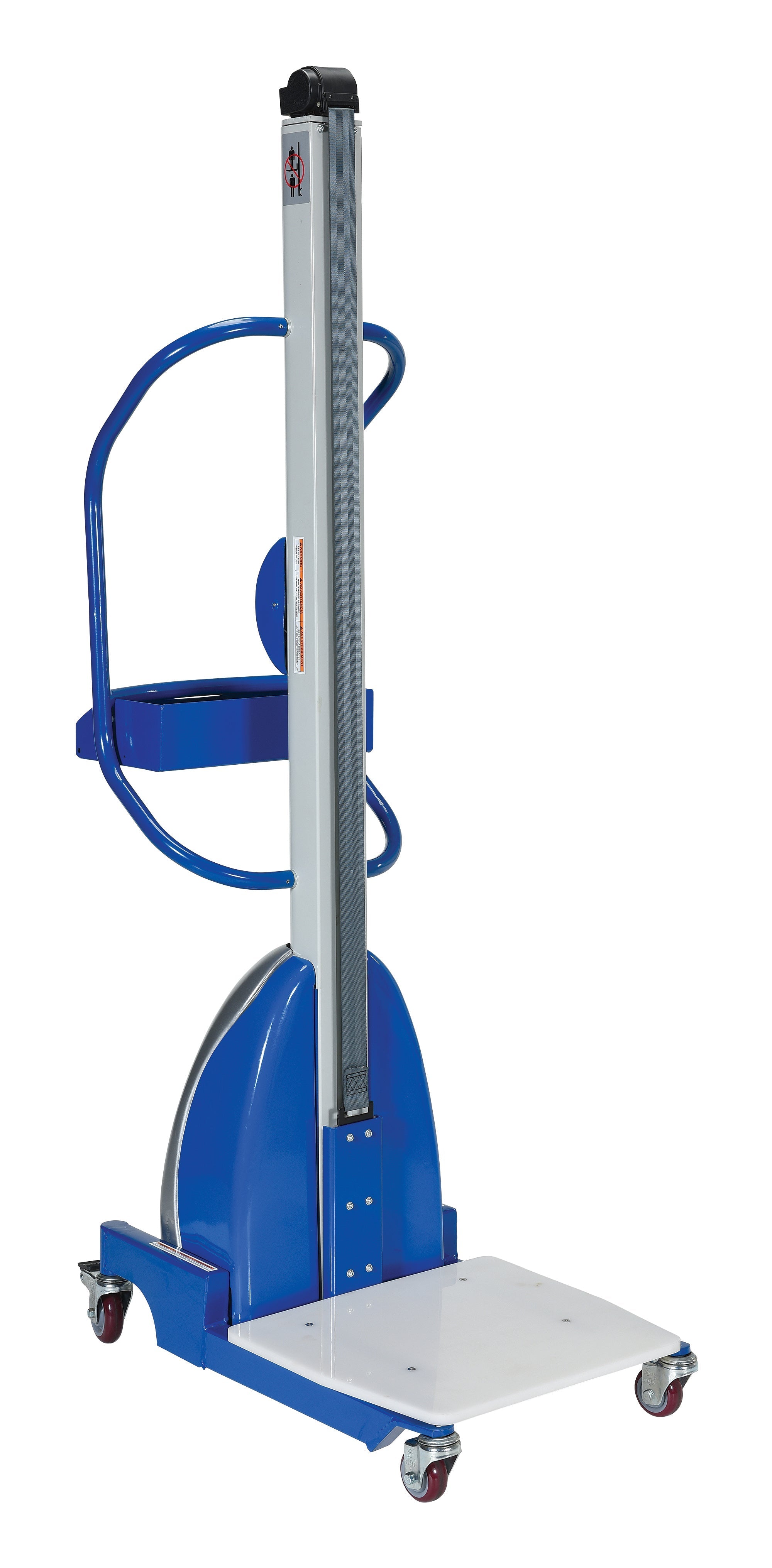
| Vestil DC Powered Hefti-Lifts | $3,105 | 550-880 lb | View → |
| Vestil Versatile Quick Lift | $2,926 | 330 lb | View → |
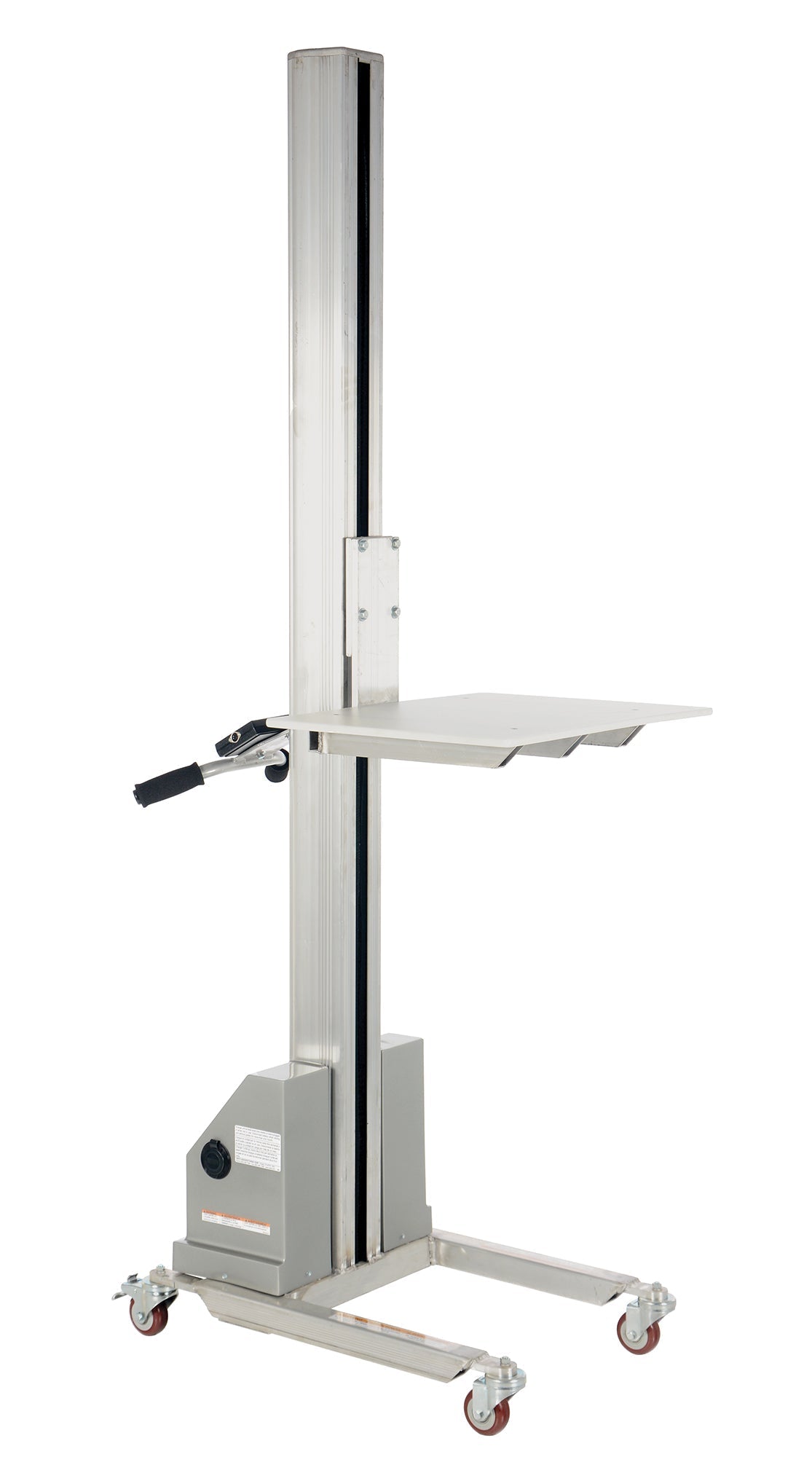
| Vestil Powered Quick Lifts | $2,809 | 125-400 lb | View → |
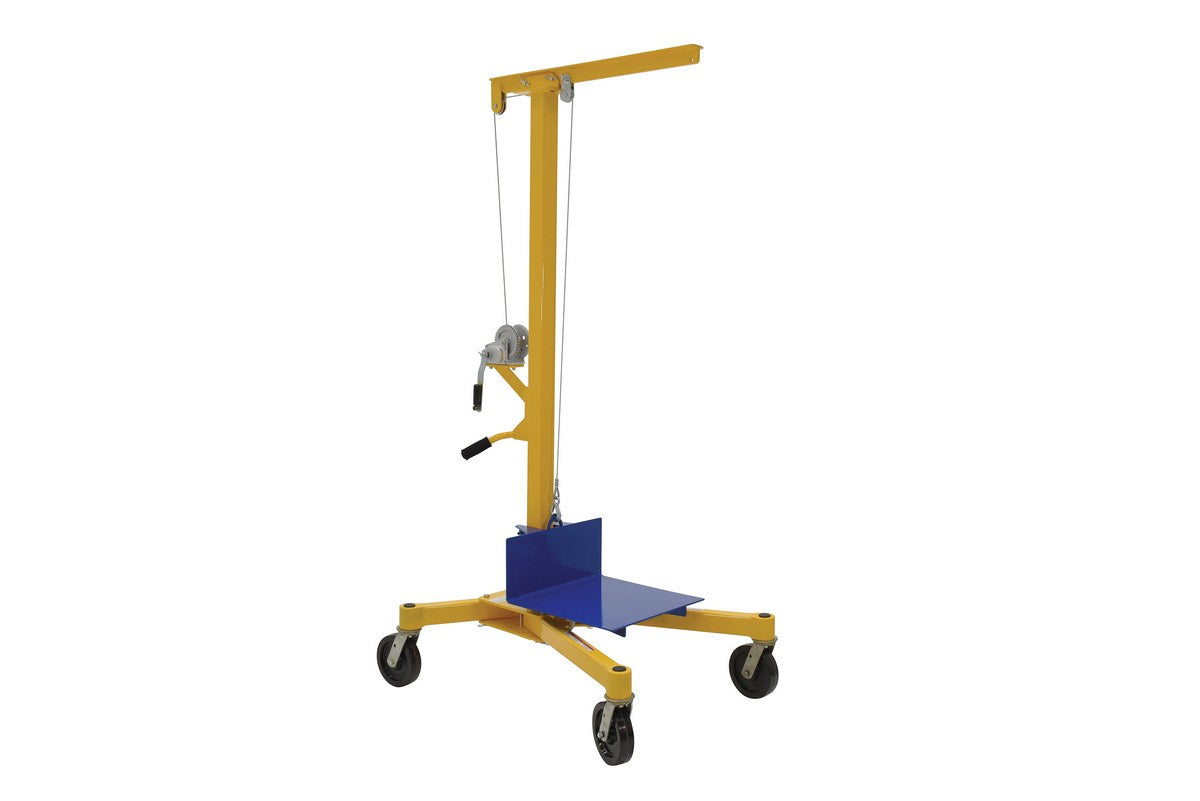
| Vestil Portable Worksite Lift | $1,540 | 500 lb | View → |
| Vestil Heater Tank Lift Truck | $1,398 | 300 lb | View → |
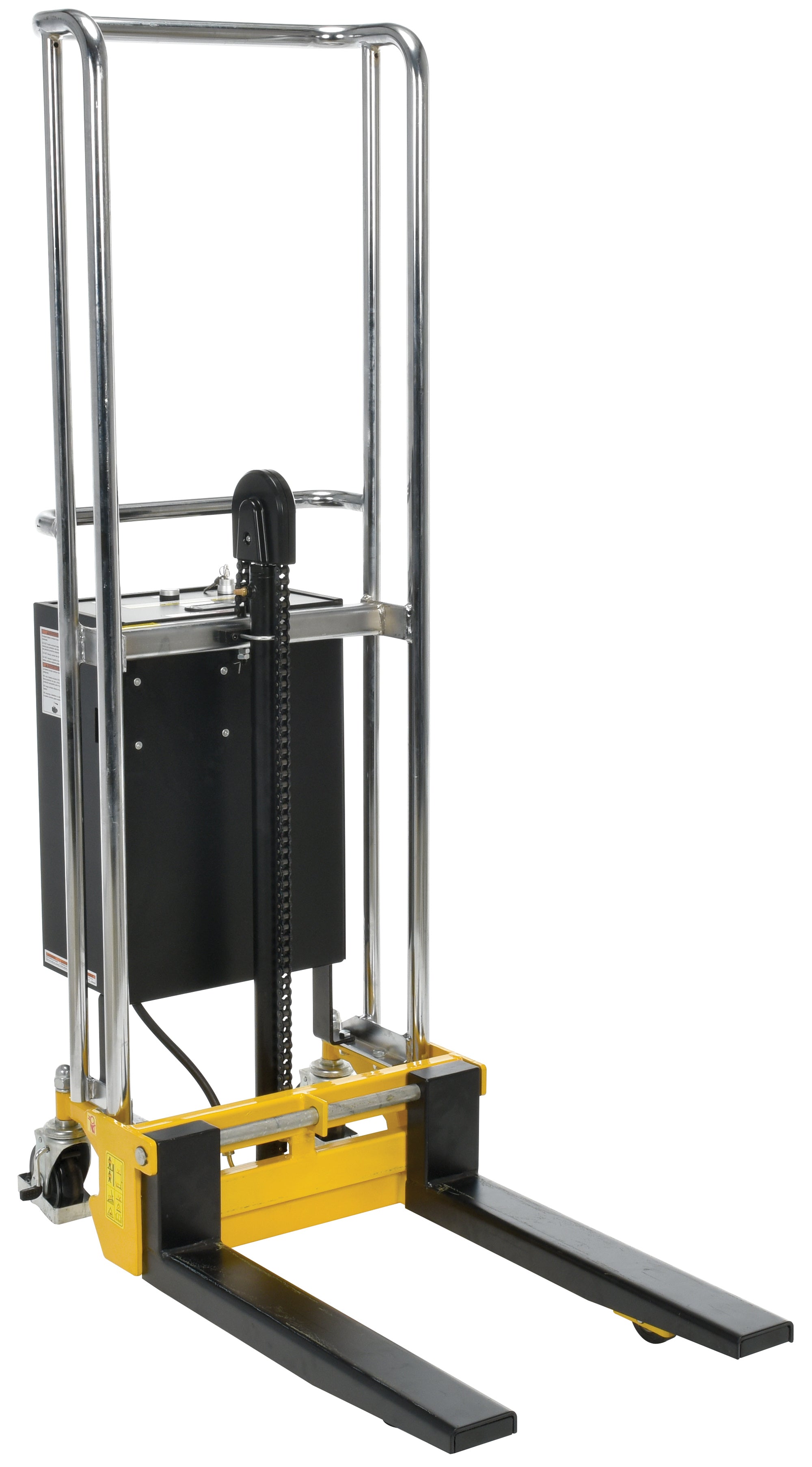
| Vestil Adjustable Box Stacker | $1,043 | 380 lb | View → |
 In Stock
 In Stock
 In Stock
 In Stock
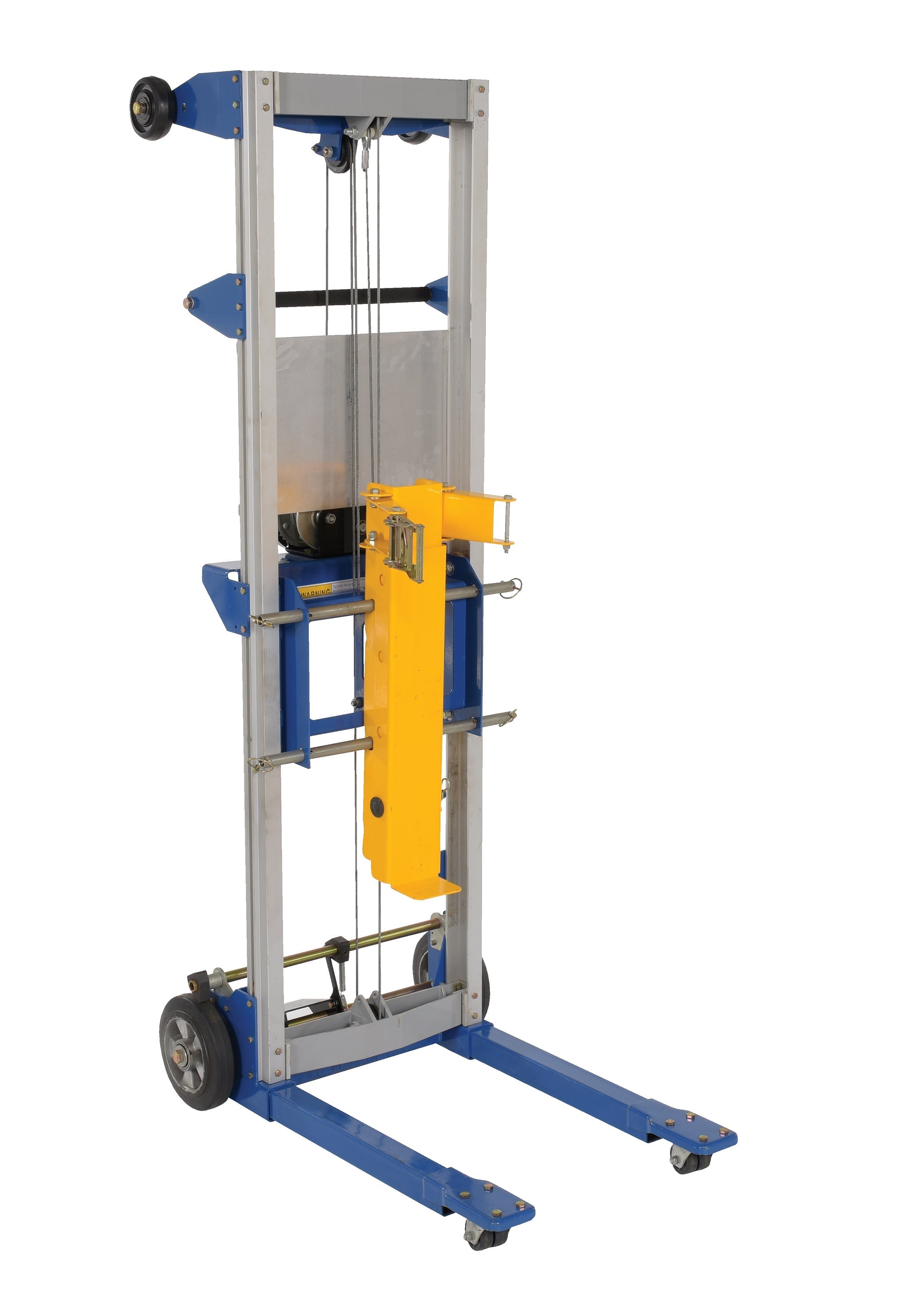 In Stock
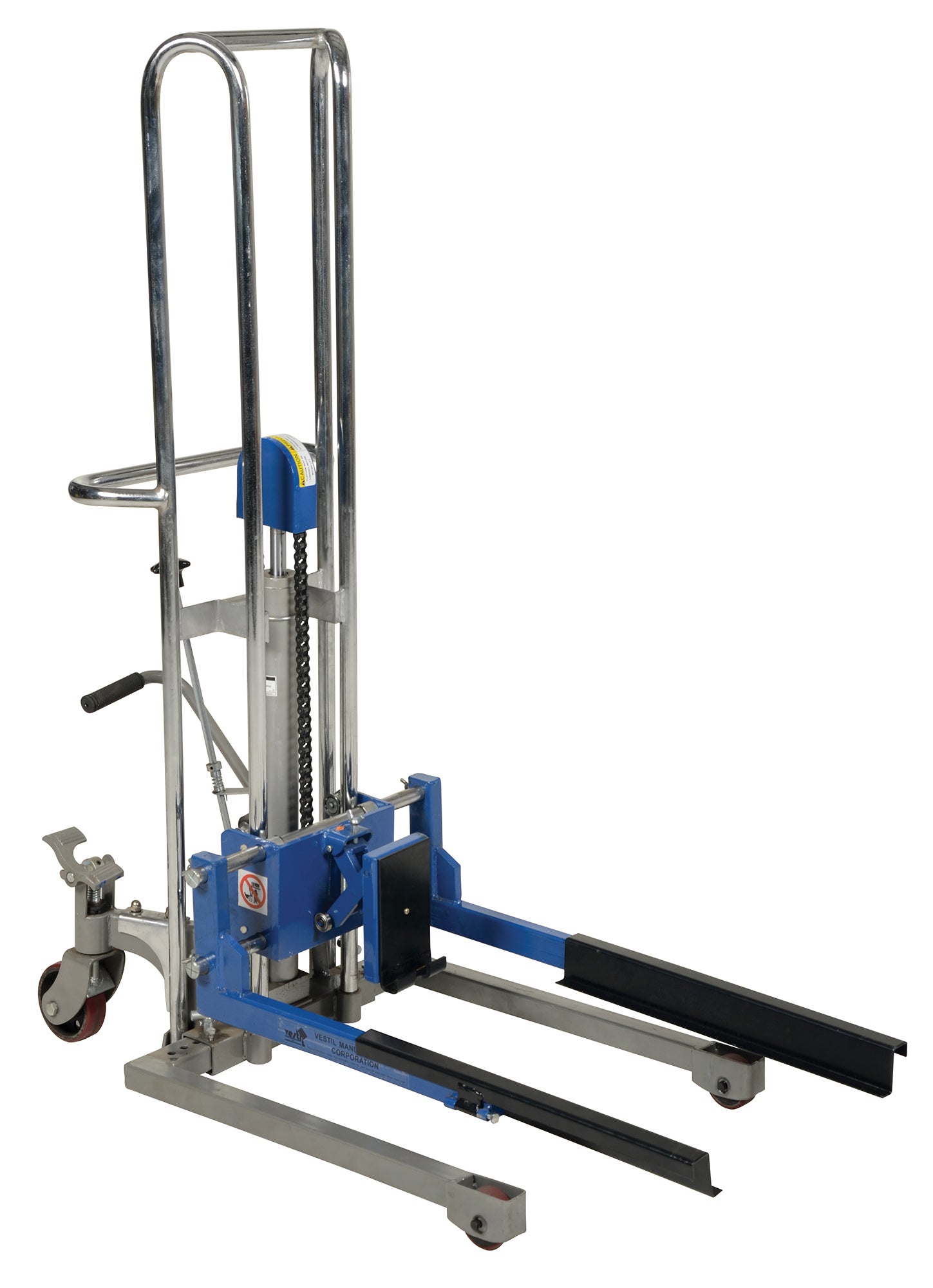 In Stock
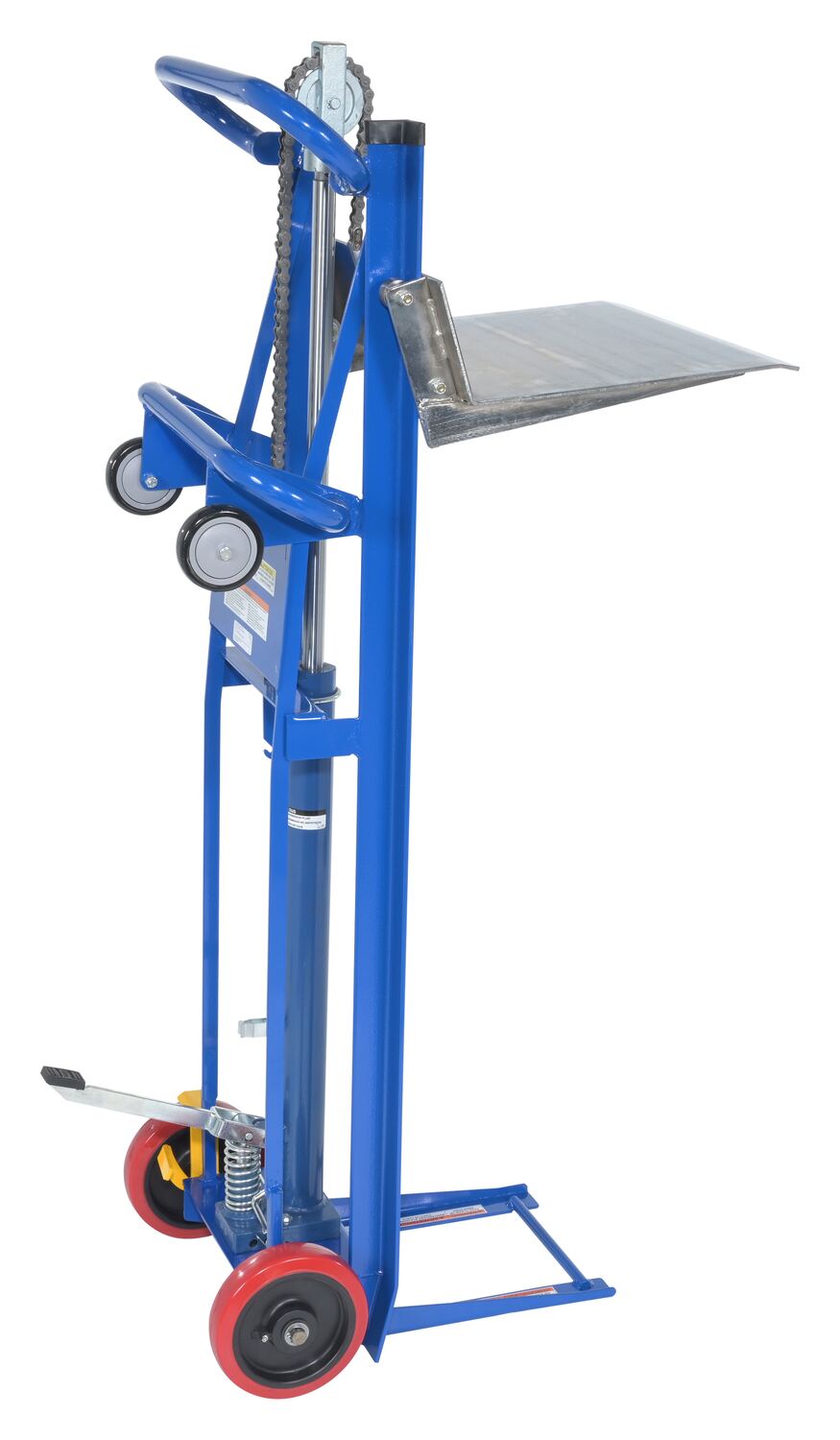 In Stock
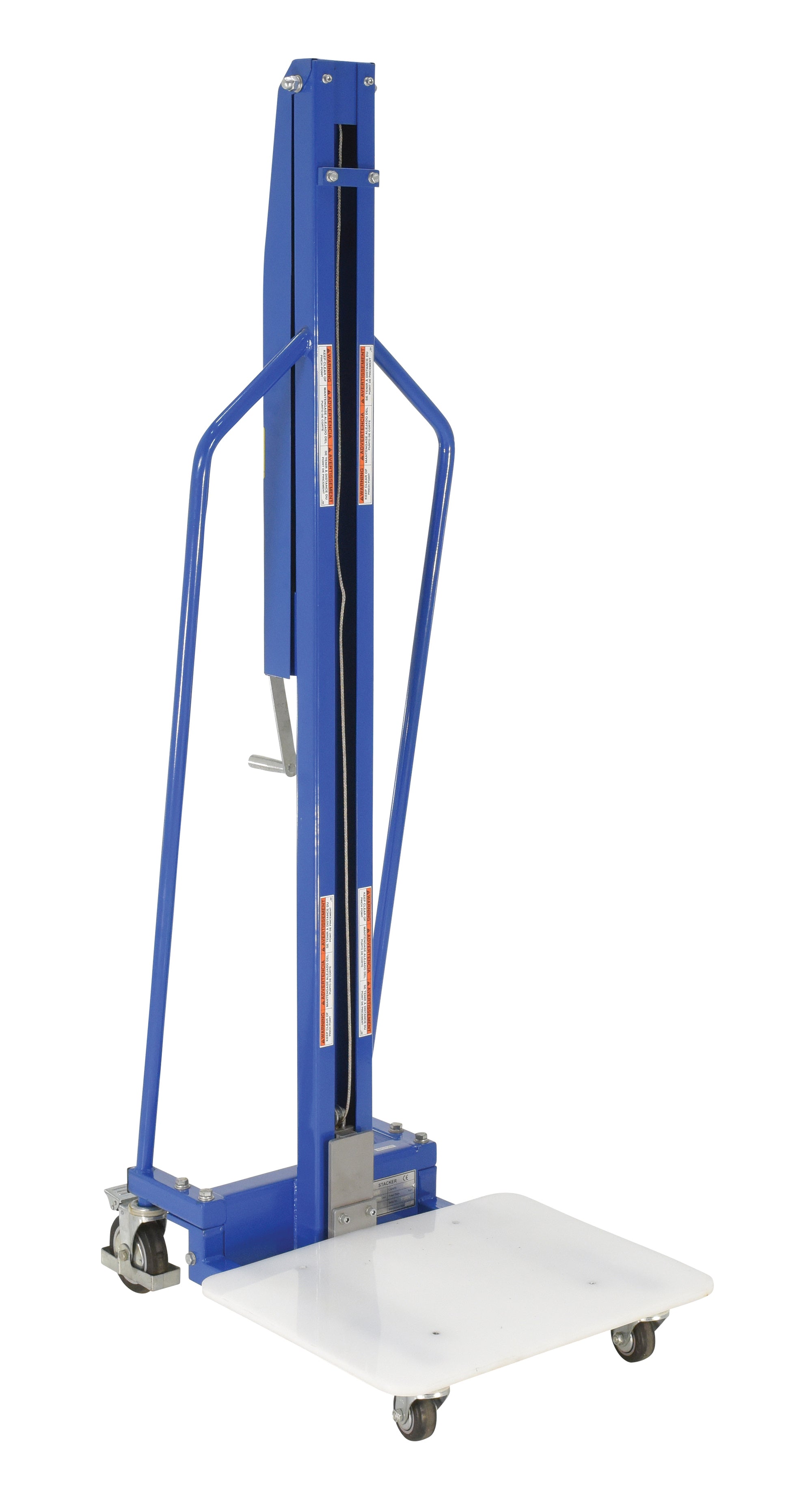 In Stock
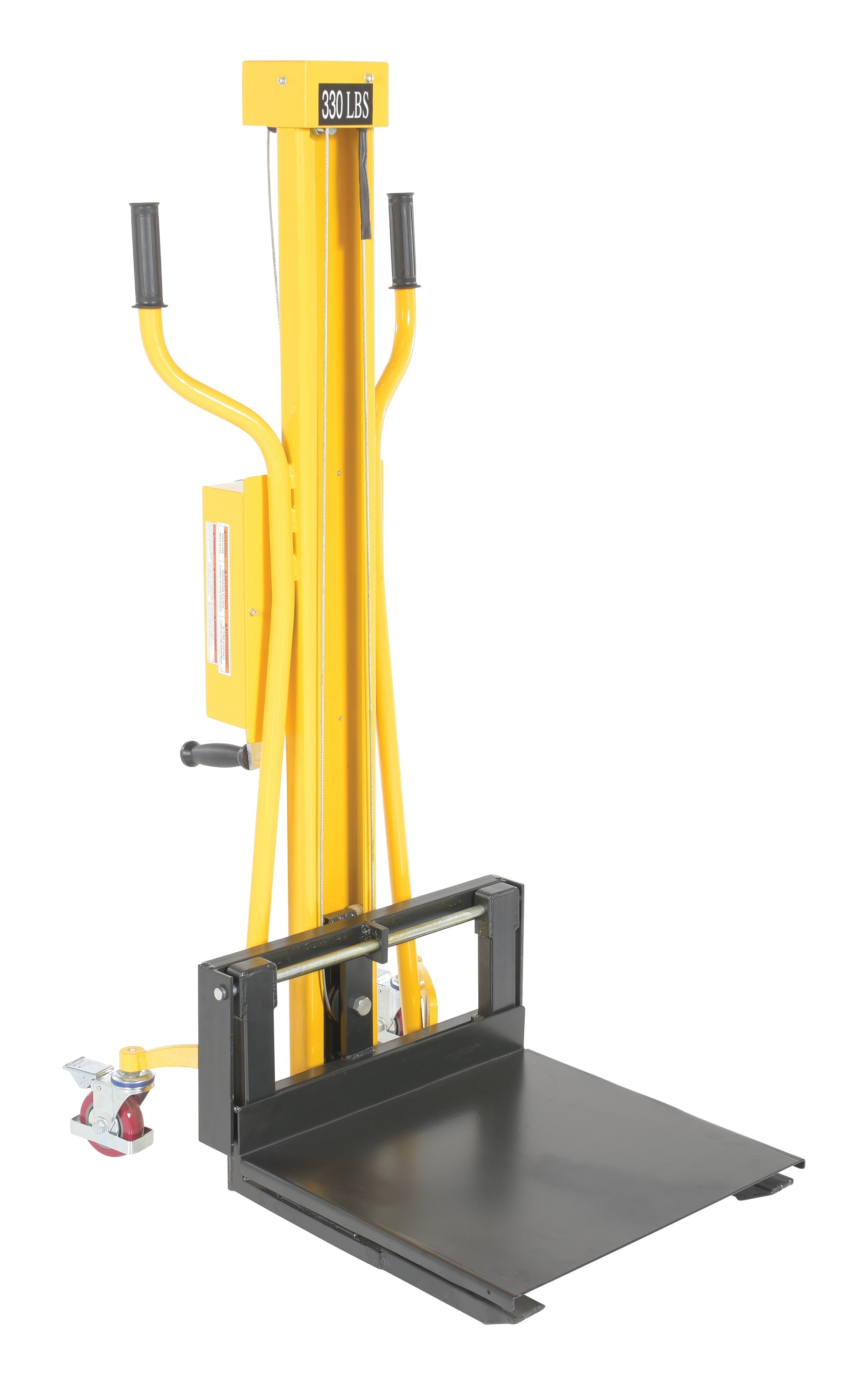 In Stock
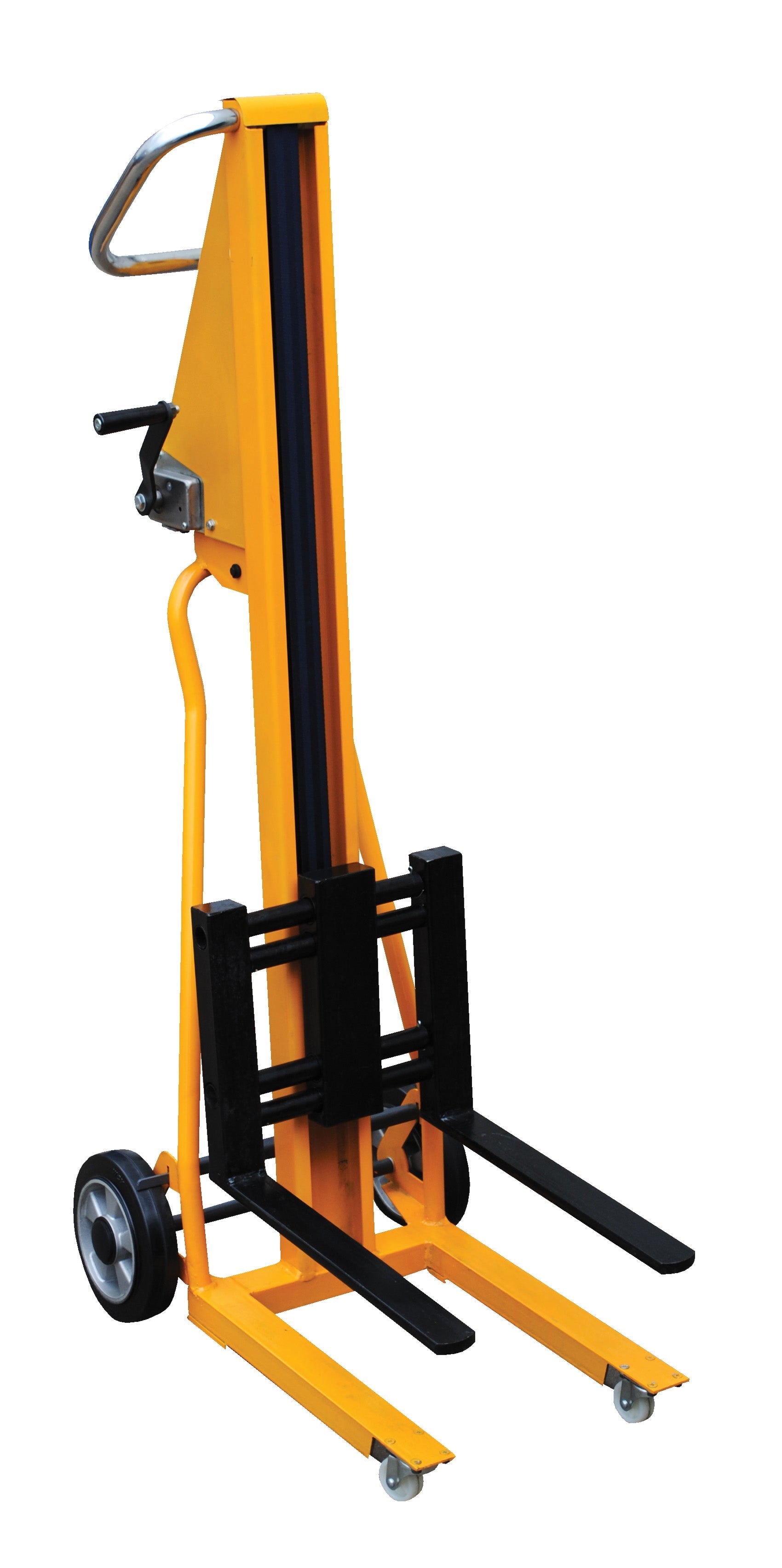 In Stock
Portable Load Lifters Buying Guide
What a portable material lift actually is. The lifts on this page share one trait: nothing about them is bolted down. Each rolls on casters or wheels, raises a load with its own mast or winch, and moves to the next job when it is done, which is the whole reason to own one instead of a fixed lift table or a crane. That also draws the line against the wheeled scissor units nearby: elevating lift carts raise a deck a foot or two to work off, while these lifters run a carriage or forks up a column to stack, feed a machine, or reach a mezzanine edge. They lift material, never people, so a worker platform is the wrong tool if the job is raising a person. Confirm the load is cargo and the base can travel your floor, then spec the machine.
Winch, screw, or powered: the drive under the mast. The cheapest way up is a hand winch: the $820 Portable Hand Winch Lifter raises its carriage by cranking a cable drum, no power and no charging, which is ideal where a lift is needed a few times a shift. Screw and hydraulic column units cover the middle, like the 260 lb Portable Mini Stacker near $745 and the Adjustable Box Stacker at about $1,043, which runs its platform from 62 up to 150 in. for stacking totes and cartons. At the top sit powered masts: the 24V Powered Quick Lifts from roughly $2,400 and the 12V DC Hefti-Lifts reaching past $8,000 raise heavier loads at the push of a button, all shift, with no operator effort. If the lift cycles constantly, powered pays for itself in cycle time; if it moves a load now and then, the crank is the honest buy. Straddle-leg pallet stackers sit alongside these when the job is full pallets rather than loose material.
Straddle legs or counterbalanced: will it reach the load. The geometry of the base decides what a lift can actually get to. Straddle designs put support legs on the floor around or under the load, which gives stability at low cost but needs clear floor space the legs can slide into, so they suit open pallets and totes. A counterbalanced base keeps its weight behind the forks and leaves the front clear, so the forks can reach into shelving, over a lip, or into a machine where straddle legs would hit first. Vestil offers the DC Hefti-Lift with a counterbalanced option for exactly that reach. Before choosing, map how the load sits: measure the opening the base has to clear, check for a lip or ledge the forks must reach past, and confirm the casters clear any floor track. A lift that raises the weight fine but cannot physically reach it is a sizing failure, and not a small one.
Capacity and lift height, sized to the real load. Two numbers bound every unit, and both are rated at the load center the manufacturer assumes. Capacity across this range runs from a 220 lb work positioner up to 1,000 lb Hydra Carts, and the DC Hefti-Lifts carry 550 or 880 lb depending on model. Total the honest weight of the load plus any bin, fixture, or attachment before you read a spec sheet, then look at how the weight sits, because a load hung off the front of the forks cuts the rating the same way an off-center load derates a table. Lift height decides what the machine can serve: the Box Stacker reaches 150 in. for high shelving, while a positioner that only needs to bring a roll to bench height buys none of that travel. Check the raised height against your tallest target and the lowered height against how the load gets on. If the task is holding a workpiece at hand height rather than stacking, a work positioner is the closer fit.
Manual or powered is a cycles and OSHA question. The drive choice is really a duty-cycle decision, and it carries a compliance line worth knowing. A hand-crank lifter costs the least and needs no charging, but every lift is operator effort, so a station that raises loads all shift turns that into fatigue and slow cycles. The 12V and 24V powered units, Manual and DC Work Positioners from about $871 plus the powered Quick Lifts and Hefti-Lifts above, cycle at a button and earn their price where the work repeats. On the rules side, a powered material lift is a powered industrial truck, so it falls under OSHA 29 CFR 1910.178, which requires trained and evaluated operators before anyone runs it. Purely manual, walk-behind lifters generally sit outside that training rule, though the safe-use basics still apply. On design, powered walking-operator lifts are built to ANSI/ITSDF B56.1 and manually propelled high lift trucks to B56.10.
Steel, stainless, or aluminum, and the specialized cases. Material follows the environment. Steel is the default and the lowest cost for the capacity. Stainless steel, offered on the Work Positioners and the Hefti-Lifts, is the buy for food, pharma, and washdown floors where a plain steel frame would corrode. Aluminum shows up on the Quick Lifts, where lighter weight makes the unit easier to push and load into a van. Match the attachment to the load too: Hydra Carts ship with either a platform or forks, and the platform depth is set to the load footprint, while the Heater Tank Lift Truck is a purpose-built cradle for one awkward load rather than a general lifter. If the job is really tipping a container toward a worker rather than lifting it, a tilter does that instead. Buy the frame material for the room, then confirm the wheels and attachment match the floor and the load.
Frequently Asked Questions
It is a wheeled lifter you push to the load instead of moving the load to a fixed station. It raises material with its own winch or powered mast, rolls to the next job, and needs no installation. The units here run from an $820 hand winch lifter to powered DC Hefti-Lifts past $8,000, covering stacking, machine feeding, and mezzanine work. They lift cargo, not people.
Total the load plus any bin or fixture, add margin, then read the rating, remembering it assumes the weight sits at the load center. Capacity across this range spans 220 to 1,000 lb. For height, check the raised height against your tallest target, the Box Stacker reaches 150 in., and the lowered height against how the load gets onto the forks or platform in the first place.
Straddle legs cost less and are stable, but they need clear floor to slide under or around the load, so they suit open pallets and totes. A counterbalanced base keeps the front clear so the forks reach into shelving, over a lip, or into a machine. Vestil offers the Hefti-Lift with a counterbalanced option. Measure the opening and any ledge the forks must clear before you choose.
If it is powered, yes. A powered material lift is a powered industrial truck under OSHA 29 CFR 1910.178, which requires trained and evaluated operators before use. Manual, walk-behind lifters generally sit outside that training rule, though safe-use practices still apply. On design, powered walking-operator units follow ANSI/ITSDF B56.1 and manually propelled high lift trucks follow B56.10.
Yes. The Manual and DC Work Positioners and the DC Hefti-Lifts are offered in stainless steel for food, pharma, and washdown floors where a plain steel frame would corrode. Steel is the standard, lower-cost frame for dry industrial use, and the Quick Lifts use aluminum where lighter weight and easier pushing matter more than outright toughness.