Hydraulic Lift Carts
A hydraulic lift cart is a scissor or post lift table built on casters, so a single machine raises a load to the right working height and then rolls it to the next station. That mobility is the whole point of the format, and it separates these carts from the stationary tables on the parent page. We carry the Vestil line across every drive type, from a foot pump scissor cart in the mid three figures through DC powered and powered-drive units into five figures for stainless and heavy-mover models. Capacities run from around 200 lb on a light shop cart up to 4,000 lb on the hydraulic elevating frames. Four numbers settle most of the decision: capacity, lowered height, raised height, and platform size. Behind them sits one choice that is really a duty-cycle question, how the cart is raised, and that is where this guide starts.
Compare Elevating Lift Carts
| Model | Price | Capacity | |
|---|---|---|---|
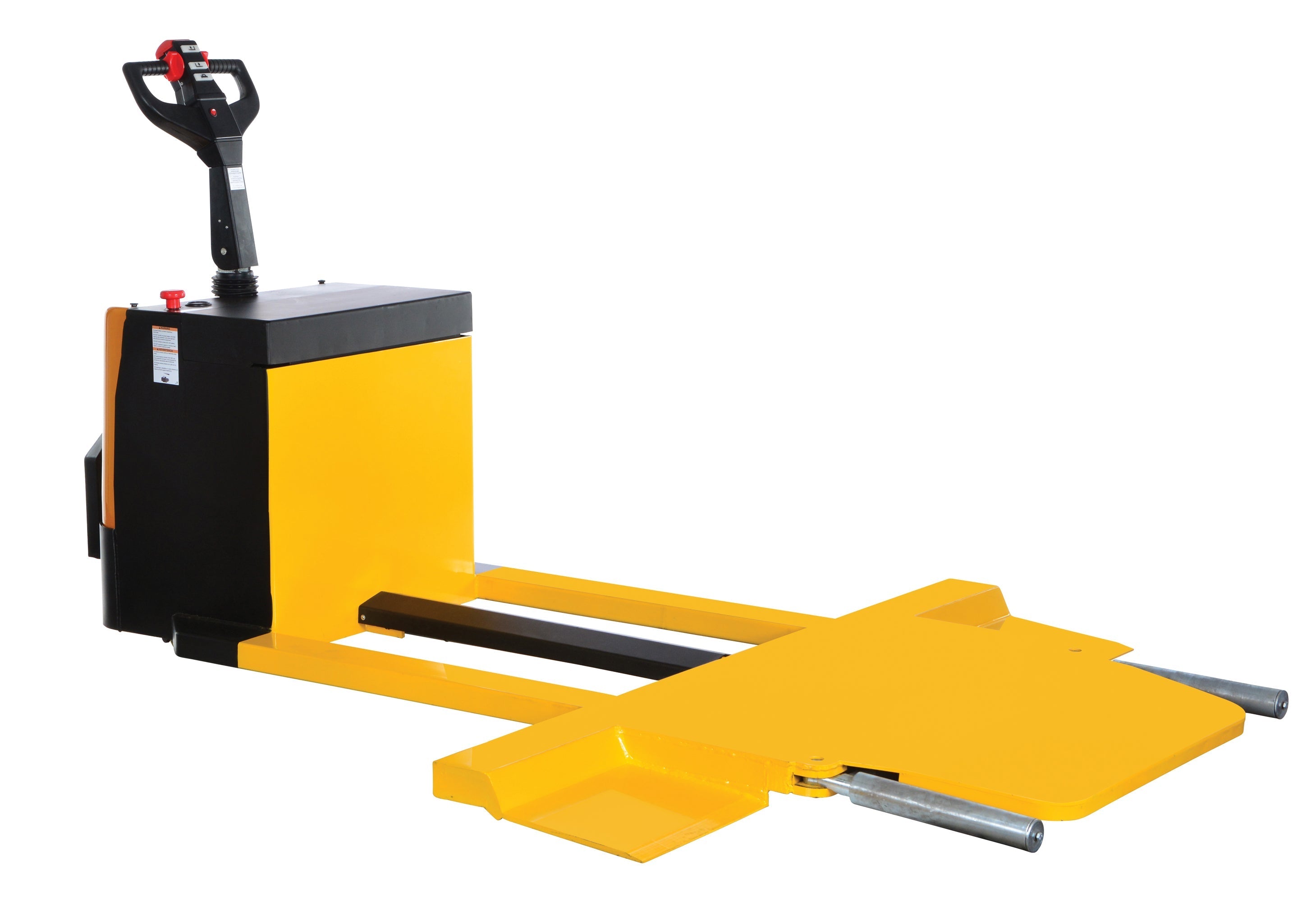
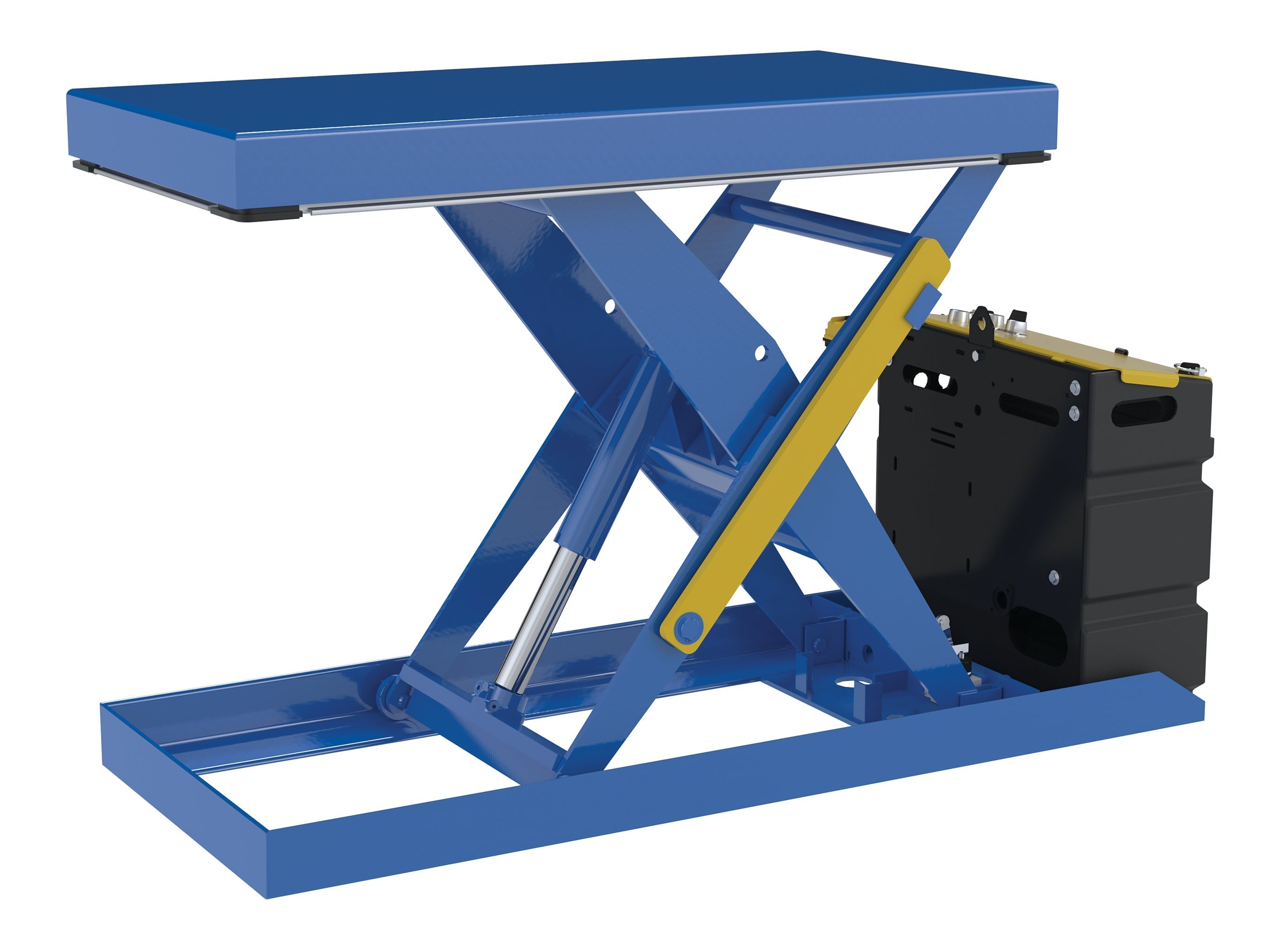
| Vestil Electric Car Mover | $18,451 | 7,500 lb | View → |
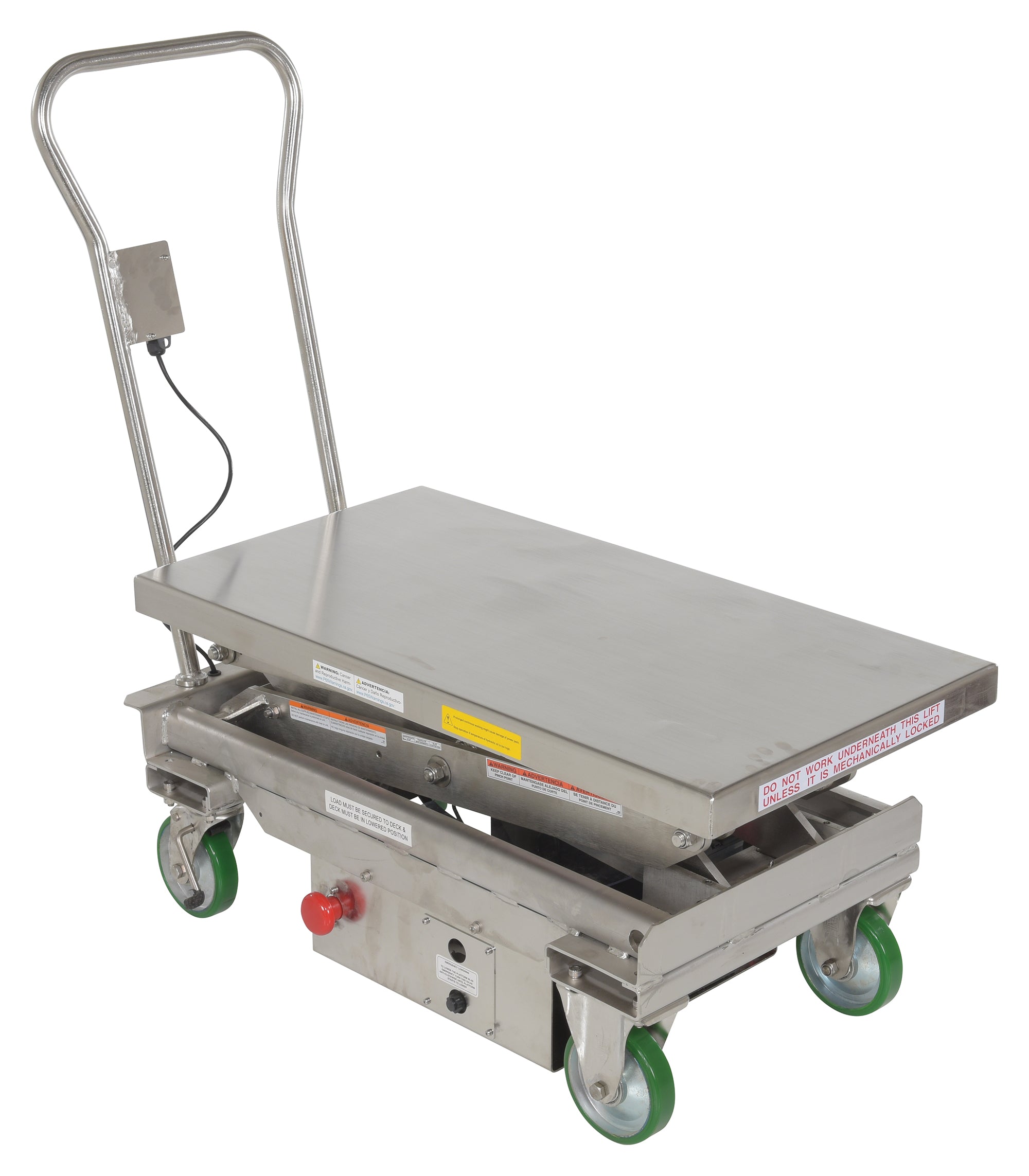
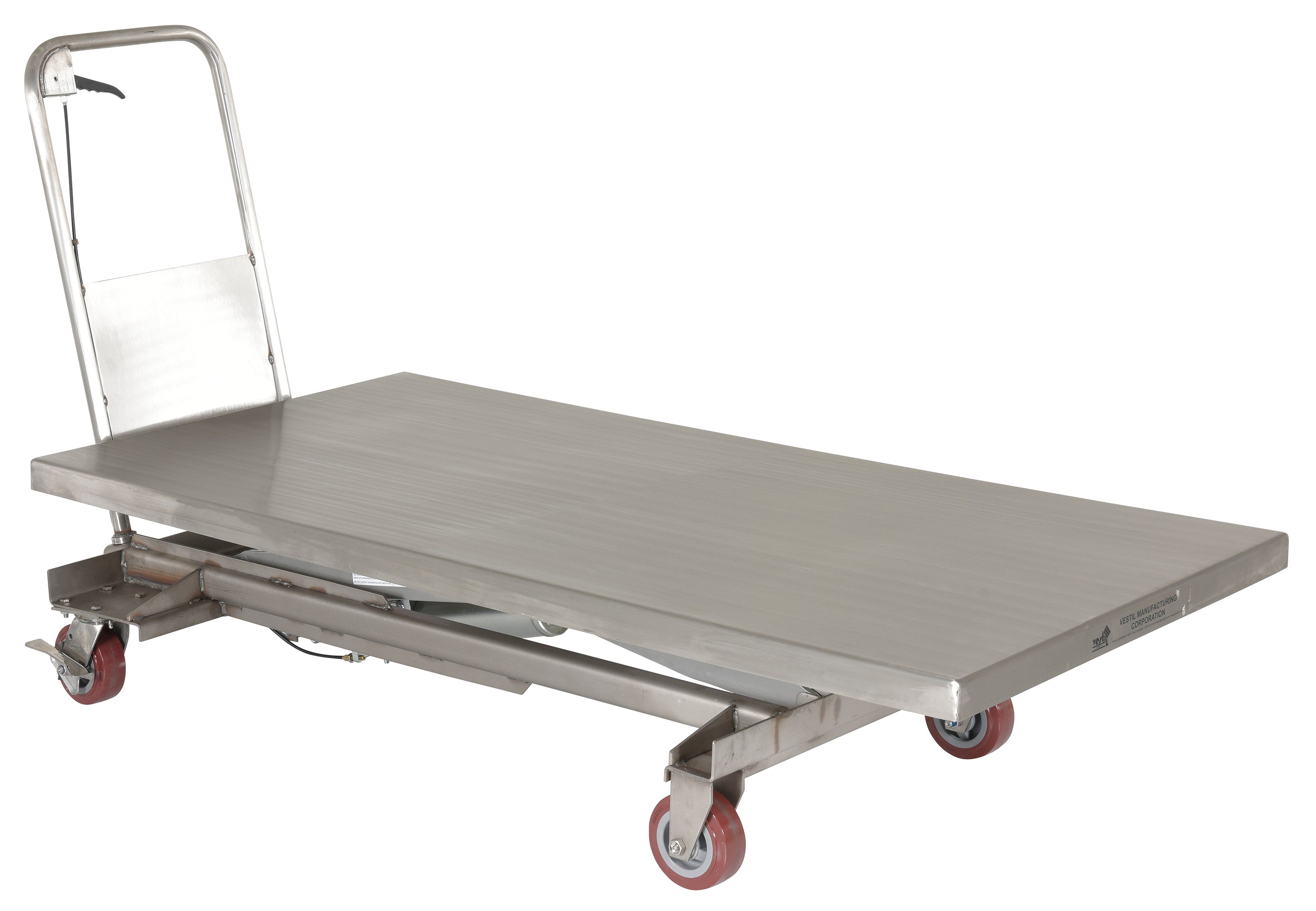
| Vestil Stainless Steel Scissor Carts | $9,099 | 200-1,100 lb | View → |
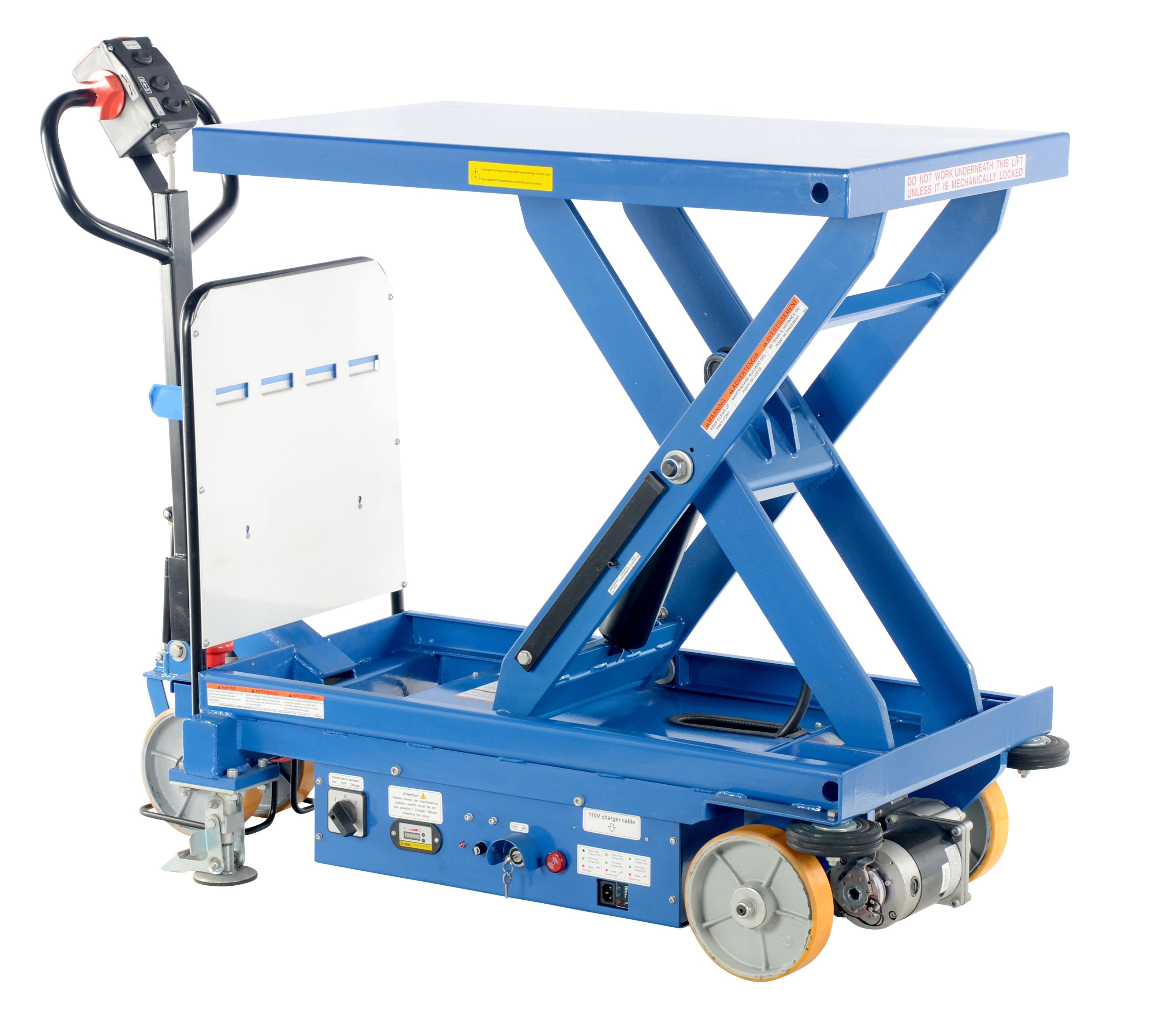
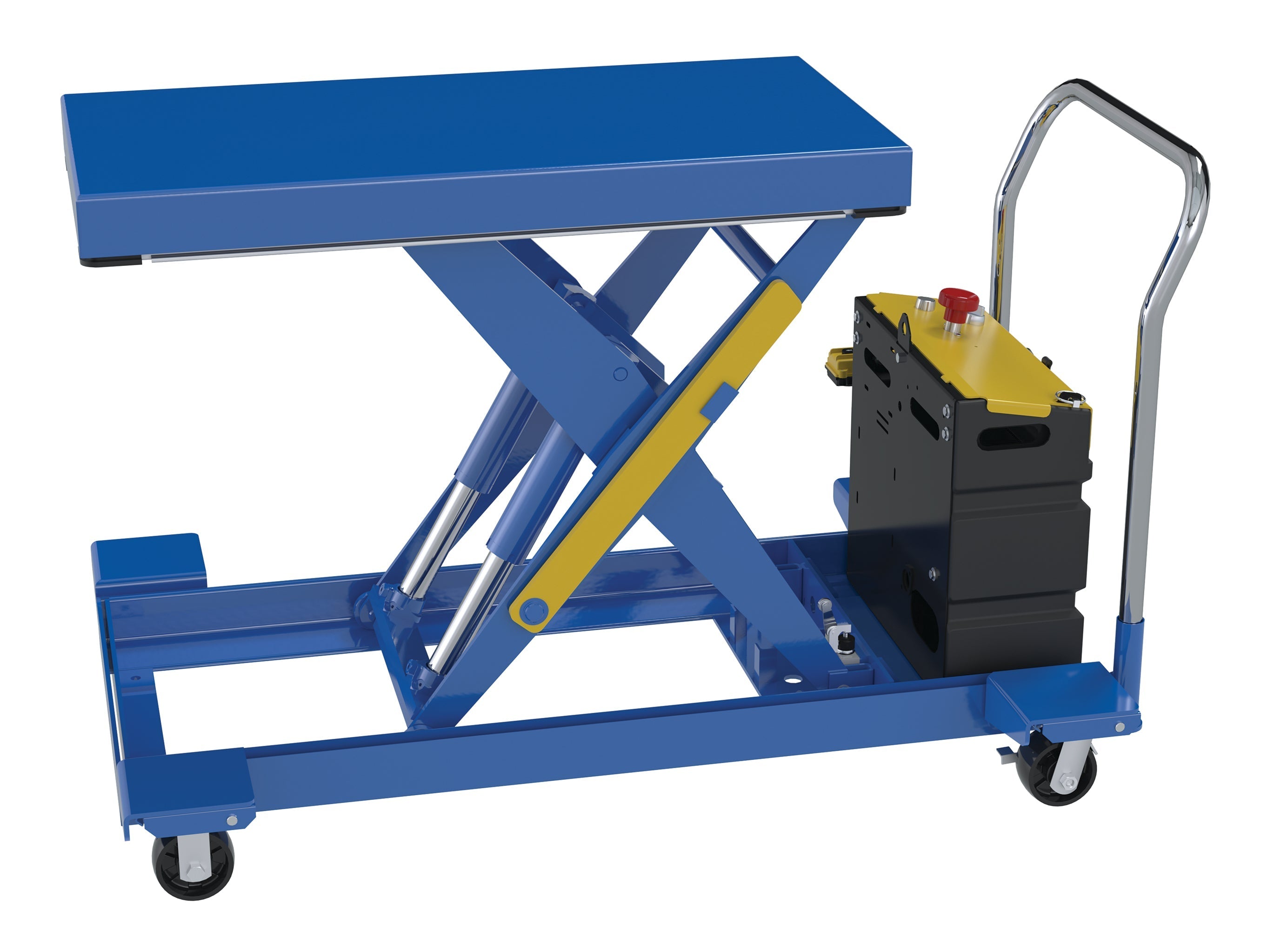
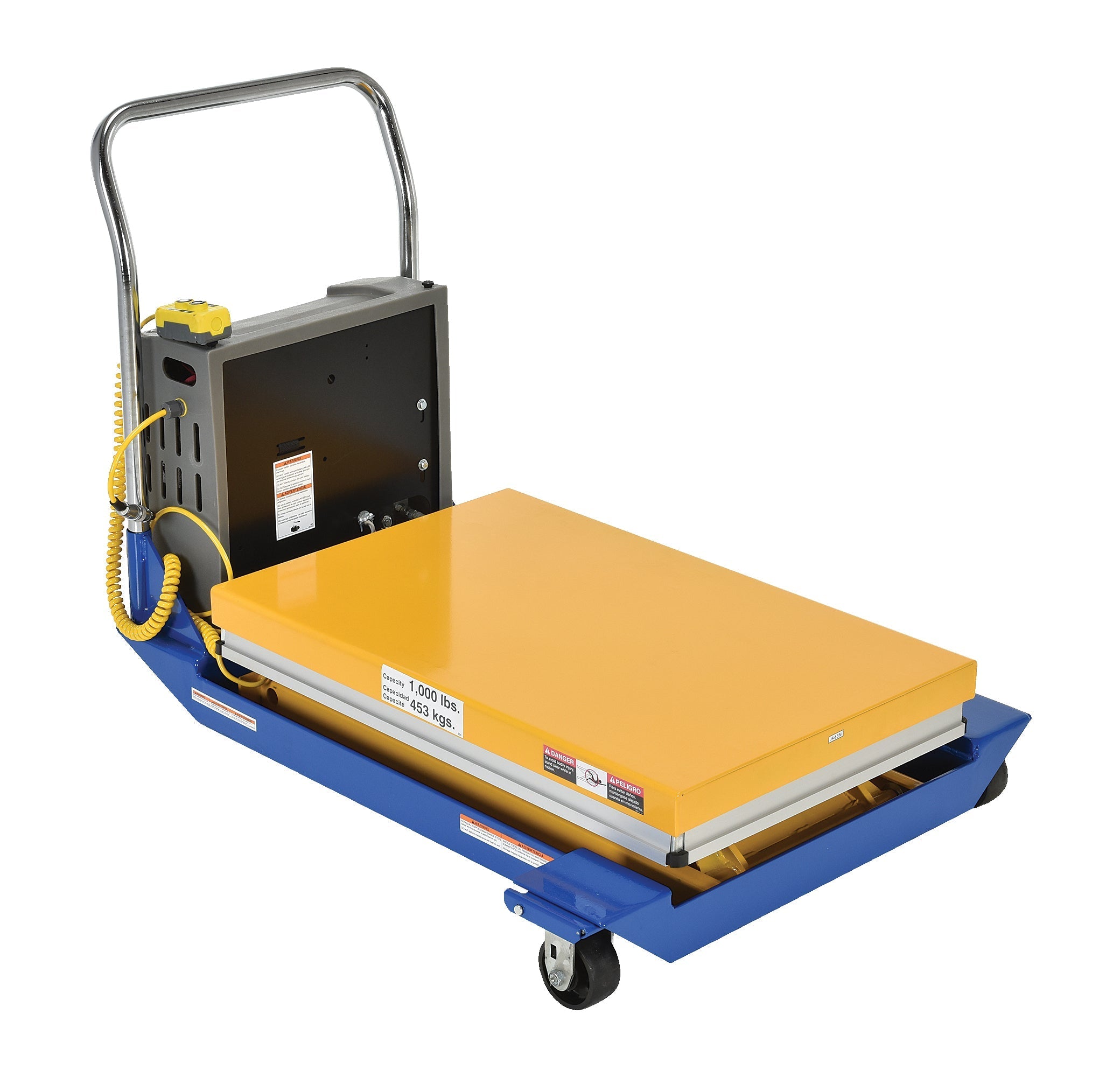
| Vestil Powered Drive and Powered Lift Hydraulic Scissor Carts | $5,334 | 1,000-1,500 lb | View → |
| Vestil Scissor Carts with Built-In Scale | $4,108 | 500-1,500 lb | View → |
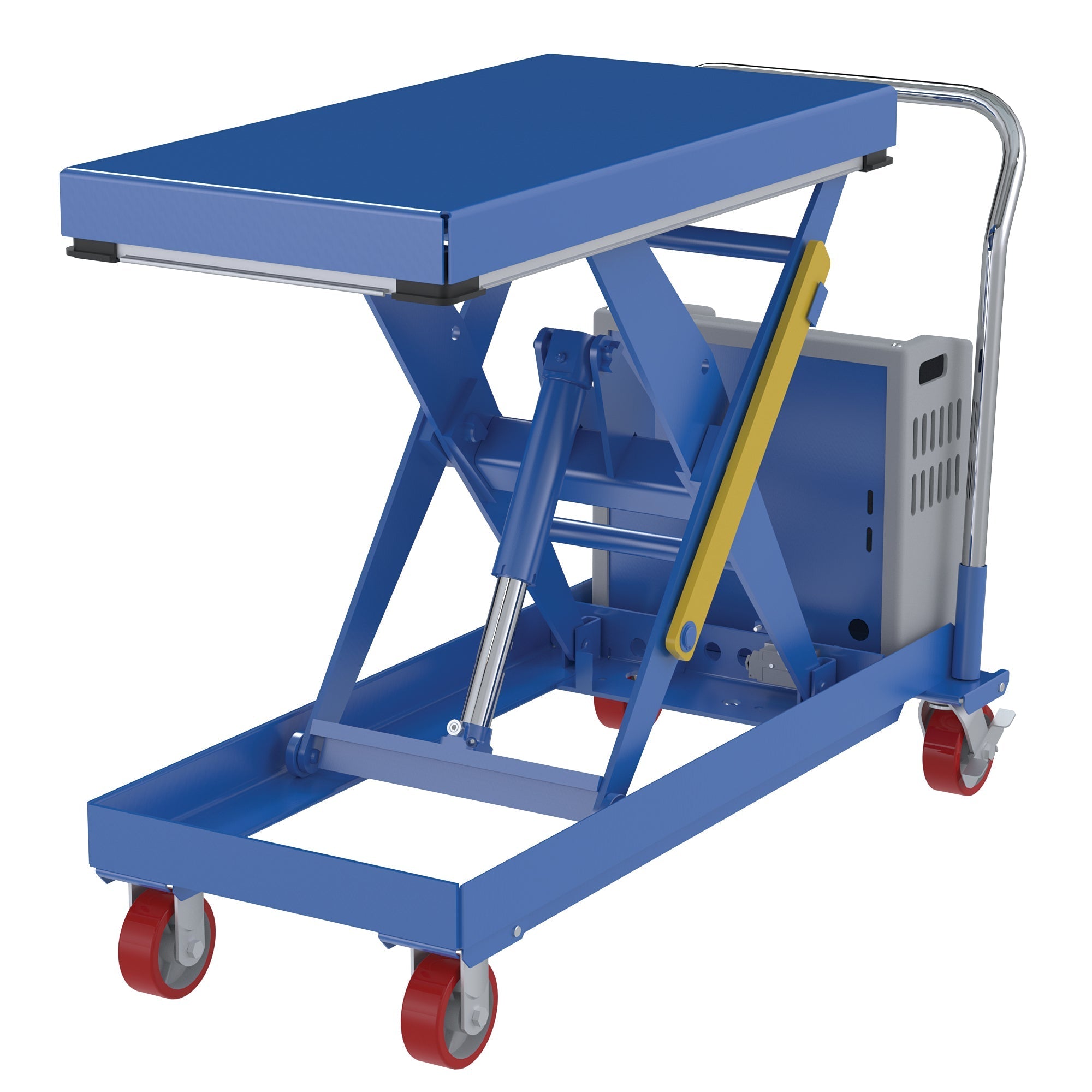
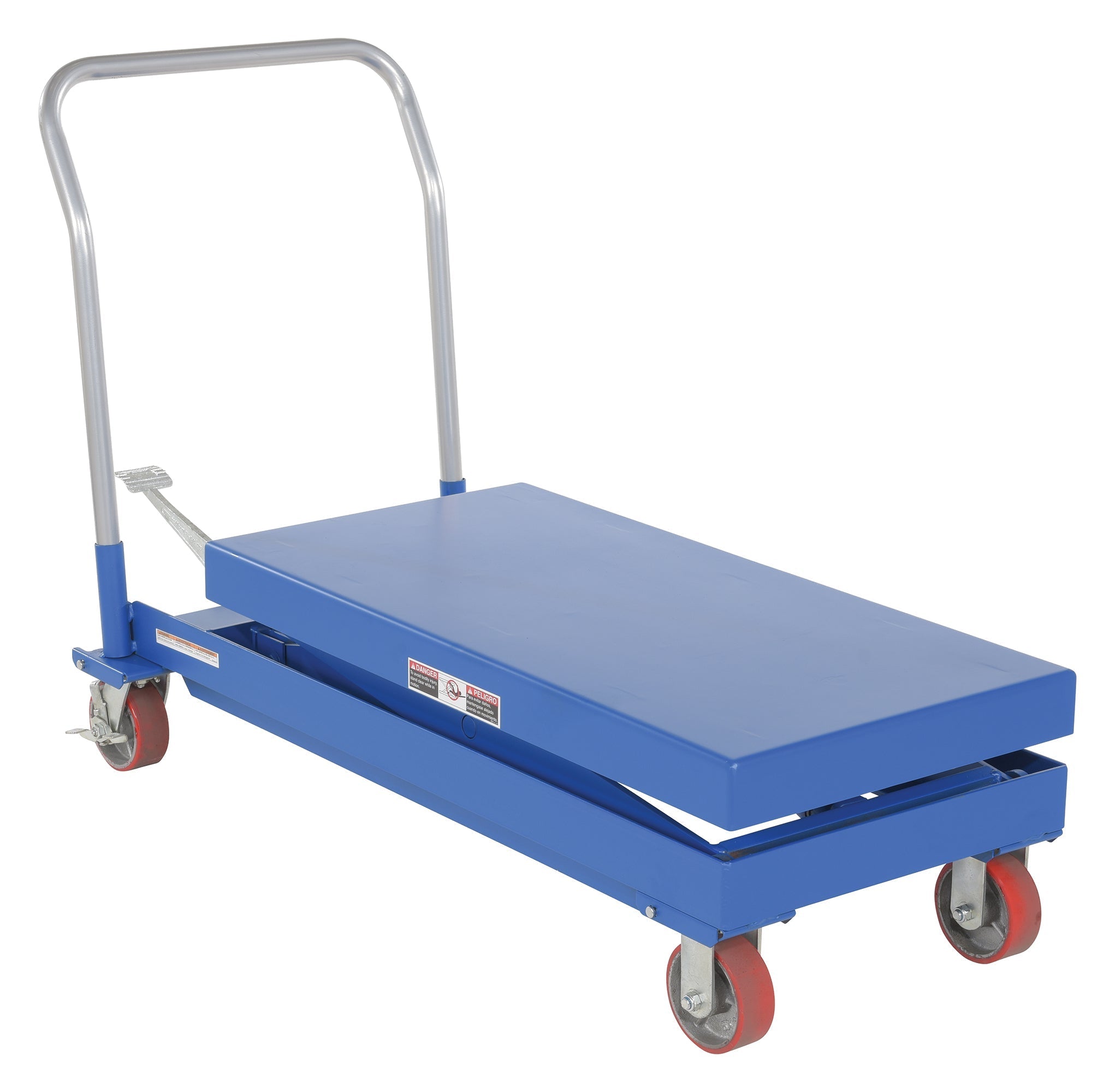
| Vestil Heavy Duty Low Profile Scissor Lift Cart | $3,108 | 2,000 lb | View → |
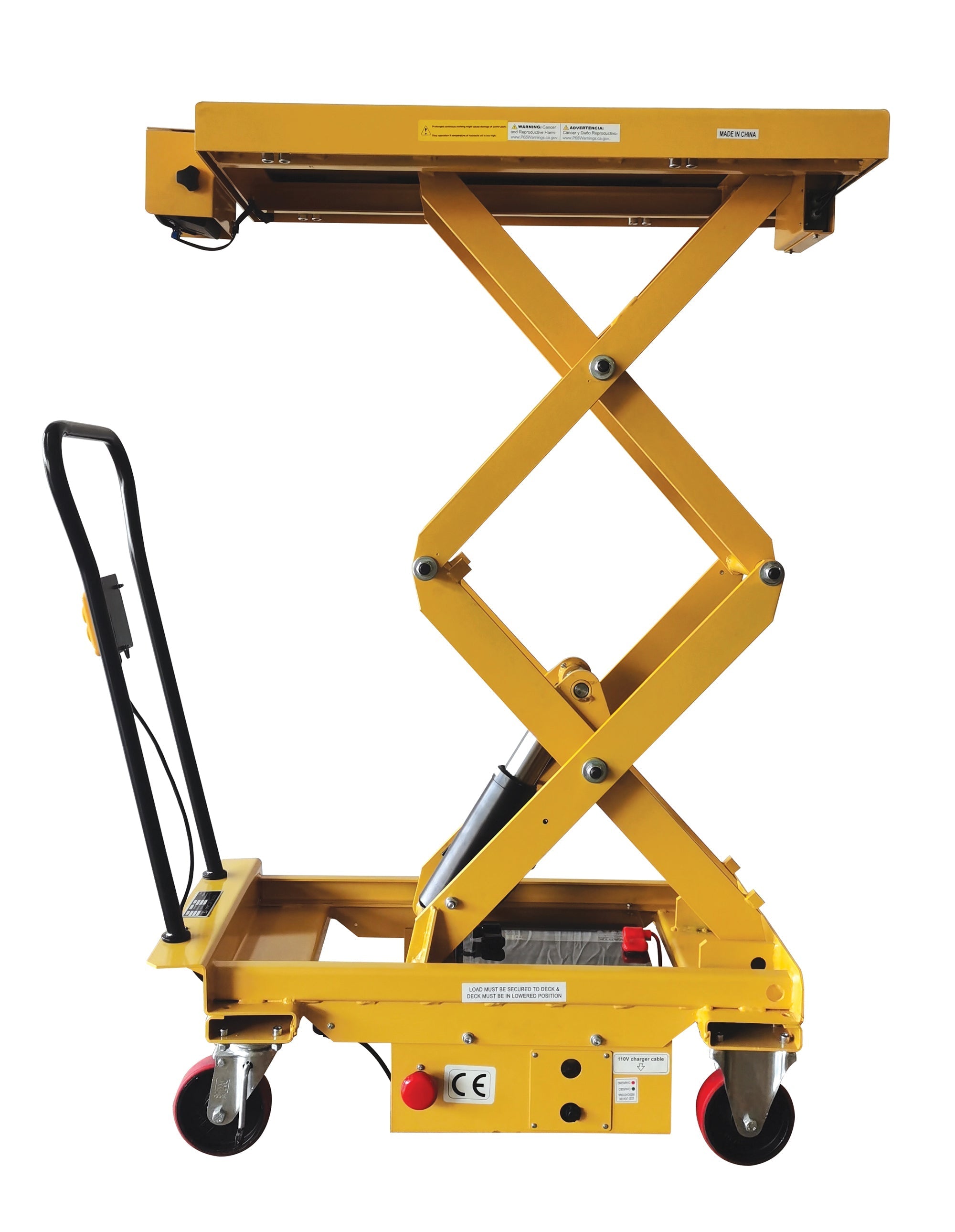
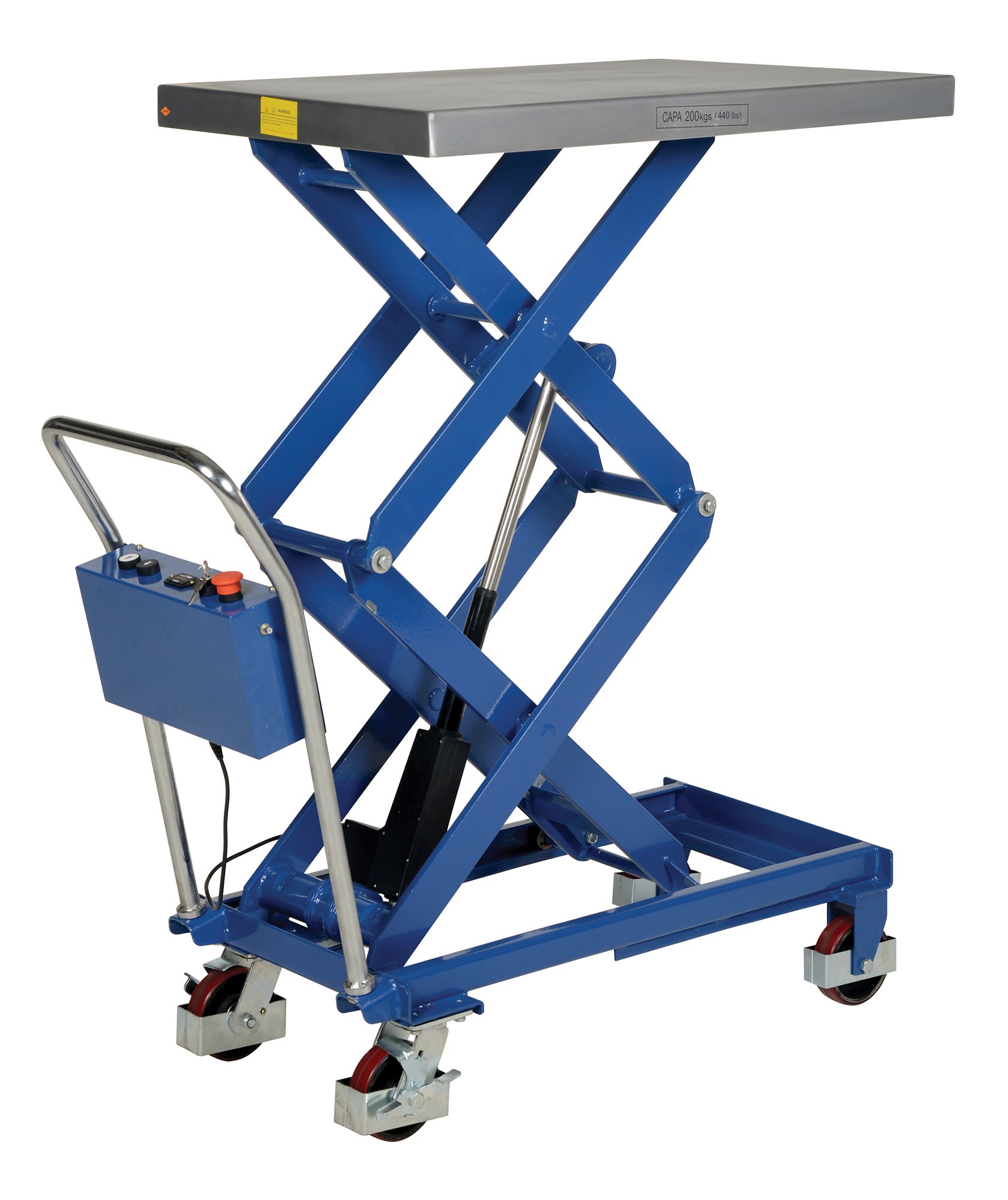
| Vestil DC Powered Hydraulic Elevating Carts | $3,041 | 1,000-2,500 lb | View → |
 In Stock
 In Stock
 In Stock
 In Stock
 In Stock
 In Stock
 In Stock
 In Stock
 In Stock
 In Stock
 In Stock
 In Stock
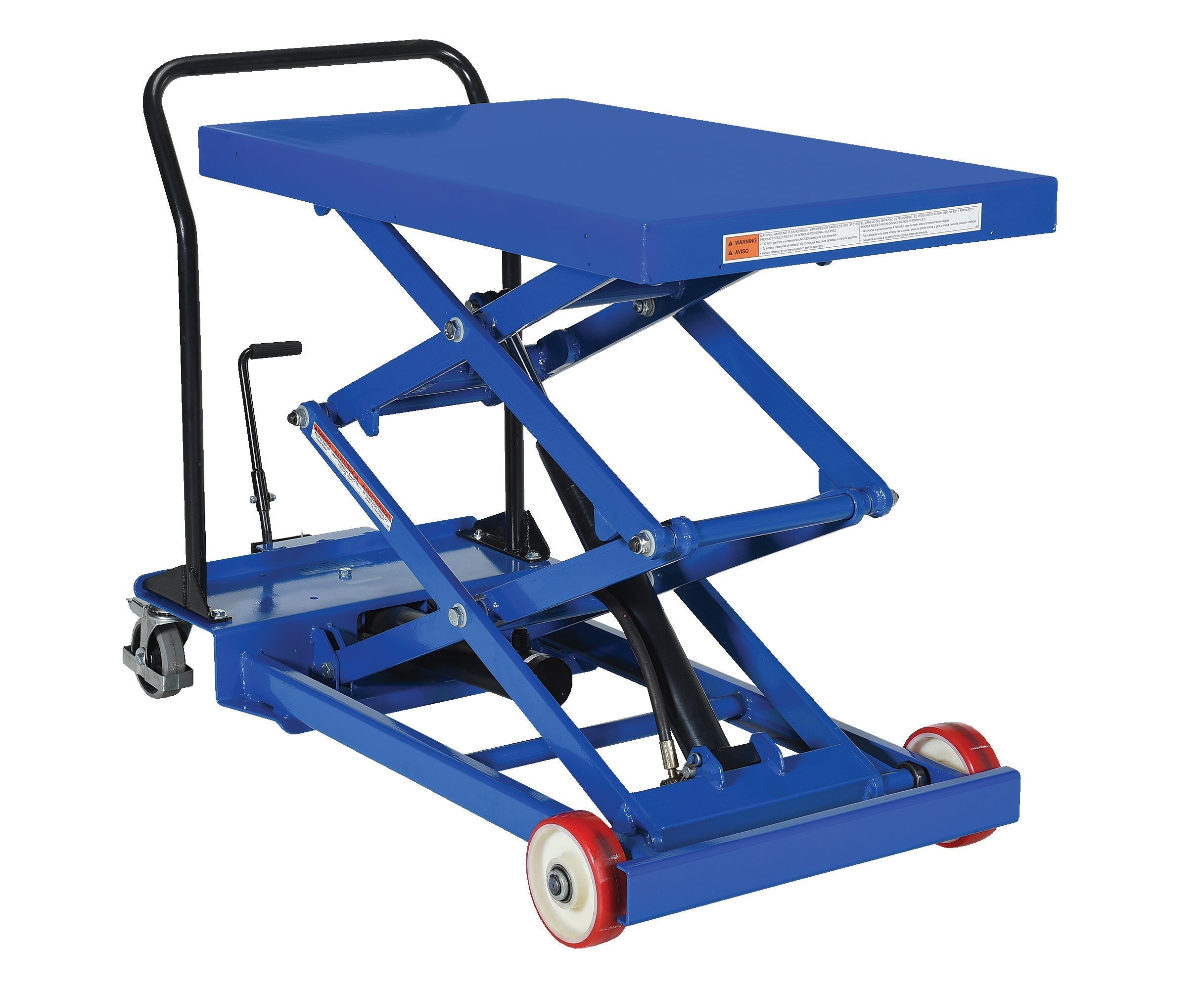 In Stock
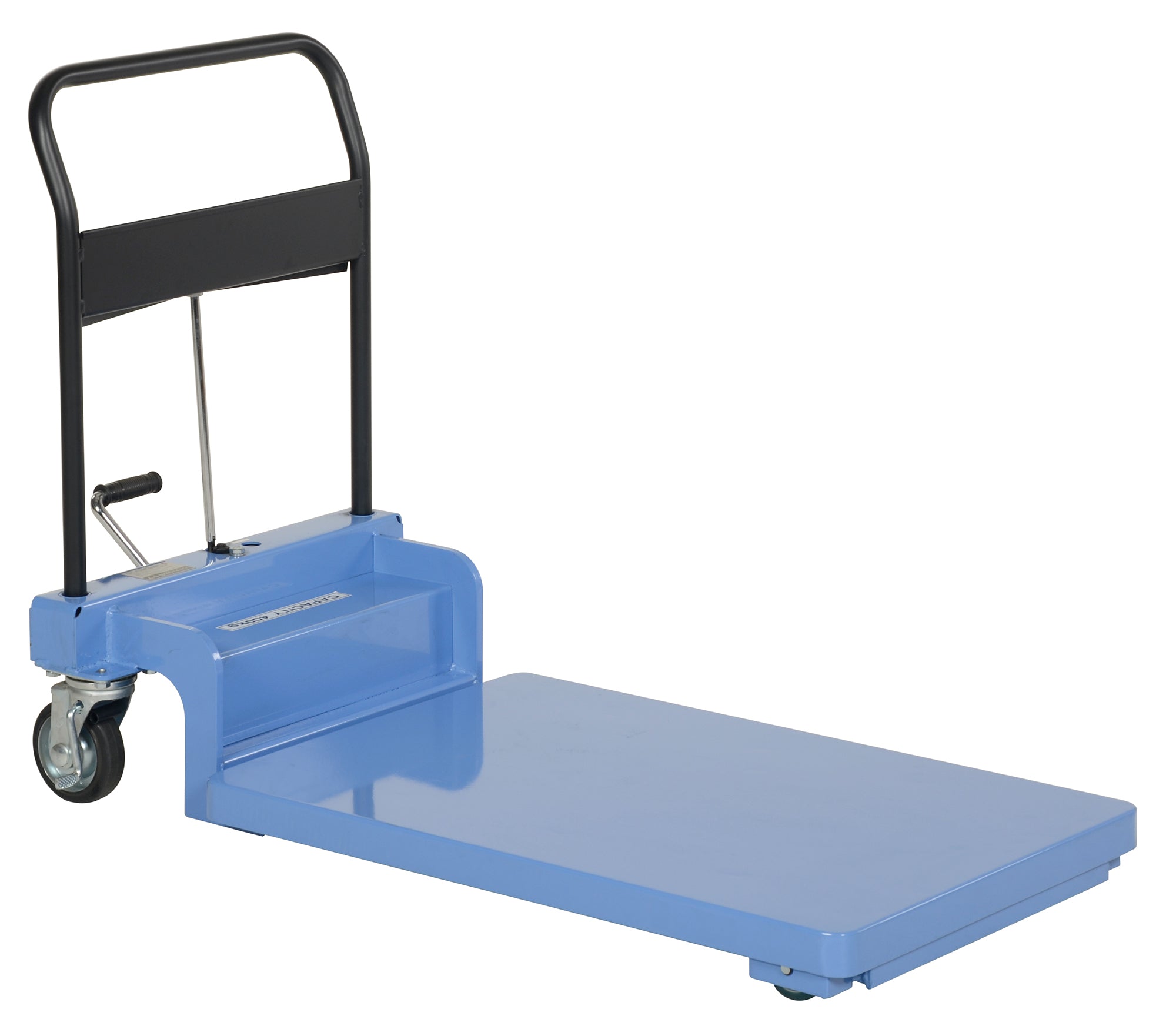 In Stock
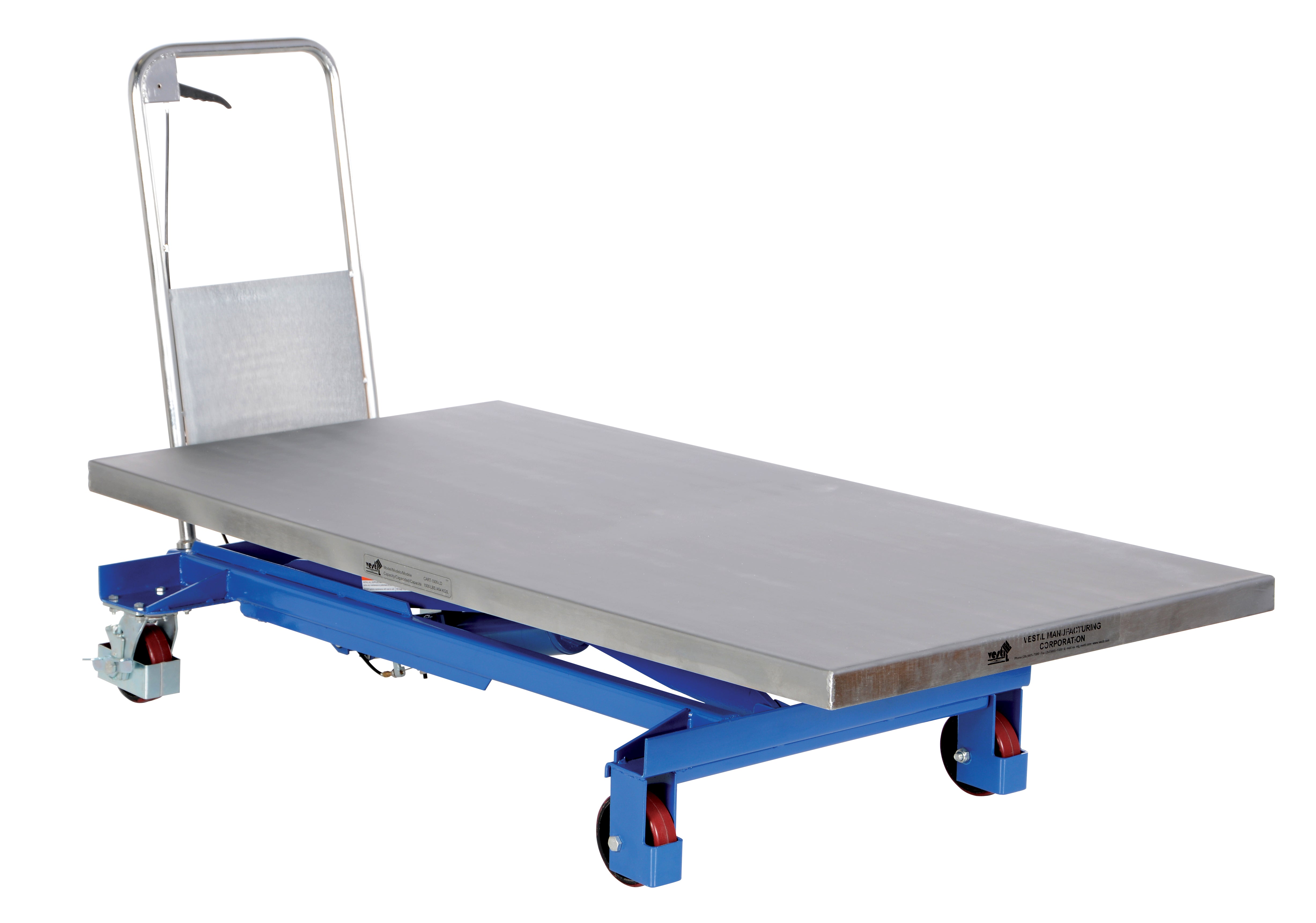 In Stock
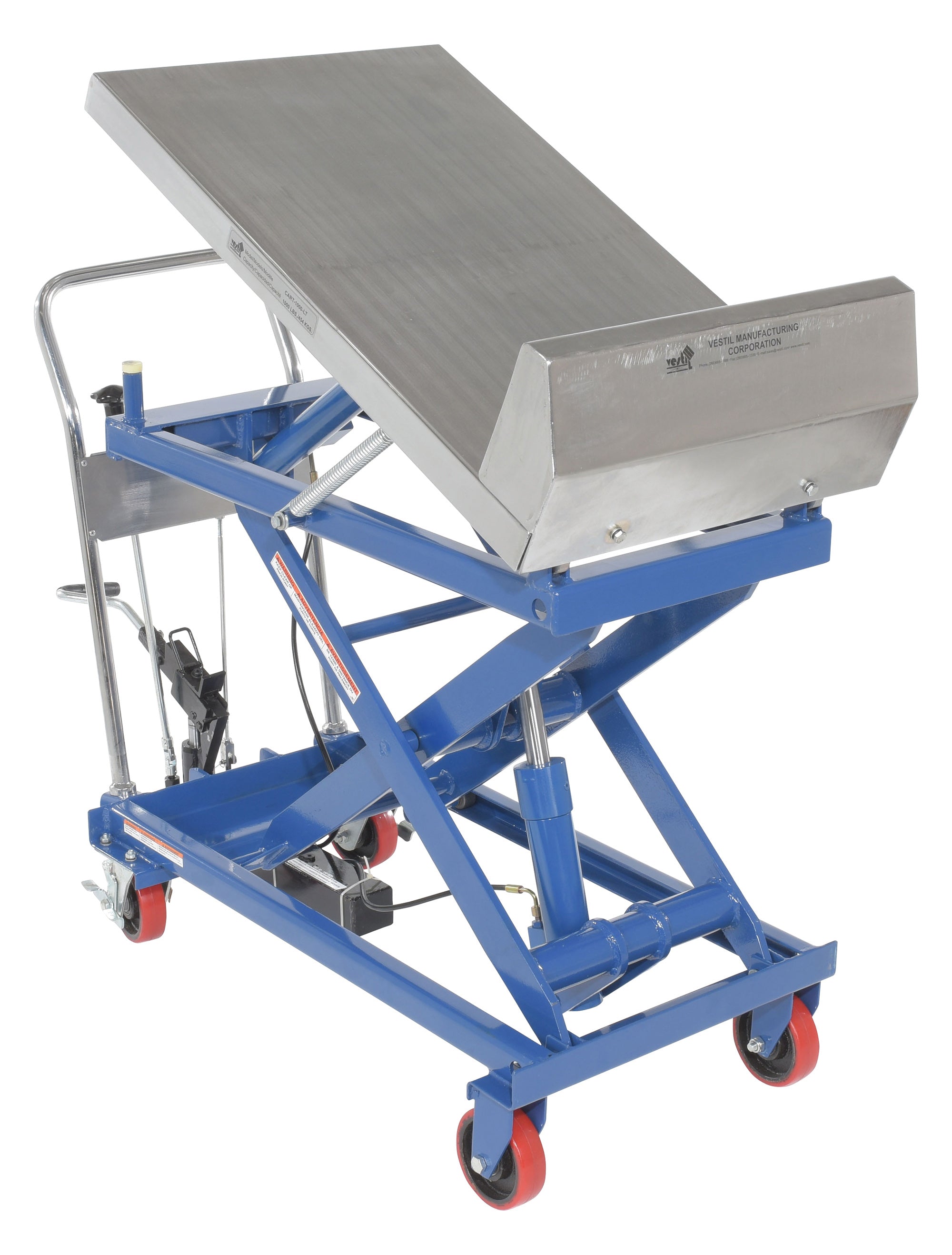 In Stock
 In Stock
 In Stock
 In Stock
 In Stock
 In Stock
Elevating Lift Carts Buying Guide
A lift cart is a lift table on wheels, and that changes the spec. Everything on the Lift Tables parent page about capacity, travel, and deck size applies here, with one addition: a cart is loaded at one height and unloaded at another, often by different people, and it has to survive being pushed across a shop floor in between. So spec the cart for the harder of its two jobs. If a pallet is built at floor level and fed to a bench, the lowered height has to clear a pallet truck and the raised height has to reach the bench, and the frame has to carry the rolling load with the platform up. A stationary table only ever sees one of those cases. When the cart mostly parks and rarely moves, a fixed table from the parent range is cheaper; buy the cart when the travel between stations is the real job.
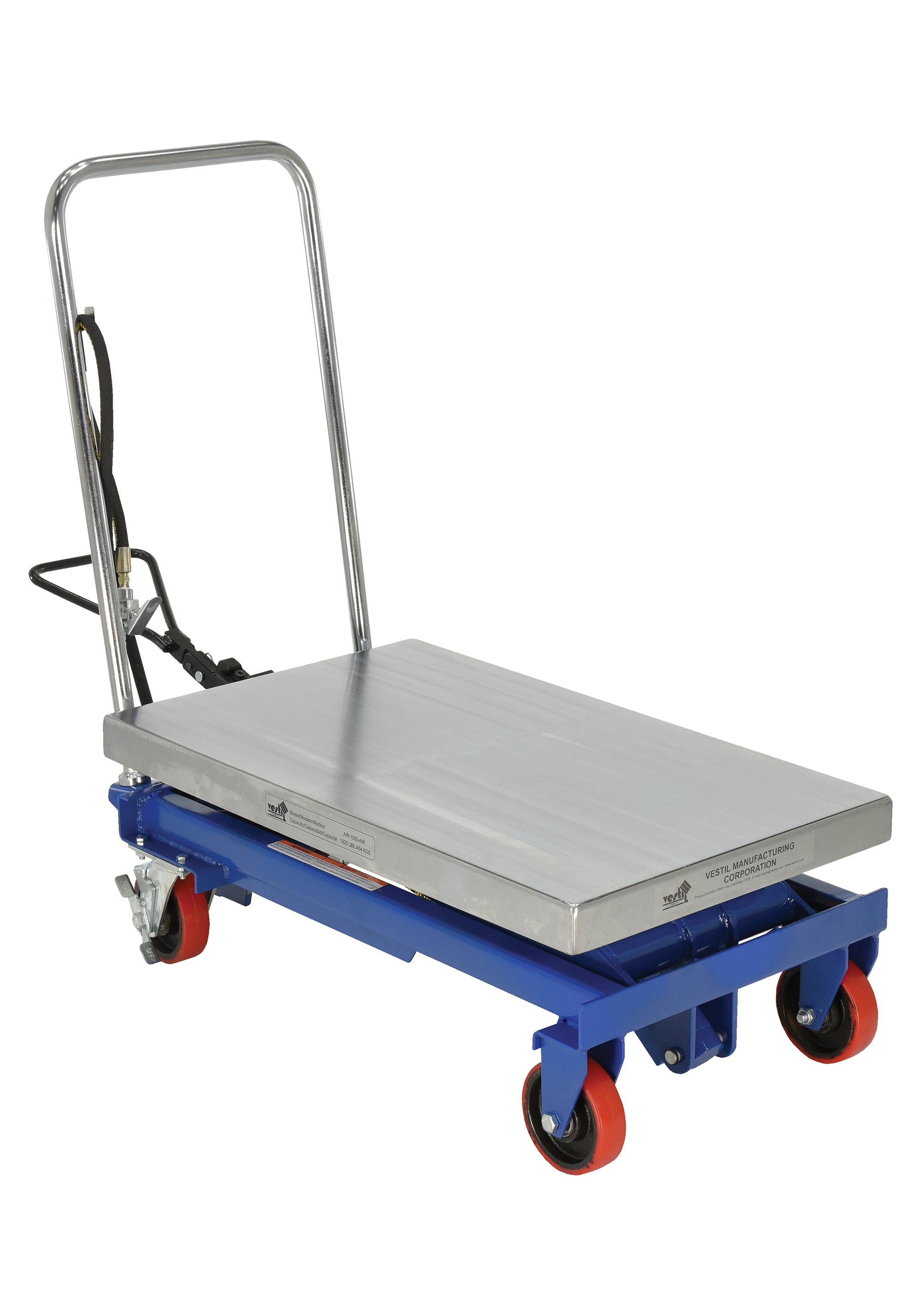
Match the drive to how many times a day it cycles. The raise mechanism is the real decision, and it tracks cycles per shift. A foot pump cart is the cheapest way in, needs no power, and earns its keep where a load goes up and down a few times an hour; Vestil's mechanical scissor and foot pump carts start in the mid to high three figures. Every stroke is operator effort, so a station that cycles all shift wants power. Air over hydraulic carts run off shop compressed air and cycle fast with no electrical service, from around $1,000. DC powered carts raise at the push of a button on a battery, which suits a mobile cart with no cord to trip over, and they run from roughly $1,800 into the mid four figures. Where a load also has to be walked a long way, the powered carts range adds driven travel to the same lift.
Auto-shift, lift-and-tilt, and built-in scale. Several models add a feature that pays for itself at the right station. The auto-shift carts use a two-speed foot pump that changes speed automatically based on hydraulic pressure, raising fast under a light load and shifting to high-force strokes as the load gets heavy, which cuts pedal count at a busy station. Lift-and-tilt carts with sequence select raise the deck and then tilt it toward the operator, so parts present at a reach-friendly angle instead of flat, which helps in assembly and welding. Carts with a built-in scale weigh the load on the platform as it rides, removing a separate trip to a floor scale in batching and shipping. Match the feature to the bottleneck, then spec capacity and height inside it; these run from roughly $800 into the mid four figures depending on capacity and material.
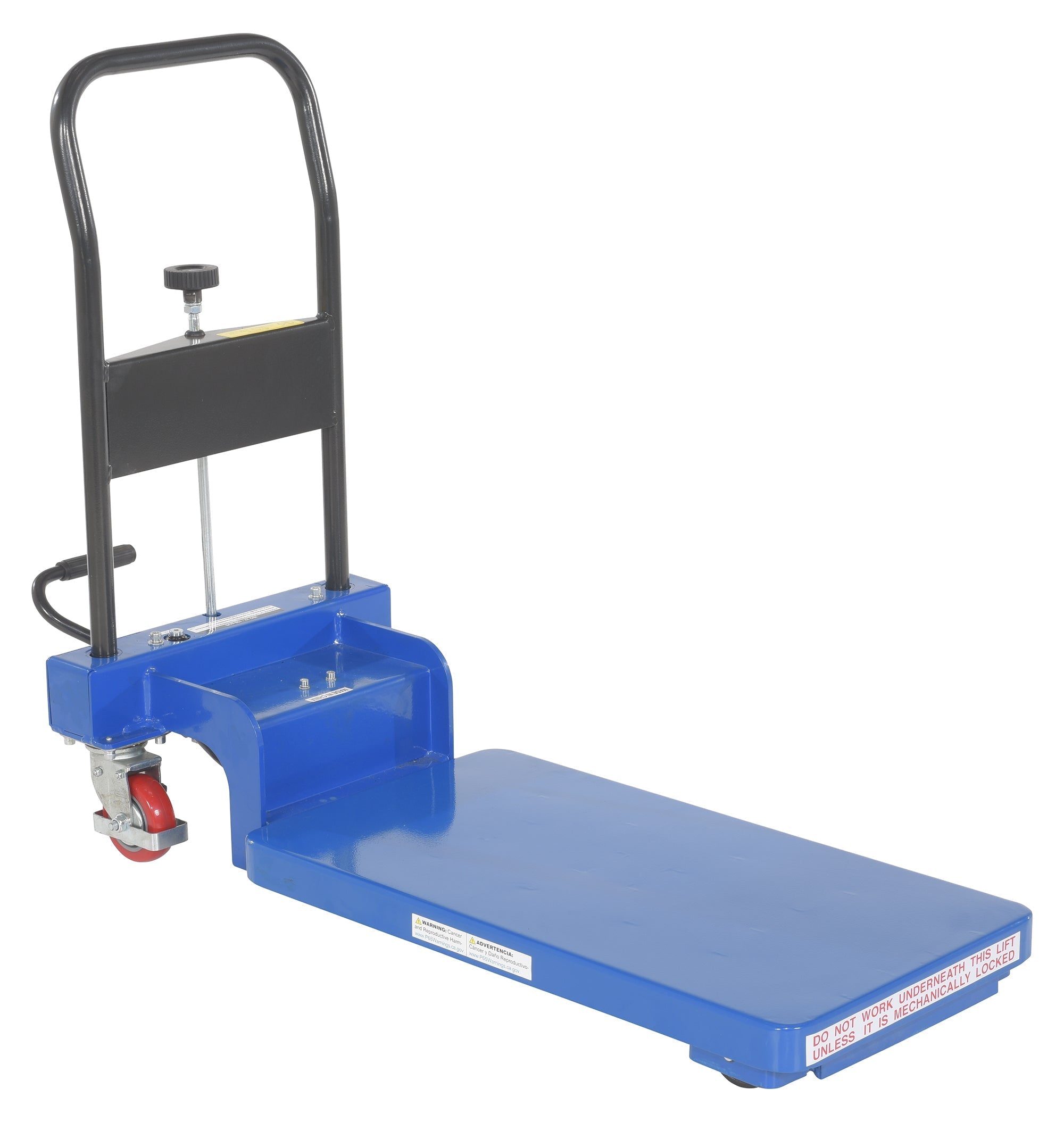
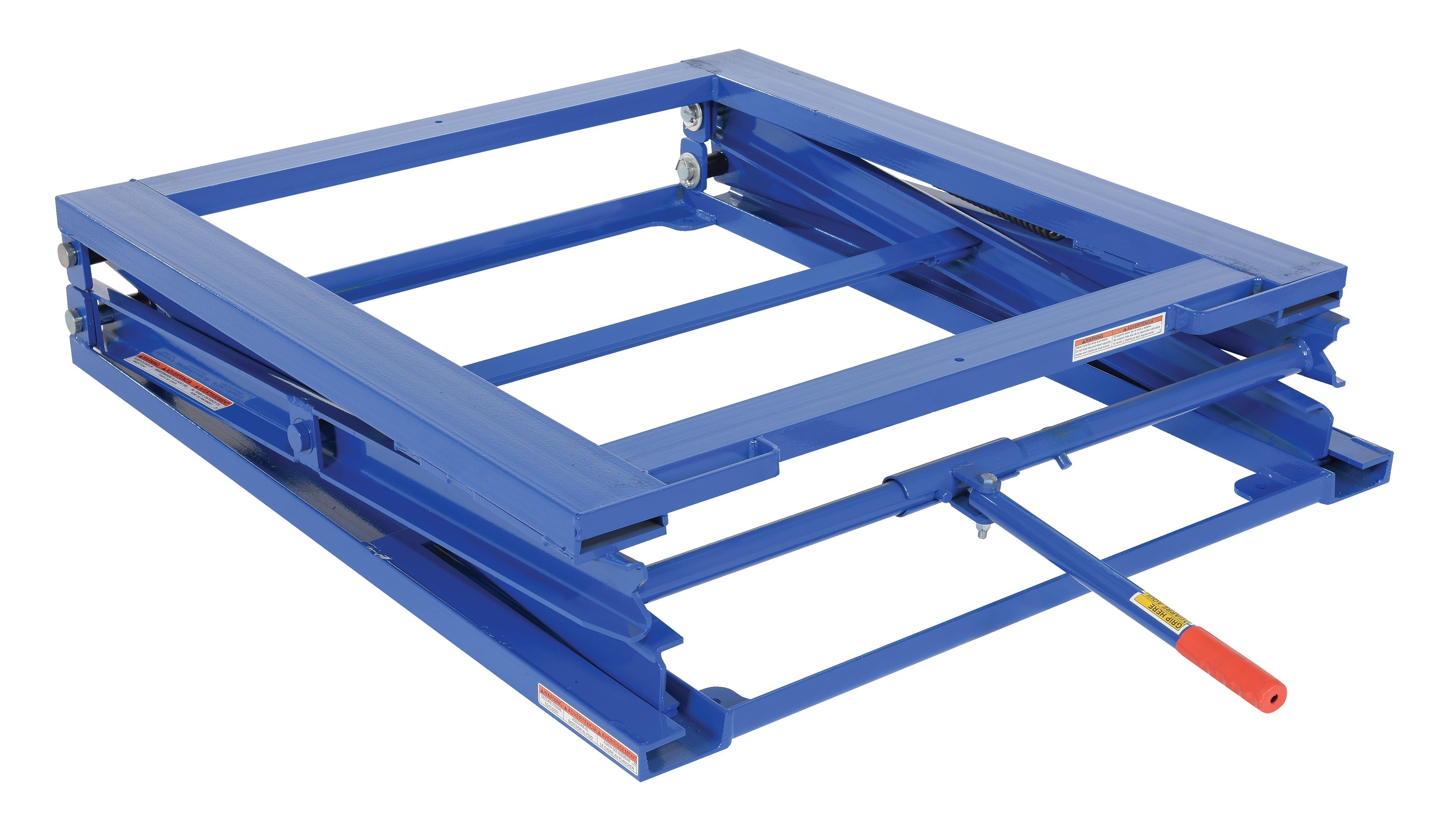
Lowered height decides what can load it; capacity is rated at center. Two numbers do the real work. Lowered height decides what can load the cart: a low profile scissor cart drops its deck close to the floor, so a pallet truck or a pair of hands can slide a load on with no ramp, while a taller frame needs the load lifted up to it. Raised height decides what the cart can feed, a bench, a machine, or a truck bed. Between them, remember the rating is set at the center of the platform. Push the weight to one edge or one end and the effective capacity drops, because the scissor and bearings see a moment the centered number never accounts for. Machine bases that overhang, coils loaded from one side, and a worker leaning on the deck edge all argue for the next capacity up. The hydraulic elevating line spans roughly 200 lb through 4,000 lb, and the price gap between adjacent ratings is small next to a bent scissor leg.
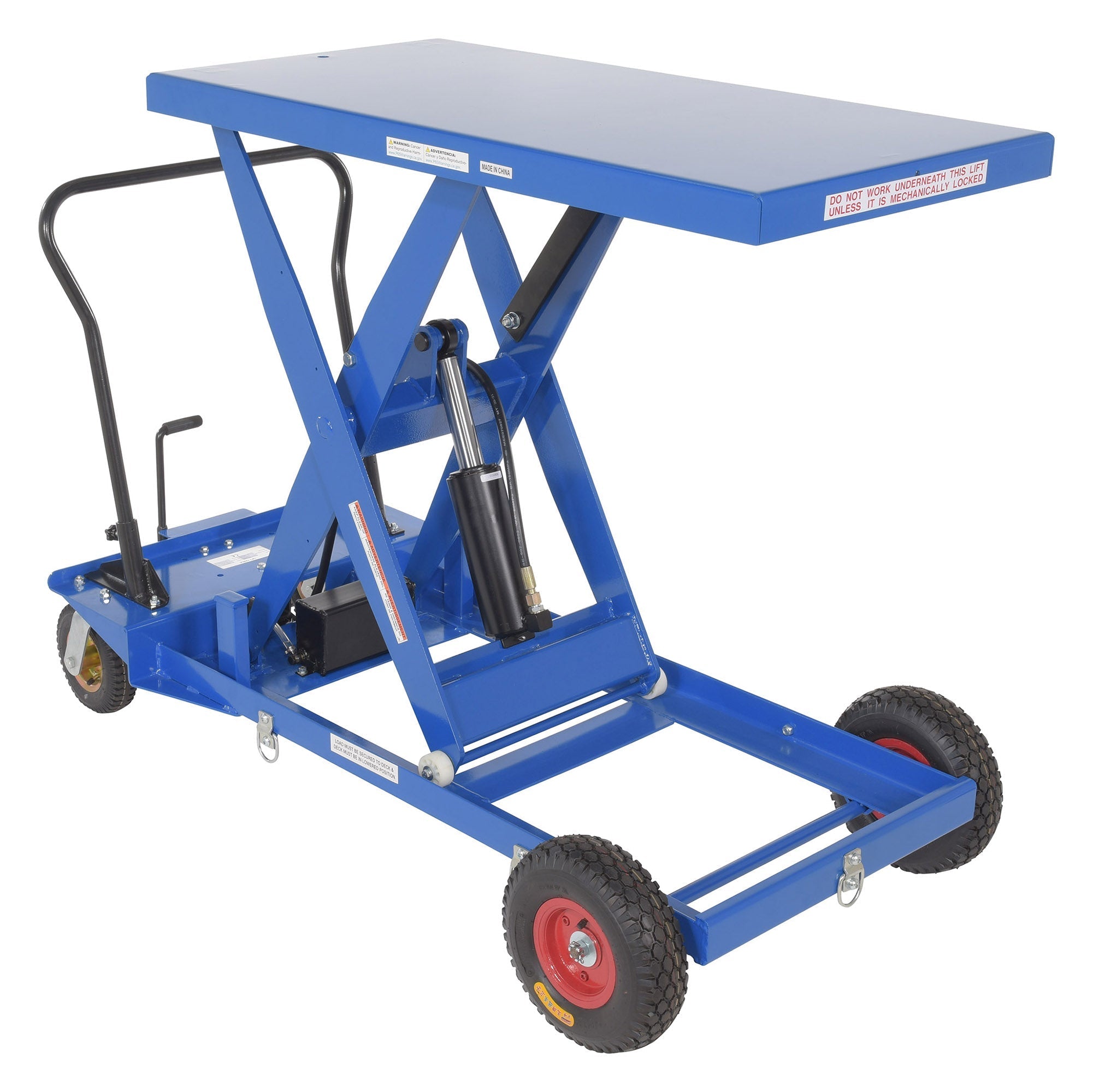
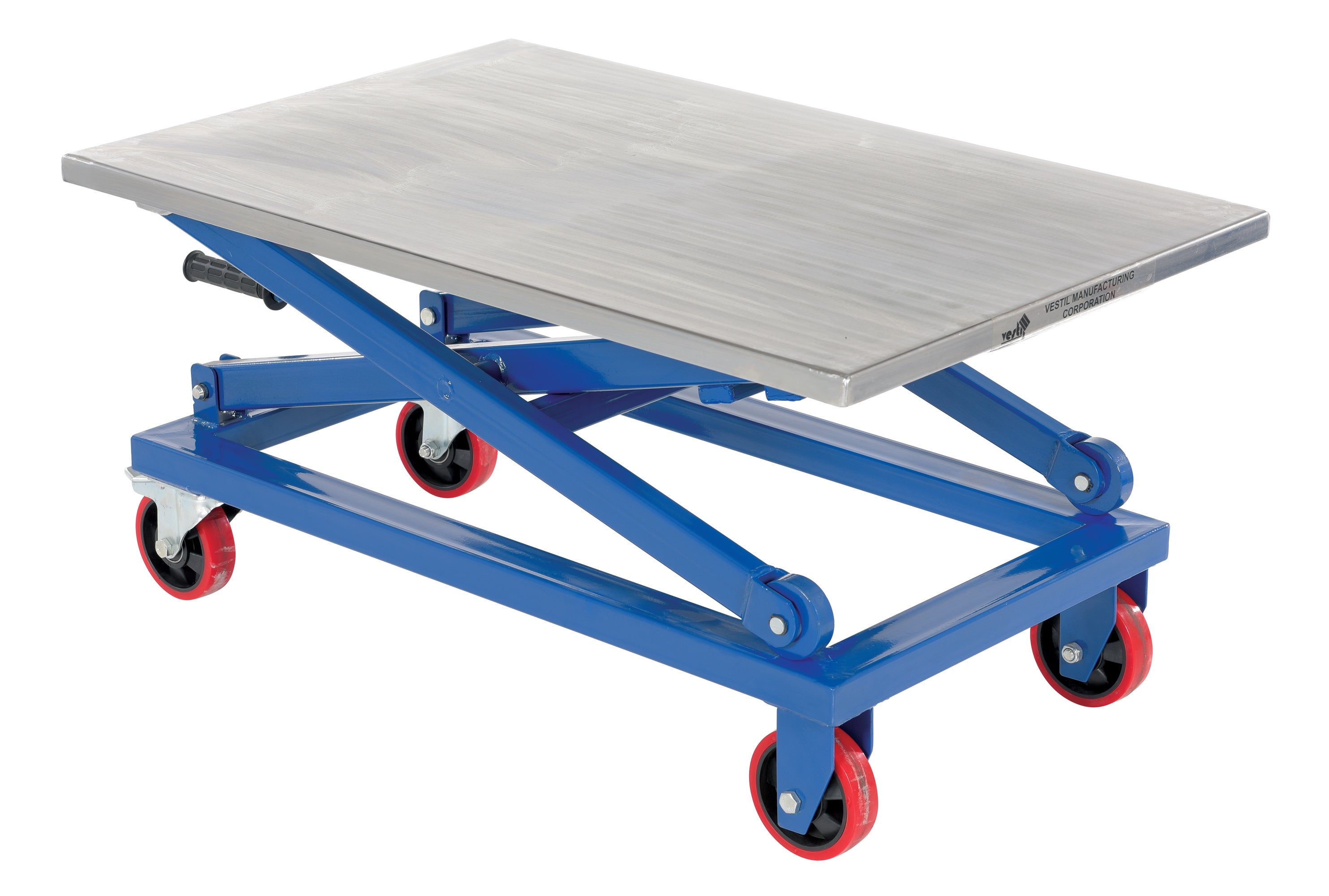
Stainless, washdown, and pneumatic tires for where the cart lives. Environment sets the frame. A painted carbon steel cart is right for a dry shop. Where the cart works around food, pharma, or washdown, the stainless and partially stainless scissor carts resist corrosion and take sanitation chemicals; full stainless models run higher, into five figures at capacity. If the cart crosses dock plates, gravel, or a rough yard rather than smooth concrete, pneumatic-tire elevating carts roll over the bumps that lock up hard casters. For lighter over-the-floor moving with no lift needed, the industrial carts and dollies range covers fixed-height transport, and the spring-loaded self-elevating tables keep a stack at working height with no pump at all.
Powered drive, heavy movers, and the standard that governs them. At the top of the range, powered-drive-and-powered-lift carts both roll and raise under battery power, so an operator walks a heavy load between stations and lifts it without a stroke of effort, from around $5,300. Purpose-built movers go further, up to an electric car mover for shifting vehicles inside a shop. Whatever the drive, a scissor lift cart falls under ANSI MH29.1, the safety standard for industrial scissors lifts raised by hydraulic, pneumatic, or mechanical actuation, mobile or stationary. It sets the design and inspection expectations for the format, and it is the reason capacity plates, maintenance props, and pinch-point guarding are not optional. Keep the plate legible, use the safety prop before anyone reaches under a raised deck, and inspect the cart on the same schedule as the rest of your handling gear.
Frequently Asked Questions
A lift cart is a lift table mounted on casters, so it does two jobs instead of one: it raises a load to working height like any scissor or post table, and it rolls that load between stations. A stationary table stays put and only serves the spot it sits in. If the load has to travel after it is lifted, buy the cart; if it stays at one station, a fixed table from the [Lift Tables](/collections/lifting-tables) range costs less.
Choose by cycles per shift. A foot pump cart is cheapest and needs no power, and it fits a station that raises and lowers a few times an hour. If the cart cycles all shift, a foot pump turns into fatigue and slow cycles, so go powered: air over hydraulic where the plant runs on compressed air, or DC battery where the cart is mobile and a cord would be in the way.
At the center of the platform. When the load sits off center, toward one edge or one end, the effective capacity drops because the scissor mechanism and bearings carry a moment the centered rating does not account for. Size the honest weight of the heaviest load plus any container or fixture, then look at how it actually sits and step up a rating if it overhangs or loads from one side.
Yes. The stainless and partially stainless scissor carts are built to resist corrosion and stand up to sanitation chemicals, which suits food, pharmaceutical, and washdown environments. Full stainless models cost more than painted carbon steel and run into five figures at higher capacities, so specify stainless only where the environment requires it.
ANSI MH29.1, the safety standard for industrial scissors lifts raised by hydraulic, pneumatic, or mechanical actuation, whether mobile or stationary. It covers design and performance criteria for the format and is the basis for capacity plates, maintenance safety props, and pinch-point guarding. Keep the capacity plate legible, use the safety prop before anyone reaches under a raised deck, and inspect the cart on your normal handling-gear schedule.
It is for loading at or near floor level. The deck drops close to the ground so a pallet truck or a manual push can slide a load straight on with no ramp or pit, then the cart raises it to bench or feed height. Choose a low profile frame when the load arrives on the floor; a taller cart would force an extra lift just to get the load onto the deck.