Roofing Harness Kit
A roofing harness kit is the personal fall arrest system a crew wears on a pitched or low-slope roof: a roof anchor near the peak, a vertical lifeline dropping down the slope, a rope grab riding that line, and a full body harness on the worker. This collection carries the rope grab end of that system, the KStrong assemblies that clamp onto the lifeline and lock when a fall pulls them tight, along with the rope termination anchor that finishes the top of a rope run. OSHA puts fall protection in play for roofing work at 6 ft above a lower level, which covers almost every job past the first course of shingles, so the grab you pick is the part standing between a slip and a stop. We stock manual and self-tracking grabs, non-captive openable bodies that snap onto the rope anywhere along its length, anti-panic versions, and a stainless build for salt and chemical exposure, priced from about $55 to $155. The sections below walk the choice in the order it matters.
Compare Roofs Kits
| Model | Price | Model | Type | |
|---|---|---|---|---|
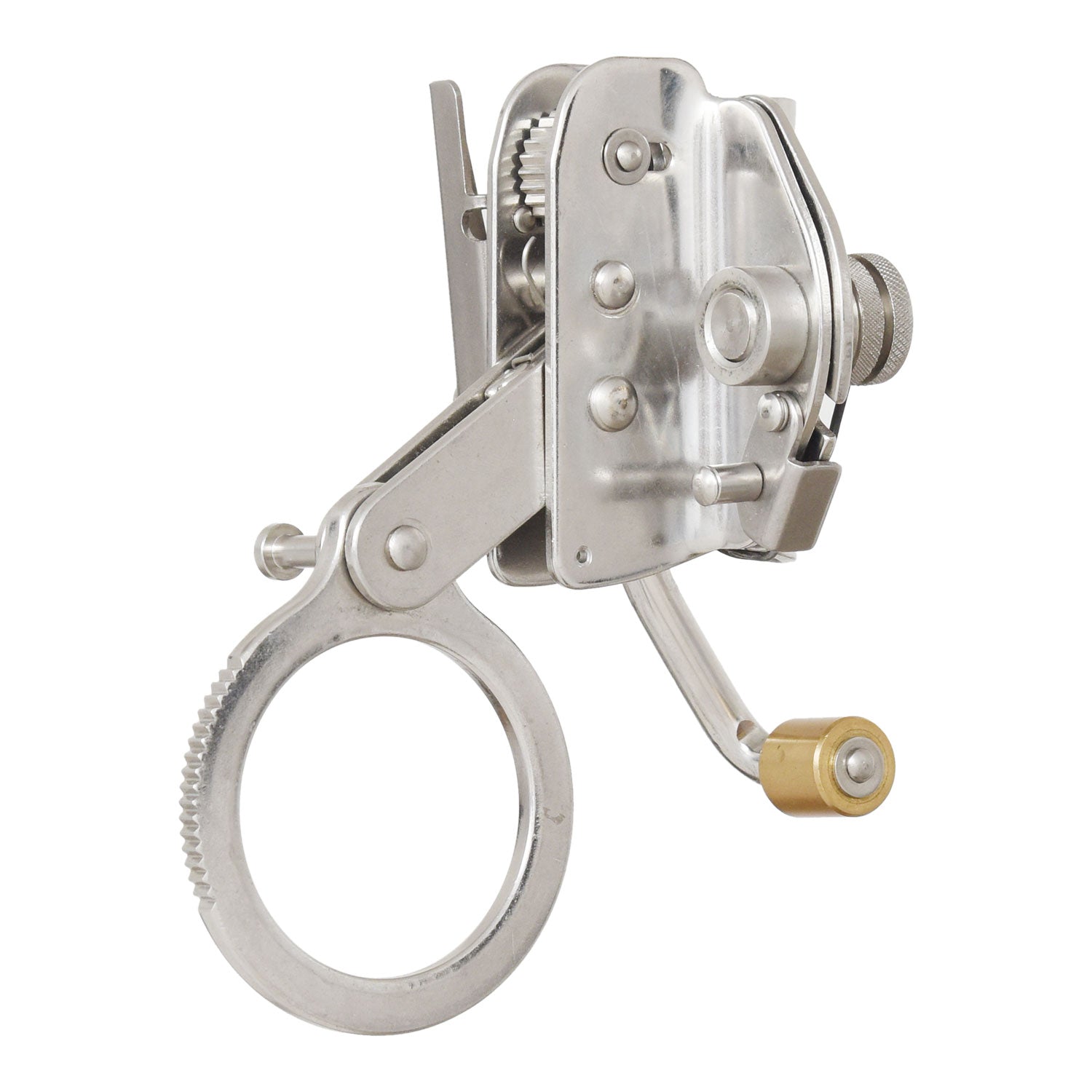
| KStrong® 5/8" Stainless Steel Self-Tracking Rope Grab with Roller Guide | $154 | UFG602100 | Self-Tracking Rope Grab with Roller Guide | View → |
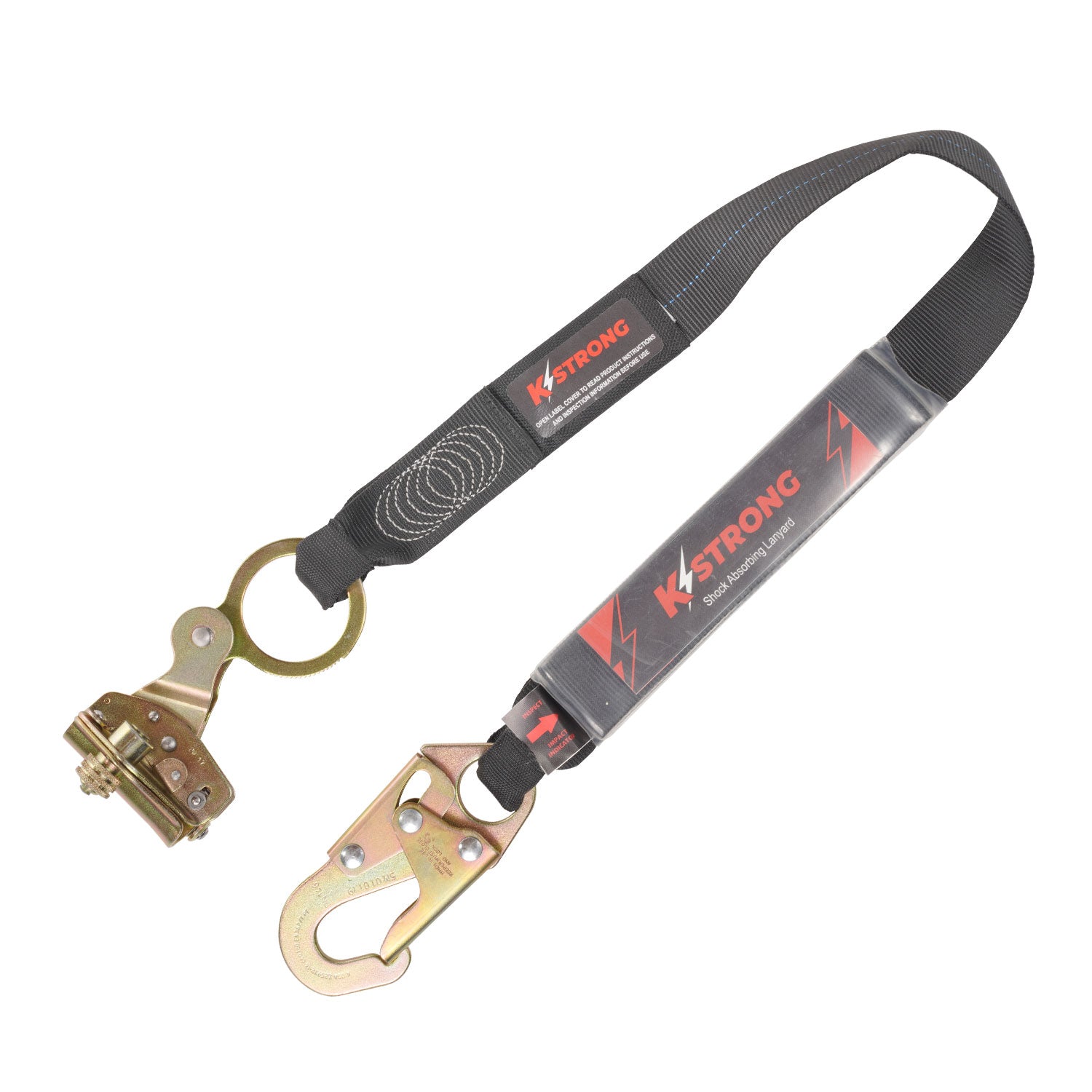
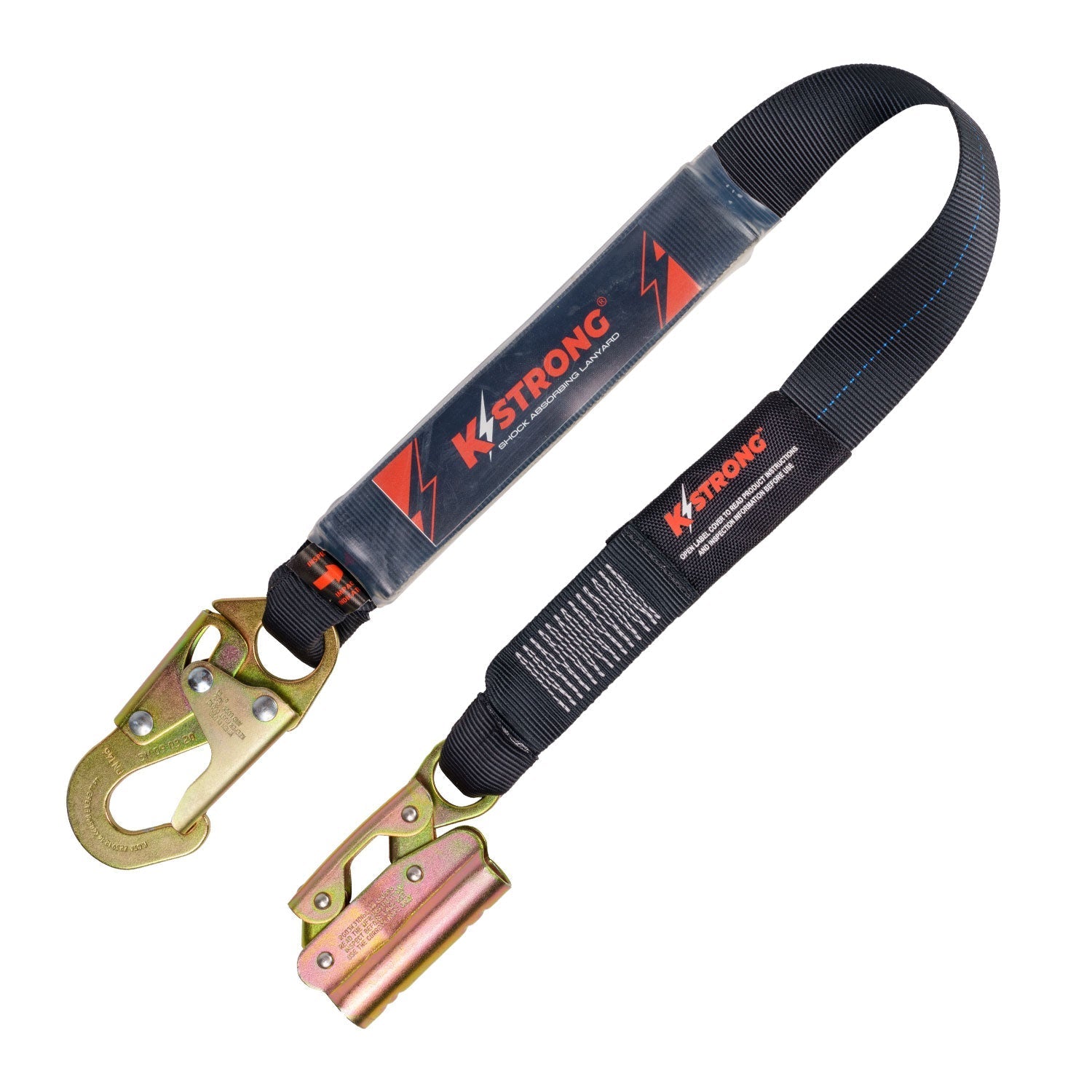
| KStrong® 3 ft. Self-tracking Non-captive Openable Shock Absorbing Rope Grab Assembly with Anti-Panic Feature (ANSI) | $70 | UFG611010 | Self-Tracking Non-Captive Openable Shock Absorbing Rope Grab Assembly, Anti-Panic Feature | View → |
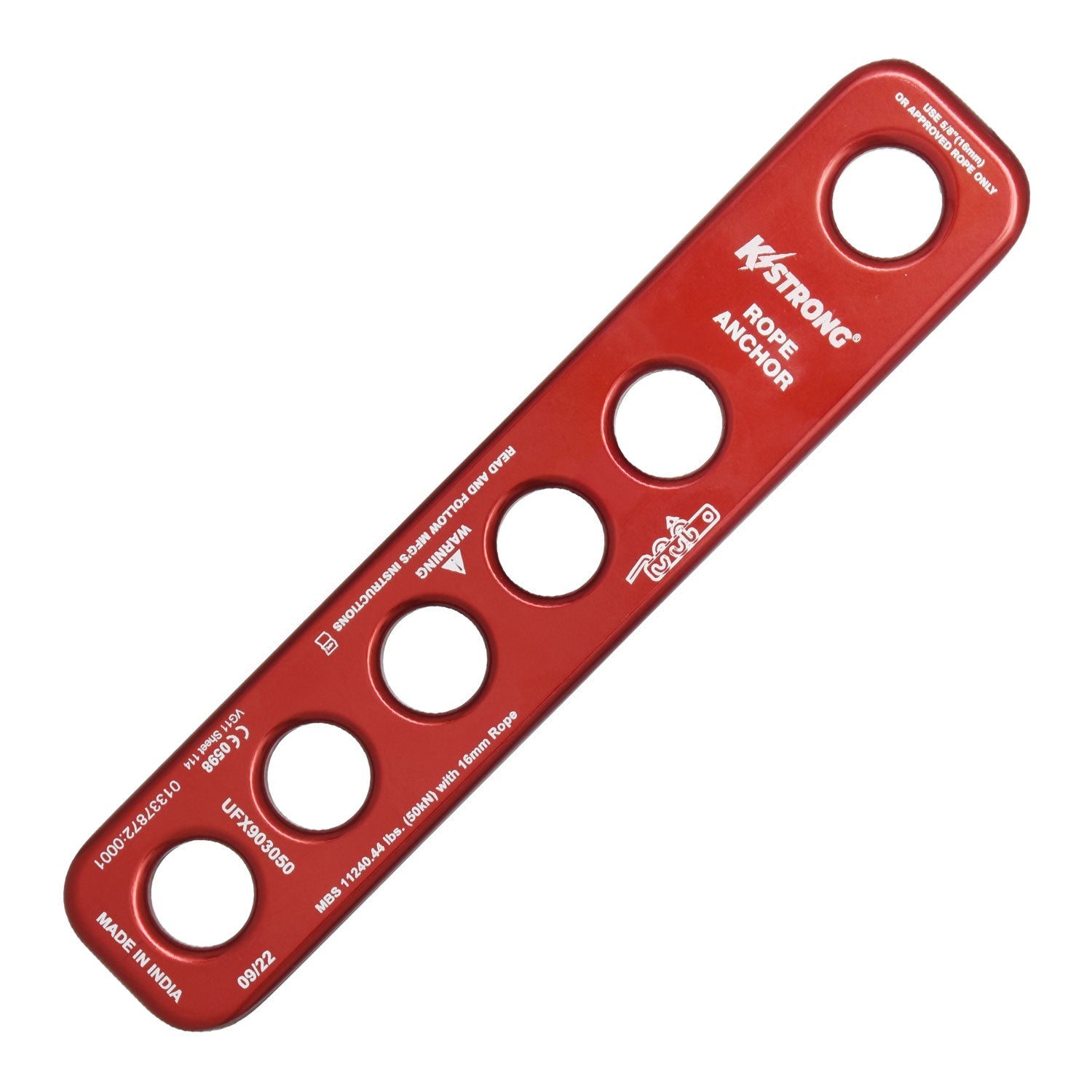
| KStrong® Rope Termination Anchor | $62 | UFX903050 | Rope Termination Anchor | View → |
 In Stock
 In Stock
 In Stock
 In Stock
 In Stock
Roofs Kits Buying Guide
The kit is four parts, and this page is the grab. A roofing kit works as a chain from the roof down: a roof anchor fixed to the structure, a vertical lifeline hanging from it, a rope grab that travels the rope with the worker, and a harness holding the worker at the other end. The weakest piece sets the rating, so the parts have to match. The complete boxed kits live in roofers kits, where KStrong packages a 25 or 50 ft lifeline, a roof anchor, and an Essential 3-point or Elite 5-point harness for roughly $165 to $230, and the harness on its own is in safety harnesses. This page carries the grab and the rope termination anchor, the two pieces a crew replaces or upgrades most. The grab is the moving part that wears and collects grit; the harness outlasts several of them. Buy the boxed kit to outfit a new crew, and buy the grab here when you are swapping a worn one or matching a lifeline you already run.
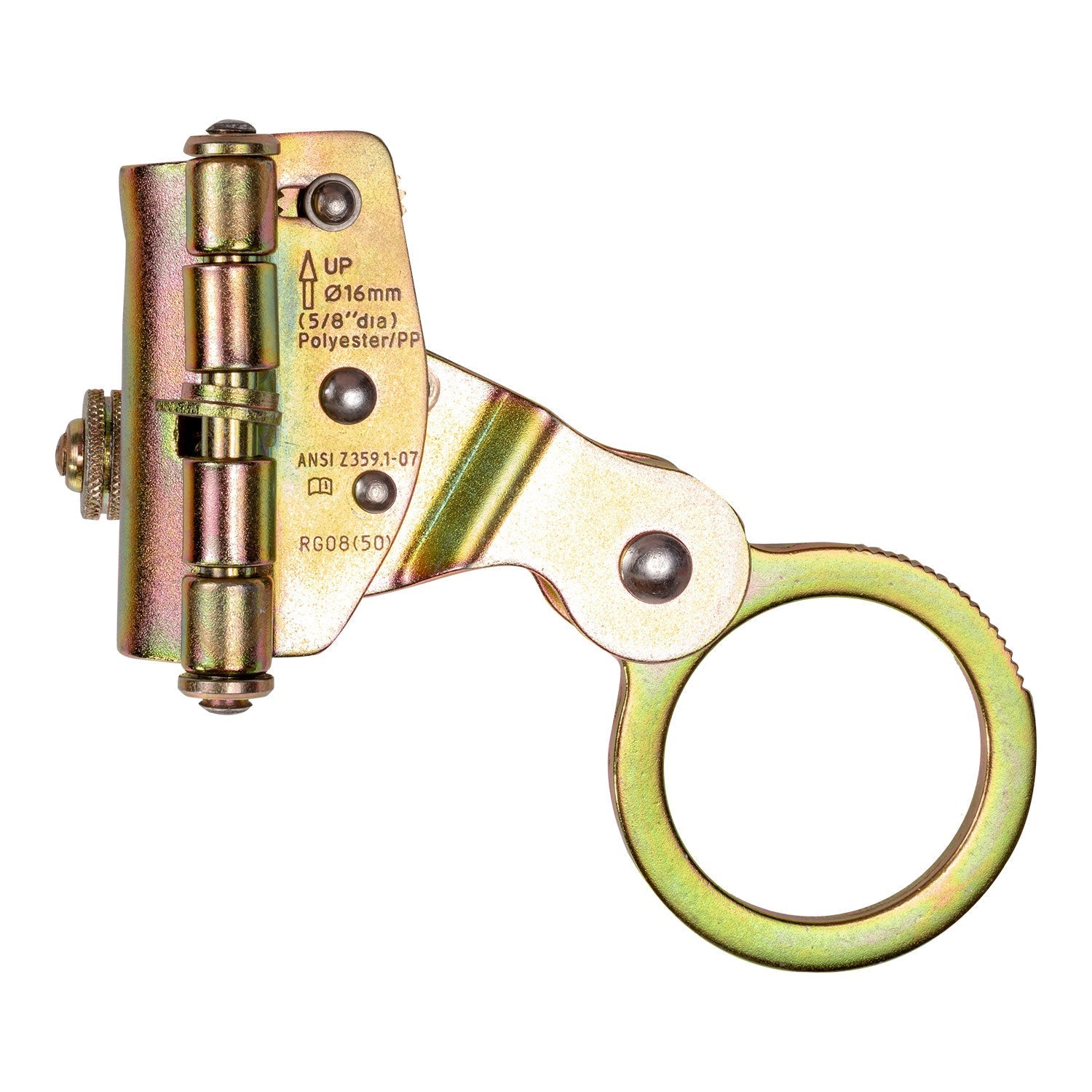
Manual or self-tracking. There are two ways a grab travels the rope. A manual grab you slide up the lifeline by hand, and it stays where you leave it until you move it again. The KStrong 3 ft Manual Shock Absorbing Rope Grab Assembly ($55.83, rated 6,000 lb) is the value pick, and its integrated shock pack is the piece that keeps arresting force inside the OSHA cap of 1,800 lb. A self-tracking grab trails the worker on its own: climb slowly and it follows, jerk it or fall and it locks within inches, so nobody has to remember to advance it. The KStrong 5/8 inch Self-Tracking Non-captive Openable Rope Grab ($61.95, 5,000 lb) and the 3 ft self-tracking assembly with its own shock absorber ($70.00) cover that side. Self-tracking is the safer default for anyone moving around the roof; manual is fine for fixed-position work like a single penetration or a short run where the grab does not need to follow.
Non-captive openable and anti-panic. Two labels on these grabs are worth reading. Non-captive openable means the body hinges open and clamps onto the lifeline at any point, so you do not have to thread it from the free end of the rope. On a roof, where the lifeline is already rigged from anchor to termination, that lets a worker clip on partway down the line instead of walking to the top. The trade is that the worker has to close and seat the grab correctly, which is a training point, not a shortcut. Anti-panic closes the one gap a rope grab has. The human instinct in a fall is to grab the device, and squeezing the lever on a plain grab can hold it open. The anti-panic function forces the cam onto the rope even when a panicked hand clamps the release, so the grab locks whether the worker does the right thing or the wrong one. The self-tracking grabs here carry both features.
The grab has to match the rope. A rope grab is rated with a specific lifeline, never on its own. ANSI/ASSP Z359.15 covers single-anchor vertical lifelines and their fall arresters as a matched pair, and the manufacturer's instructions list the exact ropes a grab is tested on by construction and diameter. The 5/8 inch grabs here run on 5/8 inch kernmantle lifeline, the common roofing rope size, and putting a grab on a rope it was not built for lets it slip instead of lock. Vertical lifelines and self-retracting options live in lifelines, and the connecting hardware, carabiners and structural anchors, is in connectors and accessories. Match the diameter first, confirm the up arrow on the grab points toward the anchor second, and never run two grabs or two workers on one single-anchor line, which is the whole reason the standard is written around a single anchor.
Terminating and anchoring the rope. A vertical lifeline needs a defined top. The KStrong Rope Termination Anchor ($61.75, 5,000 lb) finishes the top of a rope run, giving the line a rated eye to hang from the roof anchor rather than a field-tied knot that nobody can put a number on. The roof anchor itself, the plate or bracket fixed to the deck, ships in the roofers kits collection, from single-use nail-on plates near $6 to reusable hinged steel and heavy chain anchors, all rated 5,000 lb to match the rest of the system. Placement matters as much as the hardware: set the anchor as close to directly above the work as the roof allows. Every foot of horizontal offset adds swing to a fall, and on a roof a swing carries the worker toward the edge you are trying to keep them away from.
Stainless for the jobs that eat steel. Coastal work, water treatment, roofs over chemical processes, anywhere salt or vapor settles on the gear, is where a plated grab pits and stiffens. The KStrong 5/8 inch Stainless Steel Self-Tracking Rope Grab with Roller Guide ($154.38) costs more than double a plated grab, and the roller guide lets it track the lifeline with less drag so it follows the worker cleanly instead of dragging. A stiff, corroded grab is one a crew stops trailing behind them, and a grab left low on the line is a longer fall waiting to happen, so the stainless premium buys reliability where it is hardest to keep. For dry general roofing the plated grabs hold up fine and the difference is better spent on a more comfortable harness in safety harnesses.
OSHA, inspection, and when a grab is done. OSHA sets the trigger at 6 ft. Roofing on low-slope roofs falls under 29 CFR 1926.501, and residential roofing under 1926.501(b)(13), both requiring guardrails, safety nets, or a personal fall arrest system once a worker is 6 ft or more above a lower level. The rope-grab kit is the arrest option most roofers reach for because it moves with the crew. Inspect the grab before every use under ANSI Z359.15: cam and locking action for a clean grab and release, the rope channel for grit and gouges, the shock pack for any sign it has started to deploy, and the whole assembly after any fall. A grab that has arrested a fall, or whose shock absorber has paid out, comes out of service and does not go back, the same retirement rule that governs the rest of the fall protection line. Tag or destroy a retired grab so it stays off the roof.
Frequently Asked Questions
A complete kit has four parts working as one system: a roof anchor fixed to the structure, a vertical lifeline hanging from it, a rope grab that rides the lifeline with the worker, and a full body harness. KStrong sells these as boxed roofers kits with a 25 or 50 ft lifeline, anchor, and Essential 3-point or Elite 5-point harness for roughly $165 to $230. This collection carries the rope grab and rope termination anchor separately, for replacing a worn grab or matching a lifeline you already run.
A manual grab stays where you slide it and has to be moved up the lifeline by hand as you climb. A self-tracking grab trails the worker automatically: move slowly and it follows, fall or jerk it and it locks within inches, so no one has to remember to advance it. Self-tracking is the safer default for anyone moving around a roof, while a manual grab is fine for fixed-position work like a single penetration or a short run.
No. A rope grab is rated with a specific lifeline, not on its own. ANSI/ASSP Z359.15 treats the vertical lifeline and its fall arrester as a matched pair, and the manufacturer's instructions list the ropes a grab is tested on by construction and diameter. The 5/8 inch grabs here run on 5/8 inch kernmantle lifeline. A grab used on a rope it was not built for can slip instead of lock, so match the diameter and construction before anything goes on the roof.
In a fall, the natural instinct is to grab the device, and squeezing the lever on a plain rope grab can hold it in the open position and stop it from locking. The anti-panic function forces the cam onto the rope even when a panicked hand clamps the release, so the grab locks whether the worker reacts correctly or grabs it out of reflex. The self-tracking grabs in this collection carry that feature.
At 6 ft above a lower level. Roofing on low-slope roofs is covered by 29 CFR 1926.501, and residential roofing by 1926.501(b)(13), both requiring guardrails, safety nets, or a personal fall arrest system once a worker is 6 ft or more up. A roof anchor, vertical lifeline, rope grab, and harness make up the personal fall arrest option most roofing crews use because it travels with them across the roof.
Immediately after it arrests a fall, since the shock pack deforms in ways you cannot reset, and any time it fails inspection. Under ANSI Z359.15, check the cam and locking action, the rope channel for grit and gouges, and the shock absorber for signs it has deployed before every use. A grab that has locked in a real fall, or whose absorber has paid out, comes out of service permanently. Tag or destroy it so it does not end up back on a lifeline.