Roof Safety Harness Kits
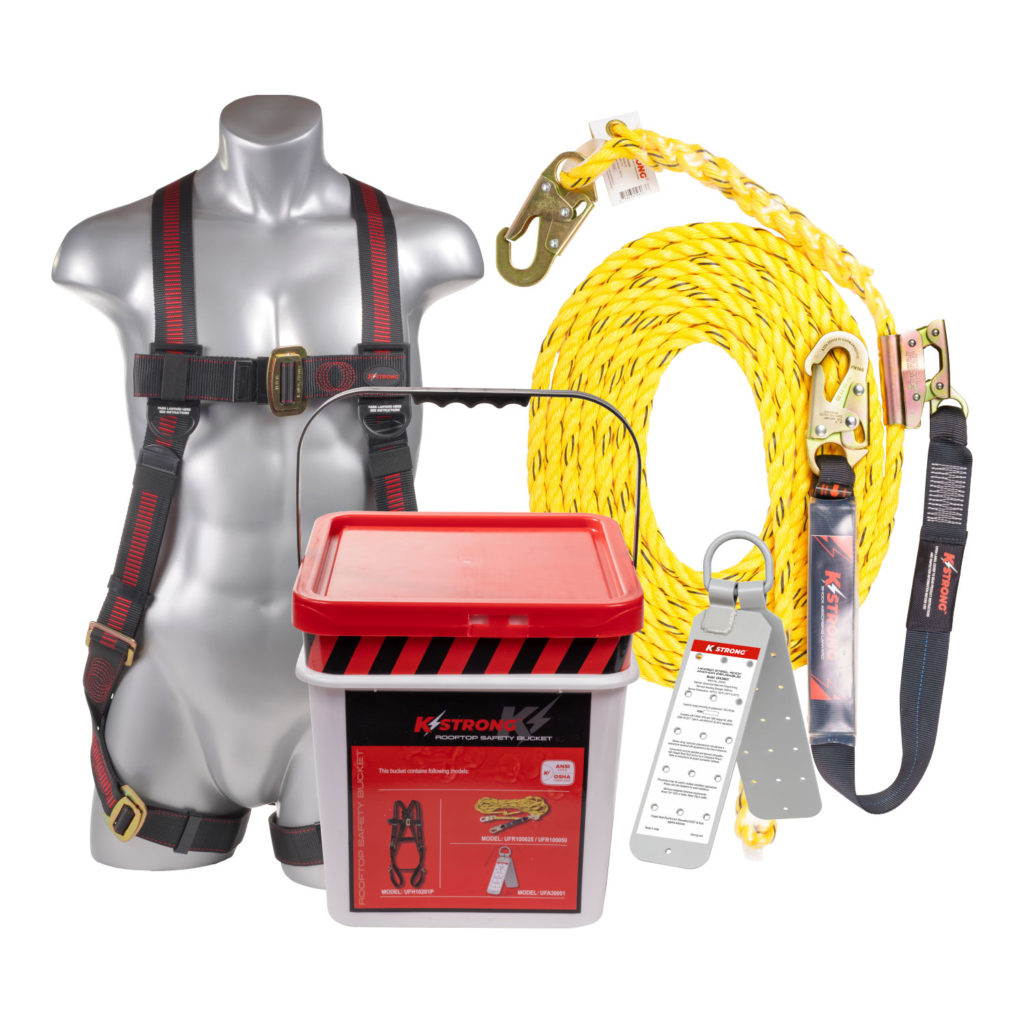
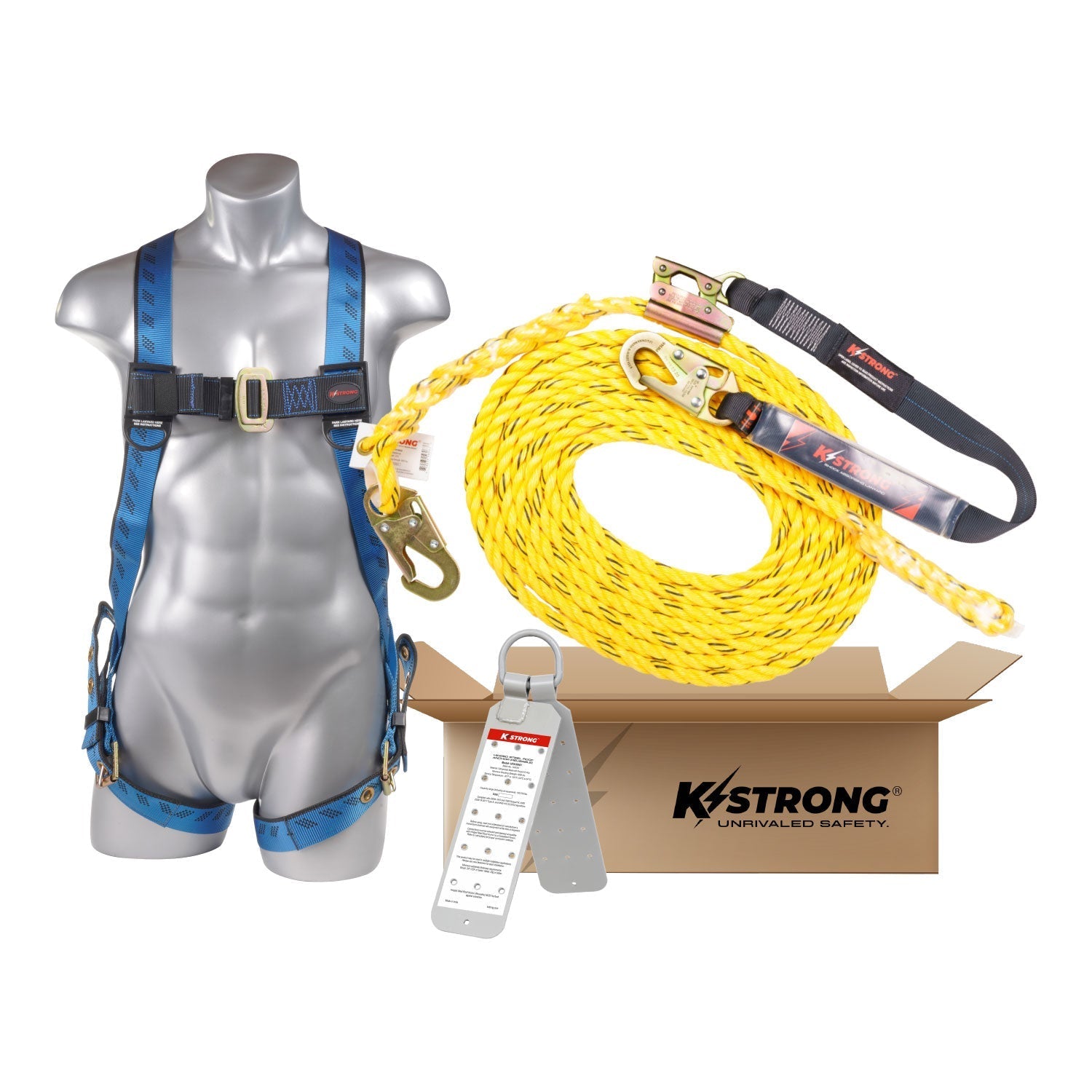
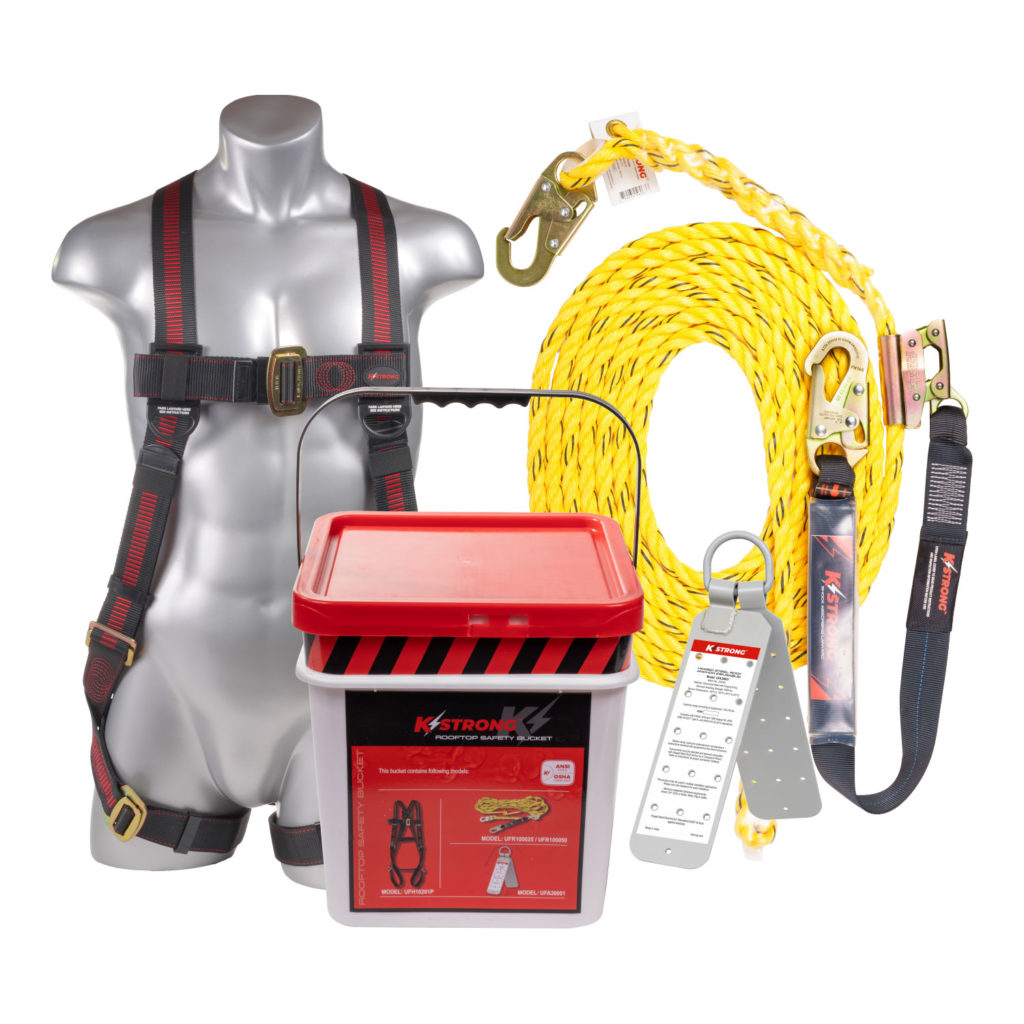
A roof safety harness kit puts every piece a worker needs to tie off on a roof into one box: a full body harness, a vertical lifeline rope, the rope grab that rides it, a shock absorbing connector, and a roof anchor to hang the whole thing from. OSHA 1926.501(b)(10) requires fall protection for roofing work once the edge sits 6 ft or more above a lower level, and a personal fall arrest system is one of the accepted ways to satisfy it, which is what these kits deliver ready to rig. Every kit here is KStrong, sold complete from around $150, built around ANSI/ASSP Z359.11 harnesses and Z359.15 rope grabs and rated to the 5,000 lb anchorage standard. Alongside the boxed kits sits a full shelf of roof anchors, from a $6 nail-down single-use plate to permanent stainless plates and standing-seam clamps, so the anchor matches the deck you are actually standing on.
Compare Roofers Kits
| Model | Price | Type | Standard | |
|---|---|---|---|---|
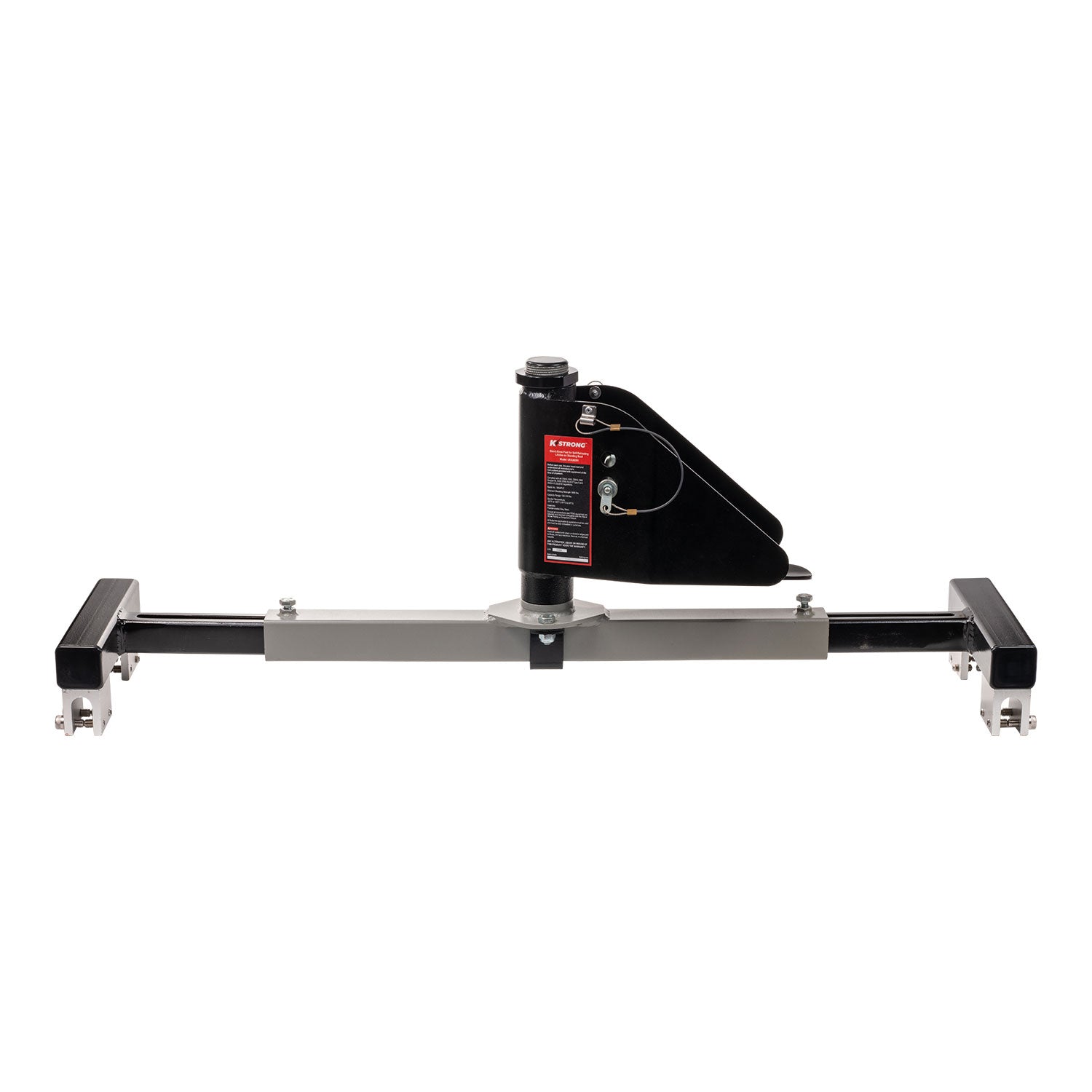
| KStrong® Swivel Anchor for Self Retracting Lifelines (ANSI) | $273 | Anchor for Self-Retracting Lifelines, 360° rotation | ANSI | View → |
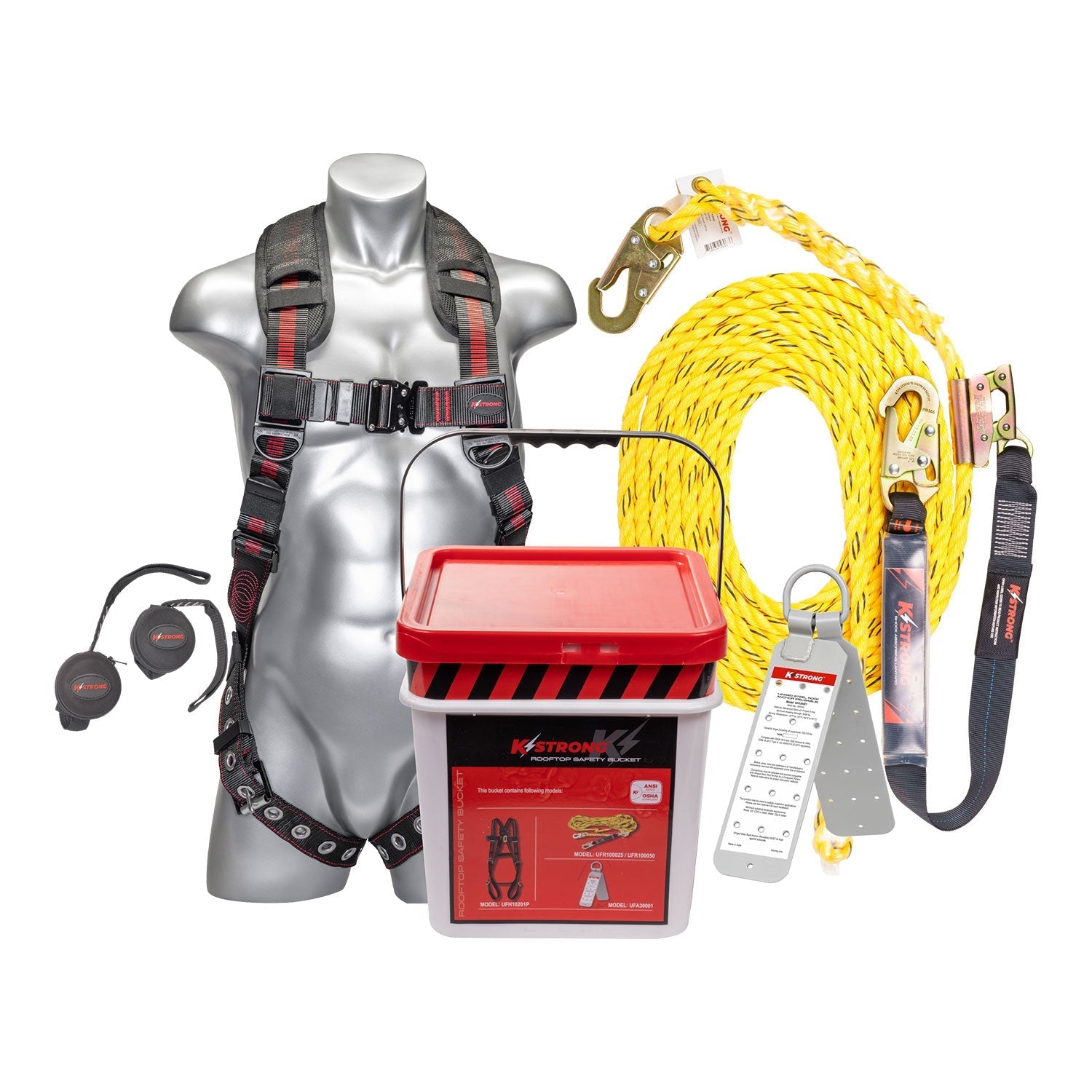
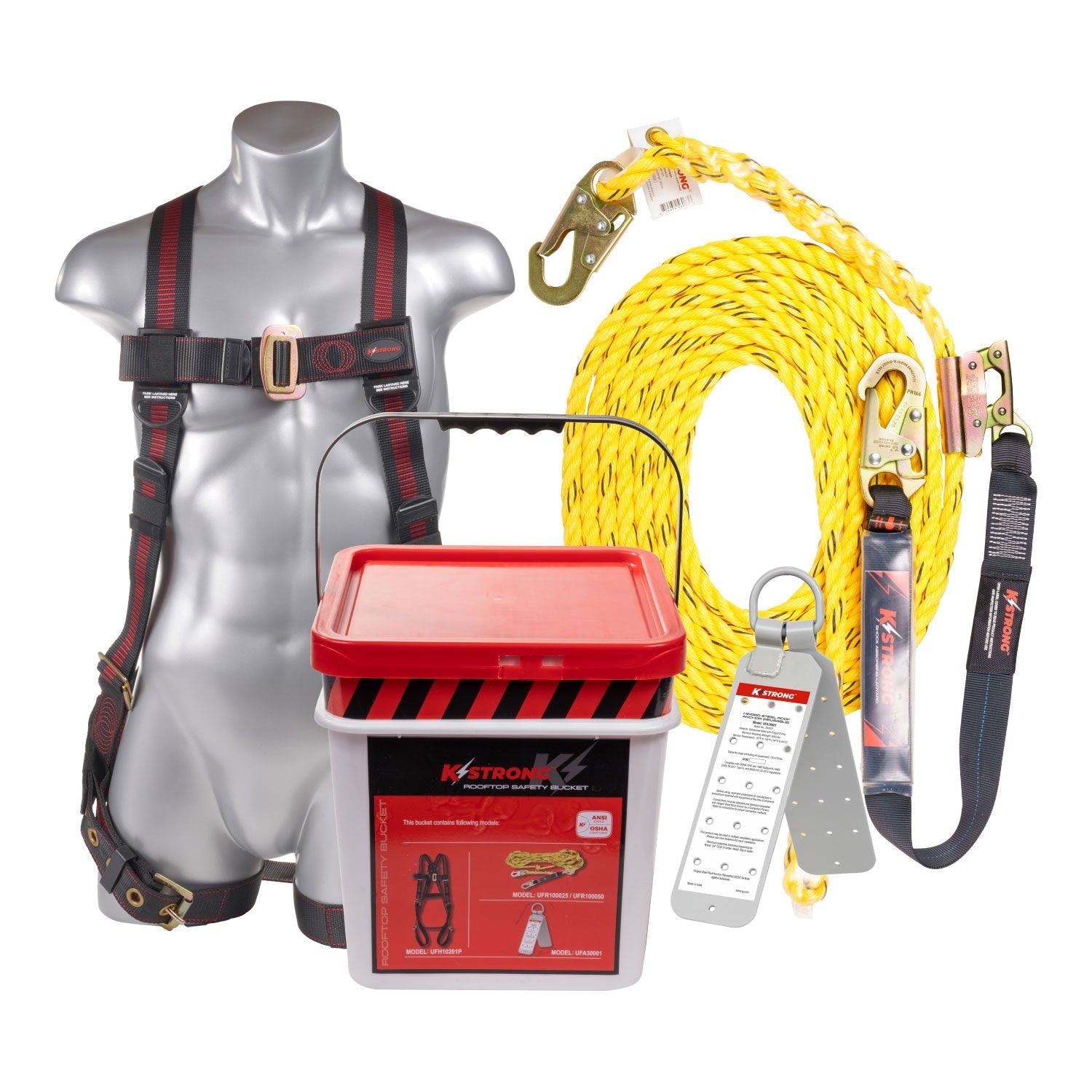
| KStrong® 25 ft. Deluxe Roofers Kit with Elite+ 5-Point Harness (M-L) | $227 | Roofers Kit | ANSI | View → |
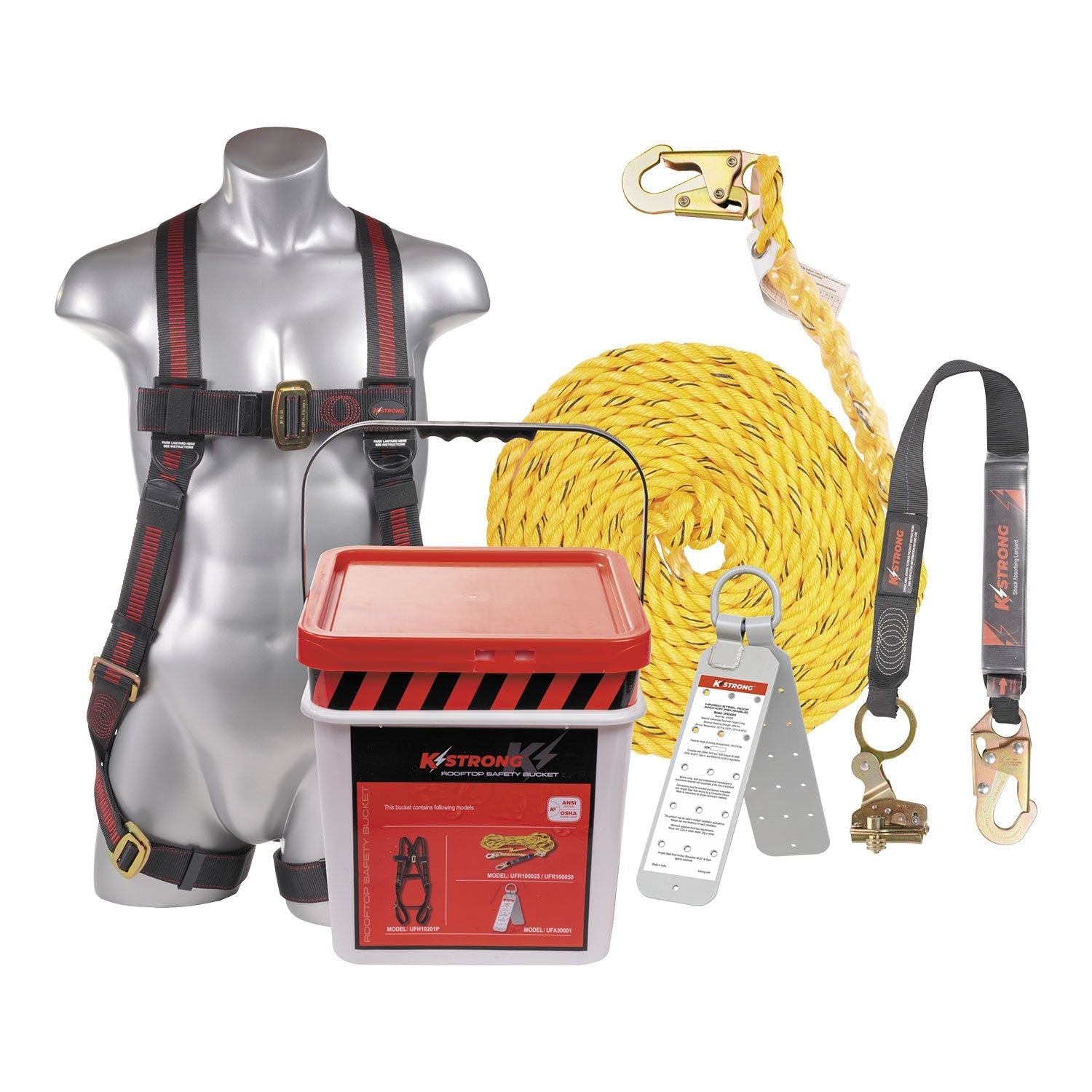
| KStrong® 50 ft. Roofers Kit with Elite 5-Point MB Leg Harness, Open Self Tracking Rope (L-XL) | $219 | — | — | View → |
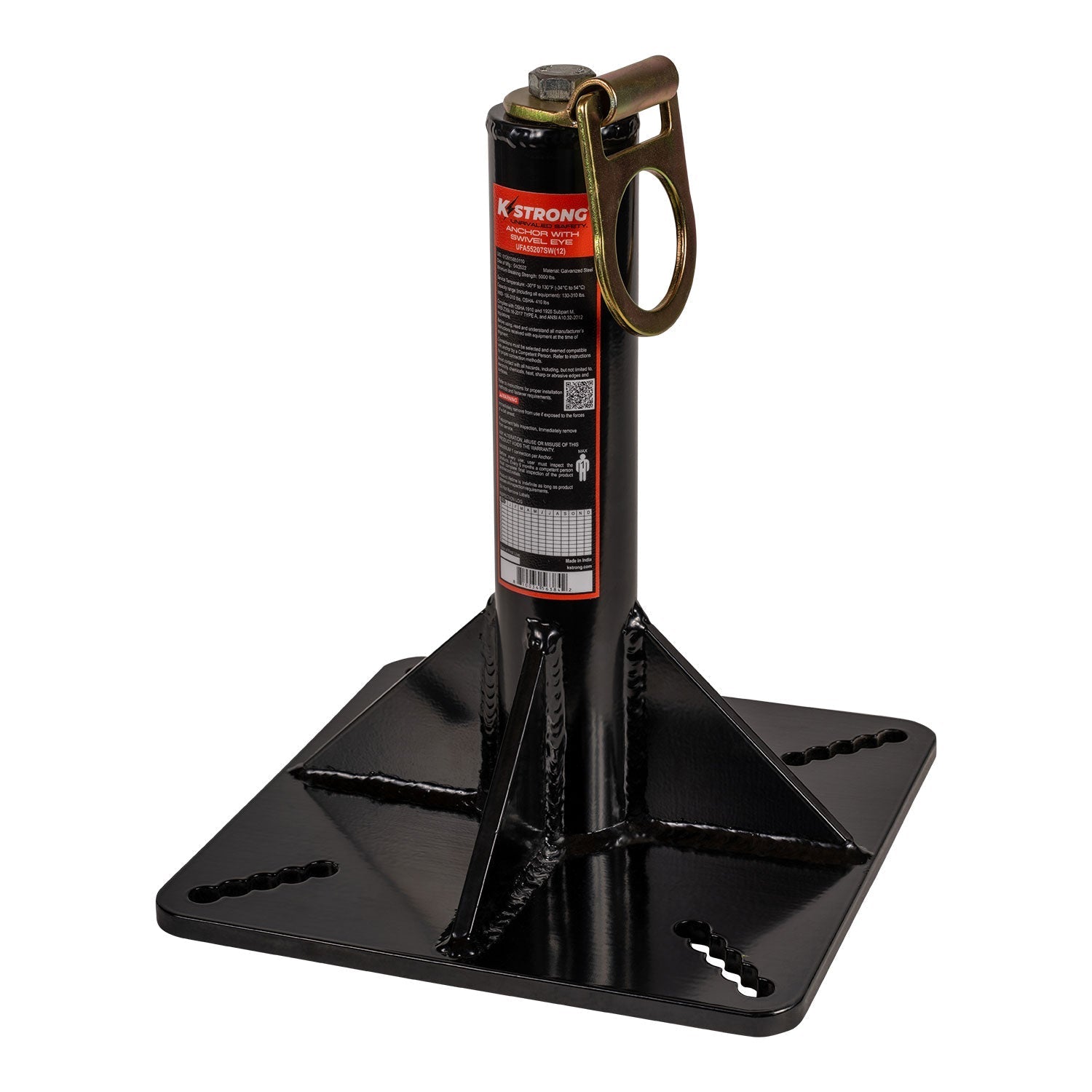
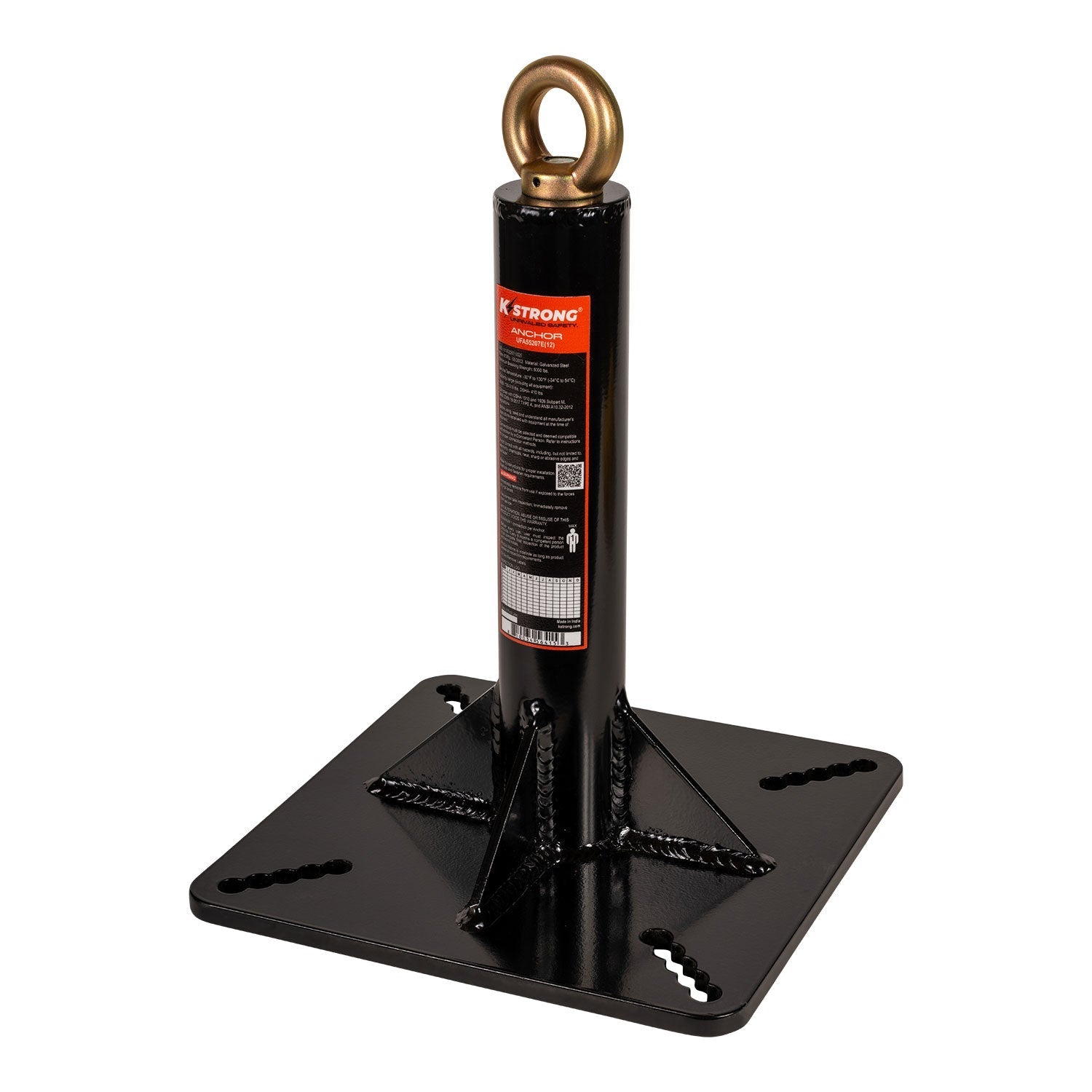
| KStrong® Riser Post Roof Anchor with Swivel D-Ring (ANSI) | $163 | Riser Post Roof Anchor with Swivel D-Ring | ANSI | View → |
| KStrong® End Post for Fixed Systems with Fixed Eye Bolt (ANSI) | $129 | End Post for Fixed Systems, Fixed Eye Bolt | ANSI | View → |
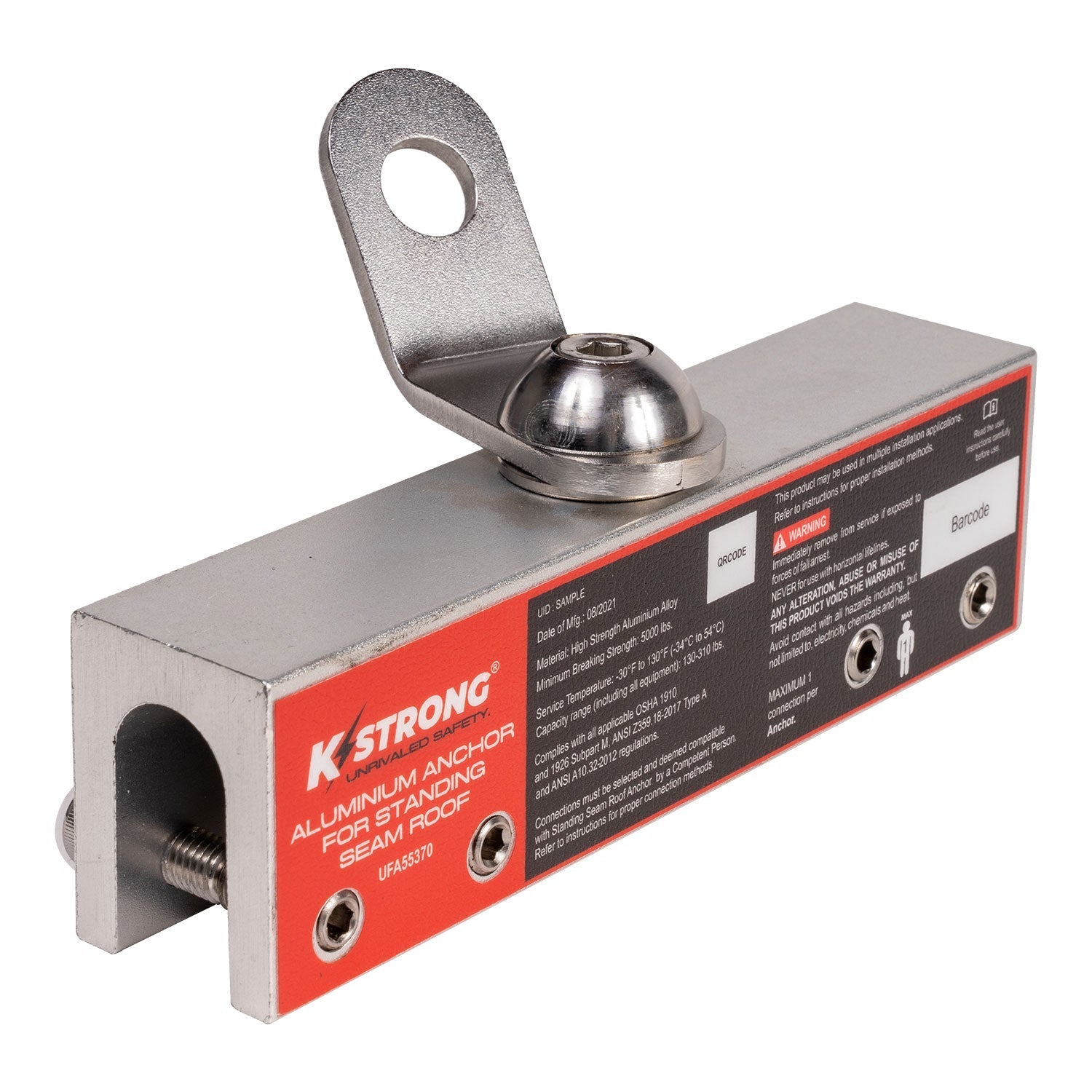
| KStrong® Single Seam Roof Anchor (ANSI) | $90 | Single Seam Roof Anchor | ANSI | View → |
 In Stock
 In Stock
 In Stock
 In Stock
 In Stock
 In Stock
 In Stock
 In Stock
 In Stock
 In Stock
 In Stock
 In Stock
 In Stock
 In Stock
 In Stock
 In Stock
 In Stock
Roofers Kits Buying Guide
What OSHA requires before you step onto a roof. OSHA 1926.501(b)(10) draws a hard line on roofing: once a working edge sits 6 ft or more above the level below, every worker on a low-slope roof has to be protected, and a personal fall arrest system is one of the accepted ways to do it, alongside guardrails, safety nets, and warning-line combinations. Low-slope has a specific meaning here, a pitch of 4 in 12 or less; steeper roofs fall under the plain 6 ft rule with no safety-monitor option. A harness kit answers the arrest route in a single purchase, and the reason to buy it boxed is that the harness, rope, grab, and anchor are matched and rated as one set, so nothing in the chain gets guessed at on the roof.
What is in the box. Open a KStrong roofers kit and you get four parts that make one system. The full body harness catches and spreads the load. The vertical lifeline is a rope, 25 or 50 ft depending on the kit, running from the anchor down to the work. A rope grab rides that rope and locks the instant it is loaded, so the worker climbs and moves while the grab trails at hand height. A shock absorbing element and connector close the gap to the harness D-ring, and the whole assembly hangs from a roof anchor. Every kit carries a 5,000 lb capacity rating and ships ready to rig, which is why a roofer buys the box instead of matching parts from the safety harnesses and vertical lifelines shelves.
Choosing the harness in the kit. The kits split first on the harness. The Essential 3-point is the value build, a back D-ring with pass-through chest and leg straps, right for occasional or short roof work. The Elite 5-point adds side and chest D-rings for positioning and easier all-day wear, and the Elite+ in the Deluxe kit adds padding and hardware upgrades for crews who wear it a full shift. The 50 ft kits also let you pick the leg buckle: MB is a mating buckle that snaps shut one-handed for fast donning, TB is a tongue buckle that threads like a belt, which some crews prefer for a fit that does not creep. All of them meet ANSI/ASSP Z359.11. To buy the harness alone, the same Kapture models sit on the individual safety harnesses shelf.
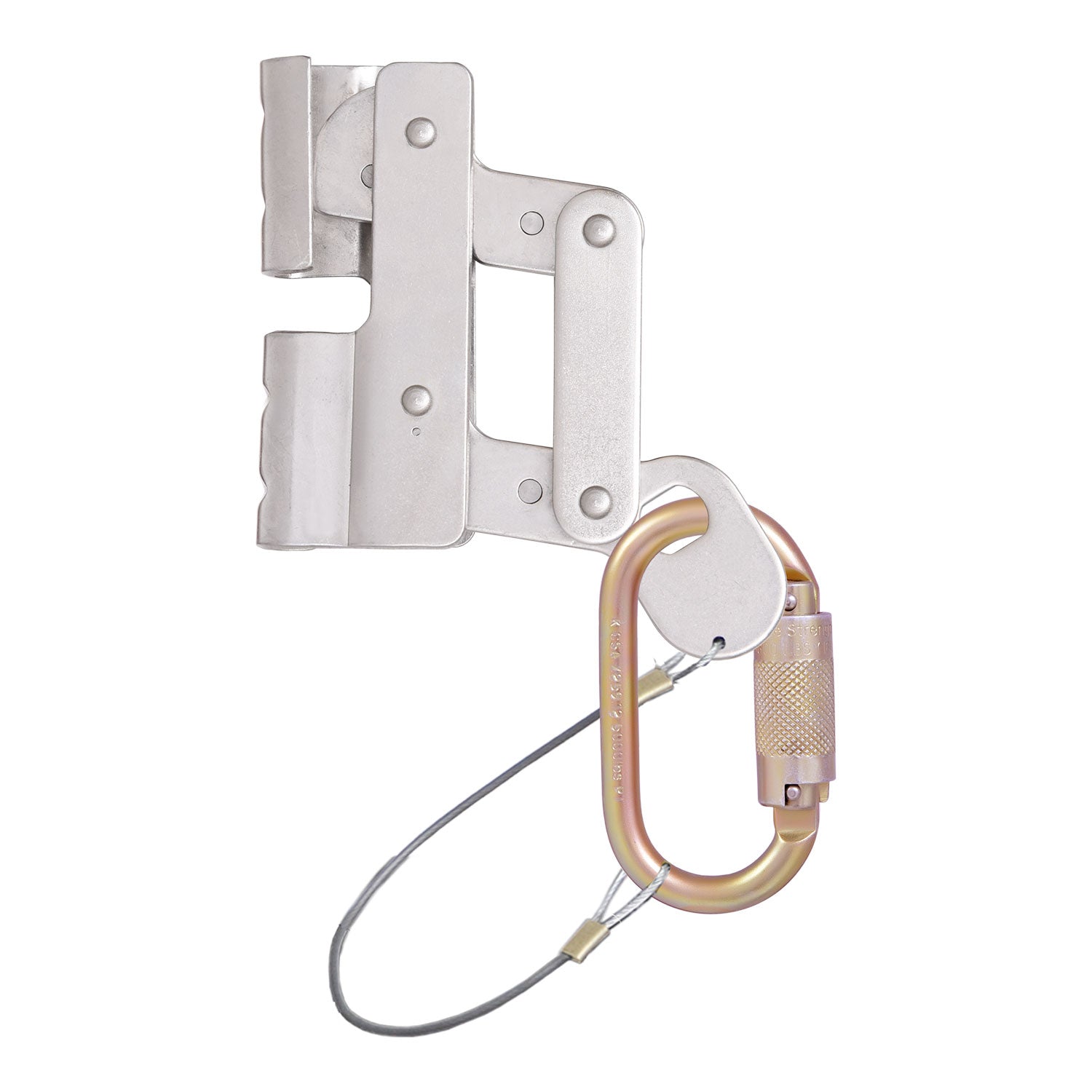
Rope length and rope grab: 25 ft, 50 ft, manual or self-tracking. Rope length is the reach the kit gives you. A 25 ft lifeline covers most residential and small commercial work; the 50 ft kits handle taller structures and longer vertical runs. The grab comes in two behaviors. A manual rope grab is set by hand and stays where you put it, fine for a fixed position but moved deliberately as you travel. An open self-tracking grab trails the worker automatically, sliding up the rope as you climb and locking on load, so it keeps slack out without a free hand. Either way the rule holds: keep the grab as high on the rope as the work allows, because every foot of rope below it is a foot you fall before it engages, and on a roof that slack is what carries you over the edge. The rope grabs and lifelines here follow ANSI/ASSP Z359.15.
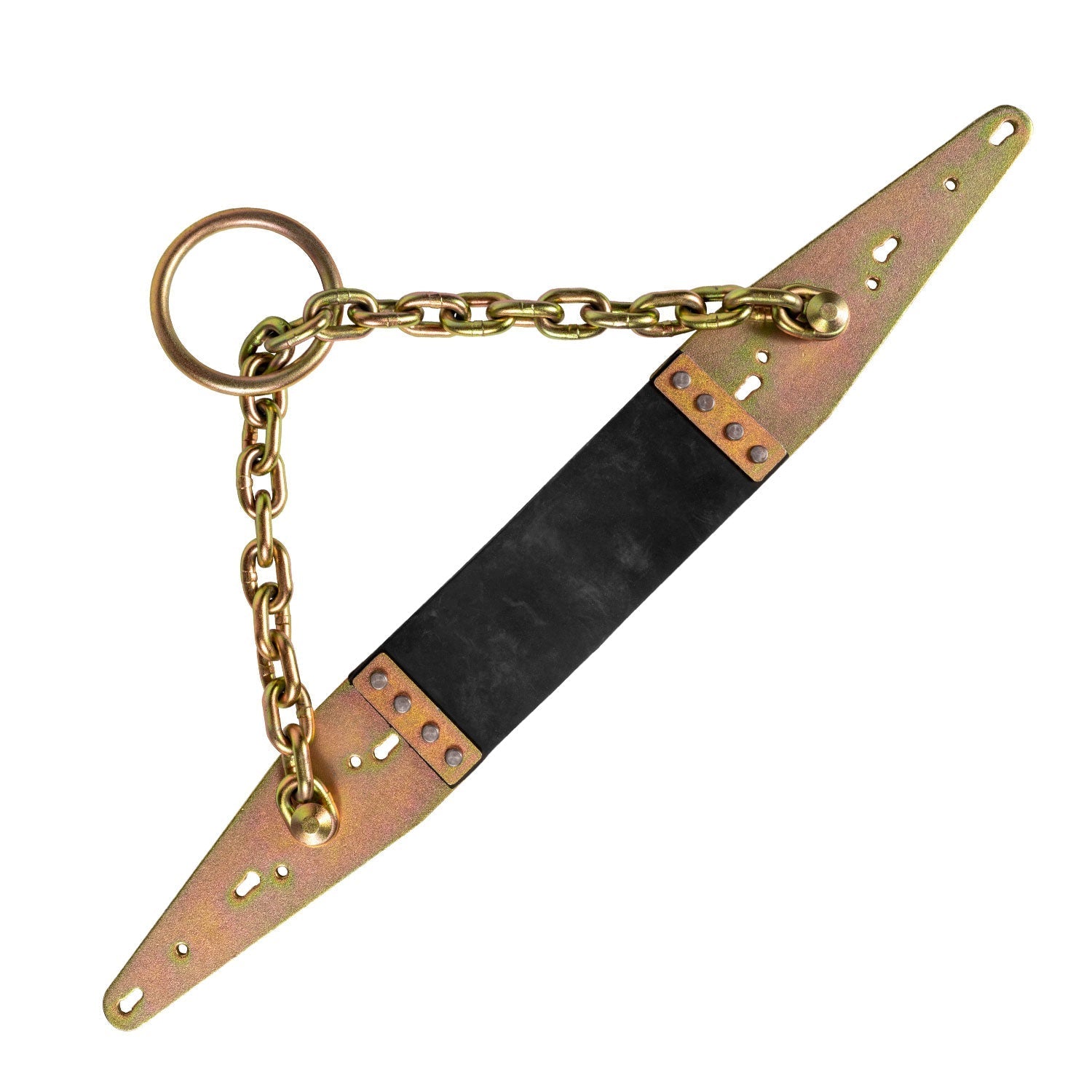
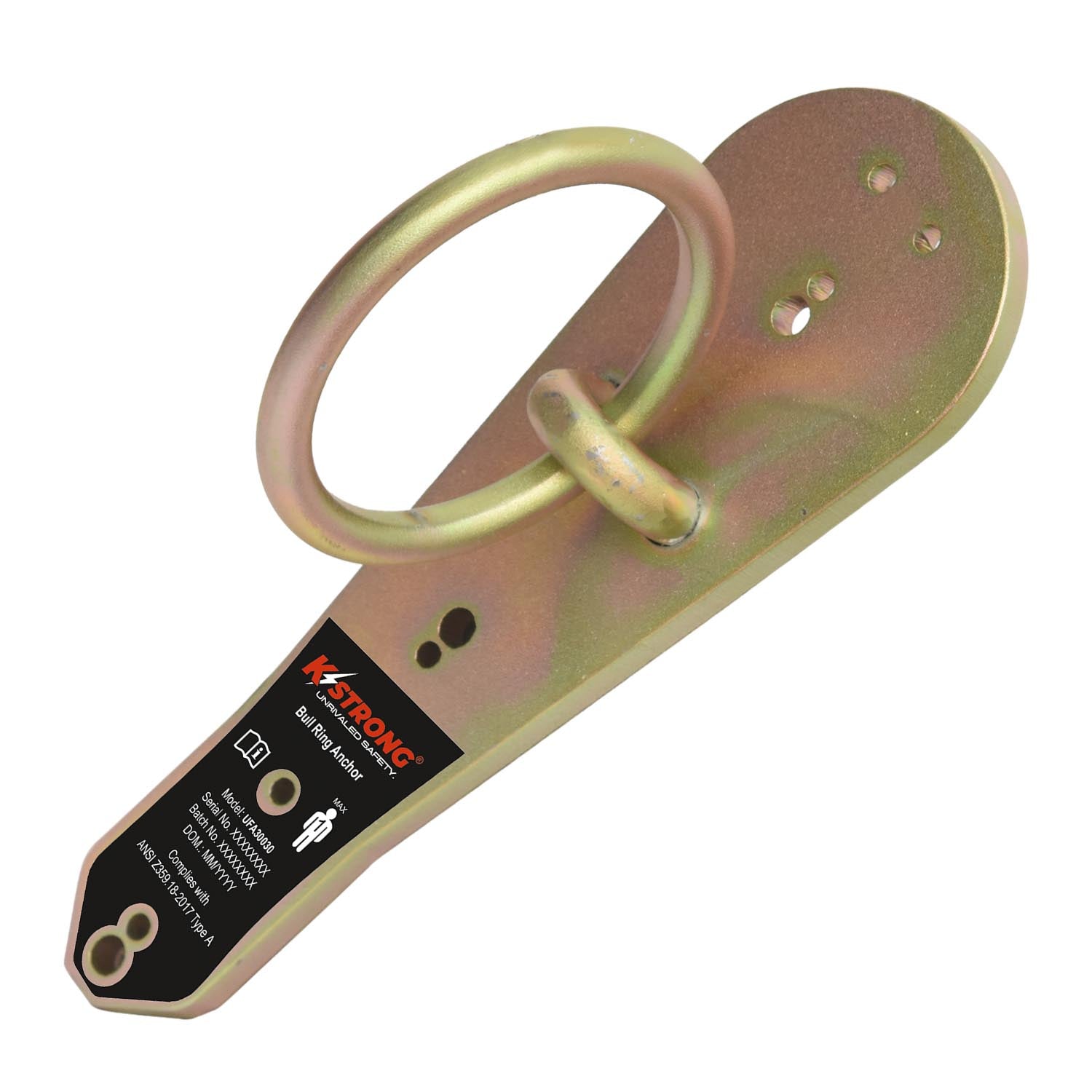
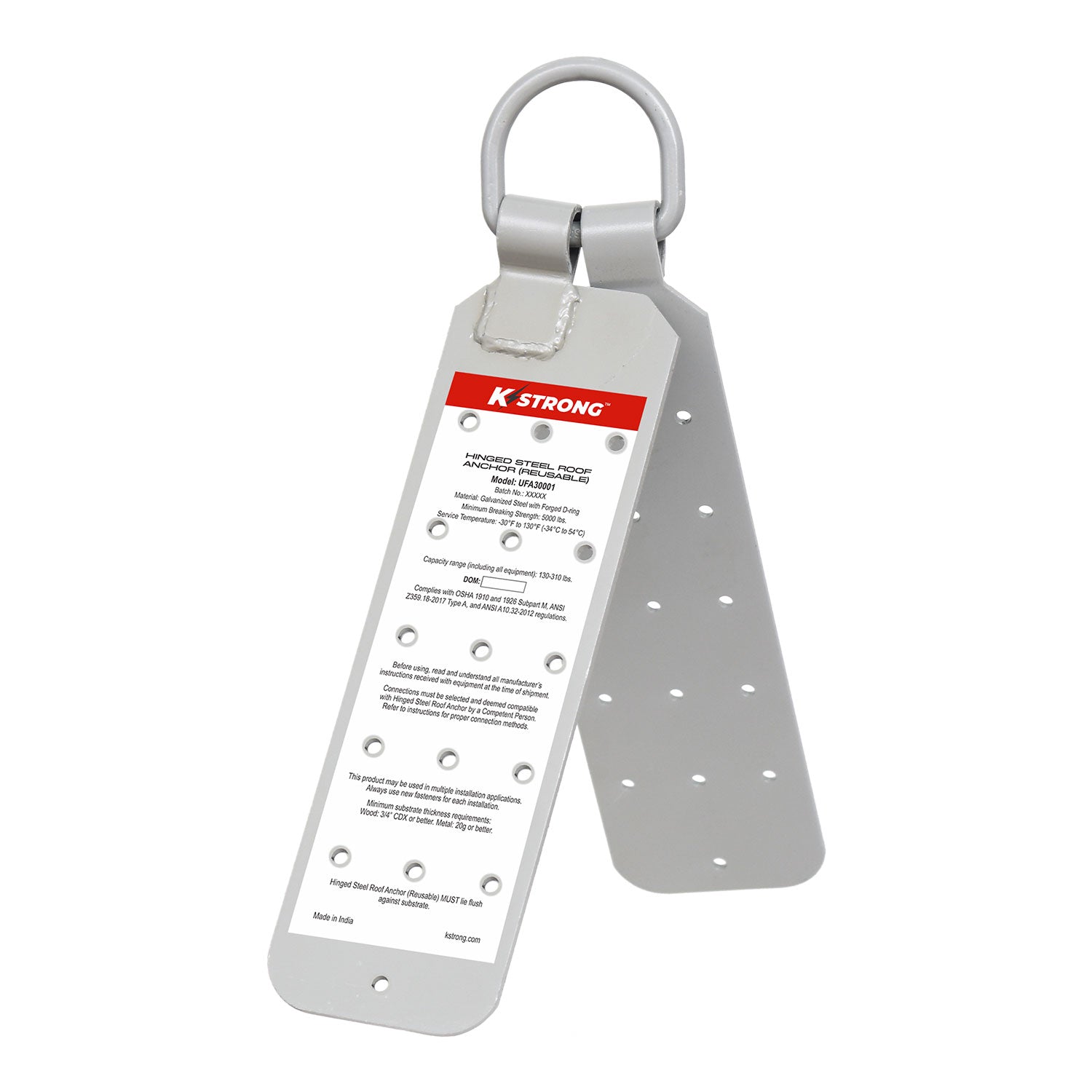
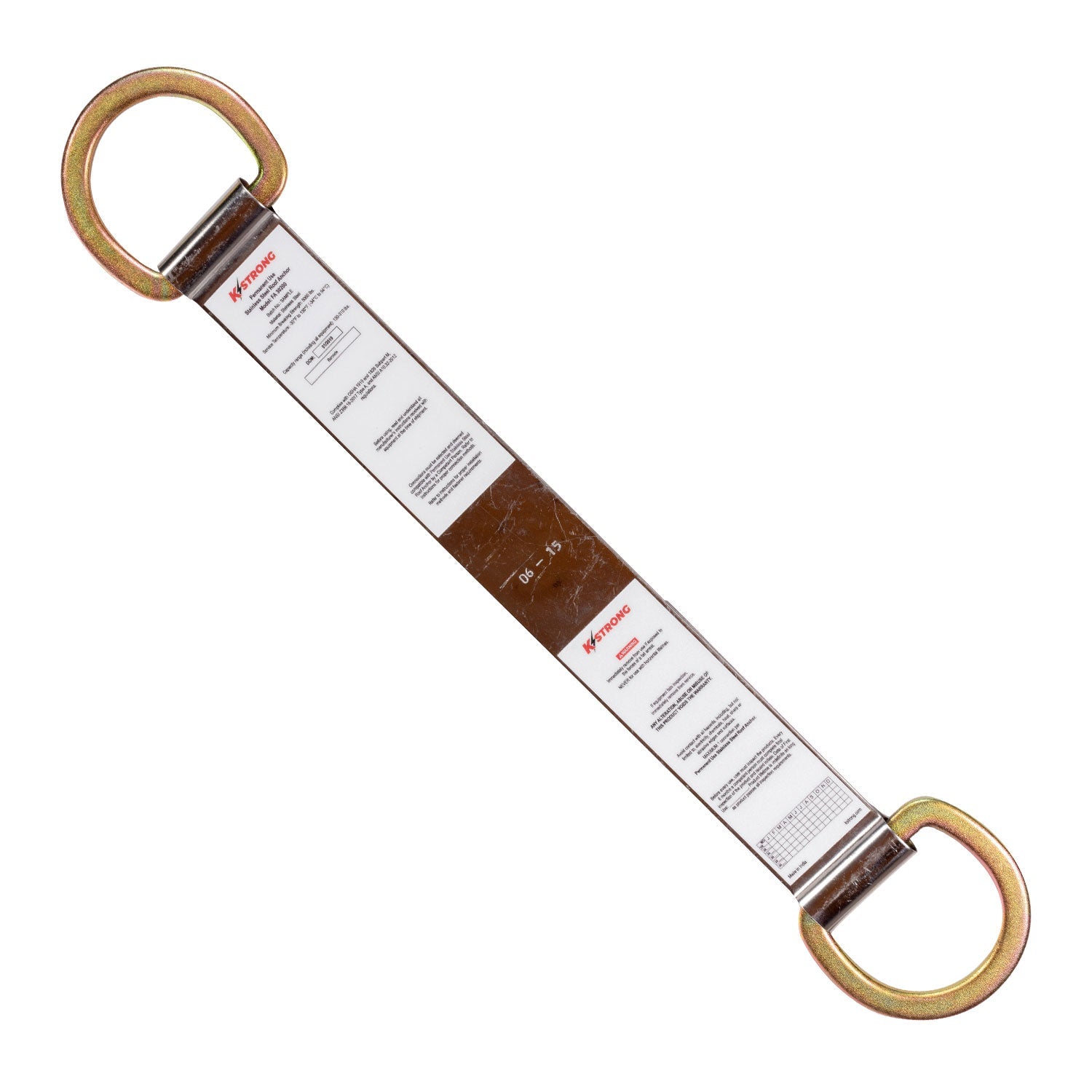
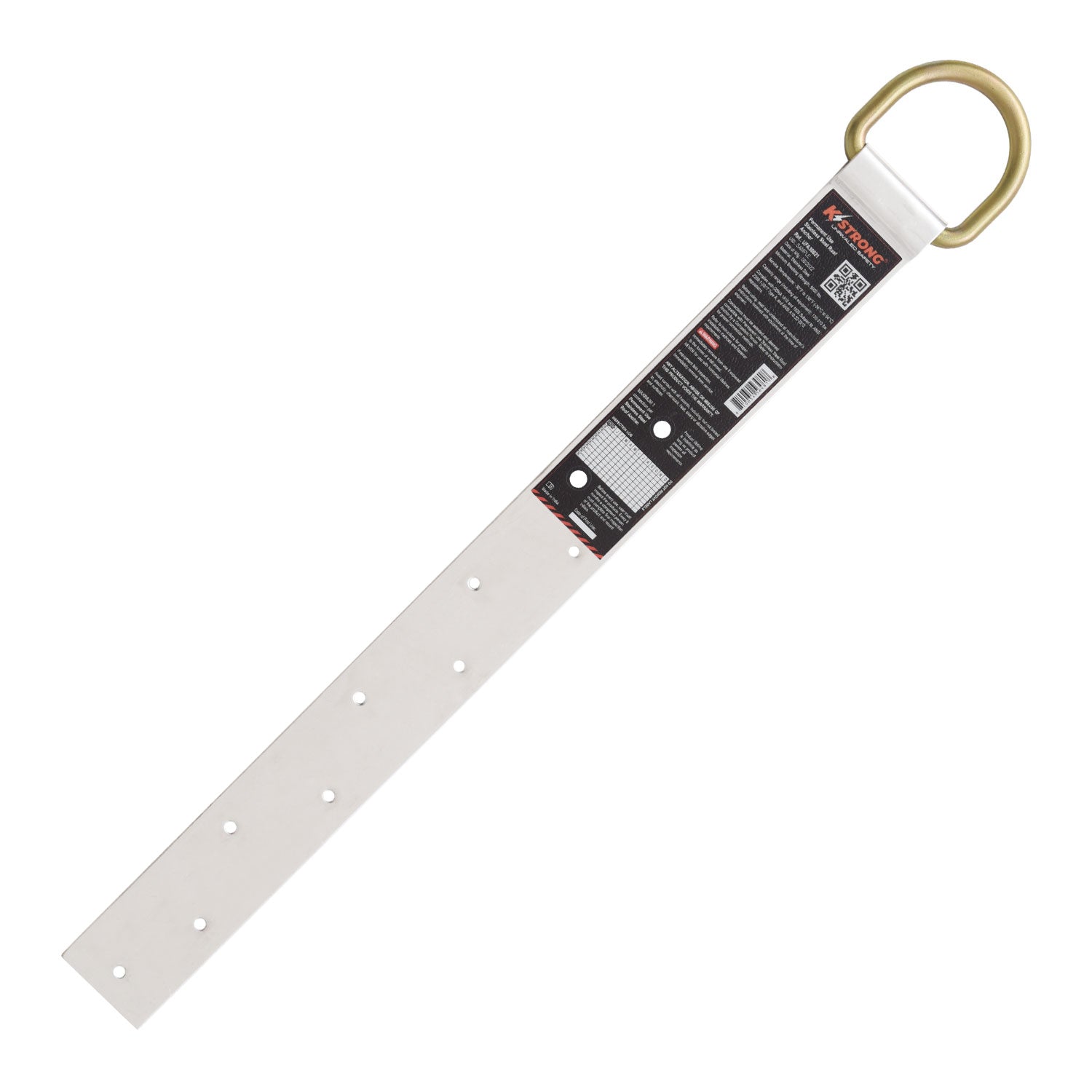
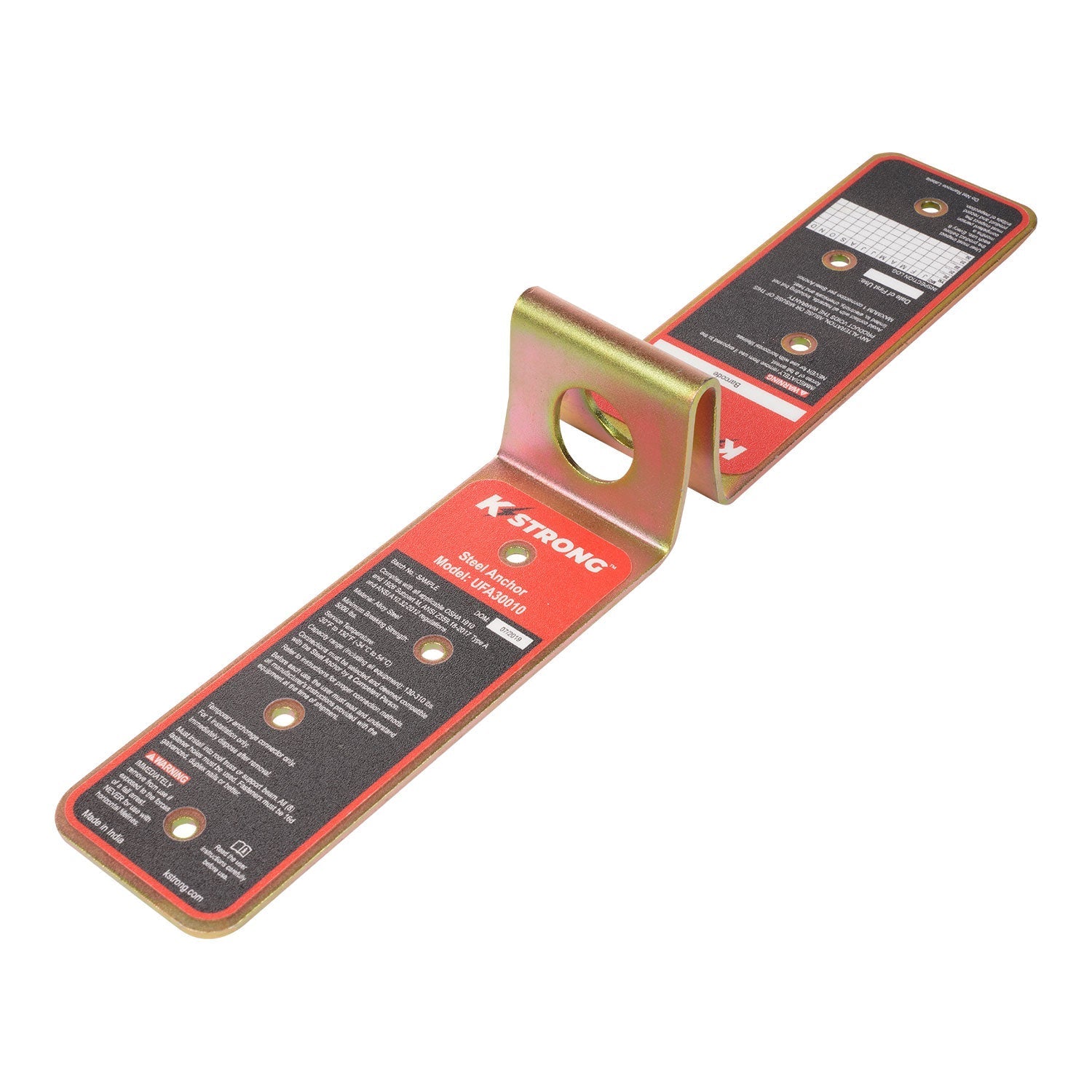
The anchor decides the deck. The boxed kits include an anchor, but the roof decides which one belongs there, and the anchor shelf carries a type for each deck. For wood-deck new construction, the single-use steel anchor nails down for about $6 and stays under the shingles when the job is done. The hinged reusable steel anchor and the permanent stainless plates are for decks you return to, the stainless built to sit exposed for years. Standing-seam metal roofs get the single seam anchor, which clamps the seam and leaves no hole. Membrane and specialty decks are where the reusable heavy-duty chain anchor, the riser post with its swivel D-ring, and the bull ring earn their place. For an overhead point feeding a self-retracting lifeline there is a dedicated swivel anchor, and permanent horizontal-run hardware like the end post with fixed eye bolt and the 8 mm cable grab supports fixed systems. The full set lives in anchor points, and the carabiners and roof-anchor hooks that close each connection are in connectors and hooks.
Fall clearance, swing, and when the gear retires. Two numbers decide whether the kit saves the worker: clearance and swing. Fall clearance is the room you need below the work to stop a fall before anything is hit, and it stacks up fast, free fall until the grab locks, then the shock absorber tearing out, then harness stretch and margin. That arithmetic is exactly why the grab stays high and the anchor overhead. Swing is the pendulum you take if you fall off to the side of the anchor, so keep the anchor as close to directly above the work as the deck allows; a swing into a wall or off an edge hurts as much as the drop. The retirement rule is absolute: any component that has arrested a fall comes out of service, the shock pack and grab included, because they deform to do their job and cannot be reset. Inspect the webbing, rope, and hardware before every use, and pull anything with cuts, chemical burns, or a grab that does not lock clean.
Frequently Asked Questions
A full body harness, a 25 or 50 ft vertical lifeline rope, a rope grab that rides and locks on that rope, a shock absorbing connector to the harness D-ring, and, on the boxed kits, a roof anchor. Everything is rated as a set to the 5,000 lb anchorage standard, so the kit is ready to rig out of the box. Kits run from about $150 for the Essential 3-point build up to roughly $227 for the Deluxe Elite+.
A standing-seam metal roof takes the single seam anchor, which clamps onto the raised seam and holds without drilling a hole, so the roof stays watertight. For a wood deck under shingles, the single-use nail-down steel anchor or the reusable hinged steel anchor is the usual pick, and permanent stainless plates suit decks you will tie off to for years. Match the anchor to the deck, not the other way around.
Match the rope to your vertical drop. Twenty-five feet covers most residential and low commercial roofs. Step up to 50 ft when the structure is taller or the anchor sits well above the work, so the lifeline reaches with the rope grab still high on it. Running out of rope forces the grab down and adds fall distance, which defeats the point.
A manual grab is set by hand and stays put, which suits a fixed work position. An open self-tracking grab follows the worker up and down the rope on its own and locks the instant it is loaded, keeping slack out while you move without needing a free hand. Crews that travel across a roof usually prefer self-tracking; a fixed-station job is fine on a manual grab.
No. Any part of a fall arrest system that has arrested a fall is retired immediately, including the shock absorber and the rope grab, because they deform permanently to absorb the energy and cannot be reset. Inspect every component before each use as well, and remove anything with cut or burned webbing, a damaged rope, or a grab that will not lock cleanly.