Shop Cranes
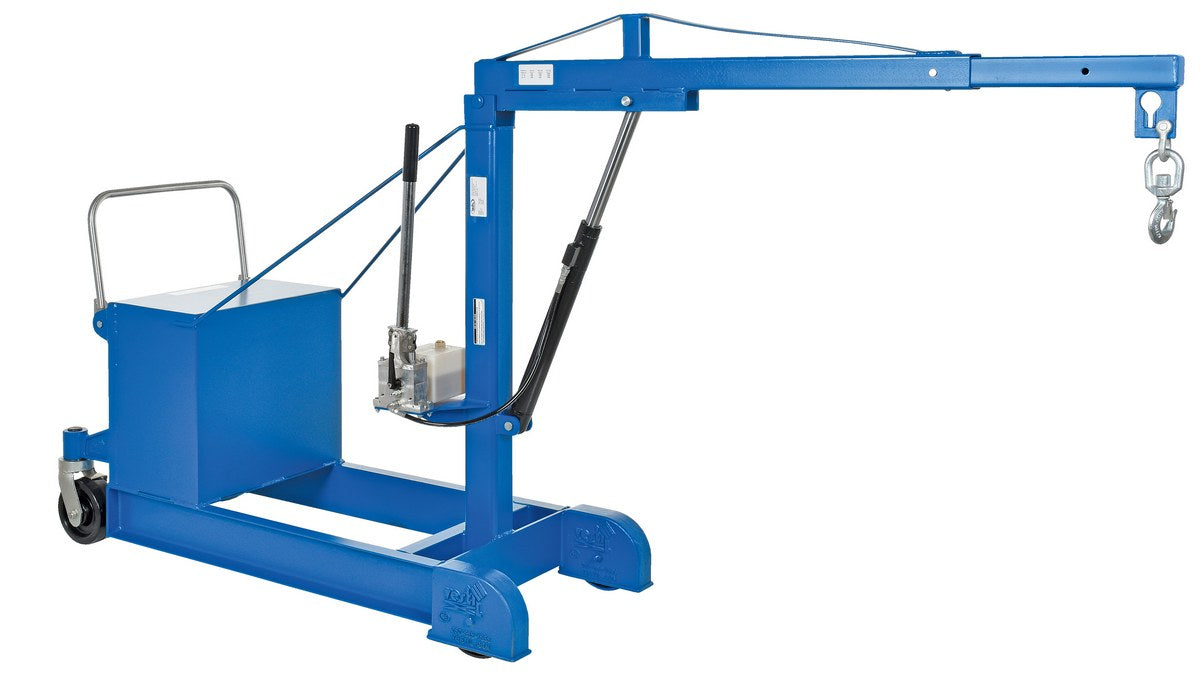
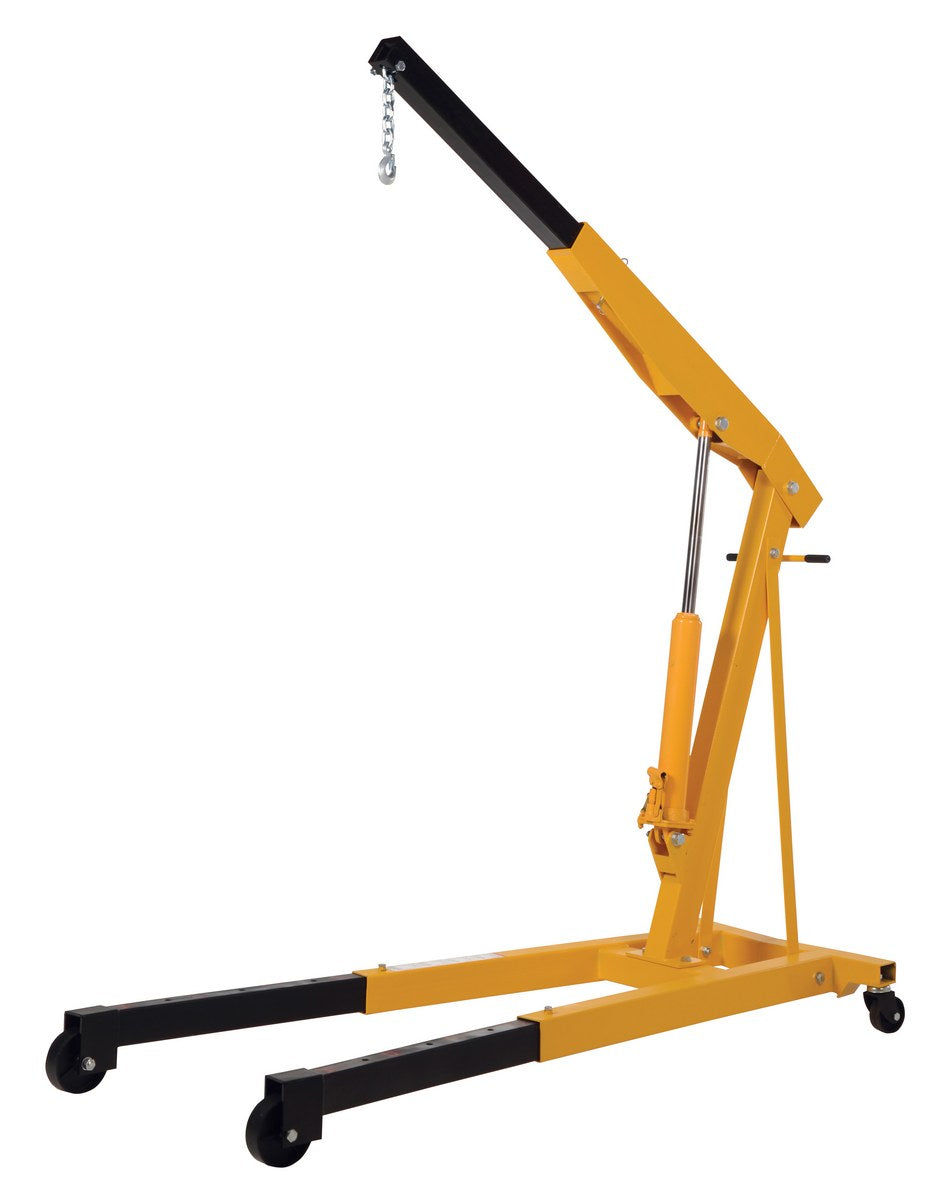
A shop crane is a wheeled, floor-standing hydraulic crane that pulls an engine, lifts a transmission, or moves a heavy part around a garage or fabrication bay with no overhead steel and no installation. We stock two Vestil lines that cover the job from opposite directions. The folding engine hoist is the classic cherry picker: a hydraulic ram raises a telescoping boom, folding or telescopic legs straddle the load, and the whole frame folds flat against a wall when the lift is done, rated 2,000 to 6,000 lb for well under a thousand dollars. The counterbalance floor crane deletes the front legs entirely, using a counterweighted base so the boom can reach into a machine or over a bench that straddle legs cannot clear, rated 500 to 2,000 lb with manual or 12V electric lift.
Compare Shop Cranes
| Model | Price | Capacity | |
|---|---|---|---|
| Vestil Counterbalance Shop Crane | $3,718 | 500-2,000 lb | View → |
| Vestil Shop Crane Engine Hoist | $457 | 2,000-6,000 lb | View → |
Shop Cranes Buying Guide
Two shop cranes, two very different jobs. The folding engine hoist (Vestil's EHN series) is the tool most garages picture: a manual hydraulic ram raises a telescoping boom, two legs run forward under the load to keep the frame from tipping, and the crane rolls on casters to the work. It folds flat for storage between jobs. The counterbalance floor crane (Vestil's CBFC series) works the opposite way. A counterweighted base balances the load, which eliminates the front legs and lets the boom reach into tight, hard to reach spots a straddle-leg crane cannot get to, over a workbench, into a machine frame, or against a wall. Its boom also telescopes out for extra reach. Pick the counterbalance when the legs are the problem; pick the engine hoist when price and portability win.
Rate to the whole lift, and read the boom at your reach. The rated capacity has to cover everything hanging off the boom, the load plus the chain, hook, and any leveler between them, so total the worst case and round up. The engine hoist comes in 2,000, 4,000, and 6,000 lb ratings from about $457 to $772, with folding legs on the lighter units and telescopic legs on the heavier ones. The counterbalance crane runs 500, 1,000, and 2,000 lb from about $2,729 to $6,546. On both, the safe capacity drops as you telescope the boom out for reach, because a longer boom is a longer lever. Read the rating at the extension your work actually needs, never the headline number at the shortest, fully retracted setting.
Legs, storage, and the floor under the crane. The engine hoist earns its keep by folding: legs collapse or telescope in and the boom drops so the crane stands in a corner. To use it you need clear floor for the legs to roll under or alongside the load, so a shape with a lip or a solid base can block the legs before the hook is over the pick. The counterbalance crane trades that away. Its fixed counterweight base is heavier and does not fold, but it buys you the reach the engine hoist cannot manage. Both roll on casters and want a smooth, level, load-rated floor, a loaded boom over a crack or a slope is how these tip.
When a shop crane is the wrong tool. A shop crane picks a load at one spot and sets it down a short roll away. It is not built to carry a load along a fixed path all day, and it is not overhead infrastructure. If the part has to travel a set line between a truck and a bench, a wheeled portable gantry crane gives you real hook travel along a beam. If the lift repeats at one machine cell for years, a fixed jib or davit off the overhead cranes hub is the cheaper long-run answer. Buy the shop crane for the mobile, one-off engine and machine pull it does better than anything else.
Frequently Asked Questions
The engine hoist is a folding cherry picker: its two legs run forward under the load to stay stable, and it folds flat for storage. The counterbalance crane uses a weighted base instead of front legs, so the boom can reach into tight spots and over benches the legs would otherwise block. The engine hoist is far cheaper and more portable; the counterbalance crane buys reach and access.
The folding engine hoist is rated 2,000, 4,000, and 6,000 lb depending on the leg configuration. The counterbalance floor crane is rated 500, 1,000, and 2,000 lb. On both, always total the load plus the chain, hook, and any leveler, then round up to the next rating.
Yes. A telescoping boom is a lever, so the safe working load drops as you extend it for more reach. Read the rating chart at the boom extension your lift actually uses rather than the maximum number at the fully retracted setting.
The counterbalance crane is offered with a manual hydraulic hand pump or a 12V DC electric lift that raises the boom at the push of a button. Manual is the value pick for occasional lifts; the 12V electric option saves your arm on a crane that gets used through the day. The folding engine hoist uses a manual hydraulic ram.
The folding engine hoist does: its legs collapse or telescope in and the boom lowers so the crane stands in a corner between jobs. The counterbalance crane does not fold, because its stability comes from a fixed counterweight base, but it still rolls on casters to get out of the way.