Portable Gantry Cranes
A portable gantry crane is a free-standing A-frame crane on casters: two legs, a beam, and a trolley hoist that rolls to wherever the load sits. It gives a workshop, garage, or job site genuine overhead lifting with no building steel and no permanent installation. We stock the REID Lifting aluminum Porta-Gantry line and Vestil's welded steel gantries, from an 880 lb foldable frame up to an 11,000 lb system.
Compare Portable Gantry Cranes
| Model | Price | Overall Length | Capacity | Type | |
|---|---|---|---|---|---|
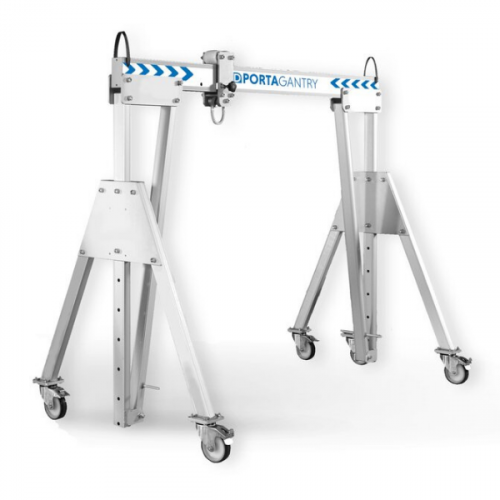
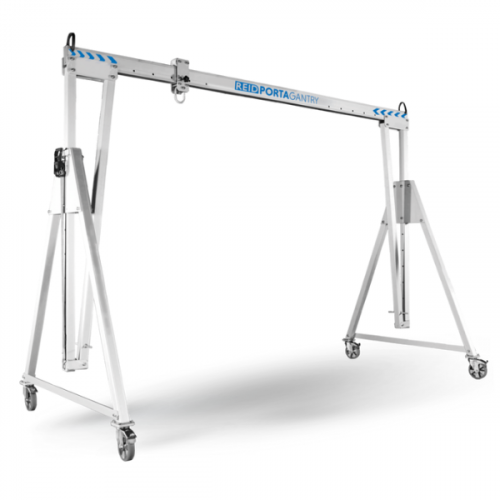
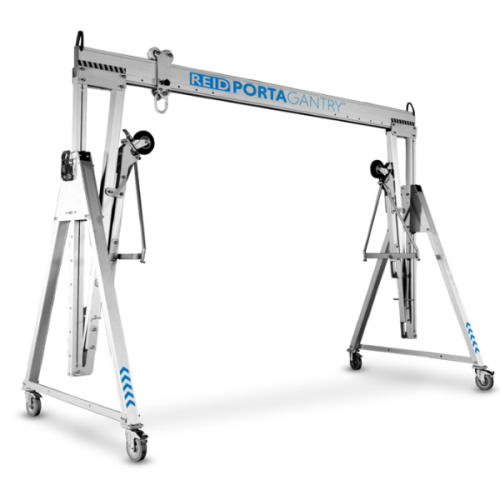
| REID Lifting 11000lbs PORTA-GANTRY® Mobile Gantry System | $19,588 | 15-18 ft | 11000 lb | Portable mobile gantry | View → |
| REID Lifting 6600lbs PORTA-GANTRY® Mobile Gantry System | $10,826 | 5-27 ft | 6600 lb | Portable mobile gantry | View → |
| REID Lifting 4400lbs PORTA-GANTRY® Mobile Gantry System | $7,153 | 8-27 ft | 4400 lb | Portable mobile gantry | View → |
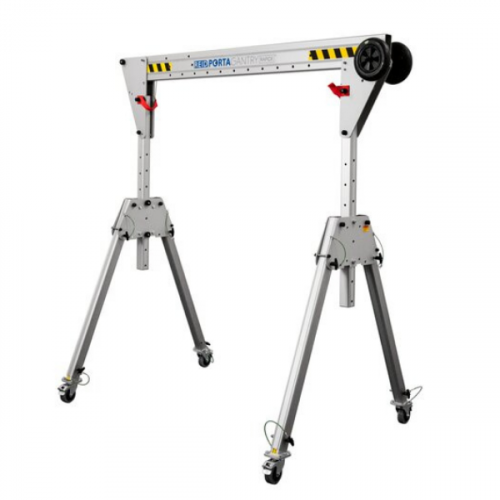
| REID Lifting Porta-Gantry Rapide® Foldable Mobile Gantry | $5,513 | — | 880-2,200 lb | Foldable portable aluminum gantry | View → |
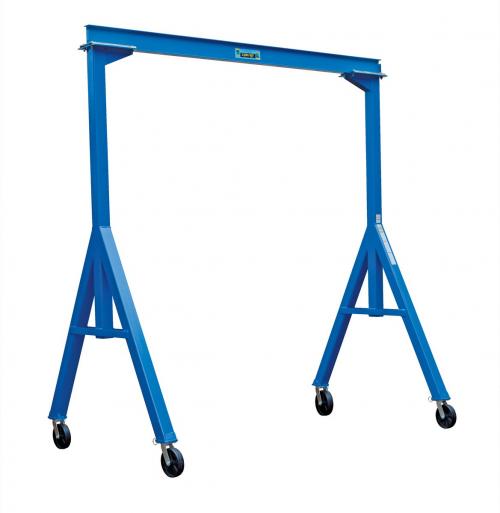
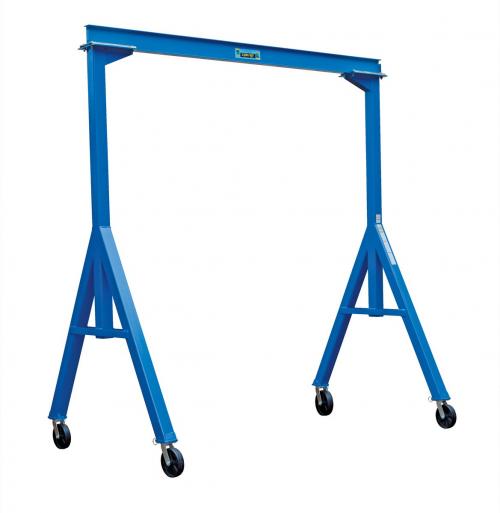
| Vestil Adjustable Gantry Crane 10ft Span, 2000lb | $2,296 | — | 2000 lb | Portable mobile gantry | View → |
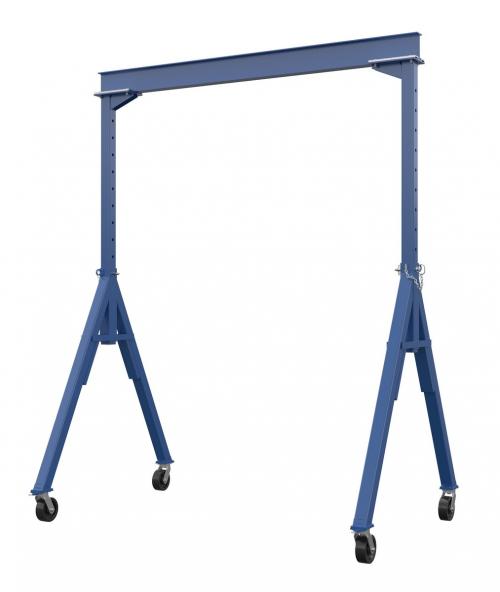
| Vestil Gantry Crane 10ft Height, 4000lbs | $1,935 | — | 4000 lb | Portable mobile gantry | View → |
 In Stock
 In Stock
 In Stock
 In Stock
 In Stock
 In Stock
 In Stock
 In Stock
Portable Gantry Cranes Buying Guide
Size the capacity to the whole lift, then round up. The rated capacity has to cover everything hanging from the beam: the load itself, the hoist, the trolley, and the slings or shackles between them. A 1,900 lb engine on a 100 lb chain hoist with 60 lb of rigging is a 2,060 lb lift, which already rules out a 2,000 lb gantry. Total the worst case, add margin, and round up to the next rating. Our Vestil steel gantries come in 2,000 lb and 4,000 lb ratings, which covers engine pulls and most single-machine work. The REID Porta-Gantry line runs 4,400, 6,600, and 11,000 lb for heavier plant and machinery, and the foldable Porta-Gantry Rapide handles 880 to 2,200 lb where portability matters more than outright capacity.
Get the span right before the height. Span is the clear width between the legs, and it decides what the crane can straddle. Measure your widest load or obstacle, a truck bed, an engine bay, a machine base, then add room for the trolley to travel past its edges, because usable hook travel is always less than beam length. The Vestil fixed-height gantries offer 10, 15, and 20 ft spans at the same rating, and REID beams run from about 8 ft up to 27.5 ft. A wider span costs more and asks more of the frame, so buy the span your work actually needs and stop there.
Check the clearance under the beam, not the beam height. What matters is clear height under the beam, because the hoist and trolley hang below it and eat into your lift. Work out the tallest load you will handle, add the rigging above it and the headroom the hoist itself takes up, and make sure the crane clears that total at working height. Then check your doorways: a gantry that lifts beautifully but cannot roll out of the room is a planning failure. Vestil's adjustable model comes in 12, 14, and 16 ft maximum heights on a 10 ft span, and REID's A-frames adjust from 5 ft 3 in up to 13 ft 4 in depending on the frame size you choose.
Adjustable height or fixed. An adjustable gantry lets you drop the beam to roll under a door or a mezzanine, then raise it at the work area, and that flexibility is worth paying for if the crane moves between spaces with different clearances. Know how the adjustment works before you buy: Vestil's adjustable steel frames are raised with a fork truck, so plan on having one around, while REID's aluminum A-frames adjust by hand with locking pins. A fixed-height gantry is simpler and cheaper, and if the crane lives in one bay doing one job, fixed is the sensible buy. Fixed does not mean immobile, both styles roll on casters when empty.
Aluminum or steel. Steel gives you the lowest price for the capacity. Vestil's welded steel gantries start under $1,700 on our site and shrug off shop abuse, but a steel frame is heavy, and relocating one means a truck and several people. Aluminum flips that trade. Aluminum's strength-to-weight ratio is far better than steel's, so a REID Porta-Gantry frame weighs a fraction of an equivalent steel unit, a two-person crew can stand one up on a job site, and the Rapide folds flat for transport in a van. You pay for the convenience up front. If the crane never leaves one bay, buy steel; if it travels between sites or gets stored between jobs, aluminum earns its price.
Moving under load, and the standards that apply. Rolling a gantry with the load on the hook is a manufacturer's call, so check the rating before you plan a job around it. REID rates the Porta-Gantry for movement under load, subject to supervision by a competent person; Vestil states that its steel gantries on standard casters must not be moved while loaded. On the rules side, overhead and gantry cranes are covered by the ASME B30 safety standards: B30.2 governs cranes with a top-running bridge, and portable A-frame gantries with an underhung trolley fall under B30.17. Both call for a frequent visual inspection plus a documented periodic inspection, on intervals that tighten as service gets heavier. Keep the rated load marked on the frame, never exceed it, and confirm the floor can carry the point loads at the casters.
Frequently Asked Questions
Add up the heaviest load you will ever lift plus the hoist, trolley, and rigging, then round up to the next rating with margin to spare. A 2,000 lb gantry covers engine pulls and most garage work, 4,000 lb handles small machinery, and the REID line runs to 11,000 lb for heavy plant. Never size right at your maximum load.
Buy steel if the crane stays in one building: it costs less at the same capacity and takes abuse. Buy aluminum if it moves. A REID Porta-Gantry goes up on site with a two-person crew, and the Rapide folds for transport in a van. Steel's real drawback is frame weight, and a frame you cannot reposition loses much of what makes a gantry useful.
Only if the manufacturer rates it for that, so check the manual first. REID's Porta-Gantry can be moved under load with supervision by a competent person. Vestil's steel gantries on standard casters must not be moved while loaded; Vestil permits it only with the V-groove caster and track option. Where it is allowed, keep the load low and the path smooth and level.
Pick a span wider than the widest thing you need to straddle, with extra for trolley travel, and a height that clears your tallest load plus the rigging and the hoist's own headroom. Measure your doorways too if the crane will roll between rooms. If the numbers come out close, an adjustable-height model buys you room for error.
No. Gantry cranes ship disassembled on a freight pallet. The Vestil steel frames bolt together, so plan on two people and basic hand tools. REID designed the Porta-Gantry to assemble with four bolts, and the Porta-Gantry Rapide goes up with two pins and no tools at all.
No, and this catches people out. The gantry is the frame; the chain hoist and the trolley it rides on are separate line items on both the Vestil and REID ranges (REID offers its trolleys as an add-on option at checkout). Budget for both, and remember their weight counts against the crane's rated capacity.