Truck Mounted Cranes
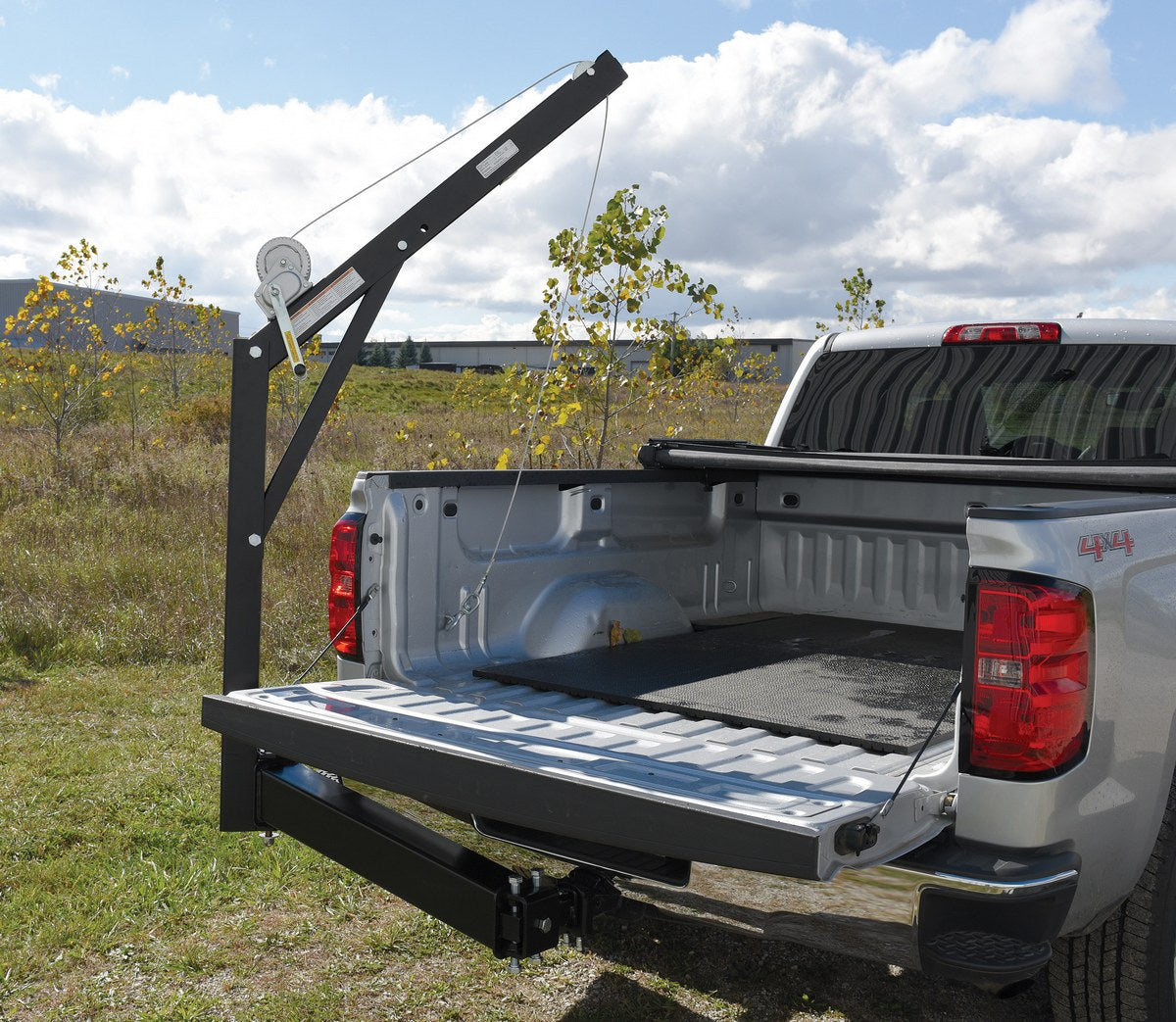
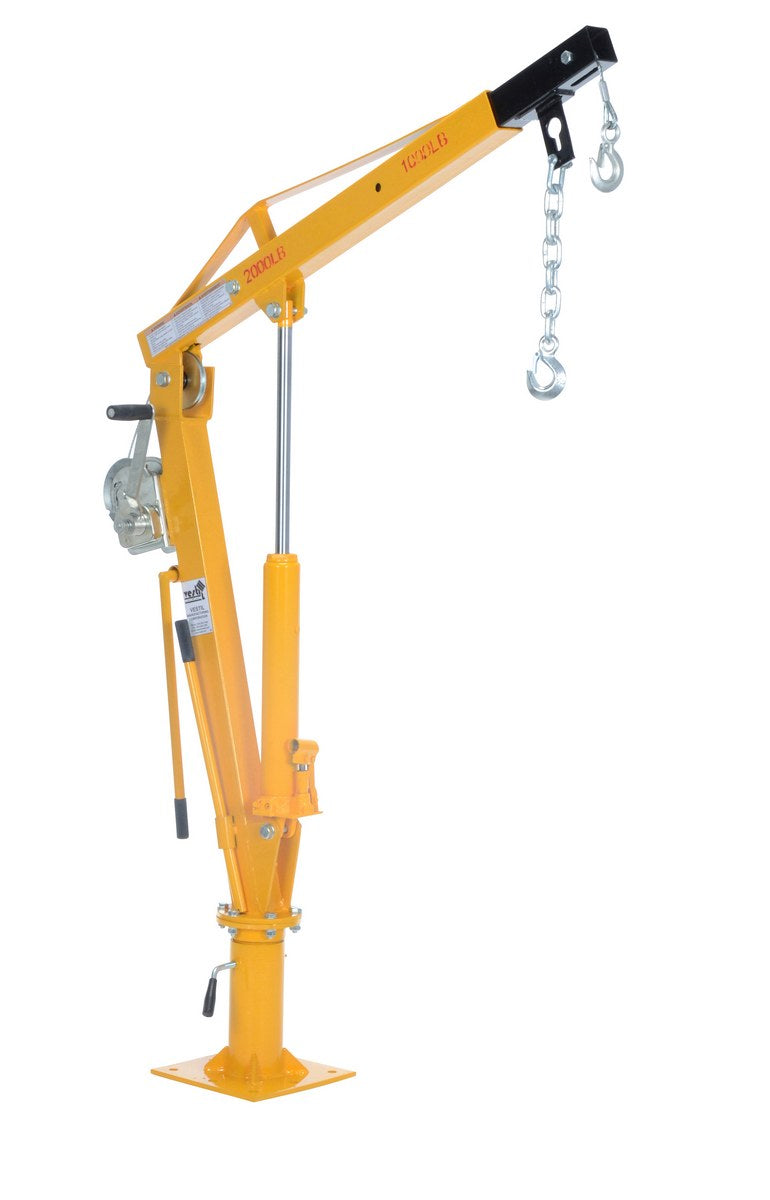
A truck mounted crane turns a pickup into a one-person loading dock: a compact boom and winch that lift a load off the ground and swing it into the bed, then get out of the way for the drive. We carry Vestil's two answers to that job. The hitch mounted crane slides into a standard Class III or larger 2 inch receiver and lifts up to 600 pounds with a hand winch, no drilling and no truck modifications. The bed mounted winch jib bolts to a pre-drilled base plate inside the bed, swivels a full 360 degrees, and telescopes out to trade reach against capacity, from 500 pounds extended up toward 1,000 pounds pulled in. Both are field-service tools built to load and unload where no forklift will ever be.
Compare Truck Cranes
| Model | Price | Capacity | Power | |
|---|---|---|---|---|
| Vestil Hitch Mounted Truck Crane | $864 | 600 lb | — | View → |
| Vestil Truck Mounted Davit Crane | $509 | 500-1,000 lb | 12V | View → |
Truck Cranes Buying Guide
Hitch mount or bed mount: pick by how the truck earns its living. The receiver crane and the bed crane solve the same lift from opposite ends. The hitch mounted unit drops into a Class III or higher 2 inch receiver with no drilling, so any truck with a hitch becomes a lift and the crane swaps to the next vehicle in minutes; it picks from the ground behind the tailgate. The bed mounted winch jib bolts down on a base plate inside the bed, swivels 360 degrees, and pulls loads up and over the side into the cargo area. If one dedicated service truck does this every day, bolt the bed unit in and leave it. If the crane has to follow the driver across a fleet, the hitch unit travels. Both sit in the broader overhead cranes family, and the bed jib overlaps the portable davit cranes that lift out of a fixed base.
Read the rating at your reach, not the headline number. A telescoping boom trades capacity for reach, so the number that matters is the rating at the length you actually work. The bed mounted winch jib is rated near 500 pounds with the boom extended and closer to 1,000 pounds pulled in, so a load that is safe tucked against the base can be over the line stretched to full reach. The hitch mounted crane holds 600 pounds on its fixed boom. Total the whole lift, the load plus the hook, sling, and any chain below it, then read the capacity at the reach and angle your job needs and round down.
How the lift works, and which winch to buy. Both cranes run the same two motions. A manual hydraulic hand pump pivots the boom up and down, and a winch pays cable out and reels the load in. The hitch crane uses a hand winch on a 25 foot cable. The bed jib comes two ways: a manual cable winch for occasional picks, or a 12V DC powered winch that runs off the truck battery when you are loading all day and do not want to crank. Both hook up with the grab hook, chain slot, and latched sling hook the unit ships with. Choose DC power for a daily workhorse; save the money with the hand winch if the crane earns its keep now and then.
Painted steel or galvanized for the weather. The bed mounted jib comes in painted yellow steel and galvanized gray. Painted steel is the value pick for a crane that lives under a cover or works mostly dry. Galvanized steel costs more and resists rust far better, which earns its price on a crane that rides an open bed through rain, road salt, and coastal air year round. The winch and capacity options carry over either way, so pick the coating for where the truck actually parks.
Stationary lifting only: park it, level it, chock it. These are loading tools, not travel cranes. Lift with the truck parked on firm level ground, the transmission in park, the brake set, and the wheels chocked, because a boom swung out to the side puts an overturning load on the vehicle. Never lift while the truck is moving and never drive with a load hanging on the boom; land it in the bed and secure it first. Keep every pick within the rated capacity at your working reach, and check the cable, hooks, and mount before each use.
Frequently Asked Questions
The hitch mounted crane needs a standard Class III or higher 2 inch receiver and installs with no changes to the receiver or the truck. The bed mounted winch jib needs a flat area in the bed to bolt down its pre-drilled base plate. Most full-size and many mid-size pickups take one or both.
The hitch mounted unit is rated 600 pounds on its fixed boom. The bed mounted winch jib is rated near 500 pounds with the boom telescoped out and closer to 1,000 pounds pulled back in, so always read the capacity at the reach you will actually use and add the weight of your hook and rigging to the load.
The manual cable winch is the value choice for occasional lifts. The 12V DC powered winch runs off the truck battery and saves the cranking on a truck that loads and unloads all day, which is worth the added cost for a daily service vehicle.
No. These are stationary lifting tools. Lift and lower only with the truck parked, level, in park, and chocked, then land the load in the bed and secure it before you move. Lifting or carrying a load while the vehicle moves is unsafe and outside how the crane is rated.
The hitch mounted crane requires no drilling or modification; it slides into the receiver and can be leveled for the ground you are on. The bed mounted winch jib does bolt to the bed through its pre-drilled base plate, so it is the permanent-install option for a dedicated service truck.