Wall Mounted Jib Cranes
A wall mounted jib crane bolts a rotating boom and hoist to building steel or a column, sweeps roughly 180 to 200 degrees across a bay, and does it without a square foot of floor space or a poured foundation. That makes it the cheapest capacity per dollar in the whole jib family, and the pattern to reach for when solid structure already stands where the lift happens. This page is the HSI wall and column line in depth: tie rod cranes from about $1,635 and cantilever cranes from about $2,030, both rated 250 lb up to 10,000 lb with boom spans of 8 to 20 feet, plus the J fitting connection kits, power collectors, air swivels, and festooning that turn a bare boom into a working installation. The choice that decides your price and your headroom is tie rod versus cantilever, so the guide starts there, then works through rotation, span, the structure that carries the load, and getting power out to the trolley.
Compare Wall/Column Mounted Jib Cranes
| Model | Price | Span | Capacity | |
|---|---|---|---|---|
| HSI 10000lbs Cantilever Style Jib Crane | $8,983 | 8-20 ft | 10,000 lb | View → |
| HSI 8000lbs Cantilever Style Jib Crane | $8,496 | 8-20 ft | 8,000 lb | View → |
| HSI 10000lbs Tie Rod Style Wall/Column Mounted Jib Crane | $5,452 | 8-20 ft | 10,000 lb | View → |
| HSI 8000lbs Tie Rod Style Wall/Column Mounted Jib Crane | $5,452 | 8-20 ft | 8,000 lb | View → |
| HSI 6000lbs Cantilever Style Jib Crane | $4,095 | 8-20 ft | 6,000 lb | View → |
| HSI 3000lbs Cantilever Style Jib Crane | $3,088 | 8-20 ft | 3,000 lb | View → |
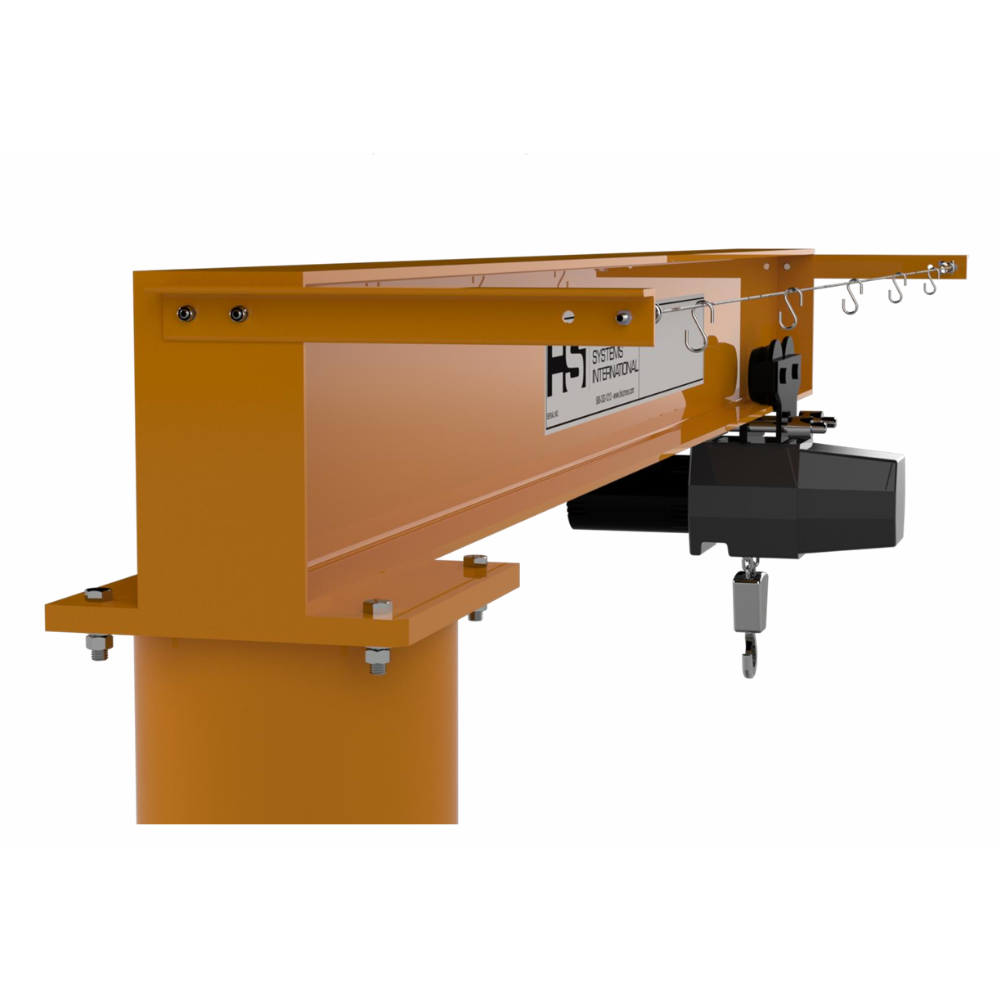 In Stock
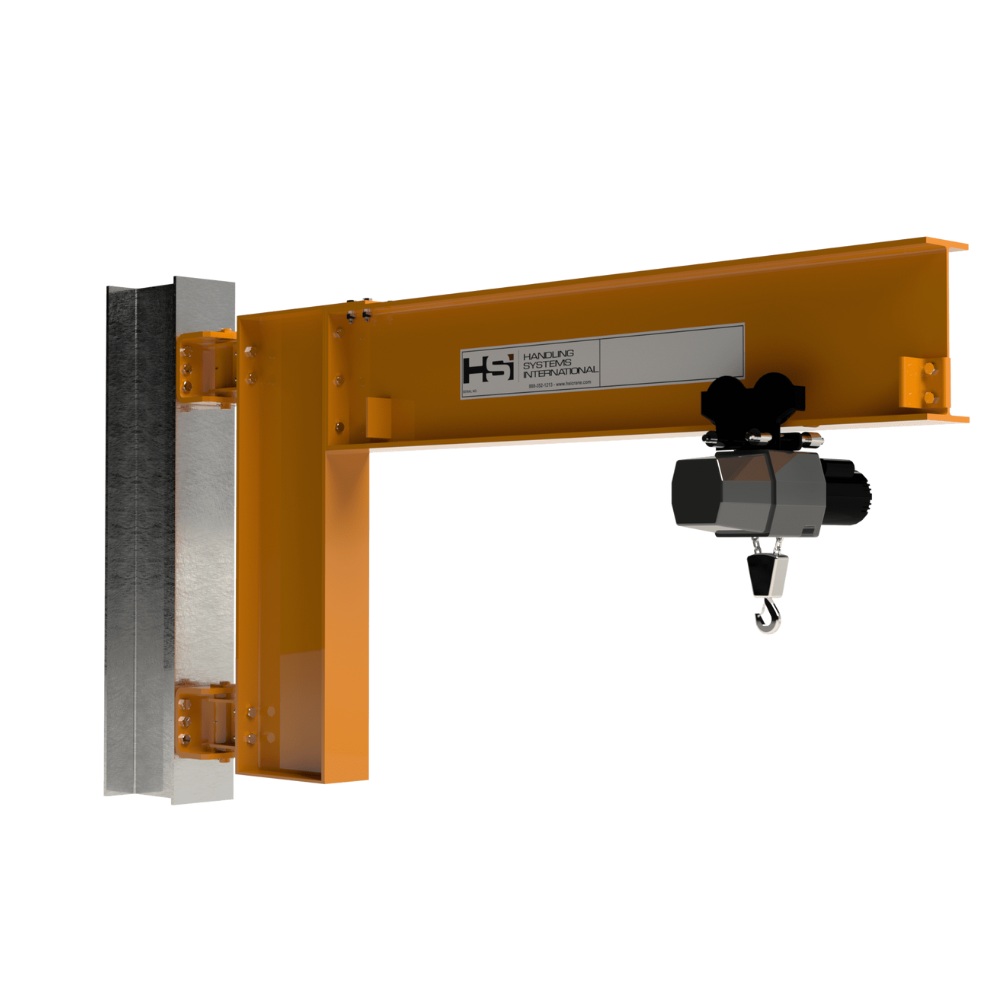 In Stock
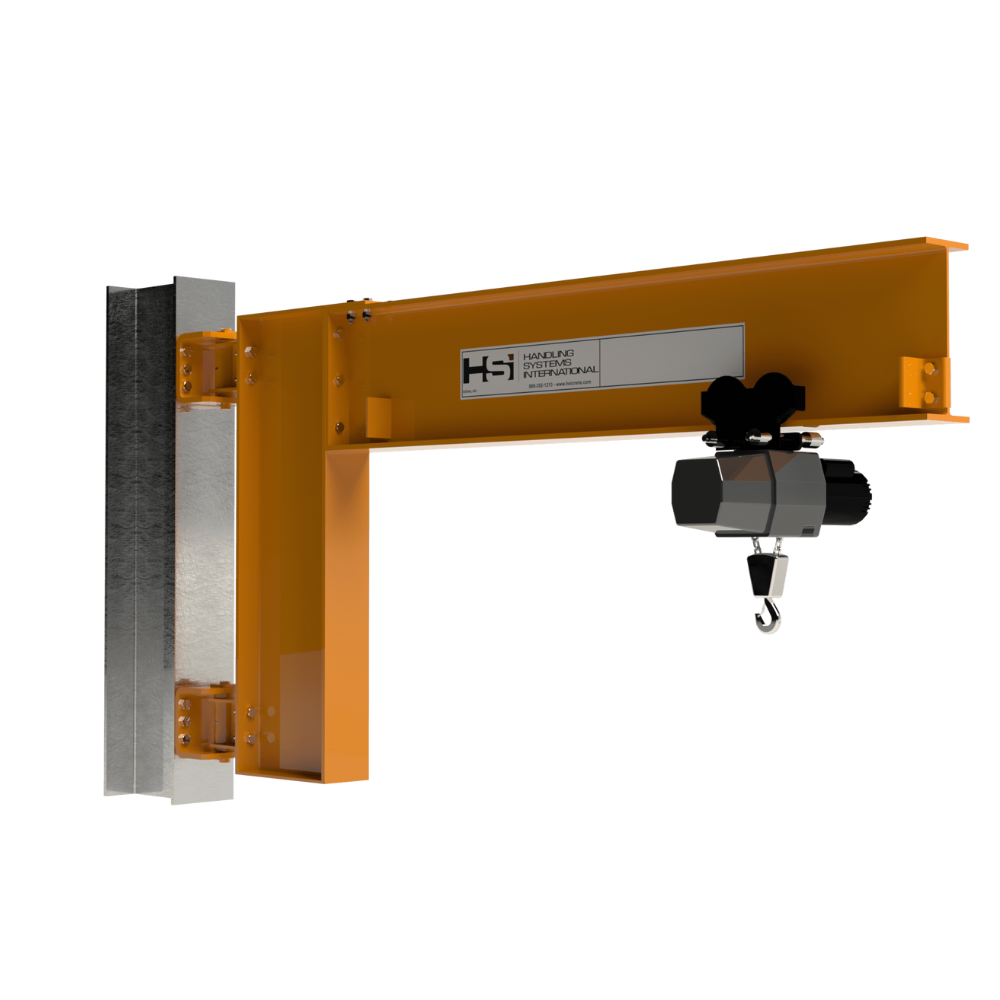 In Stock
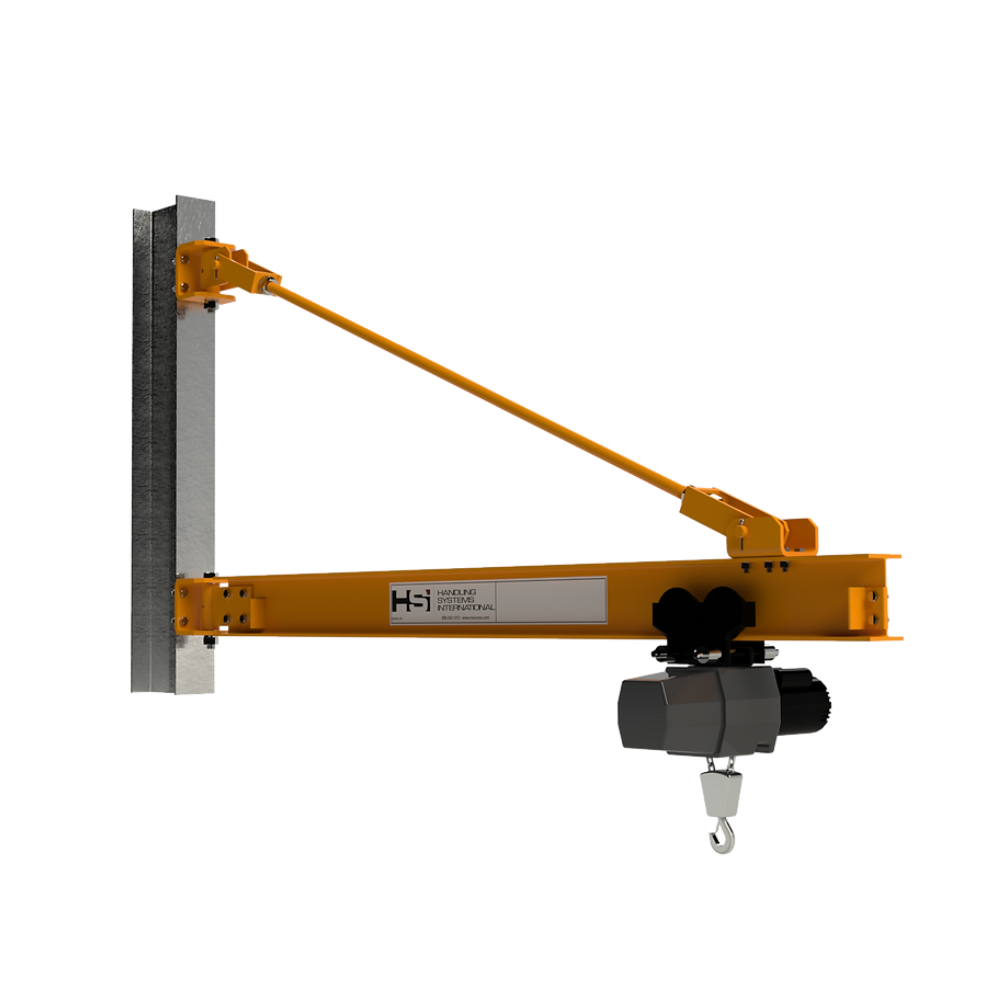 In Stock
 In Stock
 In Stock
 In Stock
 In Stock
 In Stock
 In Stock
 In Stock
 In Stock
 In Stock
 In Stock
 In Stock
 In Stock
 In Stock
 In Stock
 In Stock
 In Stock
 In Stock
 In Stock
 In StockIn StockIn StockIn StockIn StockIn StockIn Stock
Wall/Column Mounted Jib Cranes Buying Guide
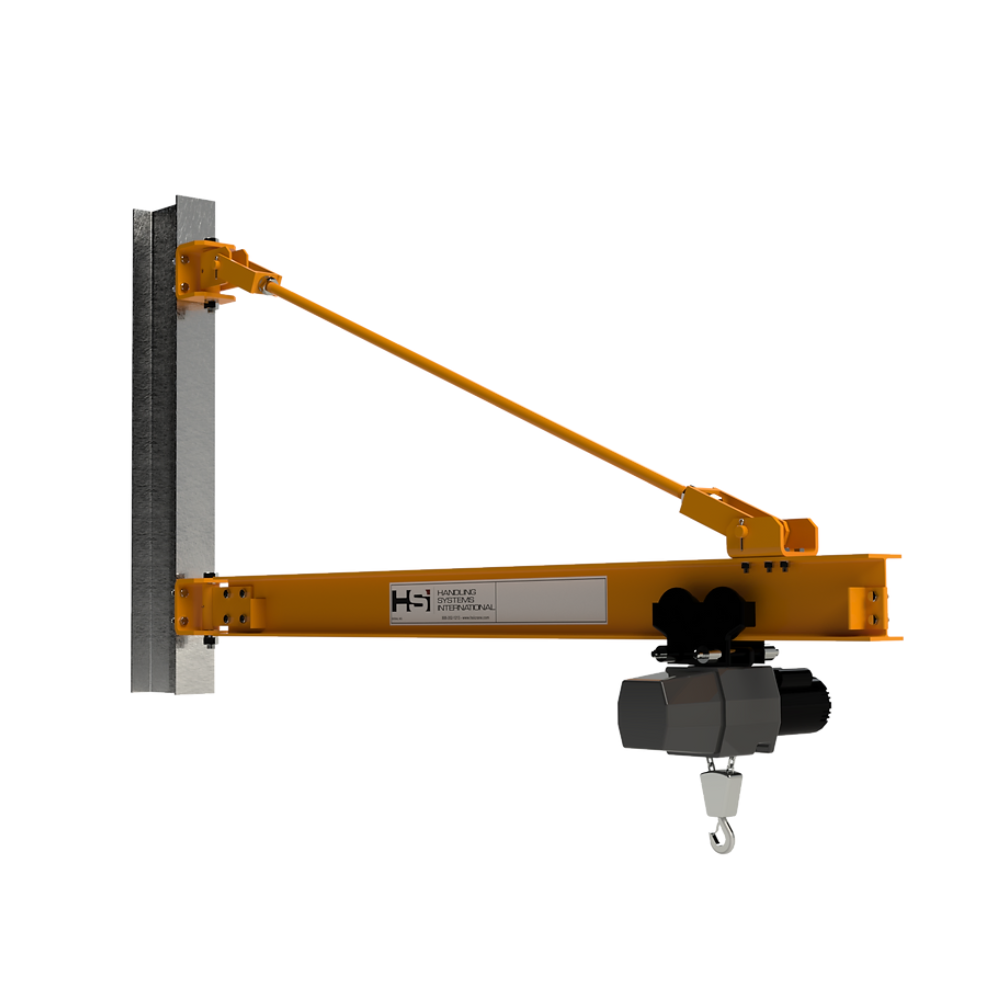
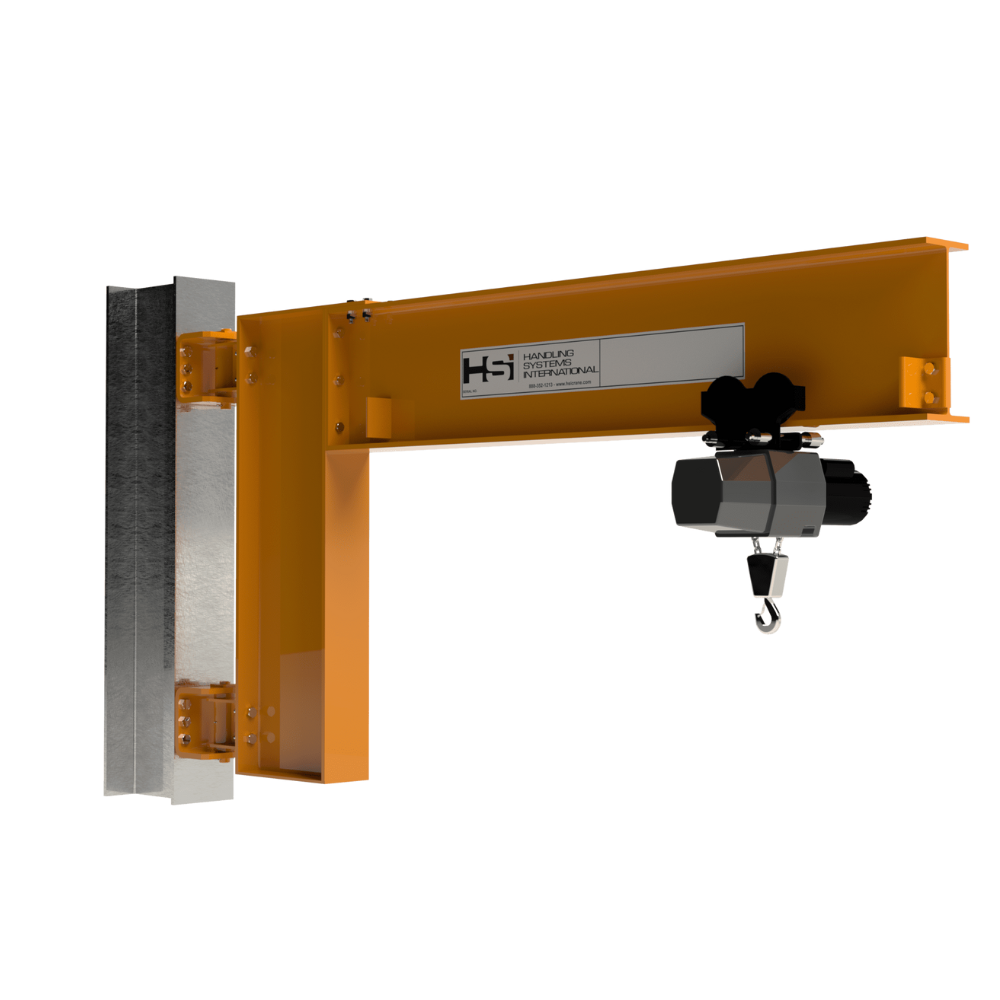
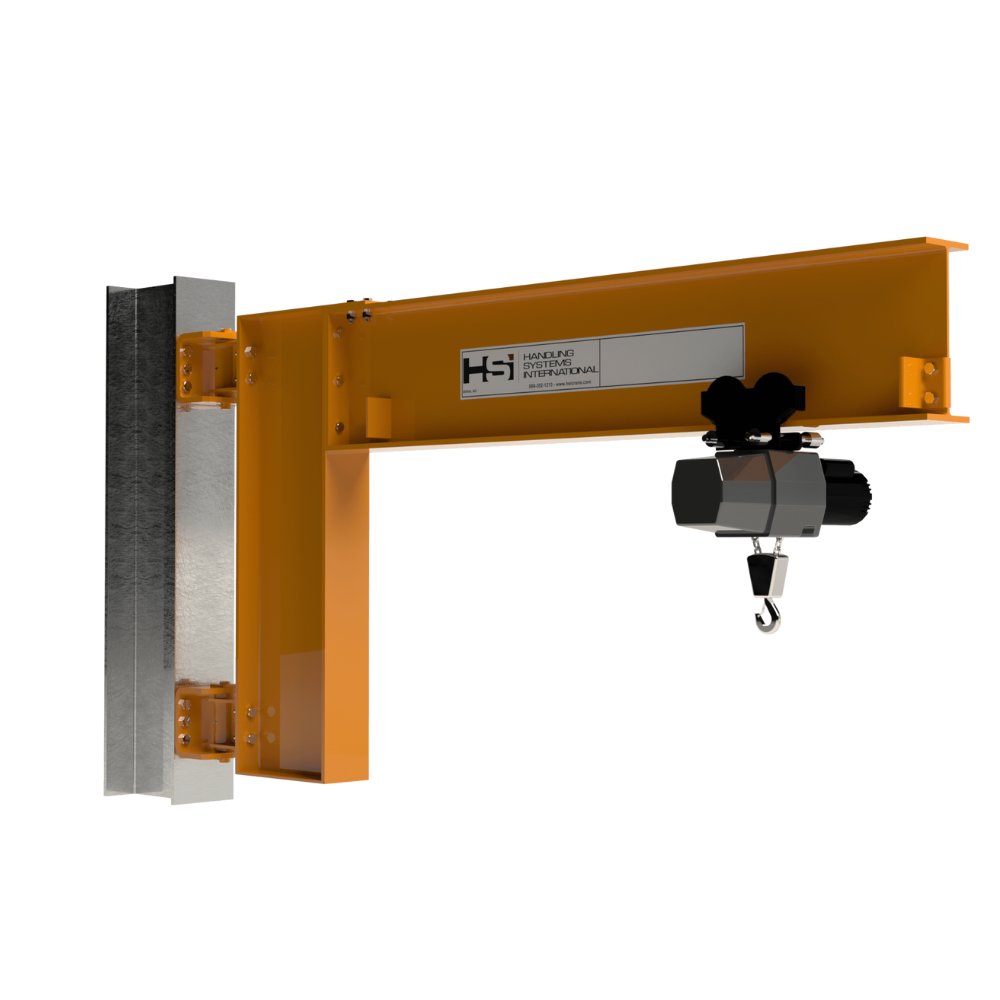
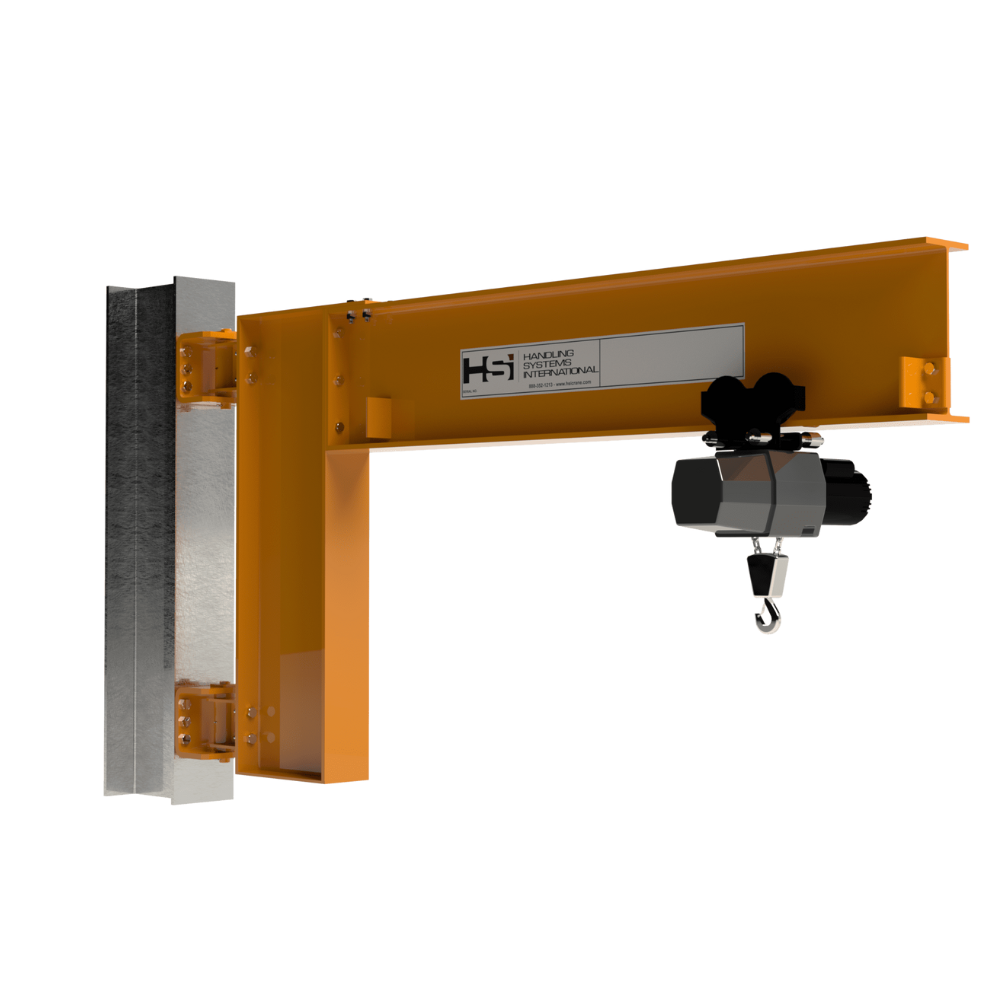
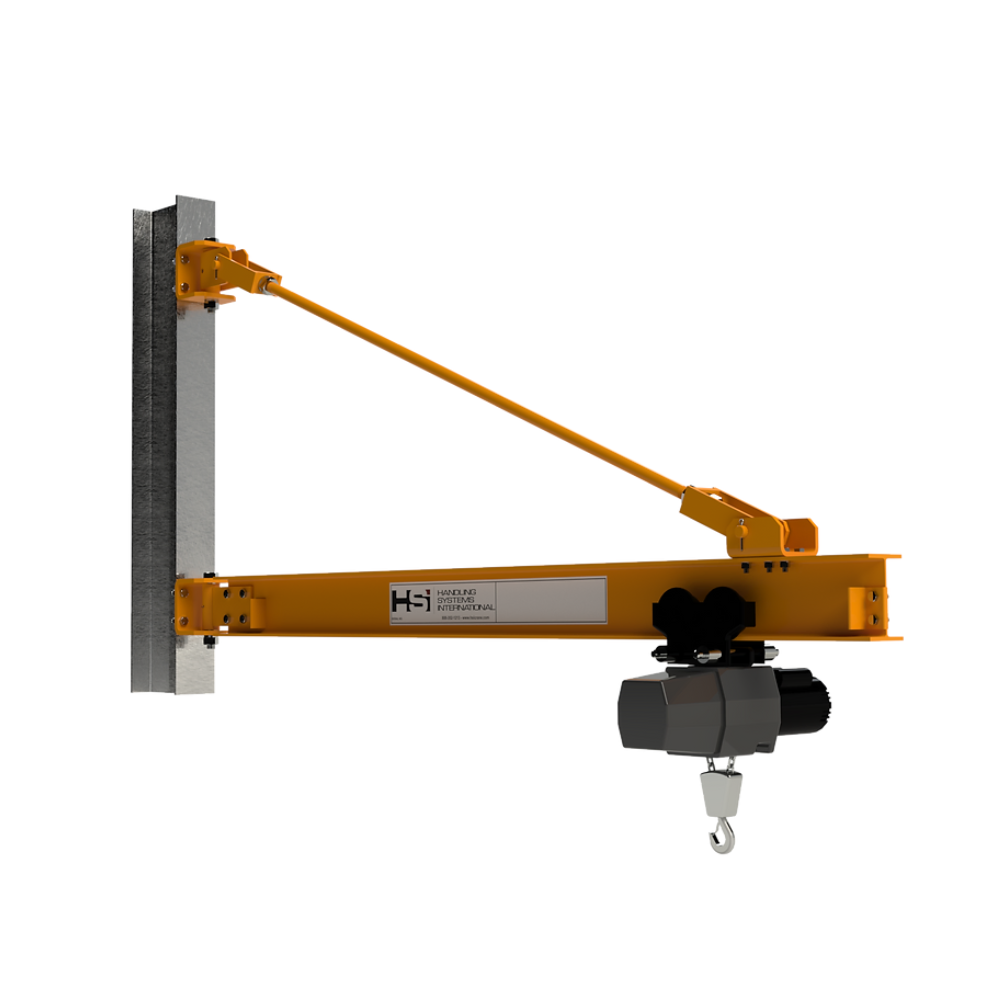
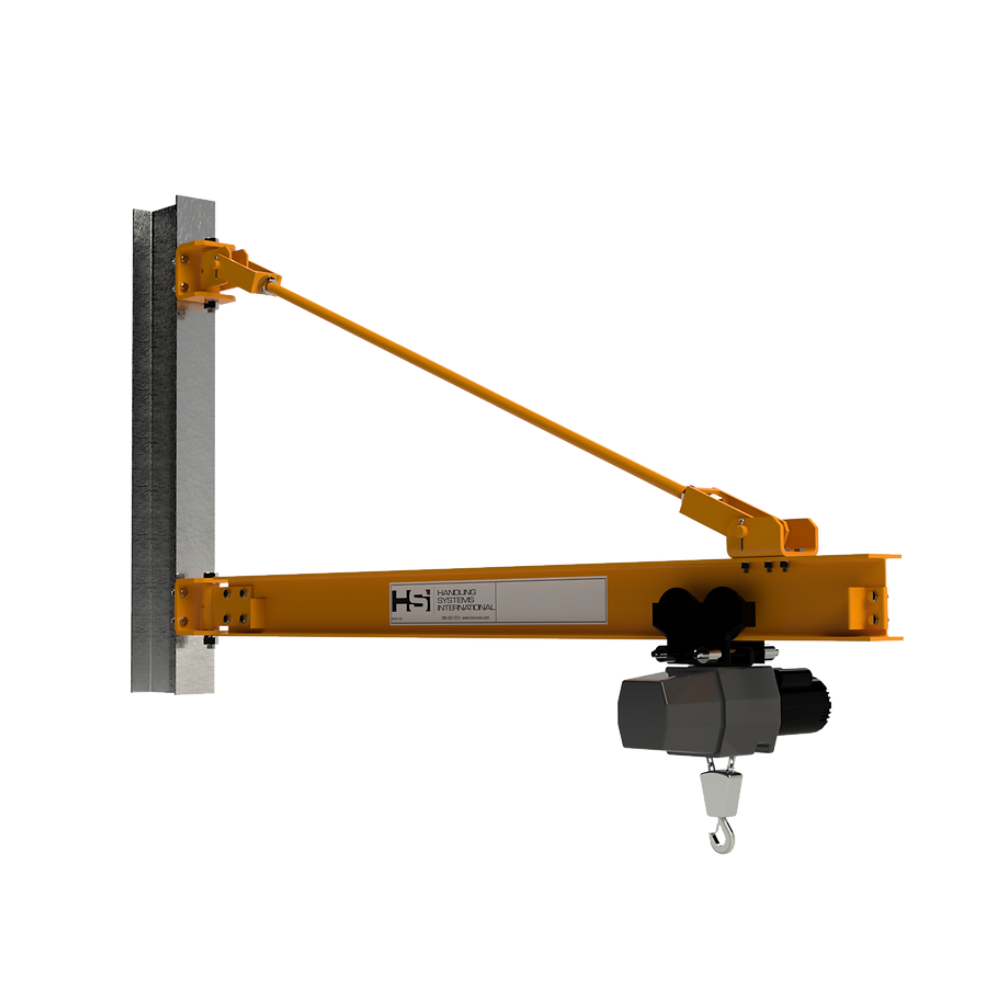
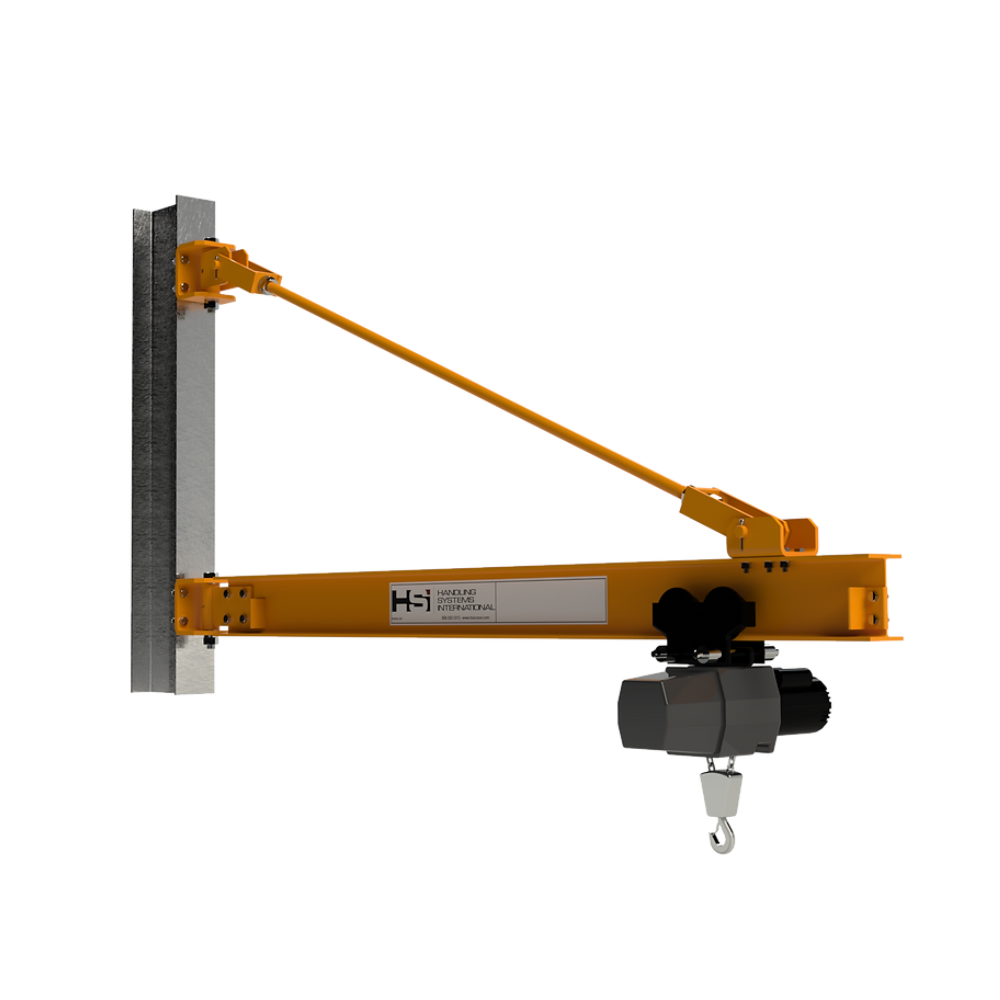
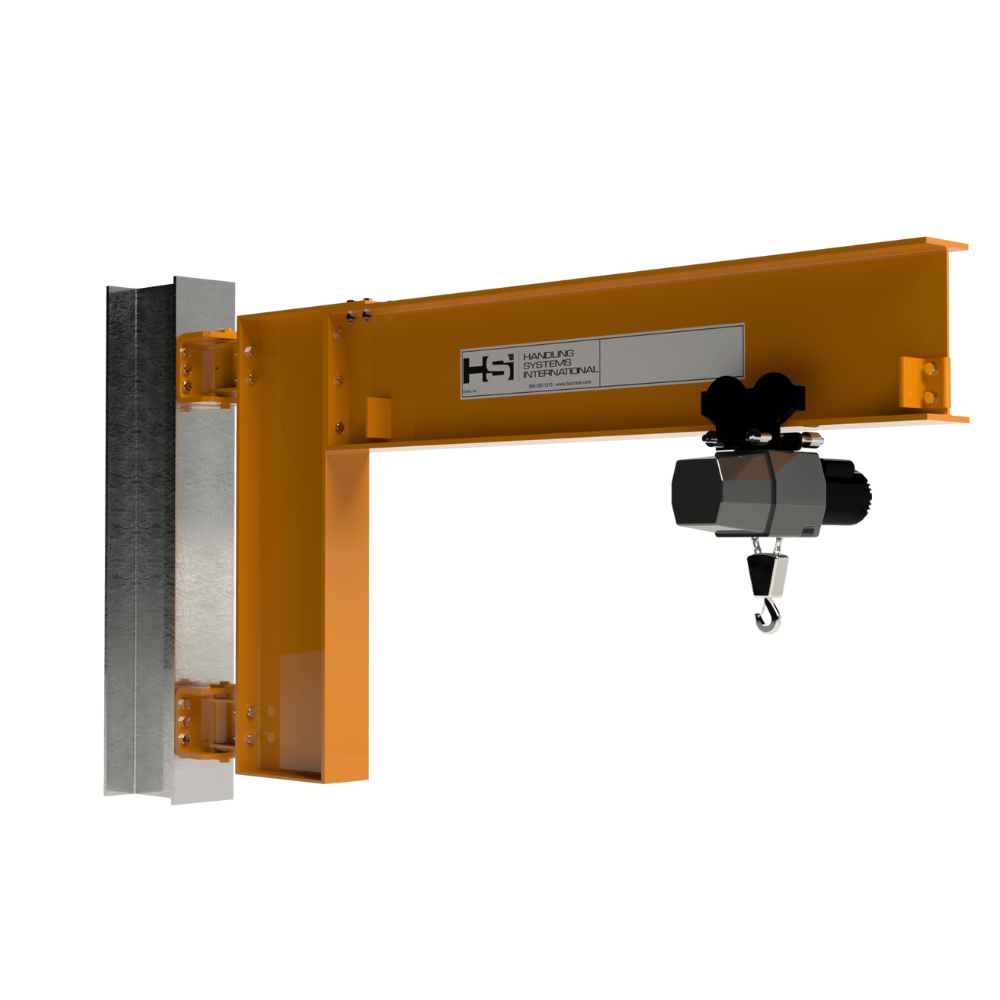
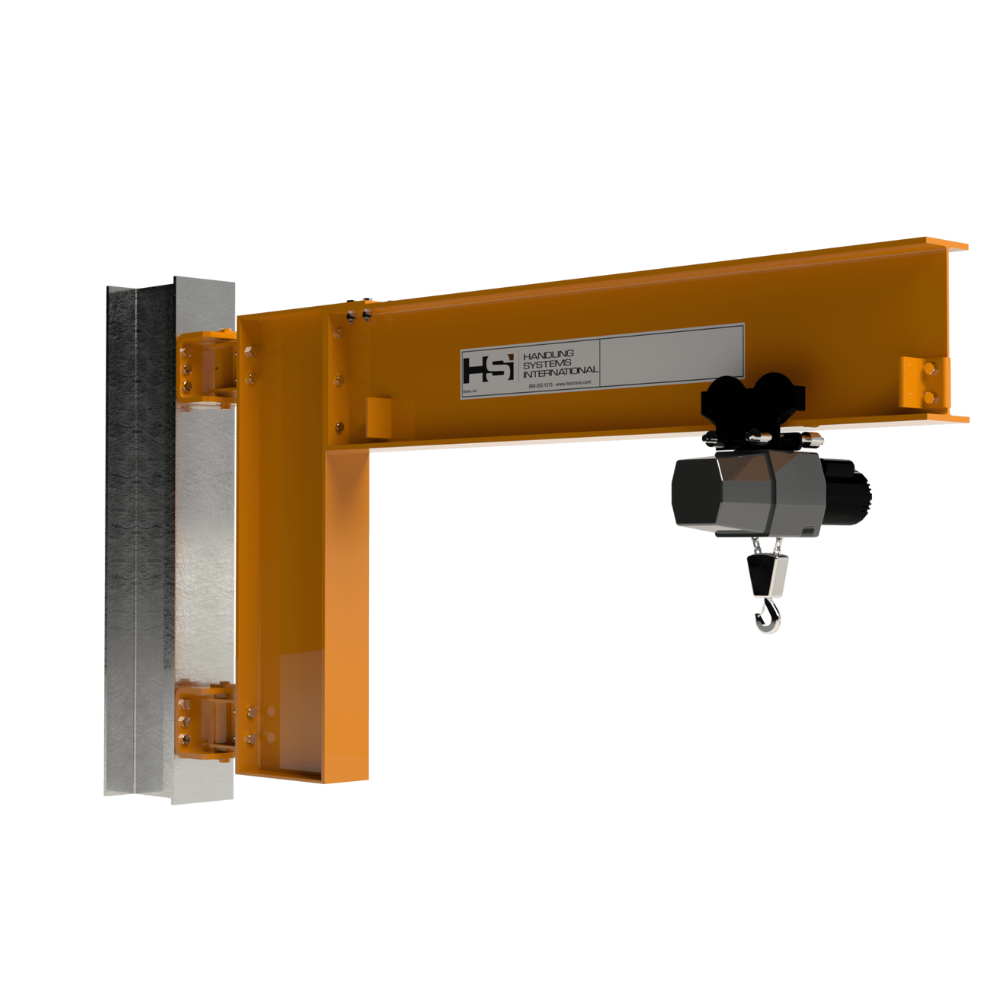
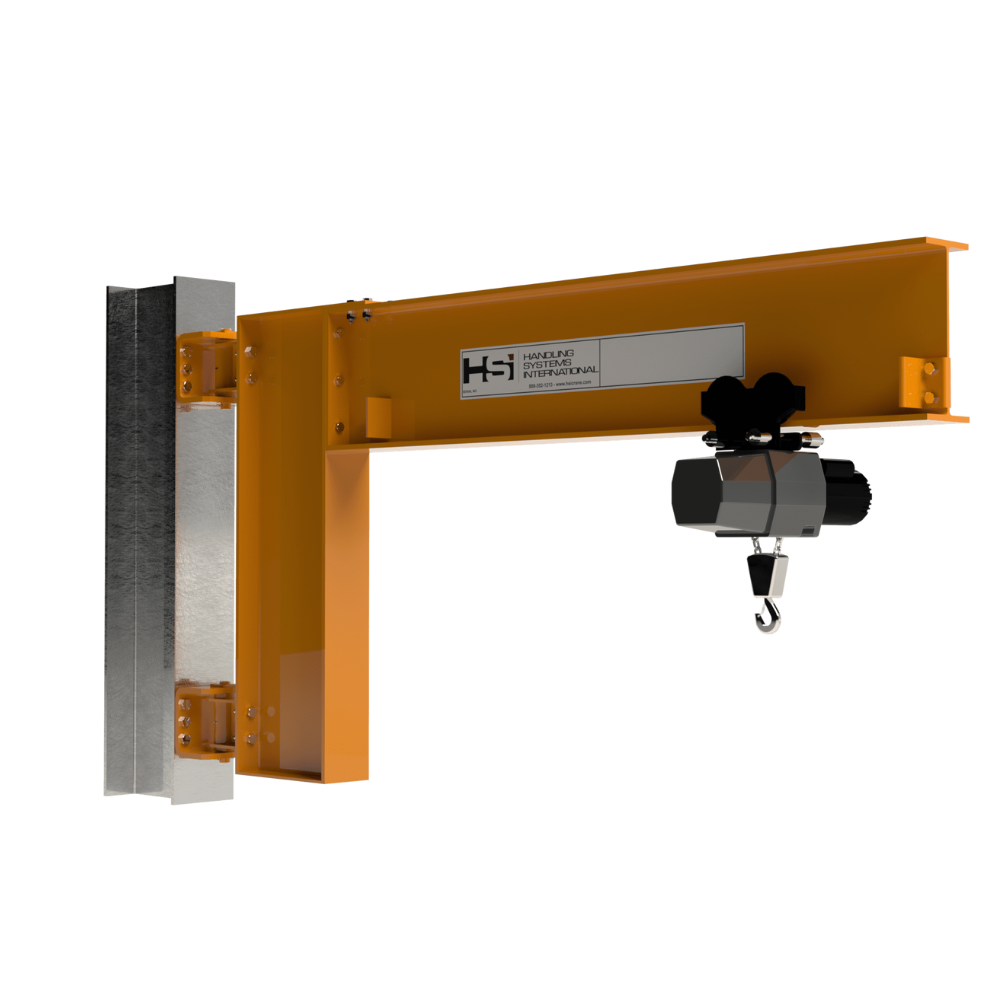
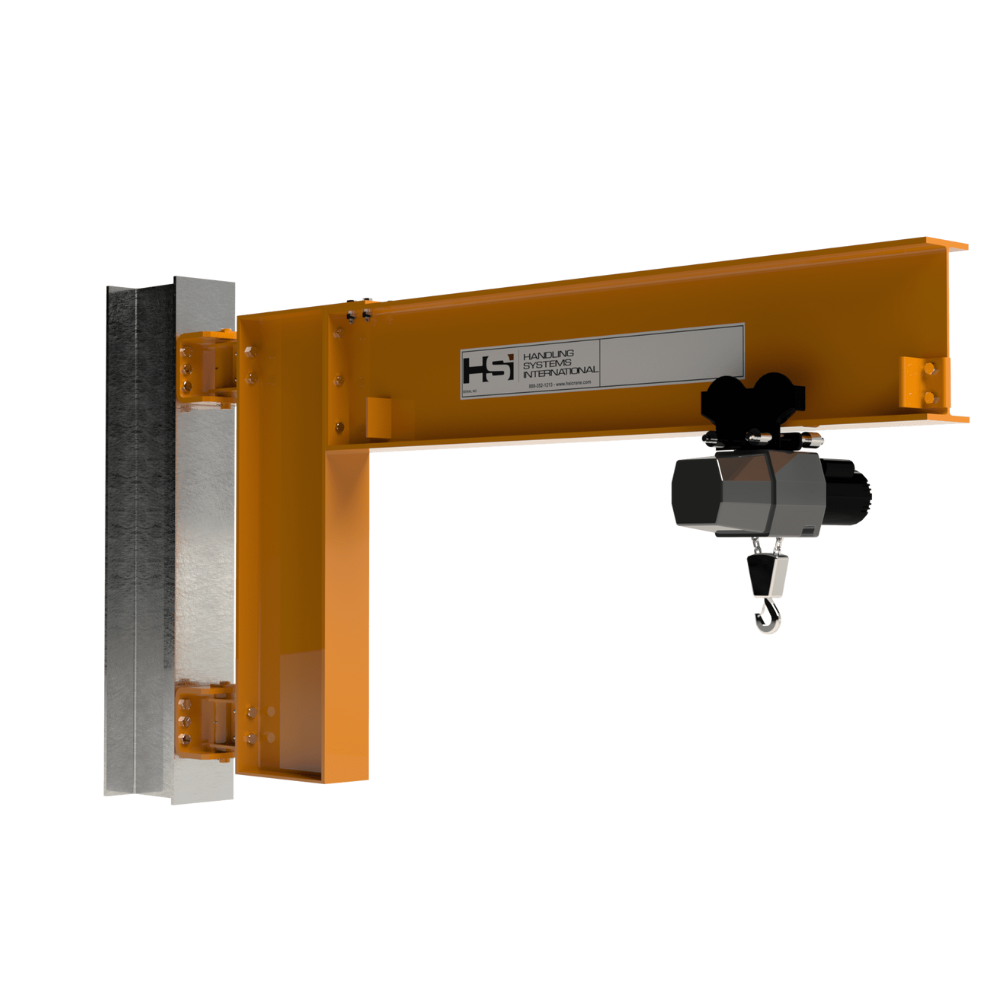
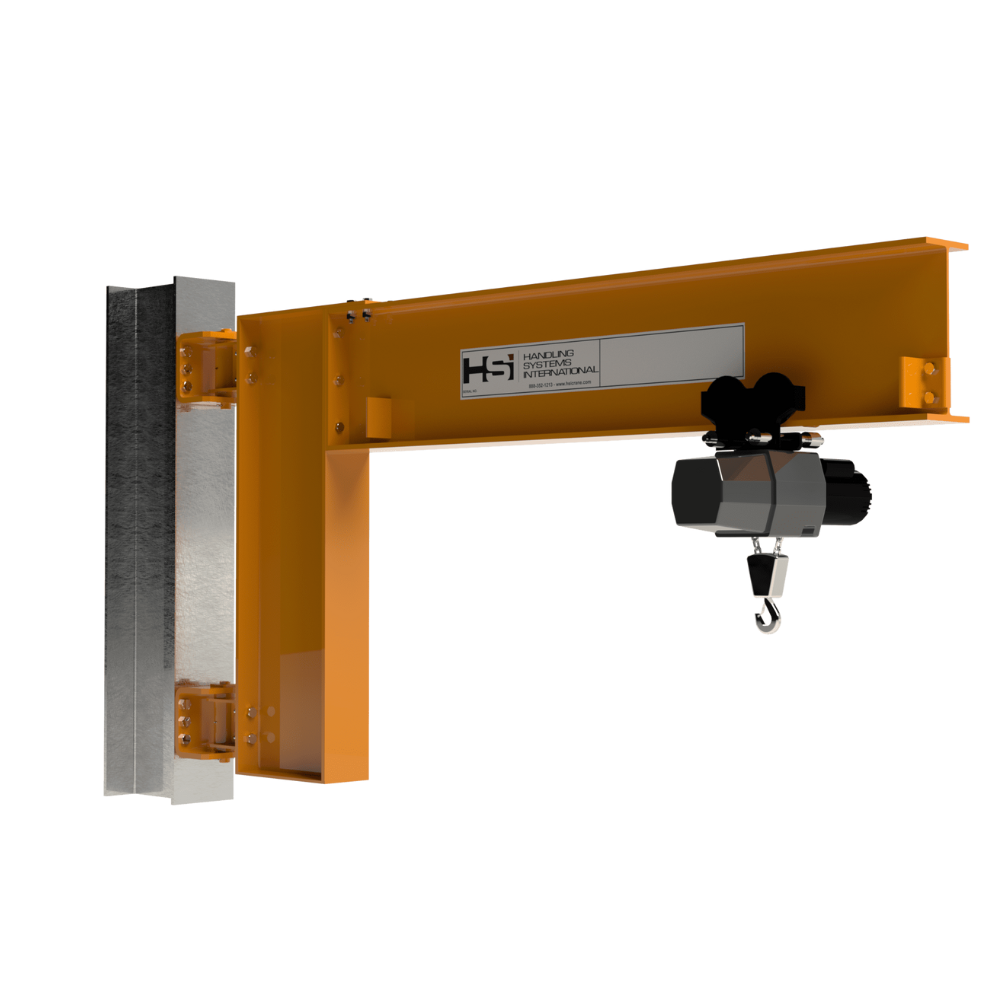
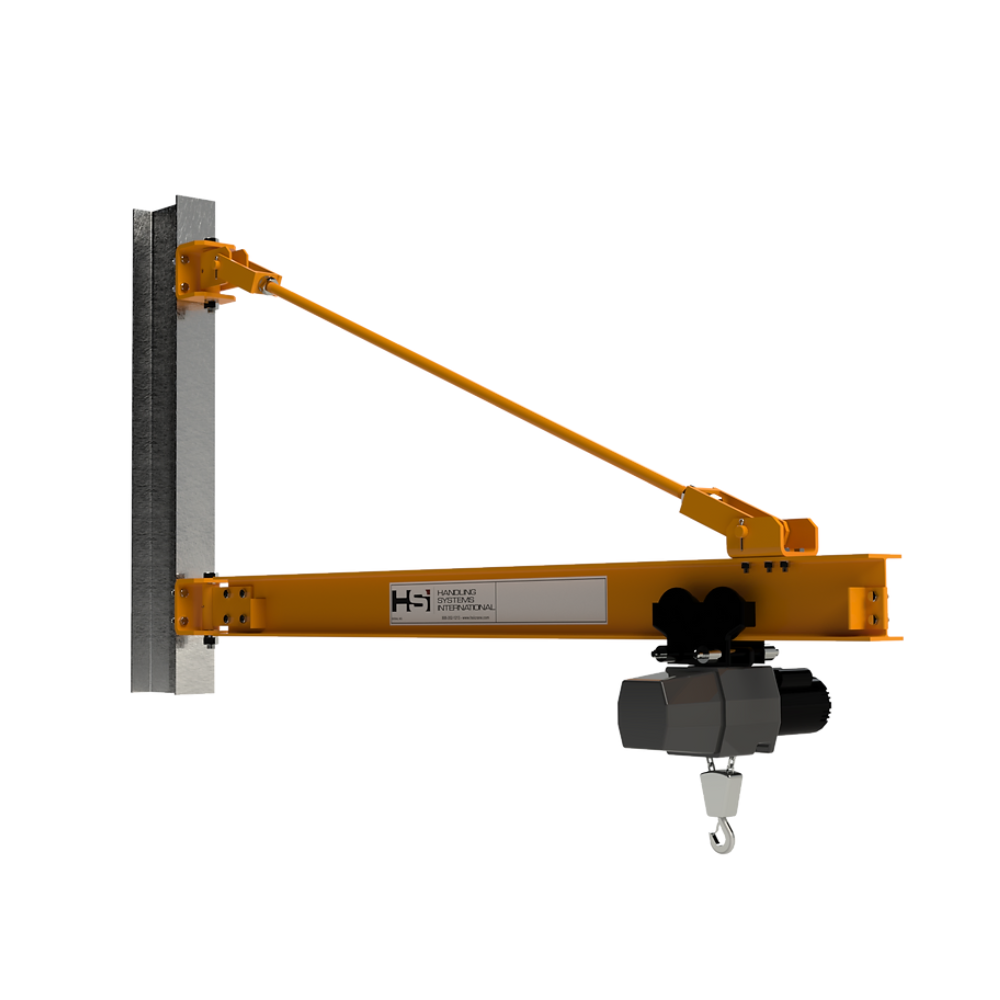
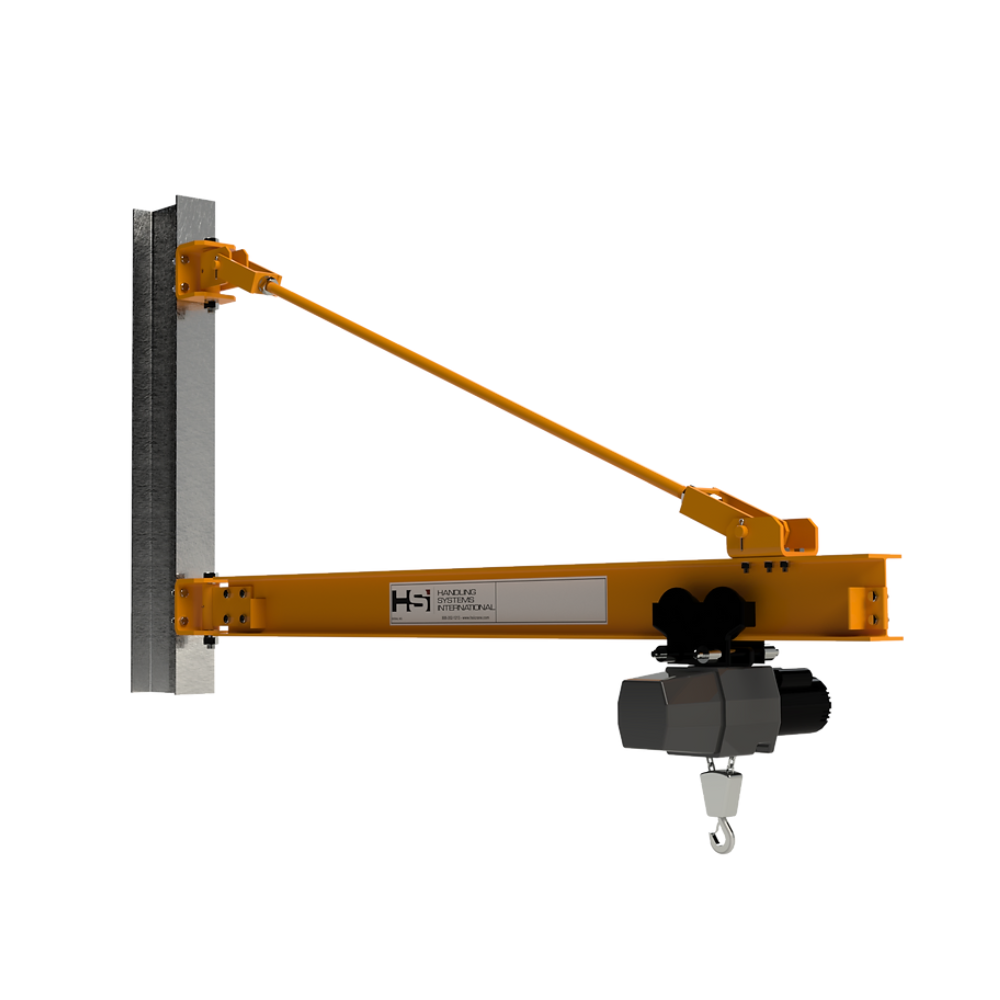
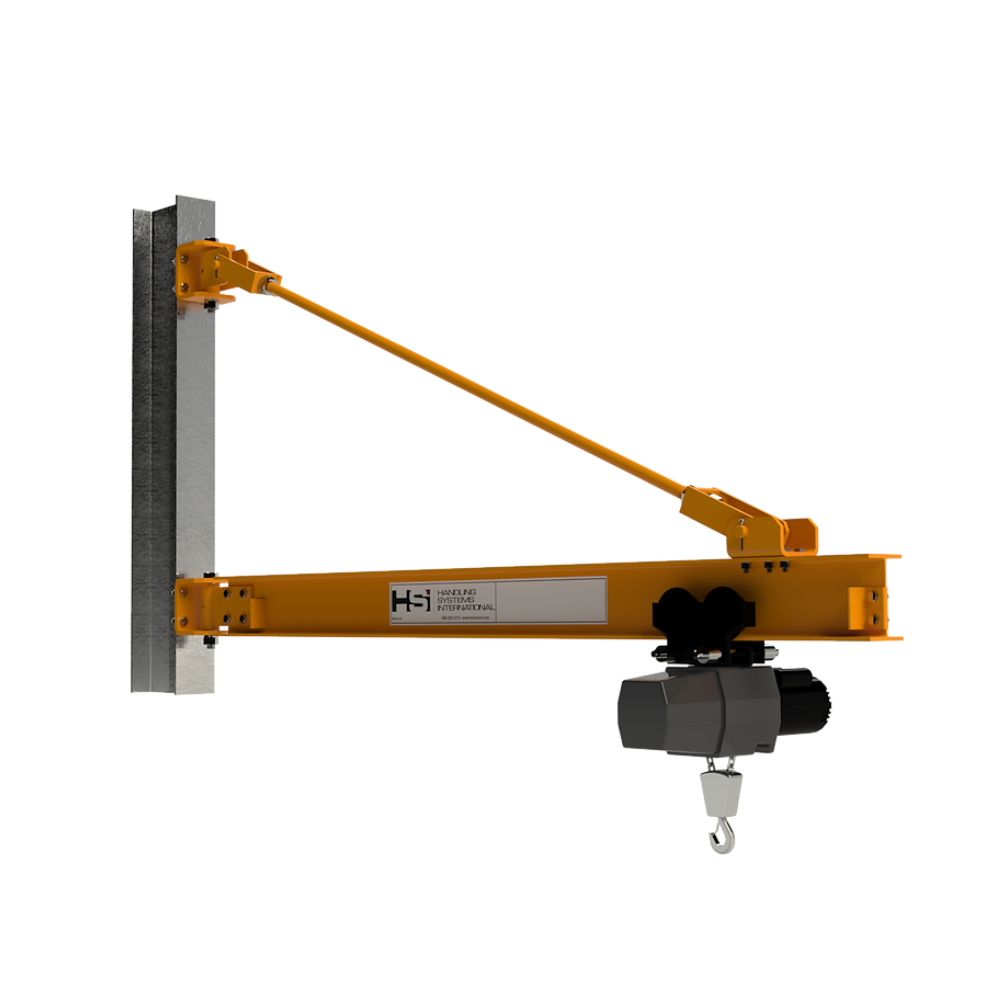
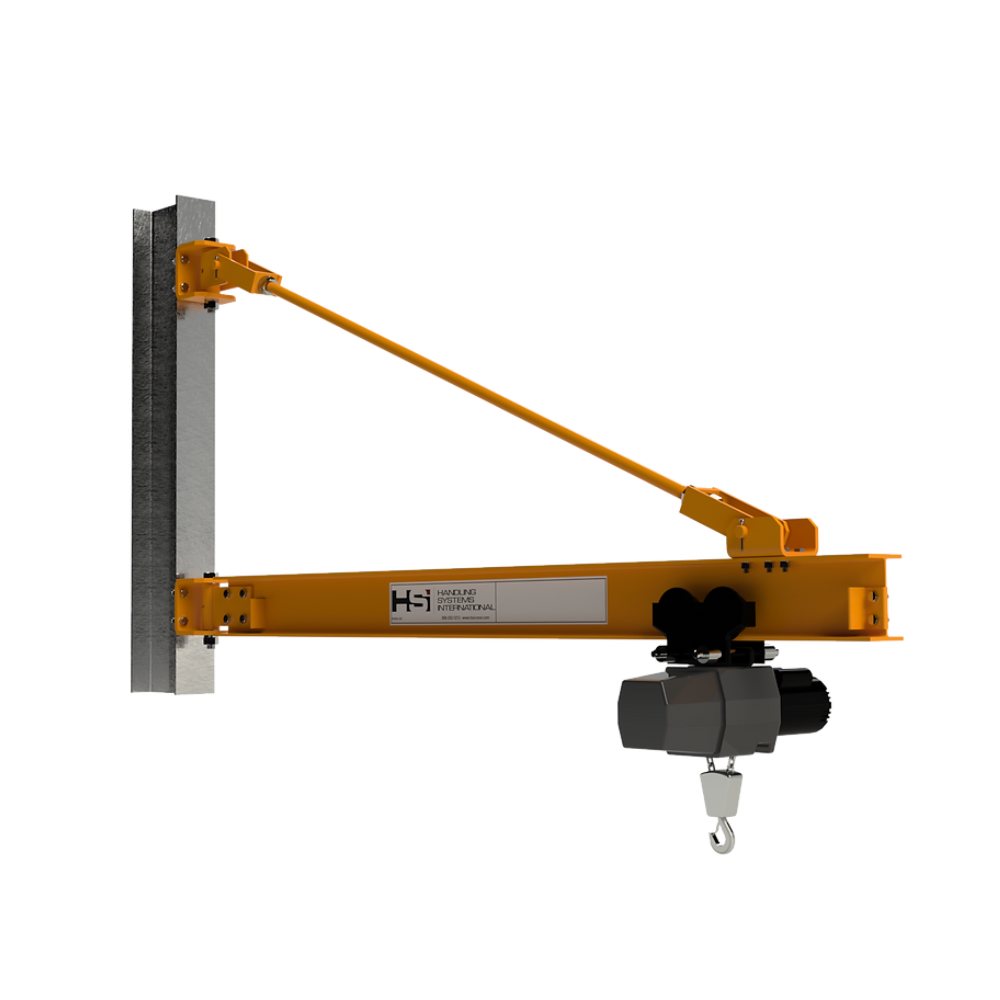
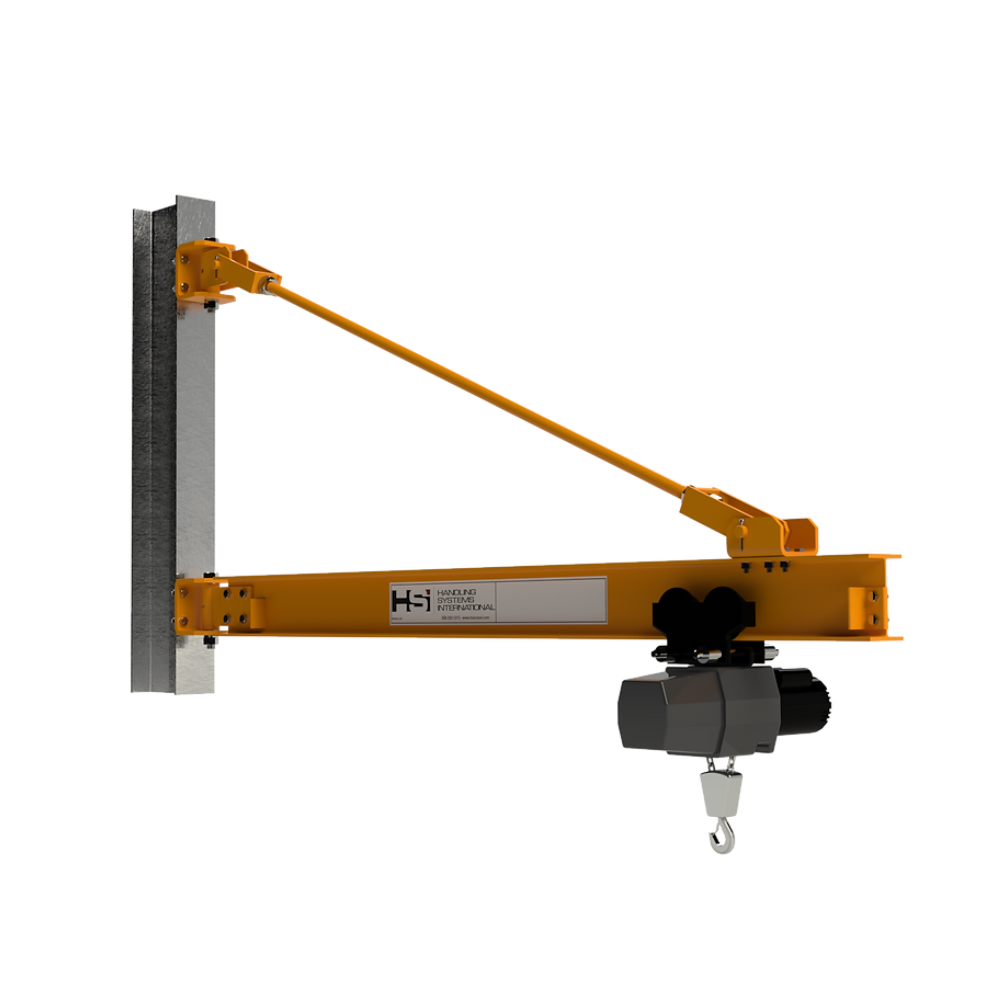
Tie rod or cantilever: the choice that sets the price. The tie rod style is the economical crane, and the one to buy wherever the space above the boom is open. A tie rod runs from the top of the wall bracket down to the beam, so the boom carries less of its own bending and HSI can use a lighter beam for the same load. It prices from about $1,635 at the 250 and 500 lb ratings and climbs with capacity to the 10,000 lb unit, and at every rating it undercuts the cantilever. The catch is the rod itself, which lives above the boom and needs clear room there. The cantilever style deletes the rod and carries the beam as a pure cantilever off the wall bracket, which buys clear space both above and below the boom and the lowest headroom install on the page. It prices from about $2,030, a premium you pay to work under a mezzanine, low steel, or an overhead crane's runway. Pick tie rod when the space above the boom is free; pick cantilever when it is not.
Wall or column, and the rotation you actually get. Both styles bolt to a wall, a building column, or a free-standing steel column, and both sweep the same arc: roughly 180 to 200 degrees, never the full circle a freestanding floor jib turns. The limit is structural, not mechanical, because the brackets sit on one side and the wall or column blocks the rest of the swing. That half circle is enough to serve a bay, feed a machine from a column, or hand loads off to an overhead crane or monorail, and it is the reason these cranes cost a fraction of a full-rotation floor unit: they borrow their load path from steel you already own instead of a poured footing. Rotation is manual across this line, so plan where the boom parks between lifts the way you plan the lift itself.
Span and height under boom. Span is the reach from the wall to the hook at full extension, offered from 8 to 20 feet on every capacity. Measure to the farthest point the lift has to reach, then stop there, because a longer boom deflects more and loads the wall harder for the same weight on the hook, which is why price climbs with span as well as capacity. Height under boom is the clear distance below the beam to the top of your load, hook, and any block, so spec it from the tallest thing you will lift plus that rigging, and remember the cantilever's clear underside is exactly what the premium buys. If a rating lands between your load and the next size up, buy up, since deflection eases and the duty cycle gets kinder on the heavier frame.
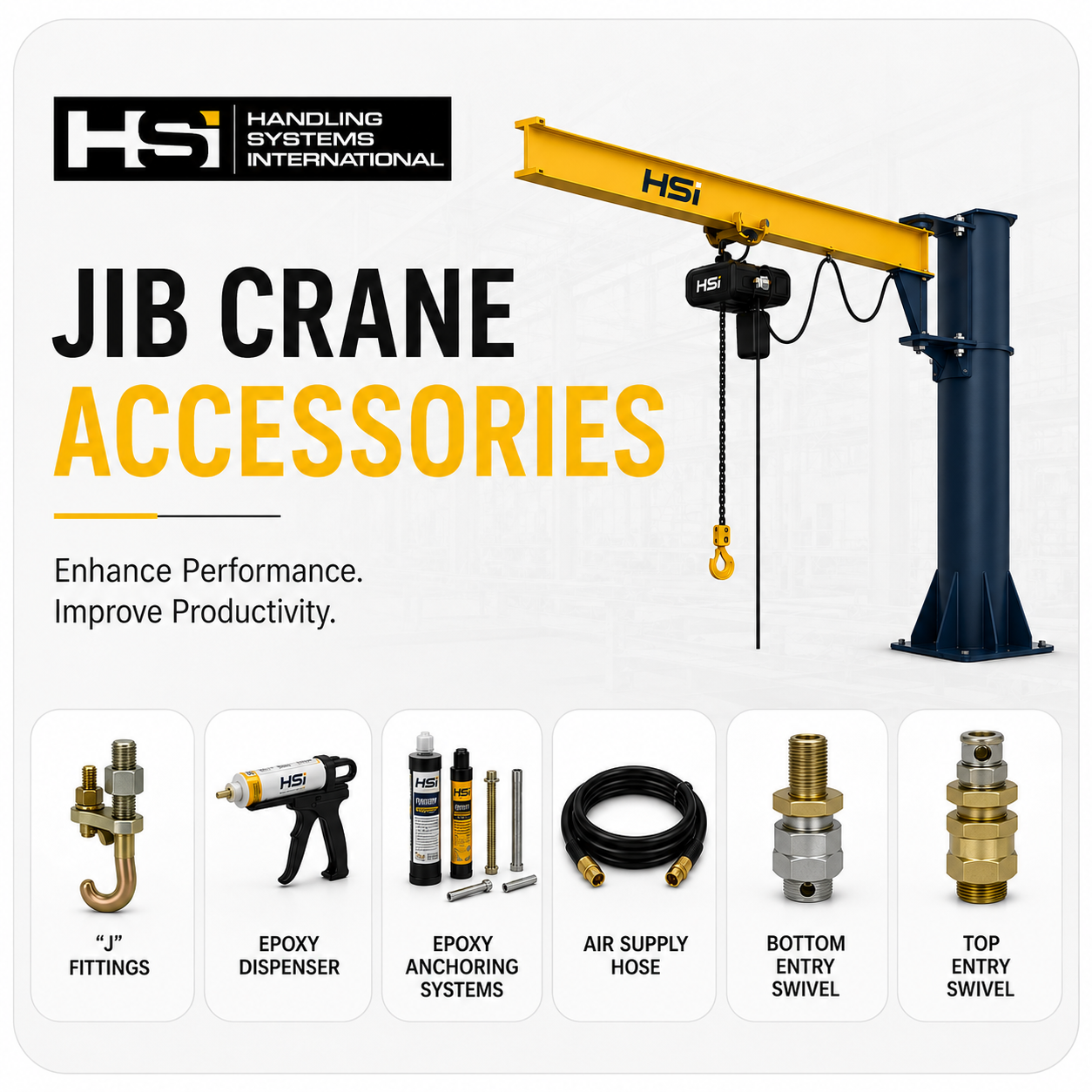
The structure has to carry the moment. A wall jib hangs its entire load moment on whatever it bolts to, and that moment is large: a 2,000 lb load at a 16 foot span is a heavy overturning force on a bracket connection. The wall, building column, or steel column has to carry it, so put a qualified engineer on the structure before ordering, the same way a freestanding jib gets its foundation designed. HSI supplies the connection as J fitting kits matched to the crane type, Type 311 fittings for the tie rod style and Type 313 for the cantilever, so order the kit that pairs with your crane rather than improvising a mount. Into concrete columns or walls, the quick dry epoxy anchoring systems and a Hilti epoxy dispenser handle the chemical set; on structural steel, the connection is engineered to the member.
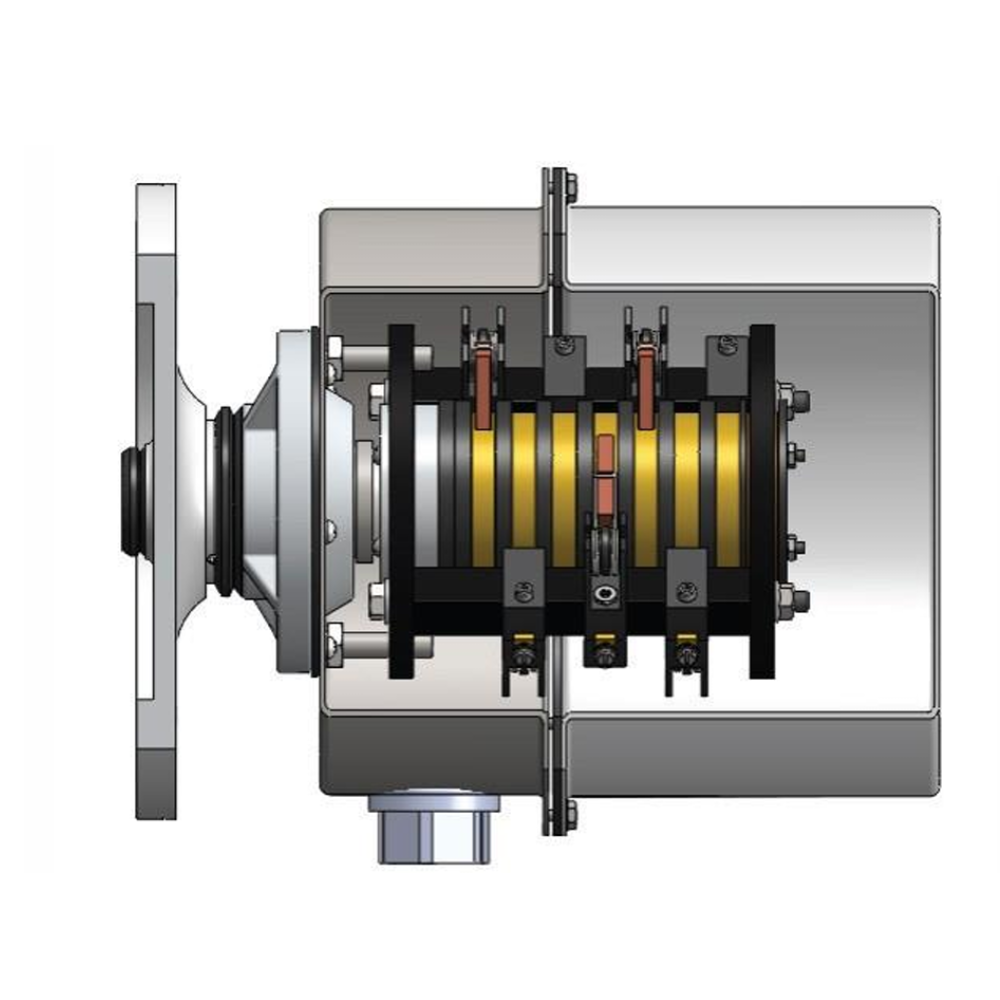
Getting power and air out to the trolley. The boom rotates, and the hoist riding it still needs electricity or air. A top entry collector, 4 conductor, feeds power through the rotation axis so the boom turns without winding its own cord, and top and bottom entry swivels do the same for compressed air. Along the boom, the tight wire tagline festooning kit carries flat cable out to the trolley and the air supply hoses cover spans to 20 feet. Order this hardware with the crane, because retrofitting a collector means pulling the pivot apart later. The hoist and trolley are separate line items sized to the boom flange and built to ASME B30.16; manual chain through three phase electric all live in hoists.
When floor mount or a davit is the better call. A wall jib is the right answer only when good structure stands where the lift is and a 180 to 200 degree sweep covers the work. When you need the full circle, or there is no wall or column to bolt to, a floor mount jib crane carries its load into the slab and rotates a full 360 degrees, at the cost of a baseplate or a poured foundation. And when the same lift repeats at scattered stations, one davit crane dropped between fixed bases beats bolting a separate jib at every spot. Match the crane to where the steel is and how the work moves, then let the mounting decide the rest.
Frequently Asked Questions
Buy the tie rod style when there is open space above the boom. It is the cheaper of the two at every capacity, from about $1,635, because the rod above the beam lets HSI use a lighter boom. Buy the cantilever, from about $2,030, when headroom is tight: it deletes the rod and carries the beam as a clean cantilever, leaving space clear both above and below for low steel, a mezzanine, or an overhead crane runway.
Roughly 180 to 200 degrees, not the full 360 a freestanding floor jib turns. The wall or column blocks the rest of the arc, so the limit is structural rather than a fault in the crane. That half circle covers a bay, a single machine, or a hand-off to an overhead crane. If you need full rotation, the crane has to stand on the floor or take mast support instead.
HSI builds both the tie rod and cantilever styles from 250 lb up to 10,000 lb, with boom spans from 8 to 20 feet on every rating. Price climbs with both capacity and span, since a longer, heavier-rated boom deflects more and loads the structure harder. Size the span to the farthest point the lift actually reaches, and the capacity to the whole load plus hook and rigging, then round up to the next rating.
Yes. A wall jib hangs its entire load moment on the structure it bolts to, and at longer spans that overturning force is substantial. Have a qualified engineer confirm the wall, building column, or steel column can carry it before you order, the same way a freestanding jib gets its foundation designed. HSI's J fitting kits, Type 311 for tie rod and Type 313 for cantilever, make the connection once the structure is signed off.
Choose a wall jib when solid structure already stands where the lift happens and a 180 to 200 degree sweep covers the work, because borrowing that steel makes it the cheapest jib you can buy. Choose a floor mount jib crane when you need full 360 degree rotation or have no wall or column to use, since it carries its load into the slab through a baseplate or poured foundation. Structure decides it more than capacity does.