The Best Safety Harnesses for Fall Protection
The best safety harness is the one whose D-ring configuration matches your work, whose fit is comfortable for long wear, and that's ANSI-rated for fall arrest. Below are our top full-body harnesses compared. All use the dorsal (back) D-ring for fall arrest; some add front, side, or shoulder D-rings for climbing, positioning, or rescue. Match the harness to your application, and always fit and inspect it correctly.
| Rank | Model | Price | Capacity | |
|---|---|---|---|---|
| #1 | KStrong® Kapture™ Elite 5-Point Full Body Harness,… | $112 | 310 lb | View → |
| #2 | KStrong® Kapture™ Element 5-Point Full Body Harness… | $129 | 310 lb | View → |
| #3 | KStrong® BRUTE™ Backer™LE 8.5 ft. Cable… | $297 | 310 lb | View → |
| #4 | KStrong® Bull Ring Anchor | $52 | 310 lb | View → |
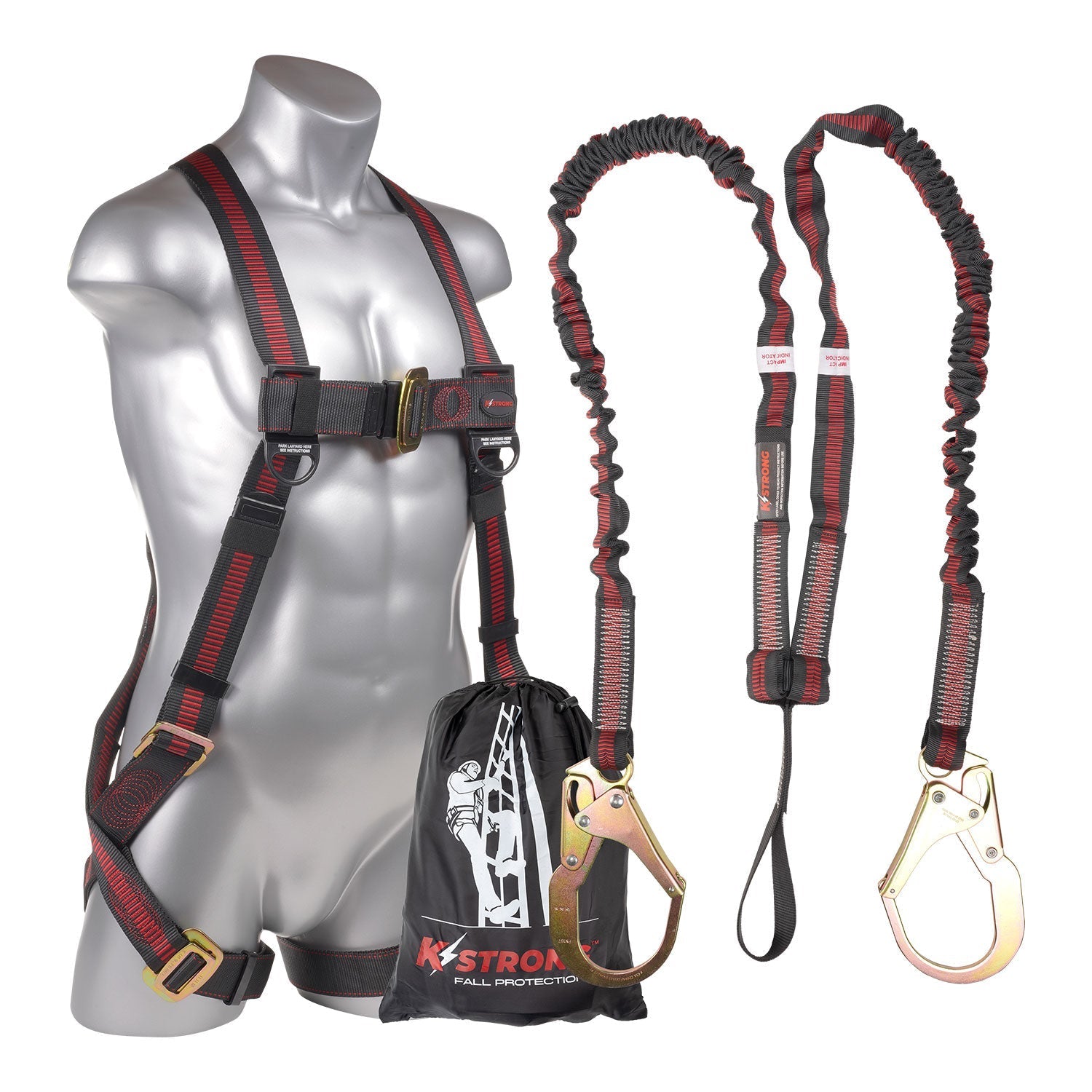
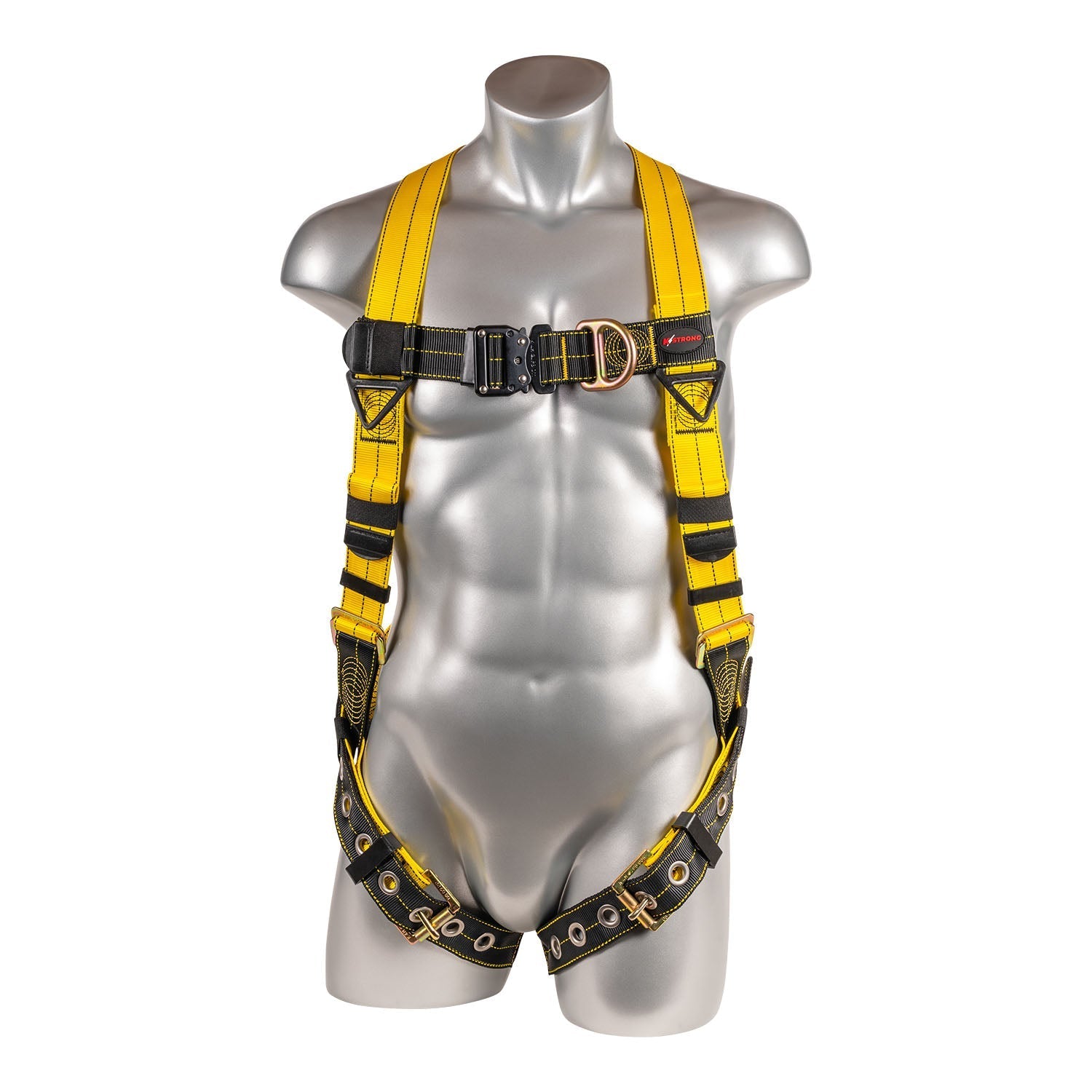
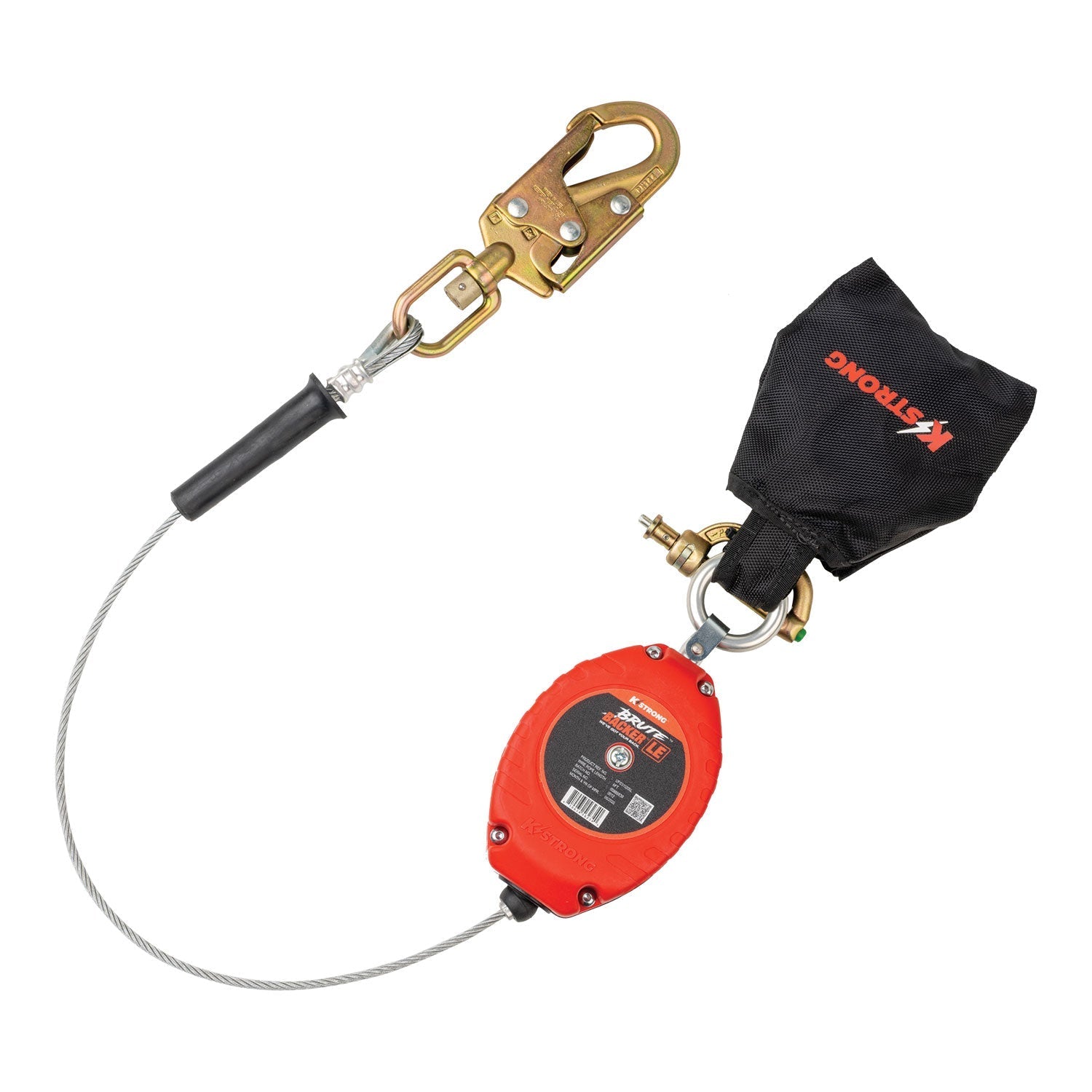
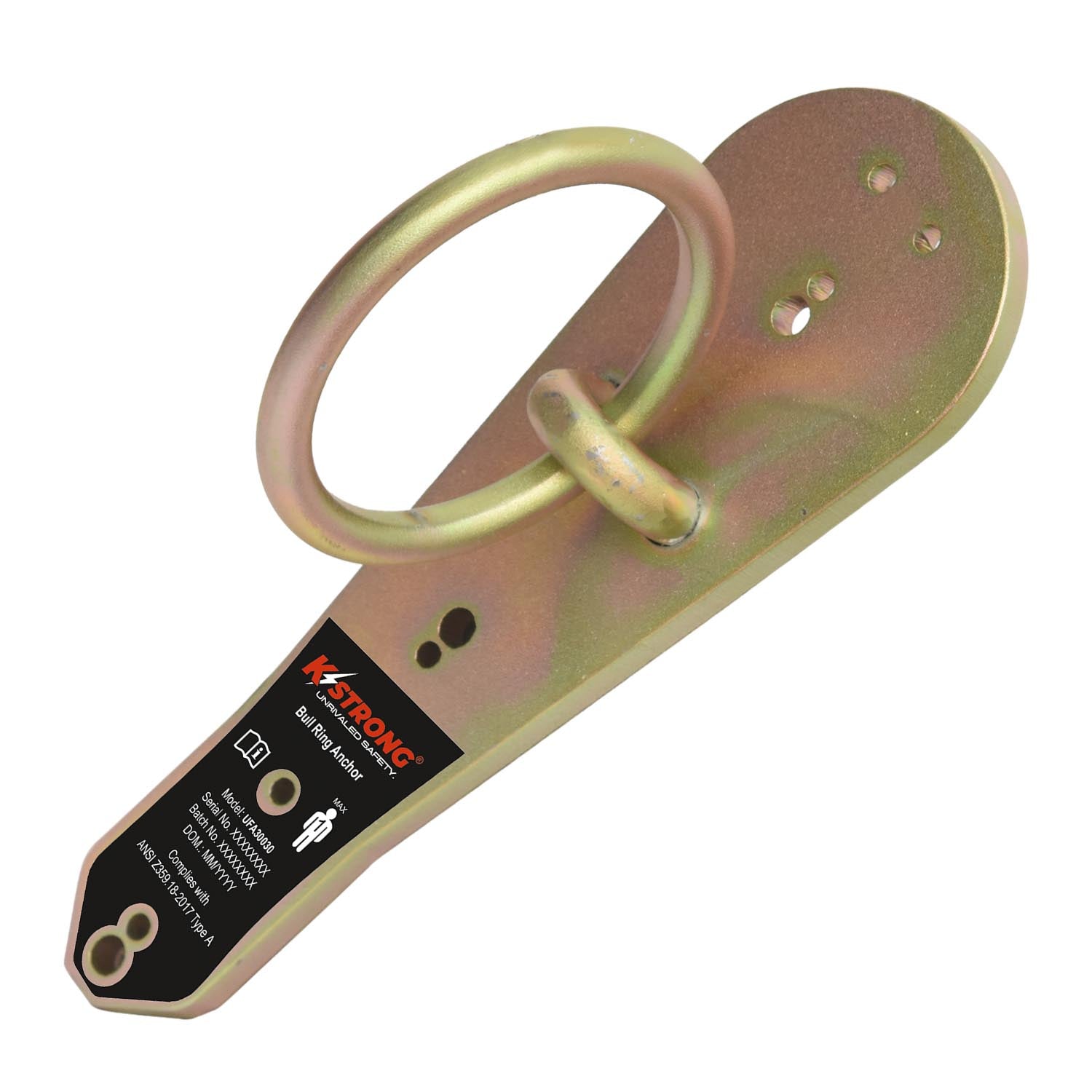
Best all-around: KStrong Kapture Elite 5-point harness
The KStrong Kapture Elite 5-point full-body harness is a strong all-around choice, an ANSI-rated harness with a dorsal D-ring for fall arrest and a five-point design that suits a range of work at height. Sold in a configuration with a twin-leg shock-absorbing lanyard, it's a ready-to-work fall-arrest setup. The five-point layout distributes arrest forces well and accommodates the main attachment needs. For general construction and industrial work at height where you need dependable, compliant fall arrest, this harness covers the essentials at a sensible price.
Best premium comfort: KStrong Kapture Element harness
The KStrong Kapture Element 5-point harness steps up with oil- and water-repellent webbing and both an enhanced dorsal D-ring and a front (sternal) D-ring, adding ladder-climbing and descent capability to fall arrest. The treated webbing suits dirty, wet, or oily environments where standard webbing degrades faster, and the extra front D-ring broadens what the harness can do. For workers in harsh conditions or those who need both arrest and climbing attachment, the Element's added features and durable webbing justify the higher price over a basic arrest harness.
Pair it with the right connector: BRUTE SRL
A harness is only half the system, it needs a connector, and where fall clearance is limited, a self-retracting lifeline is often the right partner. The KStrong BRUTE cable SRL keeps the line taut and locks on a sudden pull, arresting a fall in a much shorter distance than a shock-absorbing lanyard, which matters when there isn't much room below. Its leading-edge (LE) rating suits tie-off at foot level over edges. Whichever harness you choose, pair it with a connector, lanyard or SRL, matched to your available fall clearance, covered in our lanyard vs SRL guide.
Don't forget a rated anchor: KStrong Bull Ring
The third piece of the system is the anchor, and it must be rated for fall arrest. A bull-ring anchor provides a rated, engineered attachment point where you need one, rather than tying off to unrated structure. Remember the rule: each anchorage must support 5,000 lb per worker, or be part of an engineered 2-to-1 system under a qualified person, and you must never clip to a guardrail, pipe, or conduit. A great harness clipped to a bad anchor is unsafe. Complete the system with a proper rated anchor, covered in our fall protection anchor points guide.
How to choose your harness
Choose a harness by matching its D-ring configuration to your work: a dorsal D-ring for basic fall arrest, plus a front D-ring if you climb ladders or need descent, side D-rings if you do positioning work, and shoulder D-rings for rescue or confined space. Then weigh comfort features, padding, quick-connect buckles, specialized webbing, since a harness worn all day must be tolerable to wear. Confirm it's ANSI-rated, get the right size, and remember the harness is one part of a system, pair it with a suitable connector and a rated anchor. Fit and inspect it correctly, and it will protect you.
It's a system, not just a harness
The most important thing to remember when buying a harness is that it's one part of a system, and all parts must be present and rated. A top harness does nothing without a connector matched to your fall clearance and a rated anchor to tie off to, plus correct fit, calculated clearance, training, and a rescue plan. It's common to focus on the harness and under-think the connector, anchor, and clearance, but a fall is arrested by the whole system working together. Budget and plan for the complete PFAS, harness, connector, and anchor, not just the harness alone.
The verdict
For most work at height, the KStrong Kapture Elite 5-point harness is a solid, ANSI-rated all-around choice; step up to the Kapture Element for harsh conditions and added climbing capability. But a harness is only one part of a fall-arrest system, pair it with the right connector for your fall clearance (an SRL where clearance is tight) and a rated anchor (5,000 lb or an engineered 2-to-1 system). Match the D-rings to your work, fit it snugly, and inspect before every use.
FAQ
The best harness matches your work: a KStrong Kapture Elite 5-point harness is a strong all-around, ANSI-rated fall-arrest choice, while the Kapture Element adds oil/water-repellent webbing and a front D-ring for harsh conditions and climbing. Choose the D-ring configuration and comfort features that suit your job.
OSHA requires a full-body harness for fall arrest, body belts are prohibited because they concentrate force on the waist. The fall-arrest connector must attach to the dorsal (back) D-ring, and the harness must be part of a complete system with a rated anchor and a compliant connector.
Match the harness's D-ring configuration to your work (dorsal for arrest, front for climbing, side for positioning, shoulder for rescue), pick the correct body size for a snug fit, and choose comfort features for all-day wear. Confirm it's ANSI-rated, and pair it with a suitable connector and rated anchor.
Related Guides
Sources: OSHA 29 CFR 1926 (construction) and 1910 (general industry), ANSI/ASSP Z359, manufacturer references (3M/DBI-SALA, MSA, KStrong, FallTech), verified 2026-07-22. This is general safety information, not a substitute for training or the current regulations; fall protection is life-safety equipment. · Updated 2026-07-22