What a shock-absorbing lanyard is
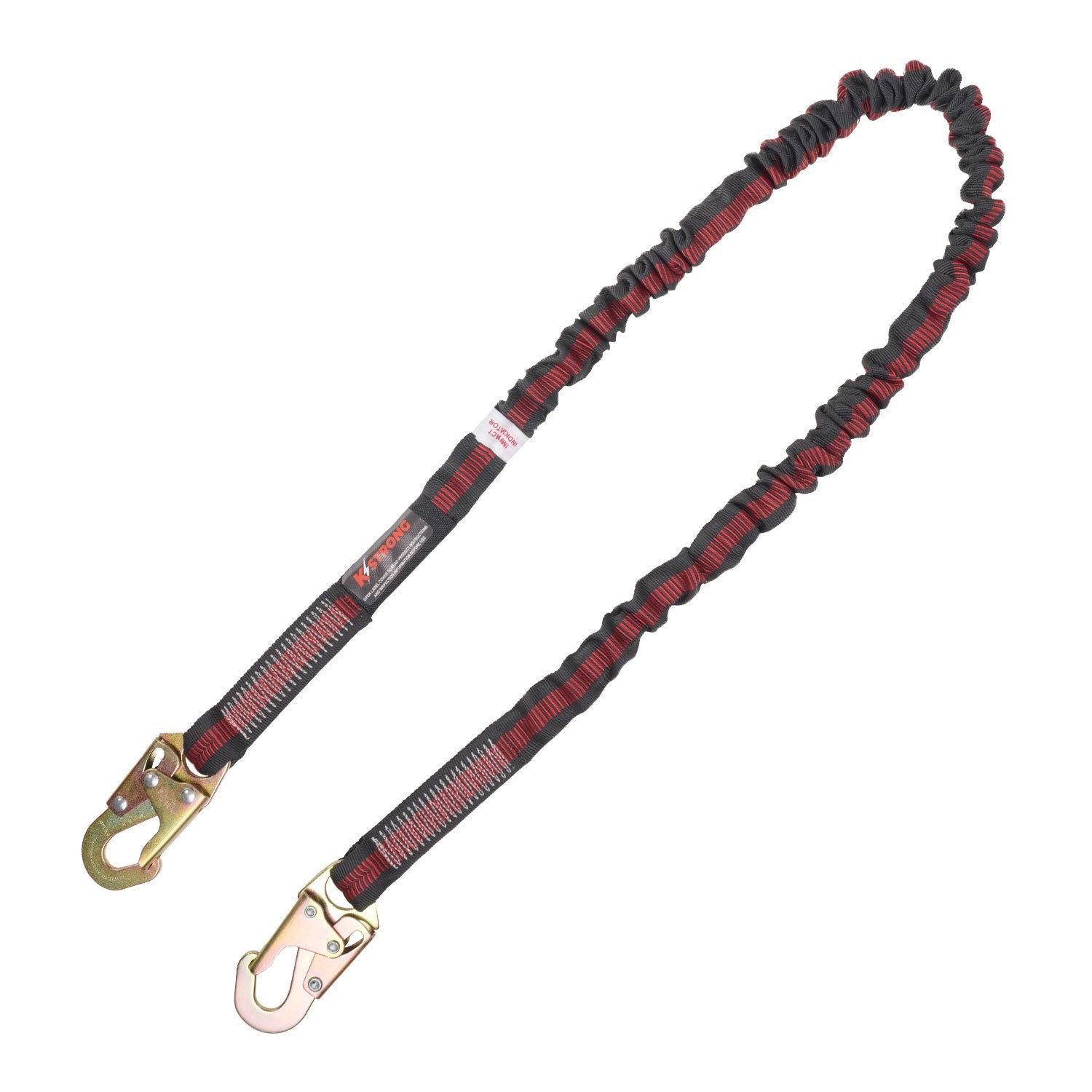
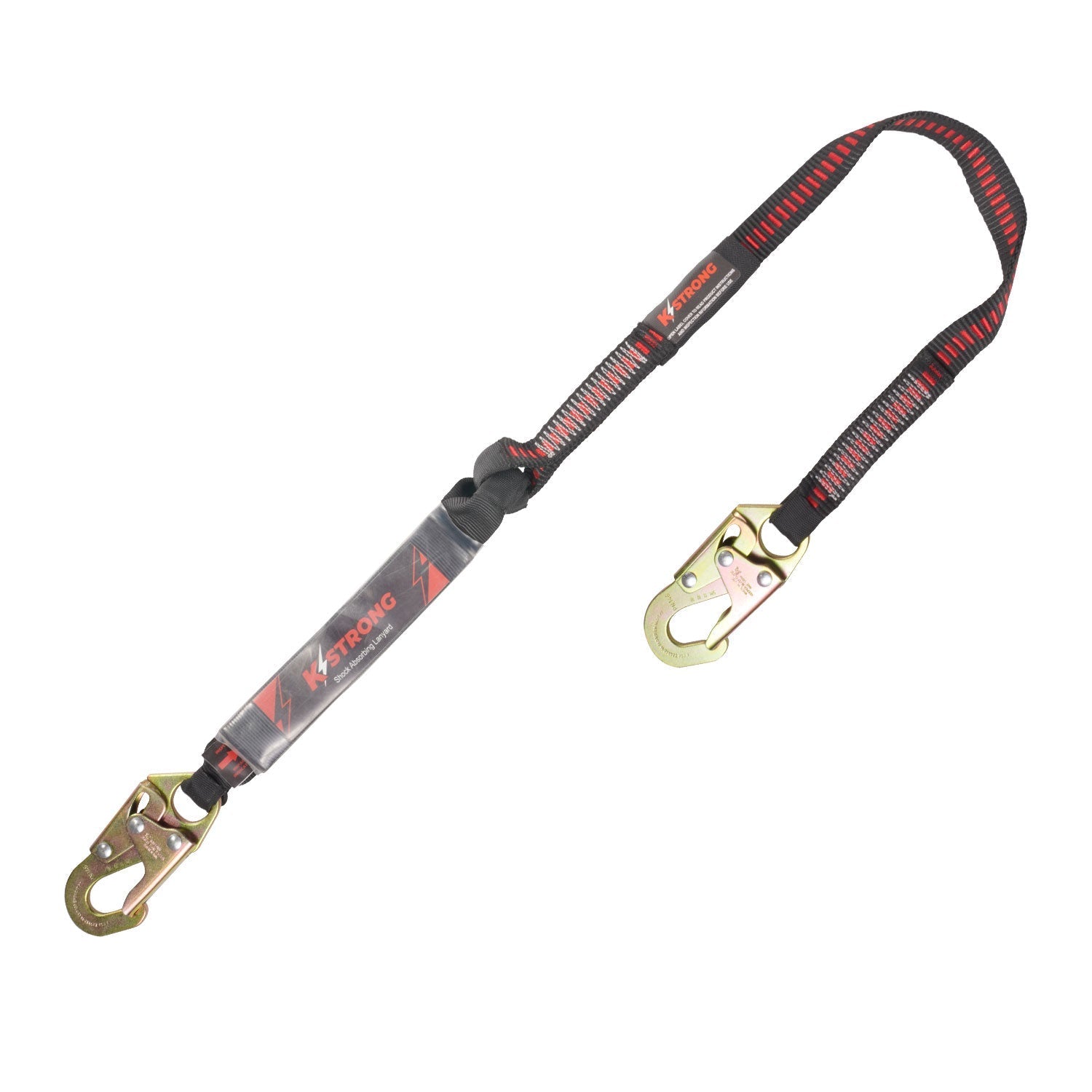
A shock-absorbing lanyard, also called an energy-absorbing lanyard, is one of the two main connectors in a Personal Fall Arrest System (the other being an SRL). It links the worker's harness to an anchor point, and its defining feature is a built-in energy absorber, usually a folded, stitched pack, that deploys in a fall to soften the stop. Without it, a fall arrested by a rigid lanyard would slam the worker with dangerous force. The energy absorber is what makes the lanyard survivable. Our shock-absorbing lanyards are ANSI-rated units built for fall arrest.
How the energy absorber works
The energy absorber is the heart of the lanyard. In a fall, as the lanyard comes taut and the load builds, the absorber, a specially stitched or packed section, begins to tear away or deploy in a controlled way, extending in length. This deployment stretches the arrest out over a short distance and time, which dramatically lowers the peak force the worker experiences. It's the same principle as a car's crumple zone: absorbing energy by deforming rather than transmitting it all instantly. Once deployed, the absorber has done its job, and the lanyard must be retired. The visible deployment also signals that the lanyard has arrested a fall.
The OSHA force and distance limits
A shock-absorbing lanyard exists to meet OSHA's strict fall-arrest limits. The system must hold free fall to no more than 6 feet, cap the maximum arresting force on the body at 1,800 lb (when used with a full-body harness), and limit the deceleration distance to no more than 3.5 feet. The energy absorber is what keeps the arrest force under that 1,800-lb ceiling, without it, the force would far exceed what the body can survive. These numbers are why you can't substitute a plain rope or a non-absorbing lanyard for fall arrest; the absorber is required to bring the forces into the survivable range.
Free fall and clearance
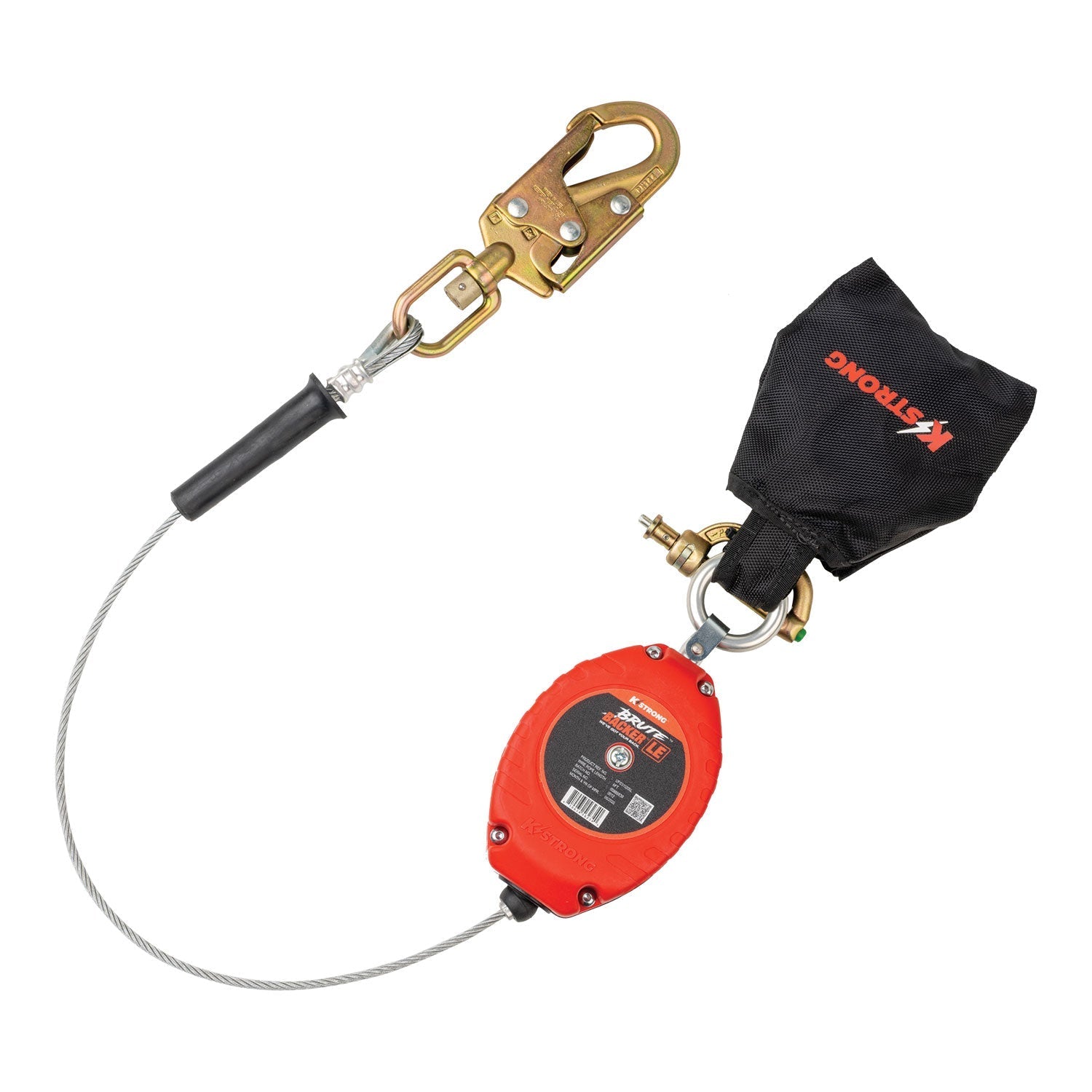
A shock-absorbing lanyard allows meaningful fall distance, and that has a critical consequence: it needs substantial clearance below. Because the worker can free-fall up to 6 feet before the lanyard engages, then the absorber deploys up to 3.5 feet more, plus harness stretch and the worker's own height, a 6-foot shock-absorbing lanyard can require roughly 18 feet of clearance below the anchor to stop the worker before they hit a lower level. This is why fall clearance must be calculated, covered in our fall clearance calculation guide. Where there isn't that much room, an SRL is often the safer connector.
Single-leg versus twin-leg (100% tie-off)
Lanyards come in single-leg and twin-leg (Y-shaped) versions, and the difference matters when moving. A single-leg lanyard has one connector, so when you unclip to move to a new anchor, you're briefly unprotected. A twin-leg lanyard has two legs, letting you clip the second leg to the new anchor before unclipping the first, so you're always tied off, this is called 100% tie-off, and it's essential when moving around at height, such as on steel. Our Kapture Elite harness pairs with a twin-leg lanyard for exactly this. If your work involves moving between anchors, a twin-leg lanyard keeps you continuously protected.
Inspection and retirement
Like all fall-protection gear, a shock-absorbing lanyard must be inspected before every use: check the webbing for cuts, burns, and abrasion, the hooks for damage and proper function, and, crucially, the energy absorber pack, if it shows any sign of deployment (partial tearing, an opened pack, a tripped indicator), the lanyard has taken a load and must be retired immediately. And any lanyard that has arrested a fall is retired, no exceptions, since its absorber is spent. Retire damaged lanyards at once. As with harnesses, a lanyard is inexpensive next to the consequence of one failing, so never keep using a questionable one.
When to use a shock-absorbing lanyard
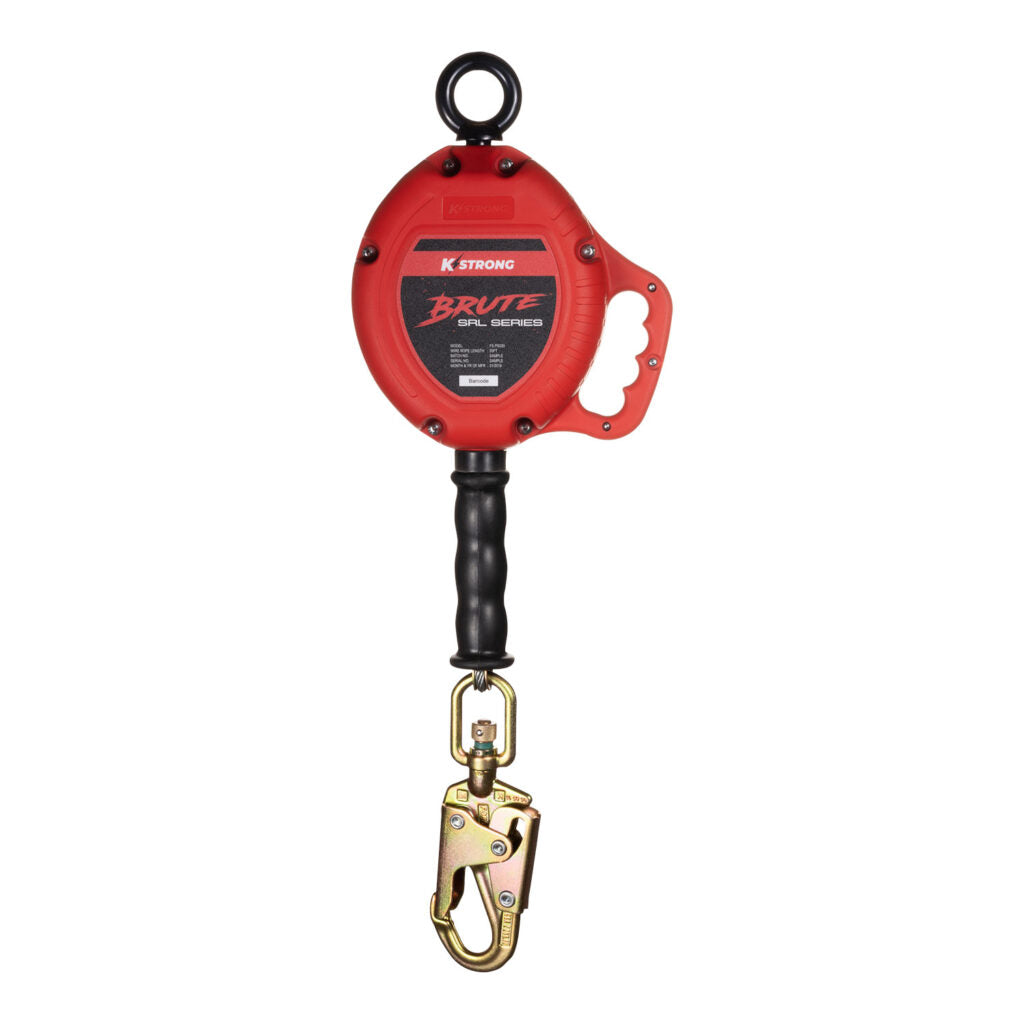
A shock-absorbing lanyard is the right connector when you have ample fall clearance below the anchor and you're working at or moving between fixed points, general construction and industrial work at height where there's plenty of room below. It's simple, rugged, and economical. Where it's the wrong choice is tight clearance, if there isn't enough room below for the full fall distance, a self-retracting lifeline that arrests in a much shorter distance is safer. So the deciding factor is usually clearance, which we compare directly in our shock-absorbing lanyard vs SRL guide.
The bottom line
A shock-absorbing lanyard is a fall-arrest connector with a built-in energy absorber that deploys to decelerate a fall and keep the arrest force under OSHA's 1,800-lb limit, typically 6 feet long, joining harness to anchor. Because it allows significant fall distance, it needs substantial clearance below (roughly 18 feet for a 6-foot lanyard), so calculate your clearance, and choose an SRL where room is tight. Use twin-leg versions for 100% tie-off when moving, and retire any lanyard that's damaged or has arrested a fall. See our shock-absorbing lanyard vs SRL and fall clearance guides.
Snap hooks and connection safety
The hooks on a lanyard matter as much as the webbing. Modern lanyards use self-closing, self-locking snap hooks that require two deliberate actions to open, preventing accidental rollout (where a hook works its way open and disconnects). Always connect to a compatible, rated point, and avoid connecting a snap hook back onto the lanyard itself or clipping two hooks into one D-ring unless rated for it, improper connections can cause rollout. Check that the hooks on your lanyard close and lock fully every time. A strong lanyard with a hook that rolls out is no protection at all, so the connectors deserve the same attention as the webbing.