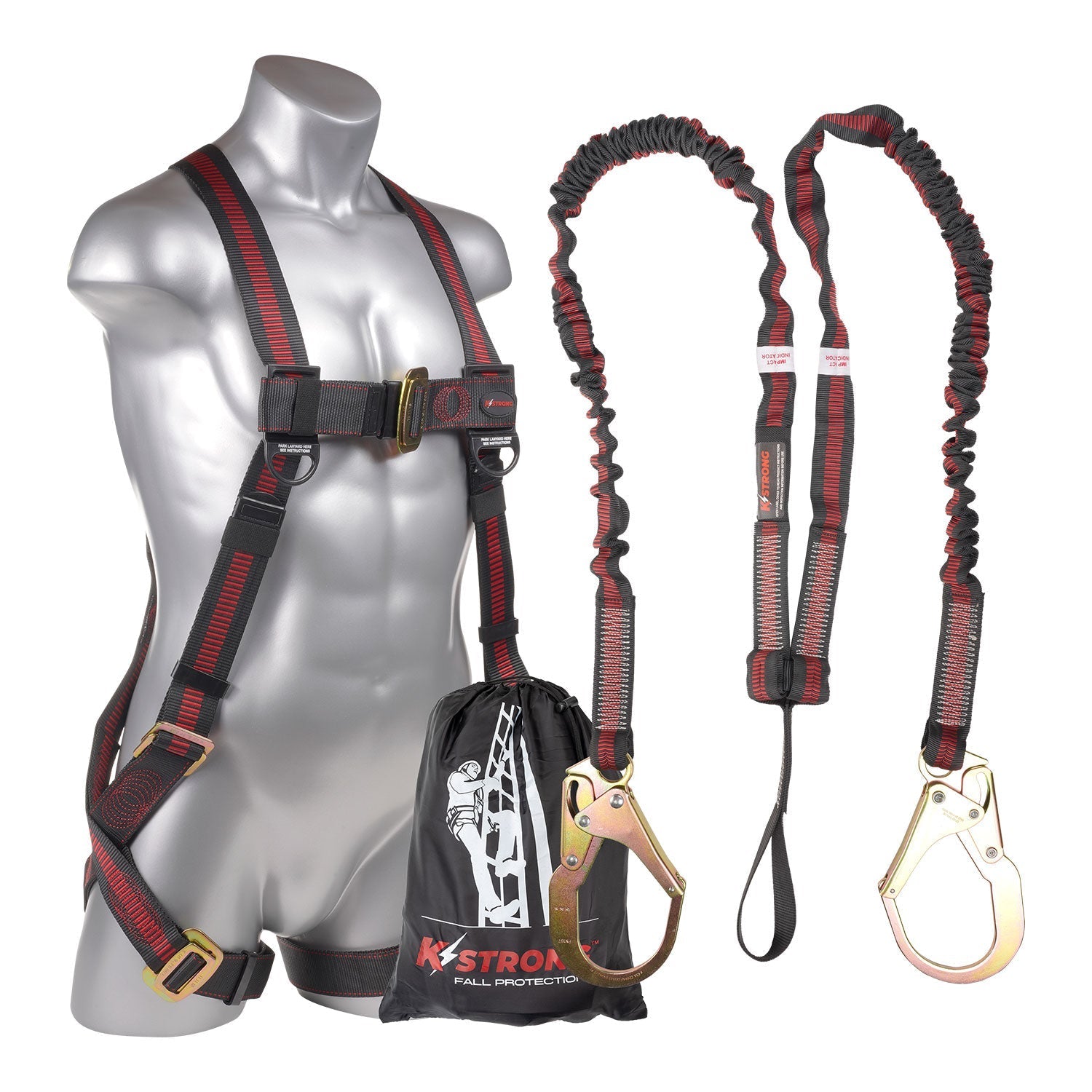
Inspect before every use
A safety harness must be inspected before every single use, not just periodically, because it's the piece of equipment that catches you in a fall, and damage can appear between uses. A pre-use inspection takes only a minute or two and is a mandatory habit for anyone working at height. In addition to this frequent user inspection, harnesses require documented periodic inspections by a competent person. But the before-each-use check is the frontline defense: it catches the cut, burn, or cracked buckle that could let a fall become a fatality. Never skip it, and never use a harness you haven't inspected.
Inspect the webbing
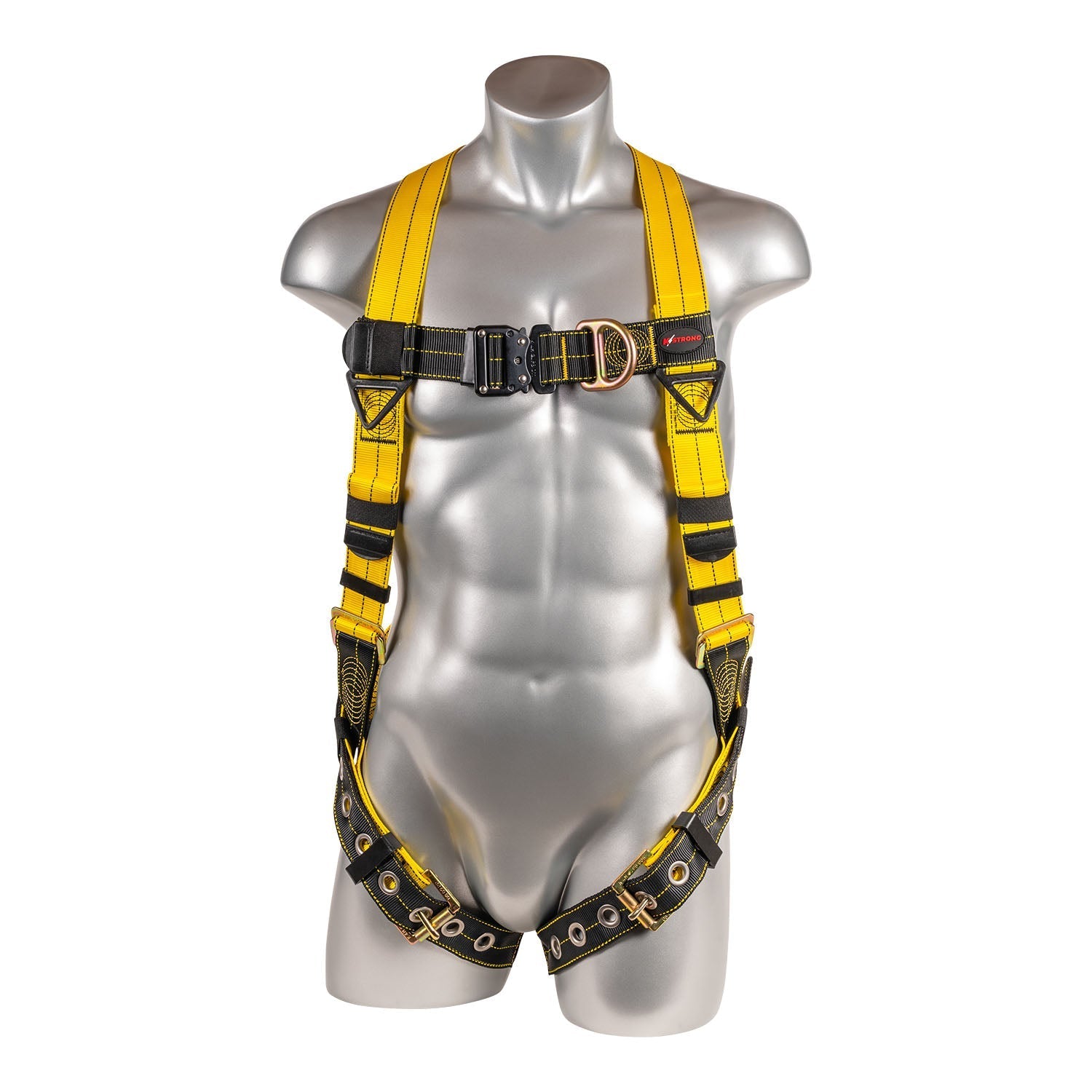
The webbing is the harness's load-bearing body, so inspect it thoroughly. Run the entire length of every strap through your hands, bending the webbing into an inverted U as you go, this flexing spreads the fibers and reveals damage that's hidden when the strap is flat. Look for cuts, frays, and abrasion; burns or melting from heat or sparks; chemical damage such as stiffening, discoloration, or brittleness; and excessive wear or fading from UV exposure. Any significant damage to the webbing means the harness comes out of service. The webbing must be sound along its full length, since a fall loads all of it.
Check the stitching
Stitching holds the harness together and often includes load-indicator features, so inspect it closely. Look along all seams for pulled, cut, broken, or burned threads, and for any loose or missing stitching, especially at high-stress points like where D-rings and straps join. Many harnesses have load-indicator stitching, a section designed to tear out and become visible if the harness has arrested a fall or been overloaded; if that indicator has deployed, the harness has taken a fall and must be retired. Compromised stitching, or a deployed load indicator, is cause for immediate removal from service.
Examine the hardware
The metal hardware, the D-rings, buckles, and grommets, transfers the load, so it must be sound. Check every D-ring for cracks, distortion, sharp edges, corrosion, and that it moves and seats properly. Check all buckles, whatever type, for cracks, deformation, corrosion, and that they latch, hold, and release correctly. Check grommets and any adjusters for damage. Any cracked, bent, badly corroded, or malfunctioning piece of hardware retires the harness. The hardware is where the harness connects to the rest of the fall-arrest system, so a failed D-ring or buckle defeats everything else.
Confirm the labels
A harness must carry legible labels, and their absence or illegibility is itself a reason to remove it from service. The labels carry the harness's rating, standards compliance (such as ANSI), model and serial information, and often an inspection grid. If you can't read the labels, you can't verify the harness is rated and compliant, or track its inspection history, so an unlabeled or unreadable harness can't be trusted. Part of every inspection is confirming the labels are present and legible. Keep them protected, and retire a harness whose identification you can no longer confirm.
What to do if it fails
If a harness fails any part of the inspection, remove it from service immediately and make sure it can't accidentally be used again, tag it as unusable and physically separate it, or destroy it. A harness that has arrested a fall must be retired regardless of visible condition, since a fall can damage it internally. Don't try to repair a harness yourself; harnesses are generally not field-repairable and a compromised one must be replaced. Given that a harness is inexpensive relative to a life, there's never a reason to keep using a questionable one. When in doubt, take it out of service, no exceptions.
Keep records and store properly
Beyond the pre-use check, keep records of the periodic competent-person inspections, and uniquely identify each harness so its history can be tracked, this supports compliance and helps you retire harnesses as they age. Storage matters too: keep harnesses clean, dry, and out of direct sunlight and away from chemicals and heat, since those degrade webbing over time. Hang them rather than crushing them in a pile. Good storage extends a harness's usable life and reduces the damage inspections have to catch. Treat the harness as the critical safety equipment it is, both in use and in storage.
The bottom line
Inspect a safety harness before every use: flex the webbing into an inverted U to find cuts, burns, and abrasion; check stitching for damage and deployed load indicators; examine D-rings, buckles, and grommets for cracks and corrosion; and confirm the labels are legible. Remove the harness from service for any defect, and always retire one that has arrested a fall. Keep records, store it properly, and never use an uninspected harness. See our what is a full-body harness guide and the full fall protection guide, and browse safety harnesses.
Make inspection a habit
The value of harness inspection comes from consistency, doing it every single time, not just when you remember. Build it into the routine of donning the harness: as you put it on, run the webbing through your hands, glance at the stitching and hardware, and check the labels. Done as a habit, it adds under a minute and catches problems before they matter. Employers should reinforce this with training and periodic documented inspections, but the daily discipline rests with the wearer. A harness that's inspected every use is one you can trust; one that's checked occasionally is a gamble with your life.