What an anchor point is
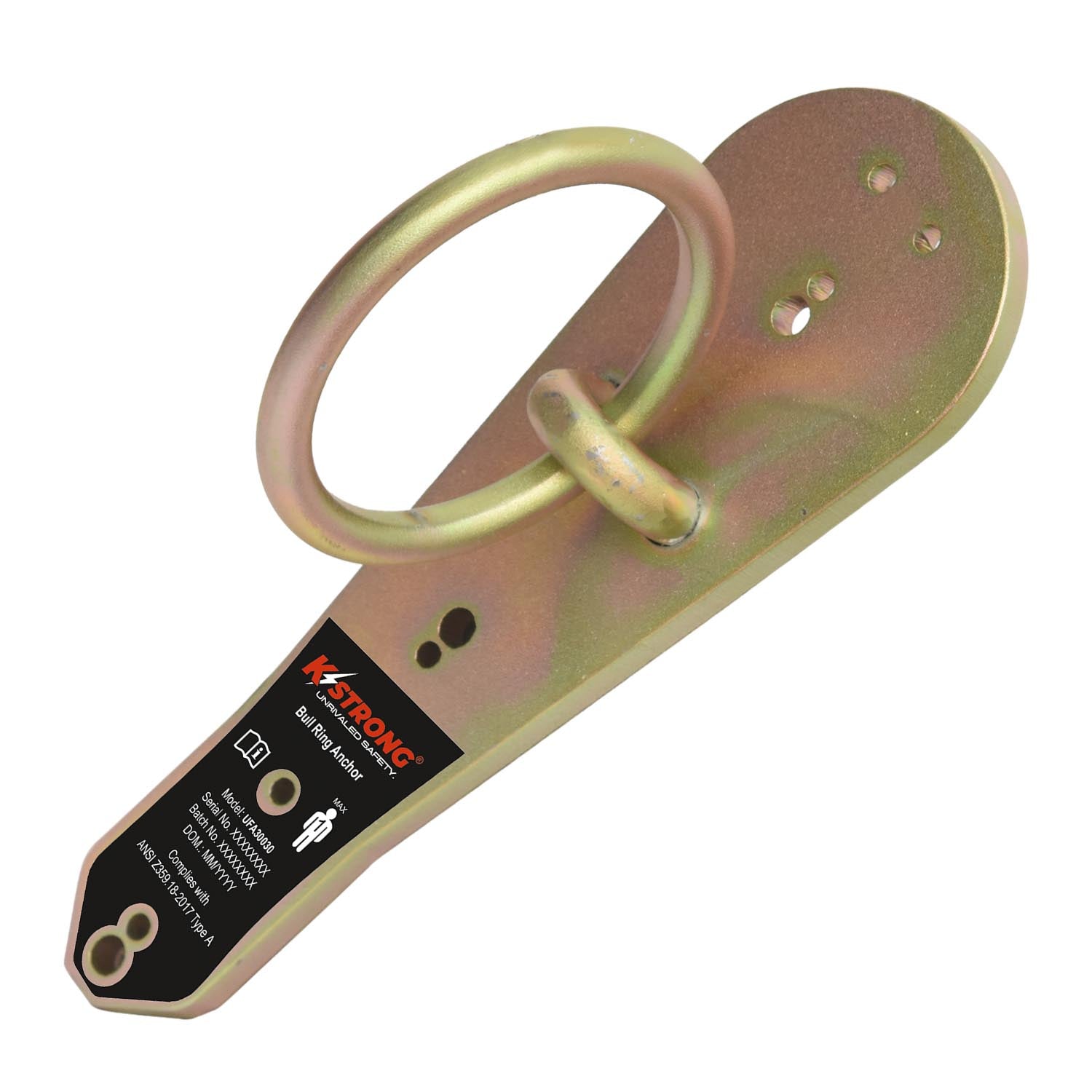
The anchorage is the foundation of a fall-arrest system, the secure structural point everything else connects to. An anchor point (or anchorage) is that rated structure, and an anchorage connector is the device, like a beam clamp, a bull-ring anchor, or a D-ring plate, that couples the system to it. If the anchor fails, nothing else matters, so anchorage is arguably the most critical part of the ABCD. It must be strong enough to hold a falling worker and rated for the purpose. Choosing and using the right anchor is fundamental, and it's an area where misunderstandings, and dangerous shortcuts, are common.
The 5,000 lb rule
OSHA's core anchorage requirement (in 1926.502 for construction and 1910.140 for general industry) is that each anchorage used for personal fall arrest must be capable of supporting at least 5,000 lb per worker attached to it. That figure sounds enormous, and it is, it reflects the dynamic forces a fall can generate and builds in a large safety margin. The 5,000-lb rule is the default, straightforward path to compliance: if the structure and anchor connector can each hold 5,000 lb per worker, you've met the requirement. It's why you can't just tie off to any convenient point, most everyday structure isn't rated for that load.
The engineered 2-to-1 alternative (correcting a myth)
Here's a widely misunderstood point: the 5,000-lb figure is not the only way to comply. OSHA's rule also allows an anchorage to be designed, installed, and used under the supervision of a qualified person, as part of a complete personal fall arrest system that maintains a safety factor of at least two. In other words, an engineered system with a 2-to-1 safety factor on the actual arrest forces is equally compliant, it doesn't have to hit 5,000 lb. The common claim that every anchor must be 5,000 lb, no exceptions, is a myth, and a frequent error on competitor sites. Both paths are valid; the engineered alternative just requires a qualified person.
Types of anchors
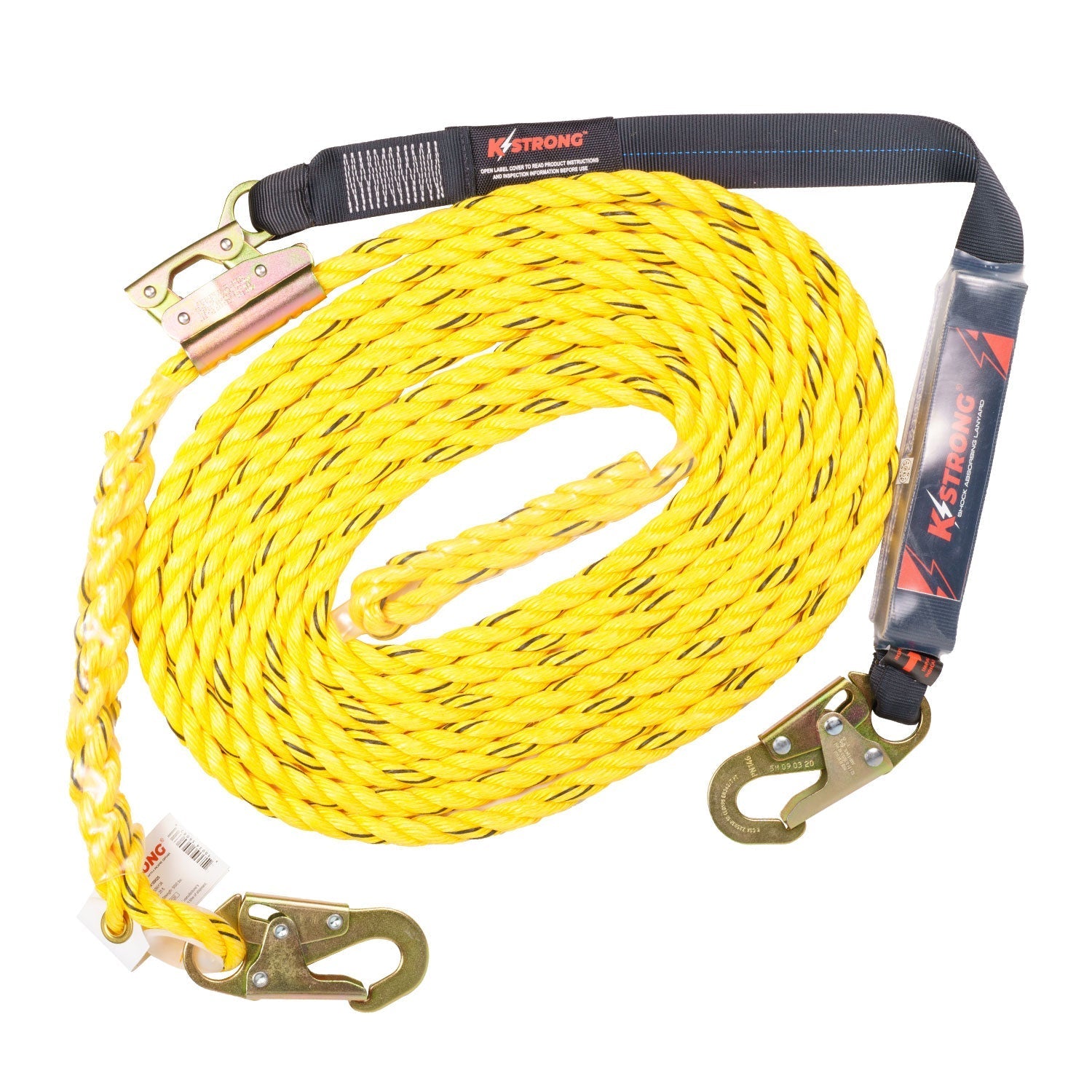
Anchors come in types matched to what you attach to. Beam anchors and beam clamps grip I-beams and structural steel. D-ring and concrete anchors bolt or cast into concrete for a permanent rated point. Roof anchors, permanent or temporary, suit pitched and low-slope roofs. And tie-off adapters and cross-arm straps wrap around a beam or column to create an anchor point. Vertical lifelines like our polysteel rope lifeline extend an anchor for climbing. Choose the anchor by the structure it mounts to, steel, concrete, wood, or roof, and confirm it's rated and certified for fall arrest.
Never tie off to unrated structure
One of the most dangerous mistakes in fall protection is tying off to something that isn't a rated anchor. Guardrails, conduit, small pipes, ductwork, ladders, and light structural members are not rated anchor points, and they can fail catastrophically under fall-arrest forces, turning a survivable fall into a fatal one. Only tie off to a proper anchor that meets the 5,000-lb-or-2-to-1 requirement, whether that's engineered structure or a rated anchorage connector installed correctly. If you're not sure a point is rated, don't use it. The convenience of an unrated tie-off is never worth the risk of the anchor giving way in a fall.
Choosing and installing an anchor
Selecting an anchor means matching it to the structure and confirming its rating. Identify what you're mounting to (steel, concrete, roof, etc.), choose an anchor rated and certified for fall arrest on that structure, and install it per the manufacturer's instructions, since an anchor installed wrong isn't rated. For complex or engineered anchorage, involve a qualified person, both to satisfy the 2-to-1 alternative and to ensure the structure itself can take the load. Position the anchor to minimize free-fall distance and swing-fall (pendulum) hazards. A rated anchor correctly installed and positioned is what makes the rest of the system trustworthy.
Swing falls and anchor position
Where you place the anchor affects safety beyond just its strength. If the anchor is off to the side rather than directly above the worker, a fall becomes a swing fall, the worker pendulums sideways and can strike structure or the ground, and the effective clearance changes. So position anchors as directly overhead as practical to minimize swing, and account for any horizontal offset when calculating clearance. A strong anchor in a poor position can still let a worker get hurt in a swing fall. Good anchor selection includes good anchor placement, directly above the work reduces both fall distance and swing hazard.
The bottom line
A fall-protection anchor must support at least 5,000 lb per worker, or be part of an engineered system with a 2-to-1 safety factor under a qualified person, the belief that every anchor must be 5,000 lb is a myth, since the 2-to-1 alternative is equally valid. Choose an anchor rated for your structure (beam, concrete, roof), install it correctly, position it overhead to limit swing falls, and never tie off to guardrails, conduit, or unrated structure. See our fall protection guide and fall clearance calculation, and browse our anchors and lifelines.
Temporary versus permanent anchors
Anchors split into temporary and permanent, and the right kind depends on the job. Temporary anchors, beam clamps, cross-arm straps, tie-off adapters, and portable roof anchors, install for a specific task and come off after, ideal for construction and short-term work. Permanent anchors are installed as fixed points for recurring access, common on buildings for maintenance and window cleaning. Both must meet the same rating requirements. Choose temporary anchors for changing worksites and permanent ones where the same access recurs, and in all cases confirm the anchor is rated and correctly installed for the structure it's on.