Why the rules exist
Federal cargo securement rules exist because unsecured or under-secured loads kill people, a shifted load can cause a rollover, and a lost load can strike other vehicles. The FMCSA rules in 49 CFR Part 393 set enforceable minimums for how loads must be tied down, and they apply to commercial hauling. Meeting them isn't just about avoiding a citation or an out-of-service order; it's about physically keeping the load on the truck. Understanding the two core requirements, the aggregate Working Load Limit rule and the minimum tie-down counts, is essential for anyone securing loads for transport, and the equipment you choose must satisfy both.
The 50% aggregate WLL rule
The central rule is straightforward: under 49 CFR 393.106, the aggregate Working Load Limit of the tie-downs securing an article must be at least 50 percent of that article's weight. So a 10,000-lb load needs tie-downs whose combined WLL totals at least 5,000 lb. This is a legal minimum, not a recommended target, you can and often should exceed it. The rule is why you must know the WLL of every strap and chain you use, and why securing to the WLL (not break strength) matters: the WLLs are what you sum to meet the 50 percent requirement.
How aggregate WLL is calculated
The aggregate WLL isn't just adding up every tie-down's full rating, it depends on how each is rigged. For an indirect tie-down (one that runs from a vehicle anchor point to an anchor point on the cargo), you count one-half of its WLL. For a direct tie-down (one that goes from an anchor point, through or over or around the cargo, and back to another anchor point), you count its full WLL. You sum these contributions across all the tie-downs on the article, and that total must reach at least 50 percent of the cargo weight. Knowing which tie-downs are direct versus indirect is necessary to calculate compliance correctly.
Minimum number of tie-downs
Beyond the WLL rule, FMCSA sets minimum tie-down counts by the load's length and weight, and you must satisfy both rules. The counts: an article 5 feet or shorter and 1,100 lb or lighter needs at least 1 tie-down. An article 5 feet or shorter but over 1,100 lb, or between 5 and 10 feet regardless of weight, needs at least 2 tie-downs. And an article longer than 10 feet needs 2 tie-downs for the first 10 feet, plus 1 more for each additional 10 feet or fraction of it. So a 24-foot load needs at least 4 tie-downs. These minimums apply on top of the 50 percent aggregate-WLL requirement.
The weakest-component rule
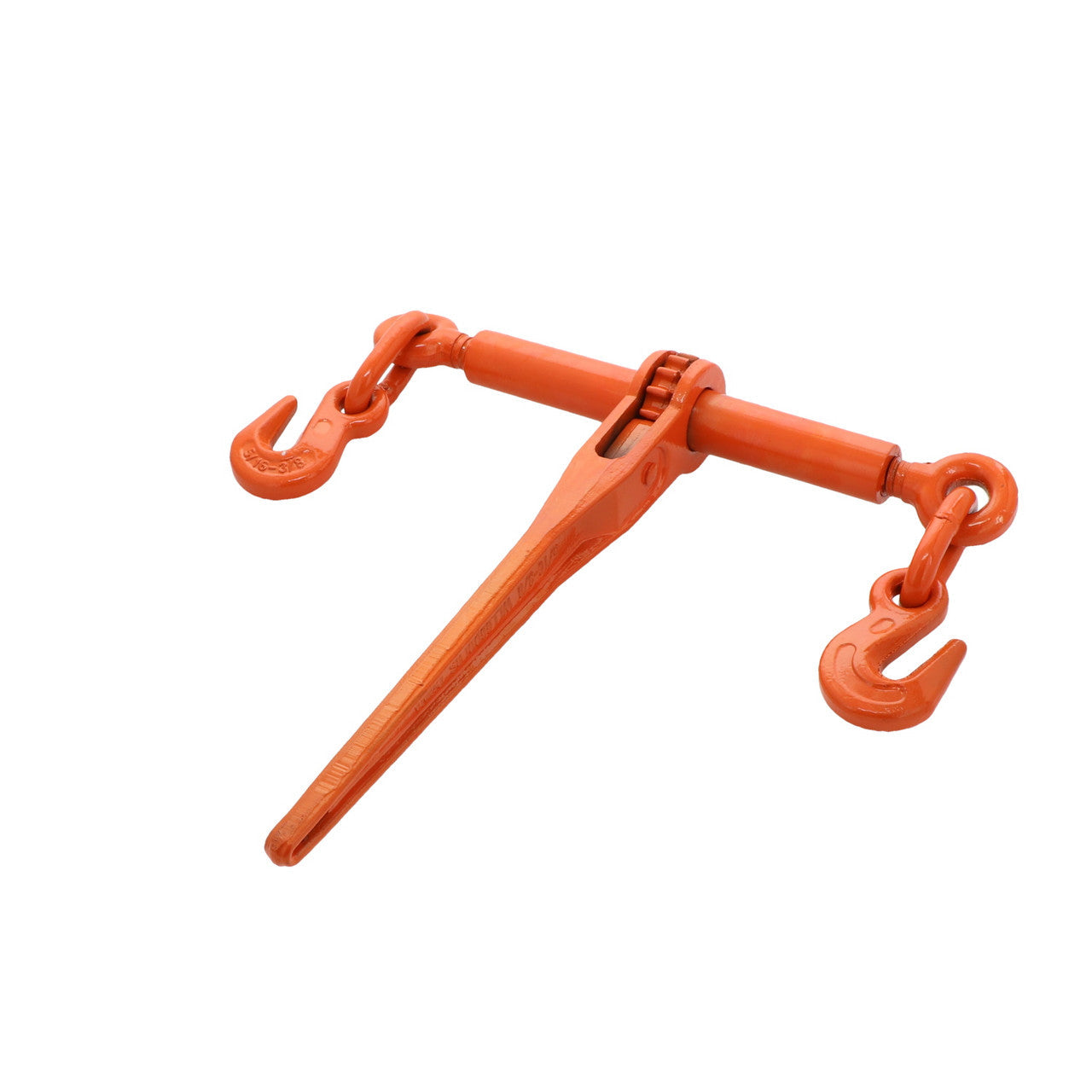
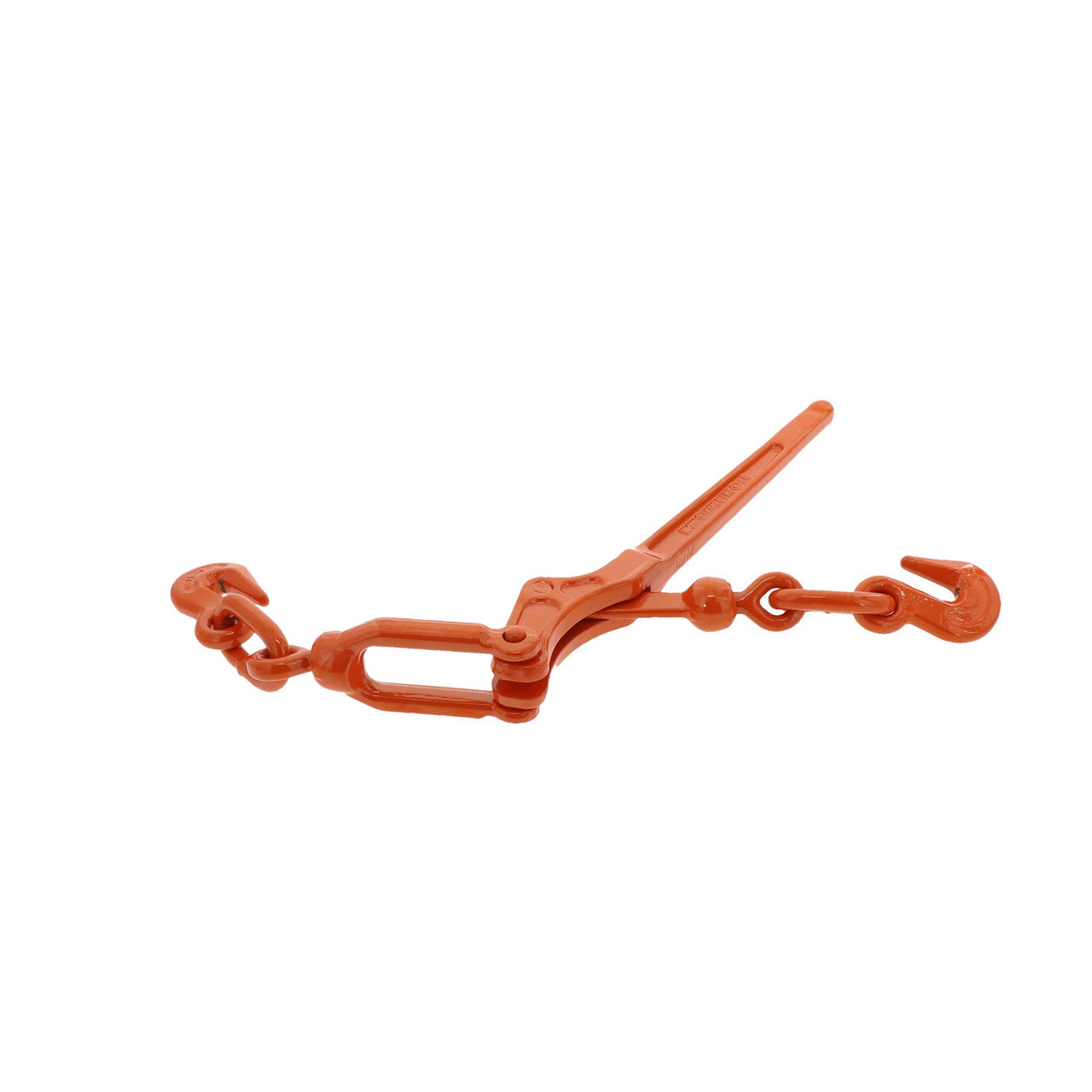
A securement line is only as strong as its weakest part, and this principle runs through the rules. If you tie down with a 6,600-lb chain but use a 4,000-lb binder, the assembly's WLL is 4,000 lb, the binder governs, not the chain. The same applies across straps, hooks, anchor points, and every component: the lowest-rated part sets the line's Working Load Limit, and that's the number that counts toward the 50 percent rule. So you must match components, a strong chain with a weak binder wastes the chain, and rate your anchor points too. Balance the whole assembly so no single part drags down its rated capacity.
Marking and default WLLs
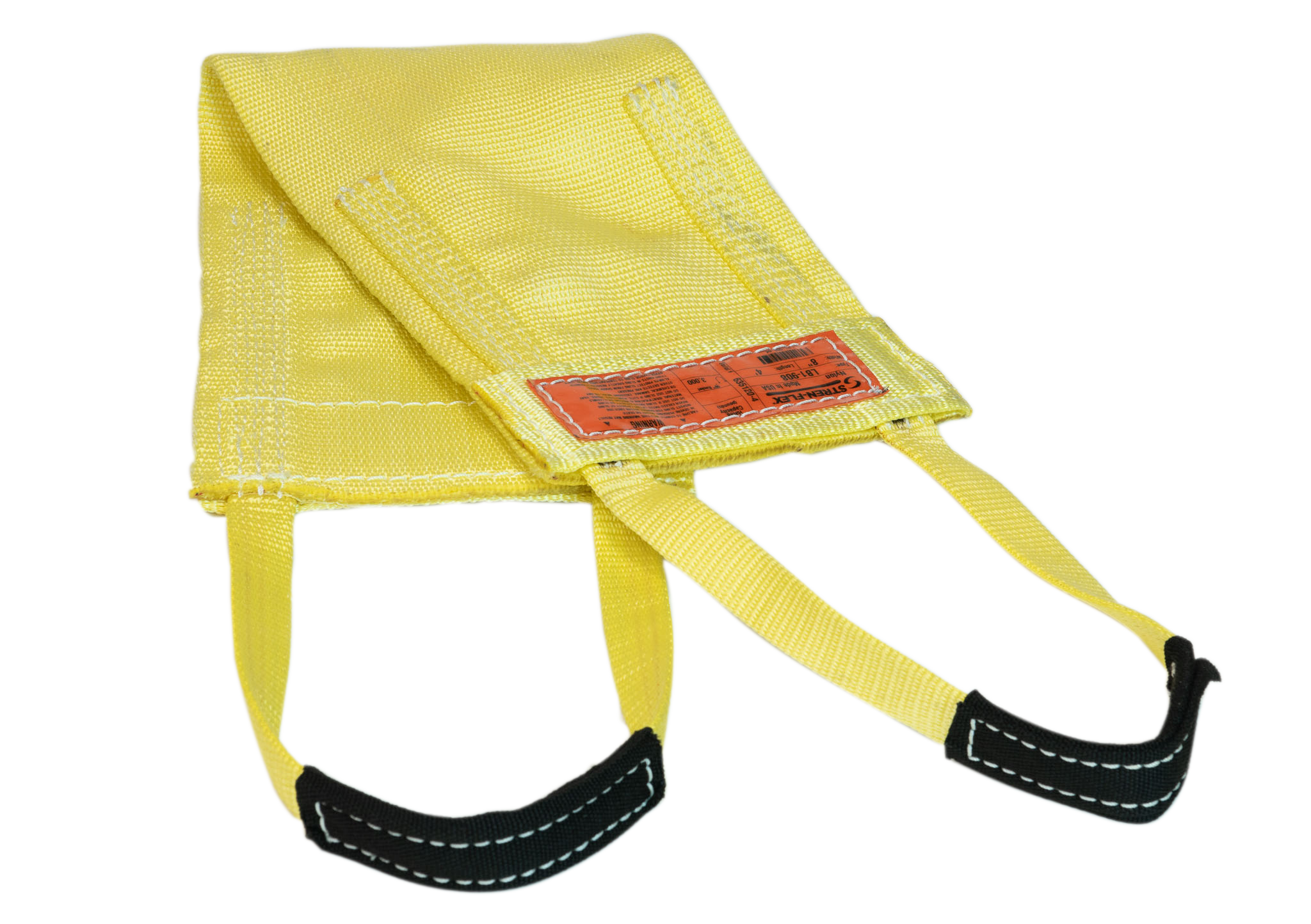
For any of this to work, tie-downs must be marked with their Working Load Limit, and FMCSA requires it, straps, chains, and binders carry a manufacturer WLL on a tag or stamp. If a component is unmarked, you can't claim its actual rating; FMCSA assigns a low default WLL, which usually won't meet your needs, effectively penalizing unmarked gear. So always use marked, rated equipment, and keep the markings legible. A strap whose tag has worn off, or an unidentifiable chain, can't be counted at its real strength for compliance, which is another reason to inspect and retire gear whose markings are gone. Buy marked, keep it marked.
Beyond the minimums: securing against all forces
The rules require more than just holding a load down. Securement must also prevent the load from moving forward, backward, and sideways under the forces of braking, accelerating, and cornering, FMCSA specifies the fractions of cargo weight the securement must resist in each direction. Meeting the tie-down count and the 50 percent WLL rule is the baseline, but you must also arrange the tie-downs so the load genuinely can't shift in any direction, using blocking, bracing, and correct tie-down angles as needed. Think about the whole load's stability, not just the numbers on paper. Compliance and actual safety go together.
The bottom line
FMCSA cargo securement rules require that your tie-downs' aggregate Working Load Limit total at least 50 percent of the cargo weight (49 CFR 393.106), plus a minimum number of tie-downs based on the load's length and weight (1 for short light loads, 2 for longer or heavier ones, and more for loads over 10 feet). The securement is limited by its weakest component, and all tie-downs must be marked with their WLL. Secure to the WLL, match your components, and prevent movement in every direction. See our cargo control guide and what are ratchet straps guides. This is general information, not legal advice, consult the current regulations.