What a ratchet strap is
A ratchet strap, also called a tie-down strap, is the most common tool for securing cargo to a truck, trailer, or flatbed. It combines a length of strong polyester webbing with a ratchet, a geared mechanism that lets you crank the strap to high, secure tension by hand. Hooked to rated anchor points at each end and tightened over the load, it holds cargo firmly against the deck. From moving furniture to strapping equipment on a flatbed, ratchet straps are the everyday workhorse of load securement, valued for being strong, light, and quick to use.
The parts of a ratchet strap
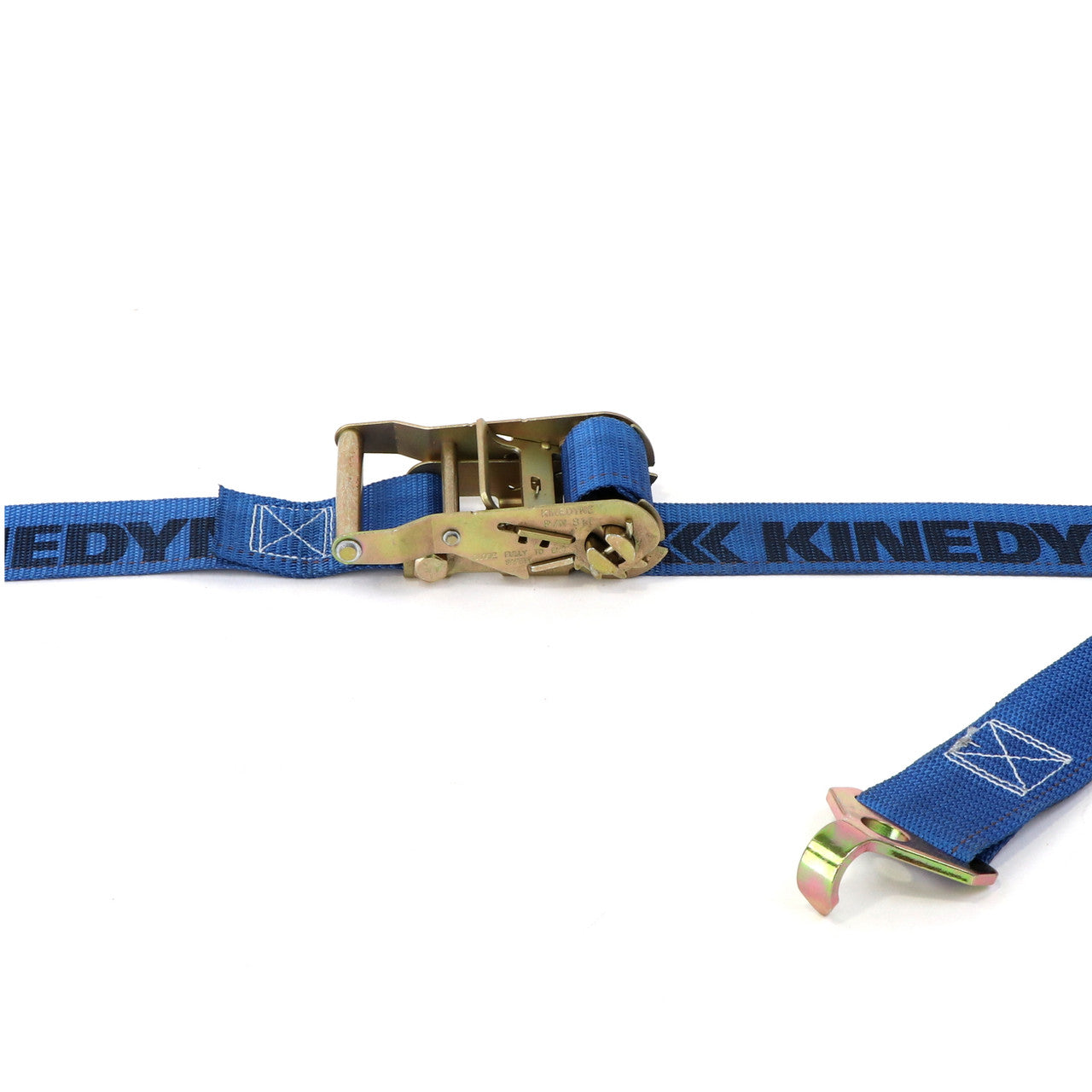
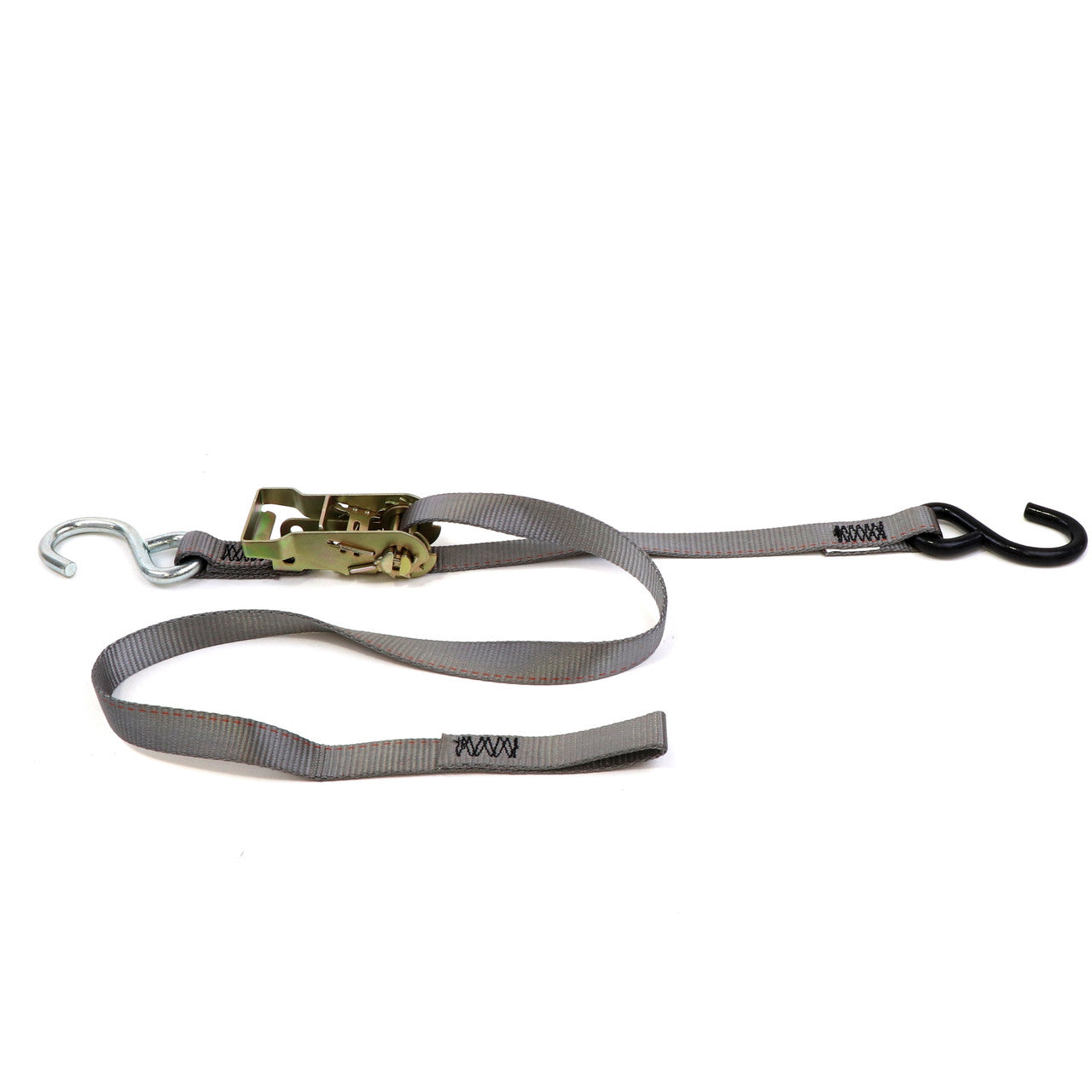
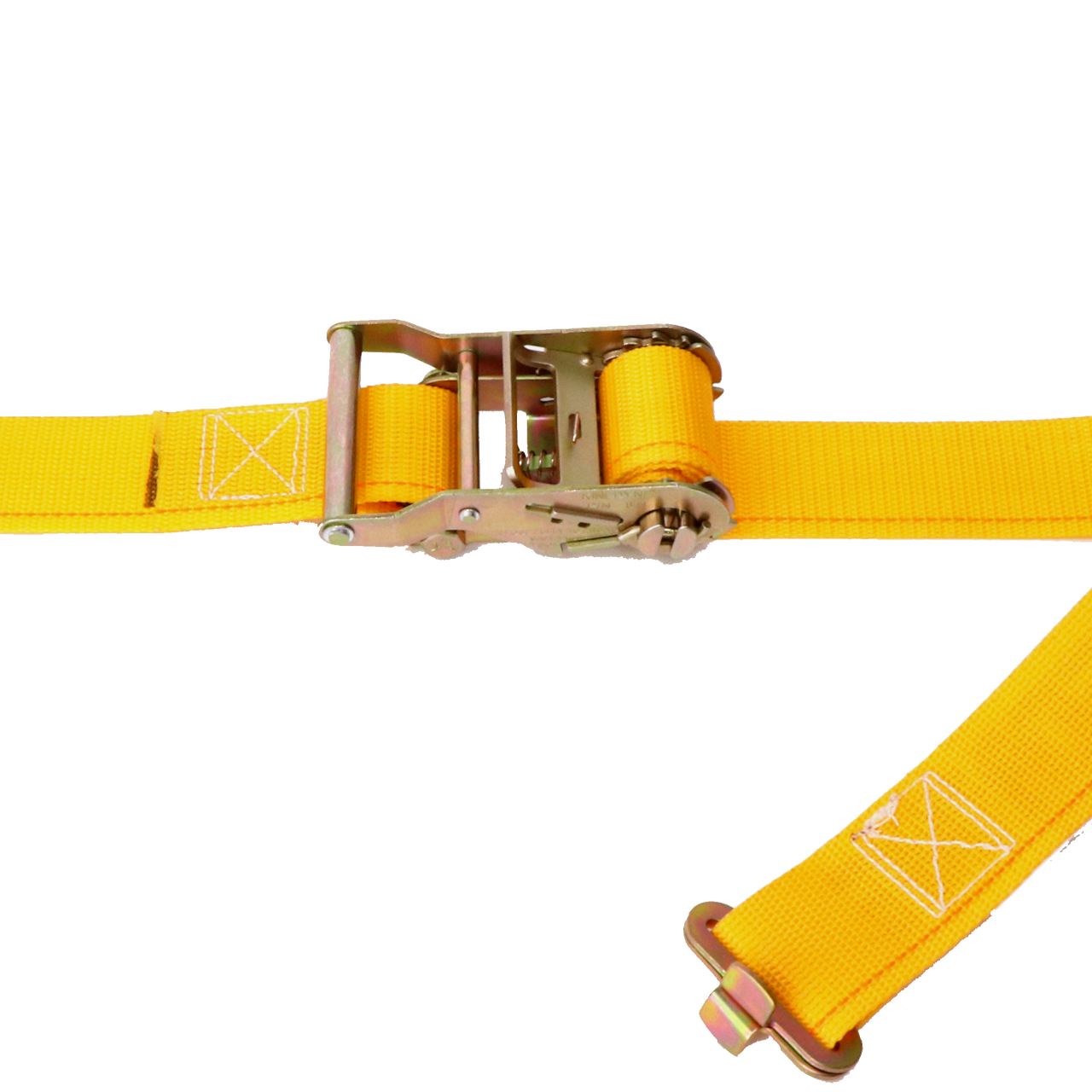
A ratchet strap comes in two pieces joined by the ratchet. The fixed end is the ratchet mechanism itself, with a short tail of webbing (about a foot) and an end fitting. The adjustable end is the long piece of webbing you feed through the ratchet's center mandrel to tension the strap. The three core components are the polyester webbing (the load-bearing part), the ratchet (which provides the mechanical advantage to tighten it), and the end fittings, flat hooks, wire hooks, chain anchors, or e-track fittings, that connect to your anchor points. Each part has a rating, and the assembly is only as strong as the weakest one.
Widths and capacities
Ratchet straps come in standard widths that determine their strength. A 1-inch strap is light-duty, with a break strength around 2,000 lb and a lower Working Load Limit, suited to smaller loads. A 2-inch strap is the versatile standard, rated to about a 3,333-lb Working Load Limit and 10,000-lb break strength. A 4-inch strap is heavy-duty, with a WLL around 5,400 to 5,670 lb and roughly a 20,000-lb break strength, for the heaviest flatbed loads. Match the width to your cargo's weight and the WLL required. Our pair of 1-inch straps and 2-inch straps cover the common light and standard duties.
Working Load Limit versus break strength
This distinction is critical and often misunderstood. Break strength is the load at which the strap fails; Working Load Limit (WLL) is the maximum you should ever secure with it. For tie-downs the safety factor is typically 3 to 1, so the WLL is about one-third of the break strength, a 10,000-lb break strap has a 3,333-lb WLL. You always work to the WLL, never the break strength, because the margin absorbs the road's shocks and vibration and the strap's wear. The WLL is stamped on the label. We cover this fully in our ratchet strap vs cam buckle and cargo securement guides.
The weakest-component rule
A key point about ratings: a ratchet strap's assembly WLL is set by its weakest component, not just the webbing. The webbing, the ratchet, and the end fitting each have their own rating, and the whole strap is limited to the lowest of them. This is why two 2-inch straps can carry very different assembly ratings, some 2-inch straps with lighter fittings are rated well below the webbing's capacity. So don't assume a strap's rating from its width alone; read the assembly WLL on the tag, which reflects the weakest link. When you compare or buy straps, the marked assembly WLL is the number that governs.
End-fitting types
The end fittings determine what a strap can hook to, and there are many. Flat hooks suit flatbed rub rails and are common on heavy straps. Wire hooks (S-hooks or double-J hooks) grab a variety of anchor points. Chain-anchor ends connect to chain for extra reach or strength. And e-track and rope-ring fittings suit enclosed trailers and specific anchor systems. Choose the fitting that matches your anchor points, since a strap you can't attach securely is useless, and remember the fitting's rating counts toward the weakest-component WLL. Our range includes flat-hook, S-hook, and logistic (e-track) fittings for different trailers and anchors.
Ratchet versus cam buckle
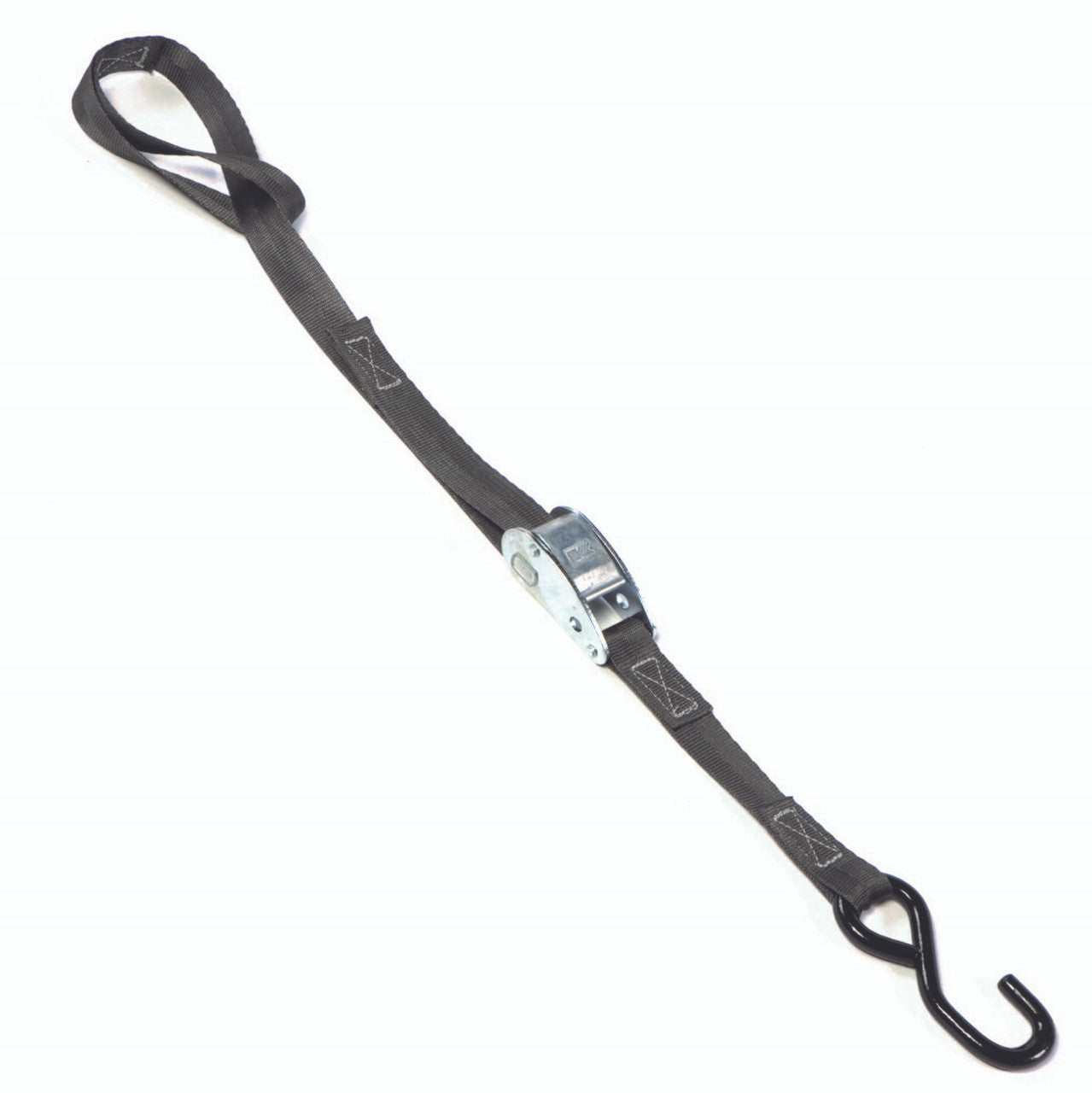
Ratchet straps aren't the only webbing tie-down. A cam-buckle strap tightens by hand-pulling through a spring-loaded cam, with no geared crank, so it applies lighter, self-limiting tension that can't over-tighten. That makes cam straps better for delicate or crushable loads, while the ratchet's high, crankable tension suits heavy and valuable cargo. Many people own both. If you're choosing between them, our ratchet strap vs cam buckle strap guide covers exactly when each is the right tool. For most heavy securement, though, the ratchet strap's tensioning power is why it's the default.
Caring for ratchet straps
Straps wear, and worn straps fail, so inspect and care for them. Check the webbing for cuts, tears, abrasion, and UV fading (sun degrades polyester over time), and the ratchet and hooks for bending, cracks, and smooth function. Retire any strap with damaged webbing or a compromised ratchet or hook. Store straps dry and out of the sun, keep the ratchet clean and lightly lubricated so it operates freely, and always use edge protectors over sharp corners to prevent cuts under tension. A little care keeps straps working safely for years; neglect turns them into a road hazard.
The bottom line
A ratchet strap is a polyester-webbing tie-down with a geared ratchet that cranks it tight, the everyday tool for securing cargo. It comes in 1, 2, and 4-inch widths with rising Working Load Limits, and its assembly rating is set by its weakest component, webbing, ratchet, or fitting, so read the marked WLL. Always secure to the WLL, never break strength, protect sharp edges, and inspect for wear. Compare models in our best ratchet straps guide, learn correct technique in how to use a ratchet strap, and see the full cargo control guide.
Choosing quality straps
Not all straps are equal, and quality matters for a load-bearing tool. Look for straps with genuine polyester webbing (which resists stretch and UV better than nylon for tie-downs), a smooth, sturdy ratchet mechanism, and forged or properly-rated hooks, with a clearly marked assembly Working Load Limit. Cheap, unrated straps with thin webbing and flimsy ratchets are a false economy on a component that keeps your load on the truck. Buy from reputable makers like the Kinedyne straps we carry, and confirm the marked WLL, so the strap's rating is real and its build will hold up to the road.