The basic idea
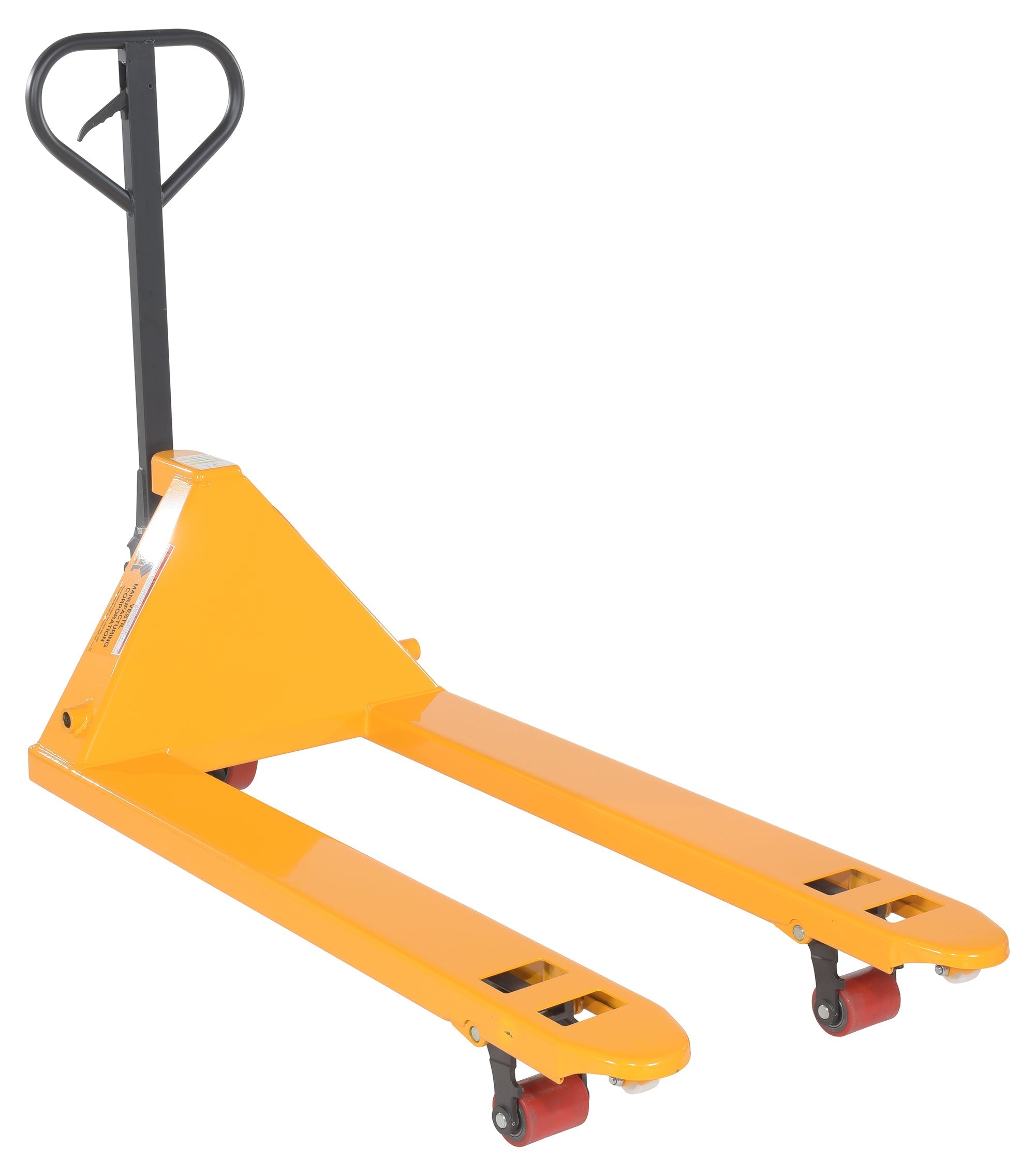
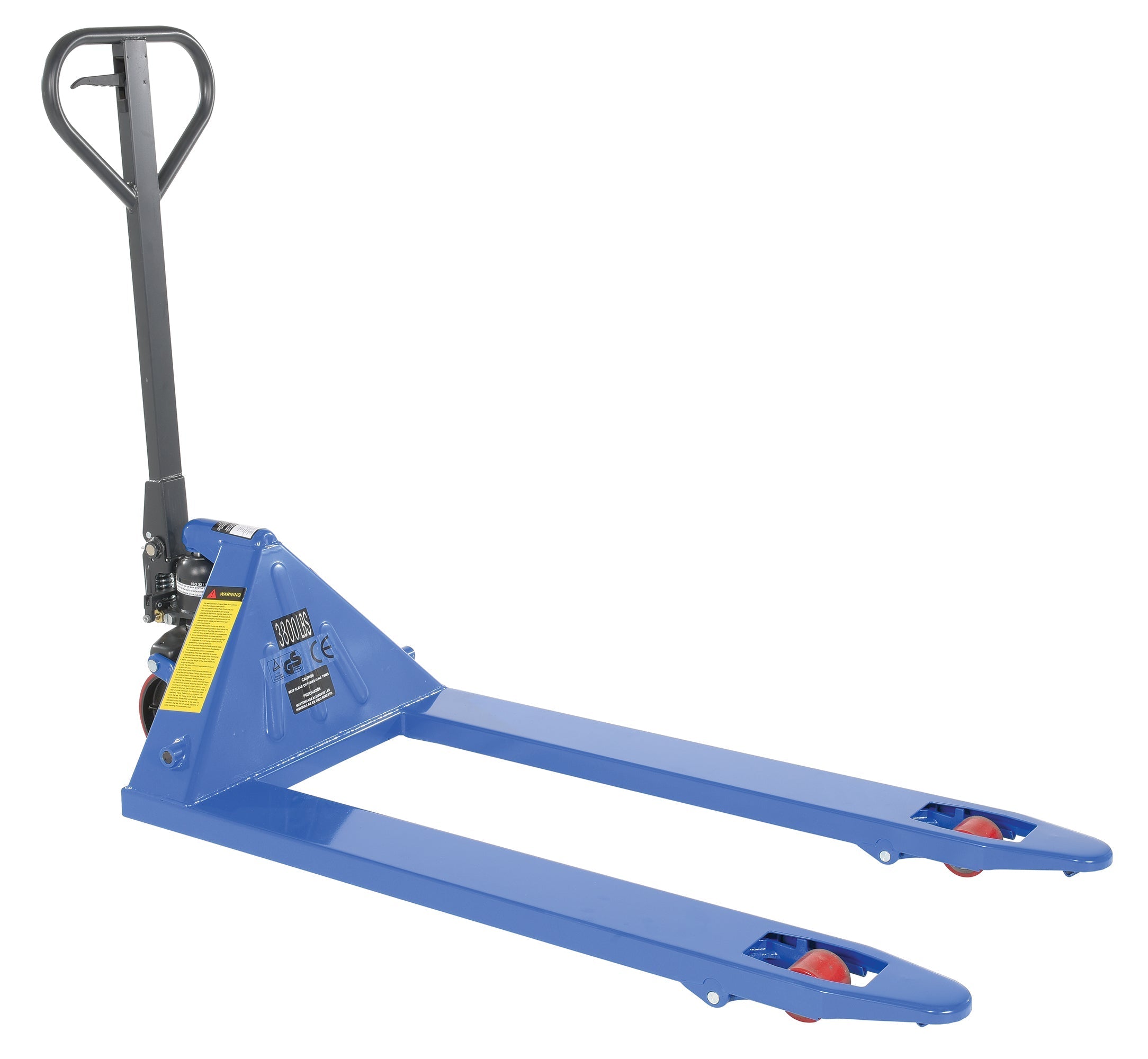
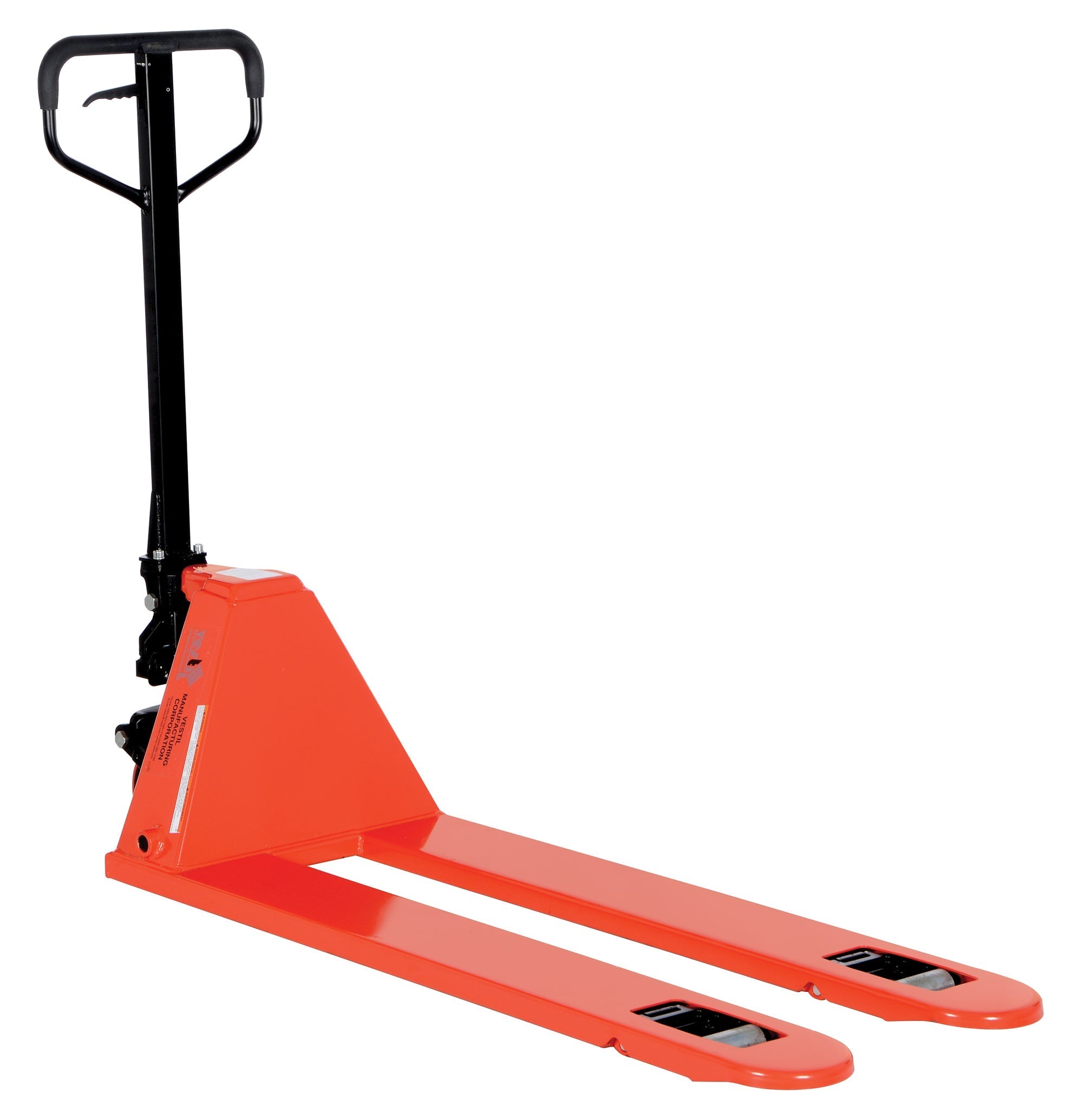
A pallet jack turns a few pumps of a handle into enough force to lift thousands of pounds, and it does it with hydraulics, the same principle that powers a car's brakes and a bottle jack. The operator slides the forks under a pallet, pumps the handle to raise it just off the floor, rolls it to the destination, and releases a lever to set it down. There's no motor on a manual jack, just a clever mechanical and hydraulic system that multiplies human effort. Understanding it helps you use and maintain one correctly.
The hydraulic pump
The heart of a pallet jack is a small hydraulic pump built into the base of the handle. Each pump of the tow bar drives a piston down into a cylinder of hydraulic fluid, usually oil. Because liquid doesn't compress, that force transfers through the fluid into a larger lifting cylinder, and the difference in piston sizes multiplies the force, which is why a light pump on the handle raises a heavy load. It's the same force multiplication that lets a small bottle jack lift a car, applied to a pallet.
Lifting the load
As you pump, hydraulic fluid is forced under pressure into the main lifting cylinder, which pushes the fork linkage up. The forks rise a few inches, lifting the pallet off the floor, roughly 7 to 8 inches at full height. It usually takes several pumps to reach full lift under a heavy load. Once the pallet clears the ground, you stop pumping and the load holds in place, supported by the trapped fluid in the cylinder. Now the pallet is ready to move.
Steering and moving
The same tow-bar handle that pumps the jack also steers it. The handle connects to the steer wheels under the pump mechanism, so pulling the jack and angling the handle turns the front end while the load rides on the fork wheels at the back. One person can maneuver a fully loaded pallet across a smooth floor with surprisingly little effort, because the wheels carry the weight and the operator only has to overcome rolling resistance. On flat, hard surfaces this is where the pallet jack feels almost effortless.
Lowering the load
To set the pallet down, you operate a release lever, usually a lever or twist control on the handle. This opens a valve that lets the hydraulic fluid flow back from the lifting cylinder to the reservoir, and the forks lower under the weight of the load. Better jacks give you a controlled, gradual descent rather than a sudden drop, which protects both the load and the mechanism. Releasing smoothly is part of using a pallet jack well, especially with fragile or top-heavy loads.
The three-position handle
Most pallet jacks have a three-position control on the handle: raise, neutral, and lower. In the raise position, pumping lifts the forks. Neutral holds the load steady while you move it, so pumping or handle motion doesn't change the height. Lower opens the valve to set the load down. Knowing which position you're in matters, trying to move a load with the control in raise or lower can be awkward or unsafe. The neutral position is where you do your traveling.
Why the design lasts
A manual pallet jack has no engine, no battery, and few moving parts beyond the hydraulic pump and the wheels, which is exactly why it's so durable and cheap. There's very little to break, and what wear happens, seals, wheels, the occasional hydraulic service, is simple to address. This simplicity is the whole appeal: a tool that reliably moves thousands of pounds for years with minimal maintenance. Electric pallet jacks add a motor and battery for easier operation, but they trade some of that simplicity and low cost for it.
Keeping it working
Pallet jack maintenance is minimal but worth doing. Keep the wheels clean and rolling freely, since debris-jammed wheels are the most common problem. Check that the forks raise and lower smoothly, low or leaking hydraulic fluid shows up as weak lifting or a fork that won't hold height, and top up or service the hydraulic unit as needed. Grease the pivot points occasionally. Done consistently, this keeps a pallet jack working reliably for many years, which is a big part of its value. Our what is a pallet jack guide covers the basics of choosing one.
Manual versus electric operation
Everything above describes a manual pallet jack, where you supply the pumping and pushing. An electric pallet jack automates both: a battery-powered motor drives the hydraulic lift and propels the jack, so the operator just steers and controls speed. That makes electric units far easier over long distances and heavy, repetitive shifts, at the cost of much higher price and weight. The underlying hydraulic lifting principle is the same, a pump moves fluid to raise the forks, but a motor does the work instead of your arm.
The bottom line
A pallet jack works by hydraulics: pumping the handle forces fluid into a lifting cylinder that raises the forks a few inches, a release valve lowers them, and the handle steers. It's a simple, force-multiplying mechanism with almost nothing to break, which is why the humble pallet jack has been a warehouse staple for over a century. Keep the wheels and hydraulics in good shape and one lasts for years. See our what is a pallet jack and best pallet jacks guides to choose the right model.
Common problems and fixes
When a pallet jack acts up, the cause is usually simple. If the forks won't lift or won't hold height, the hydraulic unit is low on fluid, has trapped air, or has a worn seal, topping up or bleeding the fluid often fixes it. If it lifts but lowers on its own, the release valve or a seal is leaking. If it's hard to roll, check the wheels for debris or flat spots. Most of these are cheap, quick fixes, which is exactly why pallet jacks are so economical to own. Only rarely does the hydraulic pump itself need replacing.