The short version
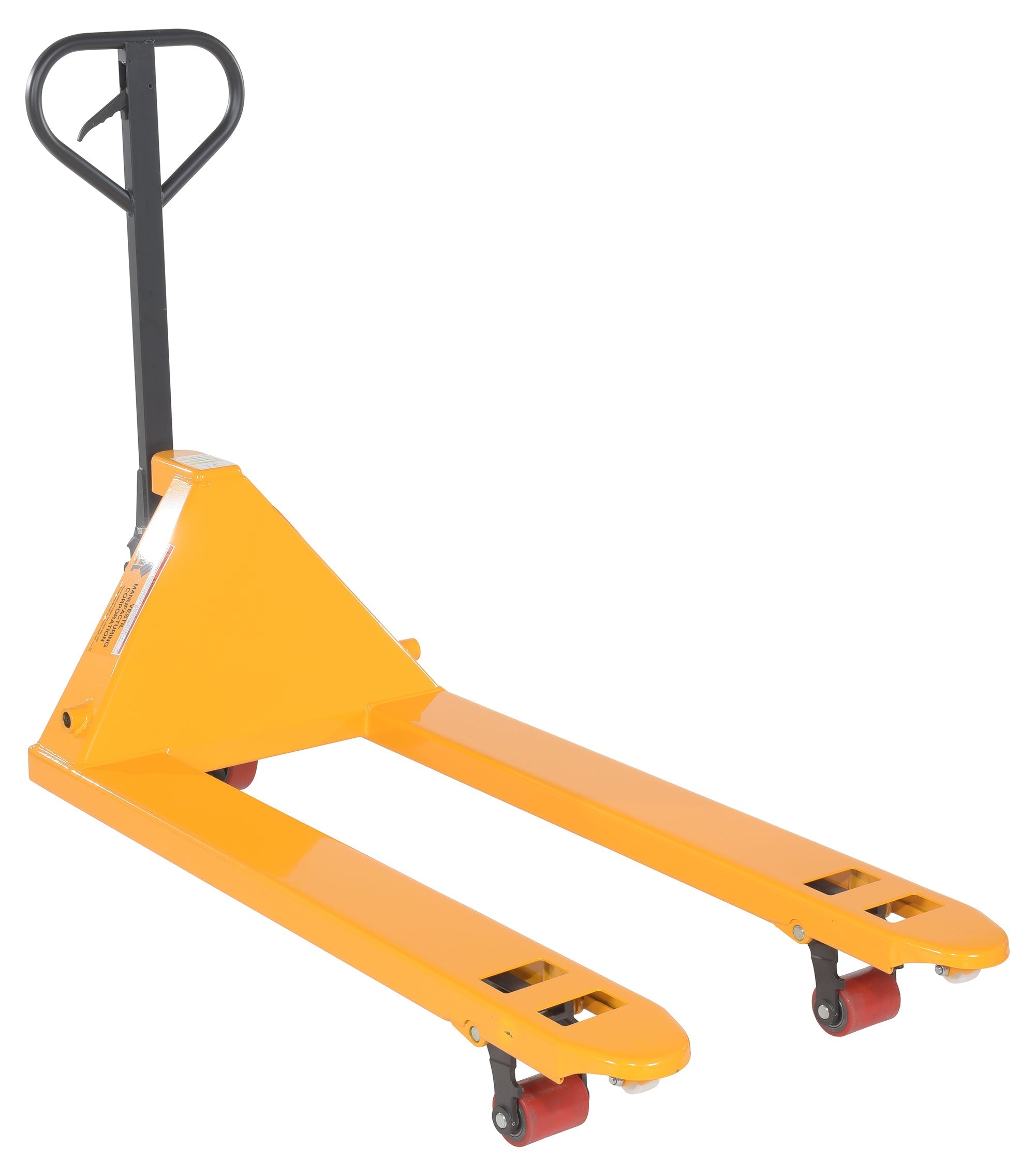
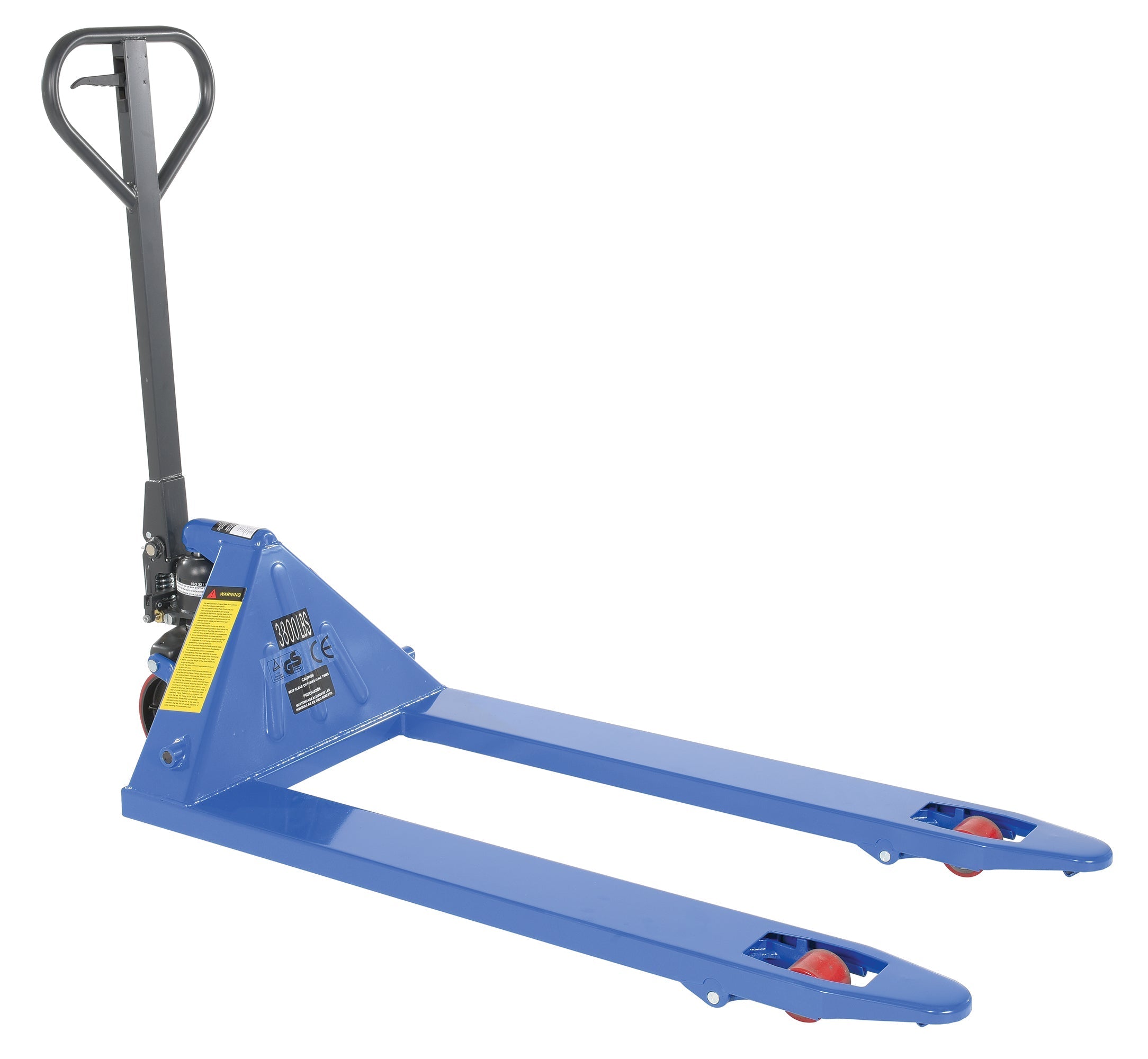
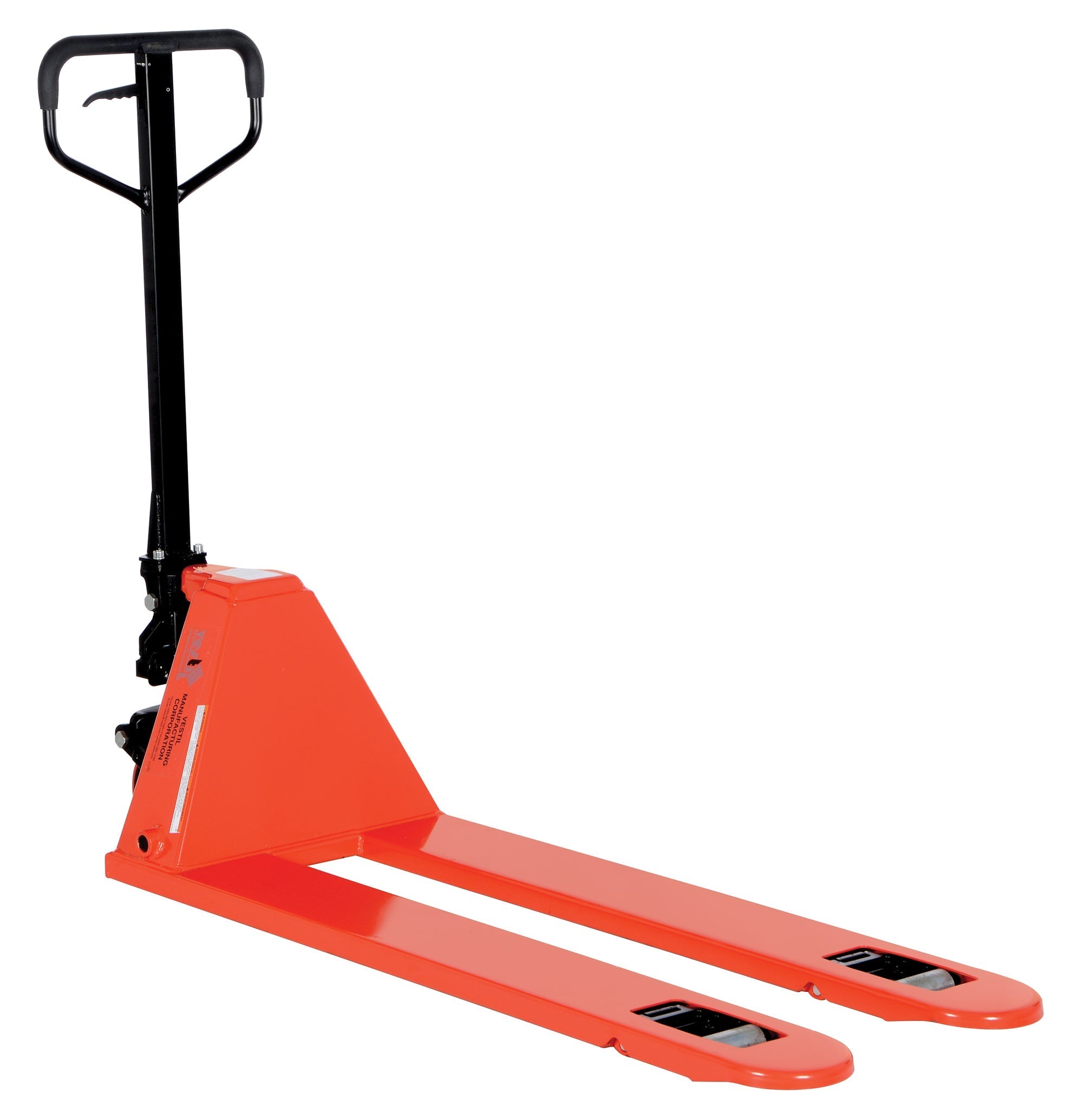
A pallet jack is the simplest way to move a loaded pallet. You slide its two forks into the pallet, pump the handle to raise the load a few inches off the ground, and push or pull it wherever it needs to go. It's essentially the most basic form of forklift, and it's the workhorse of nearly every warehouse, distribution center, and retail back-room. The names vary, pallet jack, pallet truck, and pump truck all refer to the same tool, which sometimes causes confusion when you're shopping. Our collection lists them under both names.
How a pallet jack works
The magic is a small hydraulic pump in the handle. Pumping the tow-bar handle drives a piston that forces hydraulic fluid into a lifting cylinder, raising the forks and the load with them. A release lever opens a valve to let the fluid return and lower the forks, and the same handle steers the front wheels. It's a simple, durable mechanism with no engine or battery on a manual unit, which is a big part of why pallet jacks are so cheap and reliable. We cover the mechanism in detail in how does a pallet jack work.
How high it lifts, and how much it carries
A pallet jack lifts loads only a few inches, just enough to clear the floor for transport. The forks sit around 3 inches off the ground lowered and rise to roughly 7 to 8 inches raised, which is all you need to move a pallet, not to stack it. Capacity is where they impress: a standard pallet jack typically handles 4,500 to 5,500 lb, with 5,000 and 5,500 lb the most common ratings. See how high does a pallet jack lift for the full picture on lift height.
Manual versus electric
Pallet jacks come in two flavors. A manual pallet jack is human-powered: you pump to lift and push to move, and it costs a few hundred dollars. An electric (or powered) pallet jack uses a battery and motor to lift and drive, which makes it far easier over long distances and heavy repetitive work, but it costs several thousand dollars and weighs much more. Most operations start with manual jacks and add electric units where the volume justifies them. Our cost guide breaks down the price gap between the two.
Pallet jack vs pallet truck vs pallet stacker
This trips people up, so here's the map. A pallet jack and a pallet truck are the same thing, two names for the floor-level tool that moves loads horizontally, lifting only 6 to 8 inches. A pallet stacker is a different, taller machine: it has a mast and lifts loads vertically to storage height, often 50 to 150 inches or more. Rule of thumb: a jack or truck moves pallets at floor level, while a stacker raises them up. If you need to reach racking or a truck bed, you want a stacker, not a jack.
How much a pallet jack weighs
A manual pallet jack is heavy for its size, typically 150 to 200 lb, with heavy-duty models exceeding 230 lb. That weight is mostly steel forks and the hydraulic mechanism, and it's part of why the tool is so durable. Electric pallet jacks are far heavier, often 570 lb or more, because of the battery and motor. The weight matters for transporting the jack itself and for the floors it runs on. See how much does a pallet jack weigh for the details.
What it costs
Pallet jacks are among the most affordable material handling equipment. A manual unit typically runs $200 to $600, with heavy-duty models up to around $800. Electric pallet jacks cost far more, commonly $2,000 to $5,500 for a standard walk-behind, and higher for premium or rider units. For occasional use, renting is an option at roughly $50 to $60 a day. Our cost guide covers manual, electric, and rental pricing in full.
Who uses a pallet jack, and where
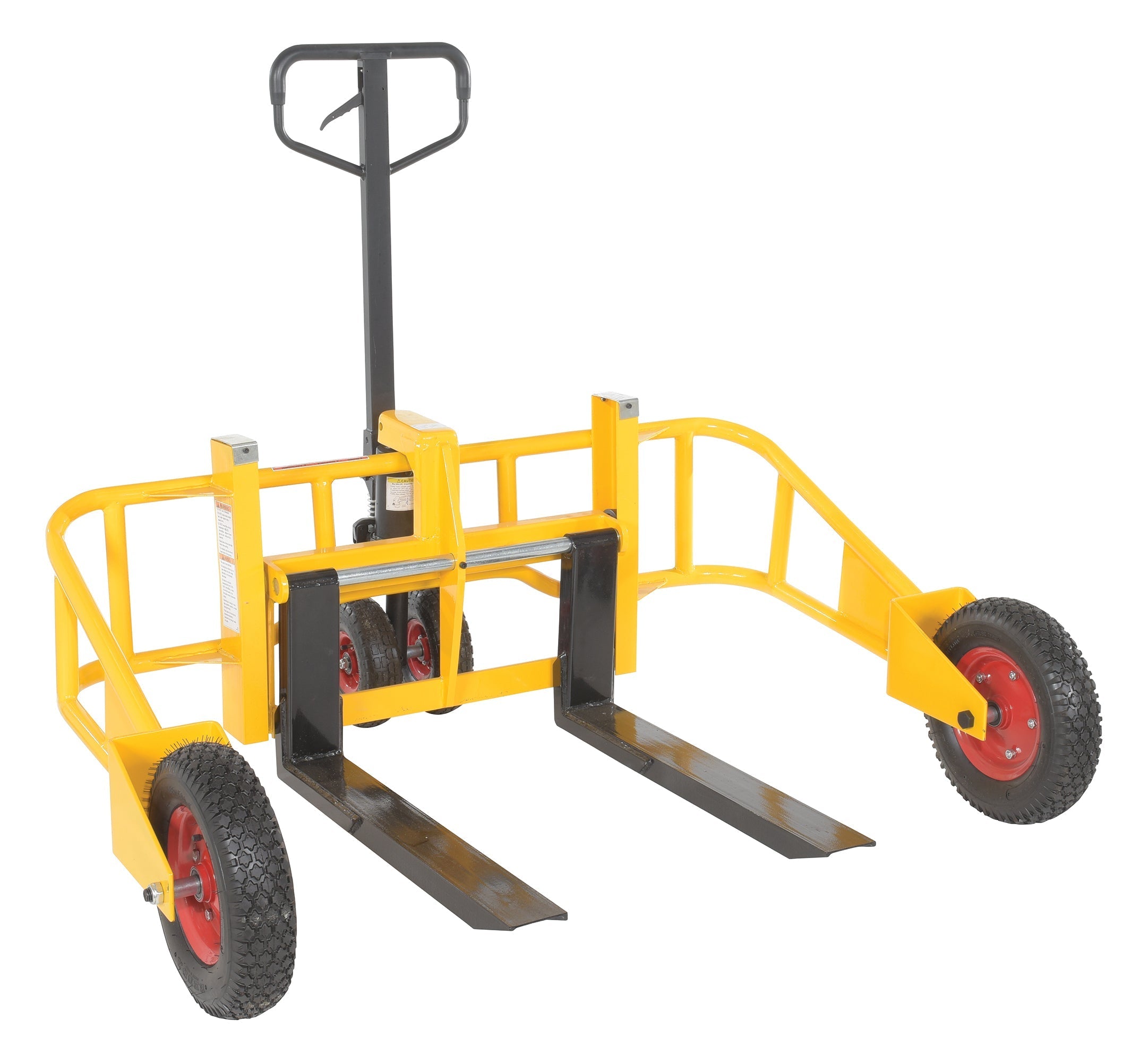
Pallet jacks are everywhere material moves on pallets: warehouses, distribution centers, factories, retail stockrooms, loading docks, and delivery trucks. A single worker can move a 4,000-lb pallet across a smooth floor with one, which is a remarkable amount of leverage for such a simple tool. They shine on flat, hard surfaces and short-to-medium distances. For rough ground there are all-terrain models, and for long hauls or constant use, electric units take over. Almost any operation that receives or ships palletized goods owns at least one.
Choosing the right pallet jack
Match the jack to your work. For general use, a standard pallet truck with 27-by-48-inch forks and a 5,500-lb capacity fits most pallets and loads. Choose a low-profile model for thin or specialty pallets, a hand-brake model if you work on ramps or inclines, or an all-terrain unit for rough or outdoor surfaces. Confirm the fork size matches your pallets and the capacity covers your heaviest load with margin. Our best pallet jacks comparison lines up the options.
The bottom line
A pallet jack is the simplest, most essential material handling tool: it slides under a pallet, lifts it a few inches with a hydraulic pump, and lets one person move thousands of pounds. Manual units are cheap and reliable; electric ones cost more but ease heavy, repetitive work. Just remember it moves loads at floor level, if you need to stack to height, that's a stacker. Compare real models in our best pallet jacks guide, or browse the full pallet jack collection.
Maintaining a pallet jack
A manual pallet jack needs little care, but a little goes a long way. The most common issue is debris jamming the wheels, so keep them clean and rolling freely. Check that the forks raise and lower smoothly; weak lifting or a fork that won't hold height usually means the hydraulic unit needs fluid or service. Grease the pivot and roller points occasionally, and wipe down the mechanism. Done consistently, this keeps a jack working reliably for many years, which is a big part of its low total cost. See how does a pallet jack work for the mechanism behind the maintenance.