The short answer
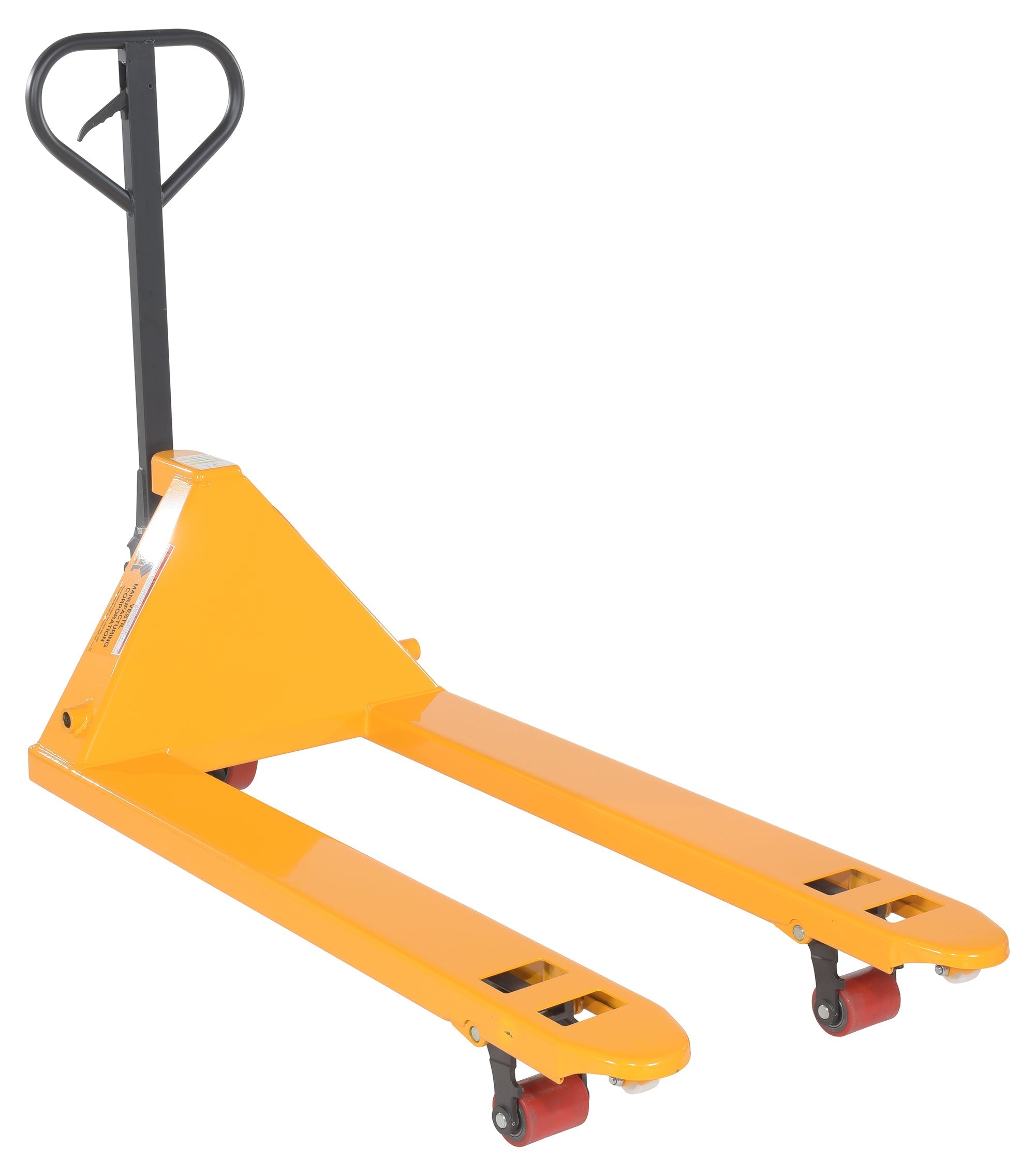
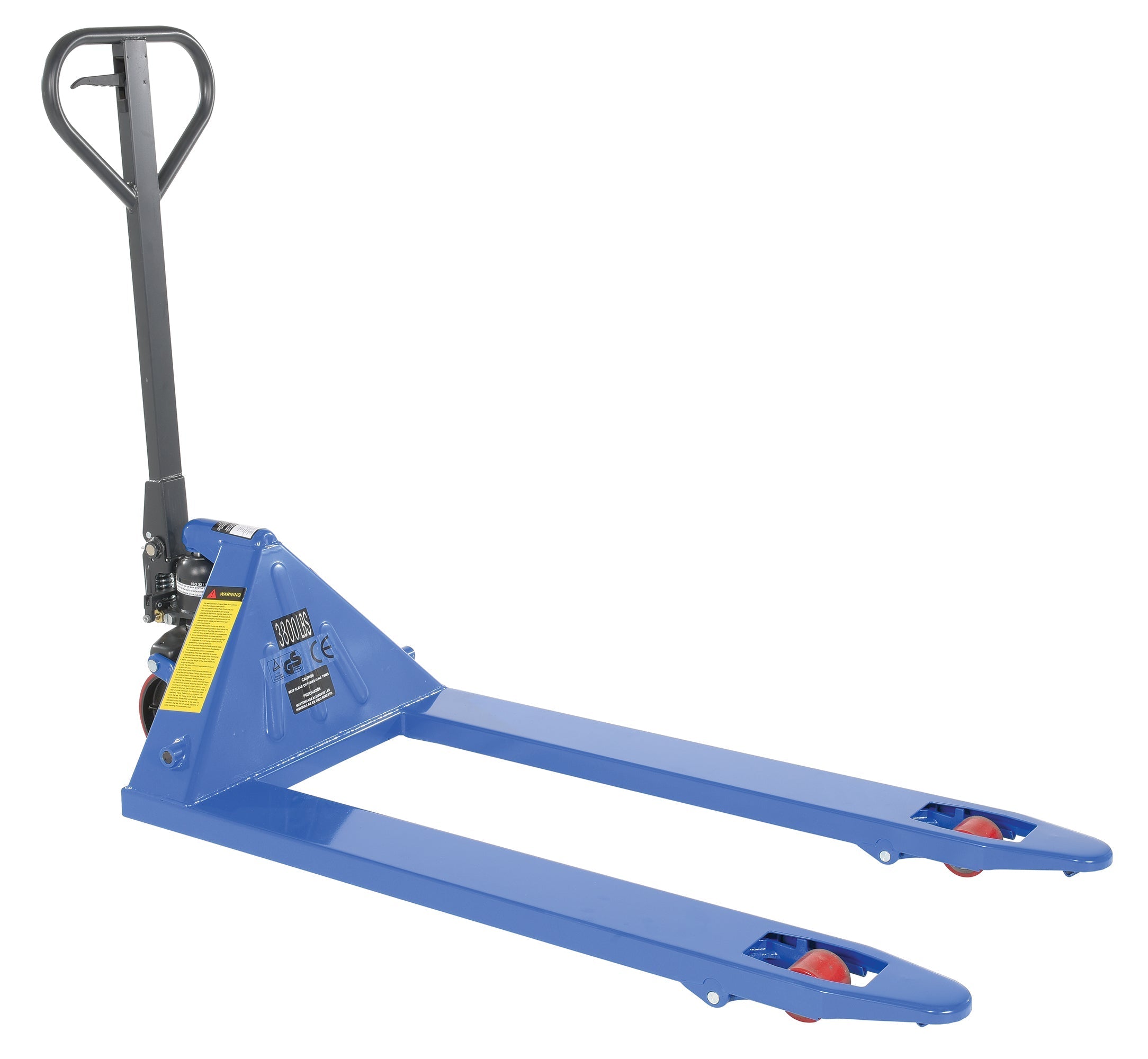
A pallet jack has a deliberately short lift. The forks start around 2.9 to 3.5 inches off the floor when lowered and rise to about 7 to 8 inches, roughly 200 mm, at full height. That's it, just enough to lift a pallet clear of the ground so it can roll on the jack's wheels. It's not designed to raise a load any higher, because its whole job is moving pallets horizontally at floor level, not stacking them. If the small lift surprises you, that's the key thing to understand about the tool.
Why the lift is so small
The short lift isn't a limitation, it's the design. A pallet jack exists to slide under a pallet, lift it just enough to clear the floor, and let one person roll it away. Lifting only a few inches keeps the tool simple, stable, and cheap: there's no tall mast, no complex lifting stage, and a low center of gravity that stays stable under heavy loads. Raising a load higher would require a completely different, taller, more expensive machine, which is exactly what a stacker is. The minimal lift is what makes the pallet jack so affordable and reliable.
Lowered versus raised height
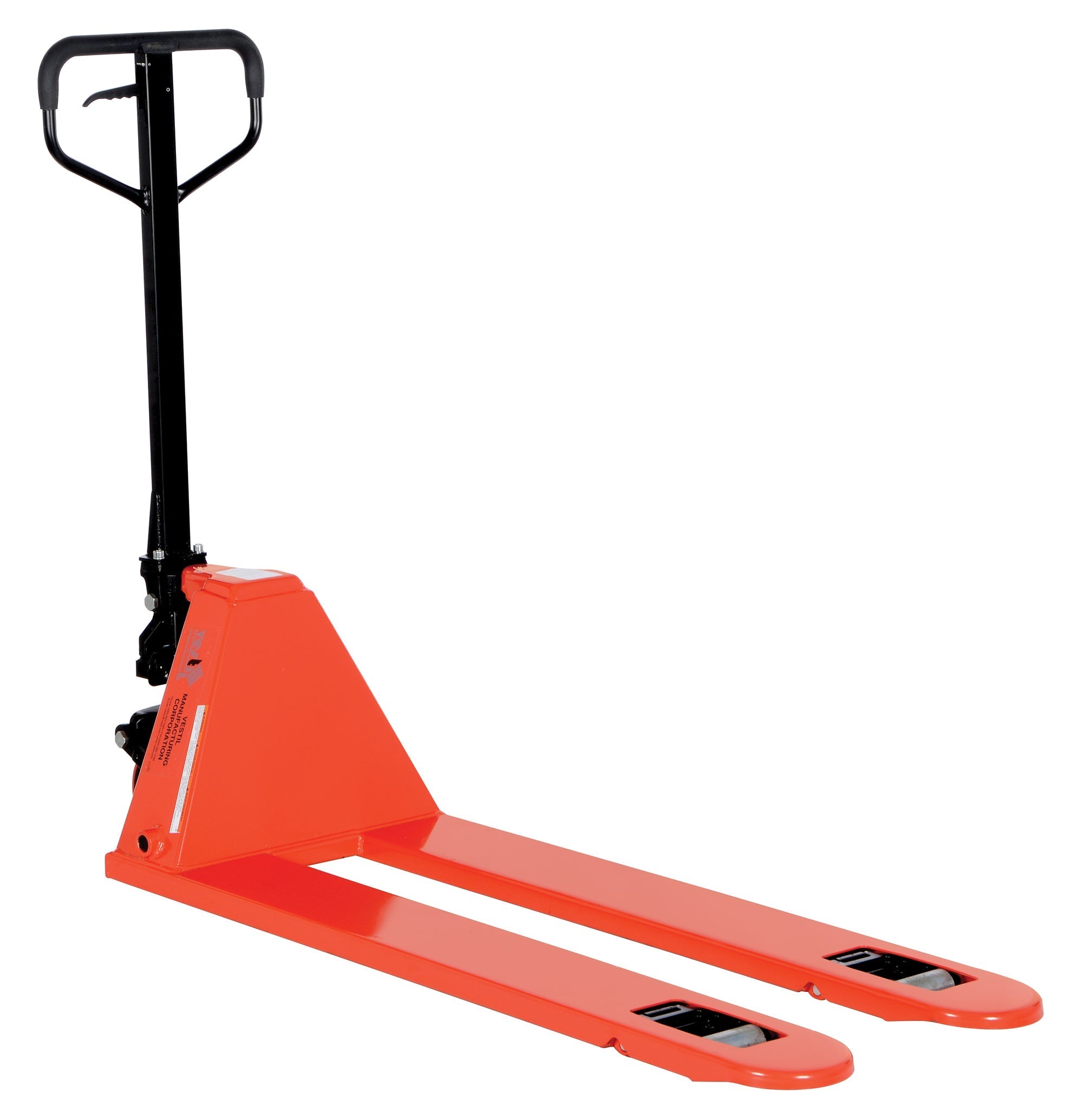
The two numbers that matter are the lowered and raised fork heights. Lowered, the forks need to be thin enough to slide into a standard pallet's fork openings, typically around 3 inches. Raised, they lift the pallet to roughly 7 to 8 inches so it clears the floor. The difference, about 4 to 5 inches of travel, is the lift. Some low-profile models start even lower, around 2 inches, to fit thin or specialty pallets, which is worth checking if your pallets aren't standard.
Pallet jack vs pallet stacker: the height difference
This is the crucial distinction. A pallet jack lifts 7 to 8 inches, floor level only. A pallet stacker is a taller machine with a mast that lifts loads vertically to storage height, often 50 to 150 inches or more. If you need to place a pallet onto racking, into a truck, or on top of another pallet, a jack can't do it, you need a stacker or a forklift. The rule of thumb is simple: a jack moves pallets across the floor, a stacker raises them up. Confusing the two is the most common pallet-equipment mistake.
What the lift height is enough for
Seven to eight inches sounds like little, but it's exactly enough for the job. It clears the pallet off the floor so the load rides on the jack's wheels, lets you roll over minor floor transitions and thresholds, and positions a pallet for loading onto a dock or truck at floor level. For the enormous amount of warehouse work that's simply moving pallets from A to B, that small lift is all you need. The pallet jack does one thing extremely well, and its lift height is tuned precisely to that.
When you need more height
The moment your task involves putting a load up, onto racking, into a truck bed, or stacking pallets, you've outgrown a pallet jack. That's when you move to a pallet stacker, which adds a mast for vertical lift, or a forklift for heavier, higher work. Many operations own both: pallet jacks for floor-level moving and a stacker or forklift for putting loads up. Trying to force a jack to do a stacker's job just means you're using the wrong tool. Match the machine to whether you're moving or lifting.
Fork length and load stability
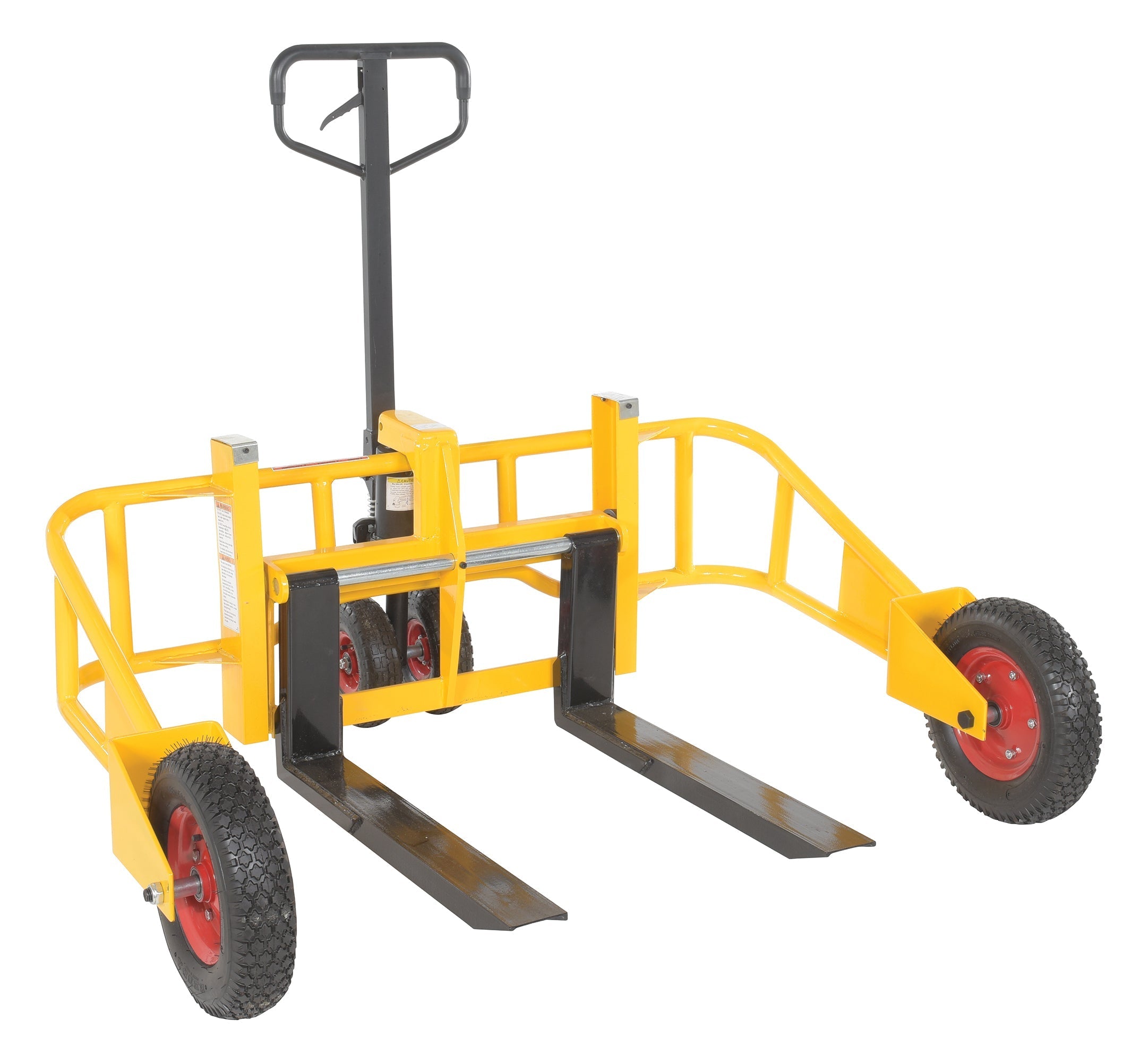
Lift height isn't the only fork dimension that matters. Fork length and width determine how well the jack supports the pallet, standard forks run about 27 by 48 inches to fit common pallets, while low-profile and specialty jacks use different sizes for non-standard loads. Getting the fork size right matters as much as the lift height for safe, stable transport: forks that are too short or the wrong width leave a pallet unsupported. Check both the lift and the fork dimensions against your actual pallets before buying.
Choosing by lift and fork spec
For most standard pallets, a standard pallet truck with 7.9-inch lift and 27-by-48-inch forks is the right choice. Pick a low-profile model if you handle thin pallets or need to start lower. And remember that no pallet jack will stack, so if your work includes lifting to height, plan for a stacker separately. Confirm the raised height clears whatever floor transitions you cross, and the fork size fits your pallets. Compare the options in our best pallet jacks guide.
The bottom line
A pallet jack lifts only about 7 to 8 inches, from a lowered height near 3 inches, enough to clear the floor and move a pallet, and nothing more. That short lift is the whole design: it keeps the tool simple, stable, and cheap for floor-level transport. If you need to raise a load to storage height, that's a pallet stacker or forklift, not a jack. See our what is a pallet jack guide for the full picture, and best pallet jacks to compare models.
How lift height shapes what you can do
The 7-to-8-inch lift defines the pallet jack's entire role. It's enough to clear a pallet off the floor, roll over a dock plate or threshold, and position a load at floor level for loading, so a pallet jack excels at receiving, moving, and staging pallets. It's not enough to place a load onto anything raised, which is why the jack hands off to a stacker or forklift for putting-away and truck loading at height. Understanding the lift height tells you exactly where a jack fits in your workflow: the floor-level moving, and nothing above it.