What a pallet stacker costs in 2026
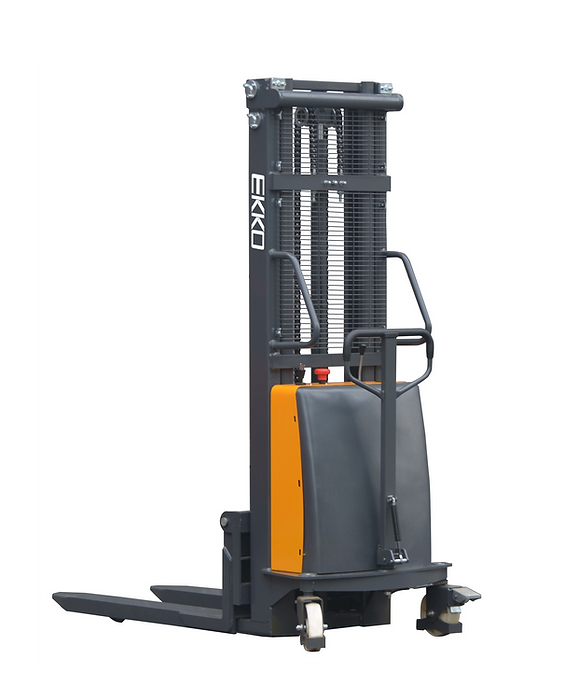
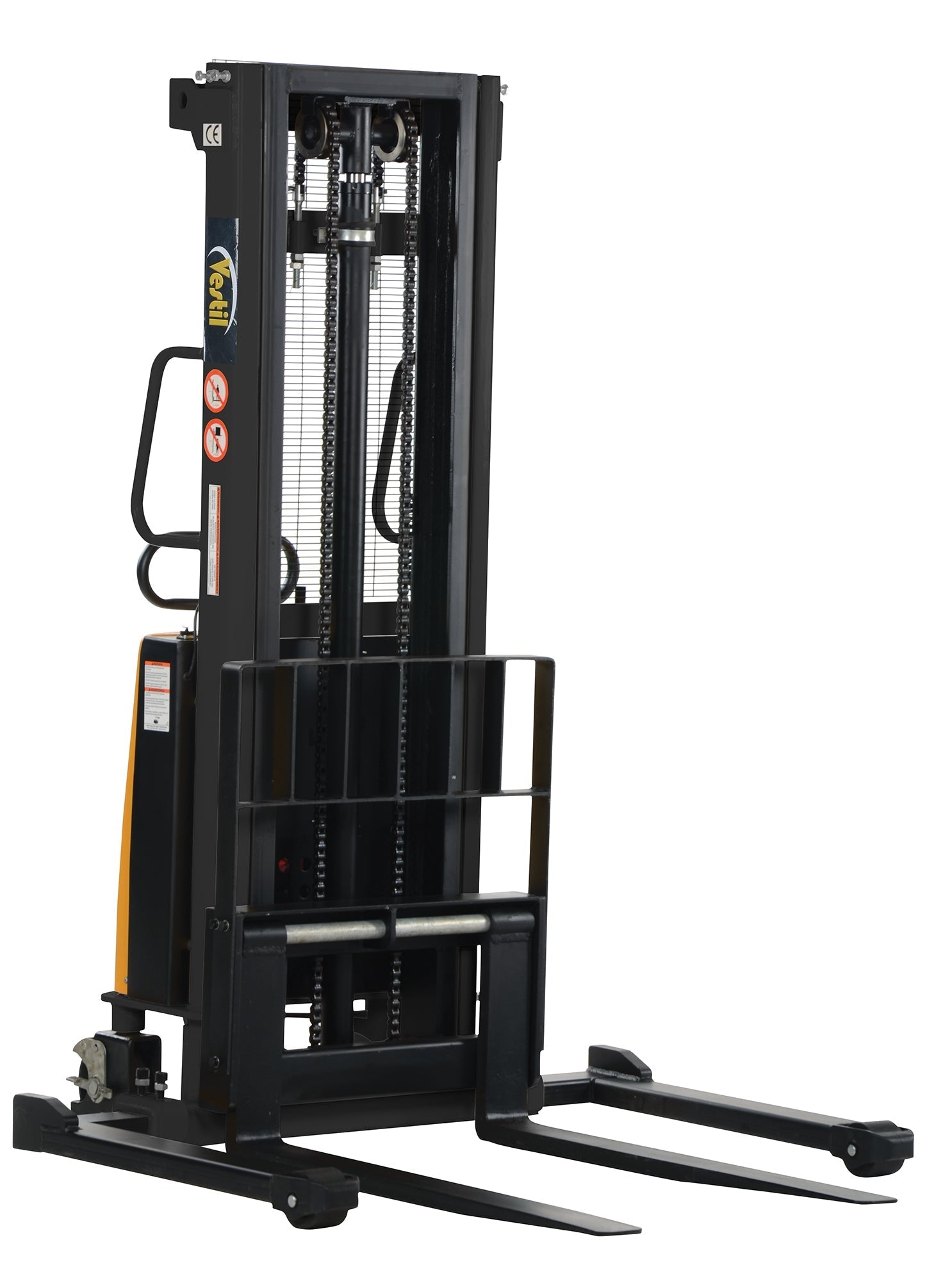
Pallet stackers span a wide price range depending on how they're powered. A manual or hand stacker runs roughly $1,000 to $3,000, a semi-electric unit $2,900 to $5,000, and a fully electric stacker $7,000 to $30,000 or more. The EKKO EA15E semi-electric straddle stacker at around $4,030 sits in the value sweet spot, while a fully electric Vestil stacker runs into the $14,000 range. Where you land depends mainly on power type, then capacity and lift height.
Manual stackers
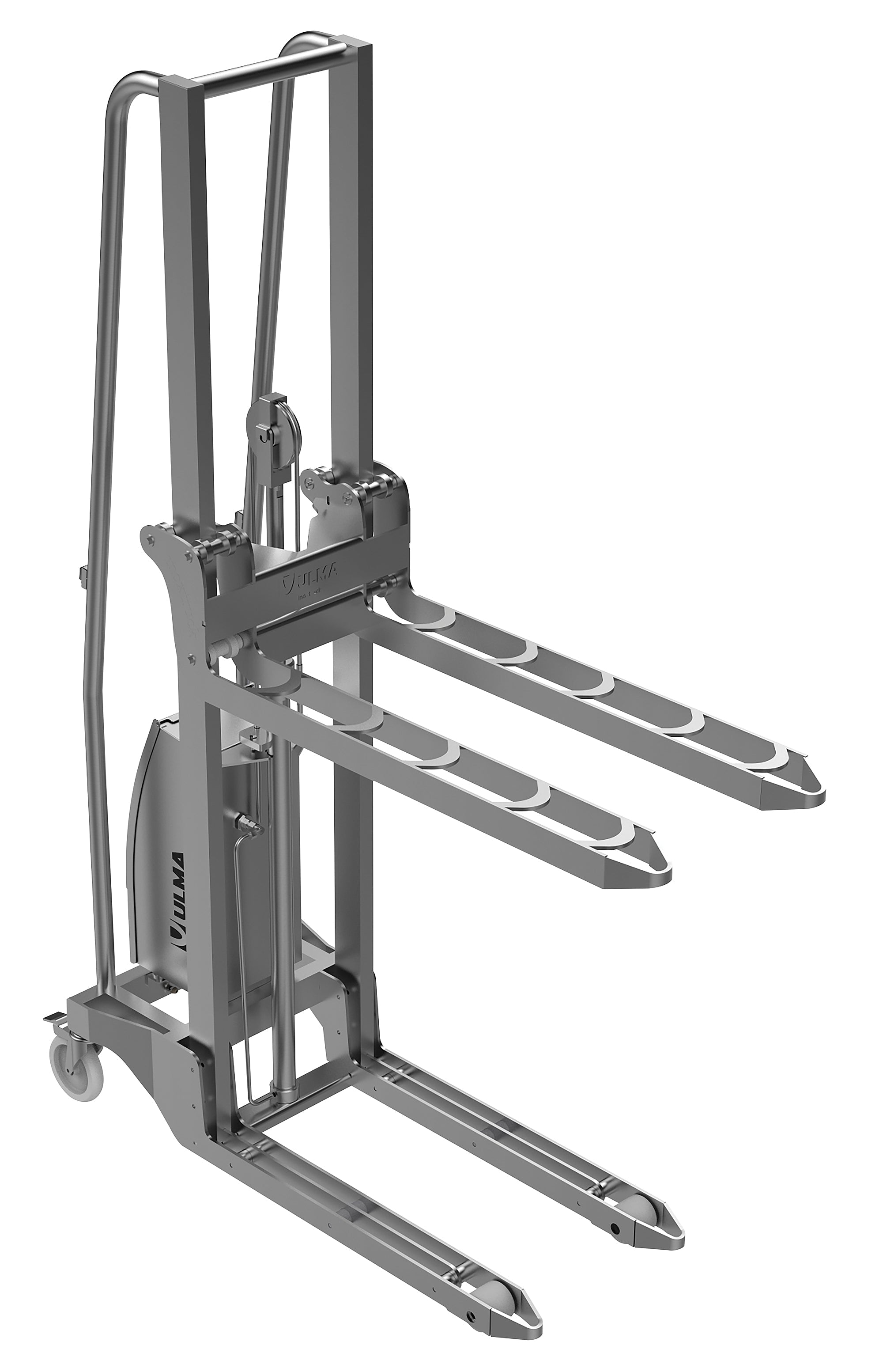
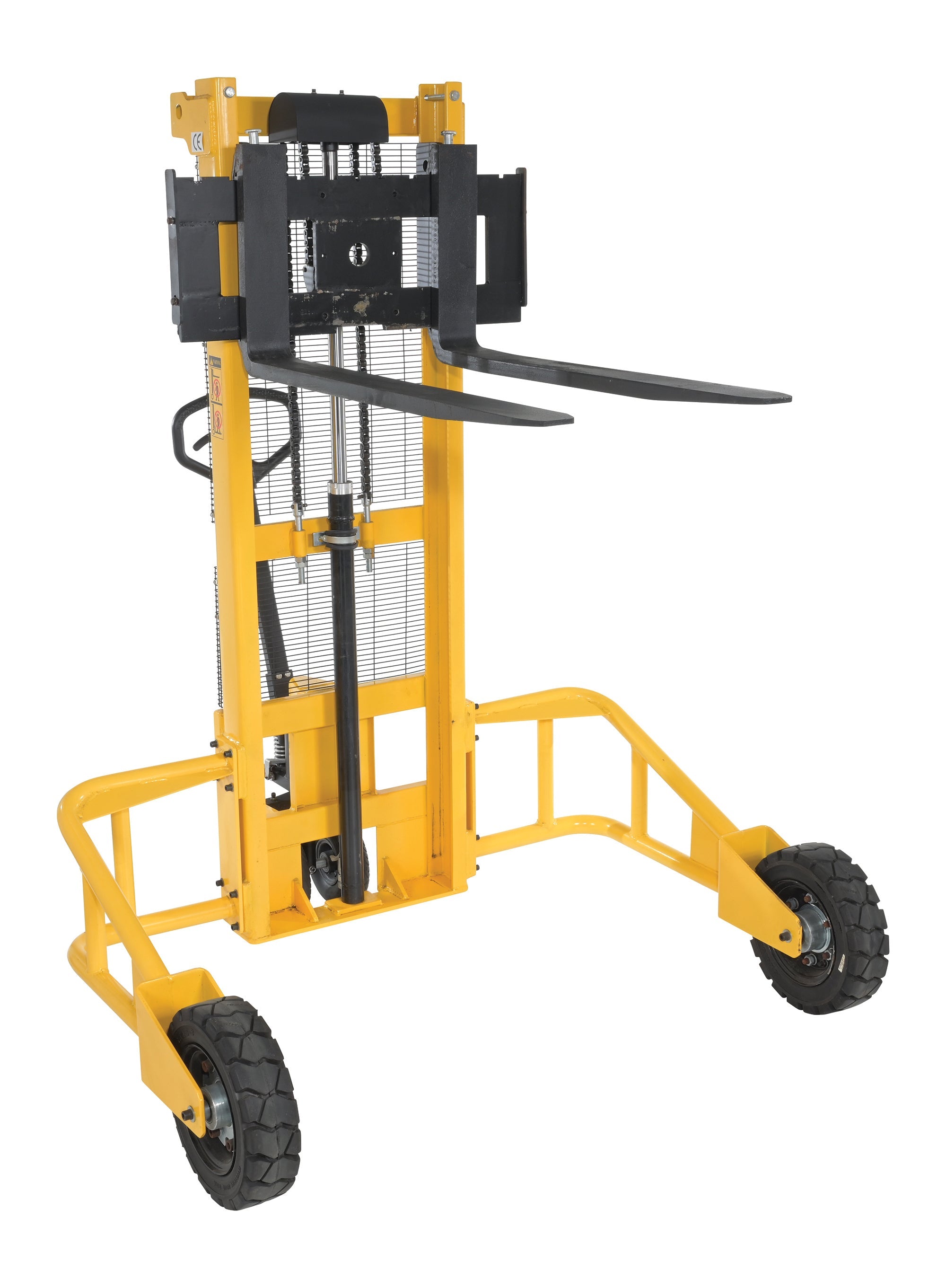
Manual (hand) stackers are the cheapest way to lift pallets to height, roughly $1,000 to $3,000. You push them to move and hand-pump the hydraulics to lift. Light-duty box and mini stackers, like the Vestil adjustable box stacker, sit at the low end for lighter loads, while heavier manual units cost more. They suit light, occasional stacking where the volume doesn't justify a powered unit. The trade-off is operator effort: pumping and pushing a loaded stacker is real work, which adds up if you stack often.
Semi-electric stackers
Semi-electric stackers are the value sweet spot for many operations, roughly $2,900 to $5,000. They add a powered lift while you still push to move, delivering about 80 percent of a full-electric unit's functionality at around half the cost. The EKKO EA15E at about $4,030, with 3,300 lb capacity and a 138-inch lift, is a good example. For moderate-volume stacking where you want the ease of powered lifting without the full-electric price, semi-electric is usually the smart buy.
Fully electric stackers
Fully electric stackers cost the most, $7,000 to $30,000 or more, because they power both the drive and the lift. The Vestil electric powered stacker runs around $14,000. You're paying for the productivity and reduced fatigue that powered travel and lifting bring to frequent, heavy, or long-distance work. Price climbs with capacity (1.5 to 5-plus tons), lift height, and features. For high-volume operations where workers stack all day, the labor savings justify the cost; for occasional use, they rarely do.
What drives the price
Three factors move a stacker's price most. Power type is the biggest: manual, semi-electric, and fully electric are distinct price tiers. Capacity matters, higher-rated units cost more. And lift height adds cost, since a taller mast is more expensive. Features like adjustable straddle legs, battery type, and build quality fill in the rest. When comparing stackers, identify the power type you need first, that sets the tier, then refine by the capacity and lift height your loads and racking require.
Stacker versus forklift on cost
A big part of a stacker's appeal is that it costs far less than a forklift while doing much of the same vertical work in tight indoor spaces. Where a new forklift runs well into five figures, a semi-electric stacker at $3,000 to $5,000 handles moderate loads to about 15 feet, emission-free and aisle-friendly. If your work fits within a stacker's height and capacity, buying one instead of a forklift saves substantial money. Step up to a forklift only when you genuinely exceed what a stacker can do.
Buying versus renting
If you'll stack regularly, buying is usually right, since the machine pays back against rental costs and is always available. Renting makes sense for a short-term project or seasonal surge. For a one-off, weigh the rental cost against a light manual stacker's modest purchase price. As with pallet jacks, frequent use tips the math toward owning. Match the purchase to genuine ongoing need: a $4,000 semi-electric stacker is a great buy for a busy operation and an overspend for occasional use, where a manual unit or rental fits better.
Total cost of ownership
Look past the sticker, especially on electric units. Manual stackers need little upkeep. Electric and semi-electric units add battery care and eventual replacement, plus charging, which factor into long-term cost, though they save real labor. A well-chosen stacker lasts for years, spreading its cost over a long life. When you compare options, weigh the purchase price plus upkeep against the labor the stacker saves and the forklift purchase it avoids. For the right operation, even a pricey electric stacker earns its keep.
The bottom line
A pallet stacker costs $1,000 to $3,000 manual, $2,900 to $5,000 semi-electric, and $7,000 to $30,000-plus fully electric, more than a pallet jack but far less than a forklift. The semi-electric tier is the value sweet spot for most operations. Match the power type to your volume, then capacity and lift height to your loads and racking. Compare real models in our best pallet stackers guide, or browse the full stacker collection.
Ways to keep the cost down
A few moves lower the spend without buying the wrong tool. Choosing semi-electric over fully electric saves thousands while keeping powered lift, the value sweet spot for most. Buying only the capacity and lift height you actually need avoids overpaying for a bigger machine. A clean used unit can save money if you inspect it well. And matching the power type honestly to your volume, manual for occasional use, prevents overspending on automation you won't use. The EKKO EA15E at around $4,030 is a good example of getting powered lift without full-electric cost.
New versus used
A used pallet stacker can save real money given the price of powered units, but inspect carefully. Check the mast and lift for smooth operation and leaks, the structure for damage, and, on electric and semi-electric units, the battery, which is the costliest component to replace and the one most likely to be worn. A used stacker with a healthy battery and sound mast can be a strong value; one with a tired battery is a hidden expense. As with electric pallet jacks, the battery is where used-buyer diligence pays off most.