The core difference
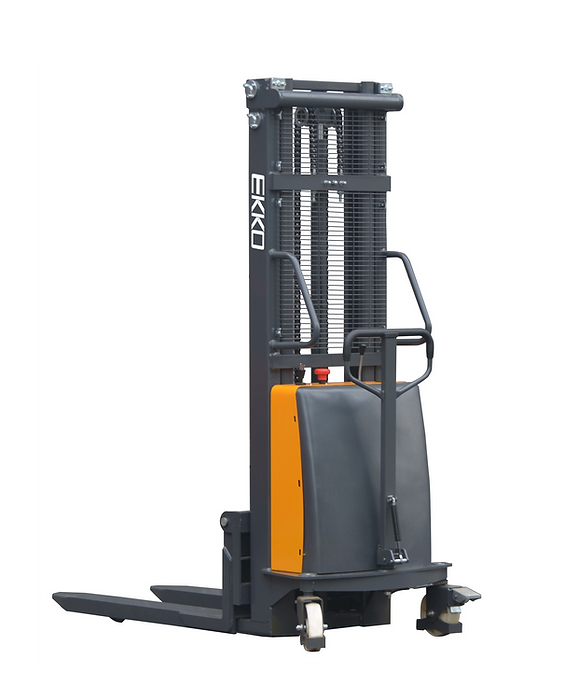
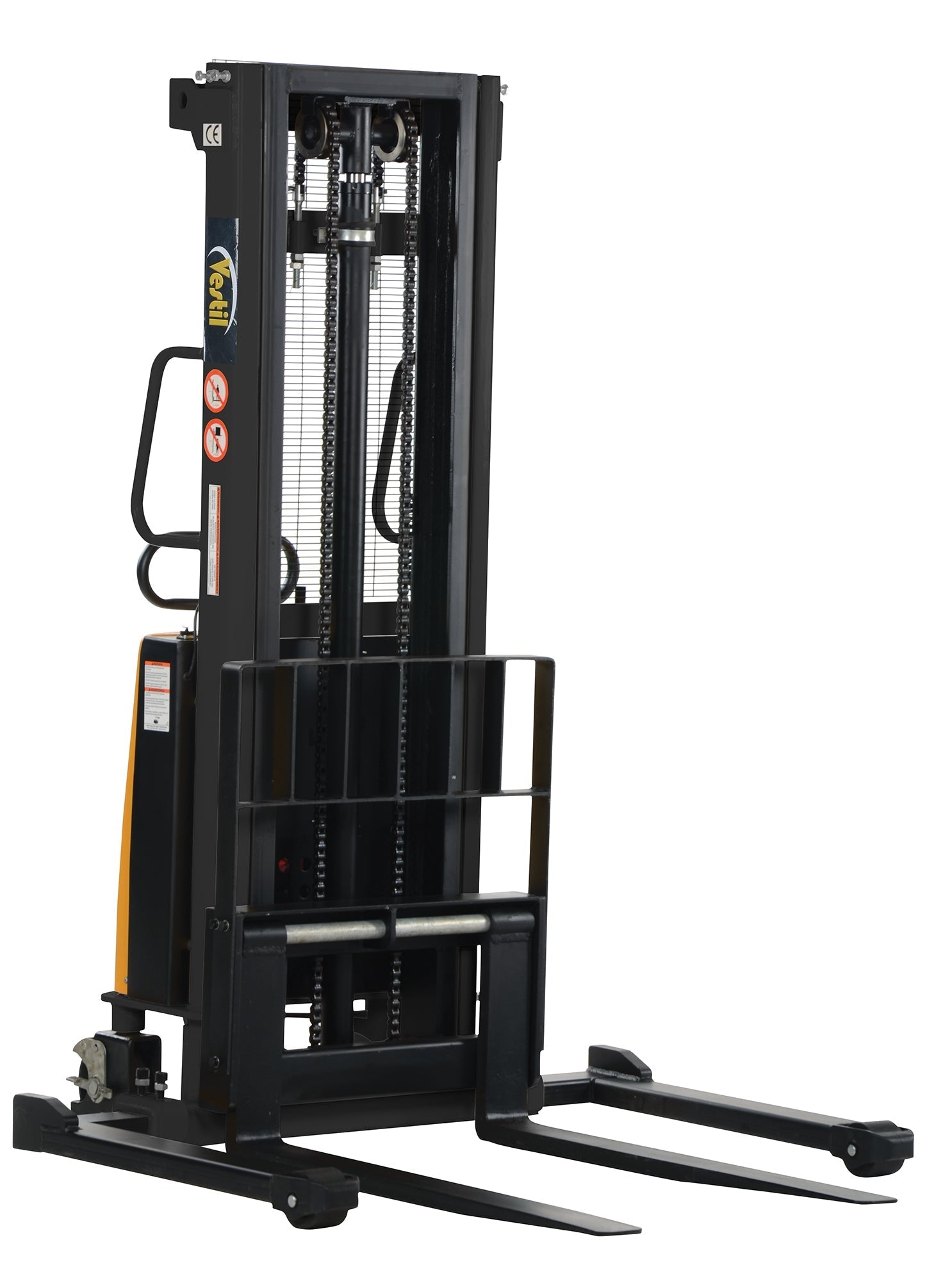
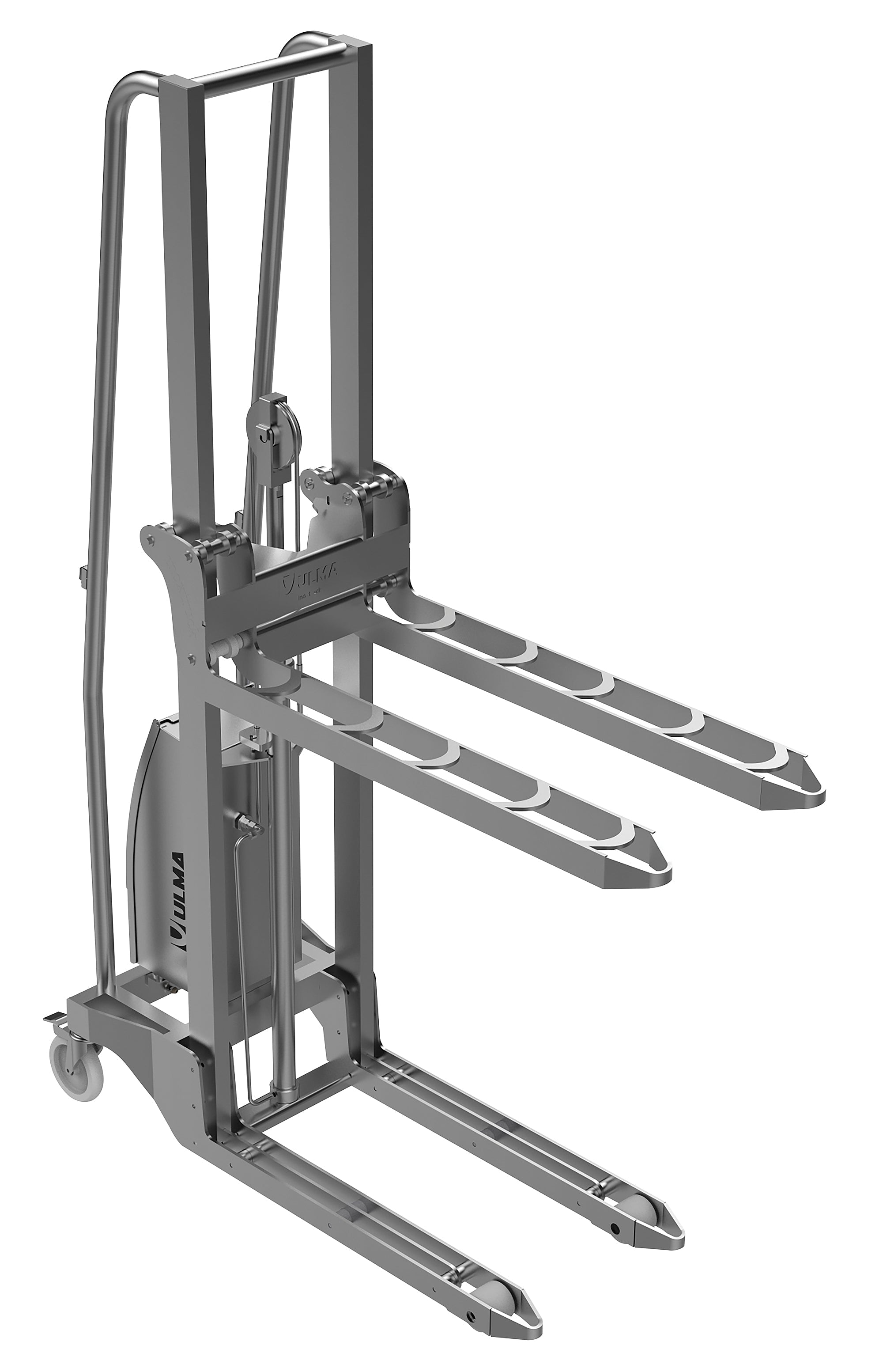
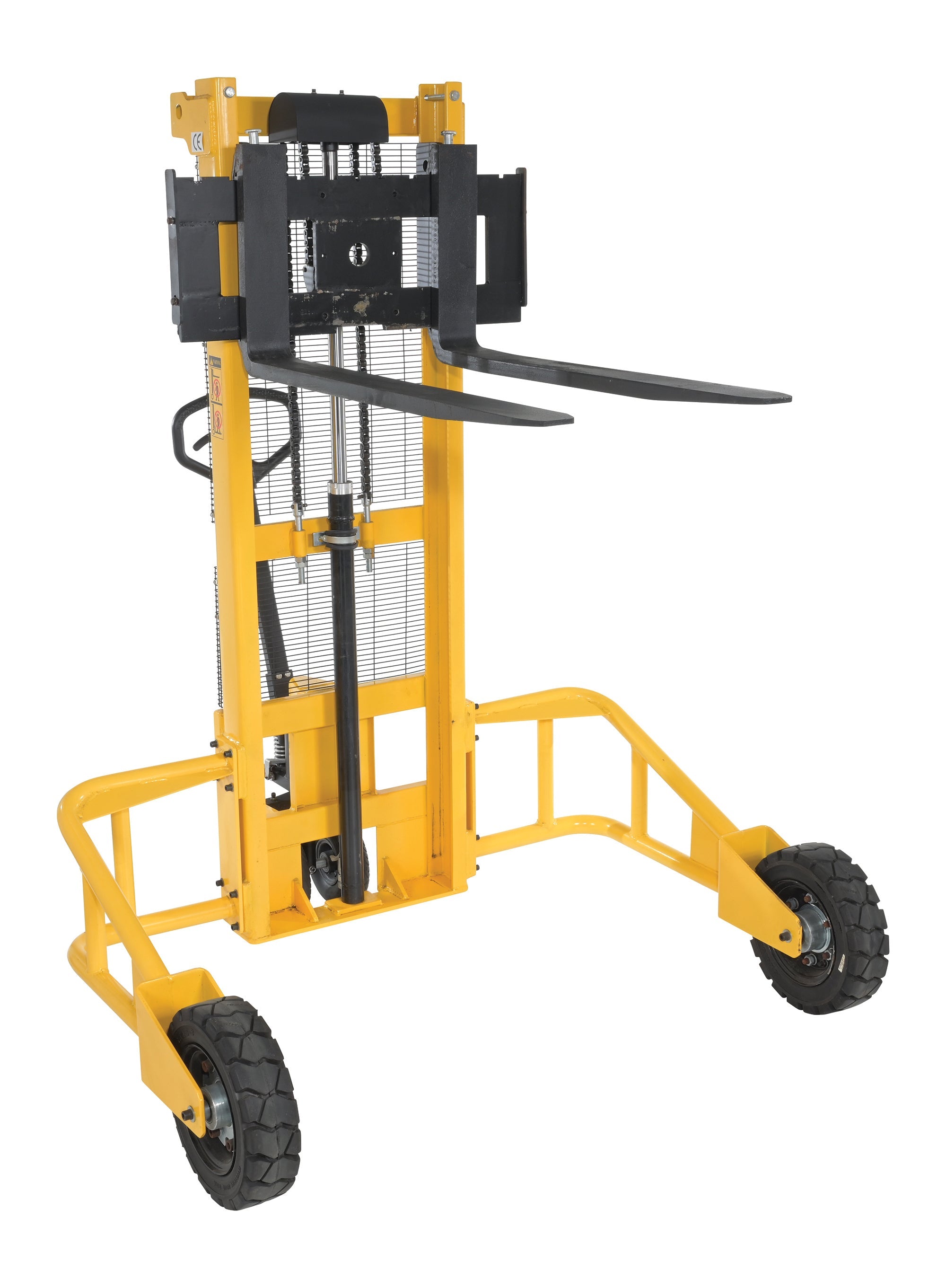
It comes down to one thing: how high each lifts. A pallet jack, also called a pallet truck, raises a load just 7 to 8 inches, enough to clear the floor so you can roll it somewhere else. A pallet stacker has a vertical mast and lifts pallets all the way up to storage height, commonly 50 to 150 inches. So a jack moves loads horizontally at floor level, and a stacker moves them vertically onto racks and trucks. Everything else, price, size, power, follows from that one difference.
What each one is for
Use a pallet jack when the task is transport: receiving, staging, and moving pallets across a flat floor, or loading them onto a dock or truck at floor level. Use a pallet stacker when the task is putting loads up or pulling them down: placing pallets onto racking, stacking them, or loading into a truck bed at height. Many operations need both, jacks for moving on the floor and a stacker for the vertical work. Trying to make a jack do a stacker's job, or vice versa, means you've got the wrong tool for the task.
Price and complexity
A pallet jack is far cheaper and simpler. A manual jack costs $200 to $600 and has almost nothing to break. A pallet stacker, with its mast and lifting system, starts higher and climbs steeply with power and capacity: from around $1,000 for a light manual unit to several thousand for a semi-electric stacker and well over $10,000 for a fully electric one. You pay for the vertical lift. If you don't need to put loads up, the jack's simplicity and low cost are exactly why it's the default floor-level tool.
Size, power, and aisle needs
The two also differ physically. A pallet jack is compact and human-powered (or a walkie electric unit), and it works in the tightest spaces. A stacker is larger, taller, and often powered, and it needs a bit more room to maneuver, especially a counterbalance model. Both are far more compact and aisle-friendly than a forklift, which is a big part of their appeal. If floor space and tight aisles are a constraint, a jack fits anywhere and a stacker still fits most places a forklift can't. Match the machine's footprint to your space.
Capacity
Capacities overlap but differ in practice. Standard pallet jacks are rated 4,500 to 5,500 lb, strong for floor-level moving. Stackers vary more by type: light manual and box stackers carry a few hundred pounds, while semi-electric and electric pallet stackers handle 2,000 to 3,300 lb and up. Interestingly, a basic jack can out-carry a light stacker, because the jack only has to move the load, not lift it up. Always check the specific rating: a jack's job is heavier horizontal loads, a stacker's is lifting moderate loads to height.
When you need both
Plenty of operations run a jack and a stacker together, and it's often the smart setup. The pallet jack handles the high-volume floor work, receiving, moving, staging, cheaply and simply. The stacker handles the vertical work, putting pallets onto racks and pulling them down, without the cost and footprint of a forklift. Together they cover most warehouse pallet handling for far less than a forklift. If your operation both moves pallets a lot and stacks them regularly, buying both usually beats forcing one tool to do everything.
Which should you buy?
Buy a pallet jack if your work is moving pallets on the floor, it's cheaper, simpler, and all you need for transport. Buy a pallet stacker if you need to lift loads up onto racking or trucks, which a jack simply can't do. Buy both if you do a lot of each. And step up to a forklift only when you exceed a stacker's roughly 15-foot height or need heavy outdoor capability. Our best pallet jacks and best pallet stackers comparisons help you pick the right model of each.
The bottom line
A pallet jack moves loads at floor level (7 to 8 inches of lift); a pallet stacker lifts them up to storage height (50 to 150 inches). The jack is cheaper and simpler for transport; the stacker does the vertical work a jack can't. Neither replaces the other, they're complementary, and many operations own both. Decide by whether you need to move pallets or put them up, then see our best pallet stackers and what is a pallet stacker guides.
What about a high-lift pallet jack?
There's a middle option worth knowing: the high-lift or scissor-lift pallet jack, which raises a load higher than a standard jack (to around 30 inches) to a comfortable working height, but still nowhere near a stacker's 50 to 150 inches. It's useful as a mobile work-height platform, not for putting loads onto racking. So it doesn't replace a stacker for vertical storage, it's a niche tool for ergonomics. If your goal is reaching racks, you still need a stacker; the high-lift jack solves a different problem.
Speed and productivity
For pure floor-level moving, a pallet jack is often faster and more nimble than a stacker, it's lighter, simpler, and turns on a dime, which is why jacks dominate high-volume receiving and staging. A stacker is slower to position and lift, but it does something a jack fundamentally can't. So the productivity comparison isn't which is faster overall, it's matching each to its task: jacks for rapid floor transport, stackers for vertical placement. Using the right one for each job is what keeps an operation efficient.