Start with your heaviest load
Capacity selection begins with one number: the heaviest load you will ever lift with the crane. The gantry's rated capacity must exceed that load, with margin, and you never size right at the limit. If your heaviest load is 1,800 lb, you don't buy a 2,000-lb gantry with almost no margin, you step up, choosing a 2,000-lb unit only if it comfortably clears the real total, or a larger one if not. Identify the true worst-case load first; everything else in sizing follows from it. Underestimating here is the most consequential mistake you can make.
Count the whole load, not just the part
A common and dangerous error is sizing to the bare weight of the part, forgetting everything else that hangs from the crane. The rated capacity must cover the load plus the hoist, the rigging (slings, shackles, spreader bars), and any lifting attachment or fixture, all of which add up and all of which the crane carries. A 1,900-lb part lifted with a 200-lb hoist and 100 lb of rigging is a 2,200-lb load, past a 2,000-lb gantry. Always total the complete suspended weight, then choose a capacity above it. This is why margin matters, it absorbs the extras you might overlook.
Round up to the next standard rating
Gantry cranes come in standard capacity steps, commonly 1, 2, 3, and 5 tons for shop models, and the rule is to round up. If your total load falls between two ratings, choose the larger. This gives you a safety margin, accommodates the occasional heavier-than-usual lift, and leaves room for the hoist and rigging. There's rarely a good reason to size right at your maximum load, the small savings aren't worth the lost margin. When in doubt between two sizes, take the bigger gantry; the extra capacity is cheap insurance against overload.
Then match span and height
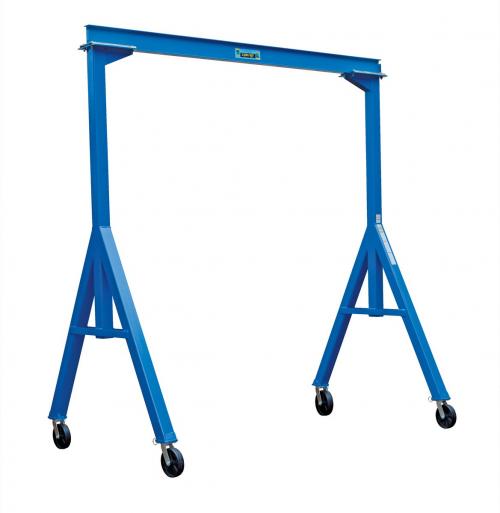
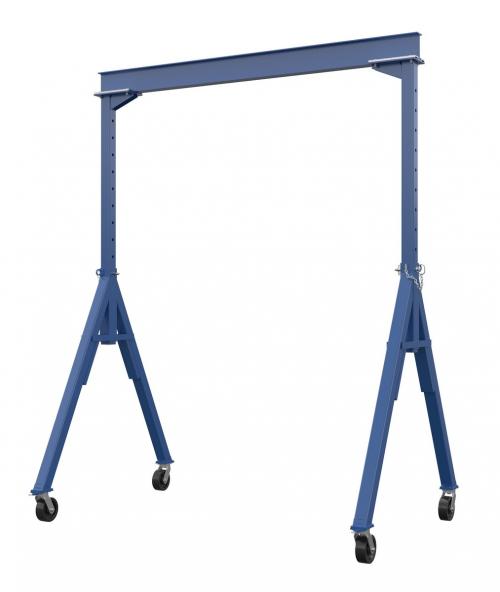
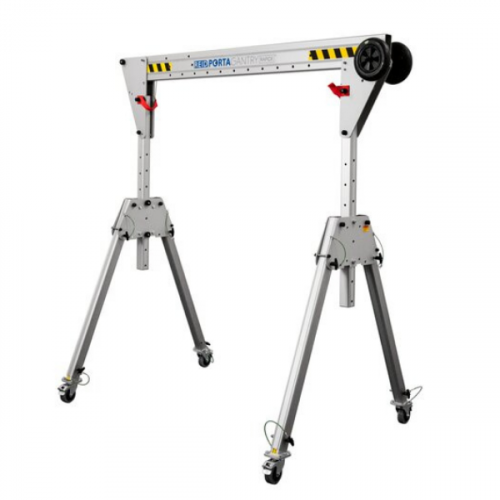
Capacity isn't the only spec. The span (the distance between the legs, and the usable beam width) must cover the area you're lifting in, and the height must clear your tallest load with room for the hoist. An adjustable gantry lets you vary height and sometimes span to fit different jobs. Bear in mind that a longer span and greater height can affect the crane's rated capacity and stability, so read the manufacturer's chart, a gantry's capacity may be specified at a particular span. Size span and height to your work after you've settled the capacity.
Confirm the floor can take it
A gantry concentrates its full load, the lifted weight plus the crane, onto a small number of wheels, so the floor must be able to bear those point loads. On a normal ground-level concrete slab, shop-sized gantries are usually fine, but on older floors, mezzanines, or raised structures, verify the floor's rated capacity against the gantry's wheel loads. An overloaded floor is as dangerous as an overloaded crane. If you're rolling a heavy gantry on anything other than a solid ground-floor slab, check the structural capacity before you load it up.
Consider future needs
It's worth thinking a step ahead when choosing capacity. If your loads might grow, or you occasionally handle heavier items than your routine work, sizing up modestly now can save buying a bigger crane later. Capacity is one of the cheaper specs to add at purchase and one of the most expensive to change afterward. Balance this against cost and the crane's size and weight, a bigger gantry is heavier and less portable, but if you can foresee heavier lifts, buying a bit more capacity than today's maximum is often the economical long-run choice.
When to get engineering help
For standard shop lifting within catalog gantry ratings, the sizing steps here are enough: total the load, round up, match span and height, check the floor. But for heavy, unusual, or high-consequence lifting, custom spans, very heavy loads, or critical operations, have a qualified person or engineer confirm the crane selection and the floor. The cost of a review is trivial against a failure. Knowing when a lift exceeds routine practice and calling for help then is part of choosing safely. For most buyers, though, a standard gantry sized by these rules is the right answer.
The bottom line
Choose a gantry capacity that exceeds your complete heaviest load, the part plus hoist, rigging, and attachments, with margin, rounding up to the next standard rating (1, 2, 3, or 5 tons). Then match span and height to your work, and confirm the floor can carry the wheel loads. Size up if your loads may grow, and get engineering help for unusual lifts. Never size at your maximum load. Browse our gantry cranes or compare models in our best portable gantry cranes guide.
A worked example
Put the rules together with an example. Say your heaviest part is 1,750 lb. You add a 150-lb chain hoist and about 100 lb of slings and shackles, giving a total suspended load of 2,000 lb. Sizing right at 2,000 lb leaves no margin, so you round up to the next standard rating, a 3-ton (6,000-lb) gantry, or at minimum a comfortably-rated unit above the total. You then pick a span and height to clear the part and confirm the floor takes the wheel loads. This is exactly why counting the whole load and rounding up matters: the bare part was well under 2,000 lb, but the real lift wasn't.