What a chain binder is
A chain binder, also called a load binder, is the tensioning tool that makes chain tie-downs work. You run transport chain over or through the cargo and anchor both ends, then the binder pulls the slack out and cranks the chain tight against the deck, holding heavy loads immovable. Without a binder, chain alone can't be tensioned enough to secure a load. Binders are the heavy-duty counterpart to the ratchet on a strap, used where loads are too heavy, sharp, or hot for webbing. Our chain binders come in lever and ratchet styles for different chain sizes.
The two types: lever and ratchet
There are two main binder designs. A lever binder (also called a snap binder) uses a single lever arm, an over-center mechanism, that you throw to tension the chain. It's simple, fast, and inexpensive. A ratchet binder uses a threaded screw combined with a ratcheting gear, so you crank it to tension gradually. Both do the same job, but they differ sharply in how they apply and release tension, and, crucially, in safety. Which you choose has real consequences, which is why we cover it in depth in our lever vs ratchet chain binder guide.
How a lever binder works
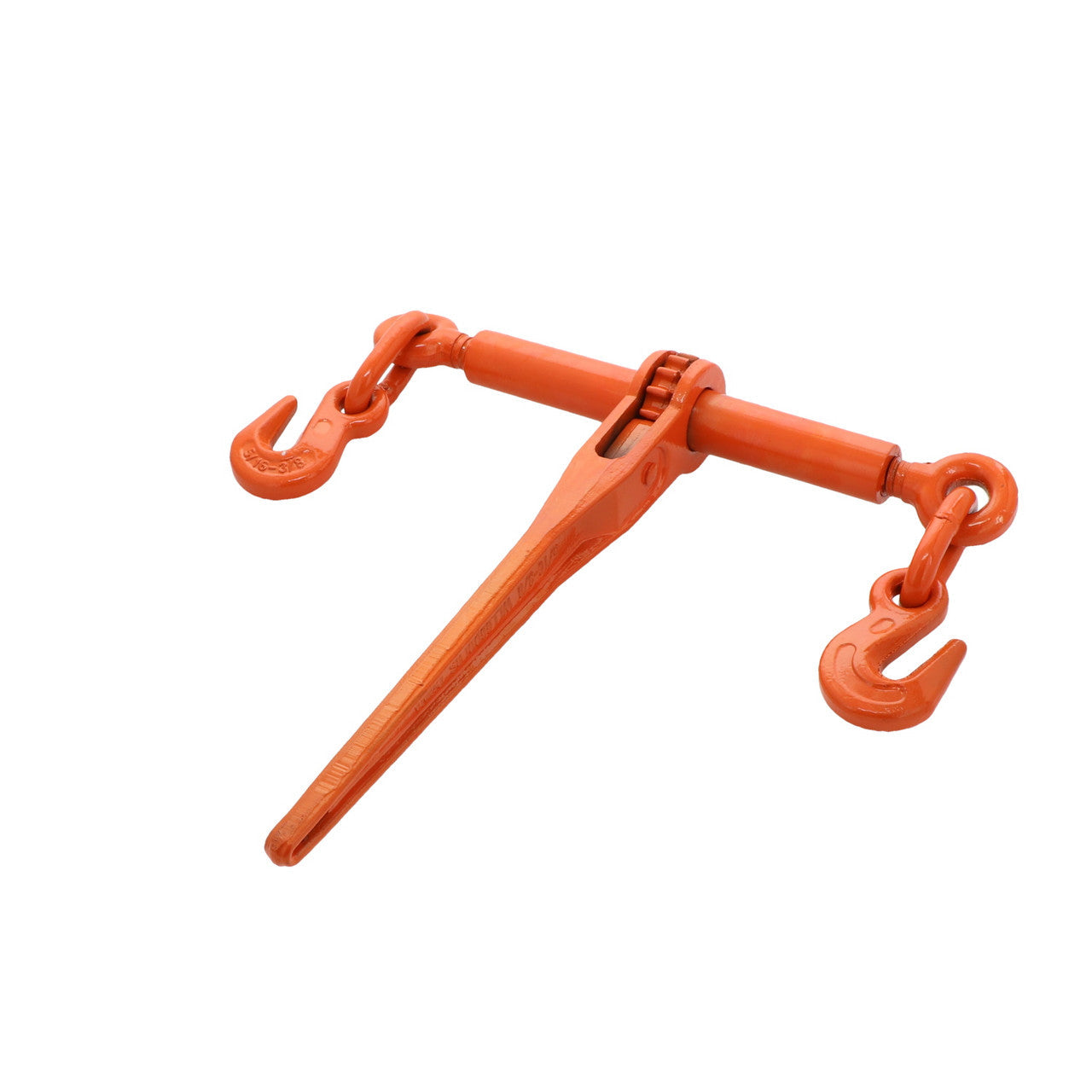
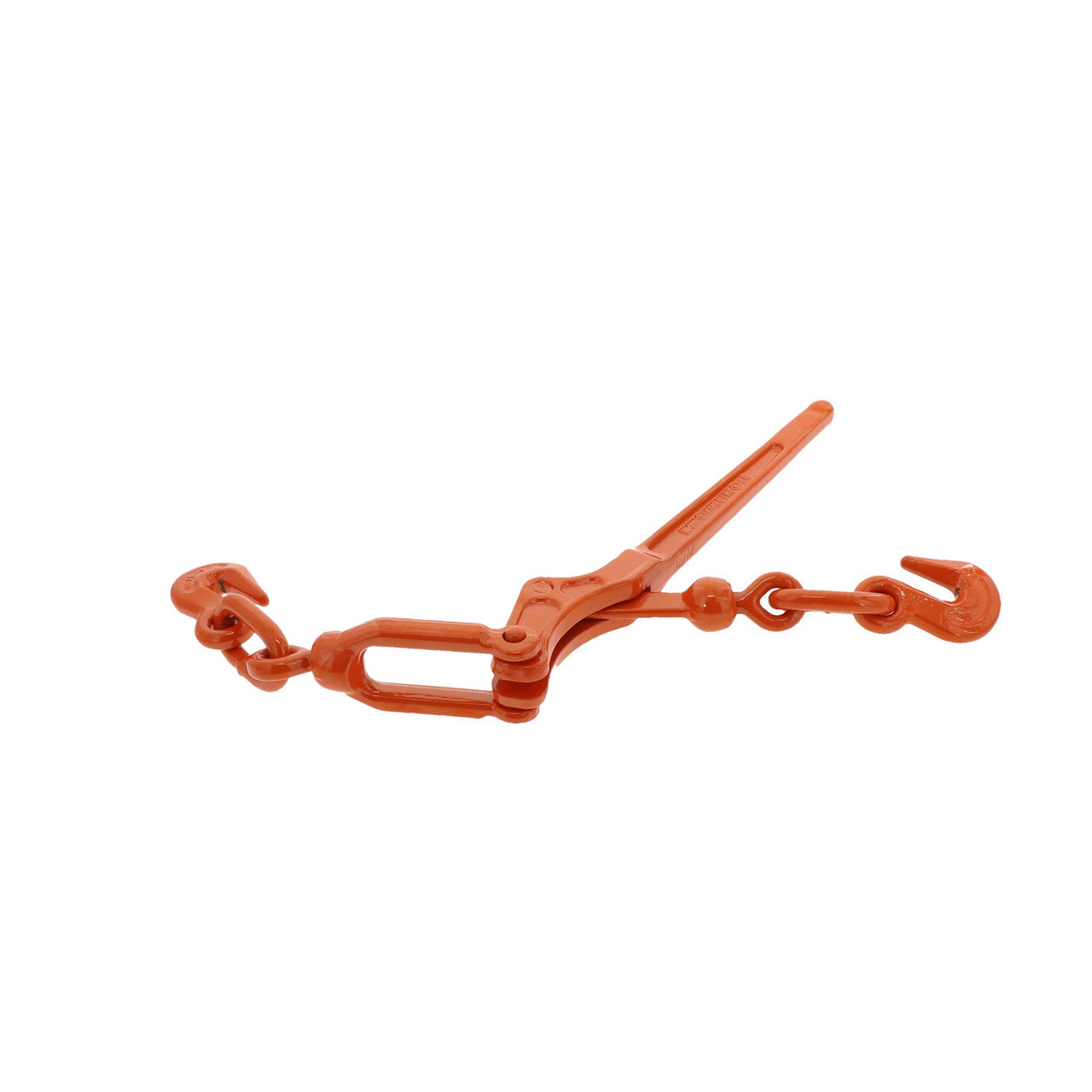
A lever binder tensions the chain through an over-center lever action: as you throw the handle past center, it shortens the distance between the two hooks and snaps the chain tight. It's quick and requires no cranking, which is why it's popular for speed. But that same over-center action stores a large amount of energy in the handle under load, and if the binder slips or is released carelessly, the handle can snap back with enough force to cause serious injury. Lever binders demand respect and correct technique, never stand in the handle's path, and are best for experienced users who understand the kickback risk.
How a ratchet binder works
A ratchet binder tensions the chain with a screw-and-ratchet mechanism: you crank the handle, and the ratcheting gear plus threaded screw gradually draw the chain tight. Because the tension builds and releases slowly through the gears, far less energy is stored in the handle, so a ratchet binder has much lower kickback risk than a lever binder. It's slower to work, but it's widely considered the safer choice, and it can also apply and hold very high tension. For most users, especially those who value safety over speed, the ratchet binder is the recommended type.
Match the binder to the chain
A critical rule: the binder's grade and Working Load Limit must match the chain it's used with, because the securement is only as strong as its weakest component. If you put a 4,000-lb binder on a 6,600-lb chain, the whole line is limited to 4,000 lb, the binder becomes the weak link. So choose a binder rated at or above your chain's WLL, and confirm both are marked and compatible. Our binders are sized for specific chain ranges, the lever binder for 1/4 and 5/16 chain and the ratchet binder for 3/8 and 1/2 chain, so you match the binder to your chain size and grade.
How to use a chain binder
To secure a load with chain and binder: drape the chain over or through the cargo and hook both ends to rated anchor points, pulling the chain as tight as you can by hand and shortening it by choosing the right links. Then connect the binder across the two runs of chain, hook one end to a link on the anchored side and the other to a link on the slack side, and work the binder (throw the lever or crank the ratchet) until the chain is fully tensioned and rigid. Finally, secure the binder handle and any excess chain so nothing can loosen or flap in transit.
Safety and inspection
Chain binders handle enormous forces, so safety and inspection are essential. Inspect the binder for cracks, bending, thread damage, and worn or deformed hooks before use, and retire any damaged unit. With lever binders especially, keep your body out of the handle's swing path and never release one under load without controlling the handle. Use a cheater bar only if the manufacturer permits it, since improper leverage can over-stress the binder or increase kickback. And always match the binder's rating to the chain and the load. Treating binders with the respect their forces demand prevents the injuries they can cause.
The bottom line
A chain binder tensions transport chain to lock heavy cargo to a deck, and it comes in two types: the fast but energy-storing lever (snap) binder, and the slower but safer ratchet binder. Always match the binder's grade and Working Load Limit to the chain, since the weakest component governs, and follow safe technique, especially the kickback risk of lever binders. Learn the differences in our lever vs ratchet chain binder guide, understand the chain itself in transport chain grade 70, and see the full cargo control guide.
When to use chain over straps
Chain and binders aren't for every load, they're the heavy-duty option for specific conditions. Reach for chain and a binder when the cargo is very heavy (machinery, equipment, steel), when it has sharp edges that would cut webbing, when it's hot enough to damage synthetic straps, or when it's rough and abrasive. Chain shrugs off all of these where a strap would fail. For lighter, gentler loads without those hazards, straps are faster and easier. Many equipment haulers use chain and binders almost exclusively because their loads are exactly the heavy, sharp, rough kind that demands it.
Grade and marking
Just as with chain, a binder should be rated and marked, and matched to the chain's grade. Quality binders carry a stamped Working Load Limit and are built to handle the forces of tensioning heavy chain. Pairing a properly-rated binder with correctly-graded Grade 70 chain gives you a securement line whose strength you can verify and trust. Avoid unrated or unmarked binders, since you can't confirm their capacity and they may become the weak link. Buy marked, rated binders sized to your chain, and keep the markings legible for inspection and compliance.