Bison Electric Chain Hoists
A Bison electric chain hoist is the powered lifter a lot of American shops reach for when they want serious capacity without a European price tag: a motor, a load chain, and a pendant that raises and lowers the hook at the push of a button. This collection runs the full Bison electric line, single phase units on ordinary 115V/230V shop power from a quarter ton up, three phase machines on 230V/460V in both single speed and dual speed, and the VFD-controlled BVH, BXH, and BIH series that bring soft-start motion control to a single phase circuit. Capacities climb to 10 tons, several models ship as a package with a motorized or geared trolley, and a factory-installed wireless remote is an option across much of the range. Prices span from mid-four-figure single phase hoists to a 10 ton three phase dual speed unit with trolley in the low twenties of thousands. The guide below walks the levers that decide which Bison is right: power, capacity, speed, suspension, and duty.
Compare Bison Electric Chain Hoists
| Model | Price | Capacity | Power | |
|---|---|---|---|---|
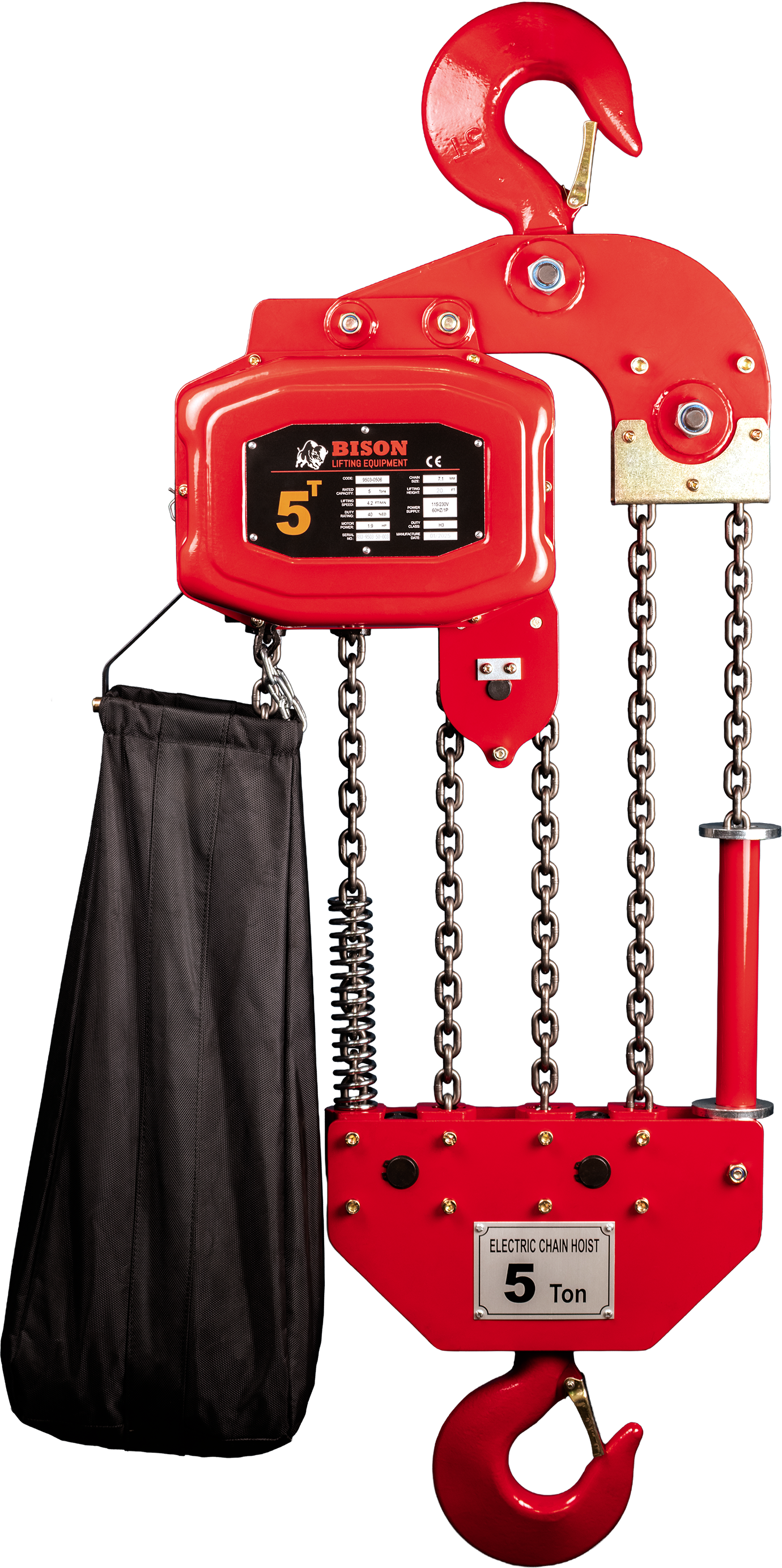
| Bison 10Ton Three Phase Dual Speed Electric Chain Hoist with Trolley 230v/460v | $21,823 | 10 ton | 230V | View → |
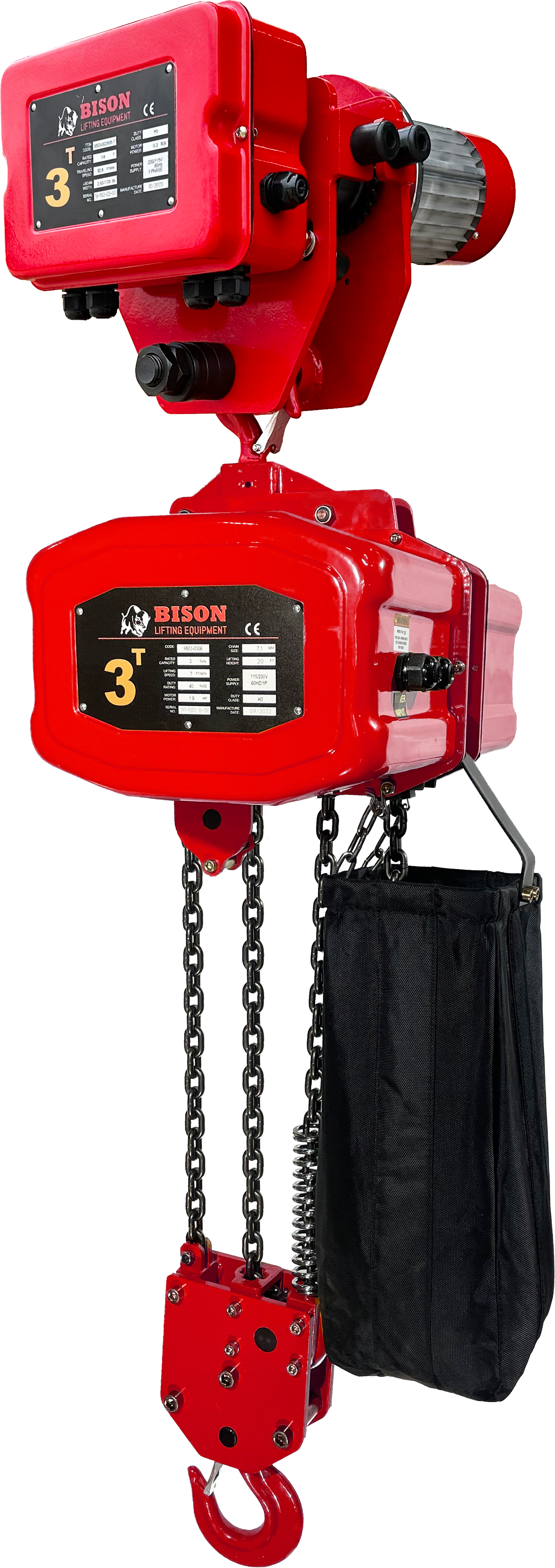
| Bison 5Ton Single Phase Electric Chain Hoist with Motorized Trolley 115v/230v | $11,988 | 5 ton | 115V | View → |
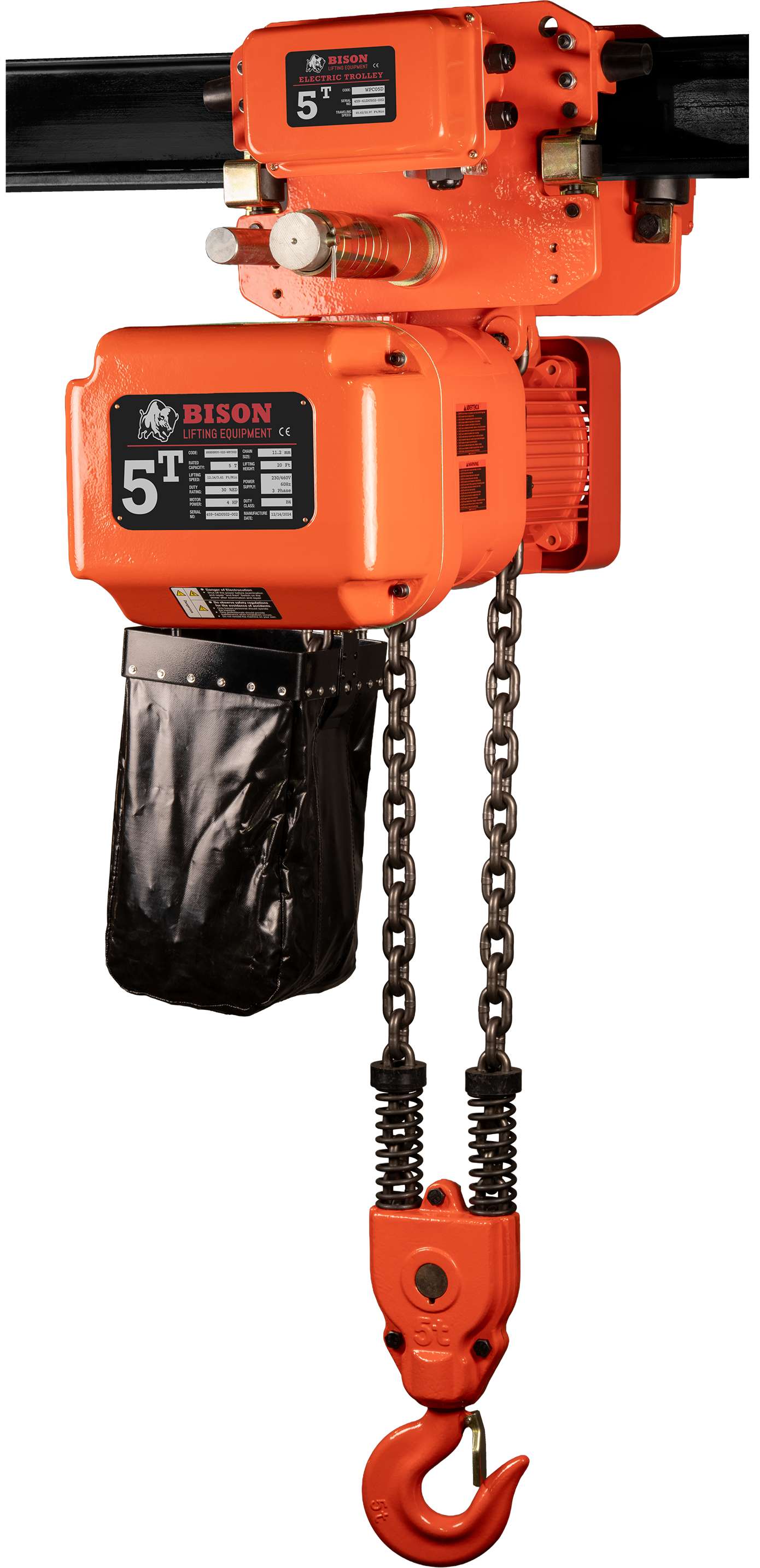
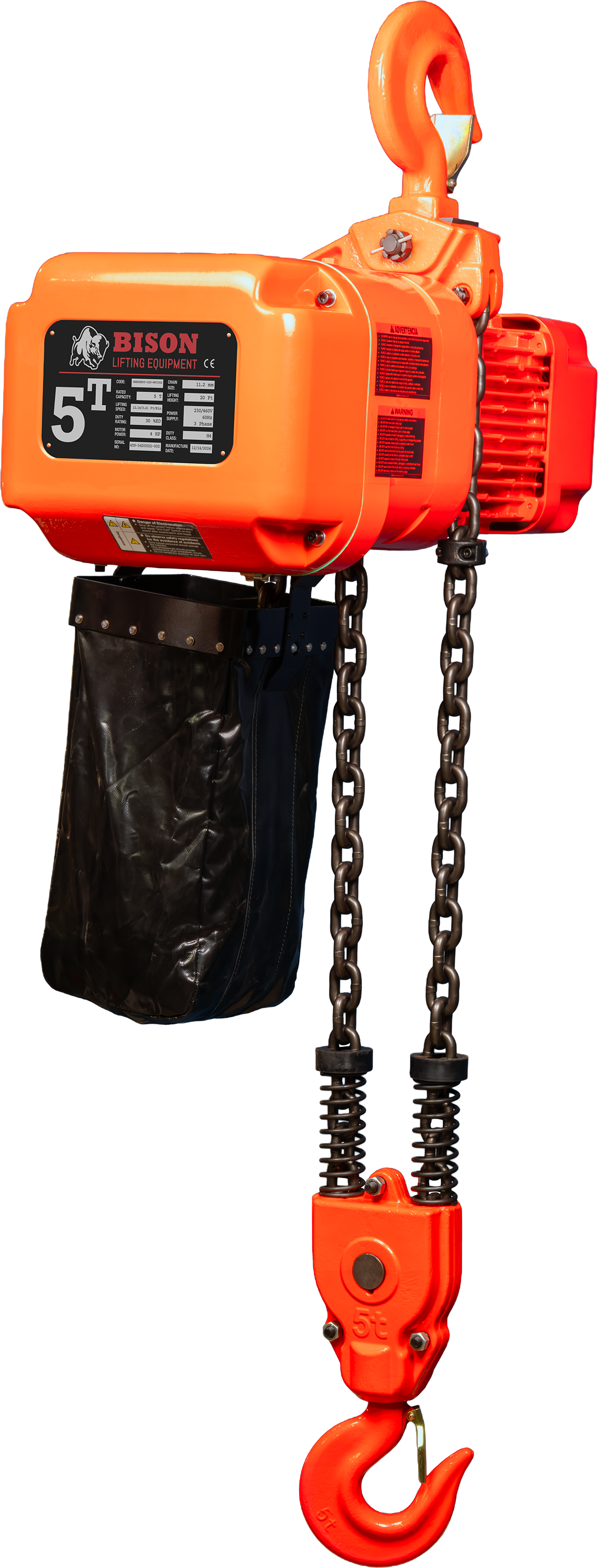
| Bison 5Ton Three Phase Dual Speed Electric Chain Hoist with Trolley 230v/460v | $11,034 | 5 ton | 230V | View → |
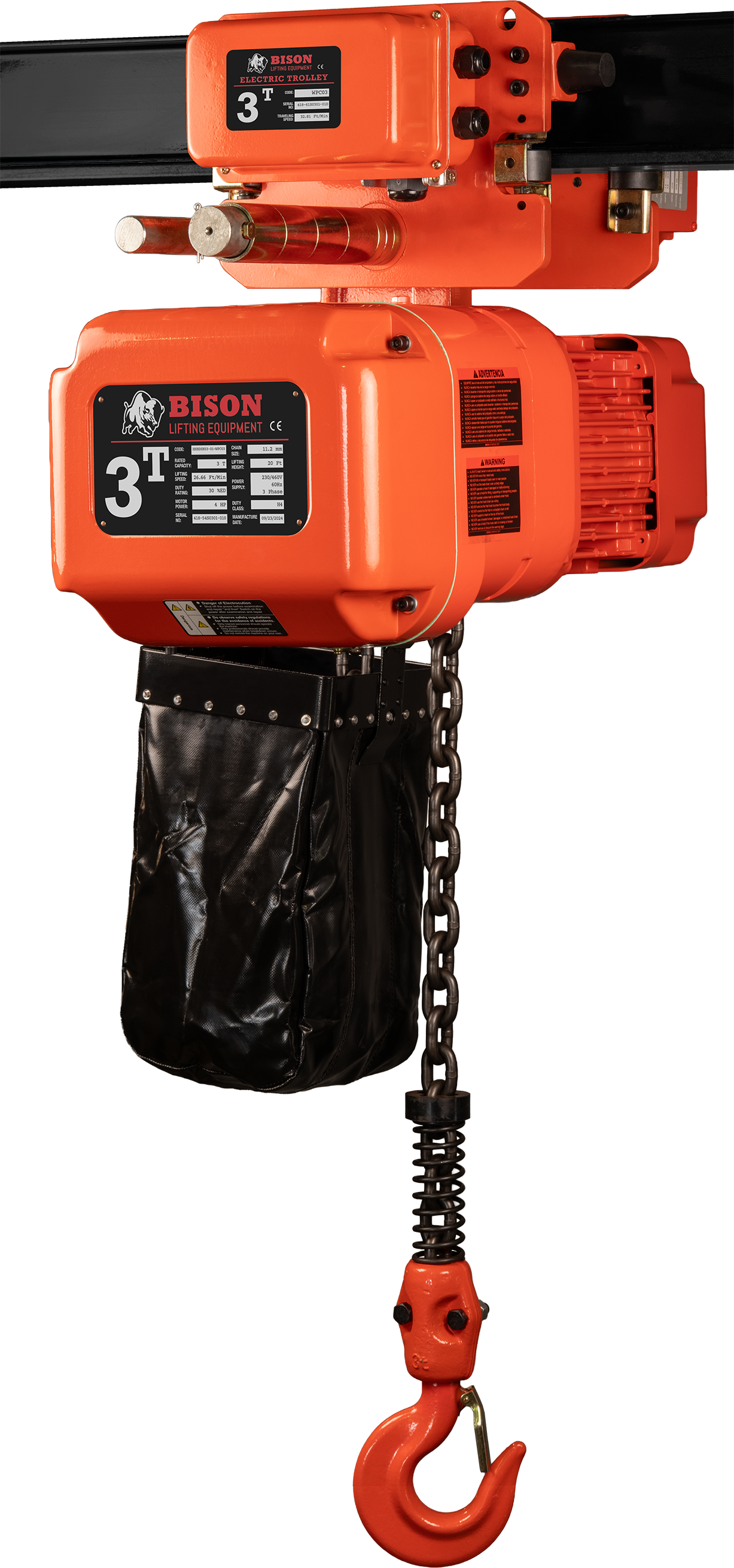
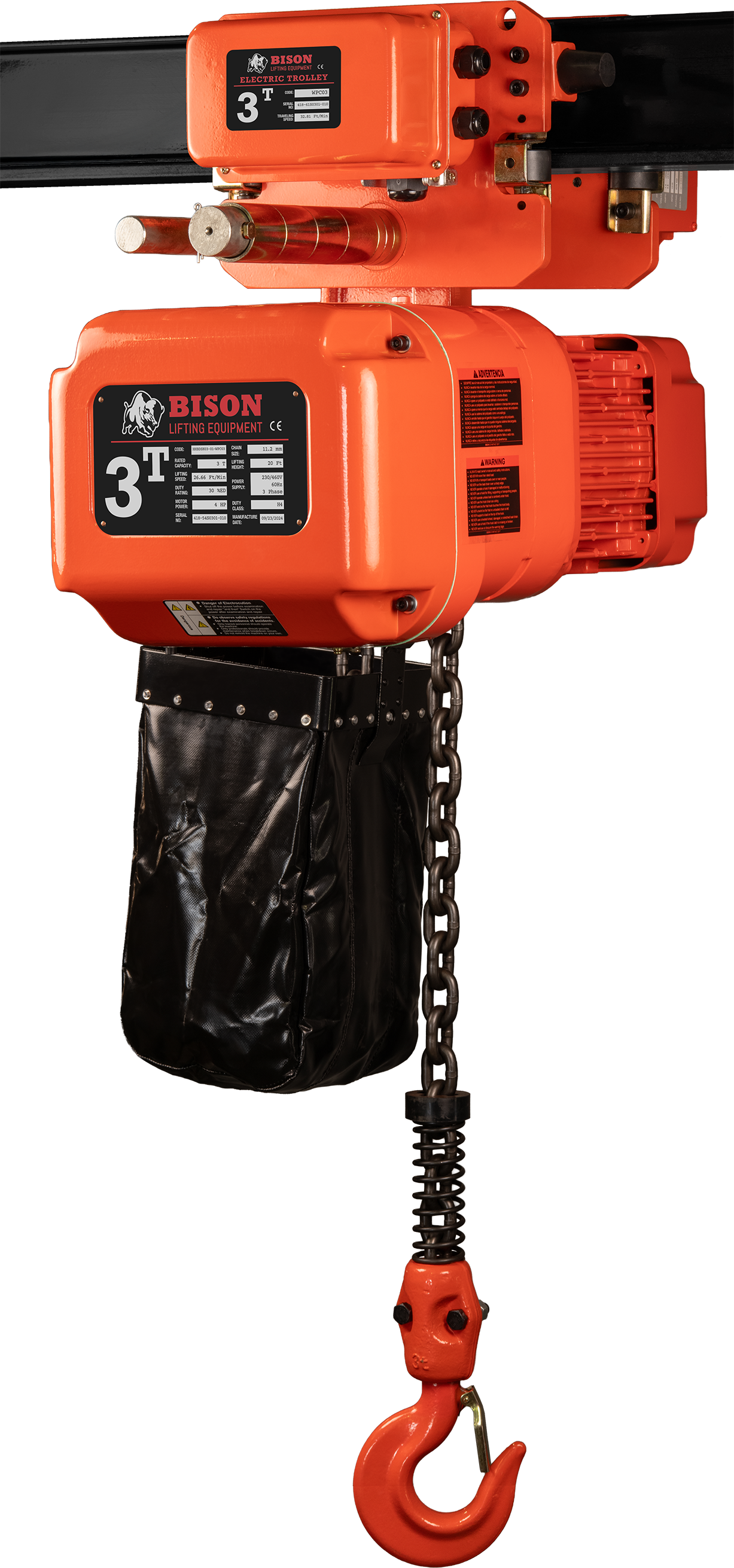
| Bison 3Ton Three Phase Dual Speed Electric Chain Hoist with Trolley 230v/460v | $9,511 | 3 ton | 230V | View → |
| Bison 5Ton Three Phase Single Speed Electric Chain Hoist with Trolley 230v/460v | $9,363 | 5 ton | 230V | View → |
| Bison 3Ton Single Phase Electric Chain Hoist with Motorized Trolley 115v/230v | $8,400 | 3 ton | 115V | View → |
 In Stock
 In Stock
 In Stock
 In Stock
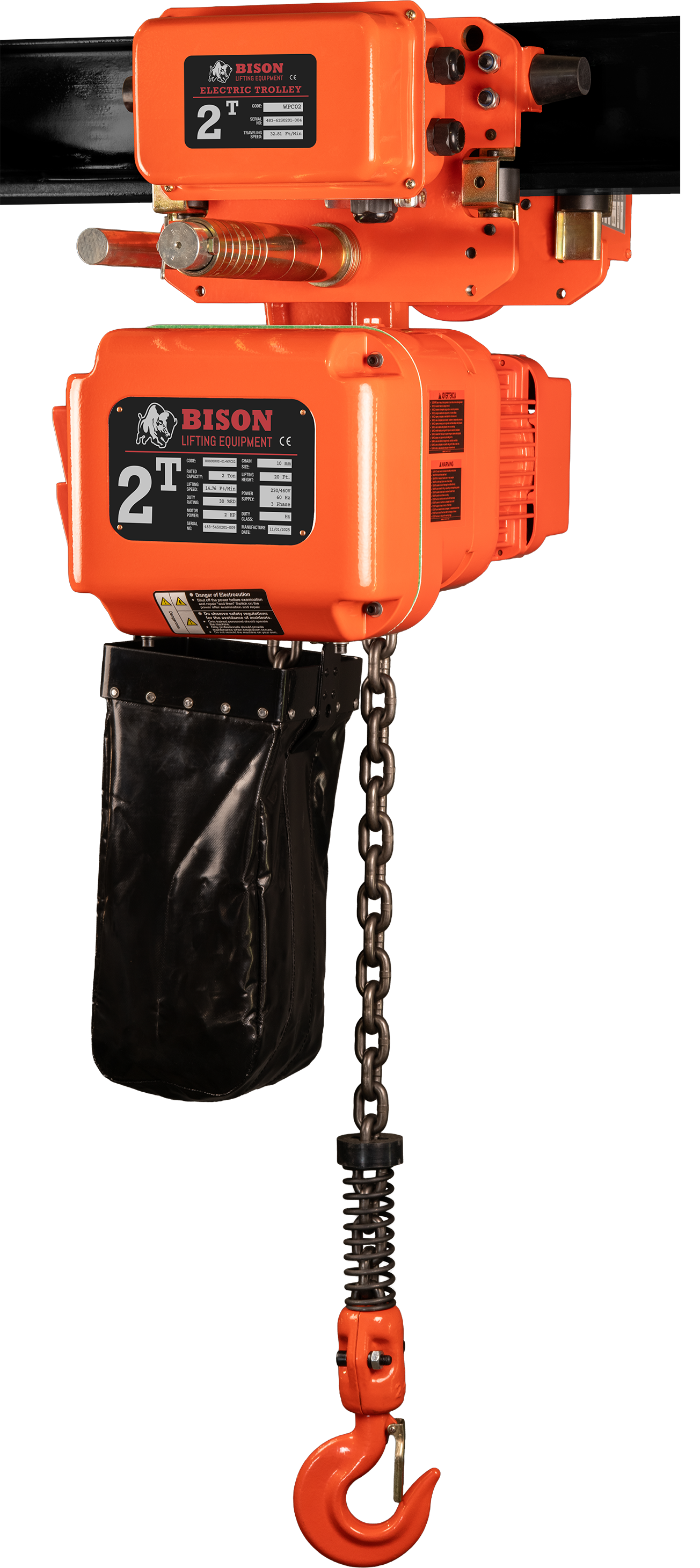 In Stock
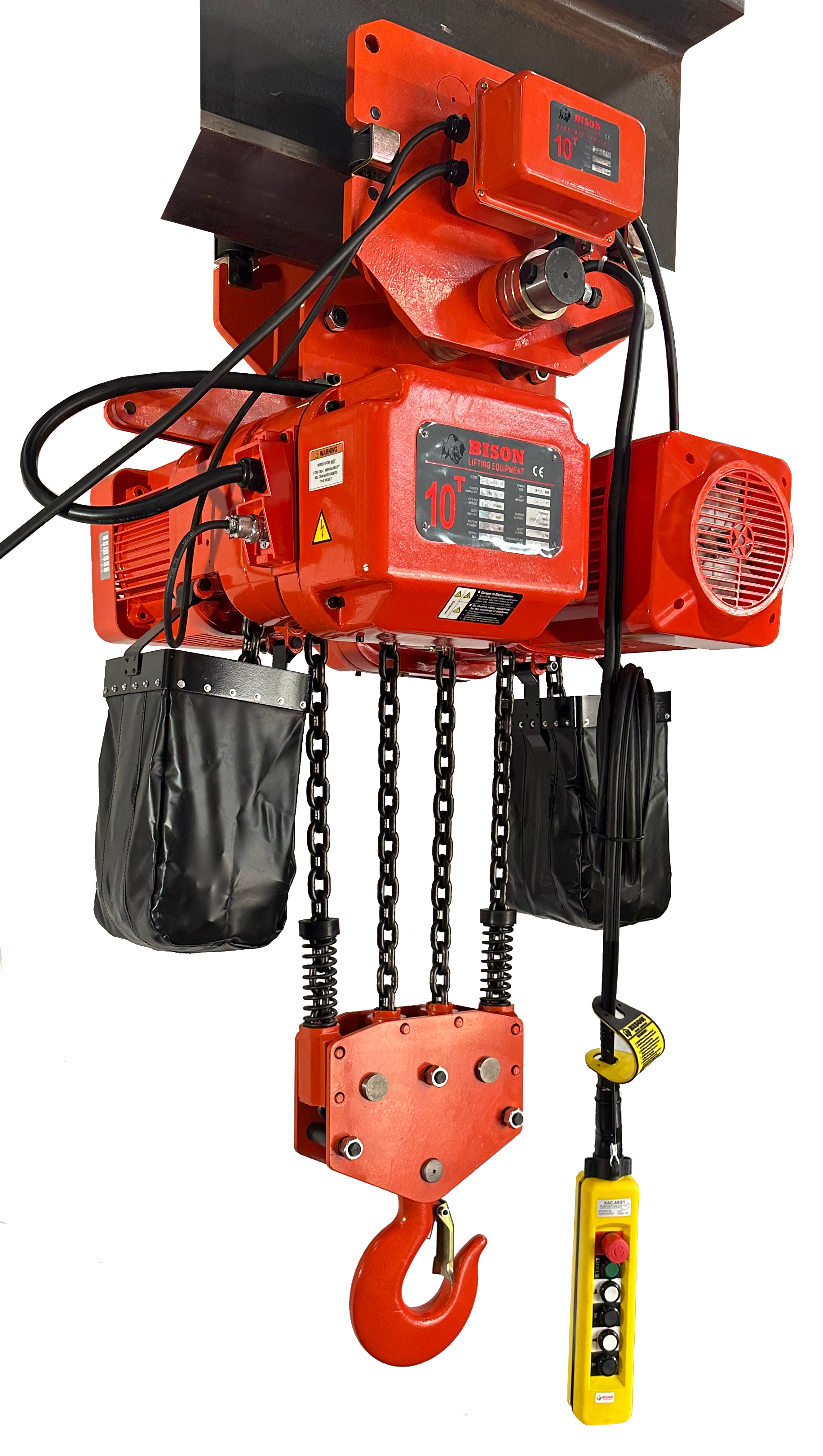 In Stock
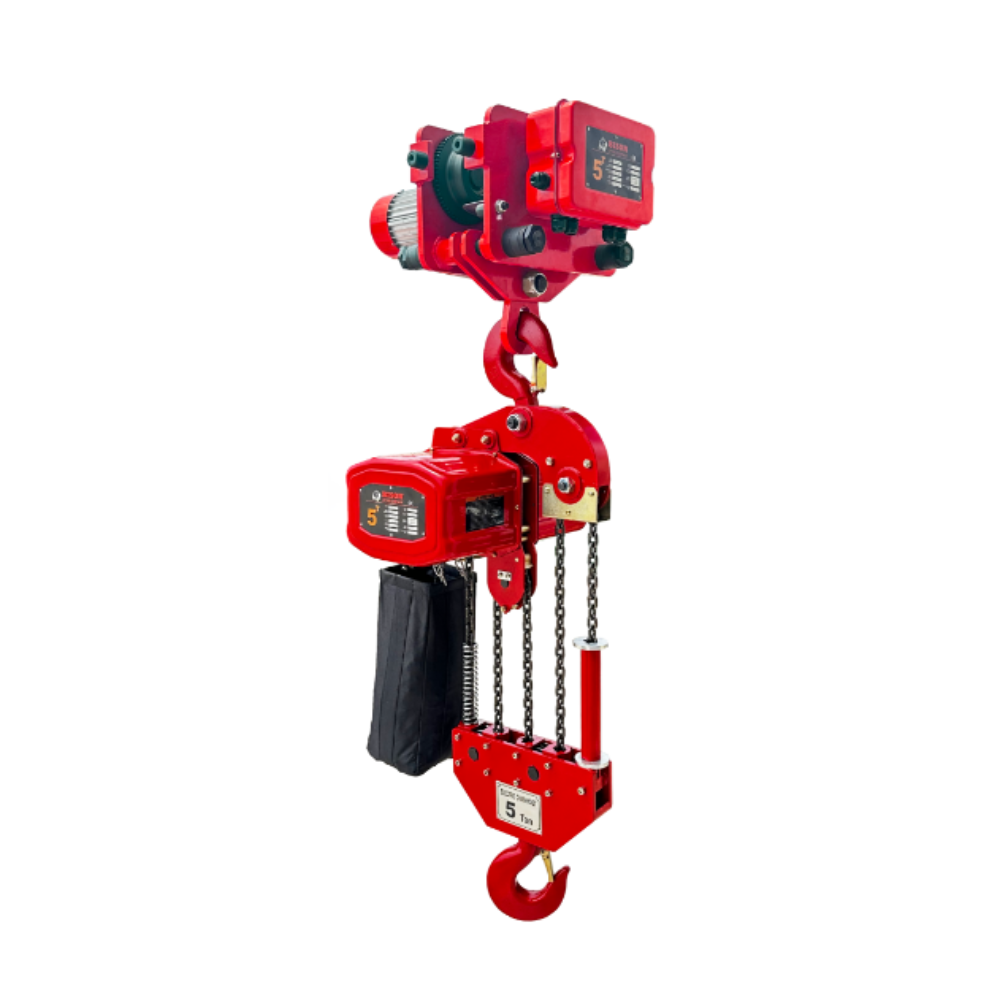 In Stock
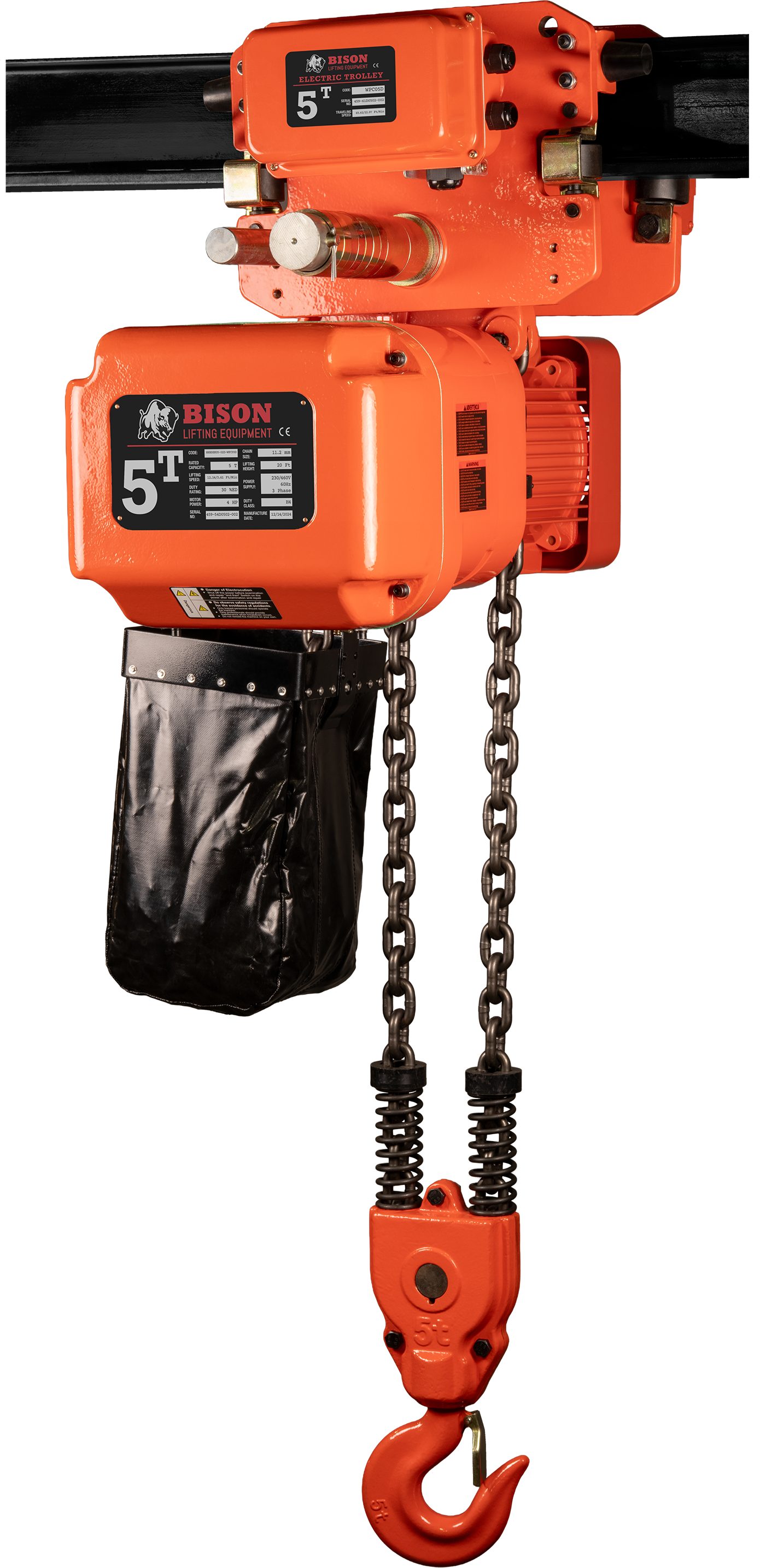 In Stock
 In Stock
 In Stock
 In Stock
 In Stock
 In Stock
 In Stock
 In Stock
 In Stock
 In Stock
 In Stock
 In Stock
 In Stock
 In Stock
 In Stock
 In Stock
 In Stock
 In Stock
 In Stock
 In Stock
 In Stock
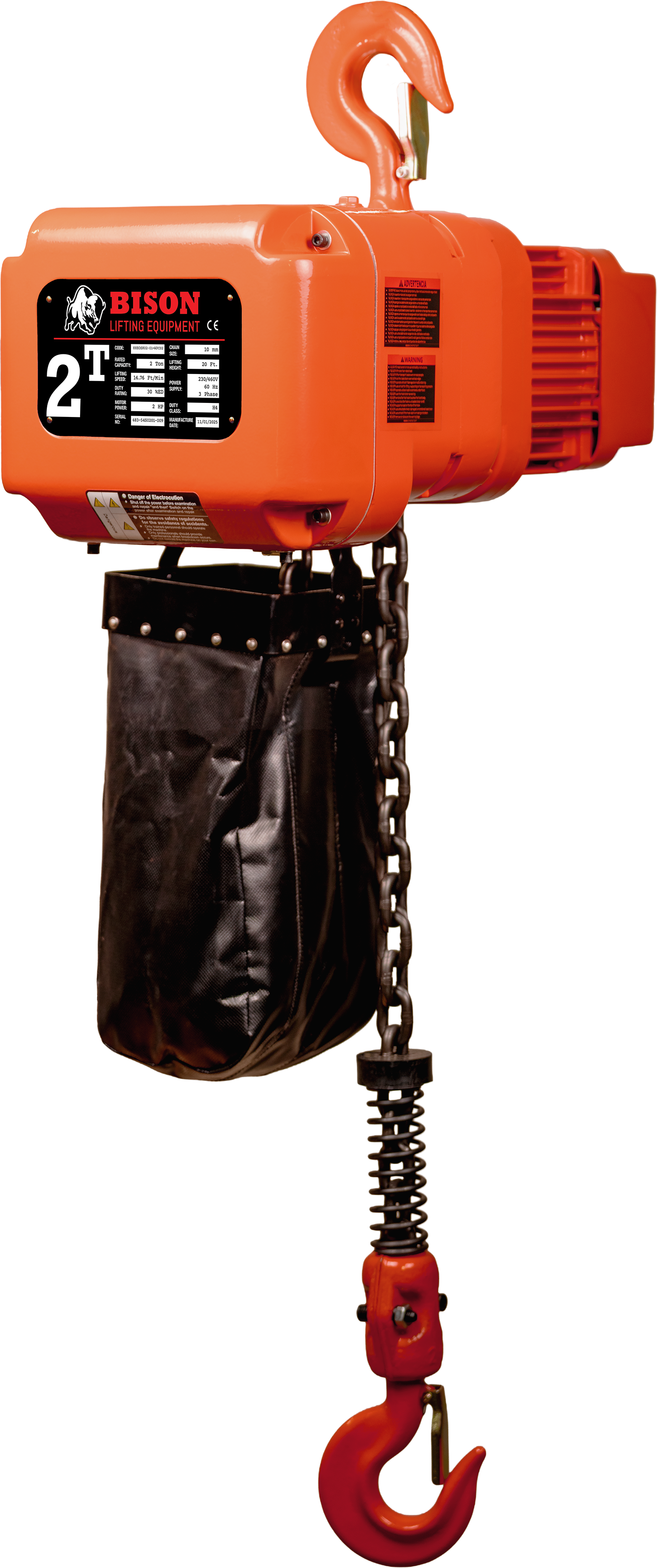 In Stock
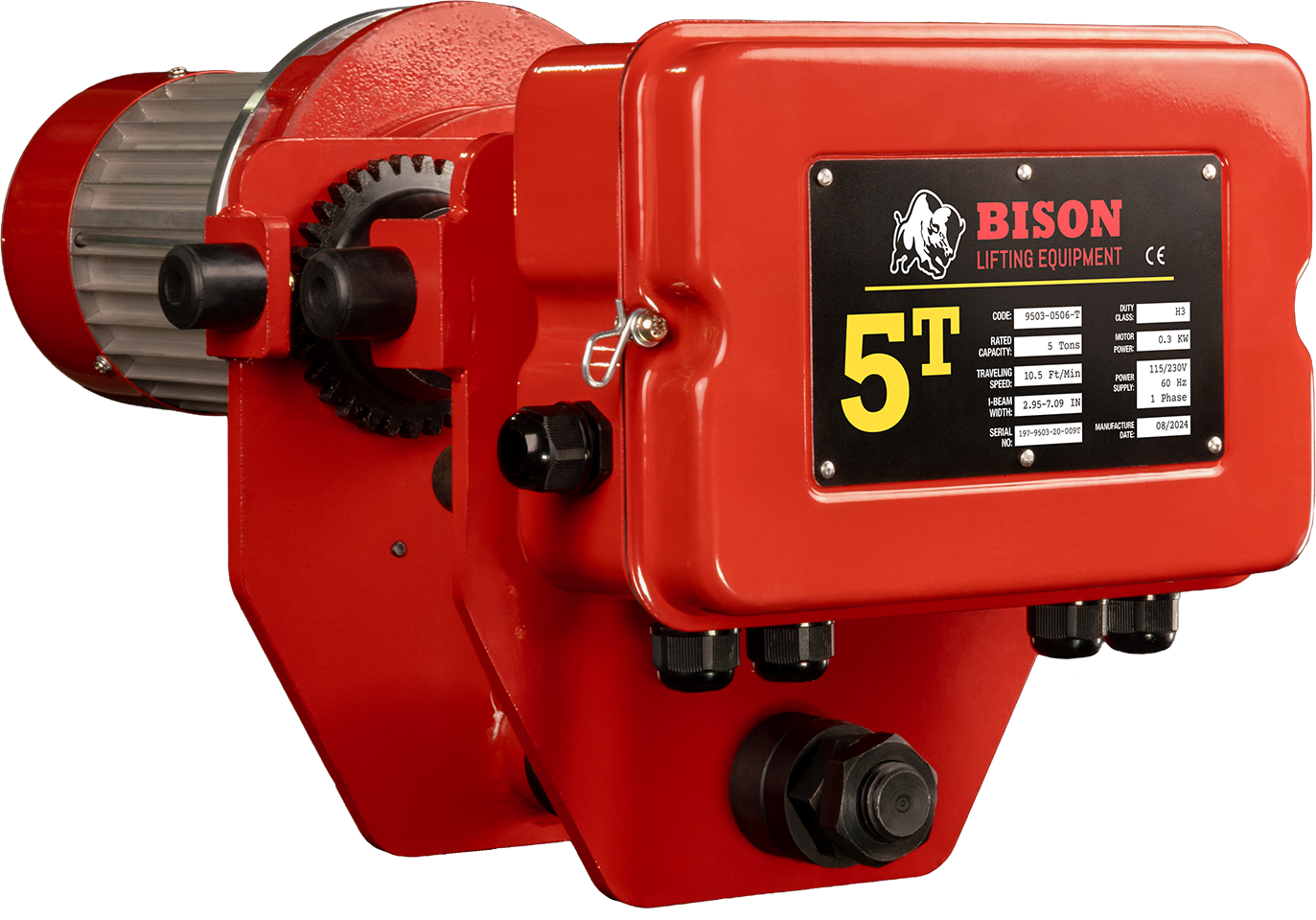 In Stock
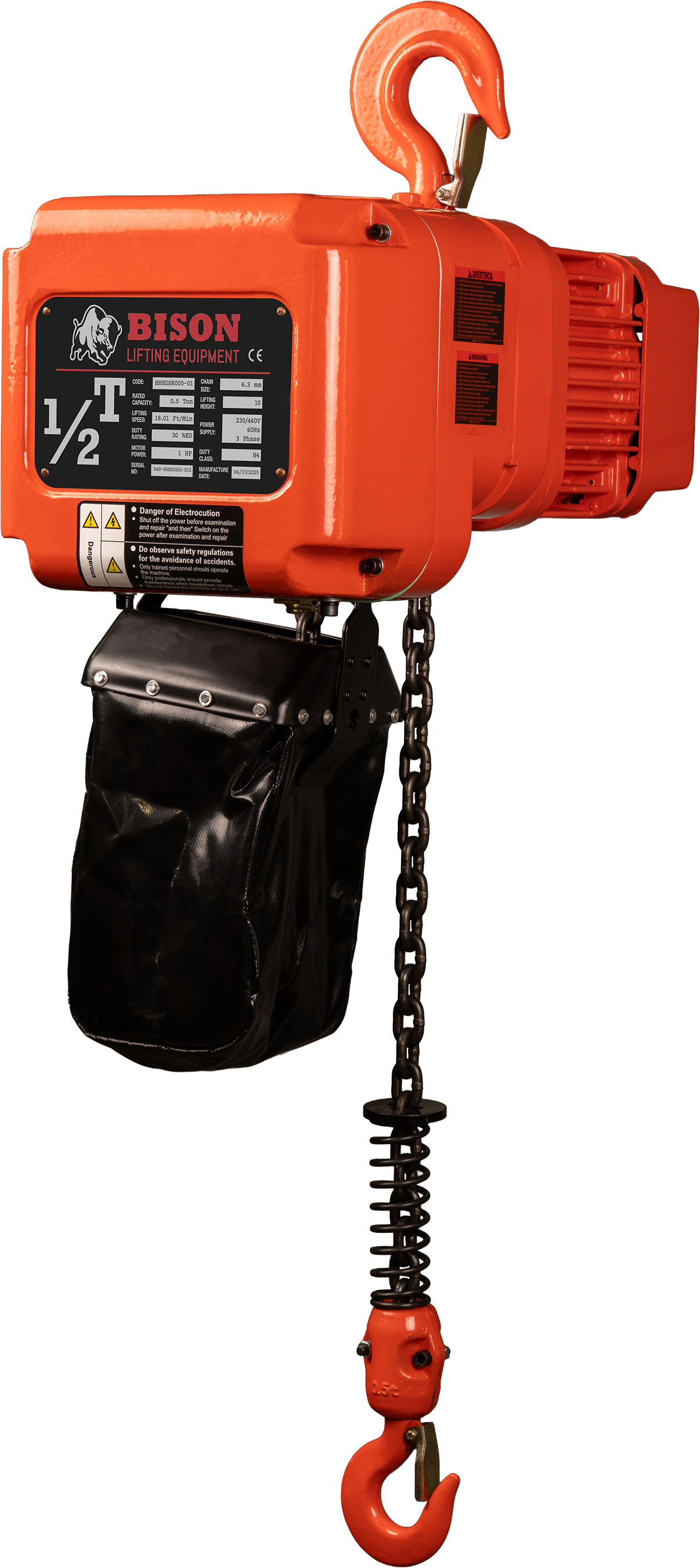 In Stock
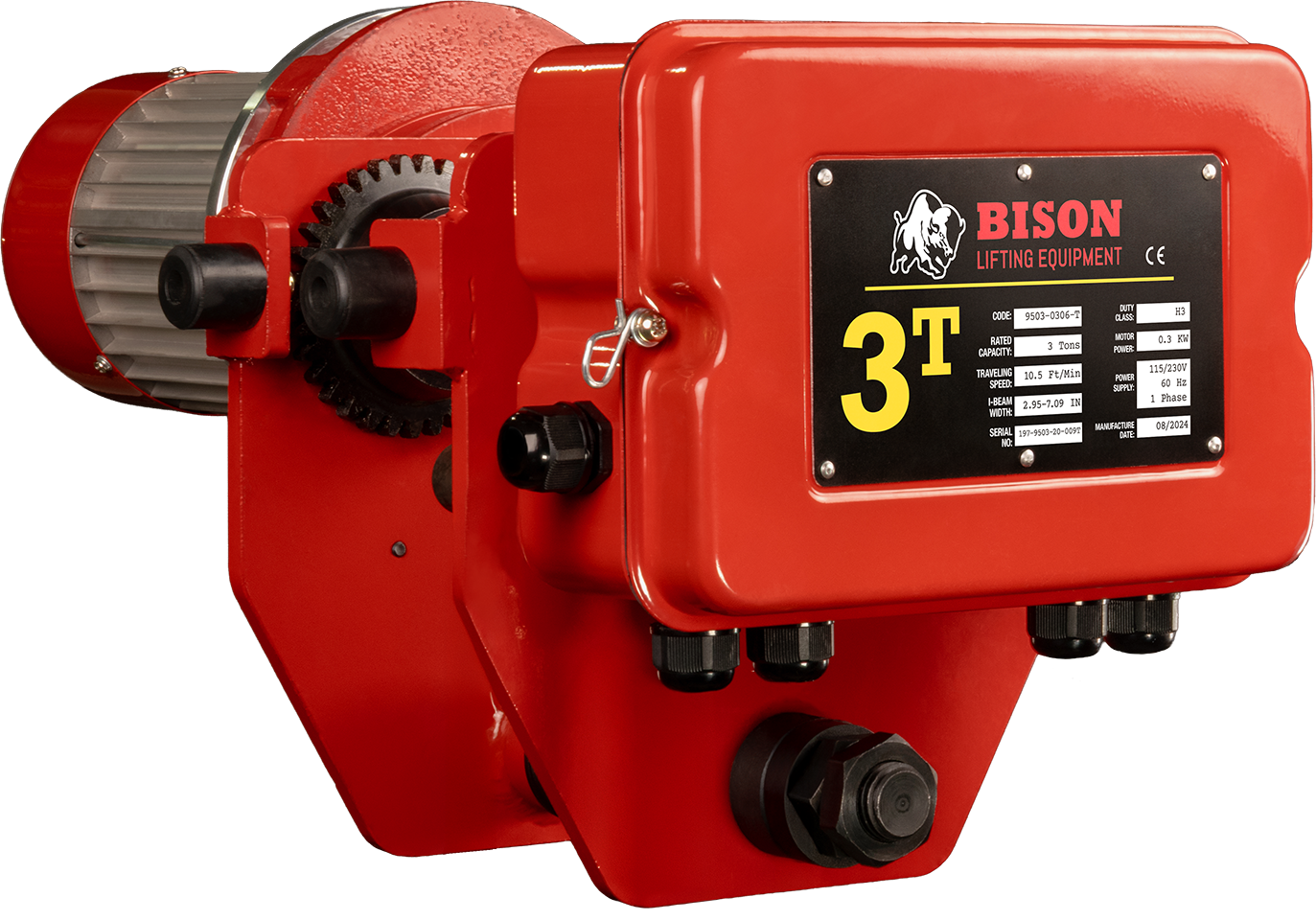 In Stock
 In Stock
 In Stock
 In Stock
 In Stock
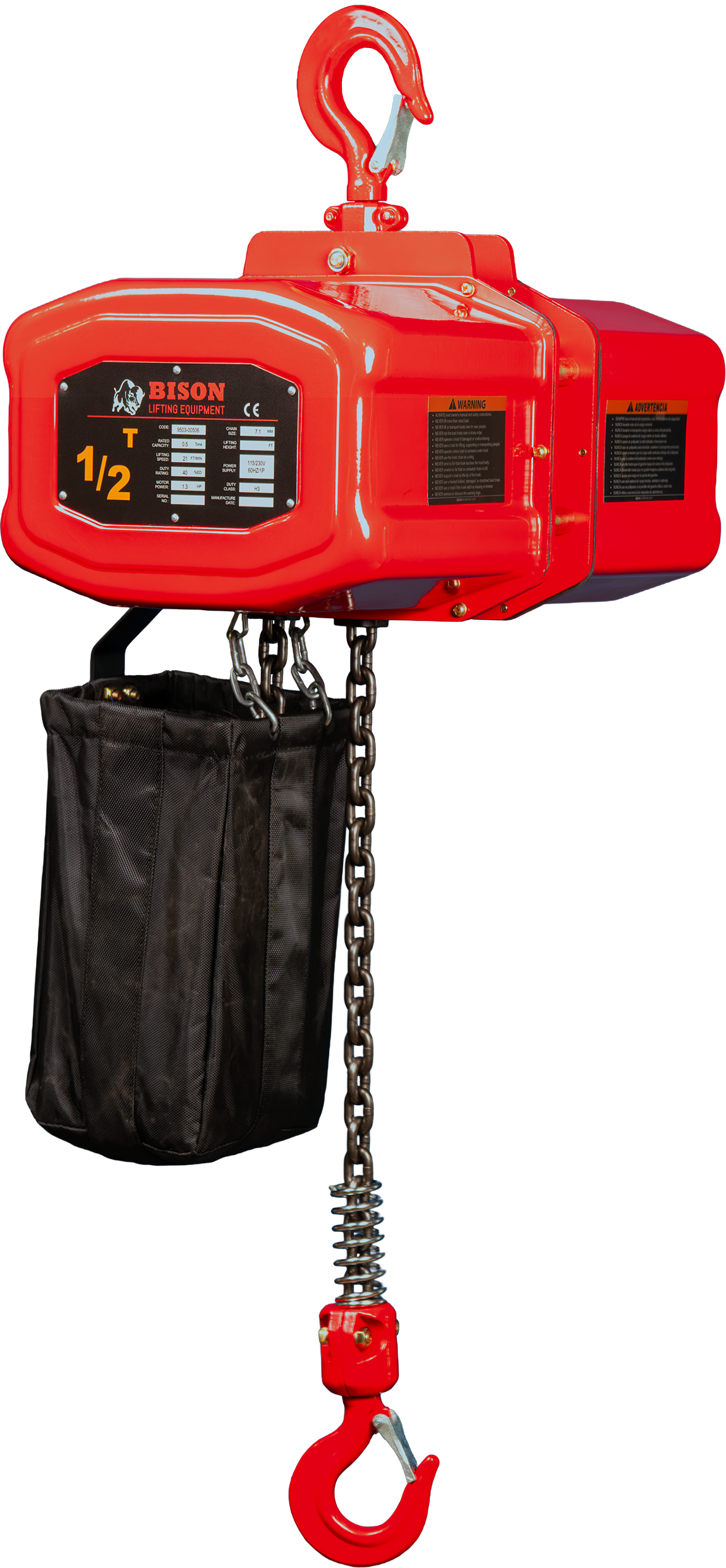 In Stock
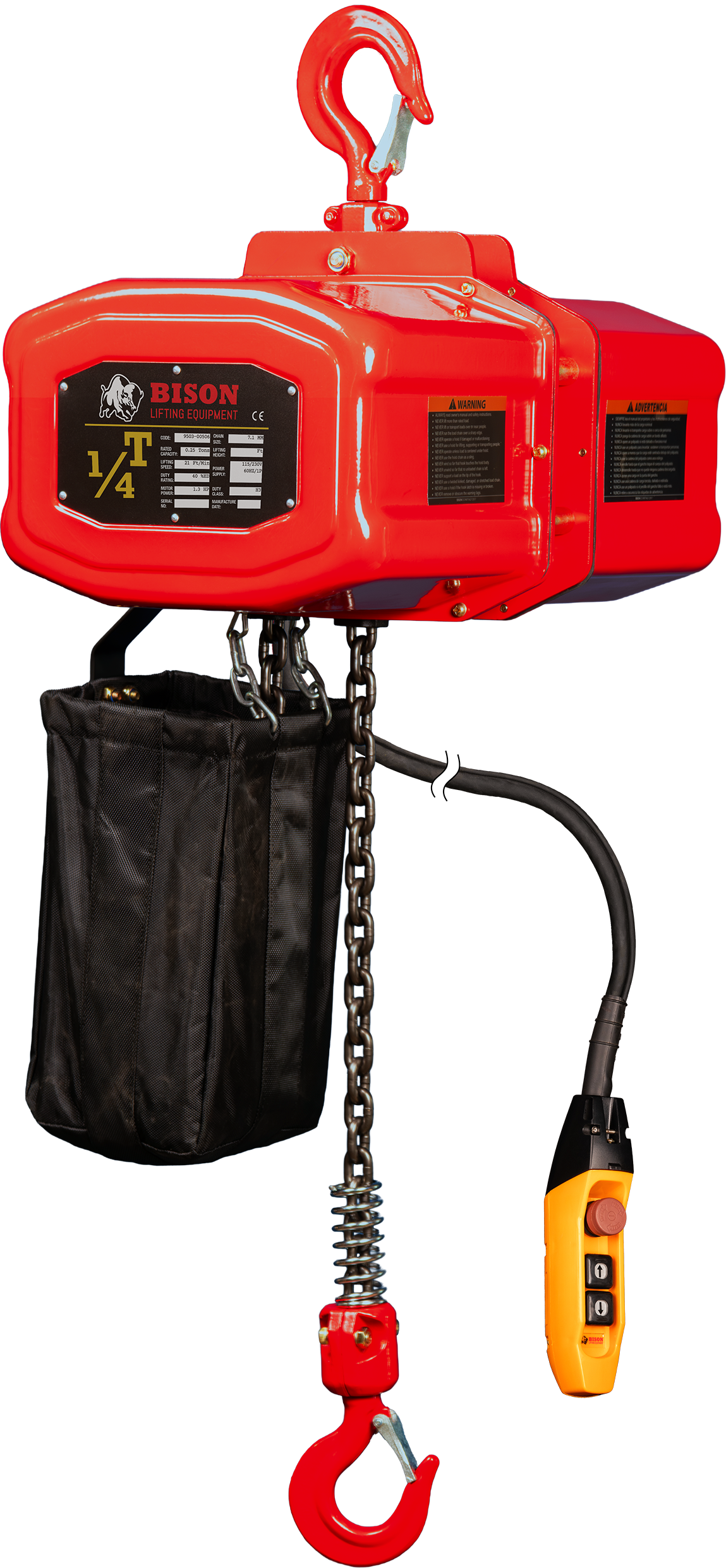 In Stock
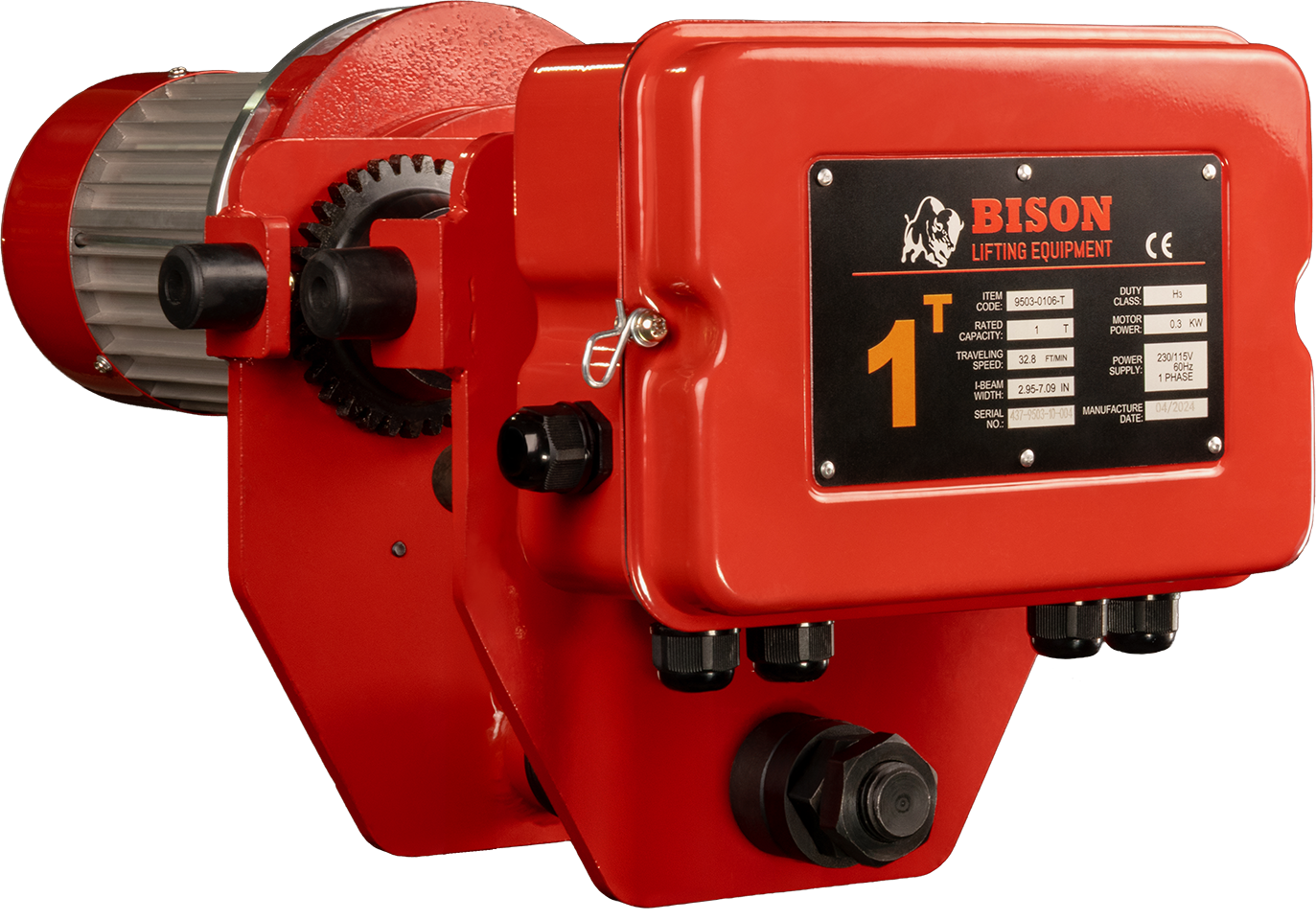 In Stock
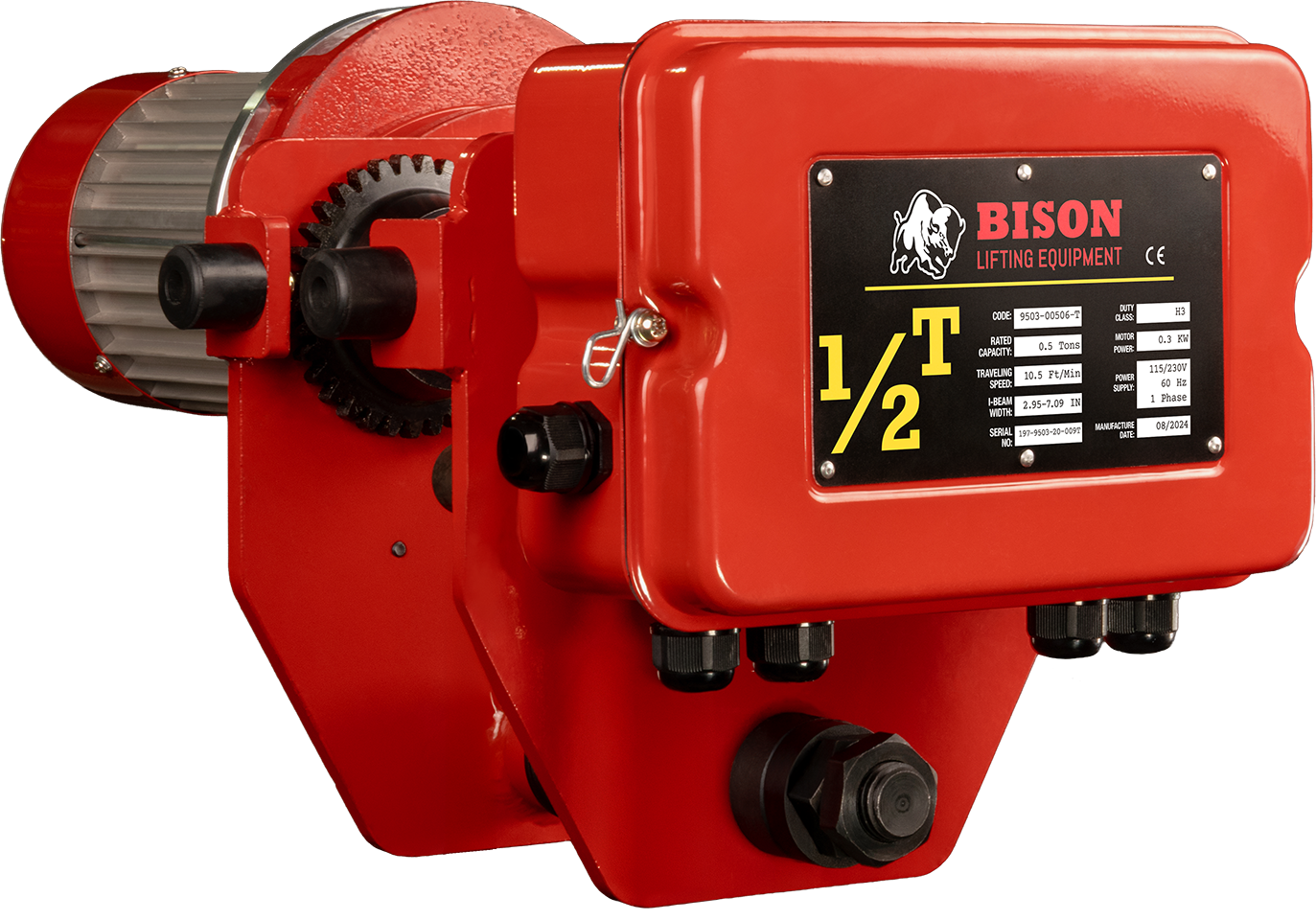 In Stock
 In Stock
 In Stock
Bison Electric Chain Hoists Buying Guide
Start with the power at your panel. The first thing to settle is what feeds the machine, because a hoist wired for the wrong service will not run. Bison's single phase electric chain hoists run on 115V or 230V, the power most small shops and light industrial bays already have at the wall, and cover the range from a quarter ton through 5 ton. Three phase Bison hoists run on 230V or 460V, waste less energy over long wire runs, and are the practical choice once you climb past a couple of tons or run the hoist hard all shift. Confirm the voltage and phase at your panel before you order, since a three phase motor will not turn on single phase power without a converter, and dropping a 460V unit onto a 230V feed leaves it underpowered.
Size the capacity the honest way. Bison electric chain hoists start at 1/4 ton and climb to 10 tons, so sizing is about totaling the load correctly. Add the heaviest thing you will ever lift to the weight of the hook block, the sling, and any below-hook gear, then round up to the next rating with margin. Do not buy right at your maximum, because a hoist run near its ceiling wears fast, and do not buy three sizes over, because that is money parked on the beam. The single phase line covers 1/4, 1/2, 1, 2, 3, and 5 ton; the three phase range adds the heavy end, including a 10 ton dual speed unit that ships with its trolley. If the load has to travel a runway or you are hanging under a jib crane or portable gantry, remember the hoist and trolley weight count against that structure's rated capacity.
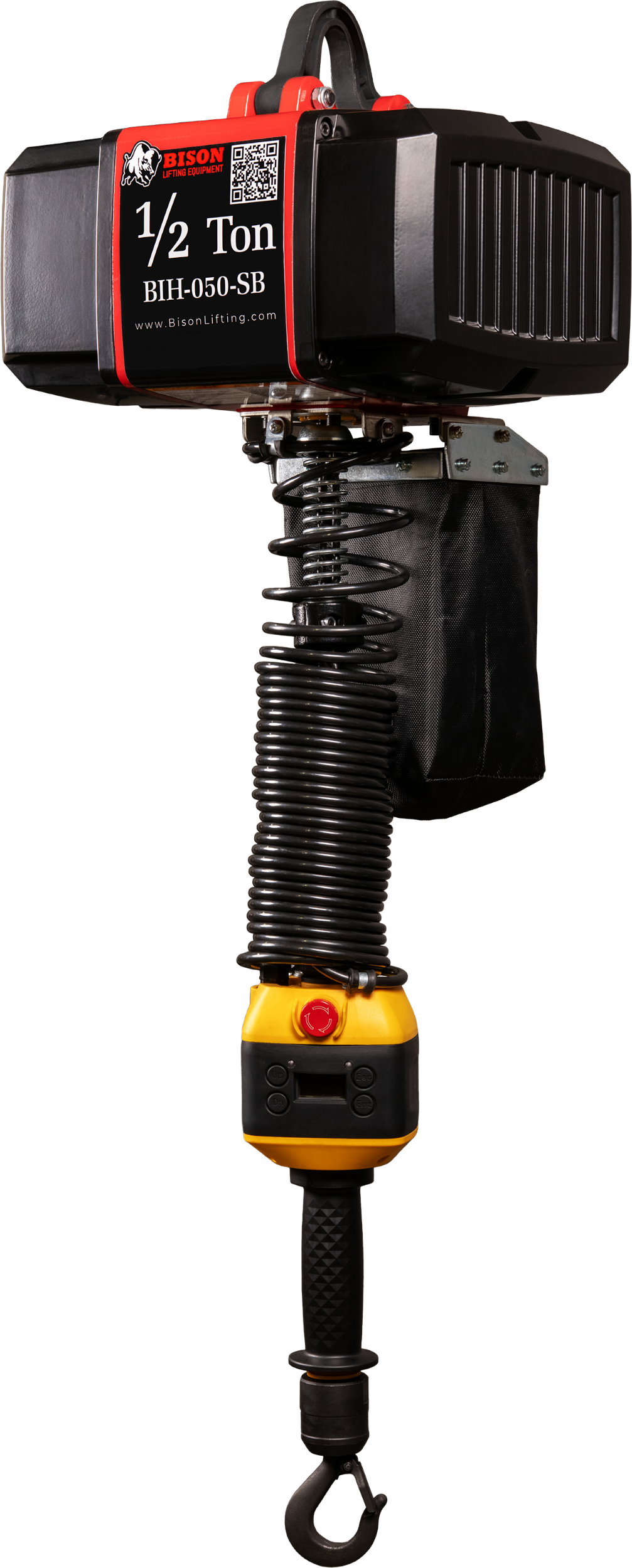
Single speed, dual speed, or VFD control. Three phase Bison hoists come in single speed and dual speed, and the second speed is worth the premium anywhere placement matters: a fast speed for the empty return and travel, and a slow creep for landing the load into a fixture without chasing it. The VFD-controlled BVH, BXH, and BIH series take that idea further on single phase power. A variable frequency drive soft-starts the motor instead of switching it straight to full speed, which cuts load sway, protects the motor windings and insulation, and gives smooth, controllable acceleration and stopping. For work that needs precise spotting, delicate loads, or high cycle counts on a single phase circuit, the VFD line does what a plain contactor hoist cannot. These sit in the broader electric hoists family if you want to compare them against the Harrington and CM units.
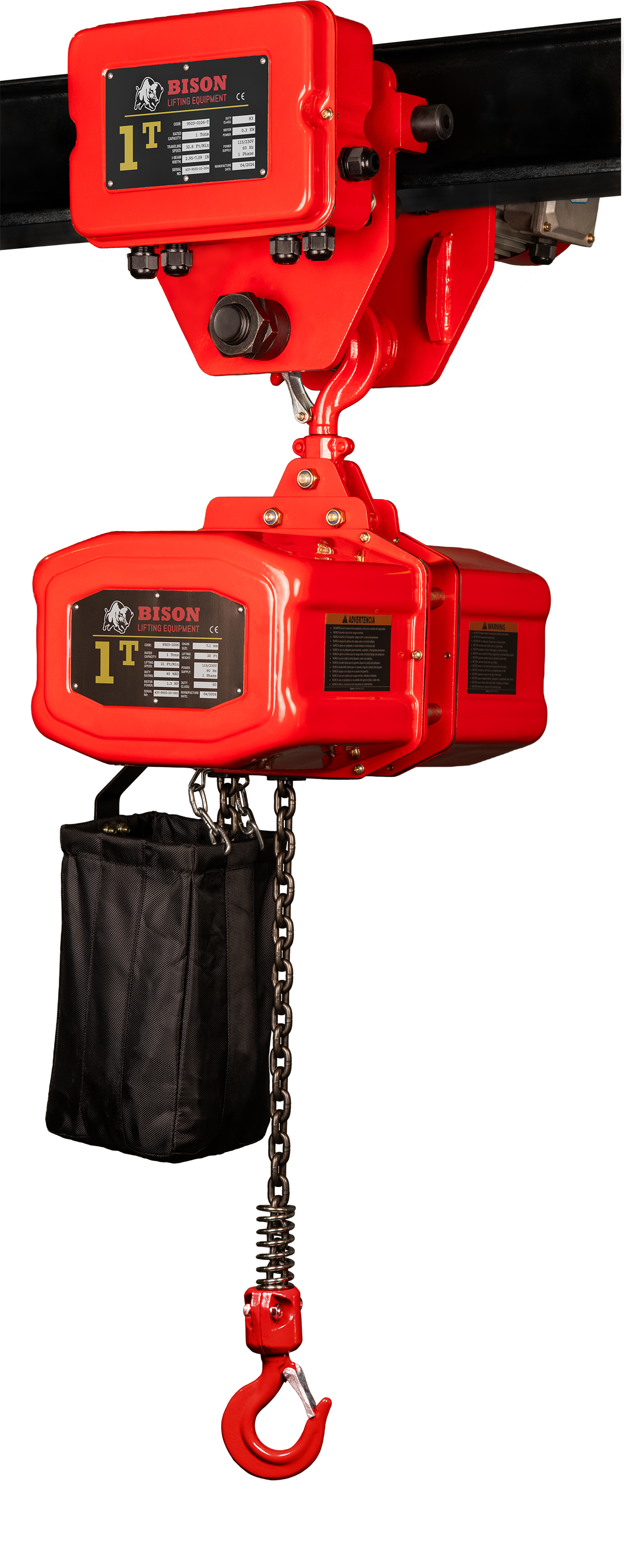
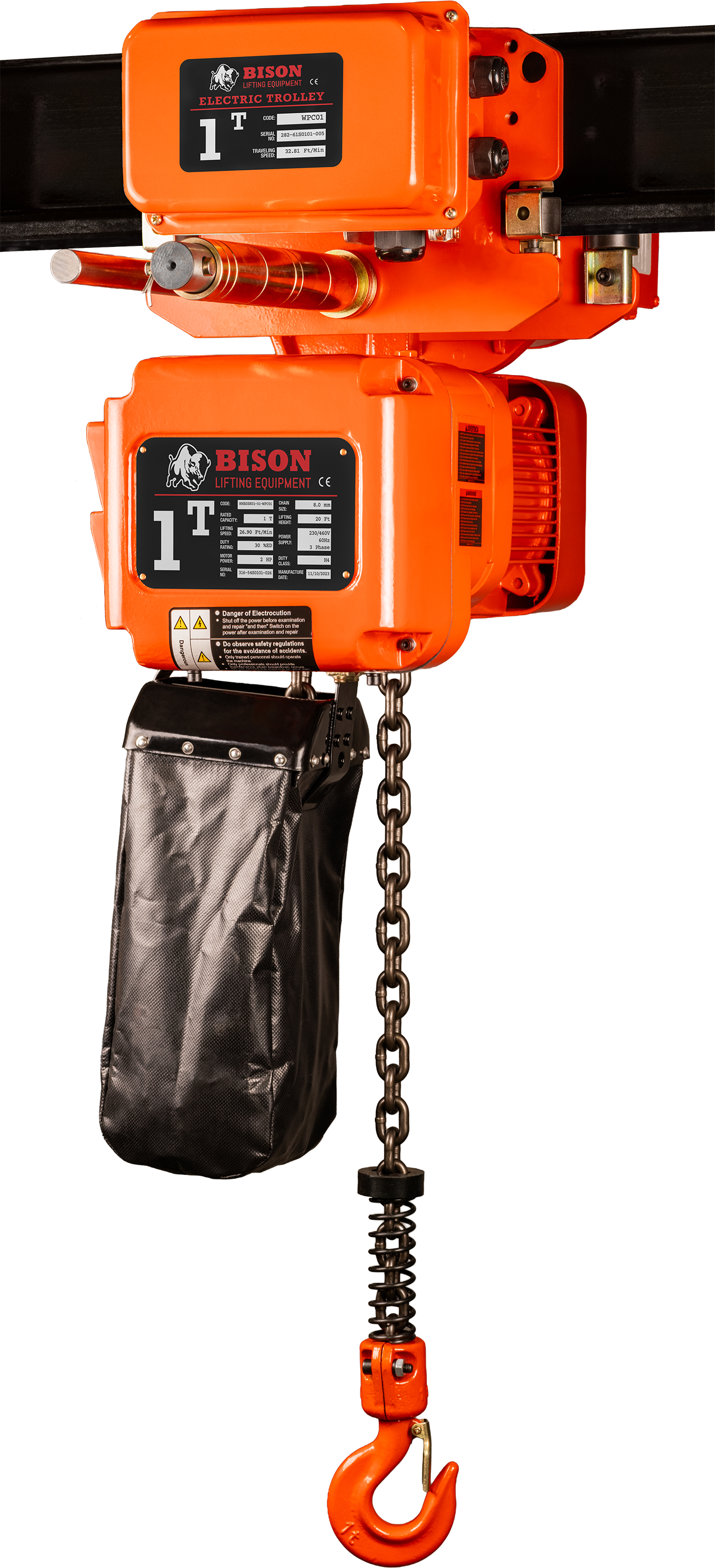
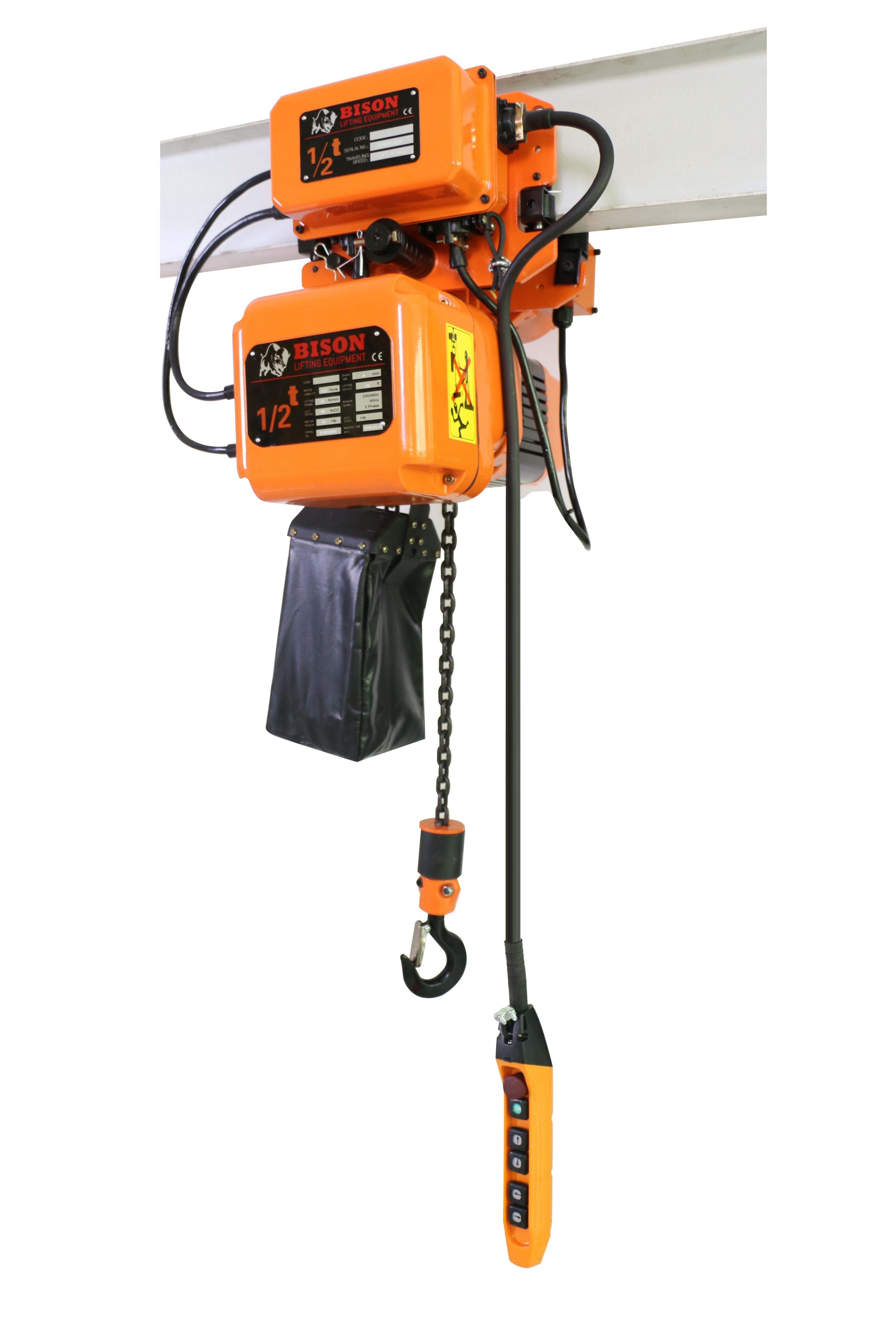
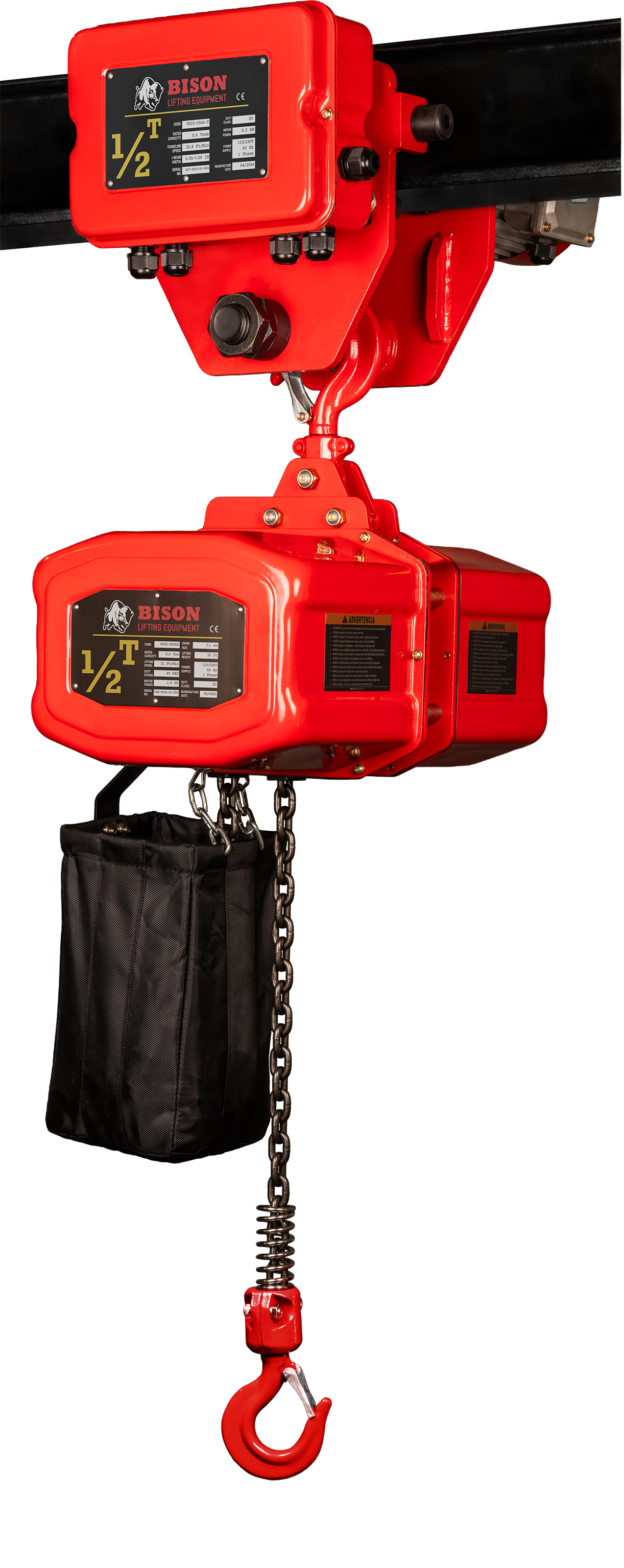
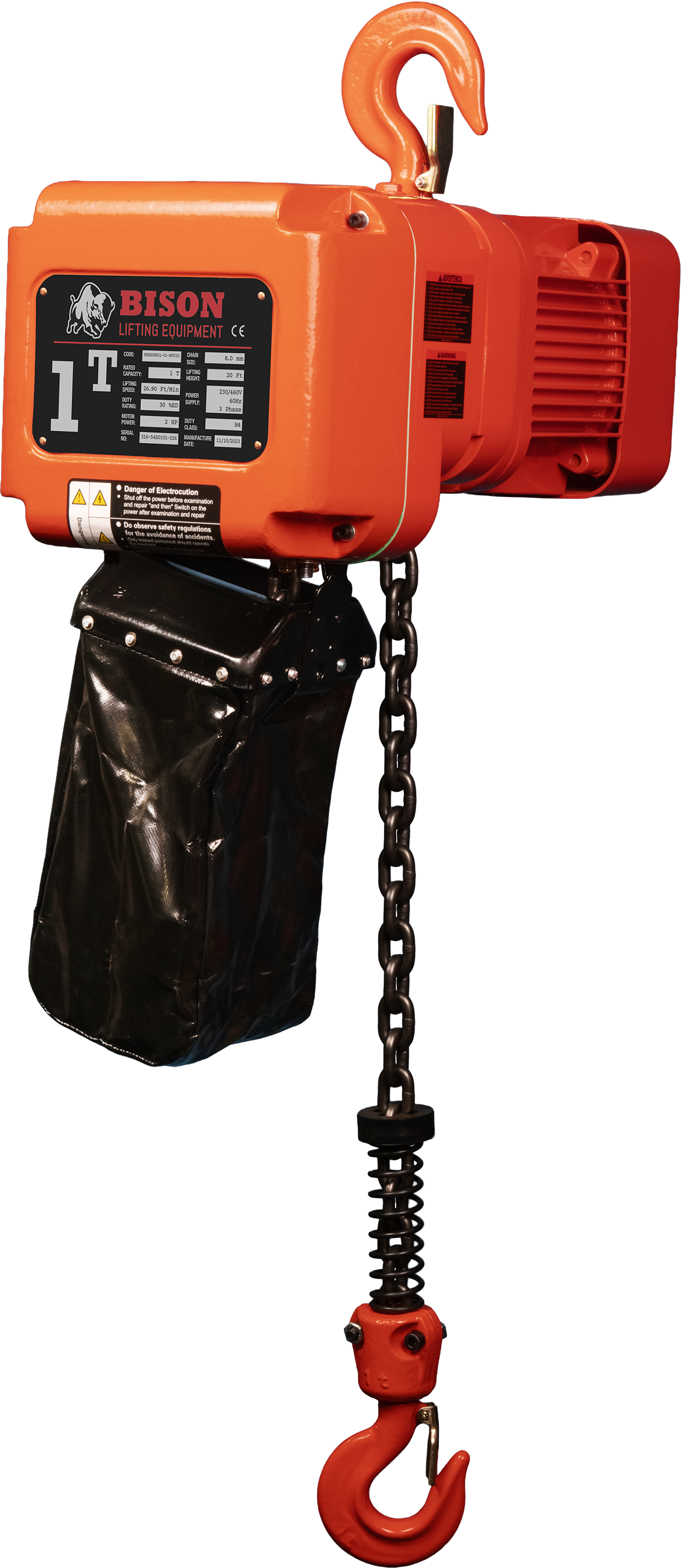
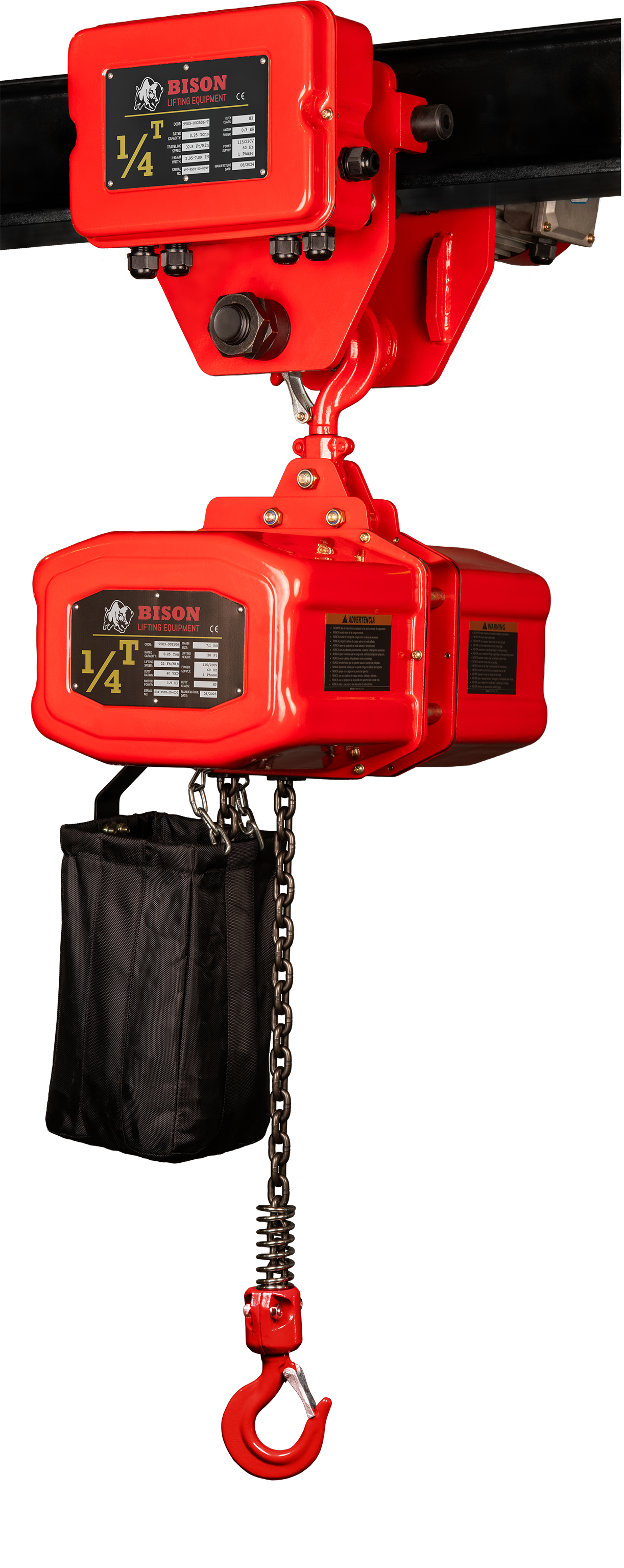
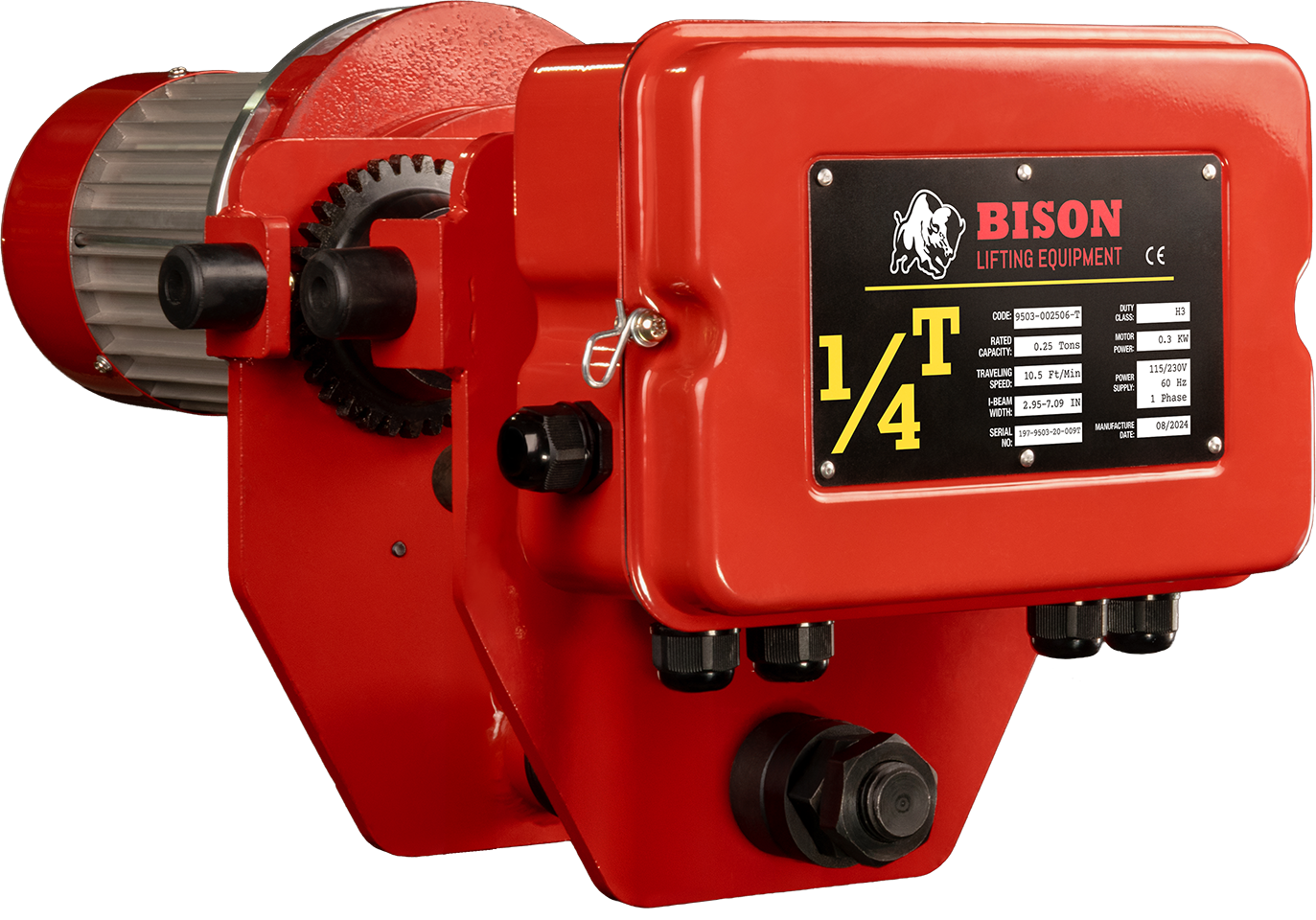
Suspension: bare hook, trolley package, or remote. How the hoist attaches decides half of what it costs. A bare top hook hangs the hoist from a beam clamp or a trolley eye and is the cheapest way in. When the load has to move along a beam, Bison offers packages with a trolley built in: several single phase and three phase models ship as hoist-with-motorized-trolley or hoist-with-trolley units, which is the clean way to buy when travel is part of every cycle. Buying the matched package beats sourcing a trolley separately and hoping the flange width lines up. A factory-installed wireless remote is an option across much of the Bison electric range, letting the operator stand clear of the load instead of walking under it on a pendant cord. Decide bare hook, trolley package, or remote before you order, since the wireless option is installed at the factory rather than added later.
Duty class is the spec that predicts lifespan. Two hoists at the same tonnage can be built for very different lives, and duty class is what separates them. The Hoist Manufacturers Institute rates hoists by how hard they run: H2 for light, intermittent work with only a handful of lifts an hour, H3 for standard shop service where the motor runs no more than about a quarter of the shift, and H4 for high-cycle production lifting near rated capacity. Match the class to your busiest hour, not your average day. Underbuying duty is the expensive mistake, because the hoist passes every load test and then eats brakes and motor windings a season into service. A Bison sized right on both capacity and duty is a machine that runs for years; sized short on duty, it turns into a warranty call.
Standards, inspection, and how it hangs. Powered overhead chain hoists are built, installed, and inspected to ASME B30.16, the standard for overhead underhung and stationary hoists, which spans construction, installation, operation, inspection, testing, and maintenance for electric chain hoists like these. On a jobsite, OSHA's construction rule at 29 CFR 1926.554 adds that the rated load must be marked on the hoist and never exceeded, and that the unit is rigged and used per the manufacturer's instructions. In practice that means keeping the load rating visible on the machine, running the frequent visual checks and documented periodic inspections the standard calls for, and watching the load chain for wear and stretch, the hook for throat opening, and the brake for hold. Whether the Bison hangs from a fixed point or rides a trolley under a jib, the rule is the same as the rest of your rigging: check it before it lifts. To weigh a Bison against the rest of the powered lineup, step up to the full hoists collection.
Frequently Asked Questions
Buy what your building supplies. Bison's single phase hoists run on 115V or 230V and cover a quarter ton through 5 ton, which handles most small-shop and maintenance work. Three phase units run on 230V or 460V, run cooler over long wire runs, and are the right call above a couple of tons or for all-shift production. A three phase hoist will not run on single phase power without a converter, so confirm the panel first.
A variable frequency drive soft-starts and soft-stops the motor instead of switching it straight to full speed. That cuts load sway, gives smooth and precise spotting, and reduces stress on the motor windings and brake, which extends service life. On a single phase circuit it delivers control closer to a dual-speed three phase hoist, which is why the VFD line suits delicate loads, tight placement, and higher cycle counts.
On the models sold as hoist-with-trolley or hoist-with-motorized-trolley packages, yes; Bison offers those across both its single phase and three phase electric lines. On bare-hook models the trolley is a separate item sized to your beam flange width. Buying the matched package is the clean route when the load has to travel, and remember the hoist plus trolley weight counts against the capacity of whatever they hang from.
Total the heaviest lift plus the hook block, sling, and any below-hook attachment, then round up to the next rating with margin. Bison covers 1/4 ton to 10 tons, so there is headroom, but do not size right at your maximum, since a hoist run near its ceiling wears out early. Match duty class to how often you lift as well, because an H2-class unit will not survive a job that needs H4.
A factory-installed wireless remote is an option across much of the Bison electric range, and it is fitted at the time of purchase rather than added later. It lets the operator stand clear of the load instead of walking under it on a pendant cord, which is worth it wherever the pick swings or the sightline from the base is poor.
Powered overhead chain hoists follow ASME B30.16, and on a construction site OSHA 29 CFR 1926.554 requires the rated load to be marked and never exceeded. Plan on frequent visual checks before use and documented periodic inspections on a monthly to annual cycle, covering load chain wear and stretch, hook throat opening, brake action, and controls. If you also run hand chain or lever hoists, they follow the same inspection rhythm under the manual-hoist standards; see [manual hoists and trolleys](/collections/manual-hoists-trolleys).