What a hoist is
A hoist is the machine that does the actual lifting on a crane, a monorail, or a fixed mount, raising, lowering, and holding a load hung from a hook. It works by winding a chain or wire rope around a drum or through a lifting wheel, driven by a motor or by hand, and it includes a load-holding brake so the load stays put when you stop. Because it suspends weight overhead, a hoist is built with a high safety factor and is governed by strict standards. The right hoist depends on how heavy, how high, how often, and where you lift.
The two main splits: medium and power
Hoists divide along two axes. The first is the lifting medium: a chain hoist uses load chain, and a wire rope hoist uses steel cable, each with different strengths (covered in our chain hoist vs wire rope hoist guide). The second is the power source: a manual hand-chain hoist is pulled by hand, an electric hoist uses a motor, and an air (pneumatic) hoist runs on compressed air. On top of these sits the lever hoist, a portable manual tool for pulling and lifting in any direction. Most buying decisions come down to choosing along these two axes plus the lever-hoist option.
Manual hand-chain hoists
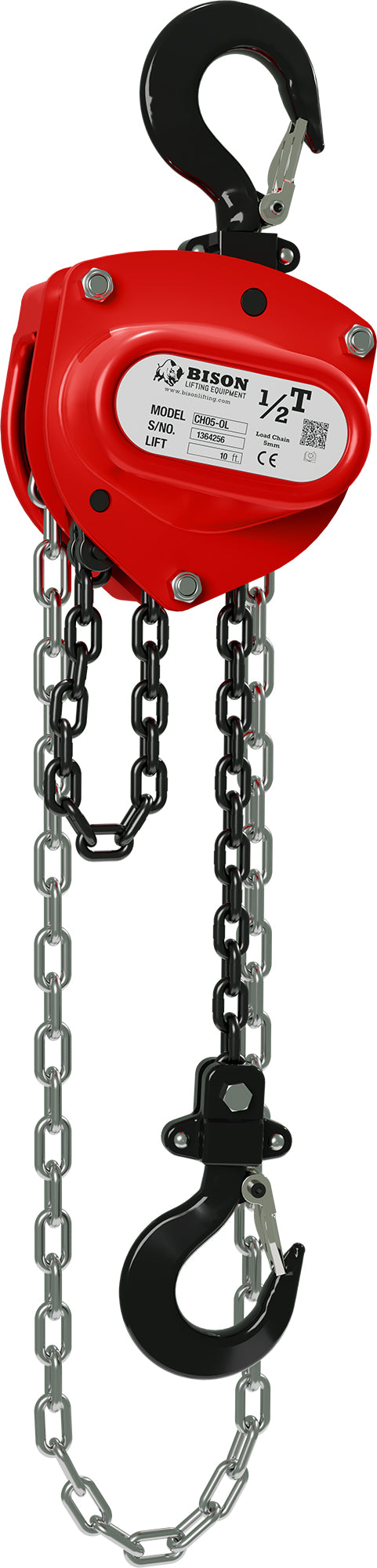
A manual hand-chain hoist lifts by pulling a loop of hand chain, which turns gears that raise the load chain and hook. It needs no power, is fully portable, offers precise control, and is inexpensive, but it's slow and tiring for repeated or heavy lifts. Manual chain hoists cover a wide capacity range, roughly a quarter-ton to 20 tons, and they're the right tool where lifting is infrequent, in maintenance work, remote locations, or as a simple fixed-point lift. When the job is occasional and power isn't handy, a hand-chain hoist is the economical, dependable choice.
Electric chain hoists
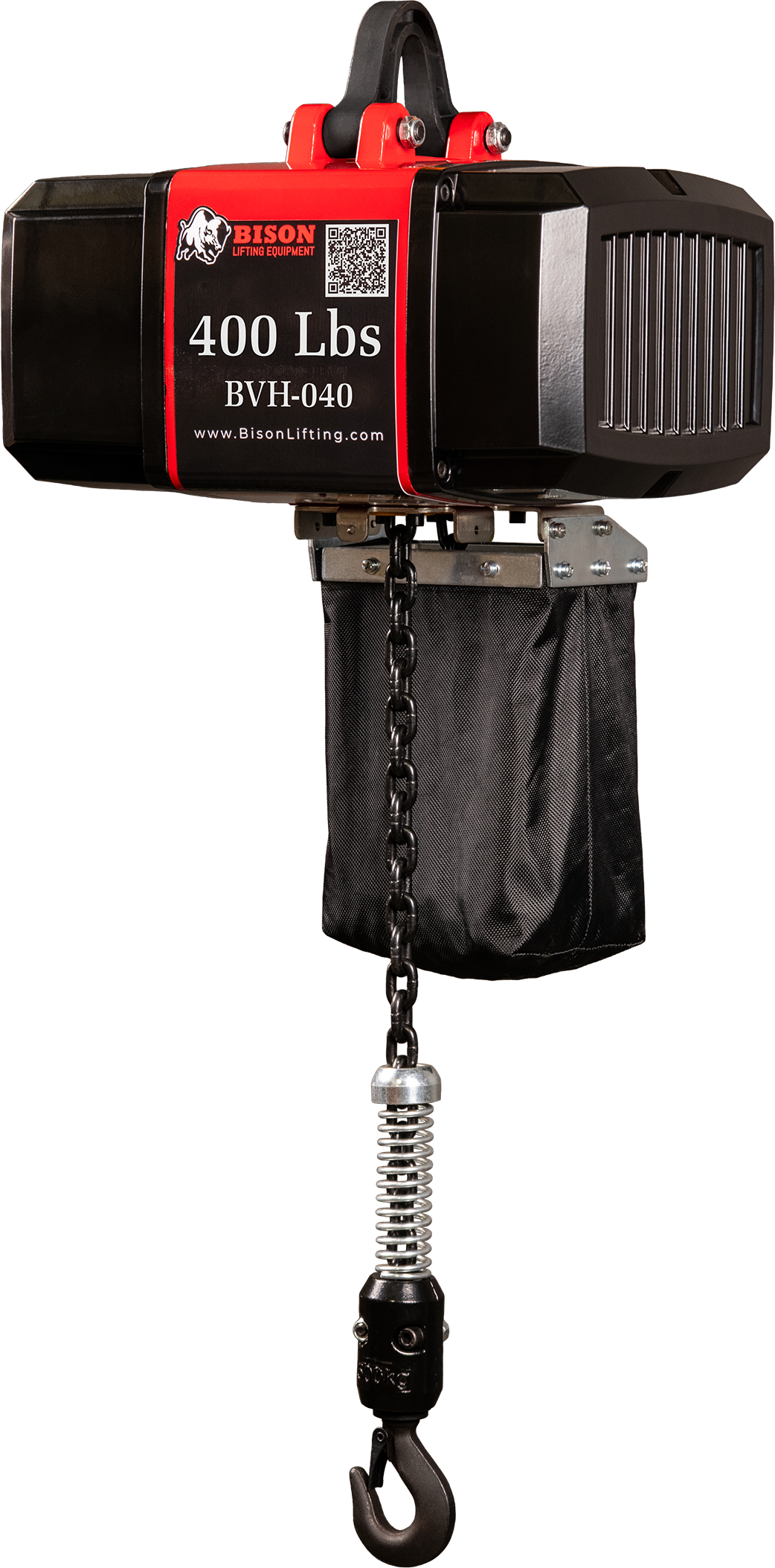
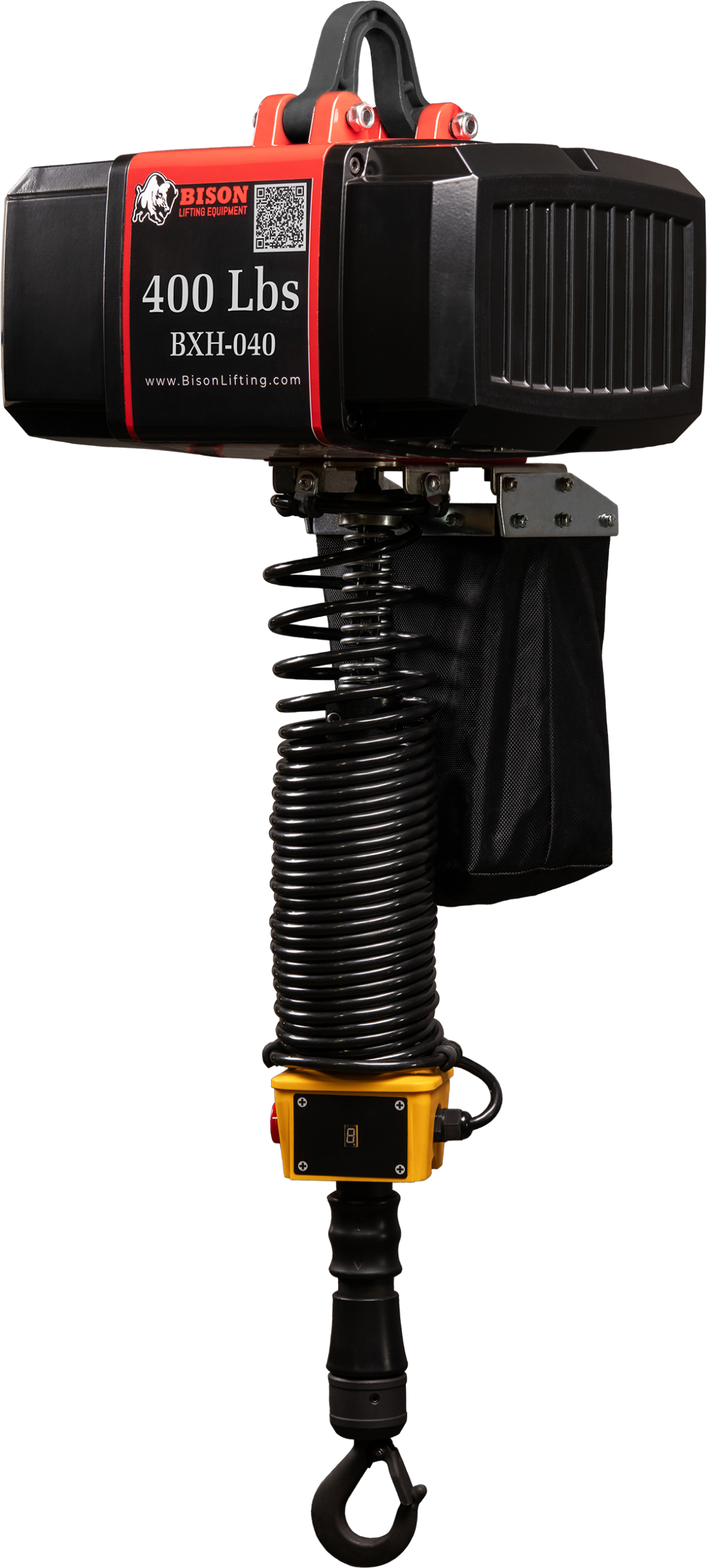
An electric chain hoist uses a powered motor to raise and lower the load at the push of a button, which makes it far faster and less tiring than a manual hoist for frequent, heavy, or repetitive production lifting. The trade-offs are a higher purchase price, the need for a power supply, and more maintenance. Electric chain hoists are the workhorse of busy shops and production lines, and they pair with a trolley to move loads along a beam. Our electric vs manual chain hoist guide covers exactly when the powered unit is worth it.
Lever hoists and come-alongs
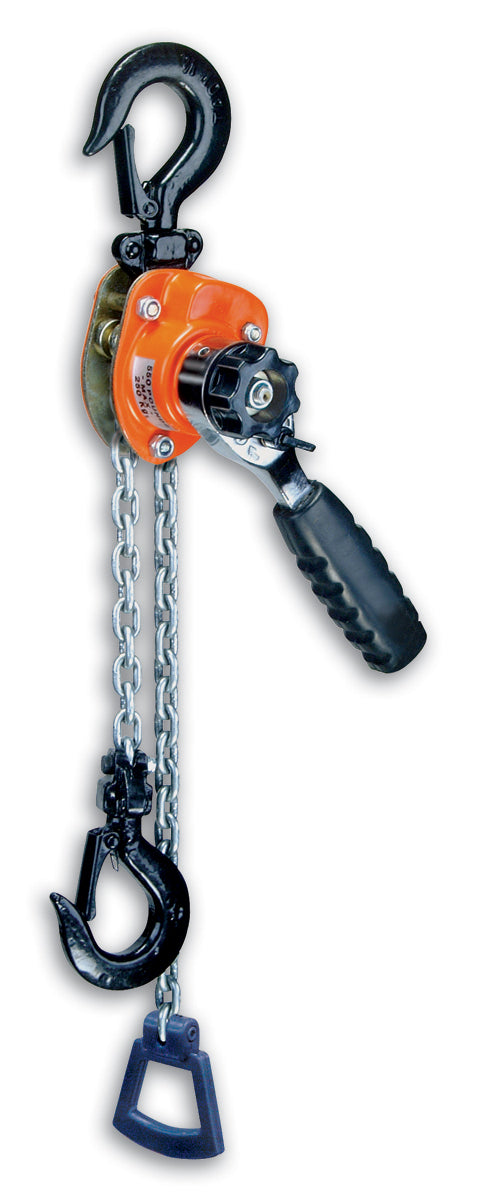
A lever hoist, also called a ratchet lever hoist or come-along, is a portable manual tool worked by a back-and-forth hand lever rather than a pull chain. Its defining advantage is that it lifts and pulls in any direction, vertical, horizontal, or angled, so it's the go-to for rigging, tensioning, and pulling loads sideways, not just straight up. A hand-chain hoist, by contrast, is optimized for two-handed vertical lifting. If you need one-handed operation or multi-directional pulling, the lever hoist is the tool, as we explain in lever hoist vs chain hoist.
Air (pneumatic) hoists
Air hoists run on compressed air instead of electricity, and they fill a specific niche: hazardous and explosion-prone environments. Because they have no electrical ignition source, they're the standard in chemical plants, oil and gas, and other areas where a spark is dangerous, and they're self-cooling, so they can run at essentially 100 percent duty cycle without overheating. The trade-off is that they need a compressed-air supply of roughly 90 to 100 psi. For most general lifting, electric or manual hoists are simpler, but where the atmosphere is hazardous or the duty is continuous, air hoists earn their place.
How to choose a hoist
Selecting a hoist comes down to a handful of specs, covered fully in our how to choose a hoist guide. In brief: pick a capacity that exceeds your heaviest load, rounding up to the next standard rating; confirm the lift height and the headroom the hoist needs; match the duty classification to how often you'll lift; choose the power source (manual, electric, or air) for your work and environment; and decide between a fixed hook and a trolley suspension. Getting the capacity and duty right is the most important part, since underspecifying either shortens the hoist's life or endangers the lift.
Capacity, duty, and safety
Two numbers govern hoist safety above all. Capacity, the rated load, must never be exceeded, and you always size up, not down, when a load falls between ratings. Duty cycle, how often and how hard the hoist works, must match a real classification (the ASME/HMI or FEM/ISO system), because a hoist run beyond its duty class wears out fast and can fail. Overhead hoists carry load-holding brakes and high design factors precisely because a dropped load is catastrophic. Respecting the rated capacity, matching the duty, and inspecting per ASME B30 are the non-negotiables of hoist ownership.
Hoists, trolleys, and cranes
A hoist rarely works alone. Mounted to a fixed point, it lifts straight up and down. Paired with a trolley, it also travels along a beam, letting you move a load horizontally, which is why hoists and trolleys are usually specified together. And a hoist is the lifting heart of a crane: a jib crane, gantry, or bridge crane provides the structure and coverage, while the hoist does the lifting. So choosing a hoist often goes hand in hand with choosing a trolley and a crane. Browse our hoist collection and see how they fit into a full lifting system.
The bottom line
A hoist raises, lowers, and holds a load on a chain or wire rope, and the main choices are the lifting medium (chain or wire rope), the power source (manual, electric, or air), and whether you need a lever hoist for multi-directional work. Match the capacity and duty to your loads and frequency, choose the power type for your environment, and pair it with the right trolley and crane. Dig into the specifics through the guides linked above, compare units in our best electric chain hoists guide, or browse the full hoist range.
Inspection and standards
Because a hoist suspends loads overhead, it's governed by strict safety standards, chiefly the ASME B30 series, and it must be inspected on a schedule: a frequent check before use and a documented periodic inspection by a qualified person. Inspectors look at the load chain or rope, the hook and its latch, the brake, and the controls, and any hoist with worn, cracked, or damaged components comes out of service. A hoist's load-holding brake and high design factor are its core safety features, and inspection is what keeps them reliable. Treat inspection as essential, not optional, on any lifting hoist.