Electric Chain Hoists
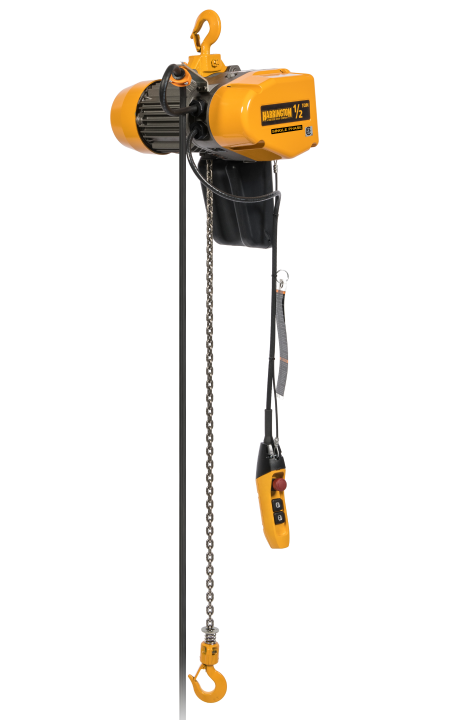
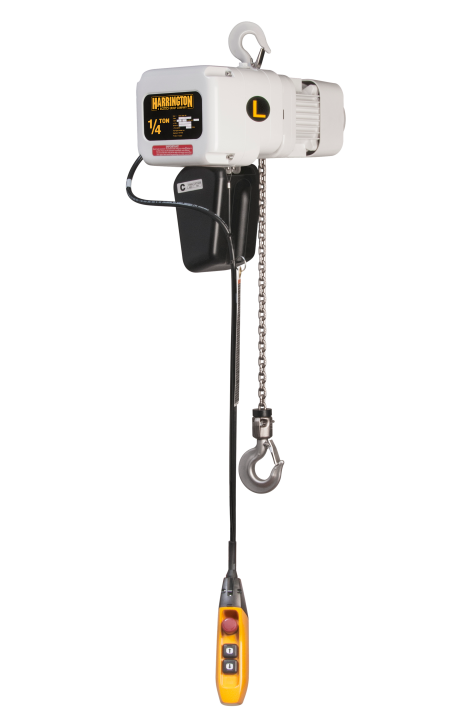
An electric chain hoist is the powered hoist most shops reach for: a motor drives a load chain over a pocketed liftwheel, and a pendant button raises or lowers the hook at a steady speed no hand chain can match. This collection is built on Harrington, the brand American production floors ask for by name, and it runs the families straight through: the ER three-phase and NER series, single-phase SER, SNER, SEQ, and SEM units for ordinary shop circuits, dual-speed EQ and SEQ models, compact EM and SEM minis, food-grade NER-FG hoists for washdown lines, and the black Krewmate entertainment minis rigged over stages. Capacities start at 1/8 ton and climb to 20 tons on multiple falls of chain, and prices run from a compact mini around $2,300 to five-figure motorized-trolley machines. The guide below takes the buy in the order that matters: capacity and reeving first, then the power at your wall, then duty class, then how the hoist hangs and travels down the beam.
Compare Electric Chain Hoists
| Model | Price | Capacity | Lift Height | |
|---|---|---|---|---|
| Harrington NERM-FG Motorized Trolley Food Grade Electric Chain Hoist | $10,335 | 1/4-2 ton | 10-20 ft | View → |
| Harrington ERM 3Ph Motorized Trolley Electric Chain Hoist | $8,525 | 1/8-20 ton | 10-20 ft | View → |
| Harrington MR-FG Dual Speed Food Grade Motorized Trolley | $7,084 | 1-2 ton | — | View → |
| Harrington SNERM Single Phase Motorized Trolley Electric Chain Hoist | $7,052 | 1/4-3 ton | 10-20 ft | View → |
| Harrington SMRQ 1Ph Dual Speed Motorized Trolley | $7,023 | — | — | View → |
| Harrington NERP-FG Push Trolley Food Grade Electric Chain Hoist | $6,992 | 1/4-2 ton | 10-20 ft | View → |
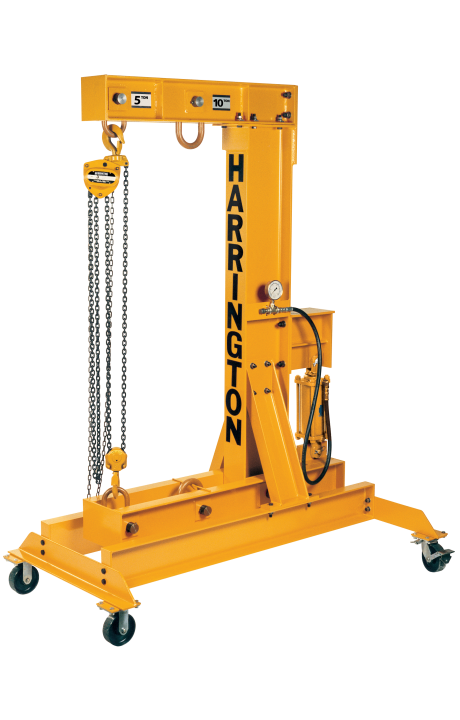 In Stock
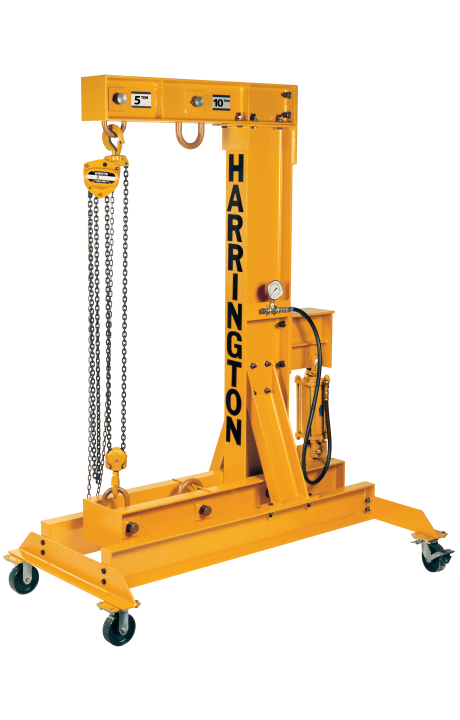 In Stock
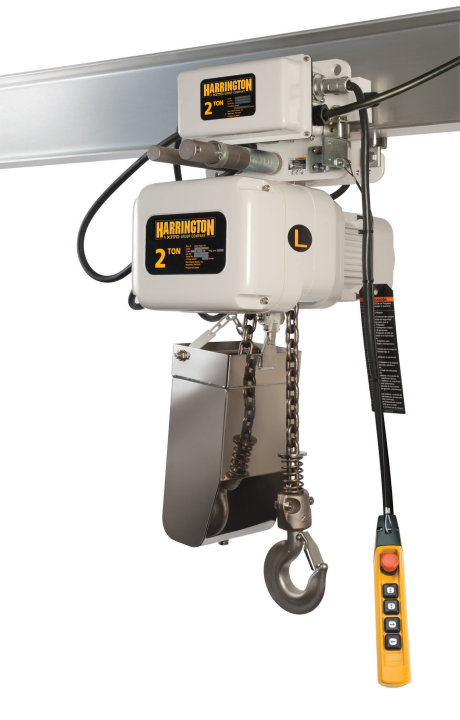 In Stock
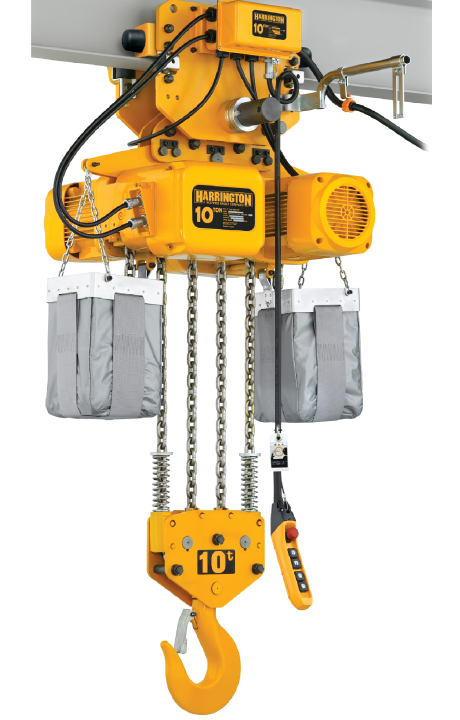 In Stock
 In Stock
 In Stock
 In Stock
 In Stock
 In Stock
 In Stock
 In Stock
 In Stock
 In Stock
 In Stock
 In Stock
 In Stock
 In Stock
 In Stock
 In Stock
 In Stock
 In Stock
 In Stock
 In Stock
 In Stock
 In Stock
 In Stock
 In Stock
 In Stock
 In Stock
 In Stock
 In Stock
 In StockIn Stock
 In Stock
Electric Chain Hoists Buying Guide
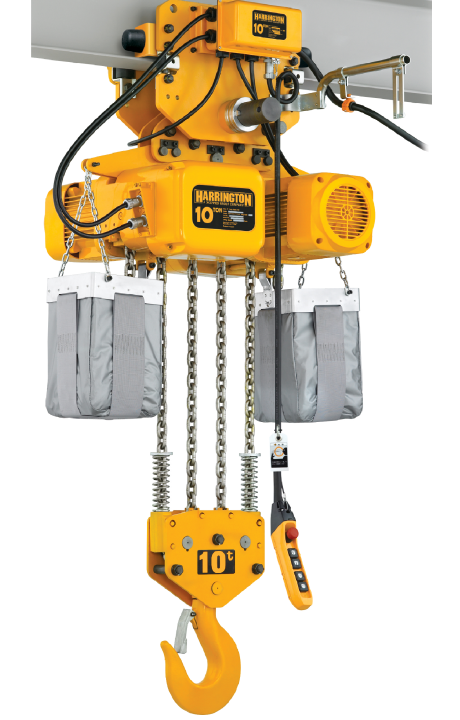
Size the capacity first, and reeving is part of it. Total the load the honest way, the heaviest thing you lift plus the hook block, the sling, and any below-hook gear, then round up to the next rating and stop. A hoist run near its ceiling wears fast, and one bought two sizes over is money parked on the wall. Harrington's ER and NER lines cover 1/8 ton through 20 ton, which spans nearly every shop job on one model family. The detail buyers miss is reeving. A hoist reeved with a single fall of chain runs one straight line from the liftwheel to the hook and lifts at full speed; adding a second fall roughly doubles the capacity and halves the lifting speed for the same motor. That is how the same frame reaches higher tonnage, so read the rating and the speed together rather than the tonnage alone, and remember that more falls of chain means more chain to store in the container and a taller lower hook block eating your headroom.
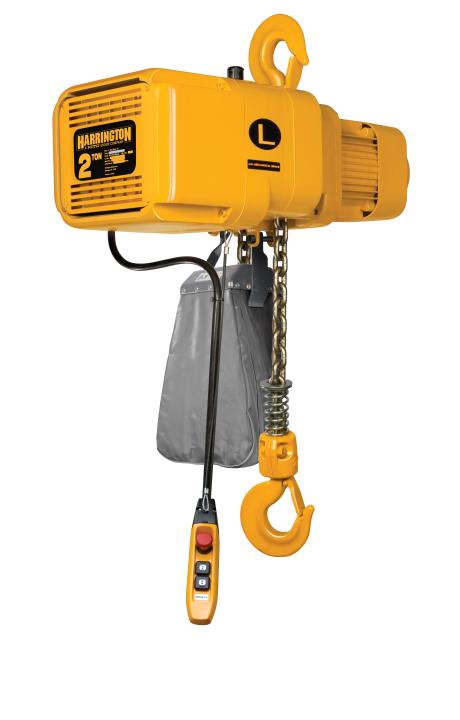
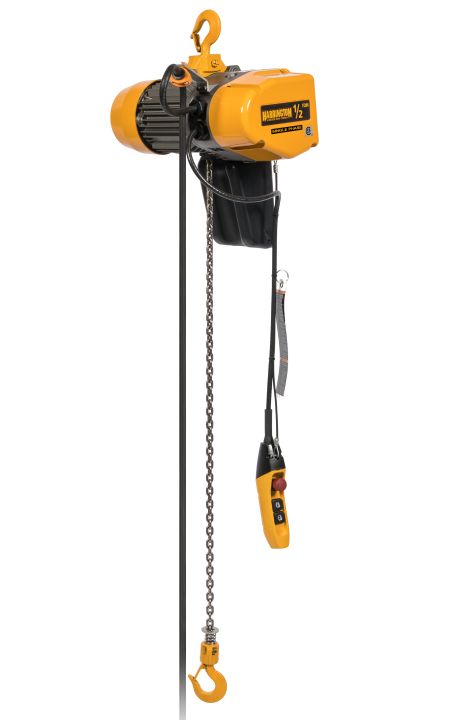
Single-phase or three-phase decides the model line. Phase is the fork that picks your model. Single-phase 115V or 230V hoists run on the branch circuits a small shop or a job site already has, which is why Harrington's SER, SNER, SEM, and single-phase SEQ units carry so much light and mid-capacity work. Three-phase 230V or 460V is the production choice and is effectively the requirement once you climb past two or three tons: the motor is more efficient over long wire runs and holds up to harder cycling. The ER, NER, EM, and EQ lines are the three-phase side, and the NER ships pre-wired for 460-volt three-phase, sixty-hertz power. Confirm what is actually at your panel before you order, because a three-phase hoist will not run on single-phase service and rewiring a shop for three-phase is a bigger project than the hoist. When you are close to the two-ton line, buying three-phase leaves room to grow.
Duty class predicts how long the hoist lasts. Two hoists of the same tonnage can be built for very different lives, and the ASME HST performance standards capture that as duty classes H1 through H5. H1 is standby and infrequent handling, H2 is light service, H3 is the general shop rating with running time up to about a quarter of the work period, and H4 means high-volume handling of loads near capacity with running time up to half the period. Harrington's NER and ER carry an H4 classification with a sixty-minute-rated motor, thermal overload protection, and a count-hour meter for planning maintenance, which is most of why they outlast bargain hoists of the same capacity. Size capacity to the heaviest lift with the usual margin, then size duty class to the busiest hour of the schedule. Underbuying duty is the expensive mistake: the hoist passes every load test, then eats brake pads and motor windings a year into service.
Single speed or dual speed. A single-speed hoist lifts at one rate, which is fine when the job is simply moving a load up and down. Dual-speed pays for itself the moment placement matters. Harrington's dual-speed EQ, SEQ, and NER models run an under-the-cover variable frequency drive that gives a fast speed for travel and empty return plus a slow creep for landing work into a fixture or setting a load onto studs. The stock speed ratio is around six to one and is adjustable up to twelve to one, so a two-ton NER might run roughly 36 feet per minute fast and drop to a 2.5-foot-per-minute crawl for the final inch. The VFD also ramps the motor up and down instead of slamming it on and off, which softens load swing and eases the driveline. If your work is repetitive spotting into jigs, assembly, or die setting, the second speed is worth the premium; if it is straight vertical lifting, single speed saves money.
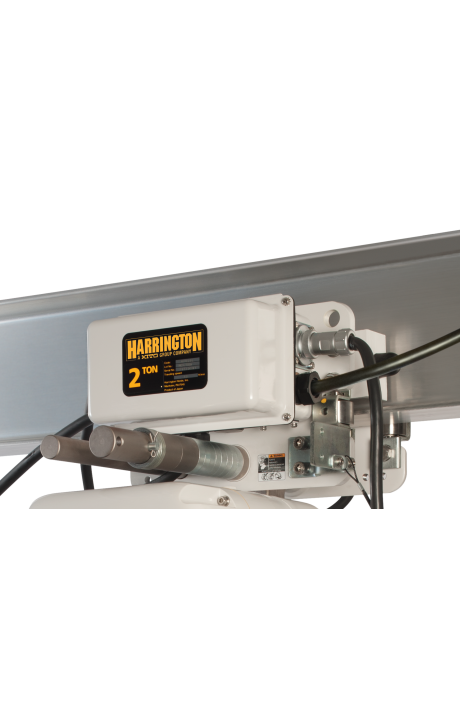
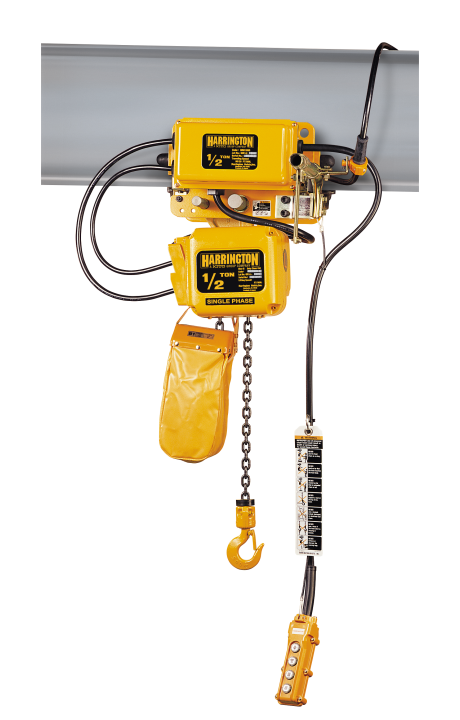
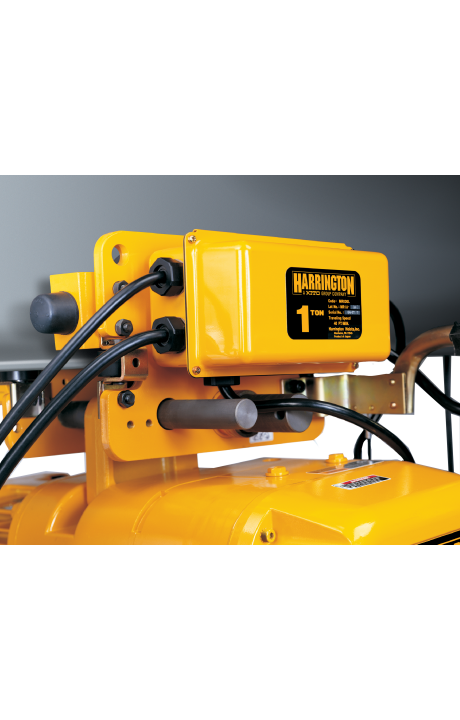
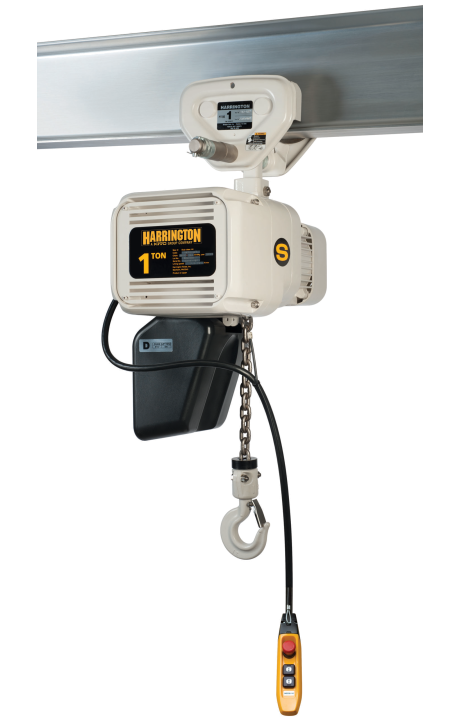
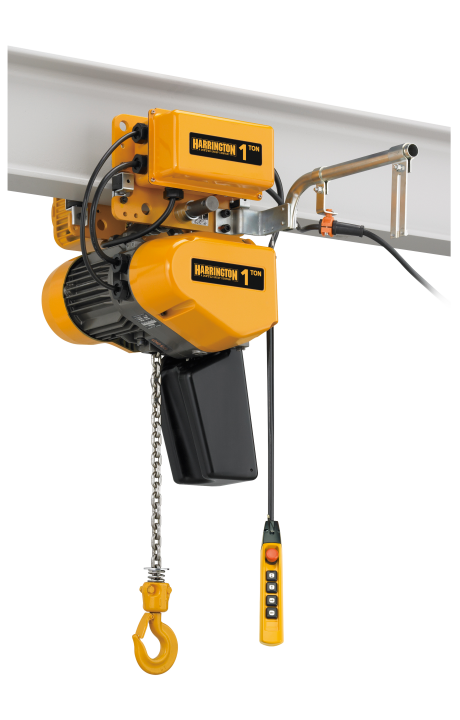
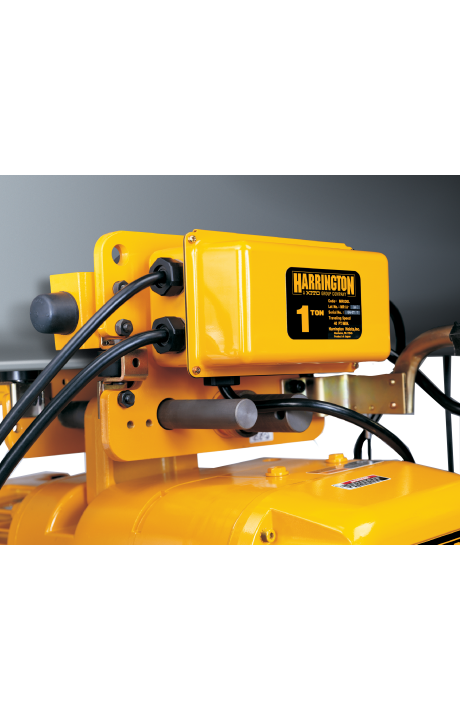
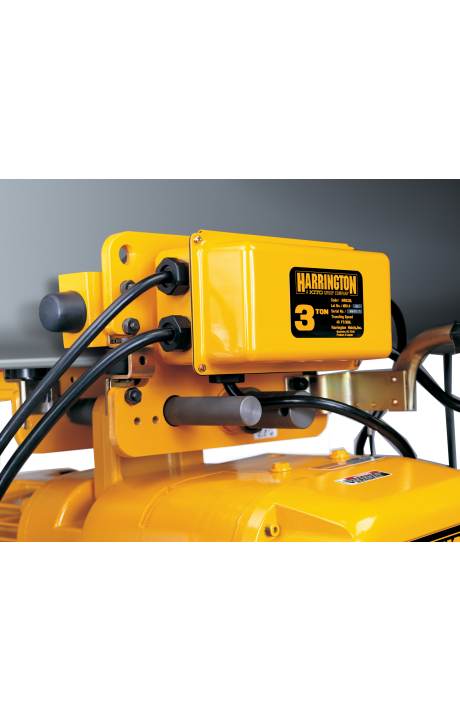
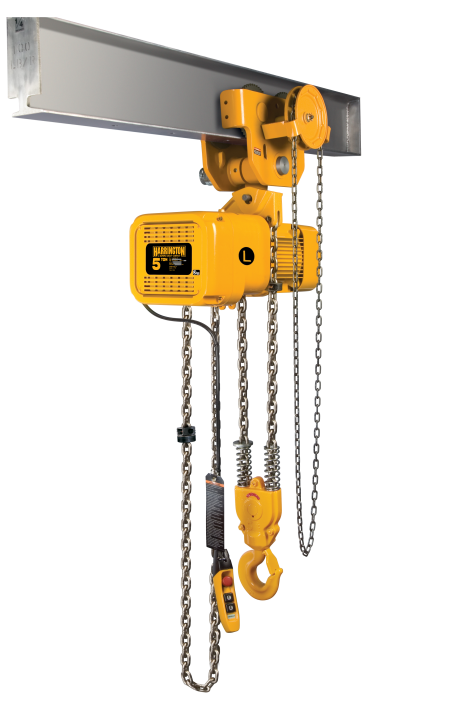
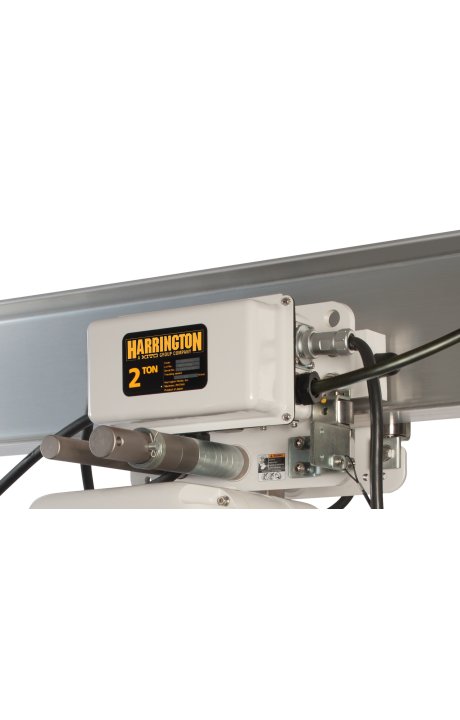
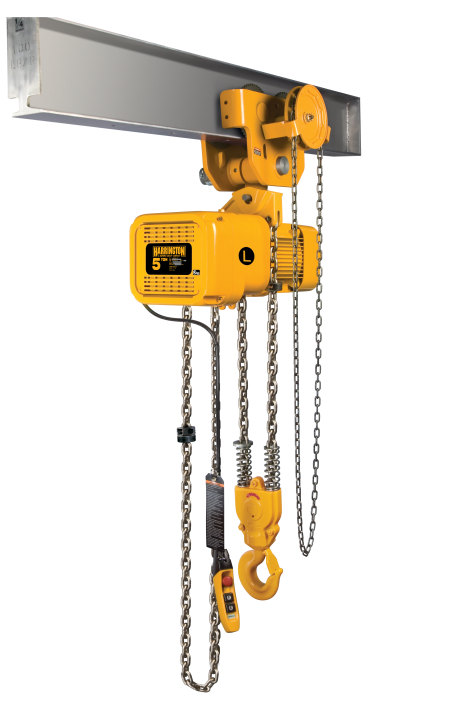
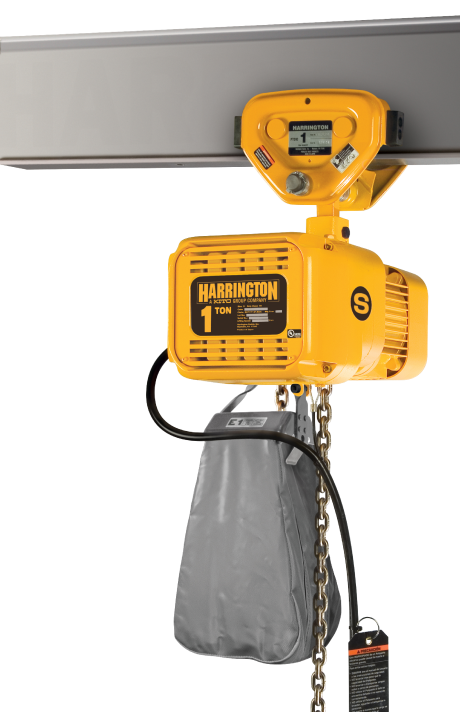
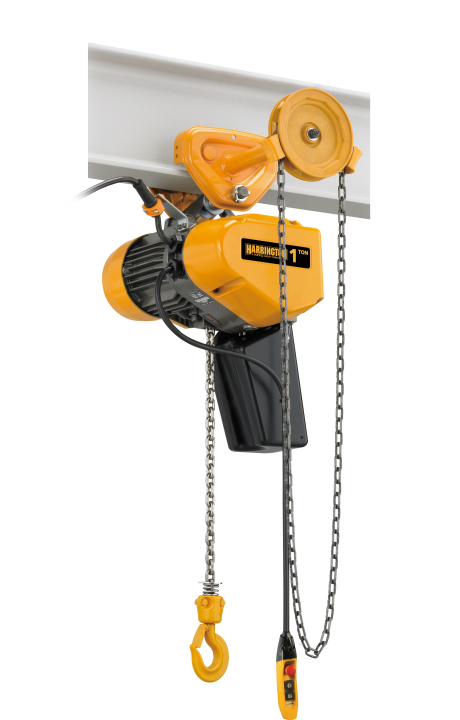
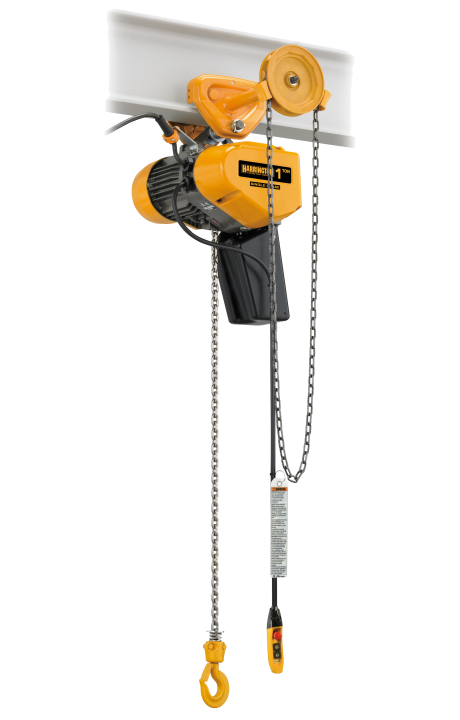
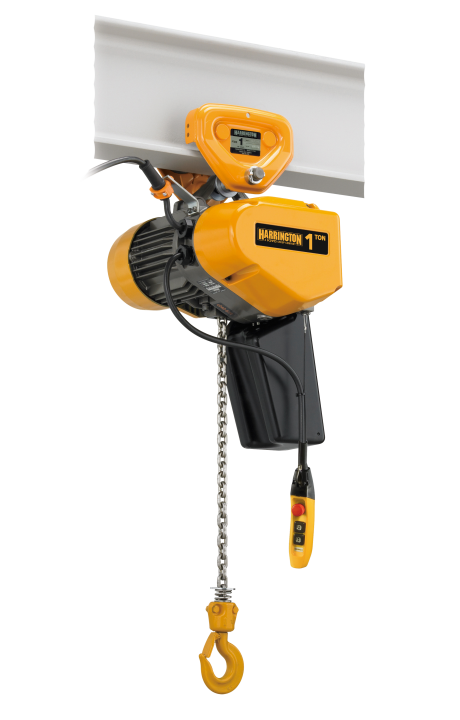
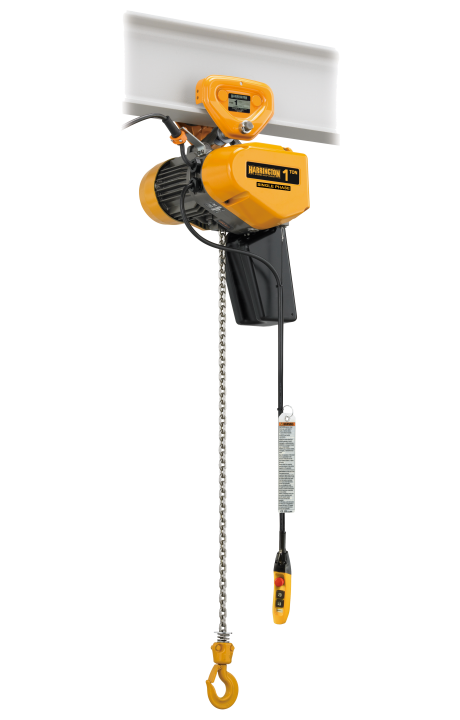
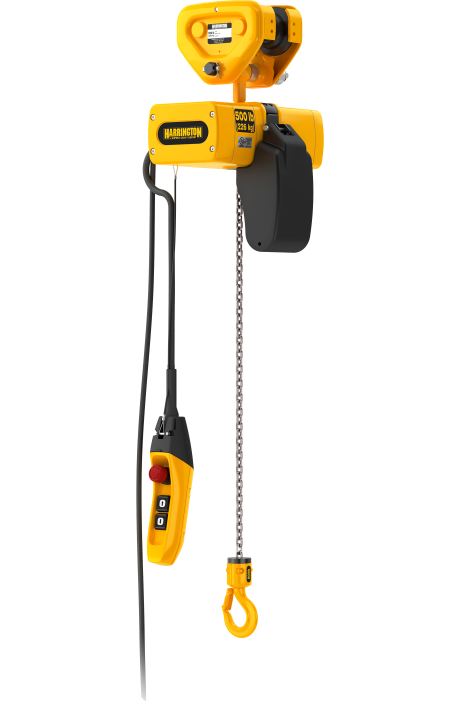
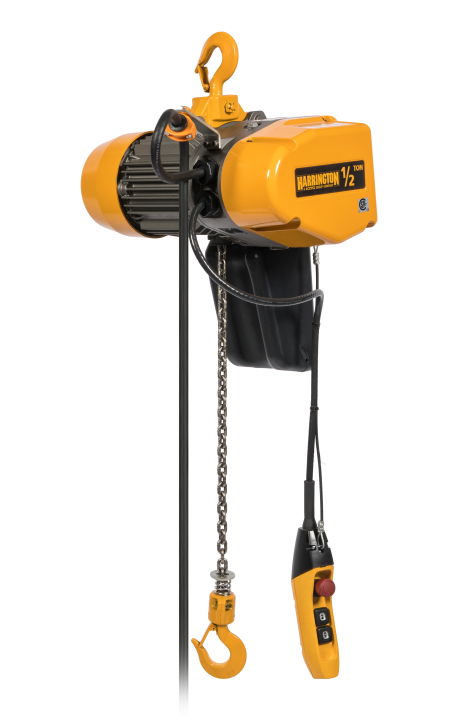
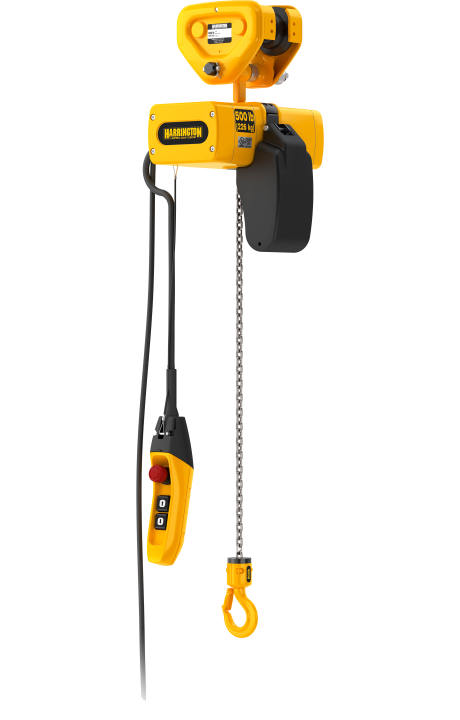
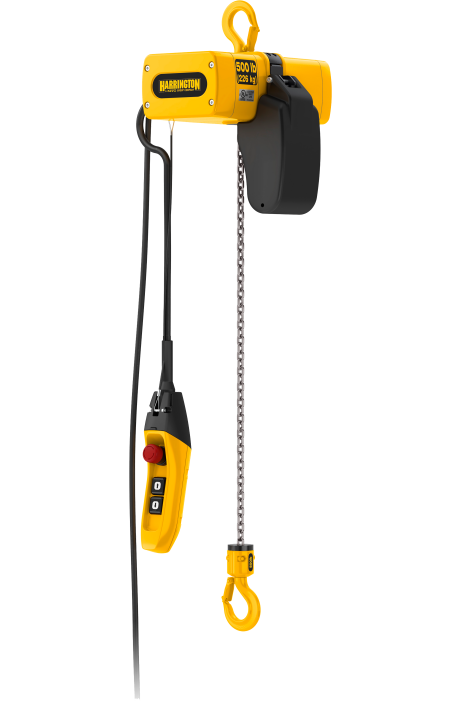
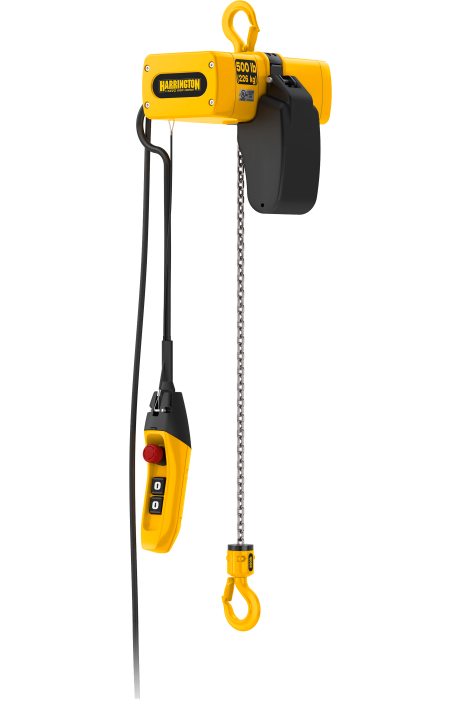
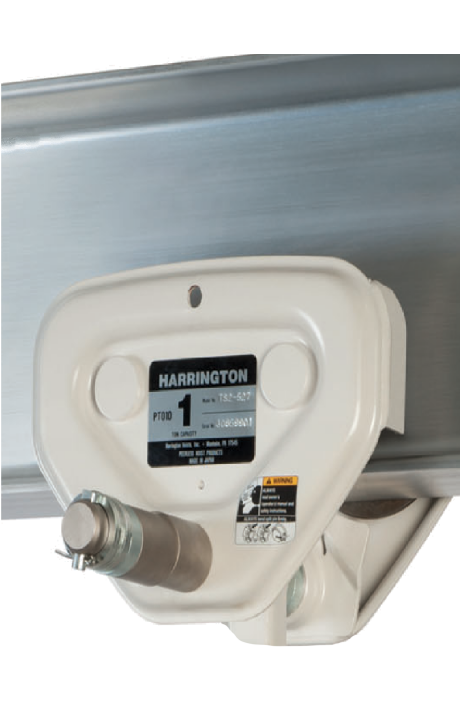
Suspension: top hook, push, geared, or motorized trolley. How the hoist hangs is the last spec, and Harrington codes it into the model suffix. A top-hook hoist hangs from a beam clamp or a trolley eye and is the cheapest way in when the load does not need to travel. A push trolley (the P models, like ERP and SEMP) lets you roll the load along the beam by hand and suits light loads and occasional moves. A geared trolley (the G models, ERG and NERG) adds a hand chain for precise, controlled positioning under heavier loads and in tight clearance. A motorized trolley (the M models, ERM, EQM, SNERM) powers the travel for production lines where moving down the beam is part of every cycle, and it is priced accordingly, running well into five figures on the larger units. Match the trolley to your beam flange width and to the hoist capacity, and remember the hoist and trolley weight both count against the rated capacity of the jib or gantry overhead.
How the hoist holds the load, and the specials. An electric chain hoist holds the load with a spring-applied DC electromagnetic disc brake on the motor: it stays clamped shut by spring pressure at all times and only releases when the motor coil is energized, so any loss of power sets the brake and the load stays put. Harrington's Guardian Smart Brake is that DC motor brake with an electrical failsafe design. Backing it up, a friction clutch limits overload by slipping when someone tries to lift past roughly 125 percent of rated capacity, and upper and lower limit switches cut the motor before the chain runs out or two-blocks. Two specials live in this collection: the NER-FG food-grade hoists, built with washdown-friendly finishes and epoxy coatings for food and beverage lines and priced from around $5,400, and the black Krewmate TEM and TSEM entertainment minis rated to 1,000 pounds for rigging trusses and stage loads. Whatever the model, ASME B30.16 sets the inspection rhythm for overhead hoists: a pre-use check every shift, frequent inspections monthly or more often under heavy duty, and a documented periodic inspection at least yearly, with the load chain gauged for wear and elongation and replaced before it stretches past the limit.
Frequently Asked Questions
Add up the heaviest load you will ever lift plus the hook block, sling, and below-hook gear, then round up to the next rating with margin to spare. Never size right at your maximum. Also read the rating alongside the reeving: a hoist reeved single-fall lifts faster, while a second fall of chain roughly doubles the capacity and halves the speed, so the same frame can cover two very different jobs. Harrington's ER and NER lines span 1/8 ton to 20 tons, so most shops find their number without leaving one model family.
It depends on the power at your panel and the tonnage. Single-phase 115V or 230V hoists (Harrington's SER, SNER, SEM, and single-phase SEQ) run on ordinary shop and site circuits and cover light to mid-capacity work. Three-phase 230V or 460V (the ER, NER, EM, and EQ lines) is more efficient over long wire runs and is effectively required past about two or three tons. Confirm what your building actually supplies before ordering, because a three-phase hoist will not run on single-phase service.
Duty class describes how hard a hoist is built to run, not how much it lifts. Under the ASME HST scale, H1 is standby use, H3 is general shop service, and H4 covers high-volume handling of loads near capacity with running time up to half the work period. Harrington's NER and ER are H4 with a sixty-minute-rated motor. Size capacity to your heaviest lift, then size duty to your busiest hour: a hoist cycling all shift needs H4, while a maintenance hoist used a few times a week does not.
If placement matters, yes. Dual-speed models like the EQ, SEQ, and NER use an under-the-cover variable frequency drive to give a fast travel speed plus a slow creep, with a ratio around six to one that is adjustable up to twelve to one. That slow speed lands a load into a fixture or onto studs an inch at a time, and the drive ramps the motor instead of slamming it, which reduces load swing. For repetitive spotting, assembly, or die setting it pays for itself; for straight vertical lifting, single speed is the cheaper right answer.
They are the suspension. A plain top-hook hoist hangs from a fixed point. P is a push trolley you roll along the beam by hand for light loads and occasional moves. G is a geared trolley with a hand chain for precise positioning under heavier loads and in tight clearance. M is a motorized trolley that powers the travel for production lines where the load moves every cycle. Match the trolley to your beam flange width and hoist capacity, and count the trolley weight against the capacity of the jib or gantry overhead.
ASME B30.16 governs overhead hoists and sets three tiers: a pre-use inspection before each shift, frequent inspections monthly (more often under heavy-duty use), and a documented periodic inspection at least annually. The load chain is gauged for wear and stretch and replaced once it elongates past the limit, and hooks, brakes, limit switches, and the pendant are checked along the way. Harrington's count-hour meter helps you time maintenance to actual run hours rather than the calendar alone.