Pallet Turntables
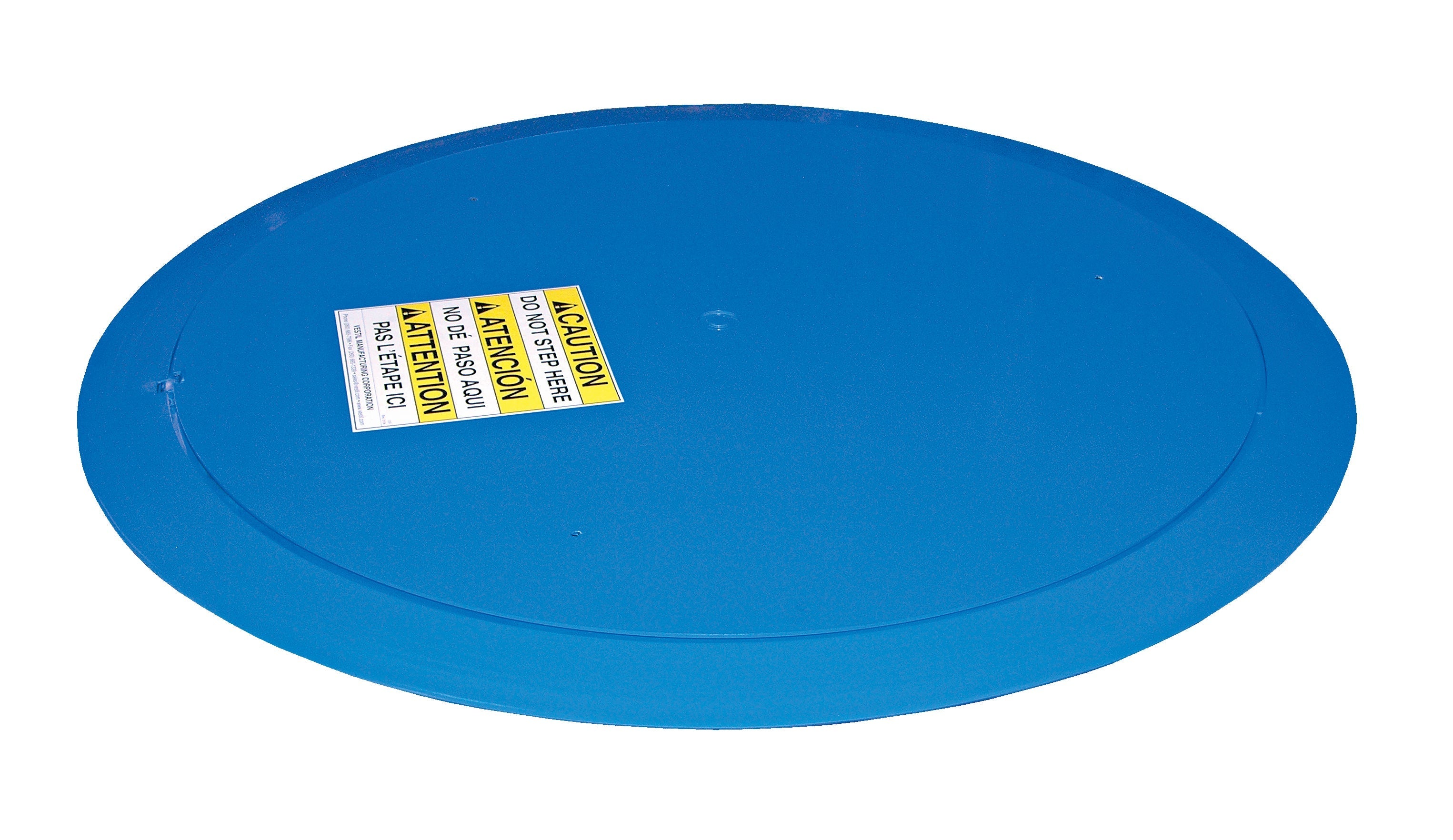
A pallet turntable is a rotating deck you set a load on so the work comes to the operator instead of the operator walking around the load. This collection is the turntable side of packaging and assembly, all Vestil, from roughly $27 aluminum mini rings for bench work up through powered floor carousels that spin a full pallet under a wrapping or assembly station. Between those ends sit steel manual carousels on sealed ball bearings, low profile decks a pallet jack can slide onto, king pin models rated for off-center loads, precision turret bearings for stand-alone positioning, and turntables with powered height adjustment that raise the deck to a comfortable working level. Capacities run from a few pounds on the bench units to 6,000 lb on the heavy steel carousels. The guide below sorts them by the two questions that actually decide the buy: manual or powered rotation, and how the load gets onto the deck in the first place.
Compare Carousels
| Model | Price | Capacity | |
|---|---|---|---|
| Vestil Stand Alone Powered Carousels | $4,788 | 3,000-4,000 lb | View → |
| Vestil Low-Profile Powered Carousel | $3,141 | 4,000 lb | View → |
| Vestil Turntables with Powered Height Adjustment | $1,910 | 750 lb | View → |
| Vestil Heavy Duty Precision Turret Bearings | $1,473 | 6,000 lb | View → |
| Vestil Thin Spins | $1,342 | 4,000 lb | View → |
| Vestil Heavy-Duty King Pin Carousels | $1,229 | 4,000-6,000 lb | View → |
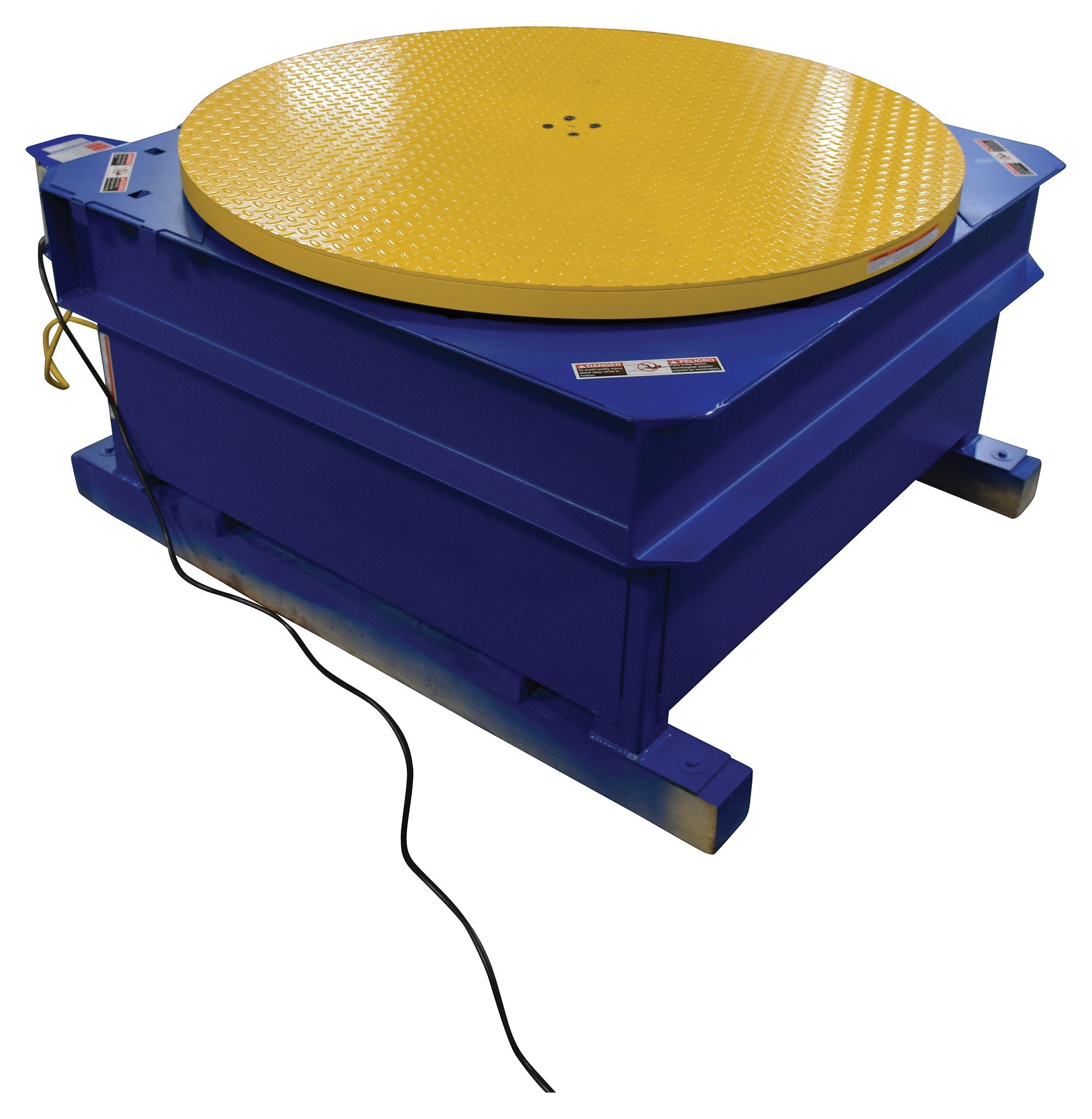 In Stock
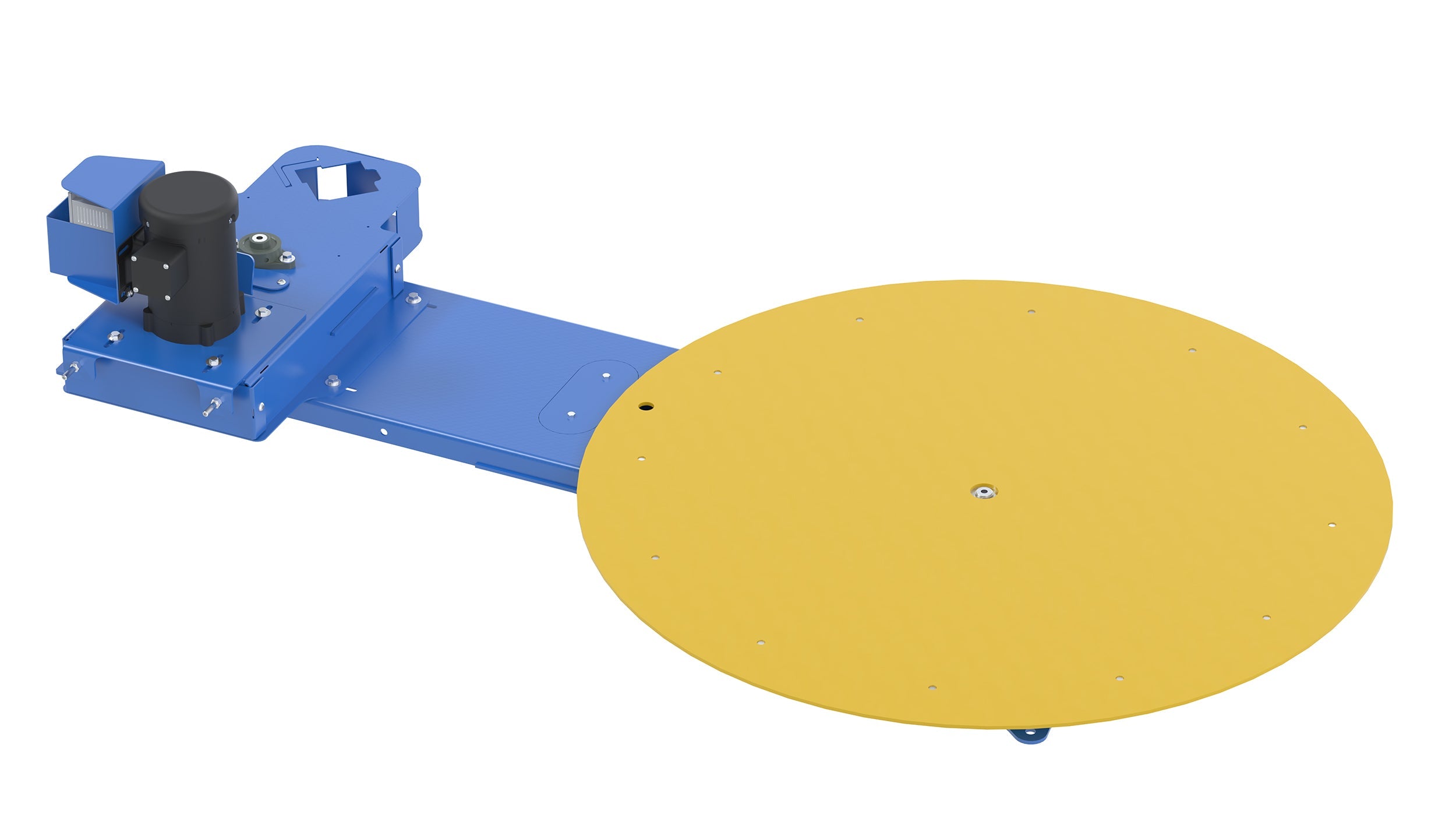 In Stock
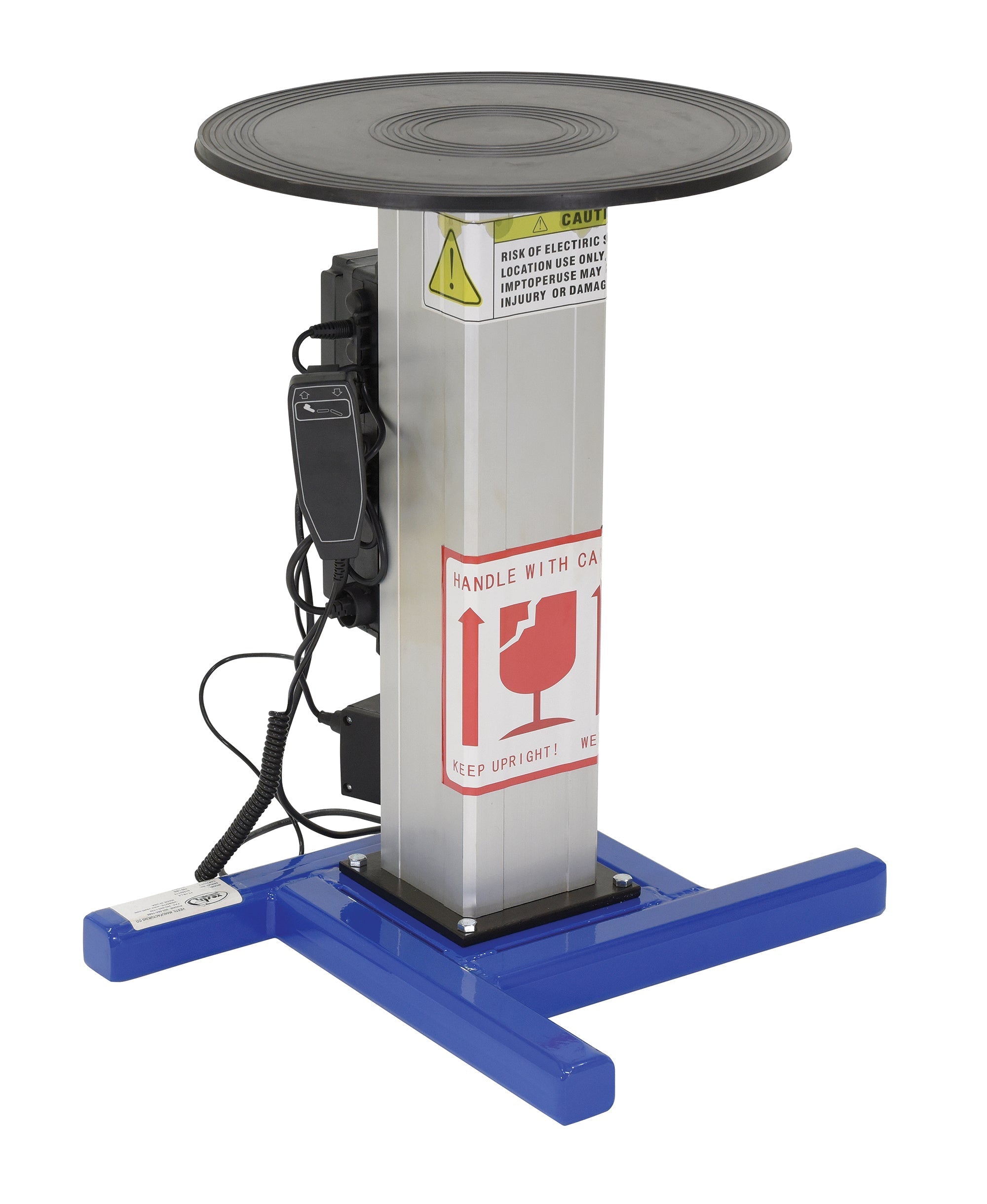 In Stock
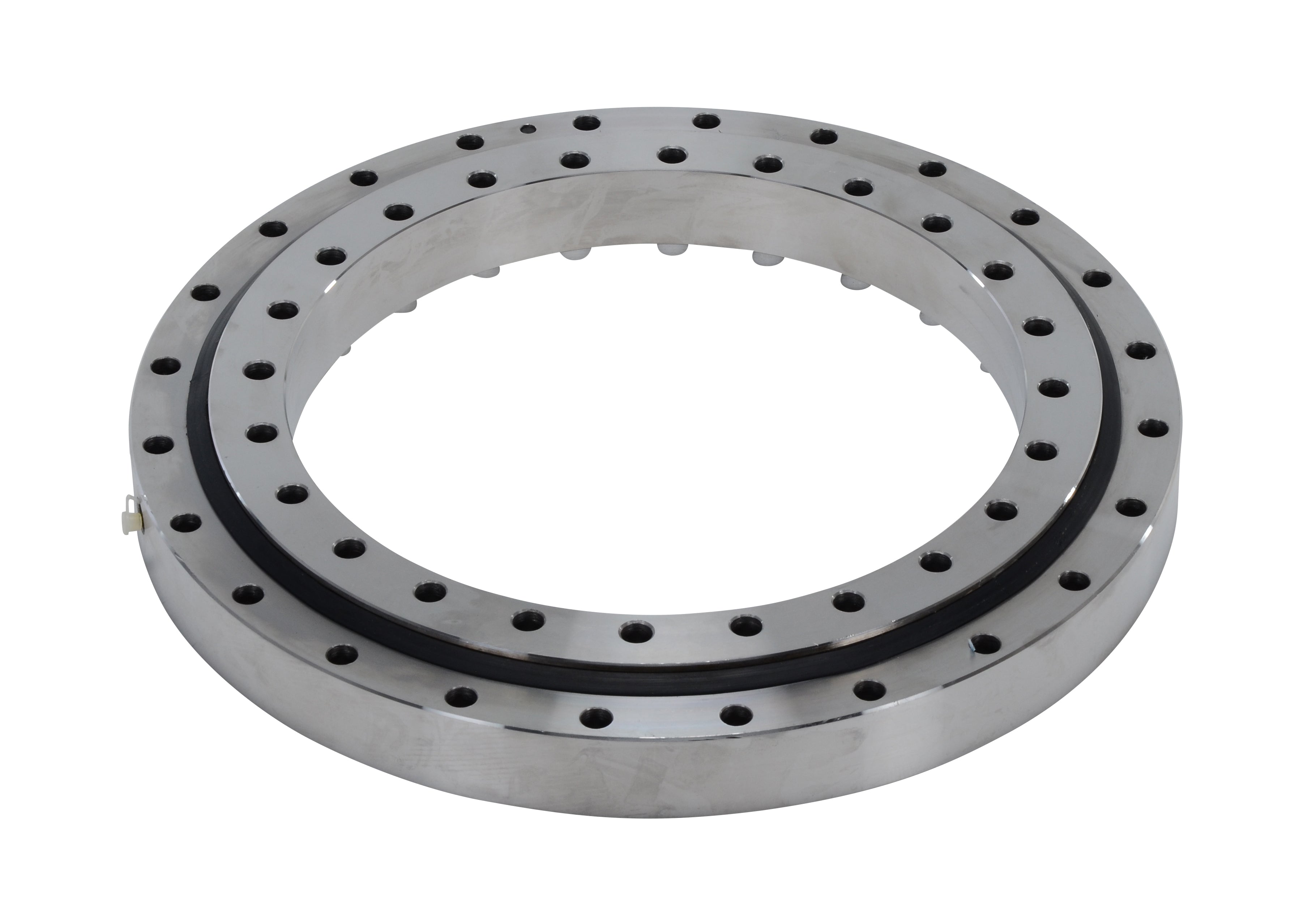 In Stock
 In Stock
 In Stock
 In Stock
 In Stock
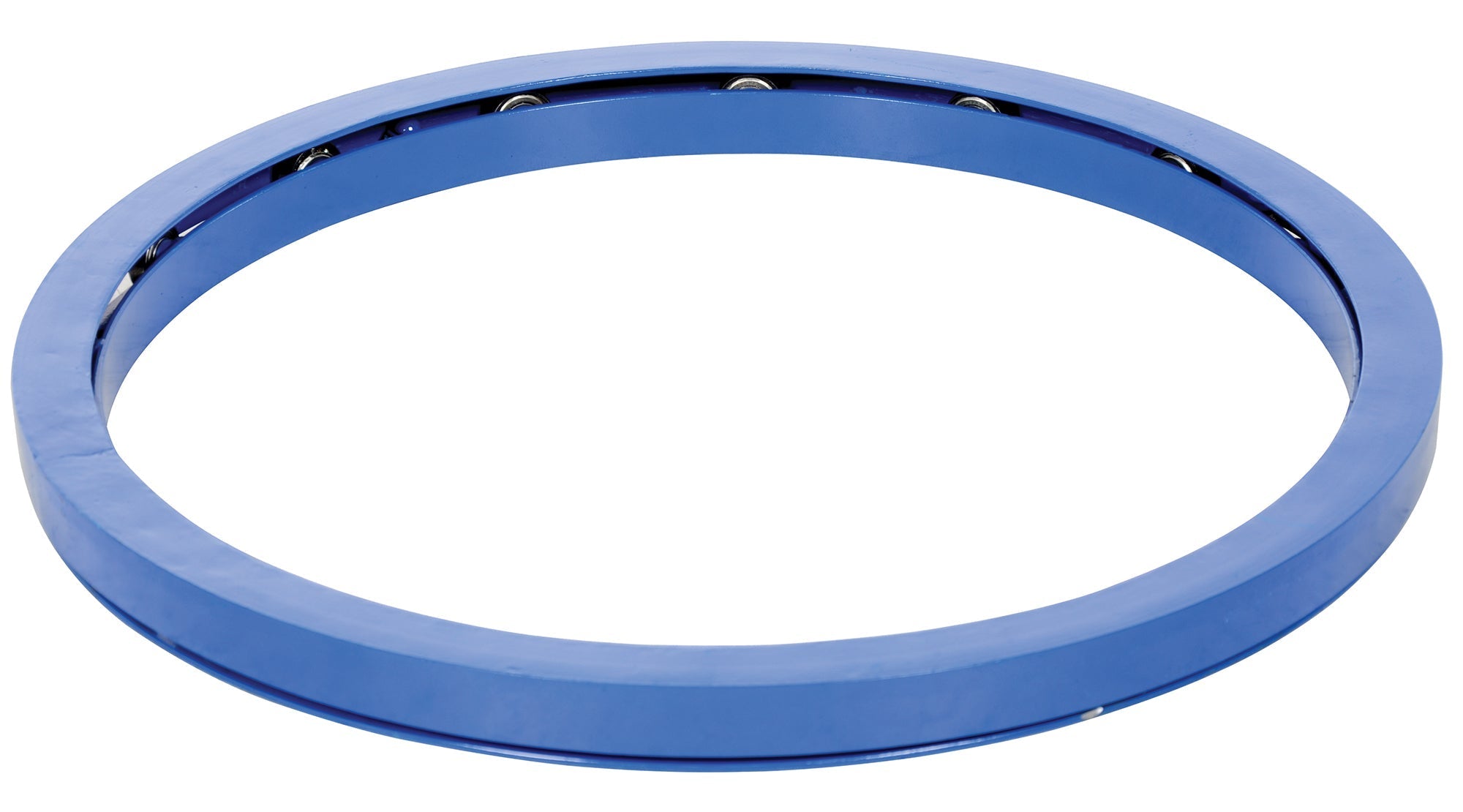 In Stock
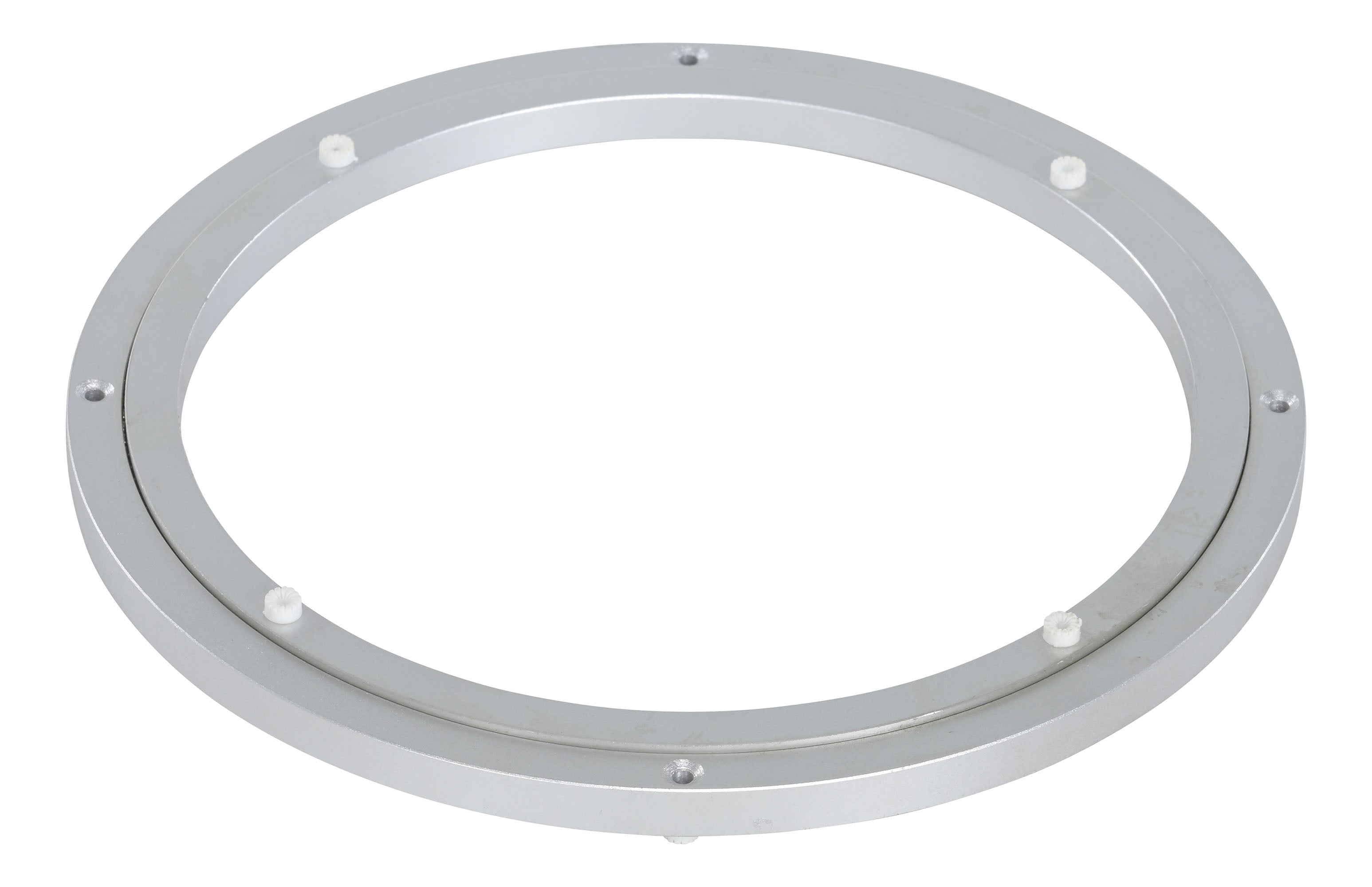 In Stock
Carousels Buying Guide
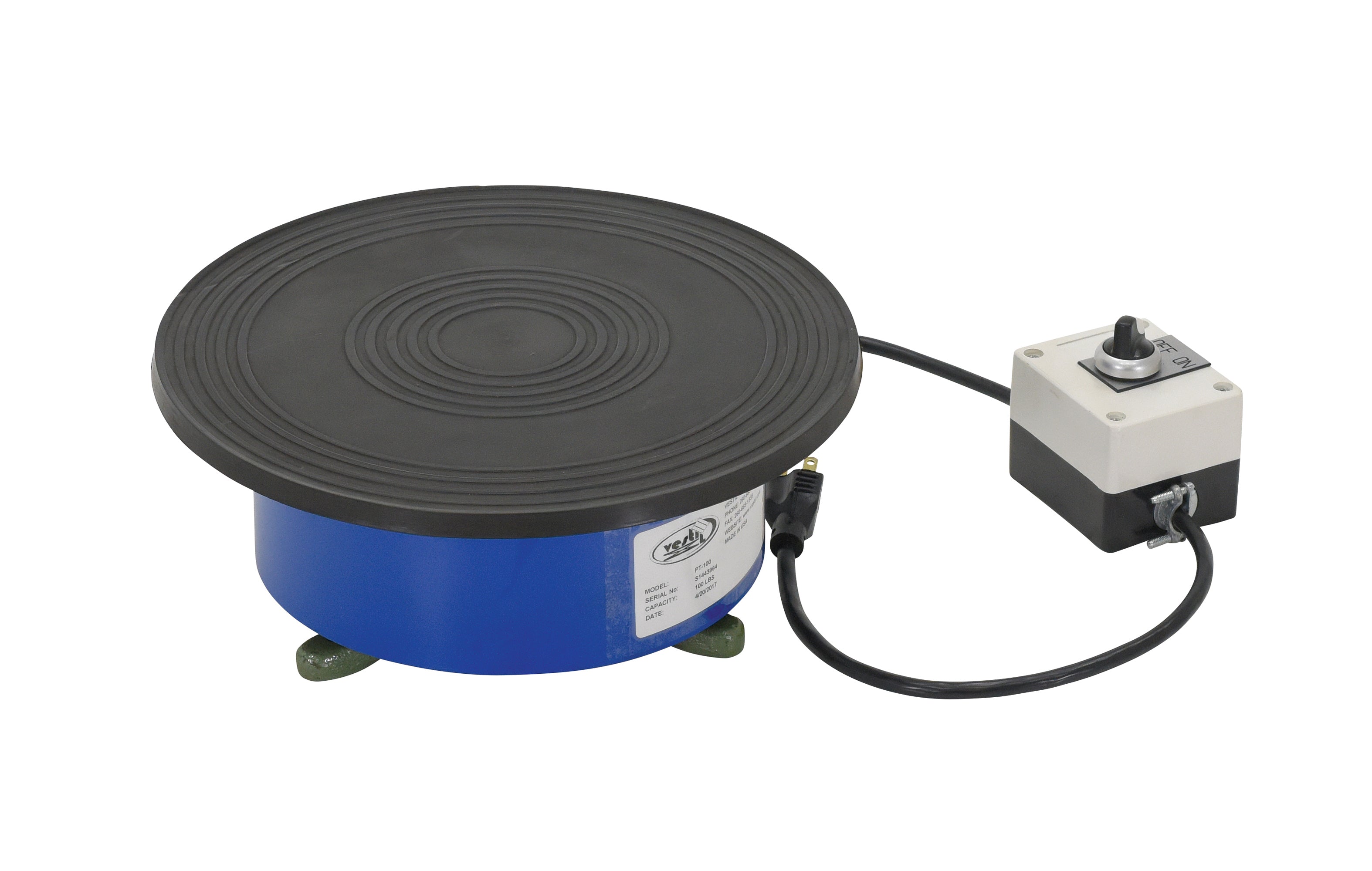
Manual or powered rotation. This is the first fork. A manual carousel spins because the operator pushes the load, riding on sealed ball bearings with four guide rollers that keep the rings aligned. It costs less, needs no power, and suits a station where someone is already handling the load by hand. The steel manual carousels here run 2,000, 4,000, and 6,000 lb across outside diameters from 18 to 72 inches. Powered rotation takes over when the load is heavy enough that spinning it a few hundred times a shift becomes the job itself. Vestil's powered turntables and low profile powered carousels drive the deck with a belt drive motor and a foot pedal on an 8 foot cord, which frees both hands for the work. The low profile carousels give variable speed from 3 to 12 RPM with cushion start and stop, while the fixed powered turntables turn at a single non-adjustable speed on 115V single phase power. Rule of thumb: if the operator's hands are full and the load runs into the hundreds of pounds, buy the motor.
Getting the load onto the deck. A turntable is only useful if you can load it, and the height off the floor decides that. Standard manual carousels sit low enough to set a box on by hand but too tall for a pallet jack to drive onto. When a forklift or jack has to place a full pallet, you want a low profile deck. The Thin Spins carry 4,000 lb on a 39 inch usable diameter at a height a jack can slide under and drop onto, and the low profile powered carousel does the same job with a motor. At the other extreme, if the deck sits too low for comfortable hand work, the turntables with powered height adjustment raise and lower the 360 degree deck on DC power with a hand control, so the operator can bring the top box up to waist height and drop it back down to start the next pallet. Match the deck height to how the load arrives and how the operator works it.
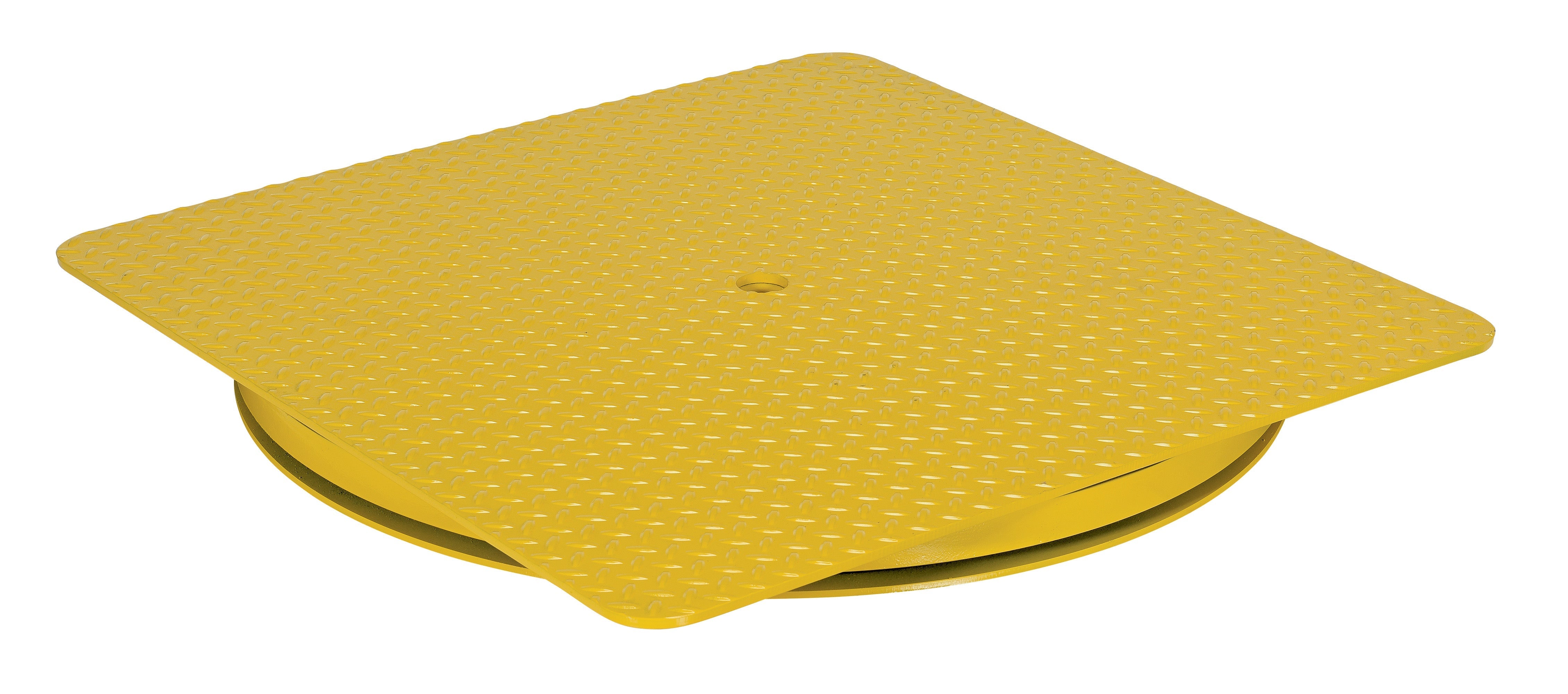
Off-center loads and the king pin. A plain carousel bearing assumes the load sits centered over the pivot. Real pallets rarely do. A half-built stack, a single heavy carton on one side, or a machine base with its mass off to one edge all push the load off center, and on an ordinary bearing that shows up as a deck that binds, tips, or wears fast. The king pin carousels solve it with a center pin and a heavy maintenance-free bearing that let you load off center up to 50 percent of the rated capacity on at least 50 percent of the deck. They carry a 1/4 inch tread plate top on the 4,000 lb models and a 3/8 inch top on the 6,000 lb models, and come with a square or round top. If your work naturally loads one side first, or an operator builds a pallet a stack at a time from one position, the king pin is the model that will not fight you.
Capacity, deck size, and bearing type. Three numbers size the buy. Capacity: the steel manual carousels top out at 6,000 lb, the Thin Spins and king pins reach 4,000 to 6,000 lb, and the bench units handle a fraction of that, so rate the turntable against your heaviest full load rather than the average. Deck: outside diameters run from 18 inches on the small manual rings to 72 inches on the largest steel carousels, and the deck needs to carry the pallet or fixture without the overhang that would let a corner dip. Bearing: the manual carousels run sealed ball bearings with guide rollers keeping the rings tracking, while the precision turret bearings are a different animal, a low 2-1/4 inch tall bearing rated to 6,000 lb in diameters from 19 to 40 inches that turns smoothly to an exact stop and works as a stand-alone positioner built into a fixture or table. Pick the turret bearing when you need precise indexed rotation rather than a full carousel frame.
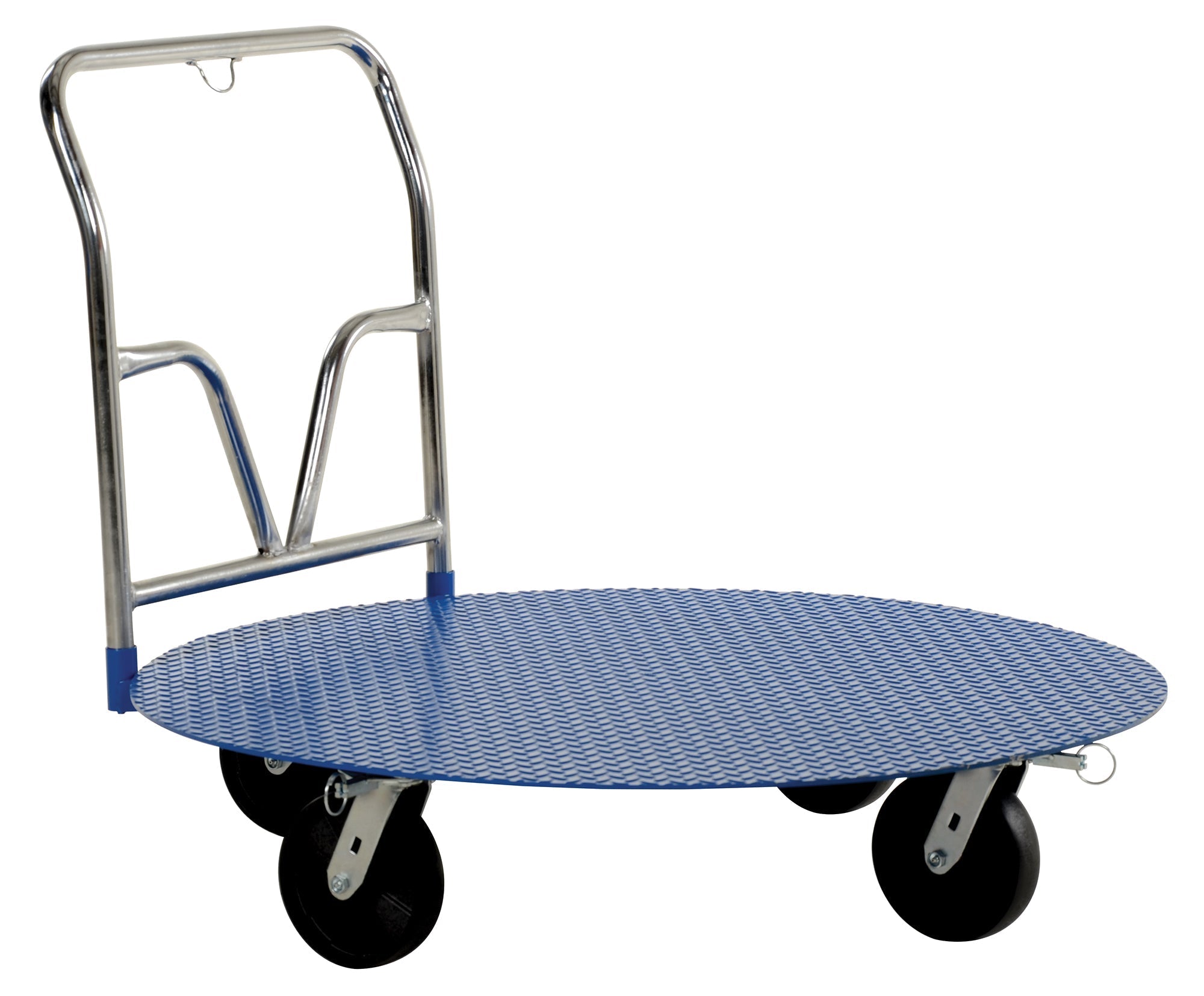
The bench and light-duty end. Not every turntable is a floor machine. The aluminum mini carousels are light rings you set on an existing work bench, scissor table, or the floor for loading and unloading small parts, and they start around $27, which makes them the cheapest way to stop an assembler from walking around a fixture. The smaller steel manual carousels do the same in heavier gauge for parts that would bend an aluminum ring. Options across the steel line let you tune the station: round or square tops in smooth or diamond plate, 12 and 24 inch elevated bases to raise the work, and hand or foot operated locking detents that hold the deck at a set position while the operator works one face. For a station that both moves and spins, the pallet cart and carousel rolls on casters to the work point, then pulling the caster pins lets the deck rotate like a carousel for unloading, with a removable handle for full access to the deck from any side.
Where the deck earns its keep. The reason to buy any of these is ergonomic, and it is the same across the line. Building or breaking down a pallet by walking around it, or reaching across a four foot load to the far corner, is exactly the reaching, bending, and twisting that OSHA's ergonomics guidance flags as musculoskeletal risk. A rotating deck brings the far side of the load to the worker, so the reach stays short and the spine stays neutral, and the powered height models keep the working course at a comfortable level as the stack grows. That is productivity and injury prevention in the same purchase, which is why these decks turn up under wrapping stations, assembly cells, welding fixtures, and inspection benches. One thing to keep straight: everything here is a turntable or positioner. These models rotate the load, and some raise it, but none carries a film carriage, so a stretch wrap operation pairs one of these decks with a separate wrapping machine.
Frequently Asked Questions
Manual if an operator is already handling the load by hand and it is light enough to push around easily. The sealed ball bearing decks spin with a shove and cost far less. Powered if the load runs into the hundreds or thousands of pounds and rotating it by hand a few hundred times a shift becomes the task. Vestil's powered carousels drive the deck with a foot pedal on an 8 foot cord so both hands stay on the work, with variable speed from 3 to 12 RPM on the low profile models.
It lets you load the deck off center. A standard carousel bearing wants the weight centered over the pivot, while the king pin carousels use a center pin and a heavy maintenance-free bearing to accept off-set loading up to 50 percent of the rated capacity on at least half the deck. That covers pallets built one stack at a time and fixtures with their mass to one side. The 4,000 lb models carry a 1/4 inch tread plate top and the 6,000 lb models a 3/8 inch top.
With the low profile models, yes. The Thin Spins and the low profile powered carousel sit low enough that a jack or truck can drive over the deck and set a full pallet down, and the Thin Spins carry 4,000 lb on a 39 inch usable diameter. Standard height carousels are meant for hand loading or placing boxes, so match the deck height to how the pallet actually arrives at the station.
It depends on the model. The bench aluminum rings handle light parts, the steel manual carousels are rated 2,000, 4,000, and 6,000 lb, the Thin Spins and king pins reach 4,000 to 6,000 lb, and the precision turret bearings are rated to 6,000 lb. Rate the turntable against your heaviest full load and confirm the deck diameter carries the pallet without overhang.
No. Everything in this collection rotates the load, and some models also raise it, but none carries a stretch film carriage. If you want the turntable to feed a wrapping operation, pair one of these decks, or a powered carousel, with a separate stretch wrap machine that holds and dispenses the film. The turntables here are built for assembly, palletizing, inspection, and hand wrapping stations.
The powered turntables and stand-alone powered carousels run on 115V single phase, so a standard outlet handles them, and they are driven by a belt drive motor with a foot pedal on an 8 foot cord. The low profile powered carousels add variable speed from 3 to 12 RPM with cushion start and stop. The turntables with powered height adjustment use DC power with a hand control for raising and lowering the deck.