Industrial Pallets
Industrial pallets are the platform every palletized load rides on, and the material you pick decides whether the pallet lasts one trip or a decade. This catalog is Vestil across most of the range, with a Star Industries scaffold pallet at the specialty end, and it covers the decks wood cannot: plastic in both grated and solid styles, welded steel and hot-dip galvanized steel, lightweight aluminum, open welded wire, and recycled presswood for single-trip export. Prices run from a presswood pallet in the mid $30s to a scaffold transport pallet near $4,900, so the buy is less about brand than about matching deck material and load rating to how the pallet actually gets used. Standard footprints like 48 by 40 in sit here alongside 36 in square, 48 in square, and smaller skid sizes. The guide below works through the material choice, the load ratings that trip people up, and fork entry.
Compare Pallets
| Model | Price | Capacity | |
|---|---|---|---|
| Star Industries Scaffold Pallets | $4,865 | — | View → |
| Vestil Heavy Duty Solid Deck Steel Pallet | $187 | — | View → |
| Vestil Plastic Pallet/Skids | $180 | 8,800 lb | View → |
| Vestil Galvanized Welded Wire Pallets | $164 | 4,000 lb | View → |
| Vestil Aluminum Pallets & Skids | $161 | 4,000-6,000 lb | View → |
| Vestil Plastic Pallets and Skids | $131 | 3,300-22,000 lb | View → |
 In Stock
 In Stock
 In Stock
 In Stock
 In Stock
 In Stock
 In Stock
 In Stock
Pallets Buying Guide
Start with the material, because it decides everything else. Every pallet on this page does the same job, so the real decision is the material, and each one trades cost against durability, weight, hygiene, and corrosion resistance. Wood is the default in most buildings and is not what this catalog sells; the pallets here are the ones you reach for when wood keeps failing, contaminates product, rots outdoors, or gets rejected at a customs border. Plastic, steel, aluminum, wire, and presswood each answer one of those failures. Sort by the problem first, then by footprint and load rating, and the range separates cleanly into a handful of clear choices.
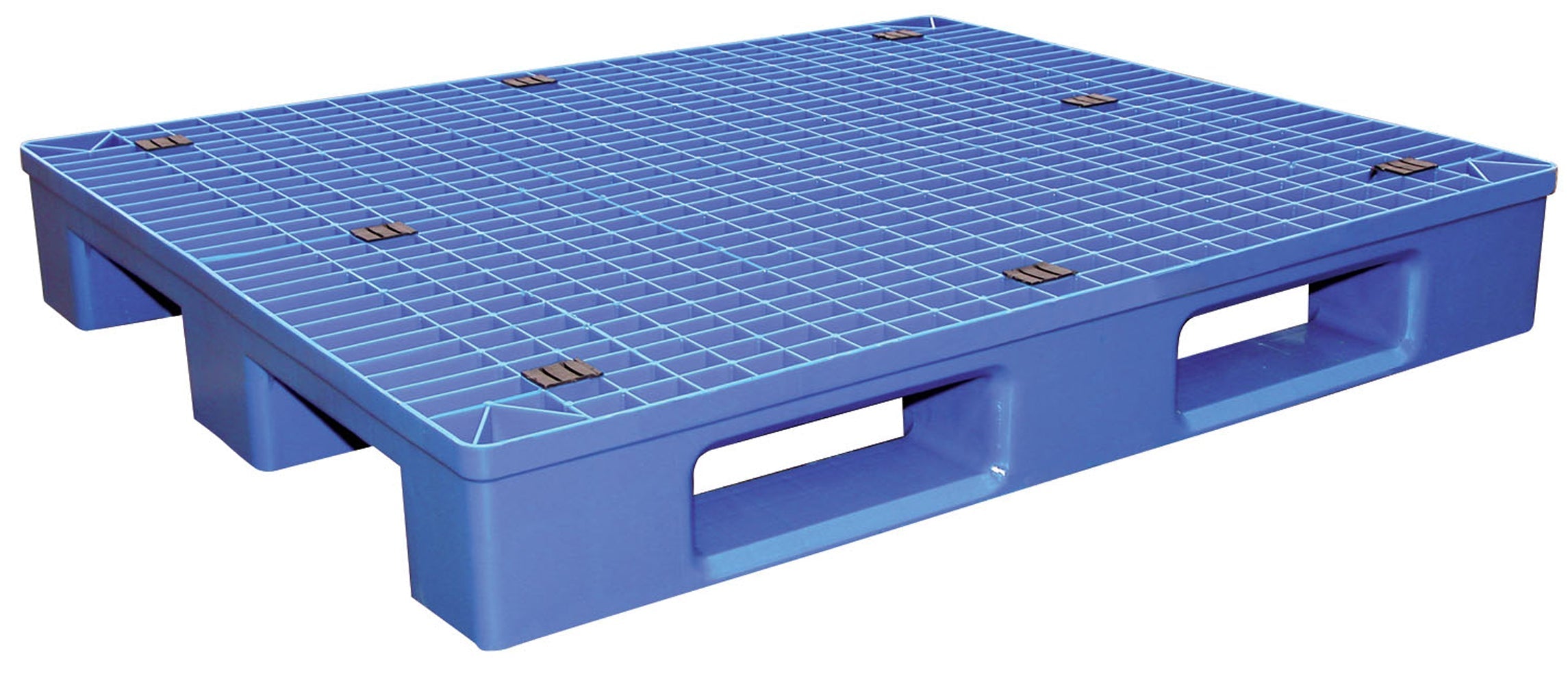
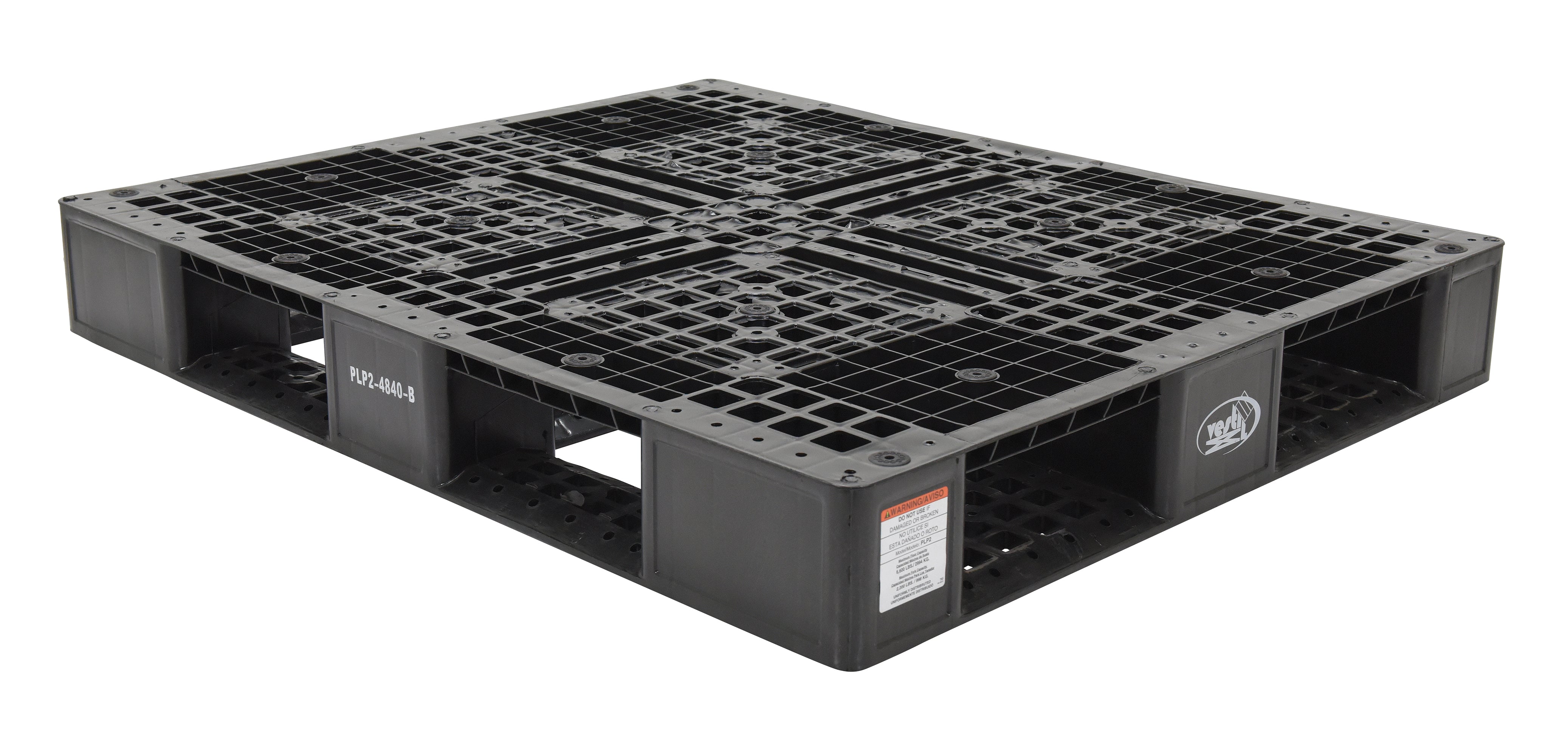
Plastic: hygiene, washdown, and no loose hardware. Our two plastic lines, the Plastic Pallet/Skids and the larger Plastic Pallets and Skids range, are the answer wherever wood's splinters, nails, and moisture are the problem. Plastic will not absorb water or harbor bacteria, it has no protruding nails or screws to snag, and it wipes down, which is why food, beverage, pharmaceutical, and clean-room operations standardize on it. Pick a grated deck for drainage and airflow, or a solid deck where fines and liquids would fall through, and the larger range comes in seven colors for line coding or department sorting. Static capacity on the plastic pallet reaches near 8,800 lb, well above any single palletized load, but read the dynamic and rack numbers before you trust that figure on a forklift or a beam.
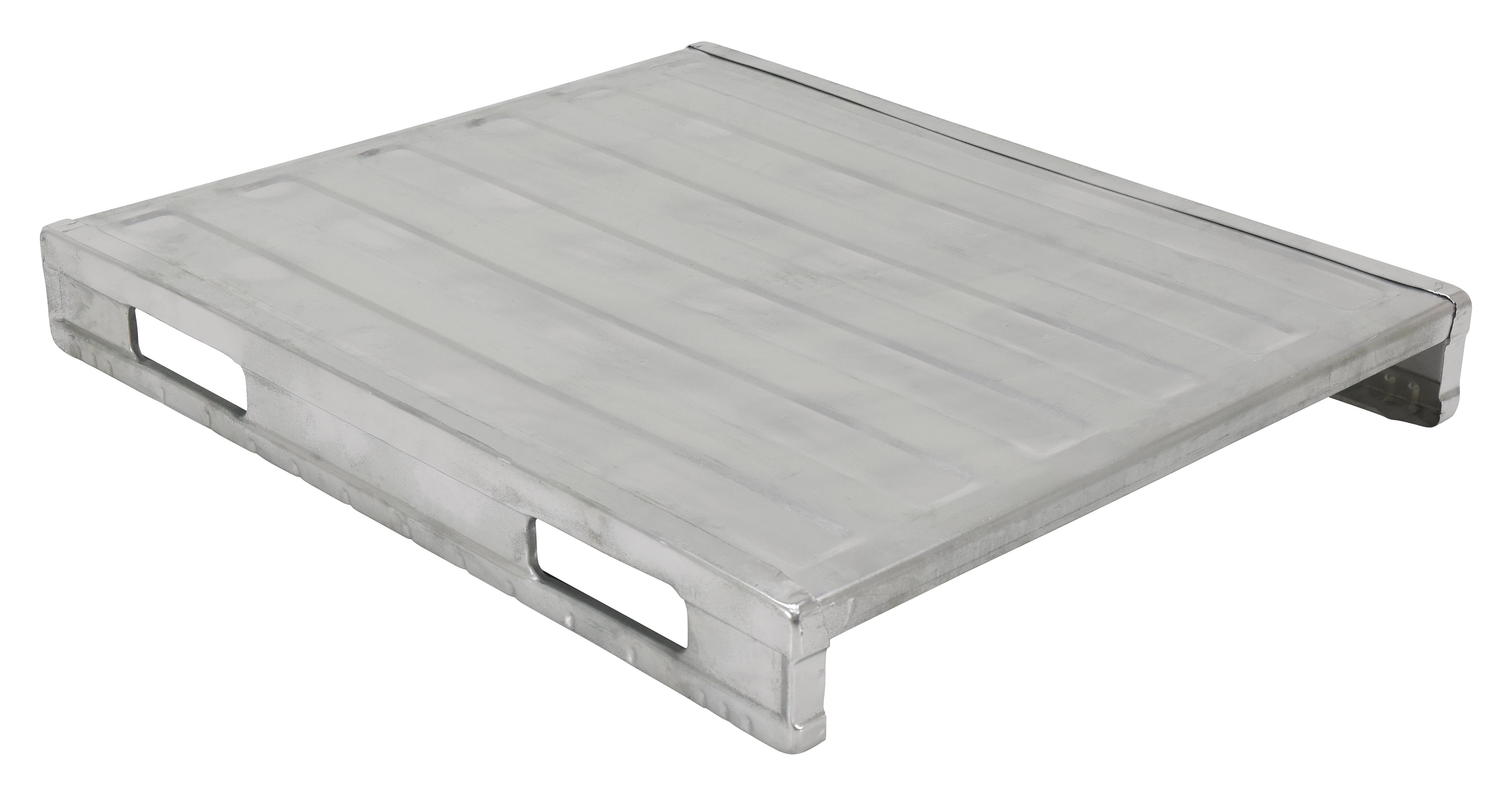
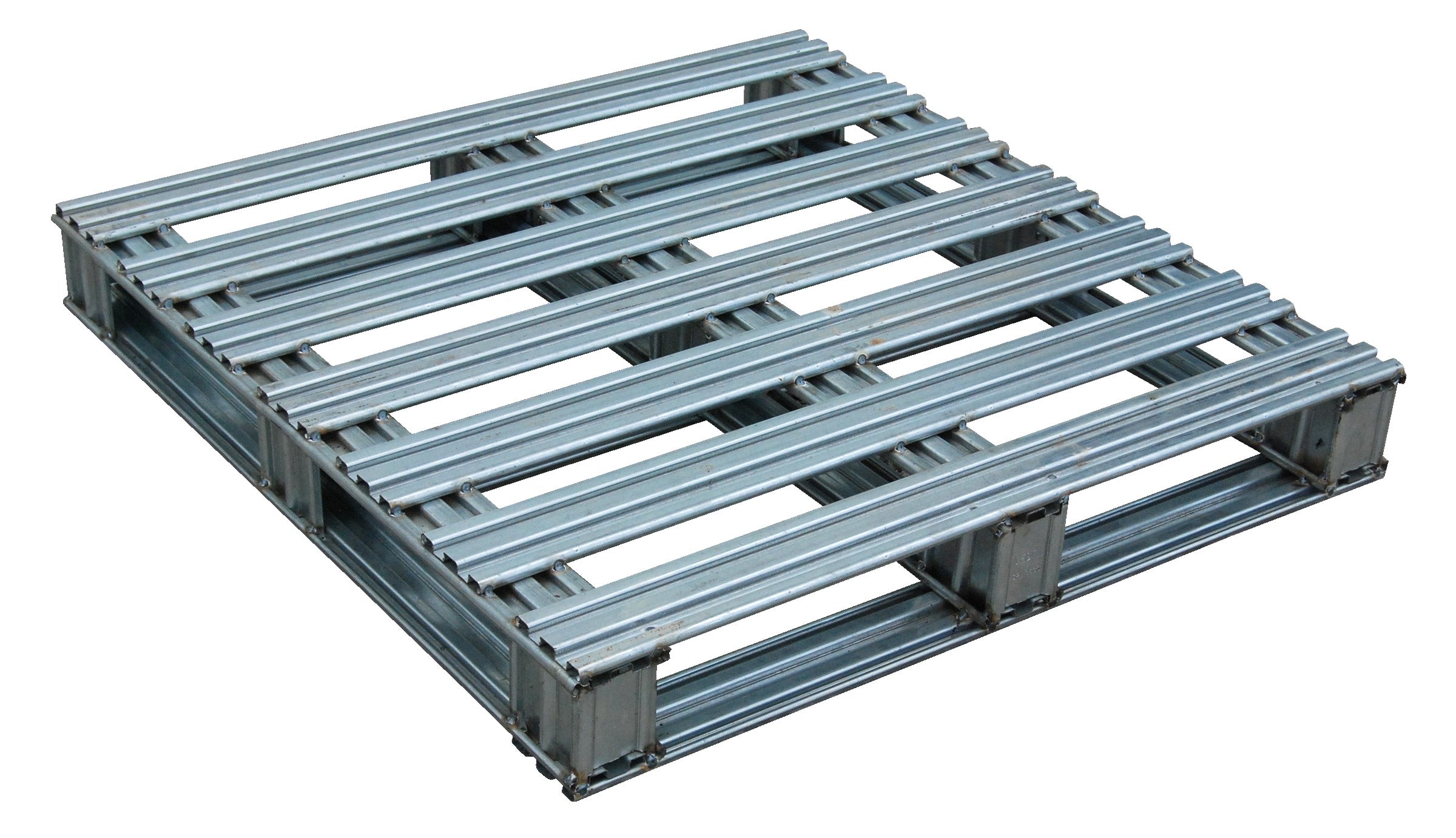
Steel and galvanized steel: heavy loads that outlast the freight. The Heavy Duty Solid Deck Steel Pallet and the Steel Pallets with Hot-Dipped Galvanized Finish are what you buy when a load is too heavy or too hot for anything else, or when the pallet lives outdoors. Welded steel has no boards to crack and a far longer service life than wood under repeated heavy loads. The hot-dip galvanized version adds a zinc coating that resists corrosion in wet, outdoor, and washdown settings, so it is the pick for rust-prone environments where a painted or bare pallet would fail. Galvanized comes in 36 in square, 48 by 40 in, 48 by 42 in, and 48 in square footprints on our site. Steel is the heaviest option by a wide margin, so factor the empty weight into your handling and freight.
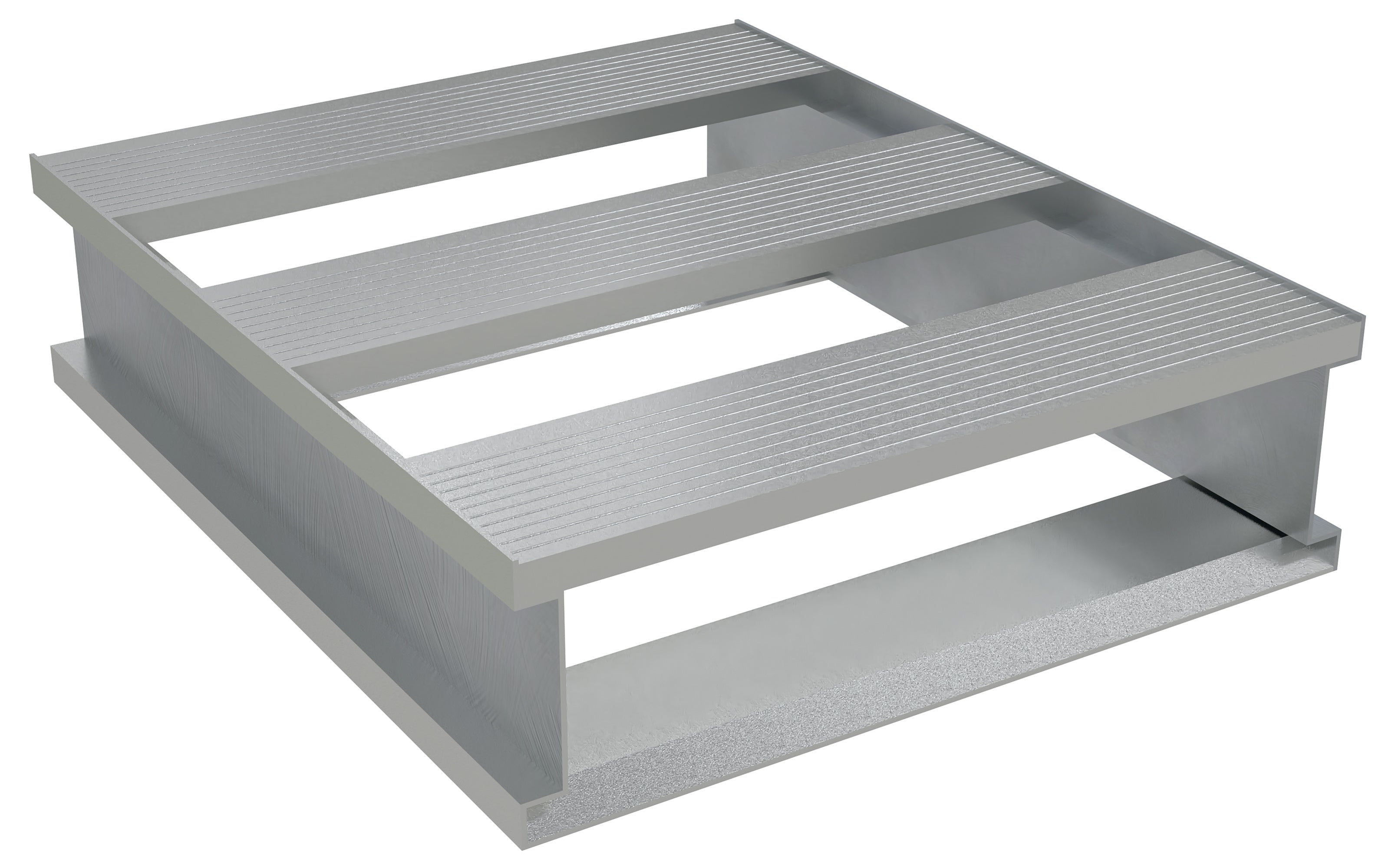
Aluminum: steel-grade capacity at a fraction of the weight. The Aluminum Pallets and Skids line splits the difference. Aluminum's strength-to-weight ratio beats steel's, so an aluminum pallet carries a heavy rating, up to 6,000 lb static in our catalog, while staying light enough for easier manual handling and lower shipping weight. It also resists corrosion with no coating, which suits export, cleanroom, and precision work where a light, non-rusting, reusable pallet earns its higher price over many trips. The range runs from a compact 20 by 24 in skid to a full 48 in square, in standard or solid tops and standard or open-skid bottoms, with prices from around $103 to just over $500 depending on size and configuration.
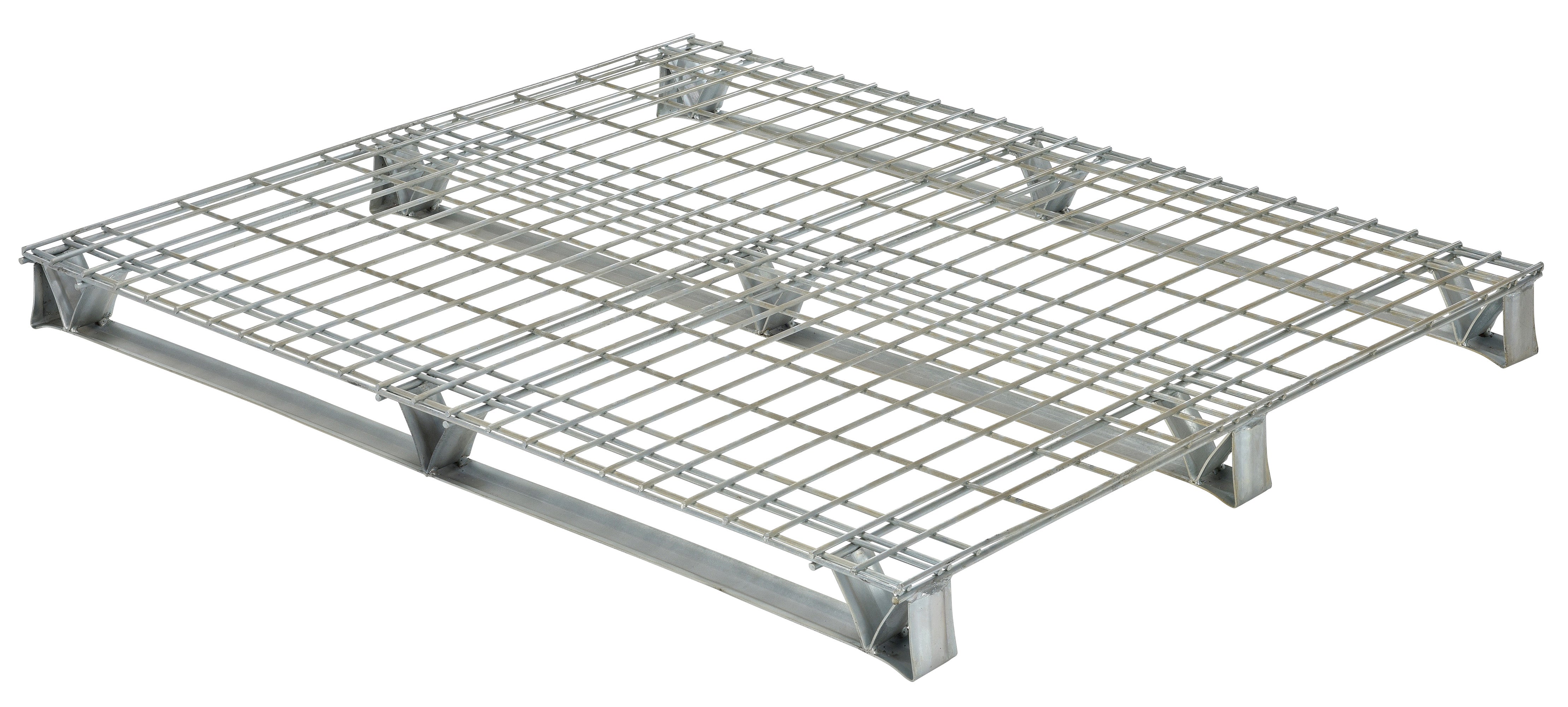
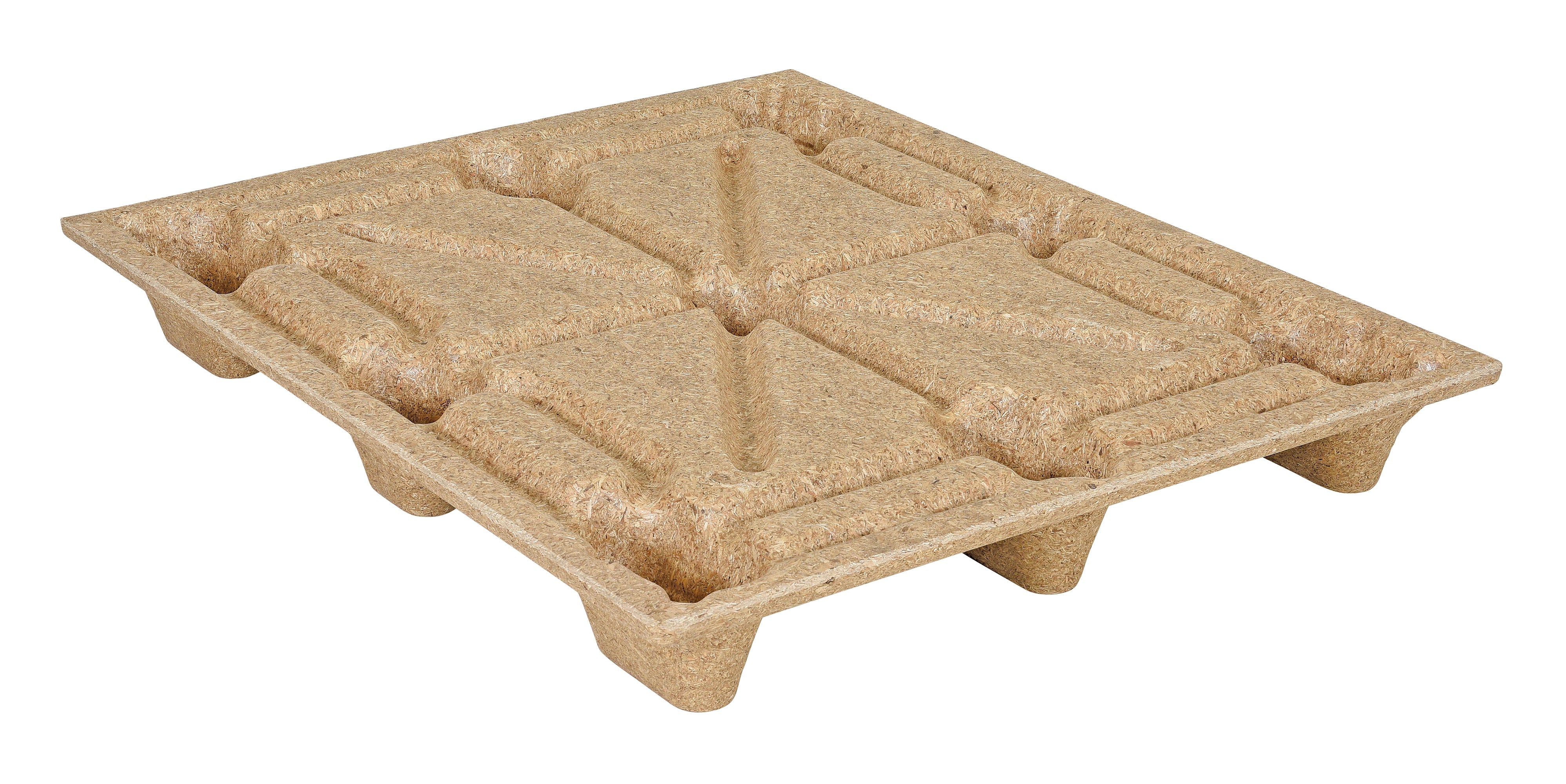
Wire and presswood: the two specialty decks. Two pallets here solve narrower problems. The Galvanized Welded Wire Pallets use an open mesh deck, which drains, lets air through, keeps stored goods visible, and works with overhead fire sprinklers where a solid deck would block the spray; they come in 48 by 40 in and 48 in square. The Recycled Nestable Presswood Pallets are the cheapest pallet on the page, in the mid $30s, and molded from recycled wood fiber so they nest to save storage space when empty. Because presswood is classed as processed wood material, it is exempt from ISPM-15 heat-treatment and stamping rules, which makes it a clean single-trip pallet for international export without the customs risk raw solid wood carries.
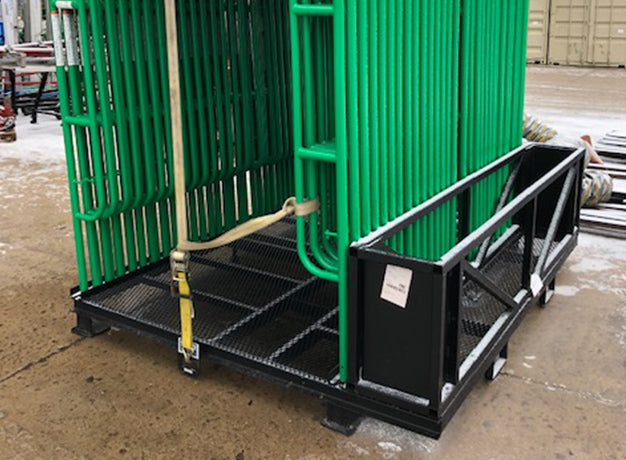
The specialty item: the scaffold transport pallet. The Star Industries Scaffold Pallets are the outlier here, and the reason for the near $4,900 price. This is a scaffold transport and storage pallet built for rental yards, not a shipping platform: loose frames and braces load once, stack uniformly, and stay consolidated through delivery, the job, return, and redeployment, moving as one 950 lb unit by forklift. Fork loops set the forks correctly and two anchor points take a strap for transport. If you run scaffold, it removes the repetitive hand-stacking that drives most of the labor cost in scaffold rental. If you are buying a pallet to ship product, it is the wrong item on this page, and a standard Vestil pallet is the right buy.
Read the load rating and the fork entry before you buy. Two spec details cause most mistakes. First, pallet ratings come in three flavors and they are not interchangeable: static is the pallet resting on a flat floor and is always the highest number, dynamic is what it carries while a forklift moves it, and rack or edge-rack capacity, supported only at its ends on beams, is the lowest and the one that actually governs rack storage. Buy to the number that matches how you store, not the headline static figure. Second, check fork entry: a 4-way pallet accepts a forklift or pallet jack from all four sides, while a 2-way takes entry from two sides only, which limits how you approach it in a tight aisle. Match footprint to your racking and your product before you settle the deck material, because a pallet that will not fit the beam or the truck is the wrong pallet at any price.
Frequently Asked Questions
Static is the weight a pallet holds sitting on a flat floor, and it is the highest of the three numbers. Dynamic is what it can safely carry while a forklift or pallet jack moves it. Rack or edge-rack capacity is the weight it holds when supported only at its ends on beams, and it is the lowest. Always buy to the rating that matches how you store and move the load, not the static figure a spec sheet leads with.
Plastic and hot-dip galvanized steel. Plastic will not splinter, rust, or absorb moisture and has no nails to harbor bacteria, which is why food and pharma operations standardize on it; choose a solid deck if you need to keep fines and liquid from falling through. Galvanized steel also handles washdown and adds heavy load capacity plus corrosion resistance where plastic is not strong enough.
Yes, and two here are built for it. Plastic and presswood pallets are exempt from ISPM-15 heat-treatment and stamping requirements because they are not raw solid wood, so they clear customs without the fumigation or heat-treat paperwork wood needs. The recycled presswood pallet is the low-cost single-trip choice; plastic is the reusable one for repeated shipments.
Match the footprint to your racking, your product, and your truck first. The 48 by 40 in GMA footprint is the North American standard and fits most racking and trailers two-wide, and several lines here offer it. Smaller skids like 20 by 24 in and square sizes like 36 by 36 in and 48 by 48 in suit specific loads and rack openings. Confirm your beam spacing and load dimensions before choosing.
A pallet has both a top deck and a bottom deck, which gives it stability in racking and lets it stack cleanly. A skid has a top deck only, with no bottom boards, so it sits lower, slides more easily, and works well as a base for machinery or the bottom of a stacked load. Several Vestil lines here offer both a standard pallet bottom and an open-skid bottom.
Because it is a different product. The Star Industries scaffold pallet is a heavy welded transport and storage frame for consolidating loose scaffold frames and braces in a rental operation, not a shipping platform for palletized goods. It carries fork loops, two anchor points for strapping, and a 950 lb rating built to survive repeated loading, transport, and job-site use. If you are shipping product, one of the standard Vestil pallets is the right and far cheaper buy.