Pallet Scales
A pallet scale is a low profile floor scale built wide and flat enough to take a loaded pallet, weigh it in place, and read the number before the load moves another foot. Every scale in this collection is Vestil and 115V powered, and the range is built around exactly that job: low profile decks from about $474 in footprints from 36 by 36 up to 60 by 60 inches, heavier electronic digital floor scales from about $730 rated to 5,000 and 10,000 lb, a U-shaped platform scale near $1,260 that straddles a pallet truck's forks, an integrated scale and ramp package, and portable floor scales for operations that weigh at more than one station. Picking the right one comes down to three questions the guide below works through in order: how big your pallet is, how heavy your heaviest load runs, and whether the number ever sets a price. Get those settled and the rest is deck height and ramp access.
Compare Scales
| Model | Price | Capacity | Power | |
|---|---|---|---|---|
| Vestil Low Profile Scale & Ramp | $5,384 | 5,000-20,000 lb | 115V | View → |
| Vestil Portable Floor Scales | $2,931 | 3,000 lb | 115V | View → |
| Vestil Low Profile Portable Bin Scale | $2,528 | — | (6) AA batteries | View → |
| Vestil Electronic Digital Floor Scales | $2,503 | 5,000-10,000 lb | 115V | View → |
| Vestil Low Profile Floor Scales | $1,601 | 2,000-20,000 lb | 115V | View → |
| Vestil U Shaped Platform Scale | $1,261 | 6,000 lb | 115V | View → |
 In Stock
 In Stock
 In Stock
 In Stock
 In Stock
 In Stock
Scales Buying Guide
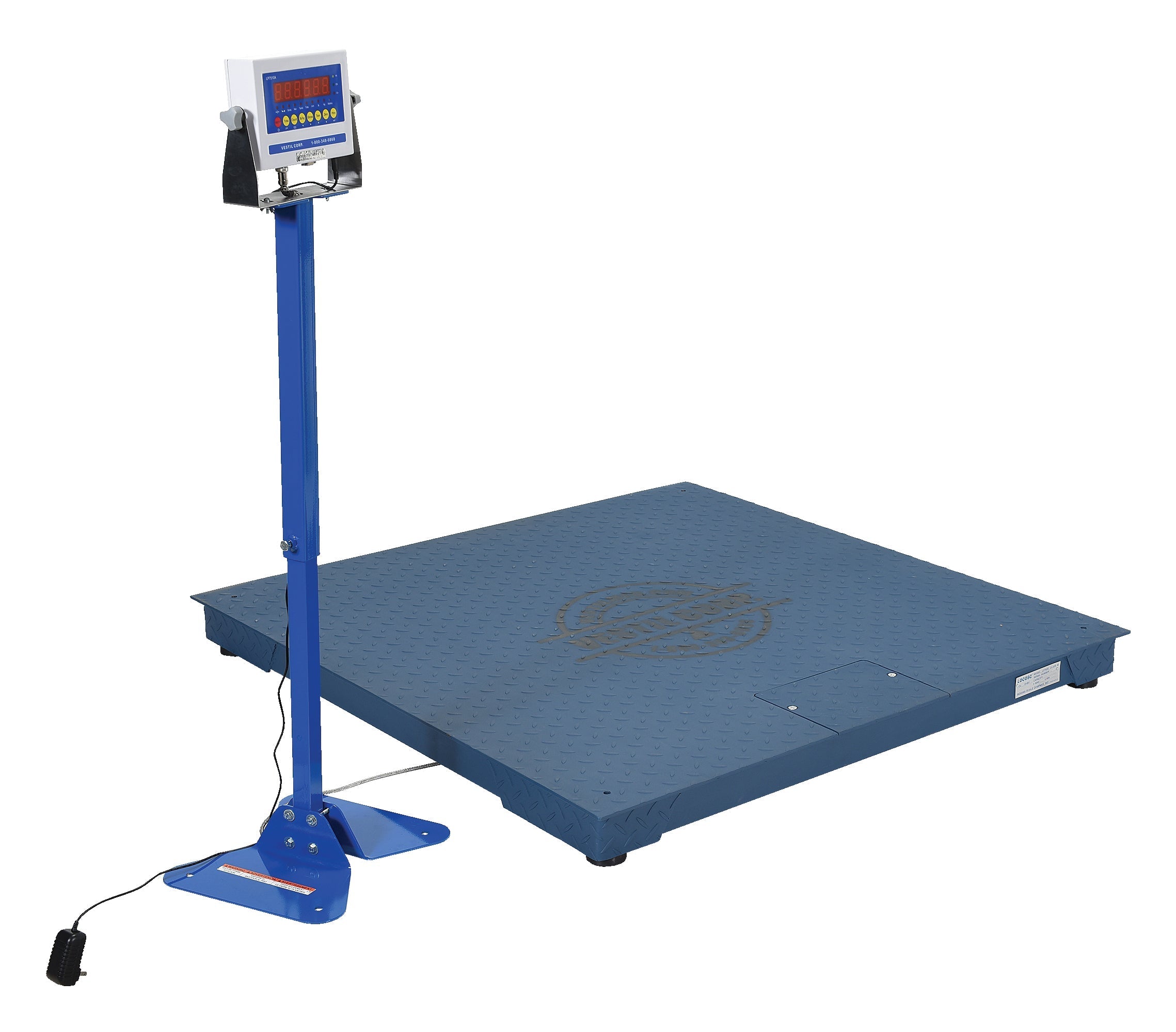
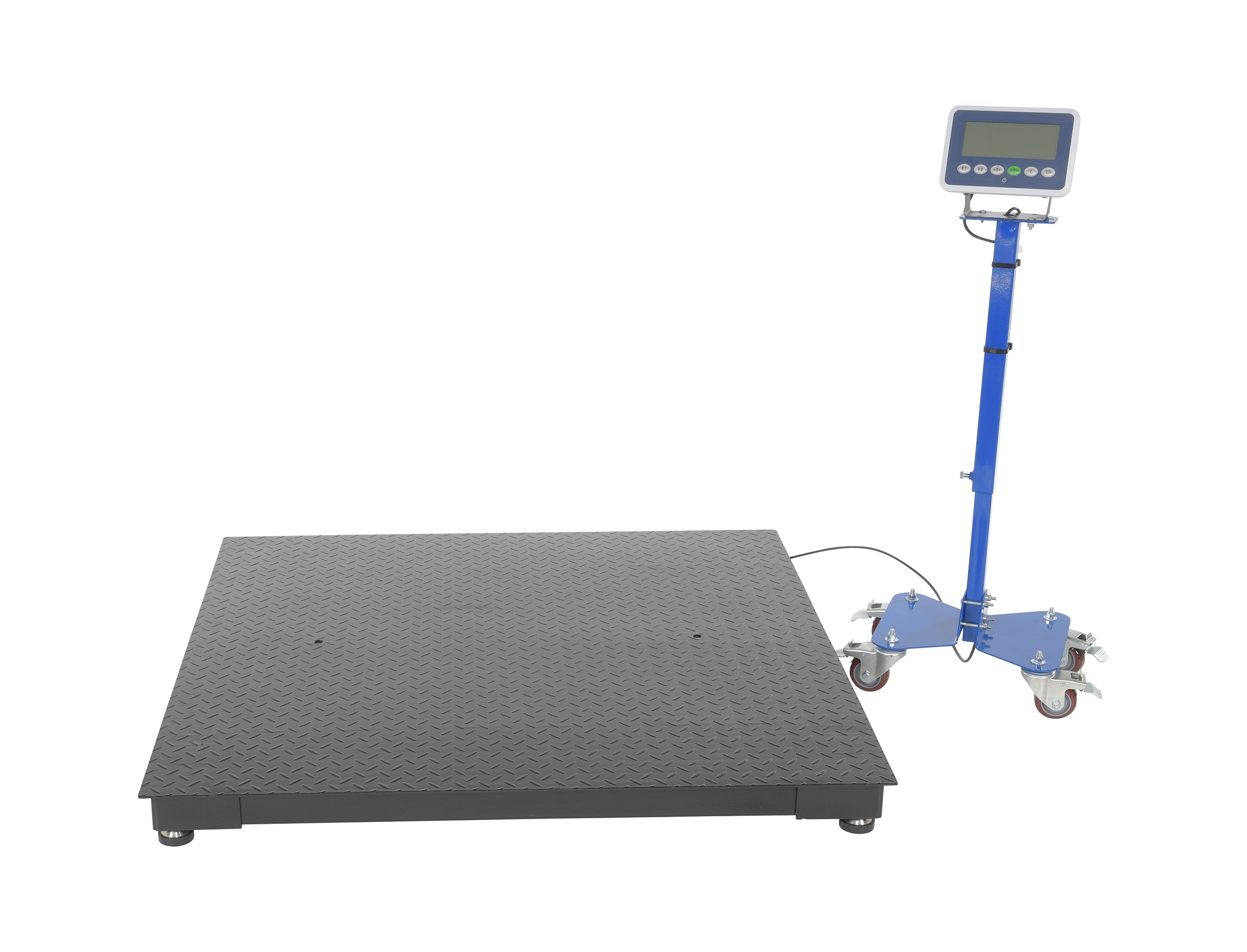
What a pallet scale actually is. The term pallet scale describes a use, not a separate machine. What does the job is a floor scale: a rugged steel weighing platform that sits at or near floor level so a loaded pallet can be set on top of it. That is different from a bench scale, which weighs parcels on a counter, and from a crane or hanging scale, which reads weight through the hook while a load is suspended. A floor scale takes the whole palletized load standing on the deck, which is why the deck has to be sized and rated for a full pallet rather than a single carton. The electronic digital floor scales here read out on a separate indicator and offer a printer option for a ticket at the point of weighing, while the low profile line keeps the deck close to the ground so the step up onto it is small.
Match the deck to your pallet, not the other way around. Start with the footprint. The standard GMA pallet in North America measures 48 by 40 inches, so a 48 by 48 inch deck gives that pallet room to sit fully supported with a margin on every side, and it is the safe default for mixed grocery and general freight. The low profile floor scales run from 36 by 36 up to 60 by 60 inches, so tighter footprints get a smaller, cheaper deck and oversized or block pallets get the 60 inch platform. The rule is simple: the pallet has to sit entirely on the weighing surface, because a foot hanging off the edge either reads short or loads the deck unevenly. If you are still standardizing your pallet stock, our pallets page runs steel, aluminum, plastic, and wire options in the common footprints so the deck you buy and the pallet you run actually match.
Capacity and division: buy headroom, read the resolution. Rate the scale above your heaviest full pallet, then leave headroom. The electronic digital floor scales here carry 5,000 and 10,000 lb capacities, which covers the great majority of palletized freight, but the number that decides accuracy is the division, the smallest increment the scale resolves. A 10,000 lb scale reading in 2 lb divisions tells you far more about a light load than one that jumps in 5 lb steps, and for legal weighing the division is fixed by the scale's approval, not by preference. Buy enough capacity that your heavy loads sit comfortably inside the range, but not so much that everyday pallets fall into the bottom few percent where a coarse division hides real weight. If pallets reach the scale by pallet jack rather than forklift, the deck height and ramp matter as much as the rating, which is the next call.
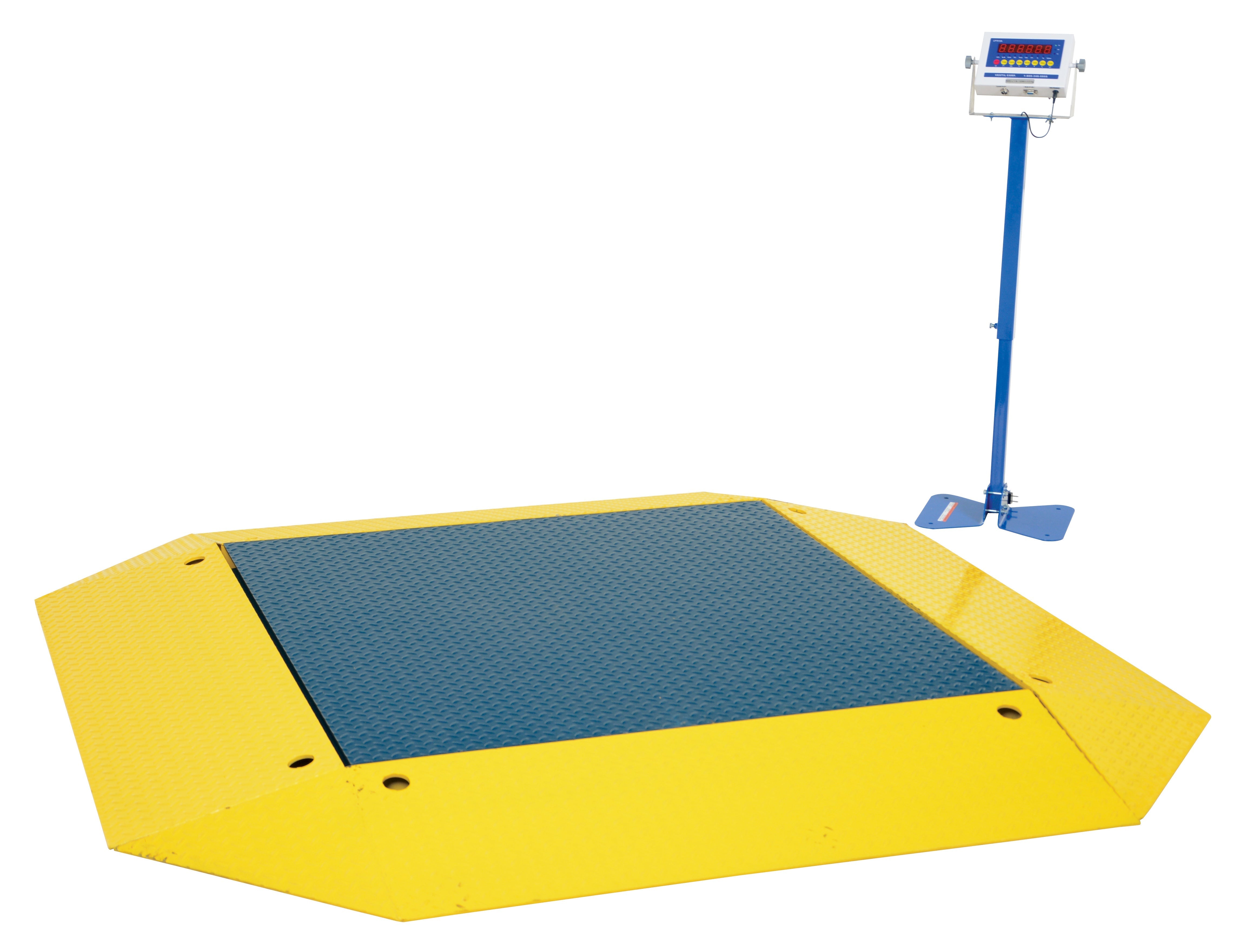
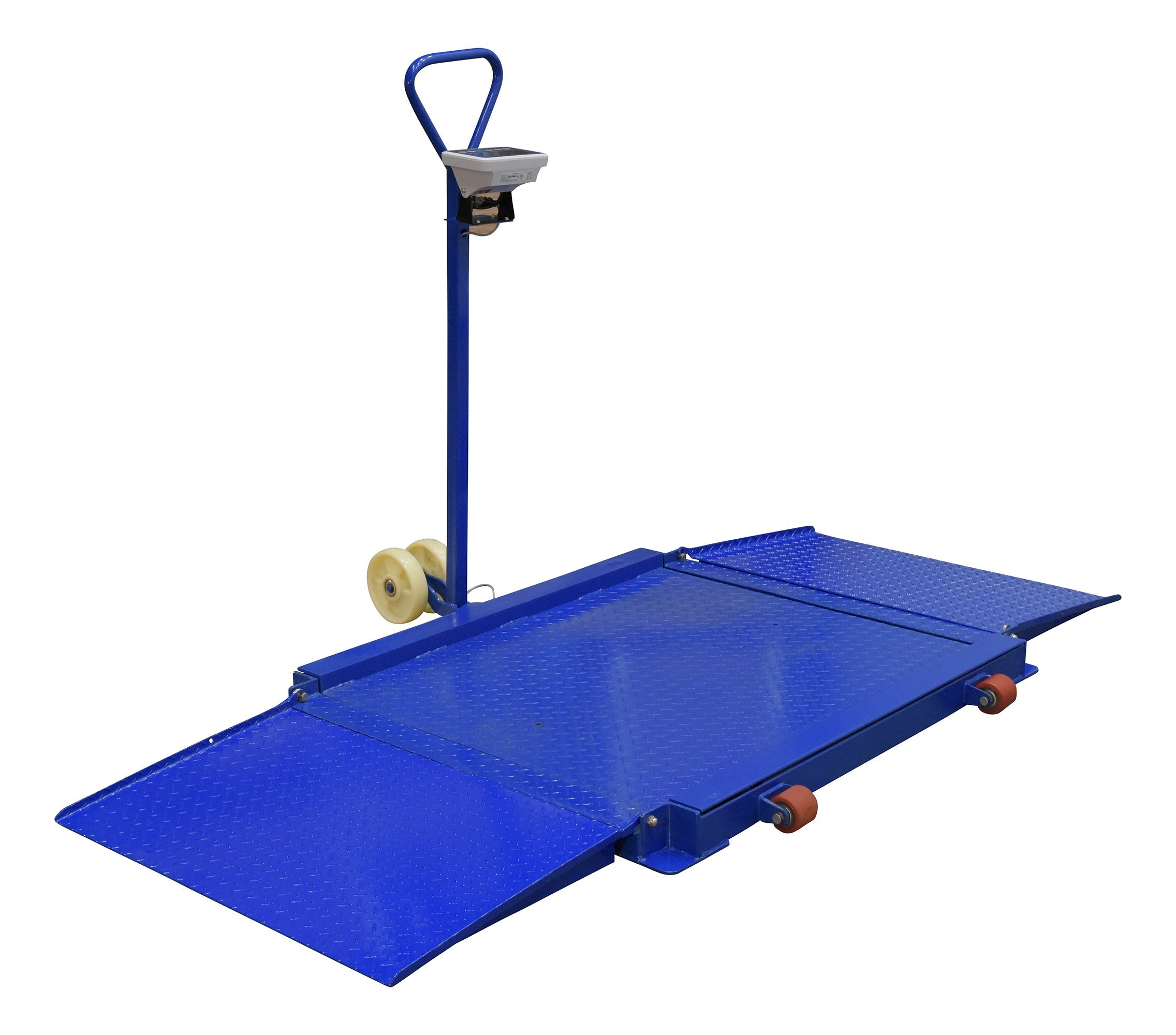
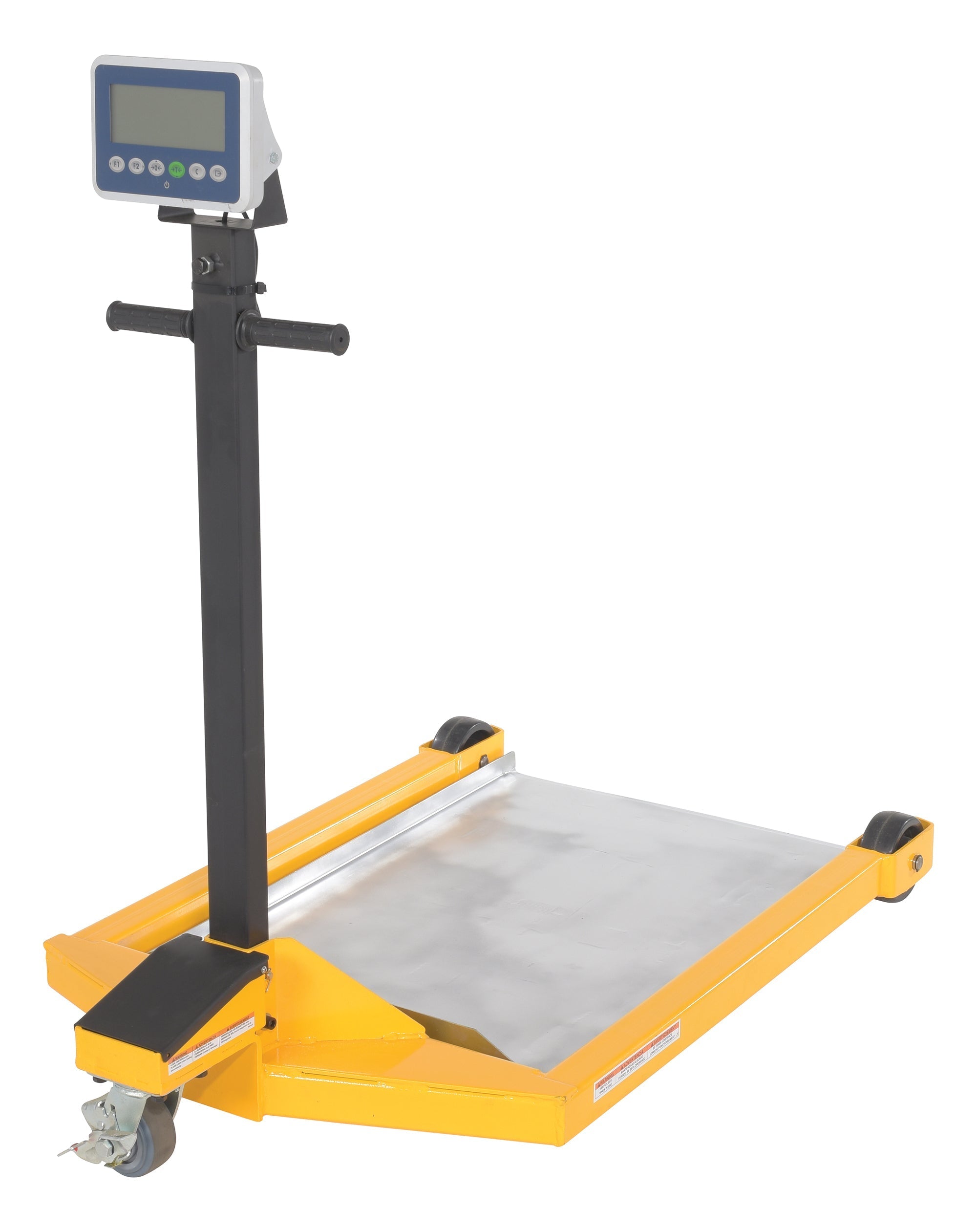
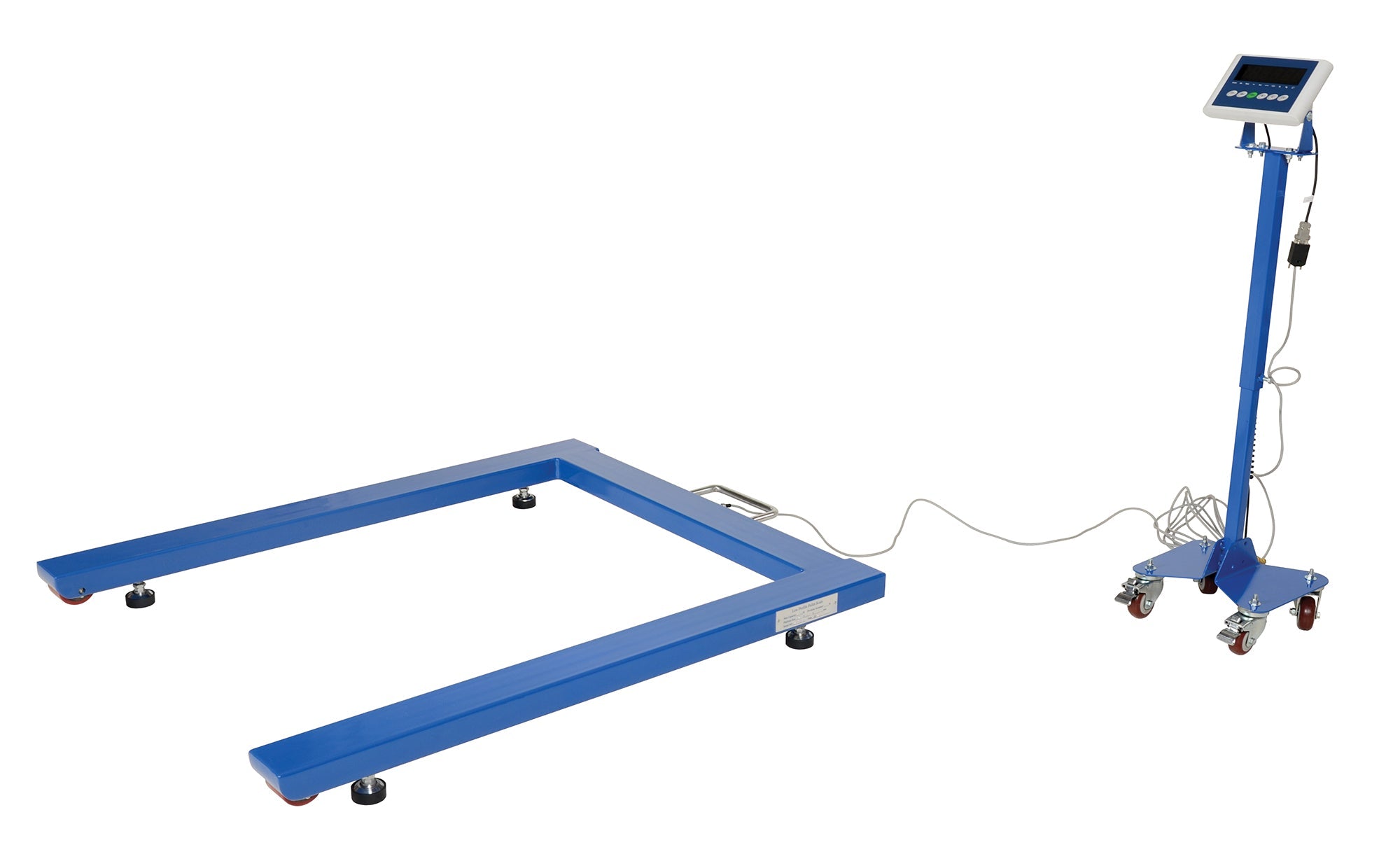
Getting the load on the deck. There are three ways a loaded pallet gets onto a scale, and the collection has a fit for each. A forklift can set a pallet straight down onto any flush low profile deck, no ramp needed. A pallet jack cannot climb a bare deck, so those decks take a ramp, and the integrated low profile scale and ramp package at about $5,384 ships the deck and the approach as one matched unit so nothing shifts underfoot. The third way skips lifting the pallet at all: the U-shaped platform scale near $1,260 is open on one side so a pallet truck rolls its forks into the U, sets the pallet down inside the scale, and weighs it where it stands. For operations that weigh at more than one point, the portable floor scales from about $2,931 in 78 by 60 and 98 by 71 inch decks, and the low profile portable bin scale near $2,528, move the weighing station to the load instead of routing every load past one fixed scale.
Legal for trade: NTEP and your state. Whether a scale has to be certified turns on one question: does the weight it shows set a price or settle a transaction. If you weigh only for your own records, load checks, or shipping estimates, any accurate scale will do. The moment the displayed weight becomes the basis of a financial transaction, buying or selling by weight, billing a customer, or paying by the pound, the law requires a scale certified under the National Type Evaluation Program, or NTEP, and the owner must have it placed in service and inspected by the state's weights and measures authority. NTEP certification fixes the scale's accuracy class and division so the reading holds up as a legal record. Confirm the specific model and configuration carries a current Certificate of Conformance for the capacity and division you need before you rely on it for trade; the certification attaches to the approved build, not to the category.
Calibration keeps it honest. A scale that has drifted out of calibration does not warn you; the display still shows a confident number that is simply wrong. Floor scales in receiving and shipping duty are generally recalibrated every 6 to 12 months, sooner if they take impact from dropped loads or live in a washdown or high traffic area. The payoff for keeping one honest shows up on the freight side. Carriers reweigh shipments, and a reweigh correction runs from roughly $25 to $150 per inspection on top of the recalculated, usually higher, freight charge, and LTL freight class itself is figured from density, weight over cubic feet. A calibrated pallet scale in the packaging line catches a wrong weight before the load leaves the dock, which is cheaper every time than arguing with a carrier's certified scale after the fact.
Frequently Asked Questions
A standard GMA pallet is 48 by 40 inches, so a 48 by 48 inch deck supports it fully with a margin on every side and is the safe default. The low profile floor scales here run from 36 by 36 up to 60 by 60 inches, so pick the smallest footprint that still lets the whole pallet sit on the weighing surface. A pallet foot hanging off the edge reads short and loads the deck unevenly.
Only if the weight sets a price or settles a transaction. Buying or selling by weight, billing a customer by the pound, or any financial transaction based on the reading requires an NTEP-certified scale, and the owner must have it placed in service by the state weights and measures authority. If you weigh for your own load checks, records, or shipping estimates, any accurate scale is fine.
The low profile floor scales start around $474 and the electronic digital floor scales around $730 for 5,000 and 10,000 lb capacities. A U-shaped platform scale that straddles a pallet truck's forks runs near $1,260, the low profile portable bin scale about $2,528, portable floor scales from about $2,931, and the integrated low profile scale and ramp package about $5,384. All are Vestil and run on 115V power, with freight and lead time confirmed at checkout.
Three ways. A forklift sets a pallet straight onto any flush low profile deck. A pallet jack needs a ramp, so pair a low profile deck with a ramp or buy the integrated scale and ramp package. Or use the U-shaped platform scale, which is open on one side so a pallet truck rolls its forks into the U and sets the load down inside the scale, weighing it without a separate lift.
Most floor scales in receiving and shipping are recalibrated every 6 to 12 months, and sooner if they take impact from dropped loads or sit in a washdown or high traffic area. A scale that has drifted out of calibration still shows a confident number, so a calibration schedule, plus legal-for-trade recertification where it applies, is the only way to trust the reading.