Confined Space Winch
A confined space winch is the hand-cranked machine that lowers a worker into a tank, manhole, or vault and raises them back out under full control, which is why its rating and its cable are the two numbers that decide the buy. The line here is the KStrong personnel and material rated series: bi-directional with a brake, wound with 60 to 100 ft of galvanized or stainless steel wire cable, and carrying a personnel rating near 310 lb for the combined weight of worker, tools, and clothing. Galvanized units cover most dry vertical entries; stainless is the pick for wastewater vaults and wash-down bays where corrosion eats a cable from the inside out. A REID manual goods winch rounds out the shelf for material-only lifts. Prices run from the high $800s for a 60 ft galvanized winch to a little over $1,100 for the 100 ft version with its mounting bracket. The sections below cover how to size a winch, how to mount it, and when to take it out of service.
Compare Confined Space Winches
| Model | Price | Capacity | |
|---|---|---|---|
| REID Lifting PLUSWINCH 1100lbs Manual Goods Winch | $1,503 | 880-1,100 lb | View → |
| KStrong® 100 ft. Galvanized Wire Cable Personnel / Material Rated Bi-directional Winch with Brake Feature and Mounting Bracket for Confined Spaces (ANSI) | $1,116 | 310 lb | View → |
| KStrong® 60 ft. Stainless Steel wire cable Personnel/Material rated bi-directional winch for confined spaces (ANSI) | $1,054 | 551 lb | View → |
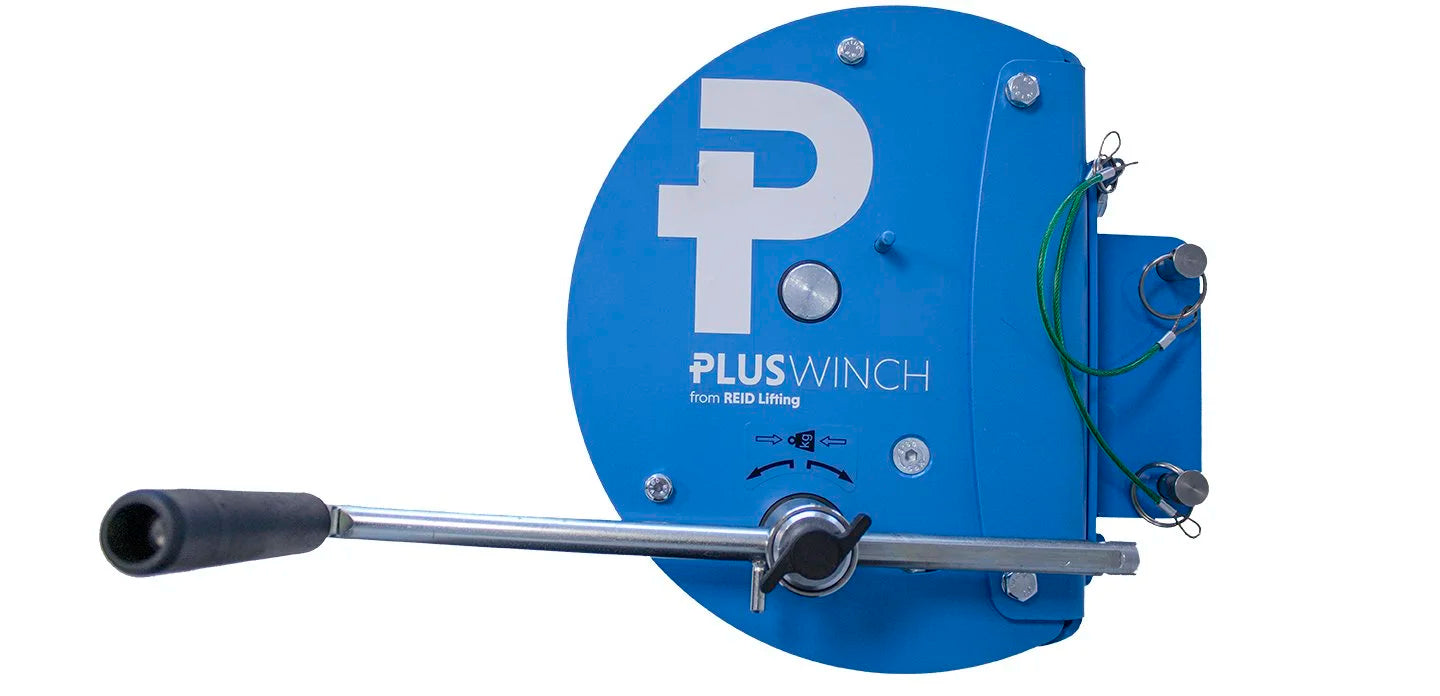 In Stock
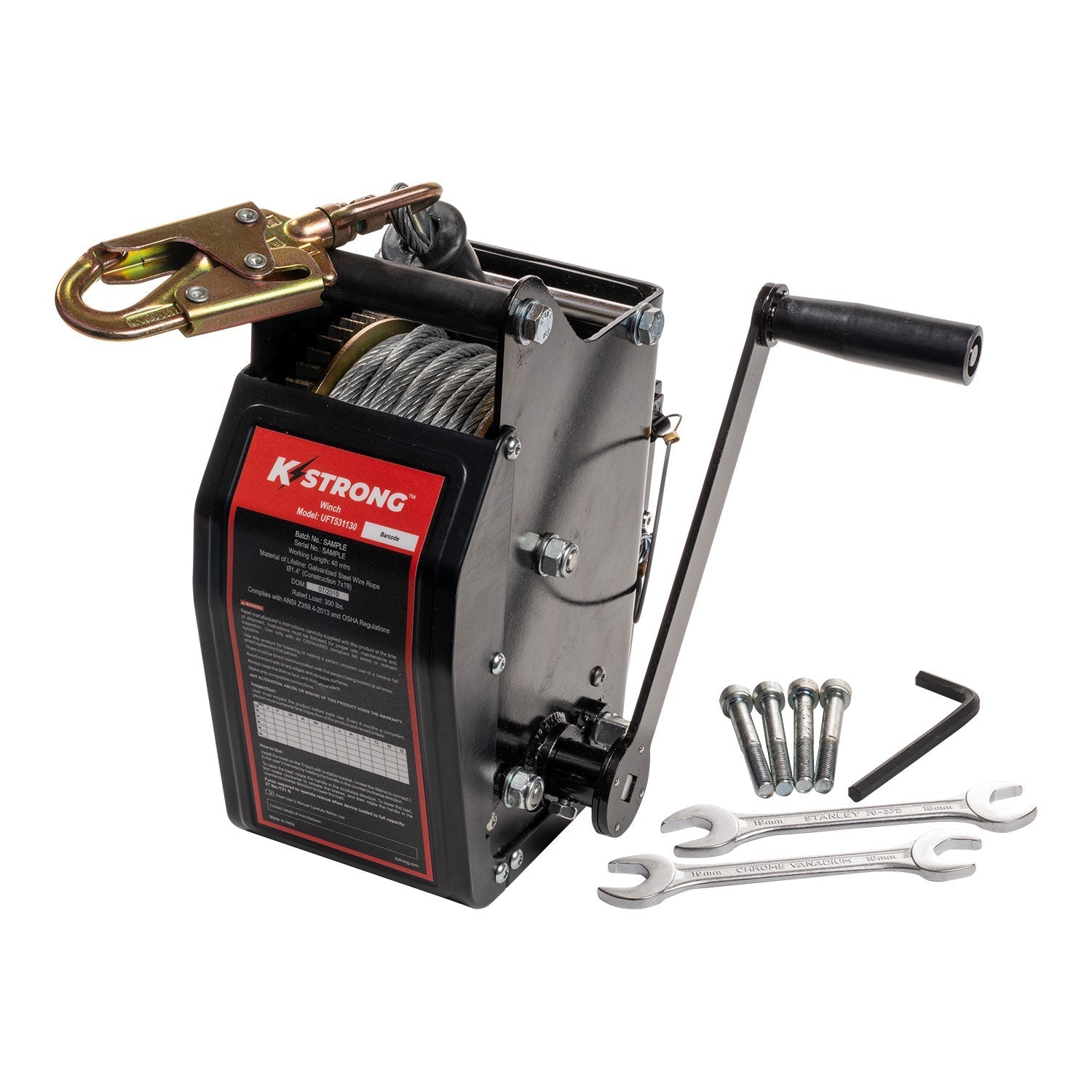 In Stock
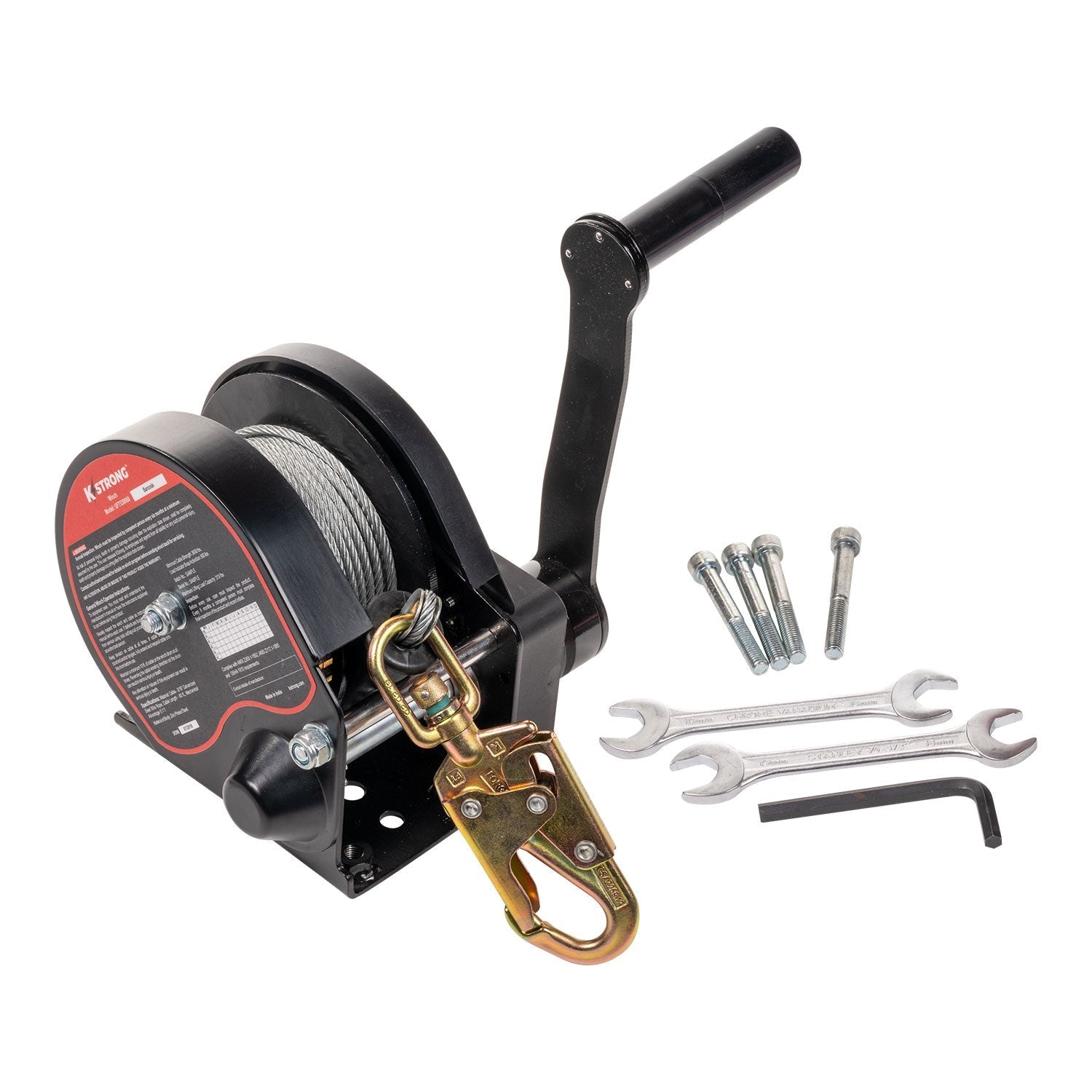 In Stock
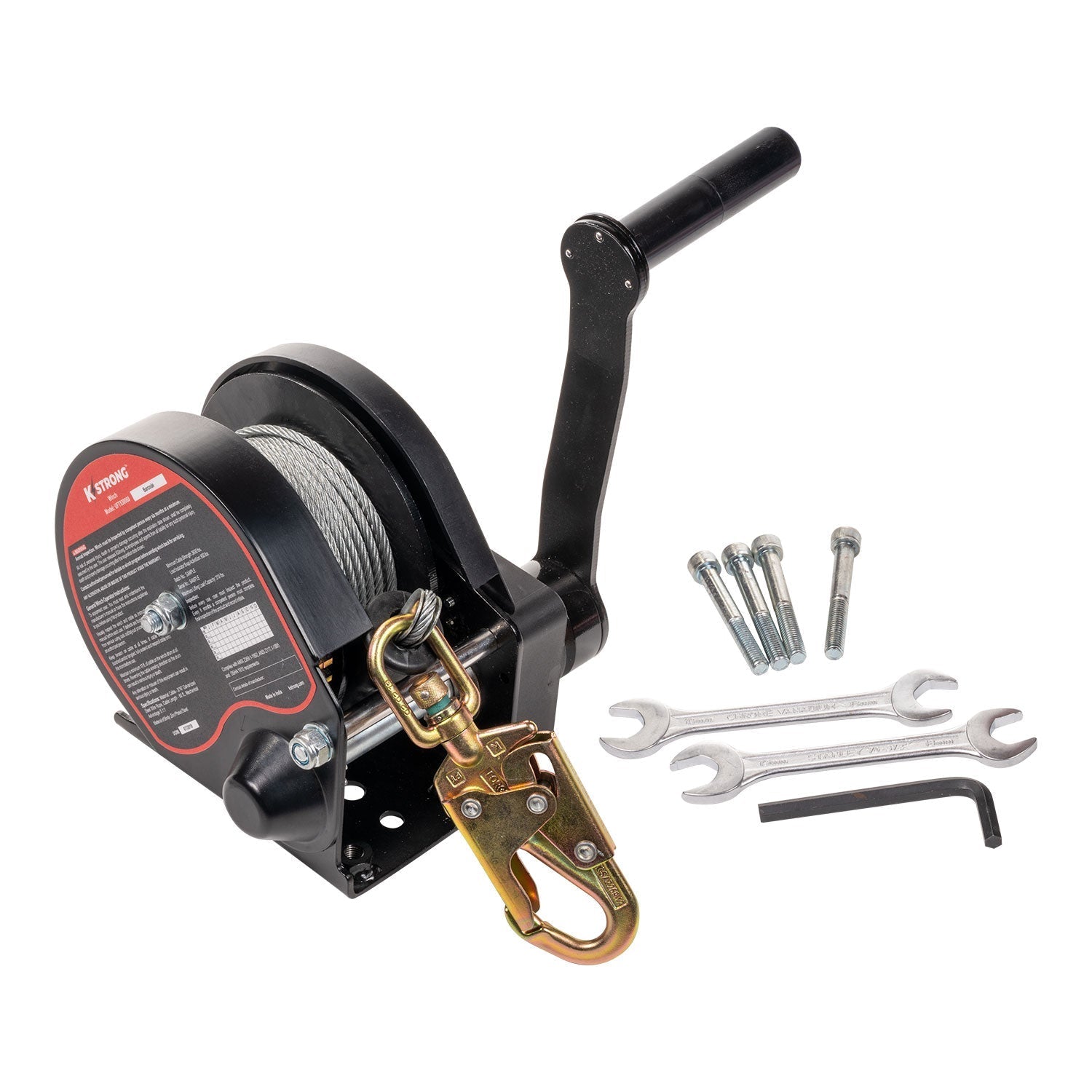 In Stock
Confined Space Winches Buying Guide
Personnel rating is the whole point, and a goods winch is not it. The single label that matters on a confined space winch is whether it is rated to carry a person. A personnel and material rated winch is built and tested to lift a live load, with the design factor and the fail-safe braking that a human on the hook demands; ANSI/ASSP Z359.4, the standard for assisted-rescue and self-rescue systems, is where those winch requirements live. Every KStrong winch here carries that personnel rating, near 310 lb combined weight of the entrant plus tools and clothing, and runs both directions so the attendant can lower a worker in and raise them out on command. The REID PLUSWINCH in the same lineup is a 1,100 lb manual goods winch for material only, and its higher number is exactly the trap: a bigger load rating is not a personnel rating, and a goods hoist must never carry a person. Read the label before the winch goes on a rescue rig, because the rating is the one thing you cannot judge by eye.
Match the cable length to the shaft, then leave margin on the drum. The cable has to reach the bottom of the space with wraps to spare, so size it to the deepest entry the winch will see. Measure the drop from the sheave at the head of the tripod or davit down to the floor of the space, not from grade, because the anchor sits several feet above the opening and that height counts against your reach. The 60 ft galvanized and stainless winches cover most manholes and shallow vaults; the 100 ft galvanized unit is the one for deep wet wells and process tanks. Whatever the depth, never pay the drum out to its last wraps, because the cable anchors to the drum core and the final turns are not rated to hold the load. A winch that just barely reaches a floor is a winch with no margin for a worker who has to be pulled up past an obstruction, so buy the length above your deepest hole rather than at it.
Galvanized or stainless: the atmosphere decides the cable. The wire rope is the part the environment attacks, and the two materials answer two different jobs. Galvanized steel cable is the general-duty choice for dry manholes, dry vaults, and confined entries where the air is clean, and it is the cheaper spool. Stainless steel cable earns its premium in wastewater lift stations, chemical vaults, wash-down bays, and any space where humidity, corrosive gas, or standing water would rust a galvanized line from the inside where you cannot inspect it. A corroded cable is a cable losing strength invisibly, which is the worst way for a rescue line to fail, so in a wet or classified space the stainless winch is not an upgrade, it is the correct spec. The stainless unit carries a personnel rating close to but slightly under the galvanized one, near 297 lb, so confirm the number against the heaviest entrant plus gear you will actually hang.
Bi-directional with a brake is what makes it a rescue tool. A utility winch that free-spools is useless and dangerous over a shaft, because a released handle drops the load. A confined space winch is built the opposite way: the gear train is self-locking, so the load holds wherever you stop cranking, and the brake lets the attendant feed a worker down at a controlled rate instead of letting gravity set the speed. Bi-directional means the same handle raises and lowers, which is what you need to place an entrant on a work level, hold them there, and recover them straight up if the monitor alarms. That controlled, hands-free hold is the feature that separates a man-rated winch from a boat or trailer winch that looks similar and costs a third as much. When you test the winch before an entry, you are testing exactly this: crank up, stop, and confirm the load stays put with the handle free.
The winch is only as good as what it bolts to. A winch does nothing hanging in the air; it has to fix to the anchor over the opening, and the bracket is where mismatched systems come apart. The 100 ft KStrong winch ships with its mounting bracket for this reason, and the tripods and davits that receive it live in the rescue and recovery kits collection, from Megapod tripods over round manholes to Megadavit arms that reach across an offset or oversized opening. The receivers and column mast fittings that tie a winch to a fixed davit base sit in confined space accessories. Buy the bracket that is tested with your winch and your anchor rather than the one that looks close, because the receiver is the cheapest part of the rig and the one nobody thinks about until a personnel-rated winch has nowhere to bolt on the morning of an entry.
Winch or SRL-R: know which one you are buying. A winch and a self-retracting lifeline with rescue solve overlapping but different problems. A winch is deliberate, controlled access: you crank a worker down into a vertical space and crank them back out. An SRL-R is a fall arrester first, locking within inches if the entrant slips, that also adds a means to raise or lower the fallen worker, and those units live in the rescue lifelines collection. Reach for the winch when the plan is to lower someone into the space on purpose; reach for a 3-way SRL-R when the entrant is climbing or working at a level and needs fall arrest plus recovery in one housing. Plenty of well-built entries carry both, the winch for access and the SRL-R for the fall the access plan did not schedule, and both share the same tripod or davit at the head of the opening.
Inspect before every use, and retire on the hard rule. A confined space winch inspects like the rest of your rigging, with the cable getting the closest look. Before every use, run the full length of the wire rope through a gloved hand and check for broken wires, kinks, birdcaging, corrosion, and flat spots, confirm the brake holds and the handle turns smoothly in both directions, and verify the cable seats properly on the drum. Beyond the pre-use check, a competent person performs a documented periodic inspection on the interval that service severity sets, tighter for daily or corrosive-environment use. The hard retirement rule matches all fall protection: a winch or cable that has arrested a shock load or shows a damaged, kinked, or corroded line comes out of service and does not go back until the manufacturer or a qualified person clears it. This gear is part of the wider fall protection equipment program, and the same inspection discipline carries across all of it.
Frequently Asked Questions
The KStrong personnel and material rated winches here carry a rating near 310 lb, which is the combined weight of the worker plus tools, clothing, and anything else on the hook, and that figure is set for lifting a person under ANSI/ASSP Z359.4. The stainless steel unit rates slightly lower, close to 297 lb. Confirm the number on the label against your heaviest entrant fully kitted out before an entry, and remember that a winch with a much larger load number, like the 1,100 lb REID goods winch, is rated for material, not for people.
Galvanized wire cable is the general-duty choice for dry manholes and vaults and is the more affordable spool. Choose stainless steel for wastewater lift stations, chemical vaults, wash-down bays, and any wet or corrosive space, because a galvanized cable rusts from the inside where you cannot see the strength loss, and a corroded rescue line is the worst kind of failure. In a wet or classified environment the stainless winch is the correct specification rather than an optional upgrade.
The KStrong line runs 60 ft and 100 ft cable lengths, so pick the length above the deepest entry the winch will see. Measure the drop from the sheave at the head of the tripod or davit down to the floor of the space, not from ground level, since the anchor sits several feet above the opening and that height eats into your reach. Always keep spare wraps on the drum, because the last turns of cable anchor to the core and are not rated to hold the load.
These winches are bi-directional, so the same handle both lowers and raises. The gear train is self-locking and the winch has a brake, which means the load holds wherever you stop cranking and the attendant can feed a worker down at a controlled rate rather than letting gravity set the speed. That controlled, hands-free hold is the feature that separates a man-rated confined space winch from a utility winch that free-spools when the handle is released.
No. The REID PLUSWINCH is a 1,100 lb manual goods winch for material only and must never carry a person, despite its higher load number. A bigger capacity figure is not a personnel rating; only the KStrong personnel and material rated winches in this collection are built and tested to lift a live load. Always confirm the personnel rating on the label before a winch goes on any rig that will lower or raise a worker.