The most important winch safety rule
If you take one thing from any winch guide, take this: a winch made for pulling is not automatically safe for lifting. It's a common and dangerous assumption that a winch rated to pull a heavy load horizontally can be turned to lift the same load overhead. It can't, not safely, because pulling and lifting impose different demands and pulling winches are built to a lower standard. Overhead lifting requires equipment specifically engineered and rated for it. Understanding why this is true, and respecting it, prevents one of the most serious mistakes in rigging: dropping a load because the wrong tool was used to lift it. Use a lifting-rated winch or a hoist overhead.
Why pulling and lifting are different
The core difference is the nature of the load. In horizontal pulling, gravity works across the load and friction shares the effort, and if the winch stops, the load largely stays put. In overhead lifting, gravity pulls the full load straight down constantly, and if anything lets go, the load falls immediately and completely. Lifting therefore demands a much higher margin of safety and a fail-safe way to hold the load at any height, exactly the demands that overhead lifting standards impose and that pulling winches are not built to meet. The physics of a suspended load is unforgiving, which is why the equipment must be rated for it.
The safety factor difference
Equipment is designed with a safety factor, the ratio of its breaking strength to its rated load. Pulling winches are commonly built to a lower design factor, often around 3 to 1, which is adequate for dragging loads horizontally. Overhead lifting equipment is held to higher factors precisely because a suspended load is so much less forgiving of any weakness, wear, or shock. So a pulling winch and a lifting device rated for the same load are not equivalent, the lifting device has far more margin built in. Rating a lift by a pulling winch's number ignores this gap and can leave the actual lift dangerously under-protected.
The load-holding brake
The single most critical missing piece on many pulling winches is a proper load-holding brake. Overhead lifting equipment, hoists and lifting-rated winches, must have a redundant, automatic brake that holds the load if power is lost, if the operator lets go, or if a component fails, so the load can never free-fall. Many pulling winches lack this; they may rely on the motor or a simpler brake that isn't rated to hold a suspended load reliably. Without an automatic load-holding brake, a lifted load can drop the instant something goes wrong. This alone disqualifies a standard pulling winch from overhead lifting, no matter its pull rating.
What to use for overhead lifting
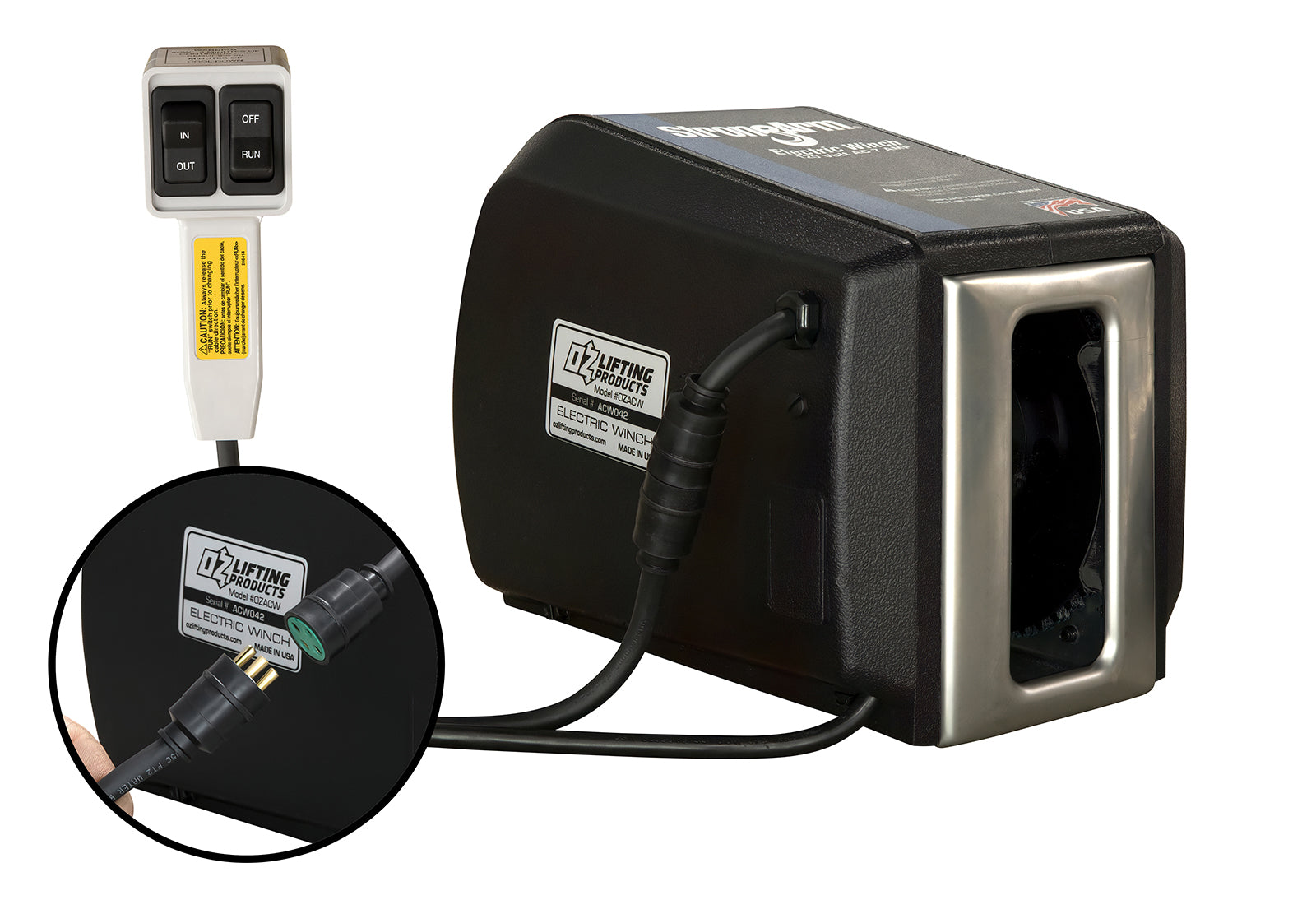
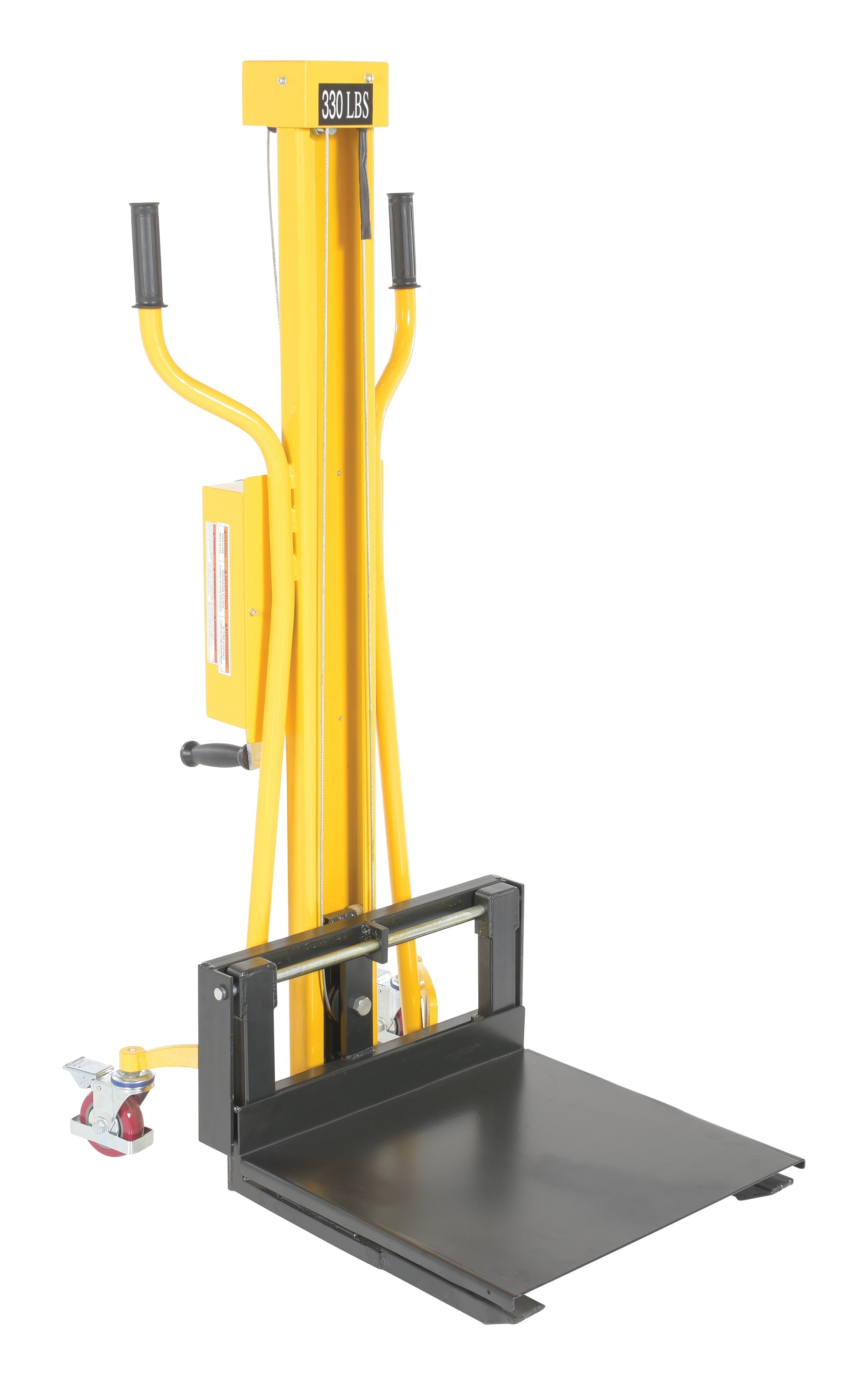
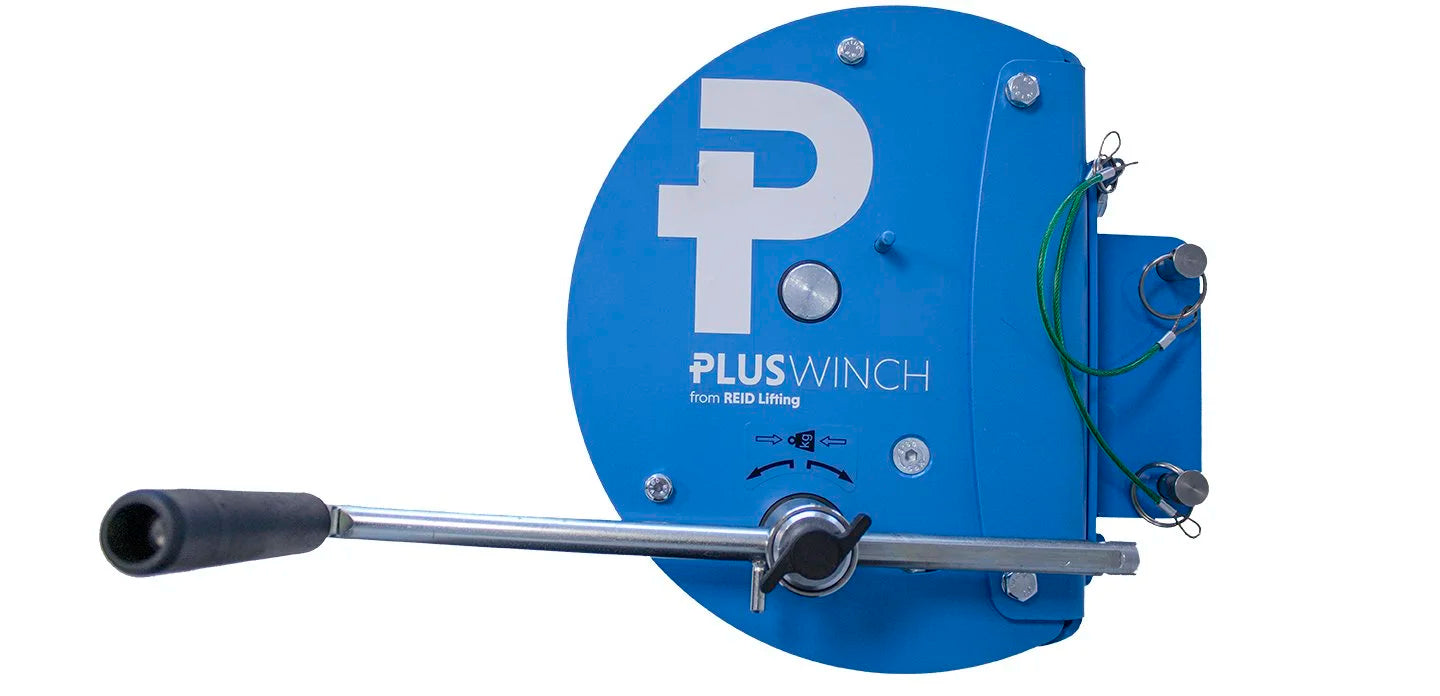
For any vertical or overhead lift, use equipment specifically rated and labeled for lifting. The clearest choice is a hoist, purpose-built for overhead lifting with a load-holding brake and a high design factor. If a winch is genuinely needed, for example on a davit crane, it must be a lifting-rated (and, for personnel, man-rated) winch with the proper brake and design factor, like our Vestil hand winch lifter or REID goods winch. Look for explicit lifting rating on the equipment. If it's rated only for pulling, or says nothing about lifting, do not use it to raise a load overhead.
Read the rating and the warnings
Manufacturers state the intended use, and you must read it. Many pulling winches carry explicit warnings that they are not to be used for lifting or supporting people, and lifting-rated equipment states its lifting capacity and standard. Don't assume; check the label, the manual, and the rated capacity for the specific application. A winch's pulling rating tells you nothing about its lifting suitability. If the equipment isn't clearly rated for lifting, treat it as pulling-only. Taking thirty seconds to confirm the rating is trivial against the consequence of a dropped load, which can be fatal.
Never lift people with the wrong equipment
The stakes rise further with personnel. Raising or lowering people, in confined-space entry, rescue, or work positioning, requires man-rated equipment with additional safety systems and certifications well beyond even general lifting gear. Never lift a person with a material-rated winch or hoist, let alone a pulling winch. Personnel lifting is a specialized application with its own strict standards. If your task involves people, use only equipment explicitly rated and equipped for man-riding, and follow the applicable rules. This is the most consequential place the pulling-versus-lifting distinction, and the broader rated-use principle, absolutely cannot be compromised.
The bottom line
A pulling winch is not a lifting winch: it's built to a lower safety factor and often lacks the automatic load-holding brake that overhead lifting demands, so using one to lift a load overhead risks a sudden, complete fall. For any vertical lift, use a hoist or a winch specifically rated for lifting, and for personnel, only man-rated equipment. Always read the rating and heed the warnings, a winch's pull number says nothing about its lifting suitability. When in doubt, don't lift with it. See our what is a winch and how to choose a winch guides.
Common scenarios where this goes wrong
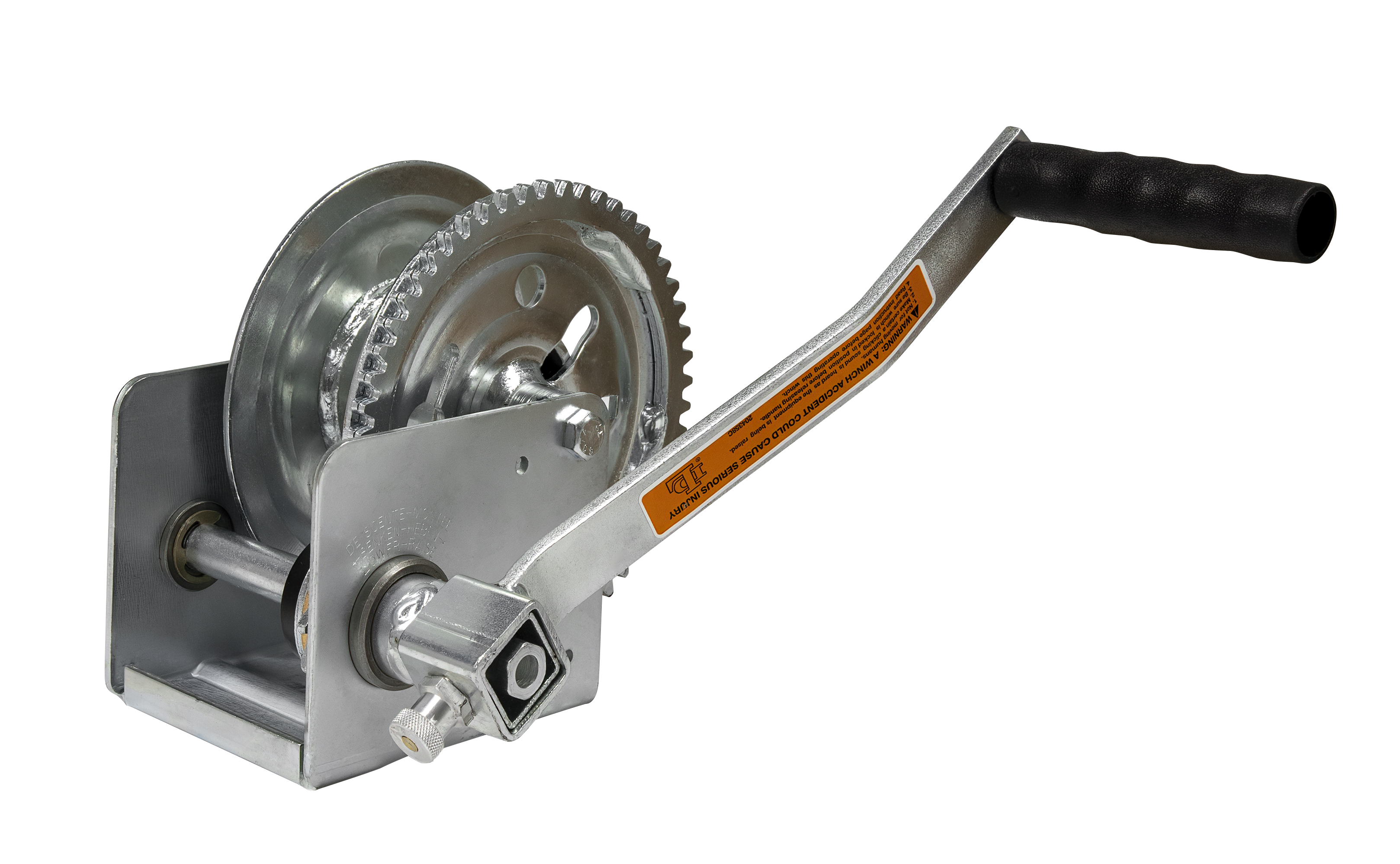
The mistake usually happens in improvised setups: someone needs to lift a load, has a pulling winch handy (a recovery winch, a trailer winch, a general-purpose puller), and rigs it overhead because it's rated for the weight. On paper the numbers work; in reality the winch may lack the load-holding brake and margin to hold a suspended load safely. The fix is simple, use a hoist or a lifting-rated winch instead, but it requires having the right tool rather than pressing the wrong one into service. Plan lifting tasks with lifting-rated equipment; don't improvise with a pulling winch just because it's there.