Dock Bumpers
Dock bumpers are the cheapest protection on a loading dock and the piece most often ignored until the wall behind it cracks. A loaded trailer weighing 40 tons backs into the dock face every time it docks, and the bumper is the sacrificial rubber that absorbs that hit so the concrete, the door frame, and the dock leveler behind it survive. This collection is all Vestil, in the styles a working dock actually specifies: laminated bumpers built from recycled truck tire rubber for medium and heavy traffic, one-piece molded bumpers for lighter duty, extruded rubber sold by the length to cut and fit your dock face, plus rounded dome bumpers and small trailer and crane bumpers for equipment and rail protection. Prices run from around $11 for a short extruded section up to a few hundred dollars for a large laminated unit. The guide below sorts the styles by how hard your dock works and how you bolt them on.
Compare Dock Bumpers
| Model | Price | Material | |
|---|---|---|---|
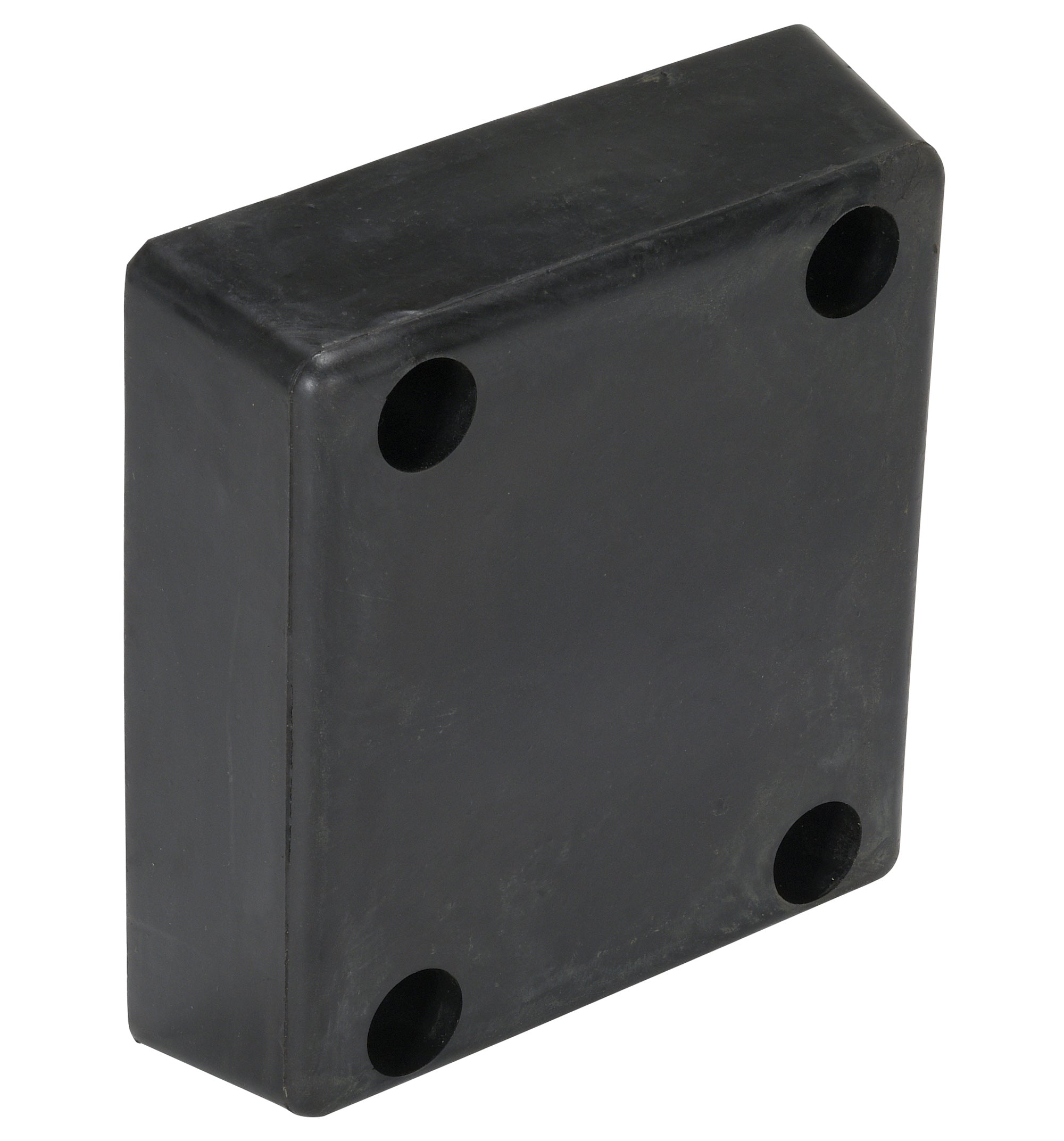
| Vestil Specialty Molded Dock Bumpers | $63 | Fiber-reinforced prime rubber w/ nylon and polyester | View → |
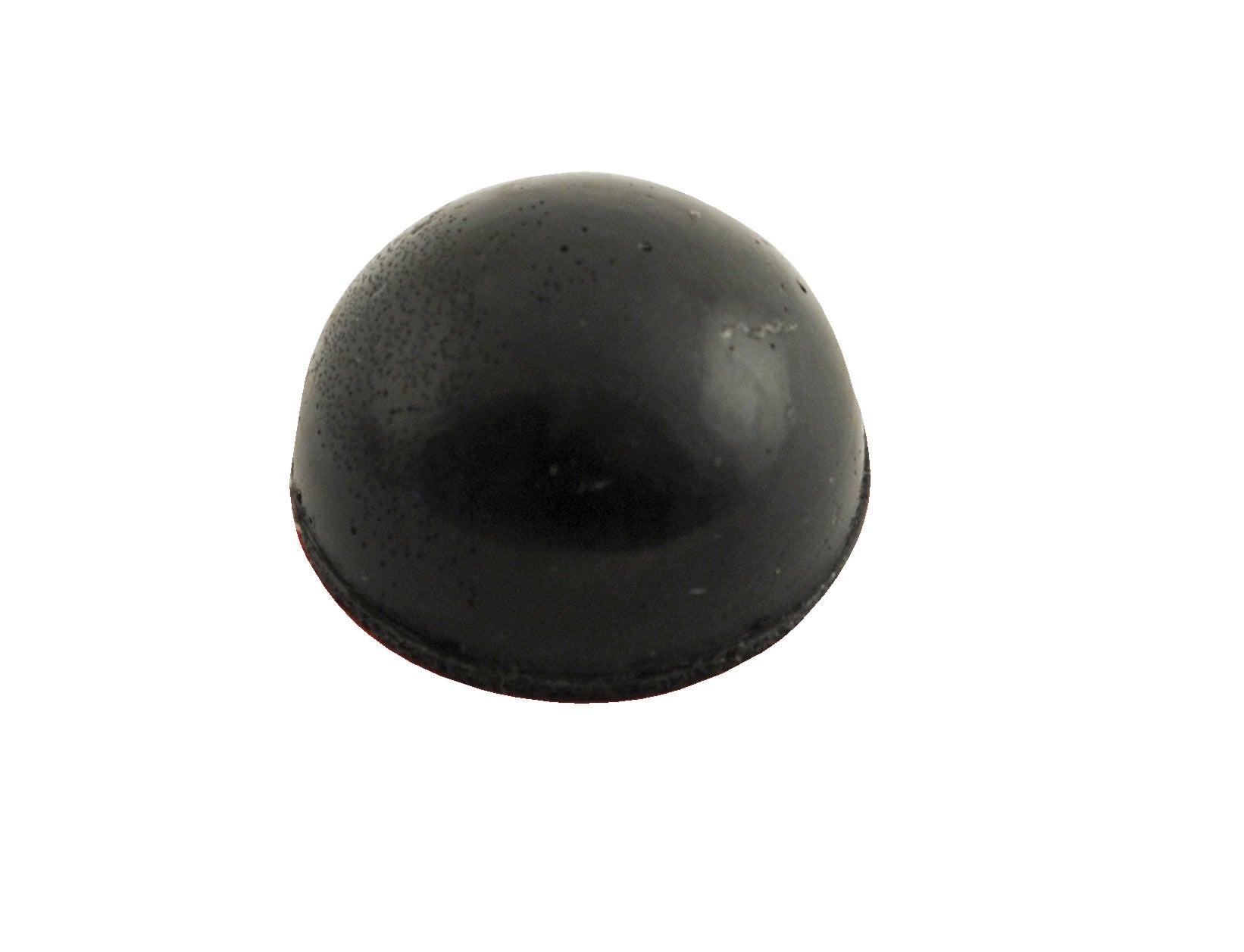
| Vestil Rounded Dome Bumpers | $43 | Non-marking polyurethane rubber, adhesive-backed peel & stick | View → |
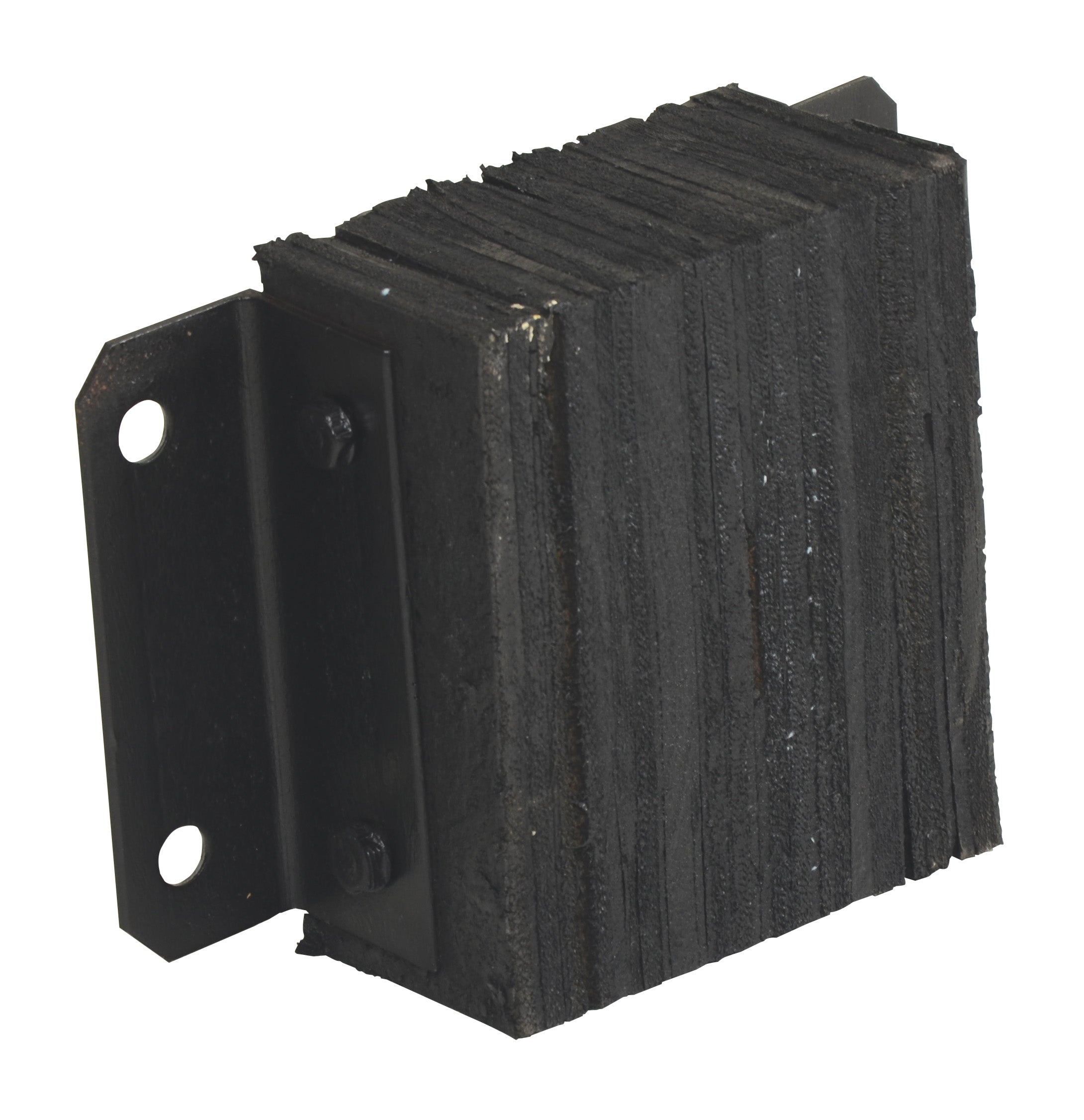
| Vestil Laminated Dock Bumpers | $42 | Laminated fiber-reinforced rubber | View → |
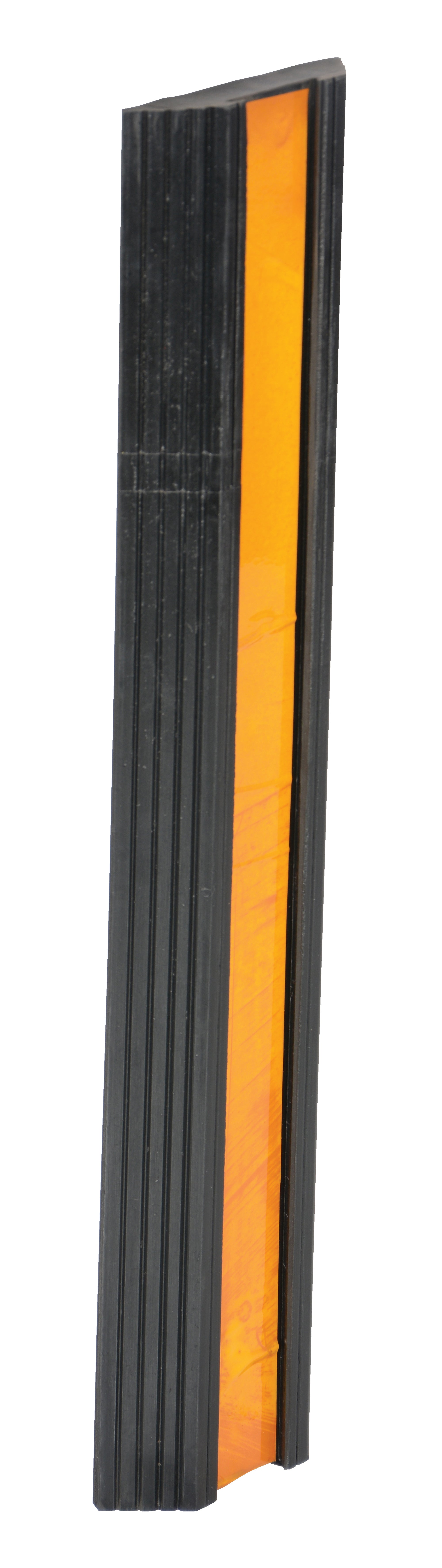
| Vestil Extruded Bumper Stops | $34 | — | View → |
| Vestil Hardened Molded Bumpers | $27 | — | View → |
| Vestil Trailer Crane Bumpers | $23 | Fiber-reinforced prime rubber w/ nylon | View → |
 In Stock
 In Stock
 In Stock
 In Stock
 In Stock
 In Stock
 In Stock
Dock Bumpers Buying Guide
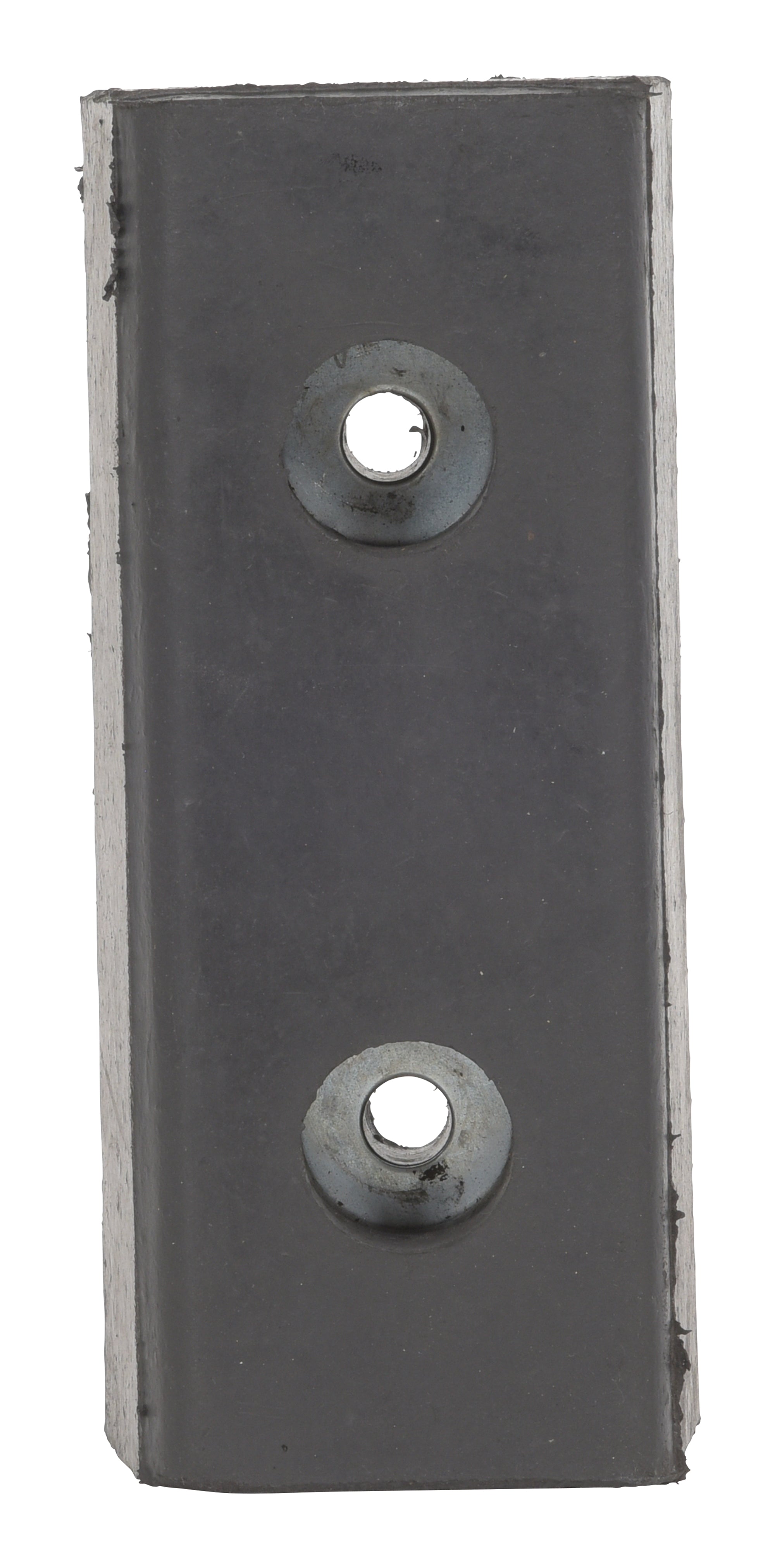
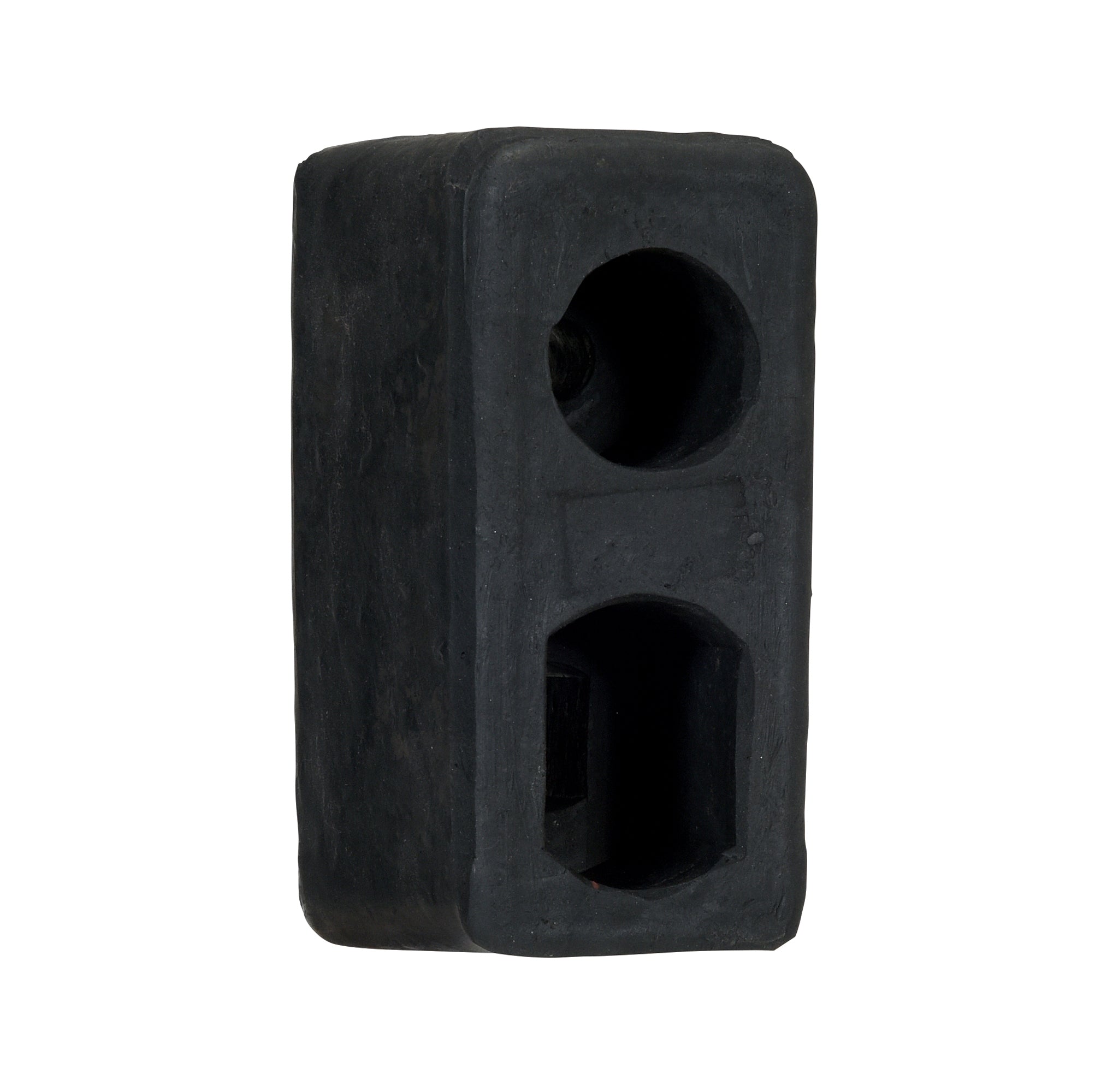
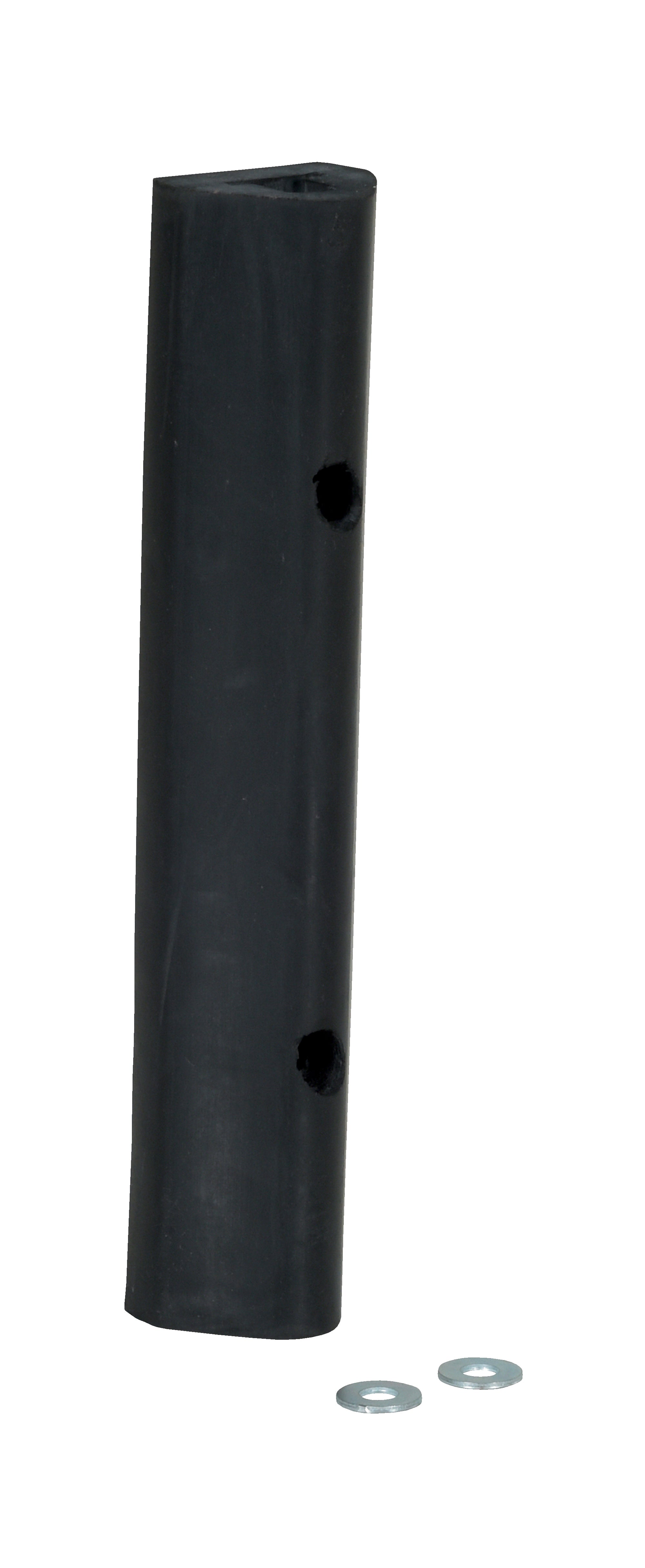
Laminated, molded, or extruded: match the style to the traffic. The three main constructions answer three levels of abuse. A laminated bumper is built from fabric-reinforced pads cut from recycled truck tires, stacked and clamped between structural steel angles on steel tie rods, and that layered rubber absorbs roughly 80 percent of a truck's impact. It is the standard choice for warehouses and distribution centers running medium to heavy traffic, and Vestil's laminated units span 12 to 96 inches wide with prices from about $42 to $451 depending on size. A molded bumper is a single solid piece of rubber compound, quieter to buy and lighter duty; the Vestil hardened molded line runs 10 to 30 inches and $27 to about $99, and suits light to medium traffic where a full laminated stack is overkill. Extruded bumpers are continuous rubber profiles you cut to length, from about $11, for odd runs, door edges, and corners where a fixed block will not fit.
Get the projection right, and mind the driveway grade. Projection is the depth the bumper stands off the wall, and it sets the gap between the trailer and the building. A 4 inch projection is the industry standard for a level approach and covers most docks; the Vestil extruded line offers 2, 4, and 6 inch projections, and laminated units commonly come in 4.5 and 6 inch depths. The grade of your approach changes the math. When a trailer noses downhill into the dock, a declined approach, the trailer bed rides closer to the wall and the impact point drops, so extra projection or a taller bumper is worth speccing to hold the standoff. An inclined approach, where the trailer backs uphill, is usually covered fine by a standard 4 inch bumper. Measure your worst trailer at your actual grade before you settle on a depth, because a bumper that is too shallow lets the trailer body reach the wall.
Mounting height and hardware: the 1 to 2 inch drop. A dock bumper only works if the trailer's rub rail or bed actually contacts it, so mounting height is not a detail to eyeball. Set the bumper so its face covers the range where trailer beds strike, and a common practice is to install the bumper 1 to 2 inches below dock level so the trailer bed slides down onto it rather than riding over the top. Fasten with lag bolts or sleeve anchors sized for the load, typically 3/4 or 5/8 inch hardware set deep into sound concrete; a bumper that shears its anchors on the first hard dock protects nothing. Laminated units ship with mounting angles drilled for bolting horizontal or vertical, which lets you orient the steel plies to face the impact. Check that the wall behind the bumper is solid concrete, not a hollow block face that will spall out around the anchors.
Rounded dome bumpers and the small stuff. Not every impact on a dock is a 40 ton trailer. Rounded dome bumpers are small half-round rubber buttons, sold by dome diameter from 3/4 inch up to 2-1/2 inch and priced from about $43, that protect doors, columns, equipment corners, and walls from the low-speed knocks of carts, jacks, and swinging hardware. They mount fast and cushion the strike without the mass of a dock bumper. Vestil's specialty molded bumpers cover the in-between cases with rectangle, L, and T profiles, from about $27, for guarding an inside corner or a projecting steel edge where a straight bumper leaves a gap. Think of these as the trim work of dock protection: once the main dock face is bumpered, they close off the secondary strike points, the door jambs and machine corners, that take steady damage no one budgets for until the repair bill lands.
Trailer and crane bumpers: protecting the machine, not the building. The Vestil trailer and crane bumpers are a different job from a dock-face bumper. These are compact rubber blocks, in rectangle and semicircle shapes around 6 by 3 inches, from about $23, that mount on the equipment itself to cushion the point where a moving machine meets a stop. On an overhead or gantry crane they sit at the end of the bridge or trolley travel to soften contact with the end stop, which is a requirement worth checking against your crane's ASME B30 inspection routine. On trailers and yard equipment they protect the frame at contact points. Because they bolt to a machine rather than a wall, size them to the striking face and the closing speed, and confirm the block is rated for repeated impact rather than a one-time bump. They are cheap insurance against denting a machine that costs orders of magnitude more.
Sizing, replacement, and what a worn bumper costs. Two numbers size a dock bumper: the width you need to cover along the dock face, and the projection your grade demands. Cover enough face that the trailer strikes rubber wherever it lands, use multiple units side by side on a wide door, and stack or choose a tall enough profile that both loaded and empty trailer heights make contact. Then treat replacement as scheduled maintenance, not an emergency. Rubber that has gone hard, cracked, or worn down below its original projection has stopped absorbing impact and is passing the load straight into the wall, so inspect bumpers on the same rounds you check the dock leveler and replace them before they are crushed flat. A bumper that fails quietly lets a trailer damage the leveler lip, the door track, and the dock seals and shelters above it, and every one of those repairs costs many times the price of the rubber that was supposed to prevent it.
Frequently Asked Questions
Most heavy-duty dock bumpers are laminated: pads of fabric-reinforced rubber cut from recycled truck tires, stacked and clamped between structural steel angles on steel tie rods. That layered construction absorbs roughly 80 percent of a truck's impact and holds up to years of medium and heavy traffic. Molded bumpers are a single solid piece of rubber compound, better suited to light and medium duty, while extruded bumpers are continuous rubber profiles cut to length. All three resist warping and rust because they are rubber, not steel.
Start with projection. A 4 inch projection is the industry standard for a level approach, and 6 inch is common where you need more standoff. If trailers back downhill into your dock, a declined approach, add projection or a taller bumper because the trailer rides closer to the wall. Then size the width to cover the dock face where trailers strike, using multiple units on a wide door, and pick a height that both loaded and empty trailers will contact. Measure your worst trailer at your actual grade before ordering.
Buy laminated for a busy dock. The steel-and-rubber stack takes repeated hits from a 40 ton trailer and is the standard for warehouses and distribution centers. Buy molded for light to medium traffic where a full laminated bumper is more than the dock needs; a one-piece molded bumper costs less up front and still protects the wall from cargo and low-speed knocks. If the dock cycles trailers all day, the laminated unit pays for itself by lasting longer before it is crushed flat.
Mount the bumper so its face covers the range where trailer beds and rub rails actually strike. A common practice is to set it 1 to 2 inches below dock level so the trailer bed slides down onto the rubber instead of riding over the top of it. Anchor into solid concrete with lag bolts or sleeve anchors sized for the impact, typically 3/4 or 5/8 inch hardware set deep, and confirm the wall behind is not a hollow block face that will spall around the bolts.
Replace a bumper once the rubber has gone hard, cracked, torn, or worn down below its original projection. At that point it is no longer absorbing impact and is passing the load straight into the wall, the leveler, and the door track behind it. Inspect bumpers on the same rounds you check the rest of the dock, and replace them before they are crushed flat. A worn bumper that fails quietly leads to repairs on equipment that cost many times the price of new rubber.