Dock Plates & Dock Boards
Dock plates and dock boards are the portable bridges that close the gap between your loading dock and a trailer bed, set by hand for the truck in front of you and pulled back out when it pulls away. Every unit here is Vestil, and the line splits cleanly by what crosses the bridge. Dock plates are the lighter, flatter pieces for hand trucks, pallet dollies, and foot traffic, starting around $144 for a mini plate. Dock boards are heavier, carry raised side curbs, and take powered equipment, with steel models rated past 20,000 lb. Material matters as much as capacity: aluminum for the weight you have to lift and reposition, steel for the harshest daily service, and fiberglass where a spark is a hazard. This page sorts plates from boards, sizes capacity to the equipment that actually crosses, and walks the OSHA rules that govern the crossing under 29 CFR 1910.26. Get the plate-or-board call right and everything else follows from it.
Compare Dockplates & Dockboards
| Model | Price | Capacity | Overall Length | Overall Width | |
|---|---|---|---|---|---|
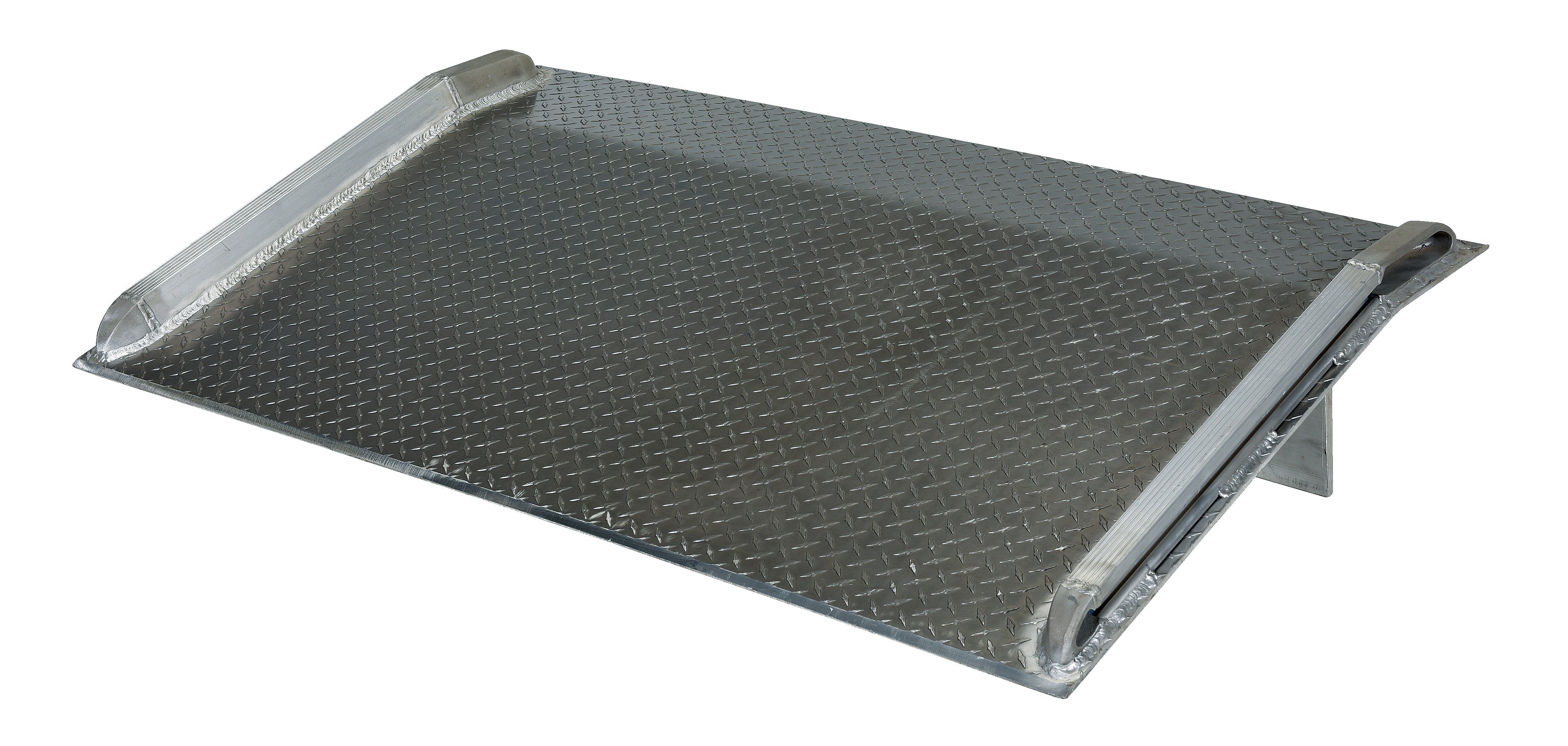
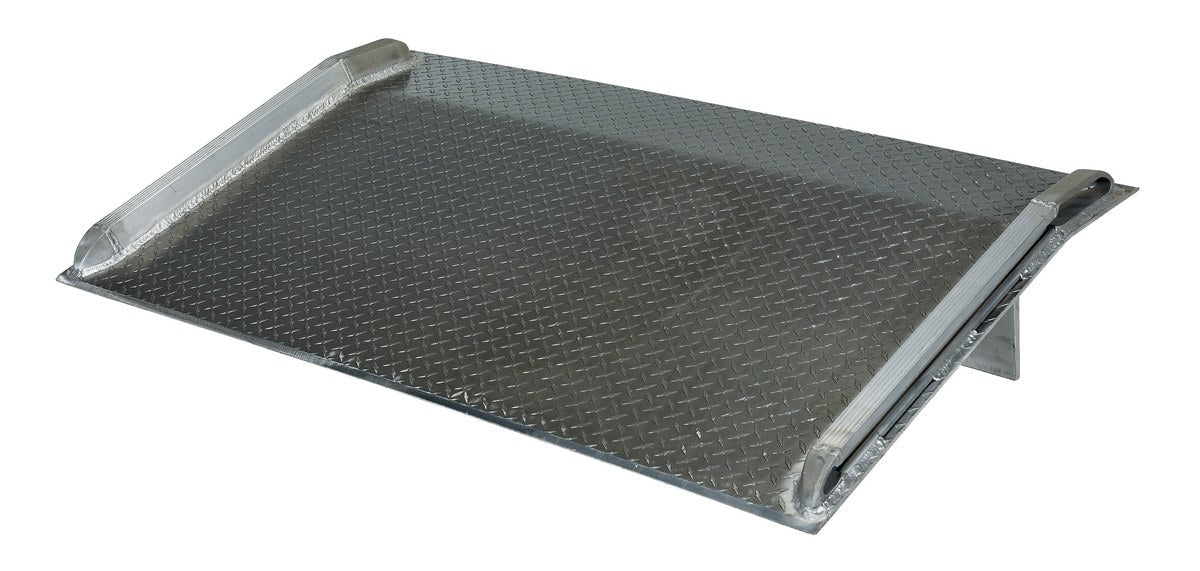
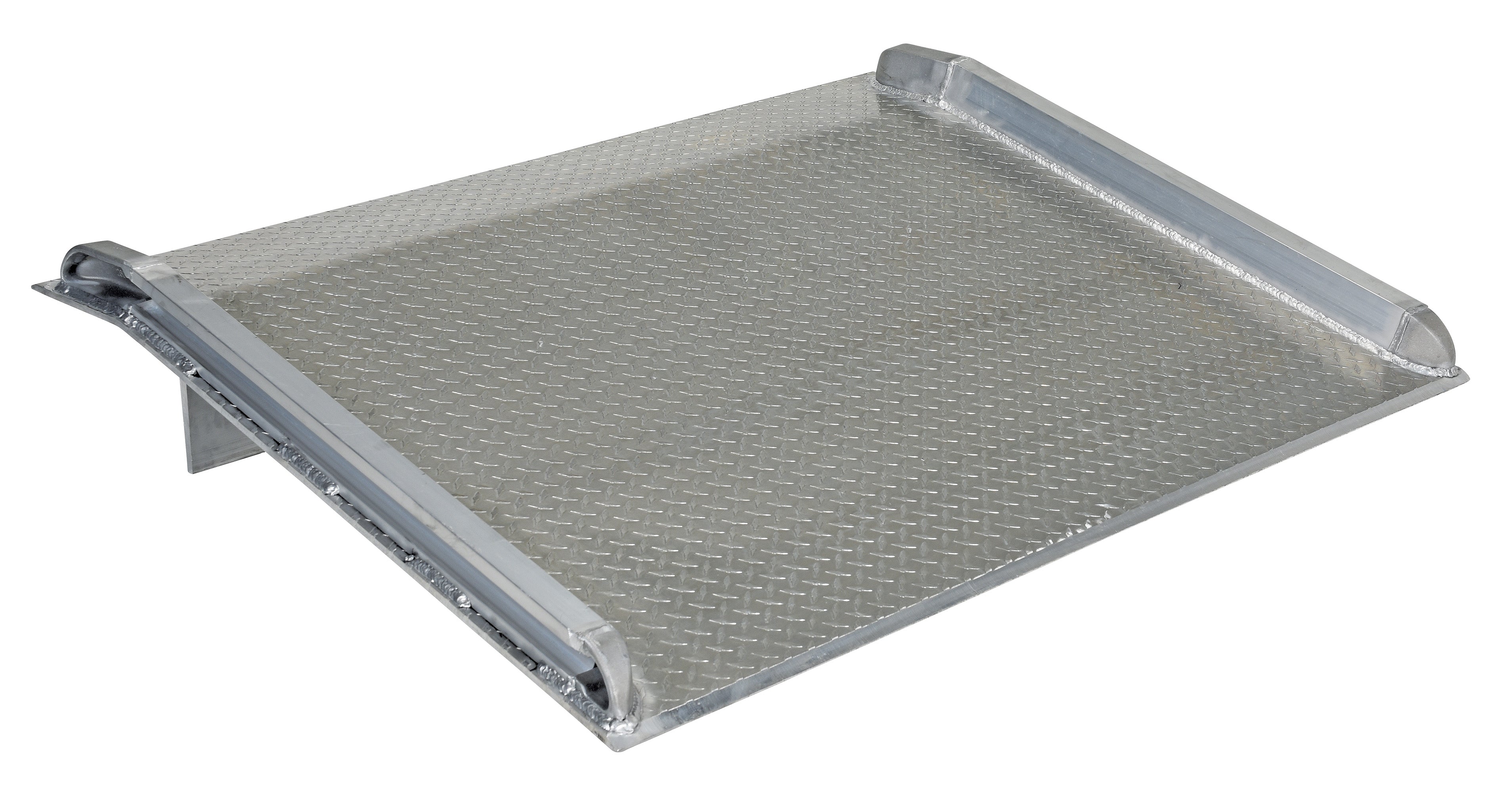
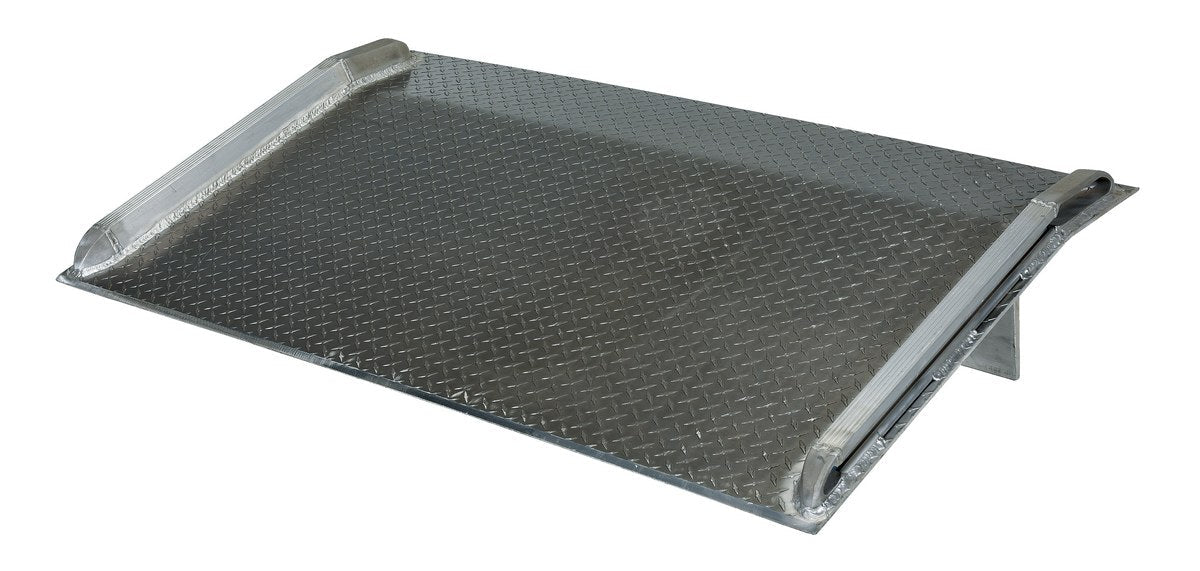
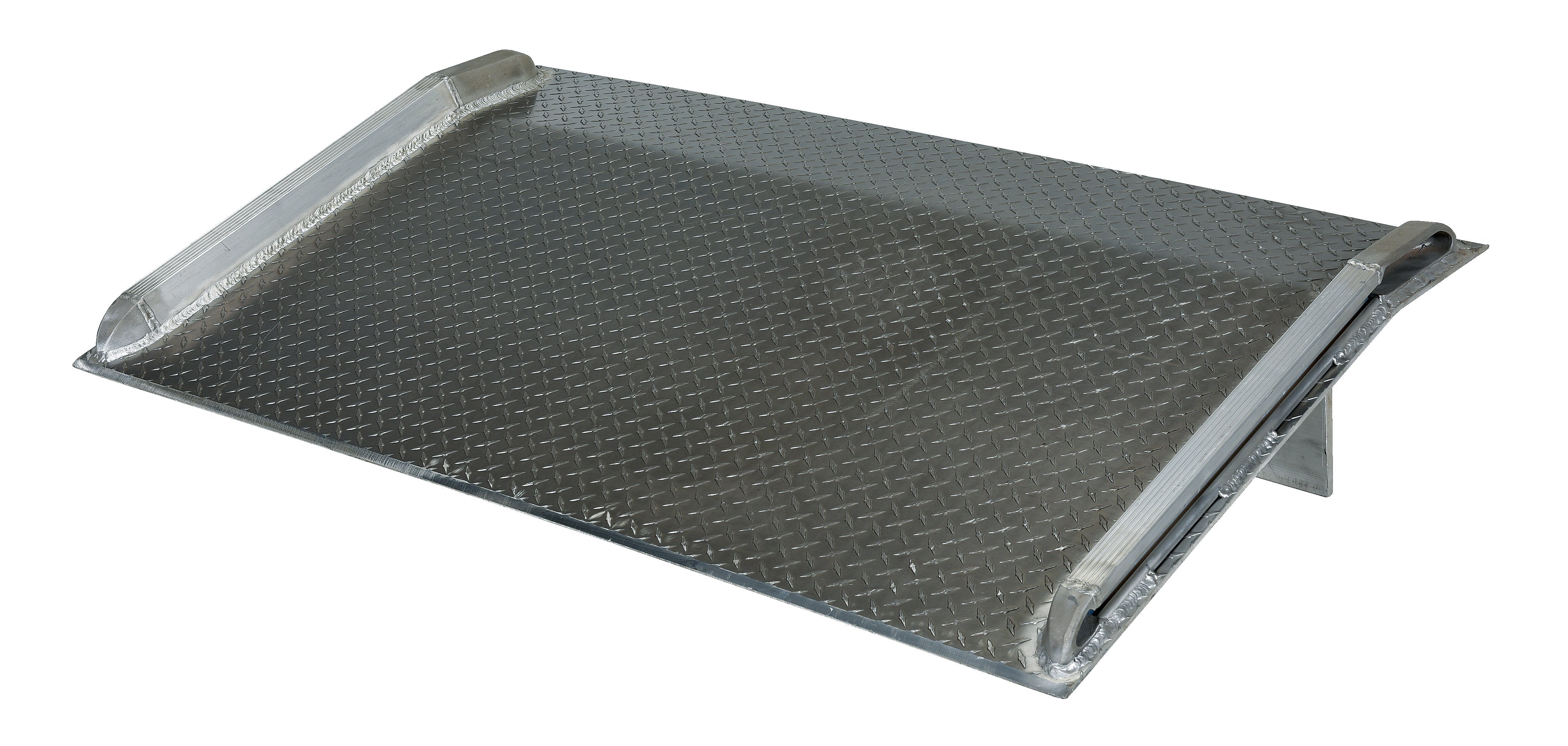
| Vestil Aluminum Truck Dockboards (Welded Aluminum Curbs) 9000lbs-10000lbs | $1,370 | 9,000-10,000 lb | 30-78 in | 54-84 in | View → |
| Vestil Aluminum Truck Dockboards (Welded Aluminum Curbs) 11000lbs-12000lbs | $1,112 | 11,000-12,000 lb | 30-78 in | 60-84 in | View → |
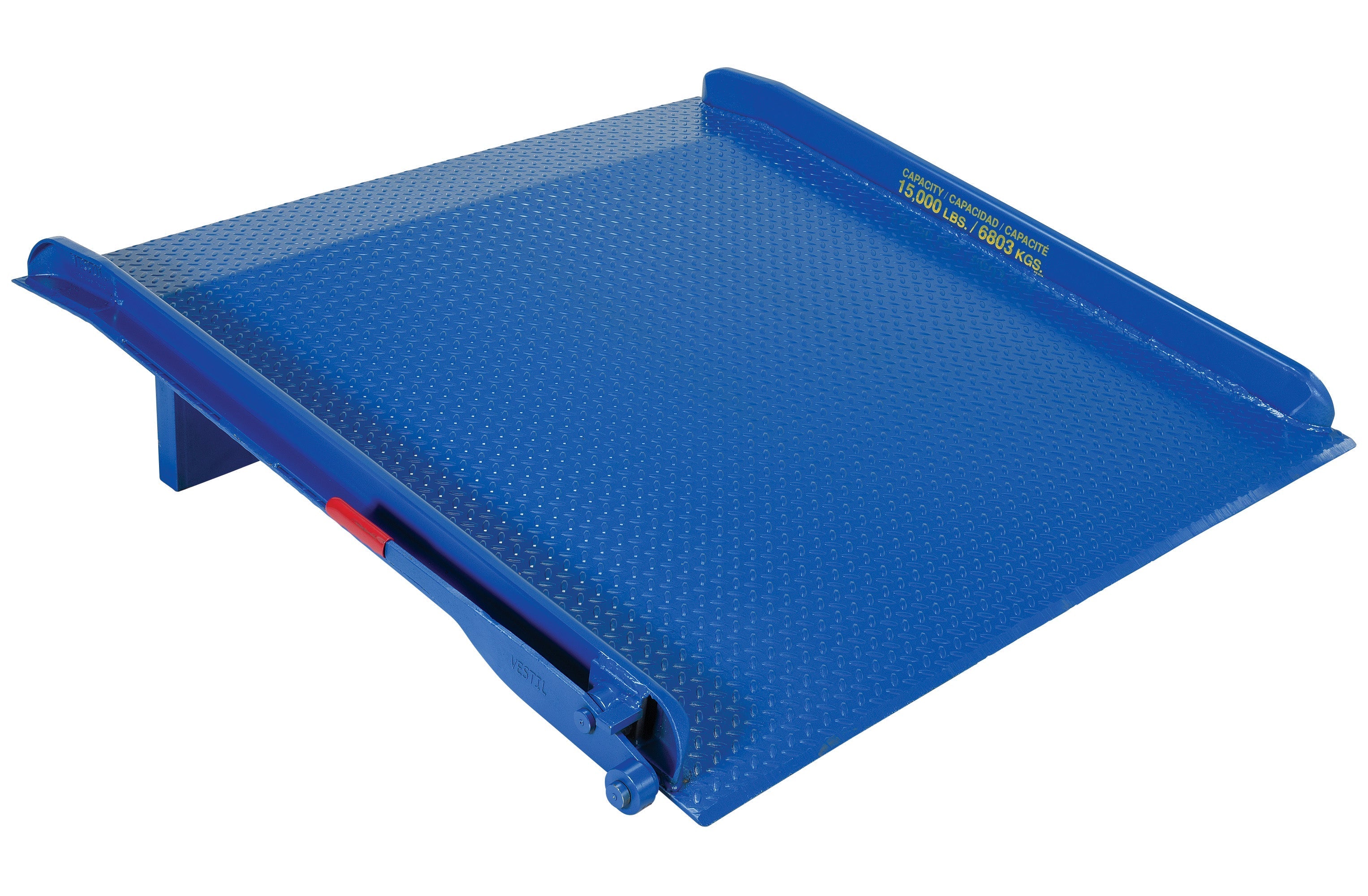
| Vestil Steel Truck Dockboards | $751 | 10,000-25,000 lb | 30-72 in | 60-84 in | View → |
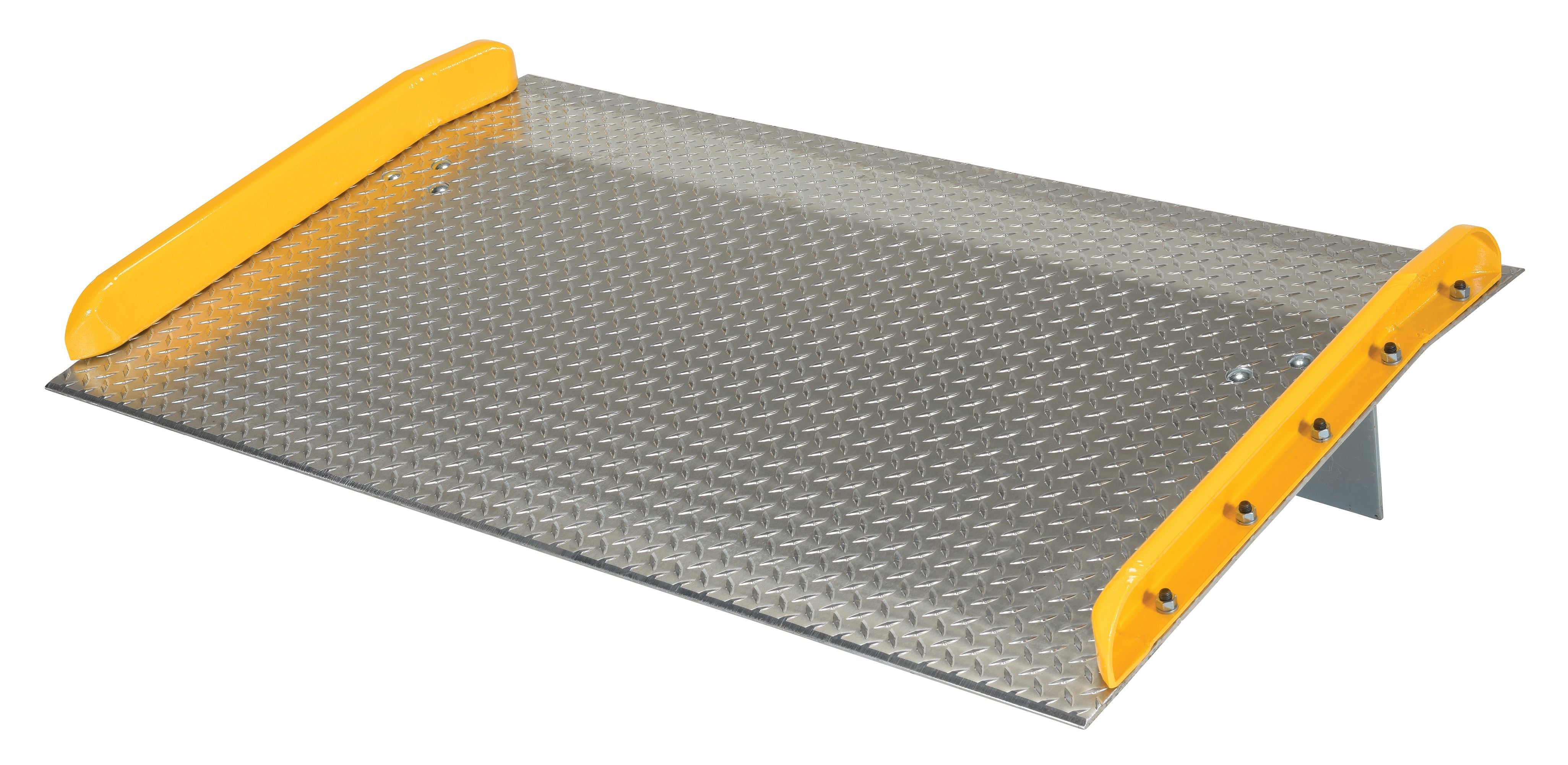
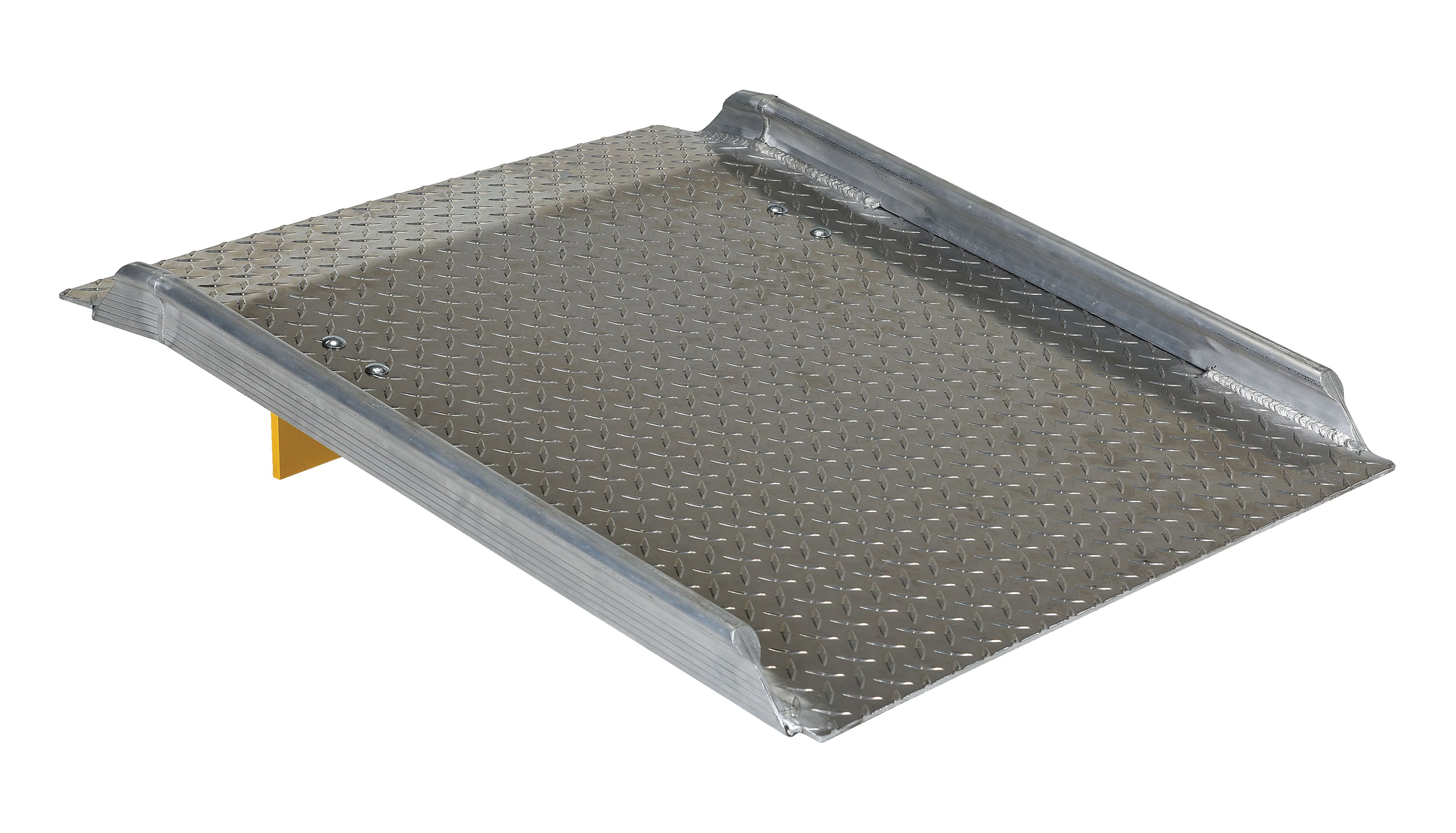
| Vestil Aluminum Truck Dockboards with Steel Safety Curbs | $724 | 10,000-20,000 lb | 36-72 in | 60-72 in | View → |
| Vestil Fiberglass Dockplate | $616 | 1,000 lb | — | — | View → |
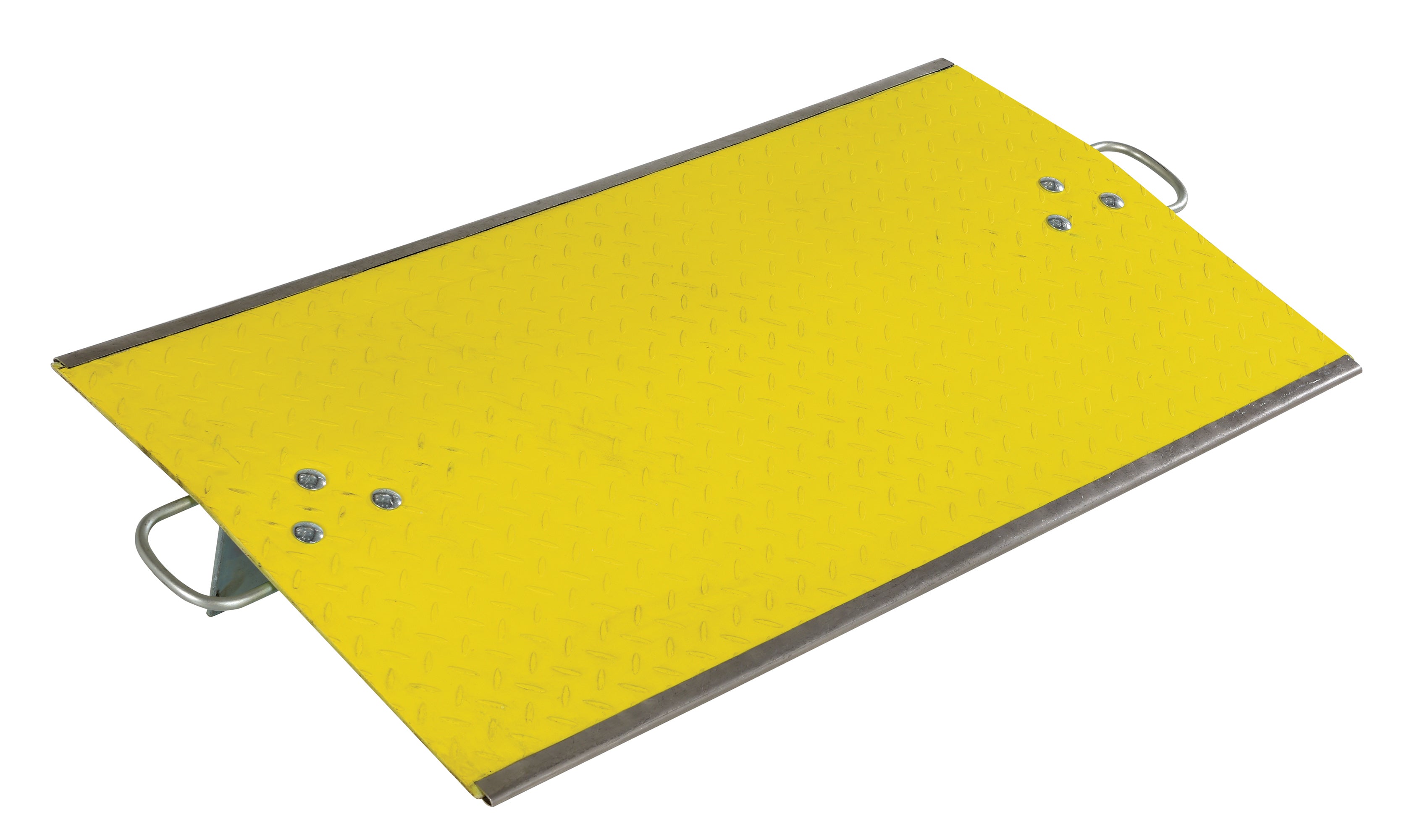
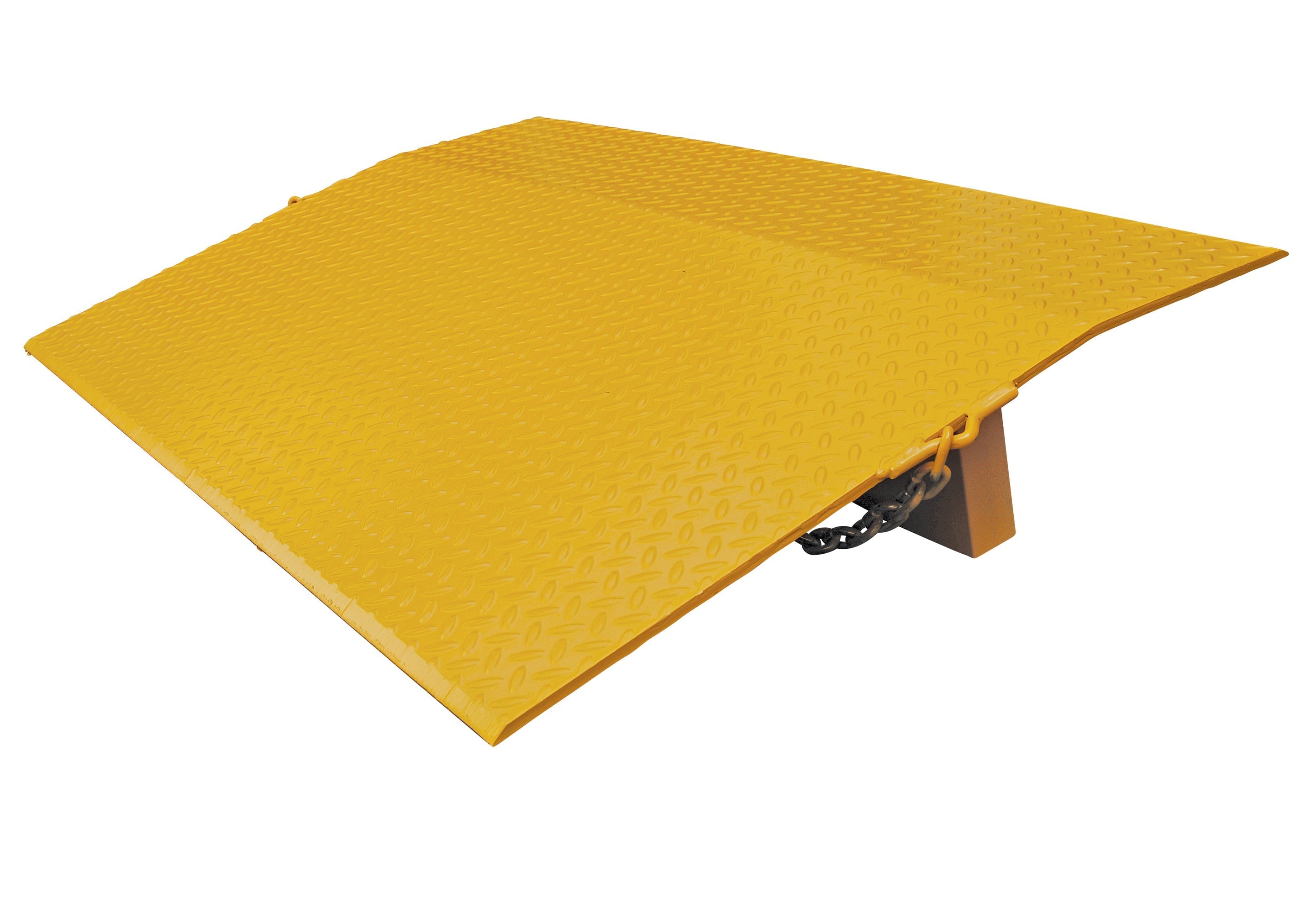
| Vestil Steel Truck Dockplates | $399 | 2,475-13,200 lb | 30-60 in | 48-72 in | View → |
 In Stock
 In Stock
 In Stock
 In Stock
 In Stock
 In Stock
 In Stock
 In Stock
 In Stock
 In Stock
 In Stock
 In Stock
 In Stock
 In Stock
Dockplates & Dockboards Buying Guide
Plate or board: the call that sizes everything. One question decides which half of this page you buy from: what crosses the bridge? Foot traffic, hand trucks, and manual pallet dollies cross a dock plate, the lightest and cheapest option, a flat deck you lift into place and reposition through the day. Anything with a motor under it wants a dock board: a heavier deck with raised side curbs that keep a forklift or a powered pallet jack from steering off the edge. The line is not about weight alone but about control. A loaded electric pallet jack can pass 6,000 lb and it steers under power, so it belongs on a board even though a heavy plate might carry the number. Make this call first. It cuts fourteen products down to three or four candidates and sets the capacity, material, and size decisions that follow.
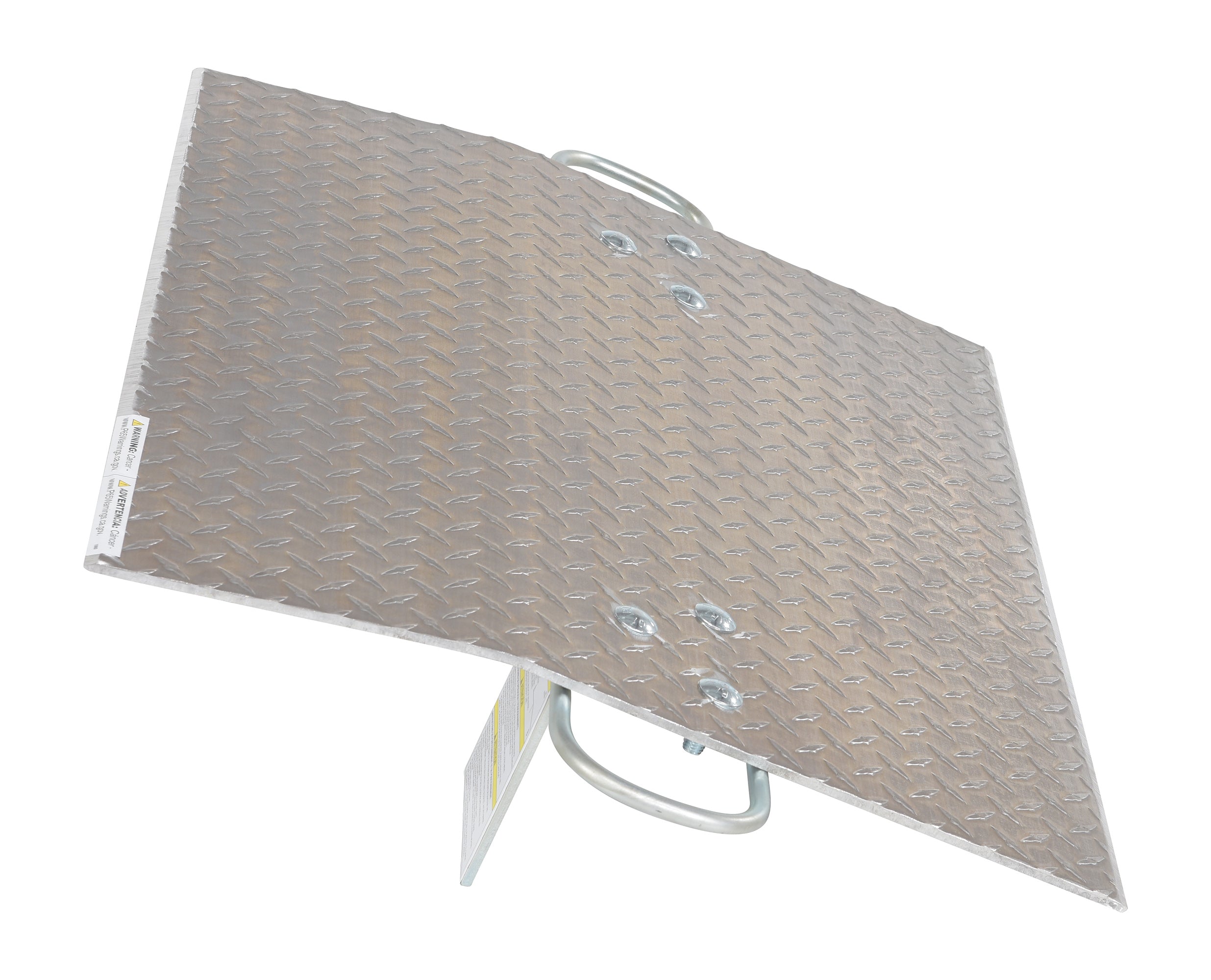
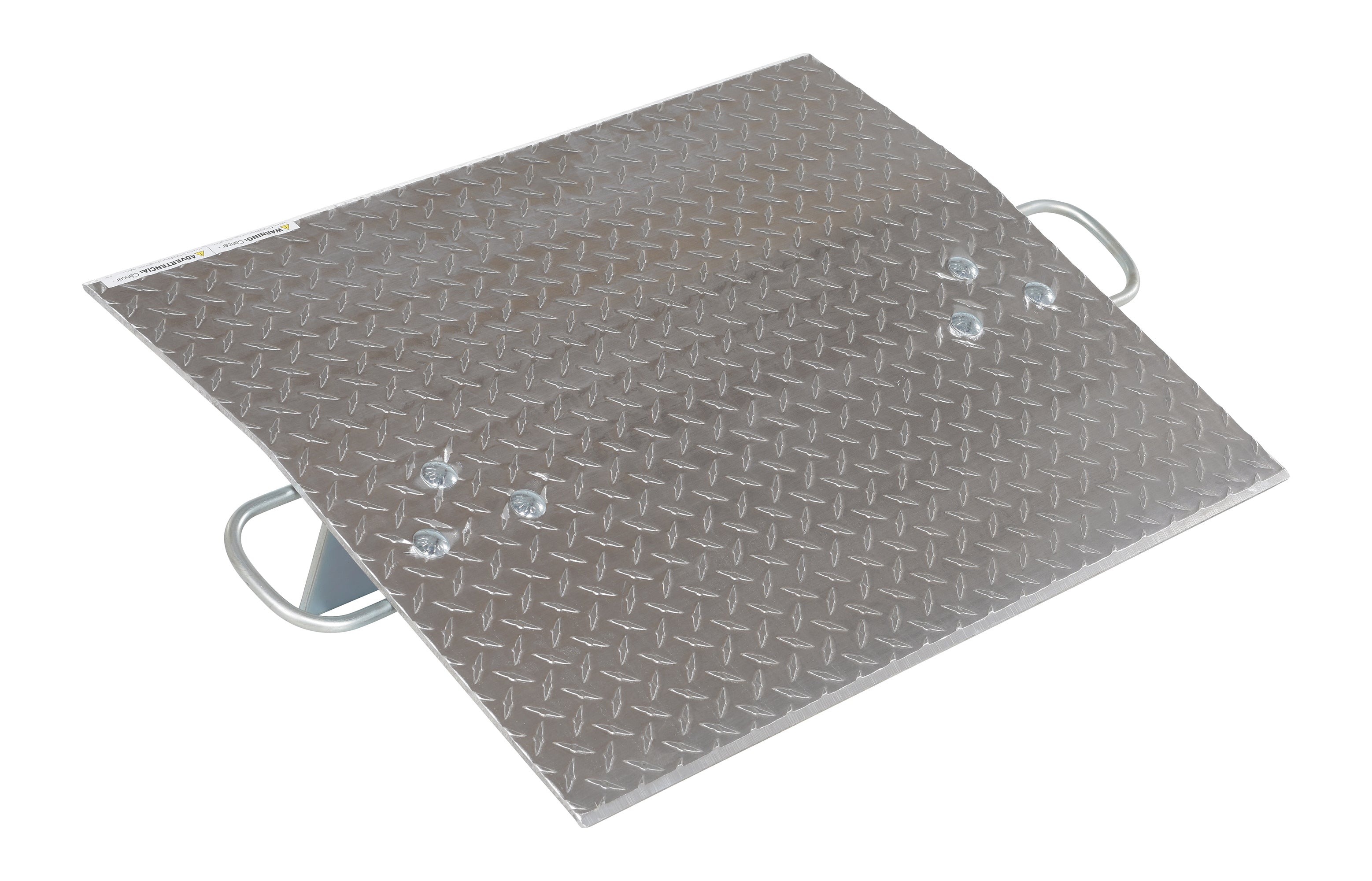
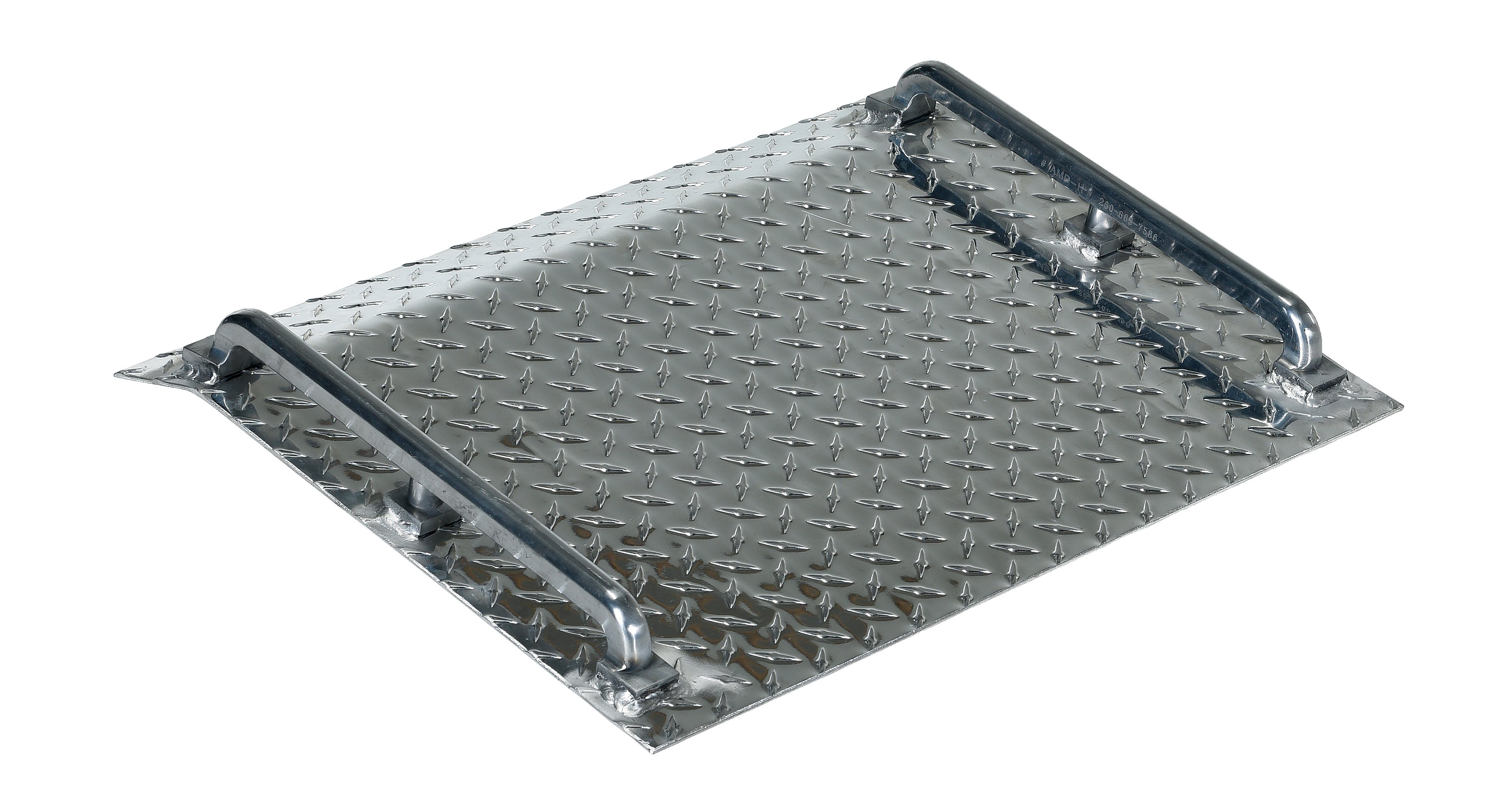
Dock plates: mini, hand truck, economizer, and steel. Plates run from a pocket-sized bridge to a serious steel deck. Aluminum mini dockplates, from about $144, are 18 inches long in 24, 30, and 36 inch widths, sized for a small gap and a hand truck. Aluminum hand truck dockplates, from about $219, add length up to 48 inches and rate 500 to 700 lb for carts and dollies. The aluminum economizer dockplates, from about $267, are the volume workhorse, with capacity set by the size you pick, from roughly 1,400 lb on a long deck up past 10,000 lb on a short wide one. When the service is rough or the load is heavy, steel truck dockplates, from about $399, carry from about 2,475 lb to 13,200 lb depending on span. All of these are the flat, curbless bridges for lighter, hand-moved loads. If your dock runs powered trucks all day, look at a permanent dock leveler instead of any portable plate.
Dock boards: curbs, legs, and the powered-equipment jump. Dock boards are built for forklifts, and the curb is the reason. Vestil's welded aluminum safety curbs prevent accidental run-offs and give the driver a visible lane, and the aluminum truck dockboards come in stepped capacity ranges, 5,000 to 6,000 lb from about $625, 7,000 to 8,000, 9,000 to 10,000, 11,000 to 12,000, and 15,000 to 20,000 lb. The aluminum truck dockboards with steel safety curbs, from about $724, put a tougher steel curb on the lighter aluminum deck at a 10,000 lb rating. For the heaviest daily service, steel truck dockboards, from about $736, rate 10,000 to 25,000 lb, with locking legs that sit uneven so the board cants for easy pickup by a fork truck. There is also a lighter aluminum hand truck dockboard, from about $333, rated 800 lb in lengths to 96 inches for long hand-truck spans.
Aluminum, steel, or fiberglass. Material is the second real decision, and it is a trade between what you lift and what you cross. Aluminum is significantly lighter than steel, which makes an aluminum board far easier to lift, drag, and reposition between trailers, and it resists corrosion, so it is the default for anything a person moves by hand more than once a day. Steel is heavier and harder to handle but takes the highest capacities and the harshest, outdoor, high-cycle abuse, which is why the steel boards top the range at 25,000 lb. The Vestil fiberglass dockplate, at $616 for a 48 by 24 inch, 1,000 lb deck, exists for one reason: fiberglass is non-conductive and non-sparking, so it belongs at docks near electrical hazards or where flammable vapors make a steel-on-steel spark unacceptable. Diamond tread or serrated surfaces on the metal decks add the traction that keeps wheels and feet from slipping on the incline.
Sizing capacity to the real crossing weight. Rate the bridge to the gross crossing weight, the truck plus its heaviest load, not the pallet alone, and leave margin on top. Vestil's published capacities are set for one-shift operation at 3 MPH, so if you run multiple shifts, move heavy roll clamps, or cross faster, step up a size, and figure roughly 5,000 lb of extra rating for that heavier duty. Three-wheeled fork trucks concentrate load differently, so order the next capacity up when you run them. Size length to the height mismatch as much as the gap: a bigger difference between floor and trailer bed needs a longer deck to keep the incline gentle and hold safe overlap on both the dock and the trailer. Check the deck width against your trailer door and your equipment's track before you buy, and keep a wheel chock under the trailer while anything crosses.
OSHA 1910.26, securing the board, and off-season storage. The crossing is governed by 29 CFR 1910.26. Every dockboard must be capable of supporting its maximum intended load. Boards put into initial service on or after January 17, 2017 must be built to prevent transfer vehicles from running off the edge, which is what the welded curbs deliver, with an exception only where the employer shows there is no run-off hazard. Portable dockboards must be secured, anchored in place or held by devices that stop them moving out of a safe position, and they need handholds or another safe means of handling them, which is why the Vestil boards ship with side chains and lift points. When a plate is not in use, a leaning deck on the floor is a trip and damage hazard, so the steel dock plate storage rack, at about $206, stands plates upright and off the ground between loads. For the wider dock picture, wheel chocks, bumpers, seals, and levelers, work back up to the loading dock equipment hub.
Frequently Asked Questions
A dock plate is a flatter, lighter bridge with no side curbs, meant for foot traffic, hand trucks, and manual pallet dollies. A dock board is heavier and carries raised side curbs that keep powered equipment, a forklift or an electric pallet jack, from steering off the edge. The rule of thumb: if anything with a motor crosses the bridge, buy a board. If it is hand-moved loads only, a plate does the job for less.
Rate it to the gross crossing weight, the forklift plus its heaviest load, with margin on top rather than right at the number. Vestil's ratings assume one-shift operation at 3 MPH, so for multiple shifts, heavy roll clamps, or faster crossings, step up a size and figure about 5,000 lb of added rating. Three-wheeled fork trucks concentrate their load, so order the next capacity up when you run them.
Aluminum is much lighter, so it is far easier to lift and reposition between trailers and it resists corrosion, which makes it the right pick for anything moved by hand often, up to 20,000 lb. Steel is heavier to handle but takes the highest ratings, to 25,000 lb, and the harshest outdoor, high-cycle service. If sparks are a hazard near electrical gear or flammable vapors, use the fiberglass plate, which is non-conductive and non-sparking.
Yes. Under 29 CFR 1910.26(c), portable dockboards must be secured by anchoring them or using devices that prevent them from moving out of a safe position. The same standard requires every board to support its maximum intended load, requires run-off protection such as side curbs on boards put into service on or after January 17, 2017 unless there is no run-off hazard, and requires handholds or another safe means of handling portable boards.
Size the length to the height difference between your floor and the trailer bed, not merely the gap. A bigger mismatch needs a longer deck so the incline stays gentle and the board keeps safe overlap on both the dock lip and the trailer. Also check the deck width against your trailer door opening and your equipment's wheel track so the load has room to cross squarely.
Off the floor and upright. A dock plate left leaning against a wall is a trip and damage hazard and can slide. The steel dock plate storage rack, about $206, holds plates vertically and out of the traffic lane between loads, which also keeps the deck surface clean and the handholds reachable.