Dock Seals
Dock seals close the gap between a parked trailer and the building so the loading dock stops leaking conditioned air, rain, dust, and pests every time a truck backs in. This page covers the two ways to do that job and the budget tiers between them. Foam compression seals press vertical pads and a head pad against the trailer body for the tightest fit, and suit docks that see a consistent trailer size. Dock shelters frame the opening with curtains that let the trailer's rear doors swing fully open, and handle mixed fleets of vans, reefers, and box trucks. We stock the Vestil line across both, from a sub-$120 draft blocker that fills the gap beside a leveler up to full curtain shelters past $2,000, with seal and shelter combinations and a retractable frame in between. The sections below sort out which style your dock needs, how to size it to your door and bumpers, and how the seal works with the equipment already on the wall.
Compare Dock Seals & Shelters
| Model | Price | Overall Width | |
|---|---|---|---|
| Vestil Dock Shelters | $1,824 | 11 ft | View → |
| Vestil Retractable Dock Shelter | $1,660 | — | View → |
| Vestil Dock Seal/Shelter Combinations | $1,118 | 8 ft | View → |
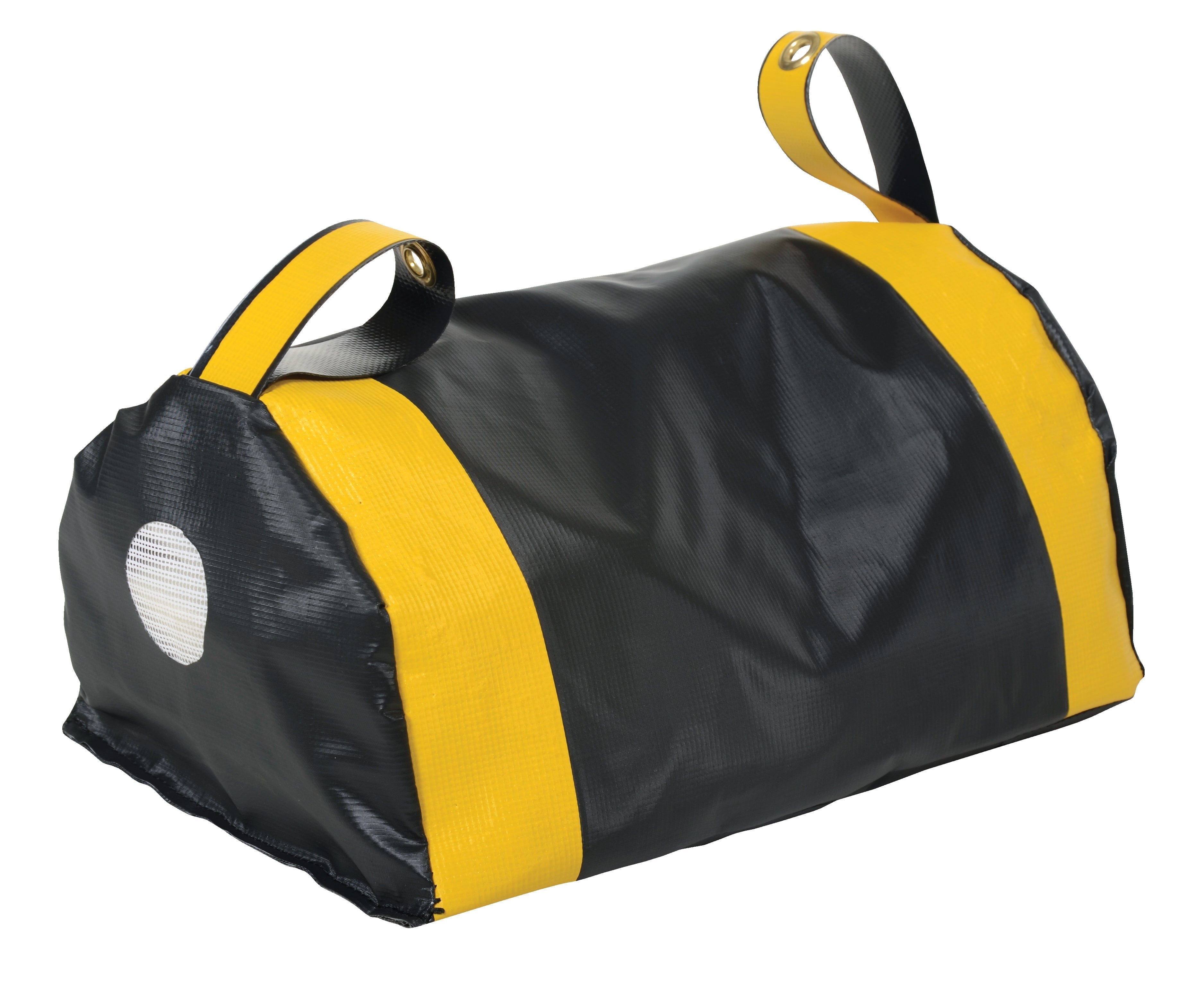
| Vestil Dock Seal Draft Blockers | $84 | — | View → |
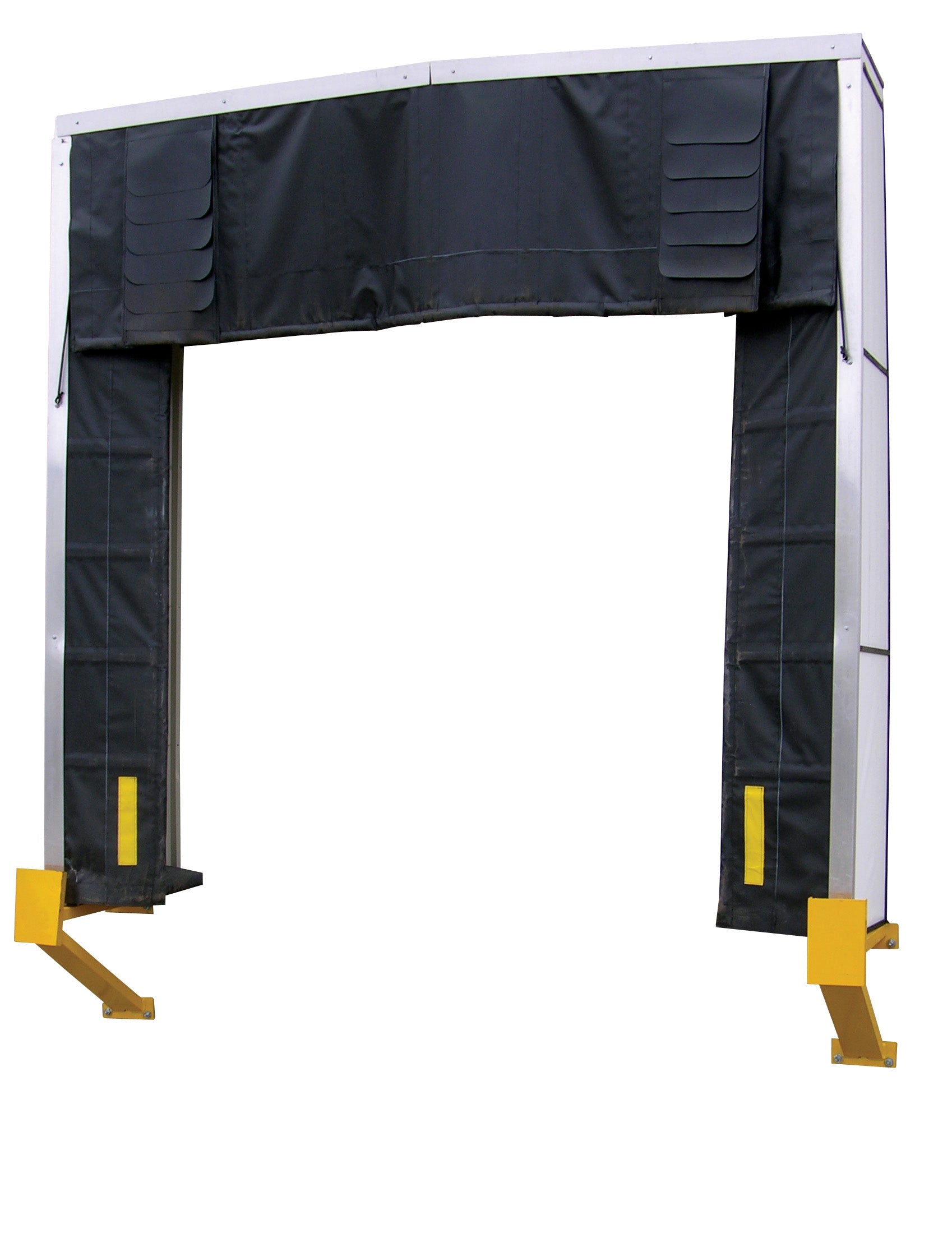 In Stock
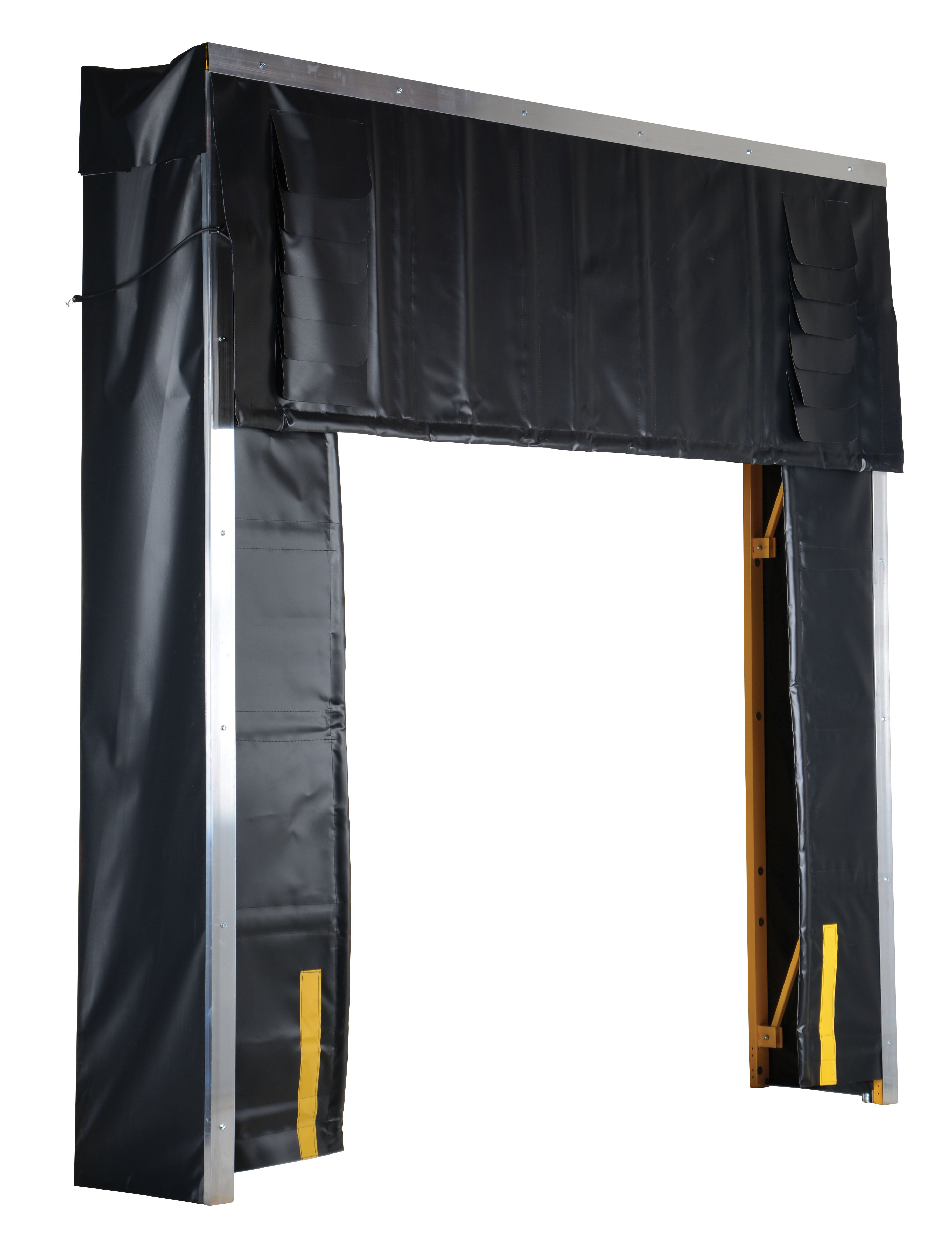 In Stock
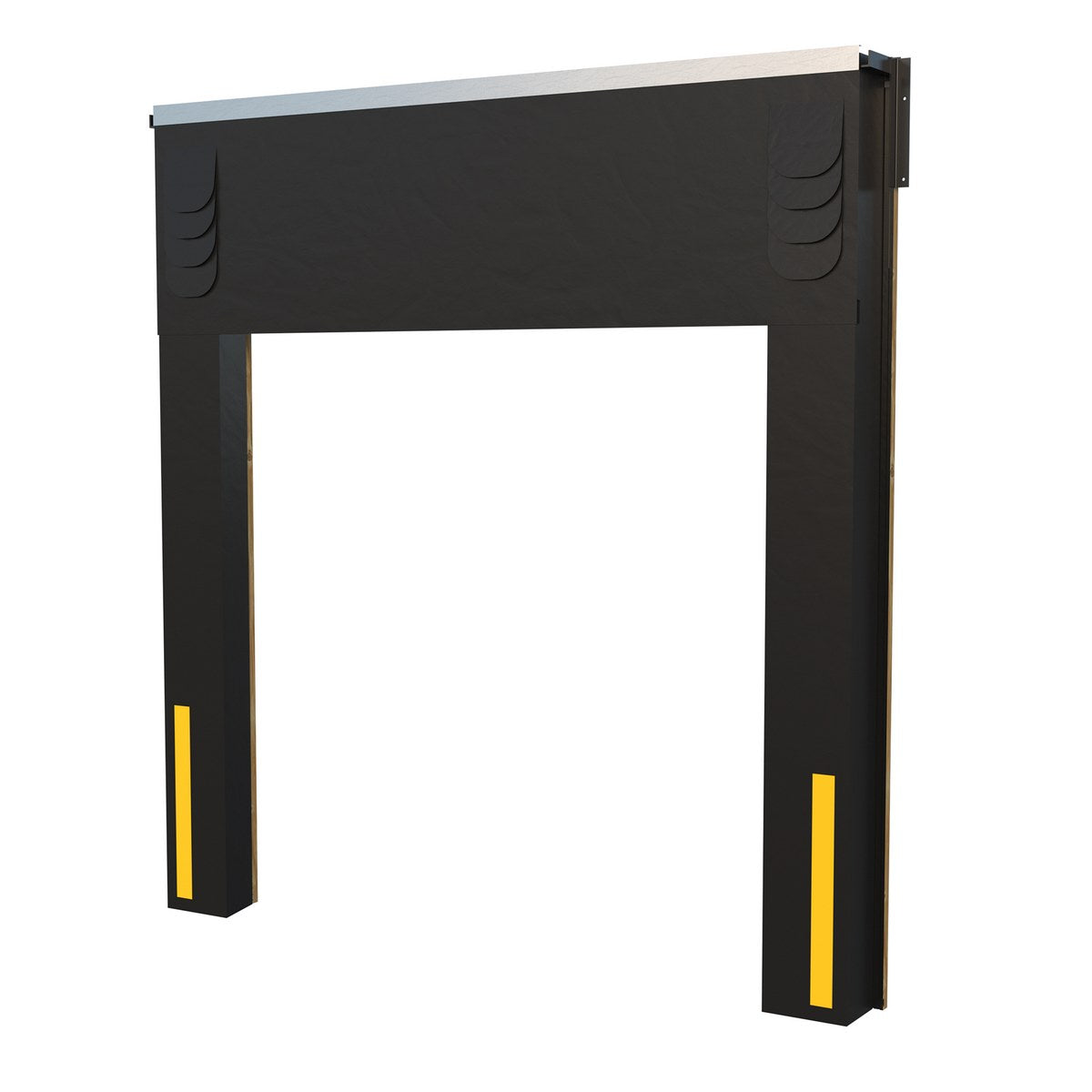 In Stock
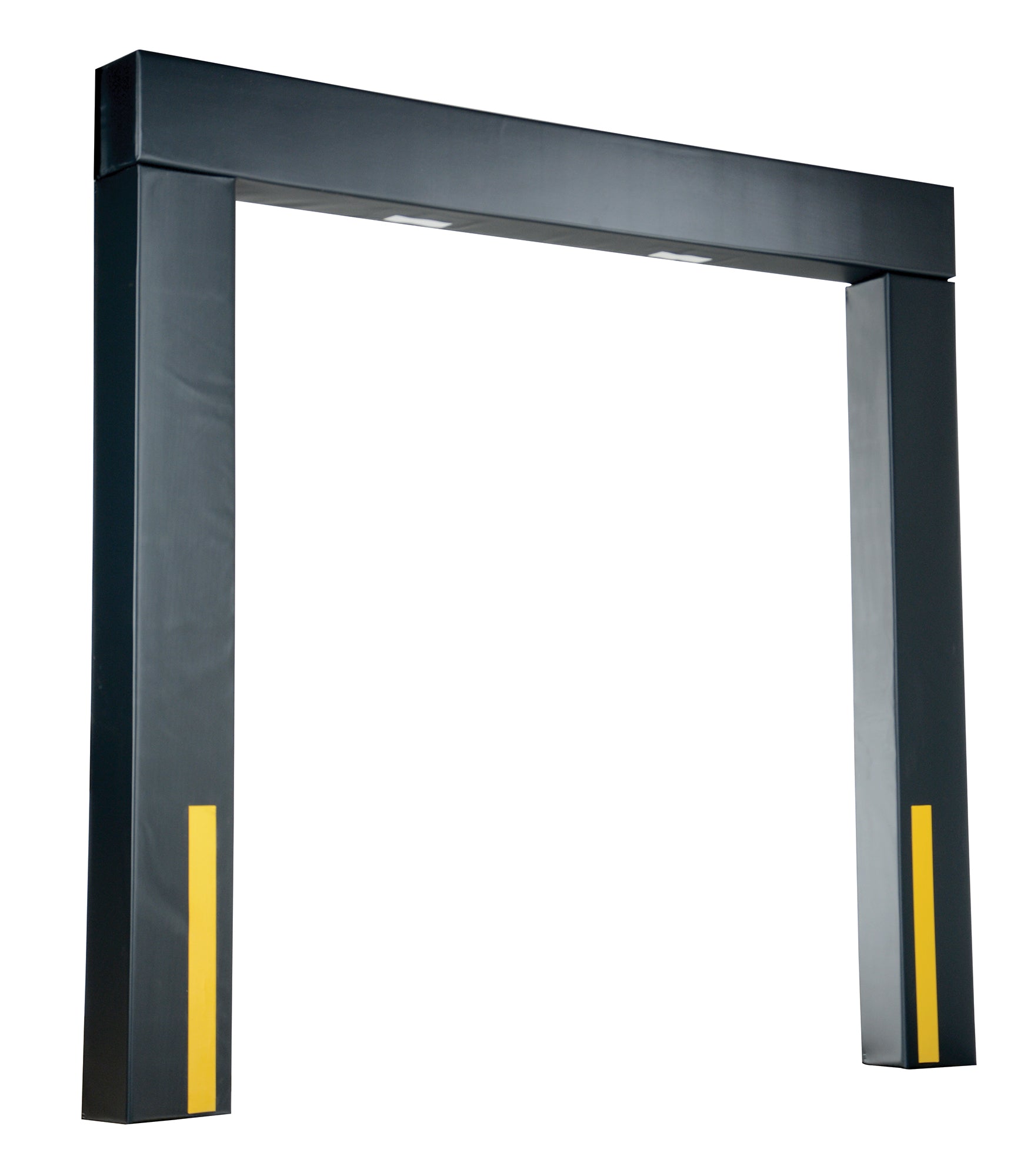 In Stock
 In Stock
Dock Seals & Shelters Buying Guide
Seal or shelter: the trailer fleet decides. The first decision is seal or shelter, and your trailer fleet makes the call. A foam compression seal is a pair of vertical pads and a head pad mounted around the door; the trailer backs into them and compresses the foam against its body, giving the tightest, most airtight seal of anything on this page. That works when your trailers are close to the same height and width, because the pads seal only where the truck actually touches them. A shelter instead frames the opening with a header and side curtains that drape onto the trailer, sealing across the top and along the sides while leaving the rear fully open. Shelters take mixed fleets, a van one hour and a tall reefer the next, and they let the trailer doors swing all the way open for full-width forklift access that a seal's pads would block. Seals cost less and seal tighter; shelters cost more and flex to whatever backs in.
Size the seal to the door and the bumpers. A foam seal is specced to the door opening and to how far the trailer stops from the wall. Our Vestil dock seals cover standard openings, 8 or 9 ft high by 8 ft wide, with the vertical pads and head pad built to compress against a trailer that has backed in over the dock bumpers. Projection is the number to get right: it is how far the pads stand off the wall, and it has to match your bumper projection so the trailer meets the foam and not the building. Our seals run 10 through 20 inch projection. As a rule the shorter 10 inch pads pair with a 4 to 6 inch bumper, while the deep 20 inch pads suit an edge-of-dock setup where the bumper stands 14 to 15 inches off the face. Aim to compress the pads no more than about 6 inches, or 45 percent of their projection, so the foam seals without crushing flat and wearing out early.
Dock shelters: full access for mixed fleets. When trailers vary, or the load needs the whole trailer opening, a shelter is the answer. Our Vestil dock shelters frame a larger opening, roughly 11 ft wide by 10-1/2 ft high, with side and head curtains that seal along the top and sides of the trailer and leave the rear doors free to open fully. That full-width access is the reason to buy one: a forklift can drive straight in and reach the corners of the trailer, where a compression seal's pads would be in the way. Shelter projection runs 18 to 36 inches on our units, so the frame stands well off the wall to meet trailers that park short. A shelter does not seal quite as airtight as foam pads pressed to a flat trailer wall, but it tolerates taller and wider vehicles, wind, and the constant in-and-out of a busy dock far better, which is why temperature-controlled and high-traffic docks lean on shelters.
Retractable frames survive off-center hits. A rigid shelter frame takes a beating when a driver backs in off-center or at an angle, and that abuse is what ends most shelters early. Vestil's retractable dock shelter answers it with a collapsing frame that moves with the incoming trailer and springs back to square afterward. When a truck hits it off-center, the frame gives instead of tearing, so the shelter keeps its shape and its seal over far more cycles and needs less maintenance. If your drivers are sharp and the approach is straight, a fixed shelter is fine and cheaper. If the dock is tight, the approach is angled, or turnover means you cannot count on every backing being clean, the retractable frame pays for itself in curtains you never have to replace.
Close the last gaps: combinations and draft blockers. Even a good seal leaves gaps, and two products here close them. Seal and shelter combinations put foam side pads together with a shelter-style head curtain, so you get the airtight side seal of a compression pad and the full top access of a shelter in one unit, a middle path for docks that want both. The other gap sits lower down, between the seal and the dock leveler: when the leveler lip and the seal do not meet, a wedge of outside air, water, and pests pours in at the corners. Vestil's dock seal draft blockers are foam gap fillers, available in 18, 24, and 36 inch lengths, that plug that opening beside or under the leveler. At well under $120 they are the cheapest item on the page and often the difference between a dock that seals on paper and one that actually holds temperature.
How the seal fits the rest of the dock. A seal or shelter is one layer of the dock envelope, and it works only if the pieces around it are right. It seals against a trailer that the bumpers stopped at the correct distance, over a leveler that bridges without leaving a corner gap, so spec the seal, bumpers, and leveler as a set rather than one at a time. Measure your real door opening and your shortest and tallest trailers before you buy, because a seal sized to an average truck seals nothing on the outliers. The rest of the dock envelope, from bumpers and levelers to gates and lights, lives on the loading dock equipment hub. Get the trailer fleet, the door size, and the projection right, and a $900 seal quietly pays for itself in the HVAC bill it stops leaking out the back of the building.
Frequently Asked Questions
A dock seal uses foam pads that the trailer compresses against for the tightest, most airtight fit, and it suits docks with consistent trailer sizes. A dock shelter frames the opening with curtains that seal on the top and sides while leaving the rear doors free to open fully, and it handles mixed fleets and taller vehicles. Seals cost less and seal tighter; shelters cost more and flex to whatever backs in.
Size it to the door opening and to your bumper projection. Our Vestil seals fit standard 8 to 9 ft high by 8 ft wide openings, with projection from 10 to 20 inches. Match the projection to how far your dock bumpers stand off the wall so the trailer meets the foam and not the building, and plan to compress the pads no more than about 6 inches, or 45 percent of their projection.
It fills the gap between the dock seal and the dock leveler, where a corner of outside air, rain, and pests would otherwise get in. Vestil's draft blockers are foam fillers in 18, 24, and 36 inch lengths that plug that opening beside or under the leveler. At well under $120 they are the cheapest way to close the last leak in a dock that already has a seal.
It is a shelter built on a collapsing frame that moves with the trailer as it backs in and returns to square afterward. When a truck hits it off-center, the frame gives instead of tearing, so the shelter keeps its seal over more cycles and needs less maintenance. It is worth the premium at docks with tight or angled approaches where off-center backing is common.
Yes, on energy. An unsealed dock is a truck-sized hole in the building that leaks heated or cooled air all day and lets in rain, dust, and pests. Sealing the trailer opening cuts that infiltration, steadies the temperature near the dock, and reduces HVAC load, which is where the payback shows up on the utility bill.
Yes, that is exactly what shelters are built for. Because the curtains drape onto whatever backs in and the rear stays fully open, a shelter handles vans, reefers, and box trucks of varying height and width, where a fixed foam seal only seals the trailer sizes it was specced for.