Dock Levelers
A dock leveler is the permanent bridge that spans the gap between your loading dock floor and a trailer bed, and unlike a portable plate it stays built into the dock and adjusts all day as trailer heights change under it. Every unit here is Vestil, and the line divides three ways by how the leveler mounts and how it moves. Edge-of-dock levelers bolt to the dock face and flip out to the trailer, the compact answer when trailers sit close to dock height, from around $970 with capacities to 30,000 lb. Pit levelers recess into a formed pit in the dock floor and handle a much wider height swing: mechanical models run on springs and a pull chain, hydraulic models raise and lower at a button. This page sorts edge-of-dock from pit, mechanical from hydraulic, walks the capacity and pit sizing that decide the buy, and flags the ANSI standards the equipment is tested to.
Compare Dock Levelers
| Model | Price | Capacity | Overall Length | Overall Width | Power | |
|---|---|---|---|---|---|---|
| Vestil Mechanical Dock Levelers | $6,900 | 20,000-50,000 lb | 50-110 in | 74-86 in | — | View → |
| Vestil Electric Hydraulic Dock Levelers | $6,153 | 20,000-50,000 lb | 50-110 in | 74-86 in | 460V | View → |
| Vestil Edge-O-Dock Levelers | $971 | 6,000-30,000 lb | — | 48-78 in | 115V | View → |
| Vestil Dock Leveler Insulation Blanket | $97 | — | — | — | — | View → |
Dock Levelers Buying Guide
Three ways to bridge the gap, and the first fork is edge-of-dock or pit. Before capacity or brand, one question sizes the whole purchase: does the dock need an edge-of-dock leveler or a full pit leveler? Edge-of-dock units mount on the dock face, need no concrete pit, and serve trailers within roughly five inches above or below dock height, which covers a fleet of consistent, close-to-dock trailers for a fraction of the price. A pit leveler recesses into a formed pit in the dock floor, extends far higher and lower, and becomes the right call once trailer beds vary by a foot or more or the dock cycles all day. If the loads are light and hand-moved, a portable bridge from dock plates and dock boards may be enough and no leveler is needed at all. Get this fork right and the rest of the page narrows to two or three real candidates. This collection sits under loading dock equipment, where the surrounding pieces live.
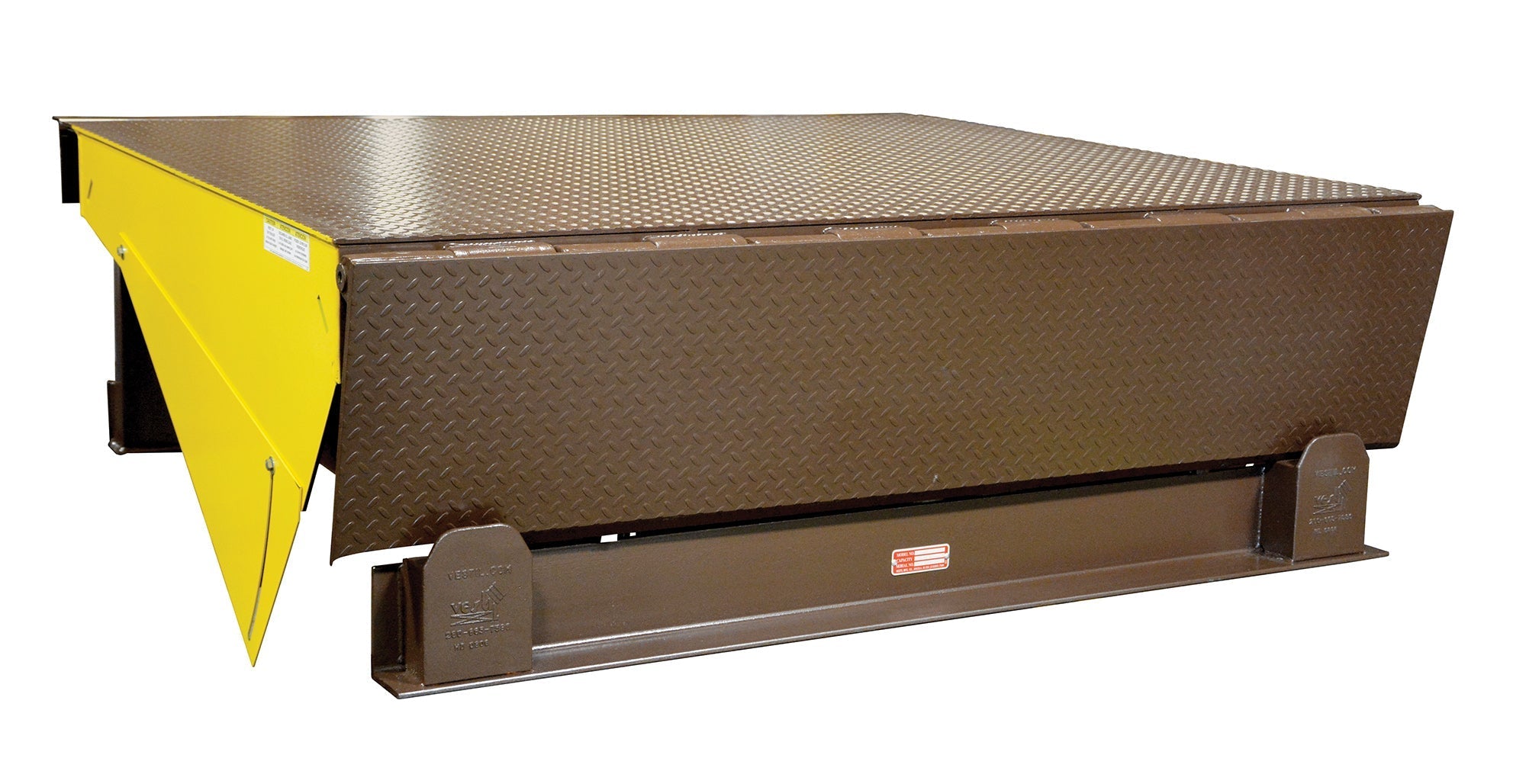
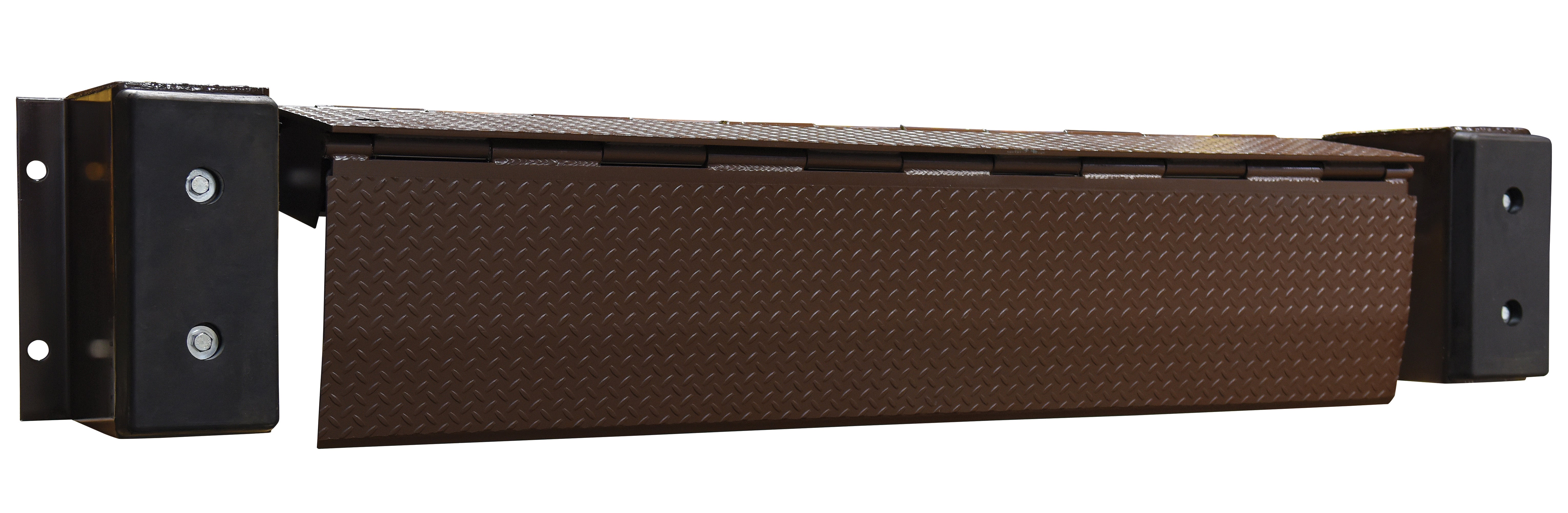
Edge-of-dock levelers: the no-pit option. The Vestil Edge-O-Dock levelers, the FM series from about $970, bolt to the dock face and flip a hinged lip out onto the trailer, so they install without cutting a pit into the floor and suit an existing dock that never had leveling. Deck widths run 48 to 78 inches and capacities step from 6,000 lb up to 30,000 lb, so you size the unit to your heaviest loaded forklift crossing, not to the pallet. The trade for the low price is range: an edge-of-dock unit only serves trailers within a few inches of dock height, so a mixed fleet of high and low beds outgrows it. Activation comes three ways, a mechanical spring-assisted handle, a hand pump, or an electric model at 115 volts, and the mechanical handle is the value pick where a worker sets the deck by hand each cycle. These are the answer when a pit is impractical and the trailers cooperate.
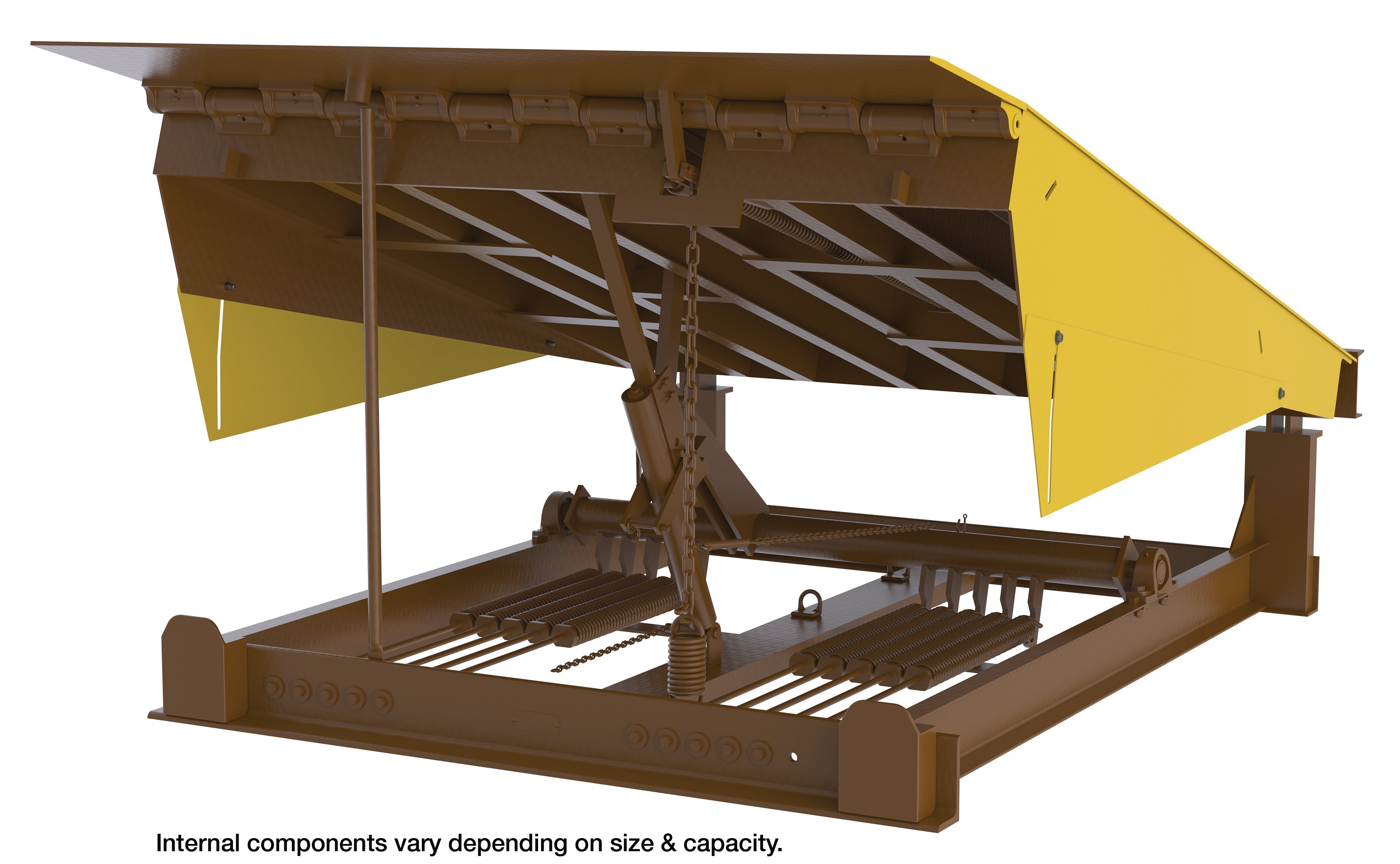
Pit levelers: mechanical spring or electric hydraulic. When the height swing is wide or the dock runs hard, a pit leveler is the correct piece, and here the split is how it moves. The Vestil mechanical dock levelers, the RR-610 series from about $4,400, store energy in springs: a worker pulls a release chain, the springs raise the deck, the lip swings out, and the operator walks the deck down onto the trailer. The electric hydraulic dock levelers, the EH-610 series from about $5,100 at 460 volts, do the same work at a push button, with a powerpack raising the deck and extending the lip and no chain to pull. Both run capacities from 20,000 up to 50,000 lb in 74 and 86 inch pit widths. Hydraulic costs more up front, commonly around thirty percent, but it carries a lower cost of ownership across years of high-cycle service and takes the manual effort and the spring-adjustment out of daily use. For a busy multi-shift dock, hydraulic is usually the honest buy; the pull chain is the part crews grow to hate.
Sizing capacity and the pit. Two numbers decide a pit leveler: the rated capacity and the pit it drops into. Rate the leveler to the gross dynamic crossing weight, the forklift plus its heaviest load moving at speed, and leave margin, because a three-wheel truck or a loaded roll clamp concentrates load harder than a static number suggests. On capacity, stepping up a size is cheap next to a bent deck. The pit is the other half: the concrete pit has to match the leveler's length and width, so the pour is coordinated to the model before the slab is finished, and retrofitting a pit into an existing floor is a saw-cut and forming job to plan around. Vestil's pit units come in 74 and 86 inch widths to suit standard 6 and 7 foot dock openings. Check the leveler deck against your widest trailer door and confirm the pit dimensions on the drawing before anyone breaks concrete.
Standards, and what mounts around the leveler. Dock leveling devices are designed and tested to ANSI standards, and the family splits the way the products do: fixed pit levelers fall under ANSI MH30.1, and portable and edge-of-dock devices fall under ANSI MH30.2, so match the spec sheet to the type you are buying. The leveler never works alone at the dock face. Dock bumpers take the impact of a 40-ton trailer backing in and are the cheapest way to keep that hit off the leveler and the dock wall behind it, from about $11, and a leveler installed without bumpers ahead of it gets destroyed on schedule. While anything crosses the deck, OSHA 1910.178(k)(1) requires the trailer's brakes set and wheel chocks under the rear wheels before a powered truck boards it, because a trailer that creeps away from the dock with a forklift inside is the dock's signature accident. Bumpers and chocks are small line items next to the leveler and they protect it.
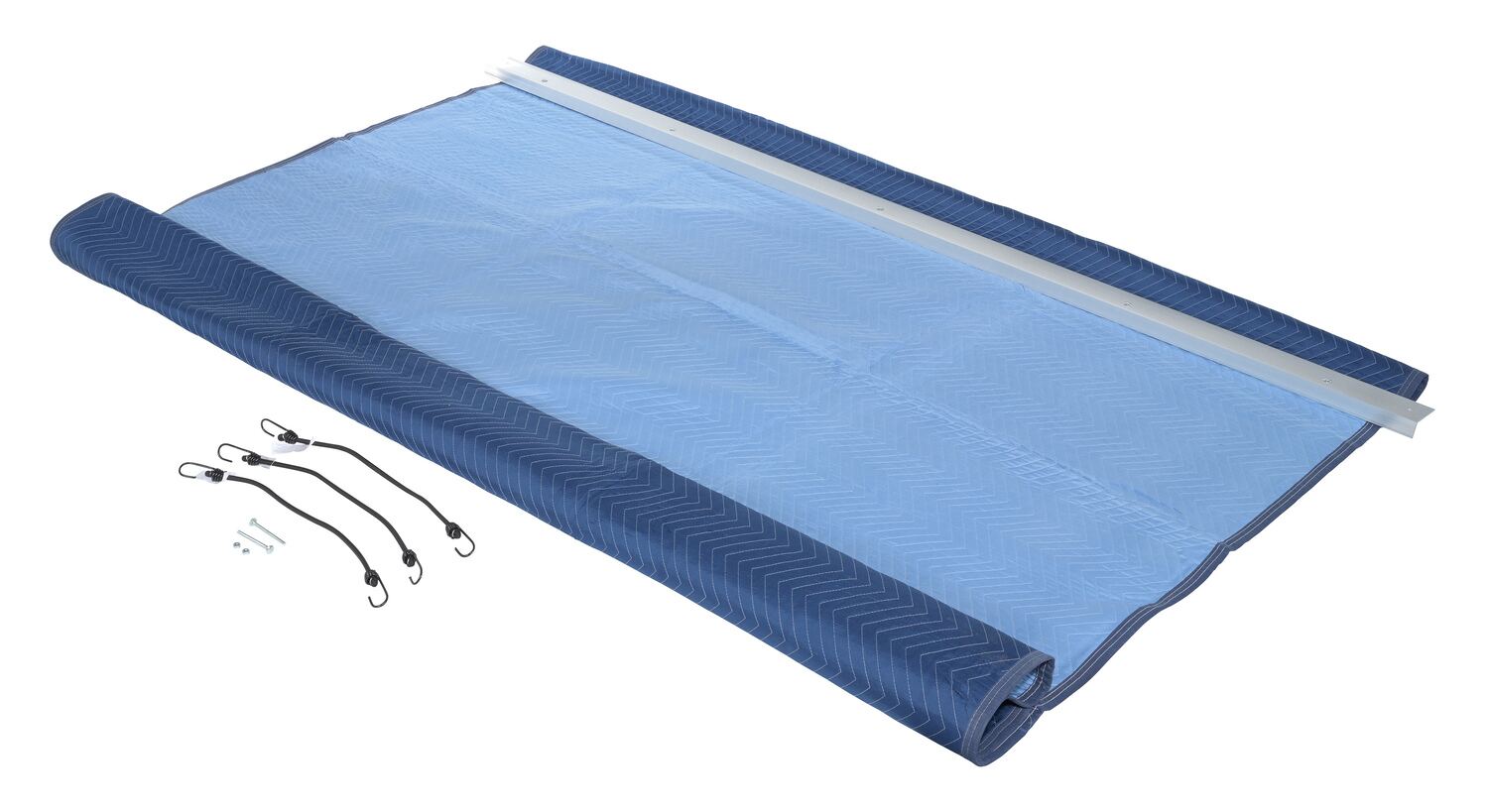
The insulation blanket, and keeping the deck in service. A pit leveler leaves a gap around its deck that leaks conditioned air, and the Vestil dock leveler insulation blanket, at $97, fastens underneath to cut that loss on a heated or refrigerated dock, the smallest energy fix on the page. Beyond that, treat the leveler as inspected equipment. Mechanical spring levelers want yearly service on the springs, hold-downs, and lip latch, the parts that wear and drift out of adjustment, which is a real share of why hydraulic wins on lifetime cost. Hydraulic units carry a powerpack, pump, and hoses to check, and both types depend on the hinge and lip being sound before a forklift trusts the crossing. Keep the pit clear of debris that fouls the return, and pull a leveler out of service the moment the deck does not seat flush on the trailer or the lip fails to extend, because a deck that drops mid-crossing takes the truck with it.
Frequently Asked Questions
An edge-of-dock leveler bolts to the dock face and needs no concrete pit, but it only serves trailers within roughly five inches above or below dock height, which makes it the low-cost fix for a fleet of consistent, close-to-dock trailers. A pit leveler recesses into a formed pit in the dock floor and handles a much wider height range, so it is the right choice when trailer beds vary by a foot or more or the dock works all day. Vestil's Edge-O-Dock units start around $970; pit levelers start around $4,400.
Mechanical levelers use springs and a pull chain: a worker releases the chain, the springs raise the deck, and the operator walks it down onto the trailer. Hydraulic levelers do the same at a push button with a powerpack. Hydraulic costs more up front, commonly about thirty percent, but carries lower maintenance and cost of ownership over years of high-cycle use and removes the manual effort. For a busy multi-shift dock, hydraulic is usually worth it; for lower-cycle docks on a tighter budget, a mechanical unit is a sound buy.
Rate the leveler to the gross dynamic crossing weight, meaning the forklift plus its heaviest load moving across at speed, not the static weight of a pallet, and add margin. Three-wheel forklifts and loaded roll clamps concentrate load harder than the number suggests, so step up a size when you run them. Vestil pit levelers cover 20,000 to 50,000 lb and Edge-O-Dock units run 6,000 to 30,000 lb, so match the rating to your heaviest real crossing.
Dock leveling devices are tested to ANSI standards, split by type: fixed pit levelers fall under ANSI MH30.1, and portable and edge-of-dock devices fall under ANSI MH30.2. Separately, OSHA 29 CFR 1910.178(k)(1) governs the crossing itself, requiring the trailer's brakes set and wheel chocks placed under the rear wheels before a powered industrial truck boards it. Match the leveler's spec sheet to its type and pair it with chocks and bumpers at the dock face.
Yes. A pit leveler recesses into a formed pit in the dock floor, so the concrete pit has to match the leveler's length and width, and that pour is coordinated to the specific model before the slab is finished. Retrofitting a pit into an existing floor is a saw-cut and forming job to plan around. If cutting a pit is impractical, an edge-of-dock leveler mounts to the dock face with no pit at all, which is one of its main advantages.