Loading Dock Lights
Loading dock lights solve a problem that overhead warehouse fixtures cannot reach: the inside of a docked trailer is a windowless steel box, and no amount of ceiling lighting carries past the door seal into it. A swing-arm dock light mounts beside the opening and extends a shielded head into that space so a forklift operator can read pallets, spot freight damage, and place forks without guessing. Every fixture here is built by Vestil and follows one pattern, an adjustable arm on a wall or column mount with a lamp head on the end. They separate along two questions: how long an arm you need to reach the far corners of a full trailer, and which light source you want behind it. Prices run from around $200 to just under $900 depending on both.
Compare Loading Lights
| Model | Price | Overall Length | |
|---|---|---|---|
| Vestil LED Dock Loading Lights | $575 | 24-114 in | View → |
| Vestil Heavy Duty LED Dock Loading Lights | $536 | 24-90 in | View → |
Loading Lights Buying Guide
The trailer is a dark room your ceiling lights never enter. A 53 foot trailer backed against a sealed dock is, for lighting purposes, a windowless room more than 50 feet deep. Warehouse high bays stop at the door. OSHA sets a minimum of 3 foot-candles on loading platforms under 29 CFR 1926.56, and a trailer interior sits well below that on its own. A dock light puts usable light where the work happens, on the pallets and floor inside the trailer, not on the apron behind the operator.
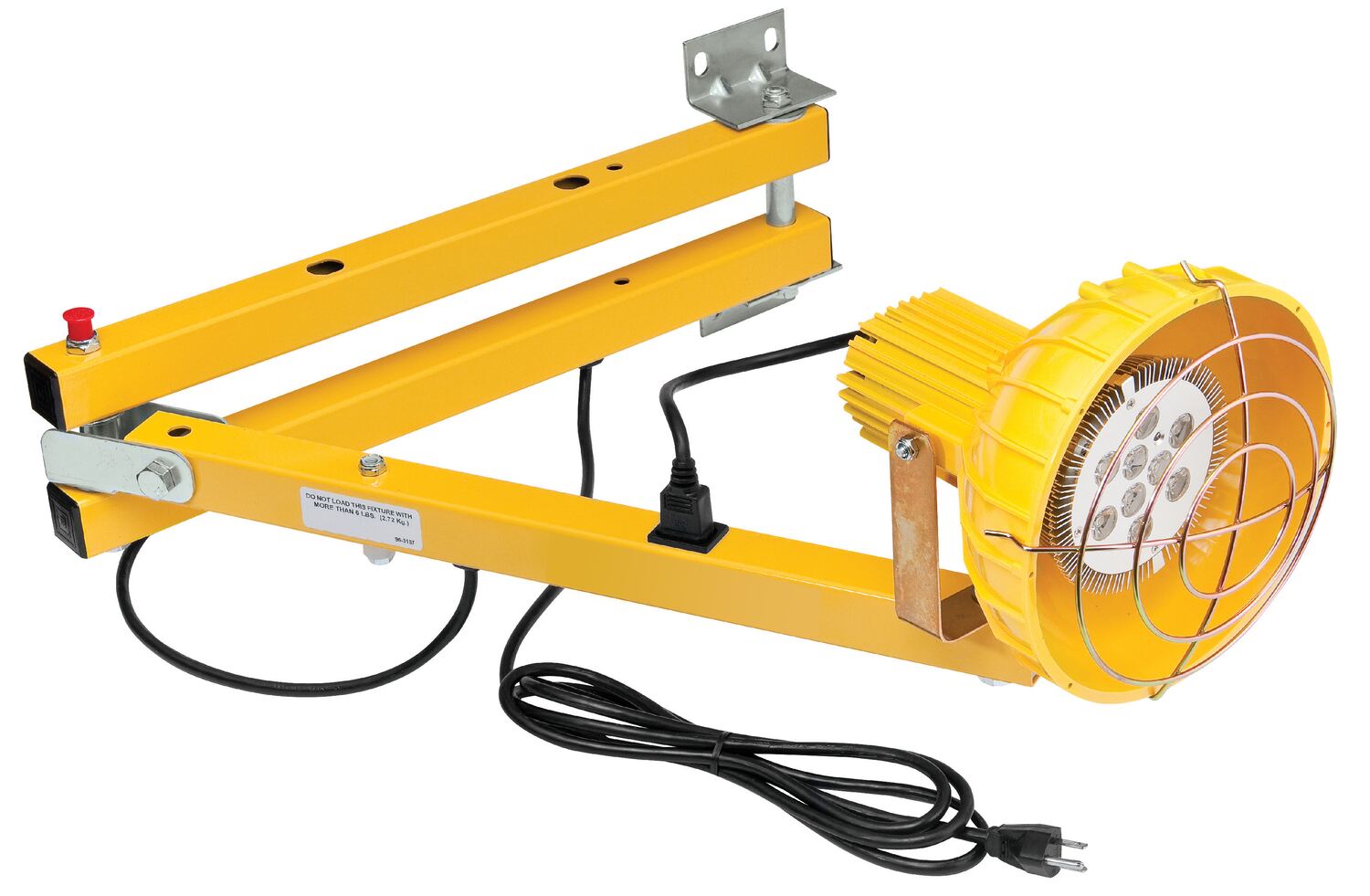
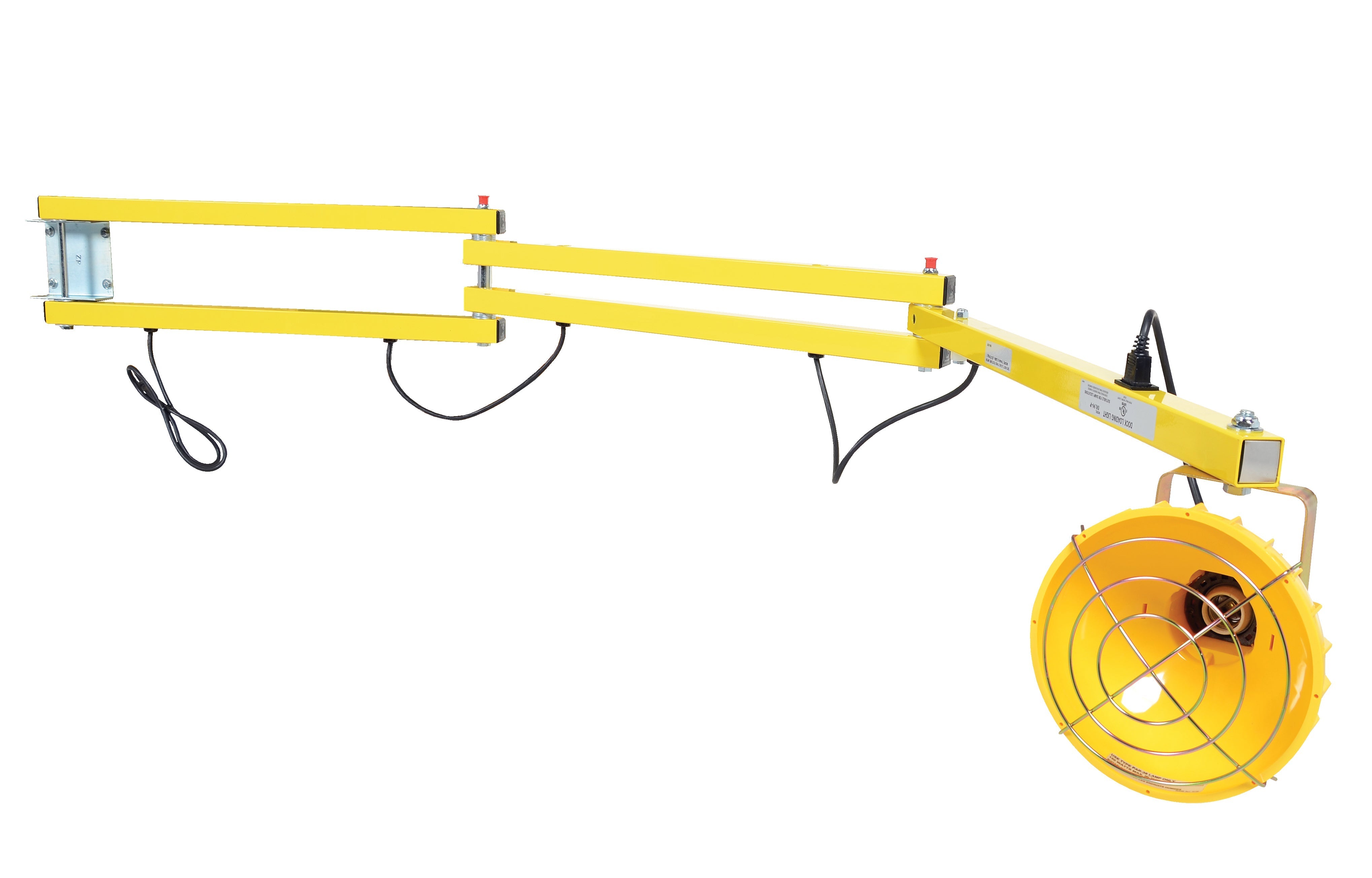
Arm length sets your reach. The single decision that separates these fixtures is arm length. Vestil builds them from 24 inch stubs up to a 114 inch reach on the LED line. A short arm suits a door where the head only has to clear the seal; a long arm carries light to the nose of a full trailer. Configuration matters too: single arms pivot on one axis, while double and triple assemblies fold and swing so the head reaches around obstructions and tucks flat against the wall when the door drops. One variant on the standard line adds a fan to the arm to move air into a hot trailer while it lights it.
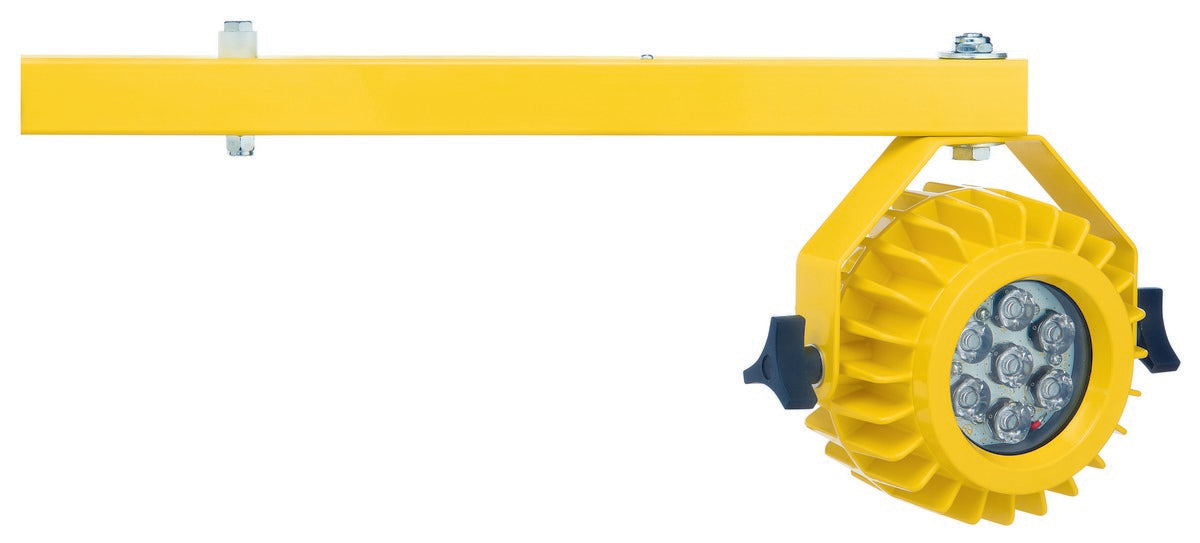
Light source: cheap entry, or LED run hours. The standard Vestil Dock Loading Lights carry incandescent, halogen, or high pressure sodium heads and start near $200, the lowest entry cost in the group. Incandescent heads turn on instantly, hold good color, and work in cold; high pressure sodium pushes far more lumens per watt and lasts longer but needs a few minutes to warm up. Bulb life on all of them runs in the low thousands of hours, and every swap is a ladder trip at a busy door. The LED lines answer that: Vestil's 15 watt LED heads draw a fraction of the power, run cool enough to sit inside a trailer safely, and last tens of thousands of hours, turning annual bulb changes into years of no maintenance.
Standard LED versus heavy duty. Two LED options exist. The standard LED Dock Loading Lights cover single and double arms from 24 up to 114 inches and price from the high $200s to around $575. The Heavy Duty LED version trades some of that price advantage, roughly $536 to $866, for an 18 watt head in a cast aluminum housing with a shatter resistant polycarbonate lens, built for docks that see impact, weather, and constant duty. If forklift traffic or a bay door regularly clips the fixture, the heavy duty build earns its premium; for a clean interior dock, the standard LED is the value pick.
Mounting and placement. All of these bolt to the wall or a structural column beside the door on standard single-phase building power, around 115 to 125 volts. Set the mount high enough that the folded arm clears the opening and low enough that the extended head clears the trailer roof, on the side that lets the arm swing across the opening rather than into it. Wire it to a switched circuit so the light comes on with the door, not left burning into an empty bay.
Frequently Asked Questions
Ceiling fixtures light the dock apron, but their throw ends at the door seal. A docked 53 foot trailer is effectively a windowless room over 50 feet deep, and the pallets at its nose stay dark. A dock light exists to put its head inside that space so the operator sees the load, not the doorway.
Match the arm to how far the light has to travel from the mount to the work. Vestil runs from 24 inch arms up to 114 inches. Short arms are fine when the fixture sits close to the opening and only needs to clear the seal; go longer when you have to light the far end of a full trailer or the mount sits back from the door.
For a door in daily use, usually yes. Incandescent and halogen heads are cheapest up front but their bulbs last in the low thousands of hours, so a busy dock means regular ladder trips. Vestil's 15 watt LED heads draw far less power, run cooler, and last tens of thousands of hours, which pays back in energy and skipped maintenance.
The standard LED Dock Loading Lights are the value choice for a clean interior dock, priced from the high $200s to about $575. The Heavy Duty LED steps up to an 18 watt head in a cast aluminum housing with a shatter resistant polycarbonate lens, built to survive impact and weather at a harder-used door, at roughly $536 to $866.
The Vestil dock lights wire to standard single-phase building power in the 115 to 125 volt range, the same circuit a normal wall outlet uses. Put them on a switch at the door so the light turns on when a trailer is being worked and off when the bay is empty.