Powered Cart
A powered cart puts a battery drive under the deck so the operator walks alongside and steers instead of pushing, the answer for the long hauls and near-capacity loads where muscle stops scaling. This is a small, focused range of Vestil walk-behind traction-drive carts, from a shelved traction-drive cart around $3,265 through the battery-powered electric material handling cart to a pneumatic-tired off-road model for rough ground, with prices running into the low $5,000s. Capacities reach about 2,000 lb, the speed control sits in the handle, and every unit carries a horn and an emergency stop. If the problem is a heavy load on a flat deck over a repeated route, this is the aisle; loaded trailers and palletized freight belong elsewhere.
Compare Powered Carts
| Model | Price | Power | Capacity | |
|---|---|---|---|---|
| Vestil Off-Road Traction Drive Powered Carts | $4,510 | 12V | — | View → |
| Vestil Electric Material Handling Cart | $3,654 | 12V | 500-2,000 lb | View → |
| Vestil Traction-Drive Carts | $3,265 | 110V | 750 lb | View → |
Powered Carts Buying Guide
When a powered cart earns its price. Muscle scales fine for a short push on a level floor. It stops scaling on long runs, on ramps, and on the repeated near-capacity moves that wear a crew out by mid-shift, and that is the line where a powered cart pays for itself. Below that line a manual deck is cheaper and simpler: work through the platform trucks and the rest of the industrial carts and dollies range first, because a $300 hardwood deck moves the same freight over a short route. A powered cart starts around $3,265, so the math has to clear real labor, a route run dozens of times a day, a grade a loaded truck cannot be shoved up safely, or a load heavy enough that pushing it by hand courts an injury.
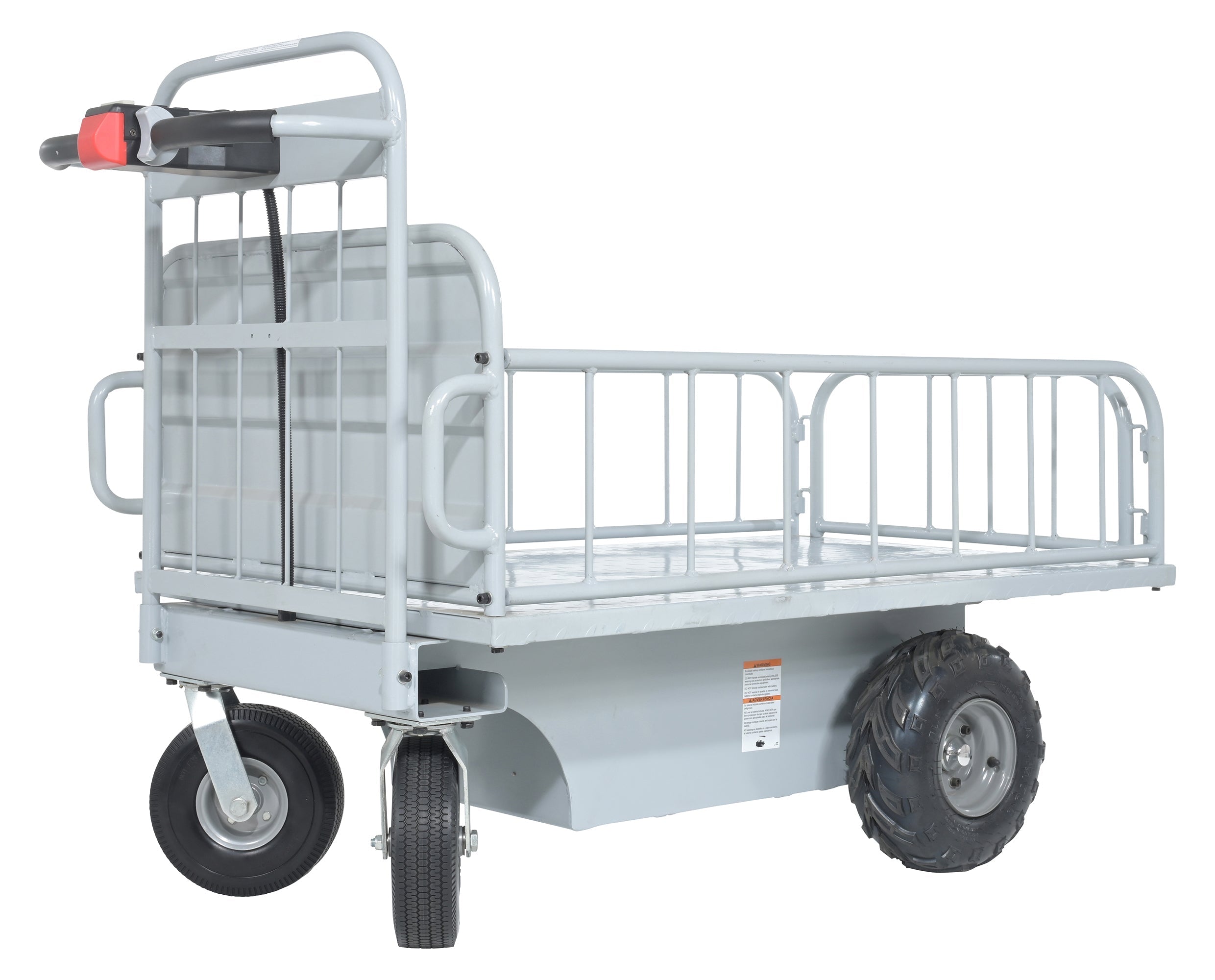
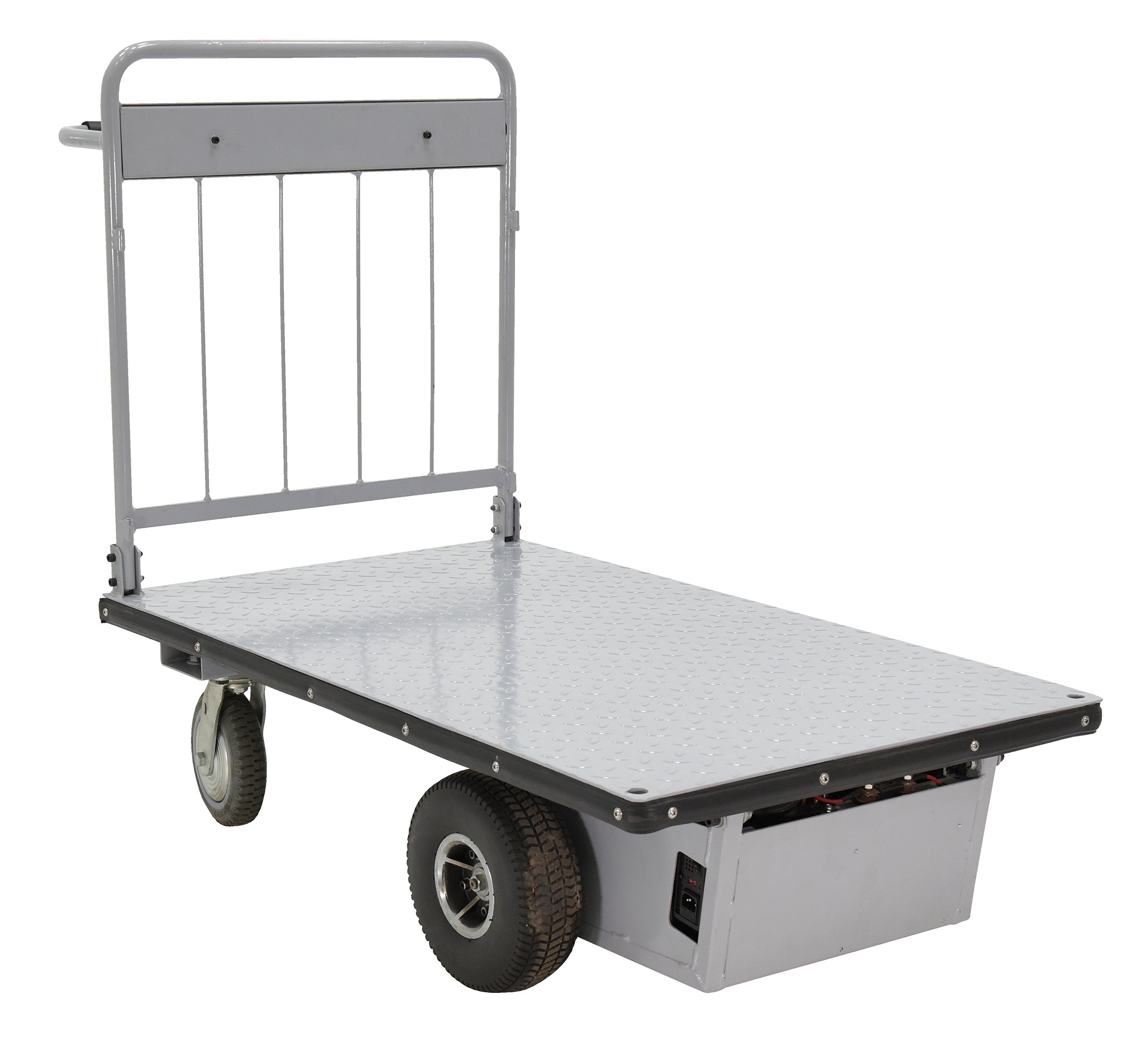
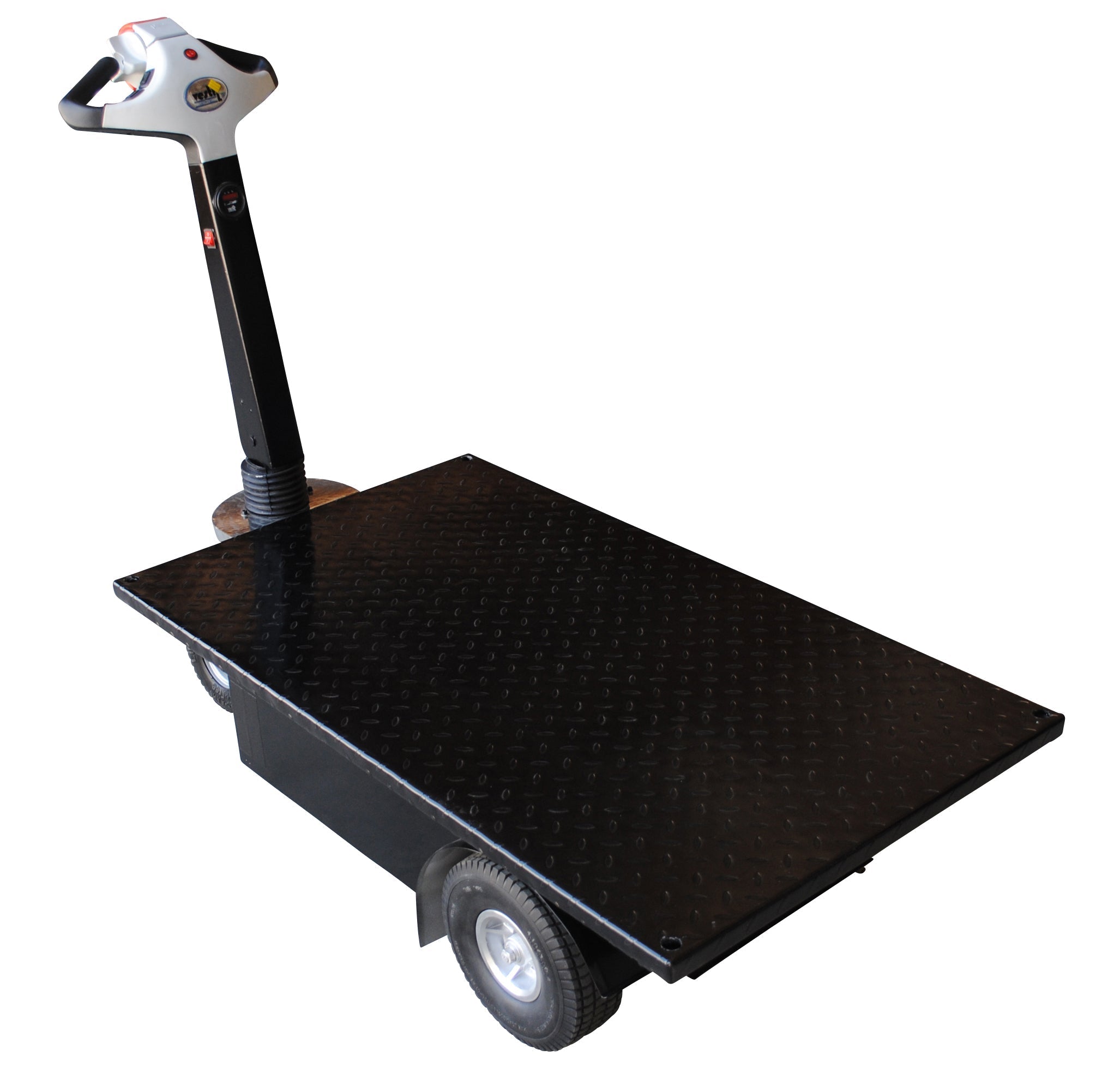
The three carts, and the load each one fits. The range is three Vestil walk-behind carts, all pedestrian-controlled with the speed control in the handle. The Traction-Drive Cart is the shelved workhorse, ordered with one to four levels and priced from $3,265; it runs up to 2.8 mph empty and 1.5 mph loaded, and the handle pivots back toward the operator with a horn and an emergency stop on it. The Electric Material Handling Cart is the flat-platform version, a 12V battery drive rated from 500 up to 2,000 lb in one to three levels, with deck sizes from 28 by 48 inches up to 36 by 72; it starts near $3,654. The Off-Road Traction Drive cart, a 1,000 lb unit from $4,510, swaps smooth-floor casters for pneumatic tires and offers an optional powered tilt so it can dump as well as carry.
Match the wheels to the floor. The wheels decide where the cart is useful. Hard casters want smooth, sound concrete; run them over gravel, expansion joints, or a yard apron and the drive fights the floor the whole way. The two indoor carts are built for finished plant floors, warehouse aisles, hospitals, and schools. The Off-Road model is the one for routes that leave the building, its pneumatic tires crossing rough ground the caster decks cannot. Past what these three do, the powered range branches: shunting loaded trailers without a truck is the trailer movers aisle and its electric tuggers; a route with a flight of stairs every trip wants the powered stair climber in hand trucks; and powered drum handling lives in drum handling equipment.
The motor changes the compliance picture. Adding a motor changes the rulebook. OSHA classifies motorized hand trucks and electric material-handling trucks as powered industrial trucks under 29 CFR 1910.178, the same standard that governs forklifts. The practical consequence is operator training: 1910.178(l) requires every operator be trained and evaluated as competent on that type of truck before running it, walk-behind units included, with a performance evaluation at least once every three years. Keep the rated capacity marked and never exceed it, charge and inspect the battery per the manual, and check the drive, brakes, horn, and emergency stop before each shift. Those controls are on these Vestil carts because a powered deck at walking speed still carries enough momentum to hurt someone in a blind aisle.
Frequently Asked Questions
When labor, distance, or grade turns pushing into a real cost. On a short run over level concrete a manual platform truck moves the same load for a fraction of the price. A powered cart earns its $3,265-and-up price on routes run many times a day, on ramps a loaded deck cannot be shoved up safely, and on loads heavy enough that hand-pushing risks a back injury. Name the specific route and count the trips before you spend.
Up to about 2,000 lb. The Electric Material Handling Cart is offered in 500, 1,000, 1,500, and 2,000 lb ratings, and the Off-Road Traction Drive cart is a 1,000 lb unit. As with any rated equipment, size to your heaviest actual load with margin and stay under the plate, and remember that grade and floor condition both affect how the cart handles near capacity.
The Traction-Drive Cart is a shelved cart in one to four levels, from $3,265, for indoor picking and transport. The Electric Material Handling Cart is a flat 12V platform rated 500 to 2,000 lb, in one to three levels and several deck sizes, from about $3,654. The Off-Road Traction Drive cart, from $4,510, runs pneumatic tires for rough outdoor ground and can be ordered with a powered tilt to dump its load. All three are Vestil walk-behind units.
Yes. OSHA treats these as powered industrial trucks under 29 CFR 1910.178, so under 1910.178(l) each operator must be trained and evaluated as competent on this type of truck before use, walk-behind included, with a documented performance evaluation at least once every three years. Training and evaluation are the employer's responsibility.
Only the Off-Road Traction Drive model. Its pneumatic tires handle gravel, rough aprons, and uneven ground. The Traction-Drive Cart and the Electric Material Handling Cart ride hard casters meant for smooth, sound concrete, and pushing them across broken outdoor surfaces fights the drive and shortens their life. Match the wheel to the floor before you buy.
They move at walking pace, not driving pace. The Traction-Drive Cart runs 0 to 2.8 mph empty and 0 to 1.5 mph loaded, with the speed control in the handle. The Electric Material Handling Cart and the Off-Road cart use a 12V battery drive. These are pedestrian-controlled carts you walk behind and steer, so plan the speed around foot traffic rather than around covering ground quickly.