Forklift Hoppers
A forklift hopper rides on the forks like a giant scoop, carries scrap, rubble, or shavings to the dumpster, and empties itself when the operator trips a latch from the seat. This collection runs from light-duty Vestil steel hoppers that start around $700 through Star Industries self-dump models rated to 4,000 lb, plus the construction-side cousins: concrete hoppers, mortar tubs, skeleton screening buckets, and crane-liftable trash skips to 13,000 lb. Every one of them answers a version of the same question, which is how to move loose bulk material with a machine you already own instead of buying a dedicated dumper or hiring a crane. Two numbers decide almost every purchase here, the volume in cubic yards and the weight rating in pounds, and they are not interchangeable. The guide below starts with how the self-dumping mechanism works, then walks the volume-versus-weight math that keeps a full hopper from overloading your truck, before it gets to the specialist pans and buckets.
Compare Forklift Hopper Attachments
| Model | Price | Capacity | |
|---|---|---|---|
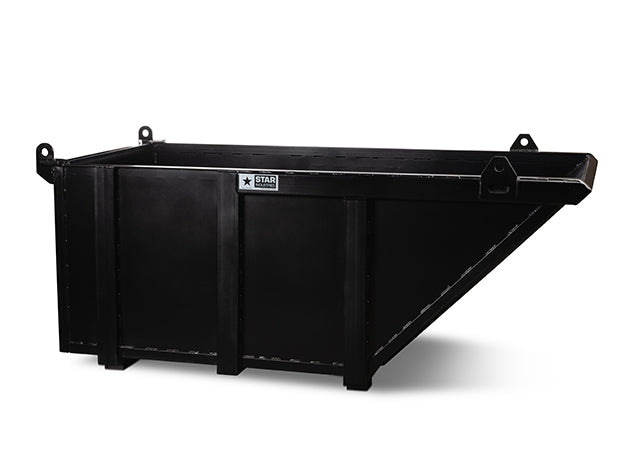
| Star Industries Crane Trash Skips | $5,607 | 5,000-13,000 lb | View → |
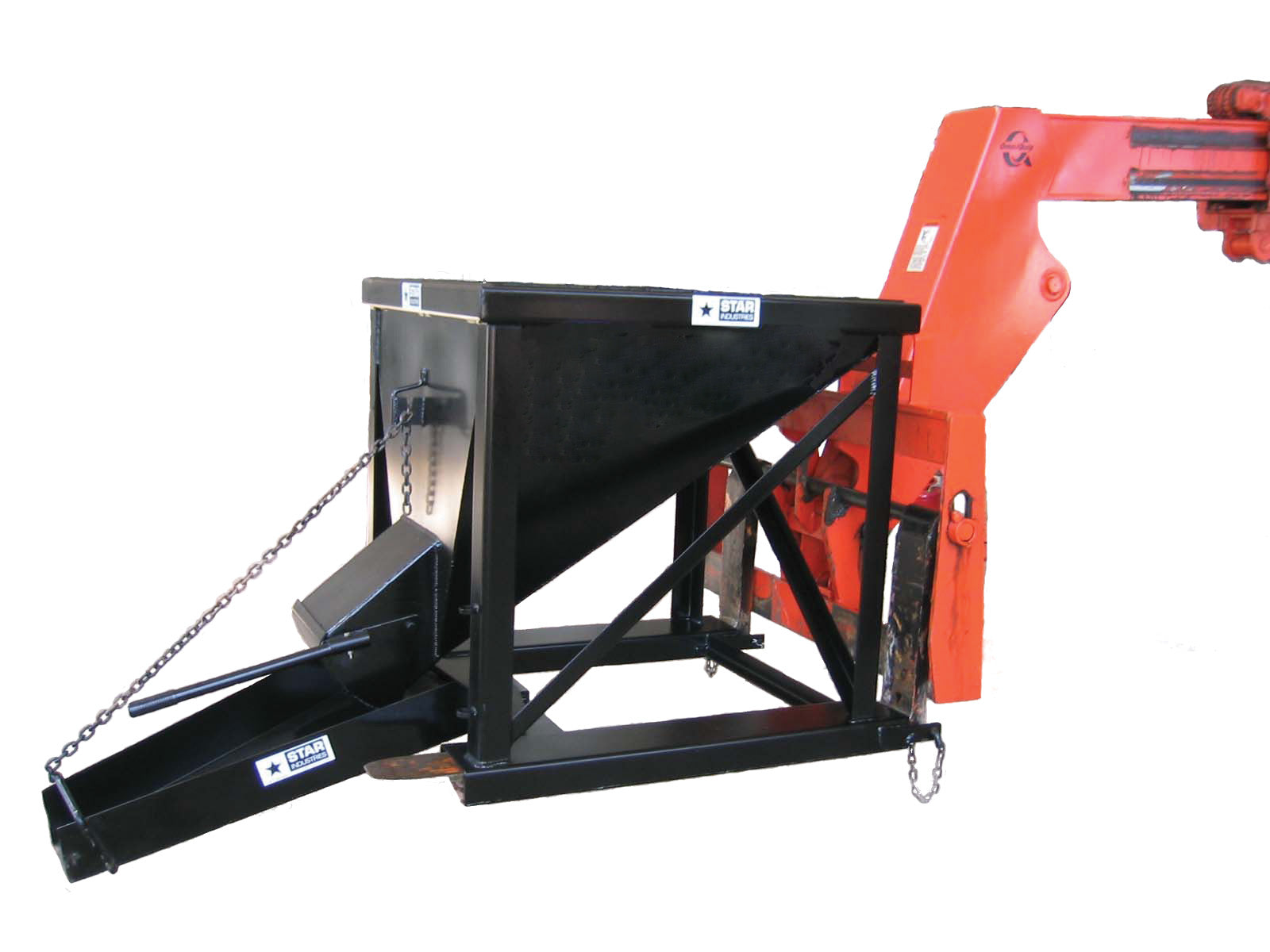
| Star Industries Forklift Concrete Hopper | $4,908 | 3/4 cubic yard | View → |
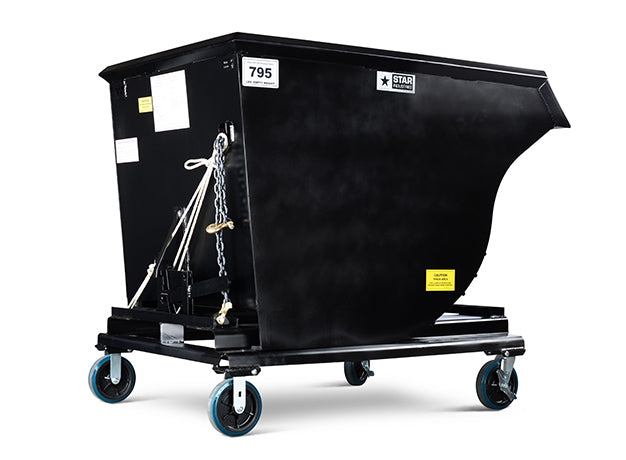
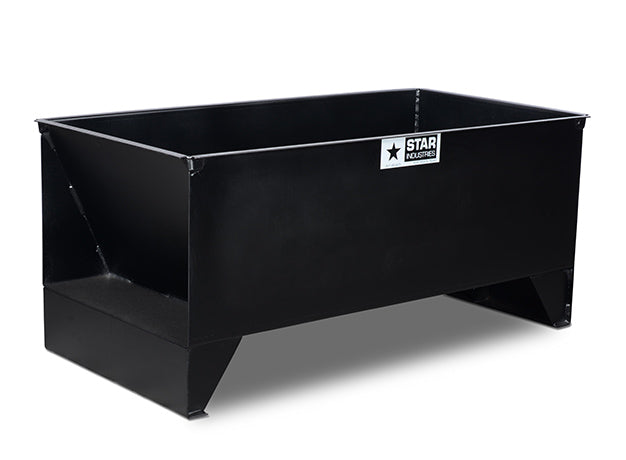
| Star Industries Self-Dump Hoppers | $2,432 | 4,000-6,000 lb | View → |
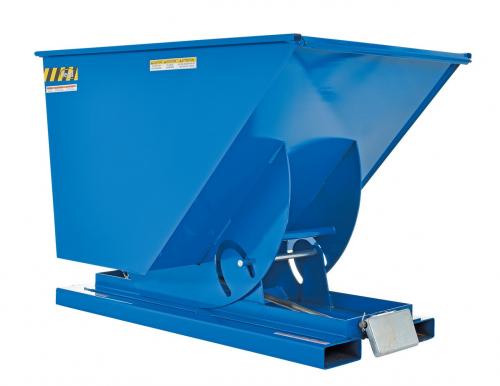
| Vestil Forklift Hopper, Self-Dumping, Light Duty Steel | $1,909 | 2,000 lb | View → |
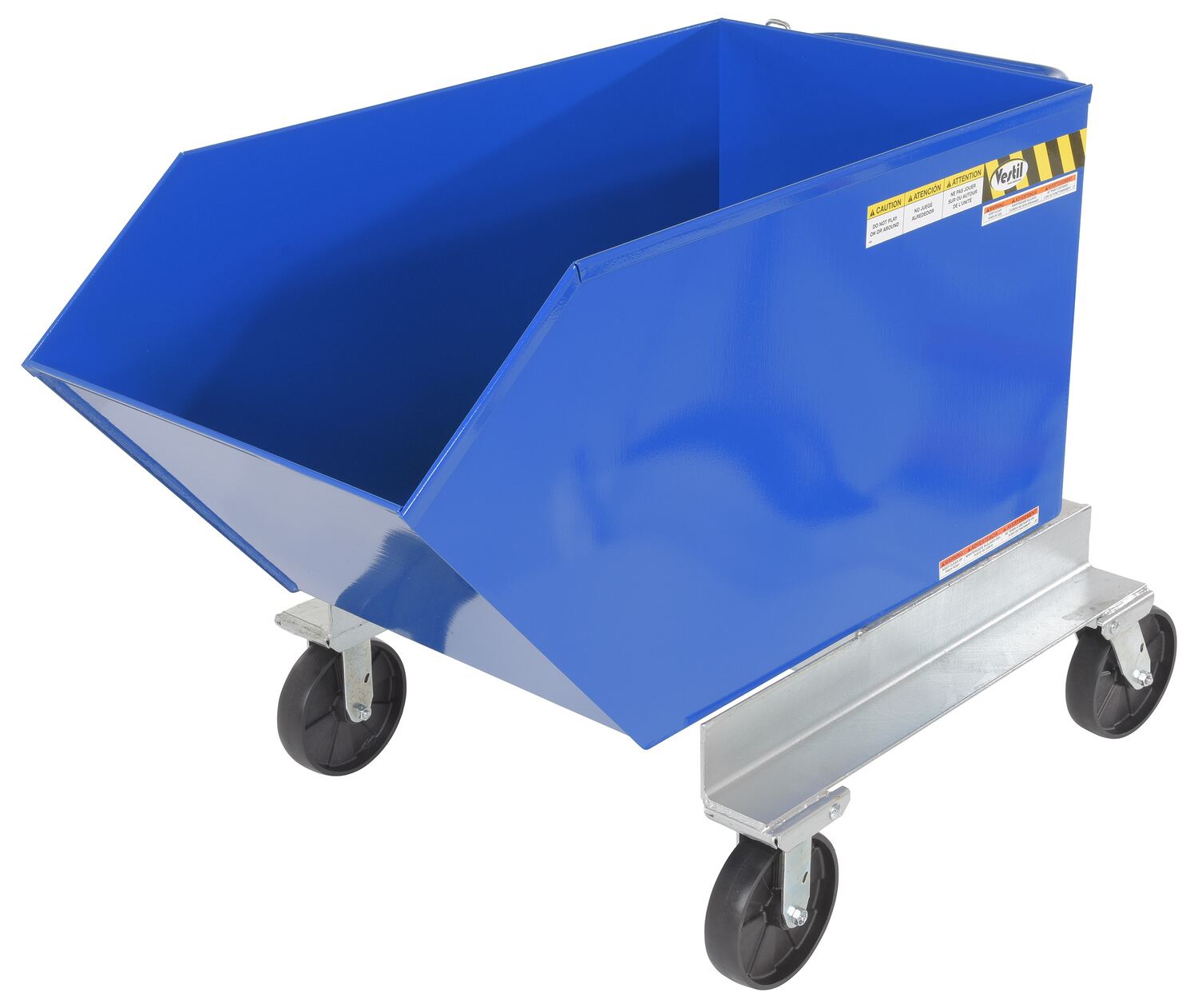
| Vestil Portable Forklift Hoppers With Wheels | $938 | 2,000 lb | View → |
| Vestil Drop Bottom Hopper | $880 | 3,000 lb | View → |
 In Stock
 In Stock
 In Stock
 In Stock
 In Stock
 In Stock
 In Stock
 In Stock
Forklift Hopper Attachments Buying Guide
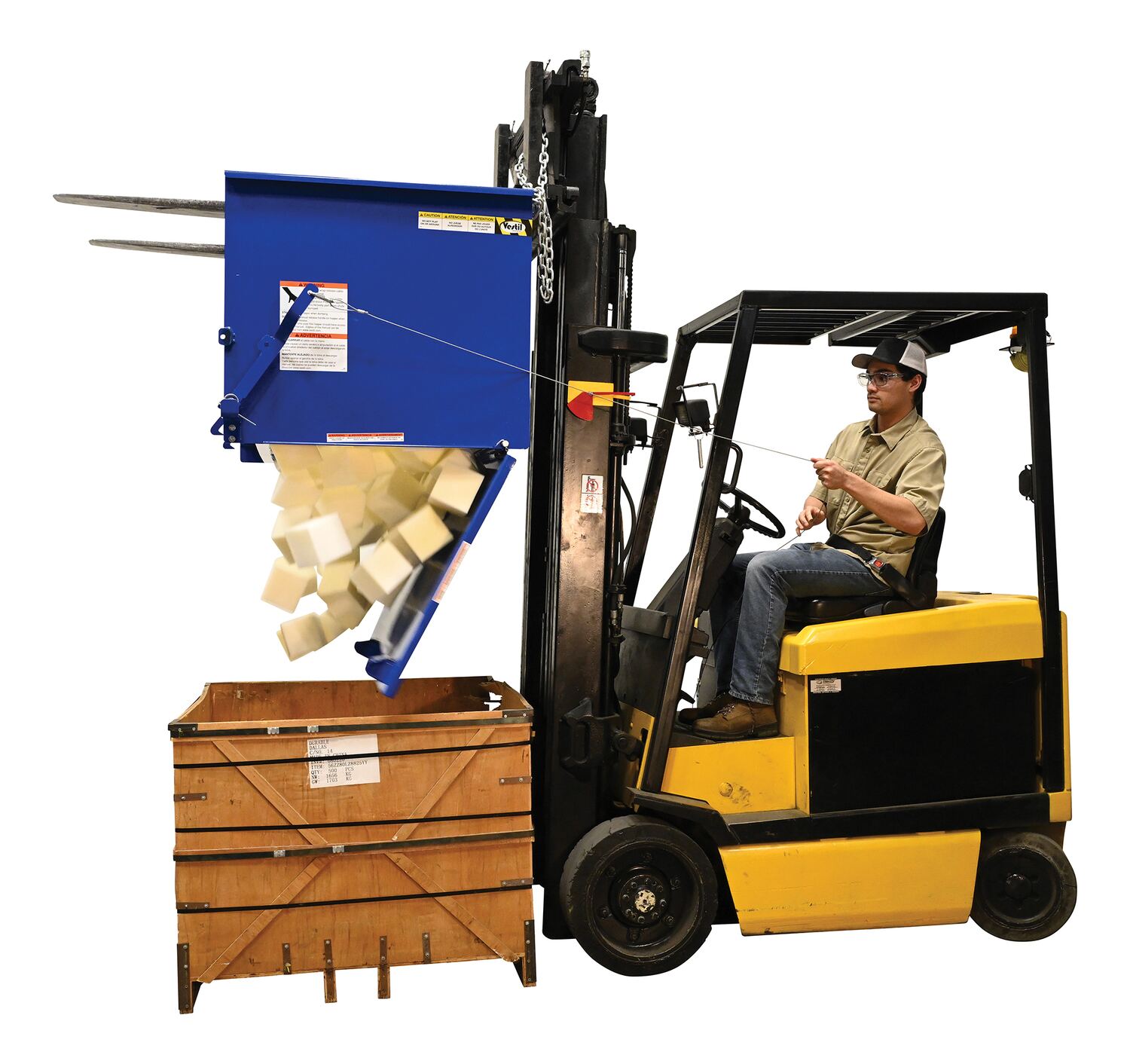
How a self-dumping hopper works. The mechanism is deliberately simple because there is nothing to power. Full-length channels on the underside slide over the forks, so the hopper becomes part of the truck once the forks are through. The operator drives to the dumpster, raises the hopper above its wall, and trips a latch, on Star's models by pulling a 12 ft nylon release rope from the seat so nobody stands under the load. With the latch open, the weight of the contents pivots the tub forward, it dumps, and it rocks back and self-rights on its own once empty, ready to relatch. Nothing hydraulic, nothing to plug in. One safety habit matters more than any other here, and Vestil prints it in the manual: never wrap the release cable or rope around a hand, finger, or arm. Pull it, do not hold it.
Cubic yards versus the weight rating. Every hopper carries two ratings that people constantly conflate. Volume, in cubic yards or cubic feet, is how much it holds. Weight, in pounds, is how much that hold is allowed to weigh. Vestil's light-duty steel hoppers span roughly a quarter yard to three yards; Star's heavier self-dump hoppers run a half yard to two and a half and hold up to 4,000 lb; the portable wheeled models carry 2,000 lb. The trap is filling by volume and blowing past the weight rating, because density changes everything. A cubic yard of packing foam or cardboard is nearly nothing; a cubic yard of wet concrete weighs about 4,000 lb, and a yard of steel turnings or wet sand is heavier still. So a one-yard hopper that shrugs off shop trash will sit at its ceiling with a single yard of masonry rubble. Size to the heaviest thing you will actually load, not the bulkiest, and leave margin.
General scrap: light-duty, heavy-duty, wheeled, and drop-bottom. For everyday scrap and waste the split is duty and mobility. The light-duty steel hoppers from about $700 suit shavings, offcuts, and packaging where a hopper fills over a shift and gets emptied now and then. Star's self-dump hoppers from around $2,400 are the heavy-service answer, thicker steel for dense loads and constant cycling. Where the hopper should also work as a floor-level collection cart, the portable wheeled models, roughly a half to one and a half yards at 2,000 lb and under $1,200, roll to the mess and then ride the forks to the dumpster. And when you would rather place material than tip it, the drop-bottom hopper at about $880 discharges through floor gates by a remote cable while staying level on the forks, handy for backfilling a trench or spotting aggregate without upending the load.
Construction pours: concrete hoppers and mortar tubs. Placing concrete is a different job from removing waste, and it has dedicated gear. The Star forklift concrete hopper, a 3/4 cubic yard pan at about $4,900, lets an extendable-reach forklift or telehandler carry a batch to a column, wall, elevated deck, or any pour a ready-mix chute cannot reach, then meter it out the bottom gate, which is often cheaper than hiring a concrete pump for a small placement. For mortar and grout at the wall, Star's mortar tubs in 6 and 10 cubic foot sizes, from under $500, ride the forks to the mason instead of the mason walking back to the mud.
Screening and digging buckets. Two families here dig and sort rather than carry. Star's skeleton buckets, from about $1,700, have spaced tines that let soil and fines fall through while rock, root, and debris stay behind, the fast way to clean fill or grade a stony site, with heaped capacities running about 7 to 18 cubic feet. The smooth and toothed mini excavator buckets, from roughly $600, trench and dig in 10 to 36 inch widths, toothed for hard or frozen ground and smooth for finish grading and clean trench bottoms. These are the same working tools that mount on compact machines, so if a skid steer does the digging on your site, the skid steer attachments collection carries grapples and buckets on that coupler instead.
Crane skips, capacity, and wear parts. When material moves by hook instead of fork, Star's crane trash skips take over: heavy steel pans from 40 to 102 cubic feet, rated to 13,000 lb, that a crane hoists off a roof or deck full of tear-off and sets down to dump, priced from about $5,600. They belong with the rest of your cranes rigging rather than the forks. Whatever you hang, remember the hopper counts against your truck: its long fork channel pushes the load center forward and its own weight comes off the plated capacity, so a hopper derates the machine exactly the way every entry in forklift attachments does, and the data plate math applies before the first load. Finally, these are wear items. Latches, springs, handles, and the 12 ft release rope fail first, and Star stocks them from a few dollars, so a cheap latch spring keeps a hopper dumping instead of jamming.
Frequently Asked Questions
The hopper's channels slide onto the forks, and the operator lifts it over the edge of a dumpster or bin. Tripping the latch, on Star's models by pulling a release rope from the seat, lets the weight of the contents pivot the tub forward so it dumps, then it rocks back and self-rights on its own once empty. There is no hydraulics or power involved. Keep clear of the swing and never wrap the release rope around your hand.
Match two ratings, not one. Cubic yards tells you how much it holds; the pound rating tells you how much that volume may weigh. Because density varies enormously, a cubic yard of cardboard is trivial while a cubic yard of wet concrete runs about 4,000 lb, so size to the heaviest material you will actually load rather than the bulkiest. Star's self-dump hoppers top out at 4,000 lb and the wheeled portable models at 2,000 lb, so confirm your load stays under the figure with margin to spare.
Not a trash hopper, but there is a dedicated tool for it. The Star forklift concrete hopper is a 3/4 cubic yard pan that an extendable-reach forklift or telehandler carries to a column, wall, or elevated deck, then discharges through a bottom gate, which often saves the cost of a concrete pump on a small placement. For mortar and grout at the wall, the mortar tubs do the same delivery job at a smaller scale.
Yes, in two ways. The hopper's own weight comes straight off the truck's rated capacity, and its long fork channel pushes the load center forward, which cuts capacity again through the longer lever arm. Read the attachment's weight against your truck's data plate before loading, and follow the same manufacturer-approval and marking steps that apply to every forklift attachment. Never judge it by the hopper's volume alone.
How they are lifted. A forklift hopper rides on the forks and dumps by tilting; a crane trash skip hangs from a hook and is rated for crane lifting, up to 13,000 lb on Star's models, so it can pull tear-off and refuse straight off a roof or deck where no forklift can drive. Choose by whether material moves by fork or by hook on your site.