Guard Rail Systems
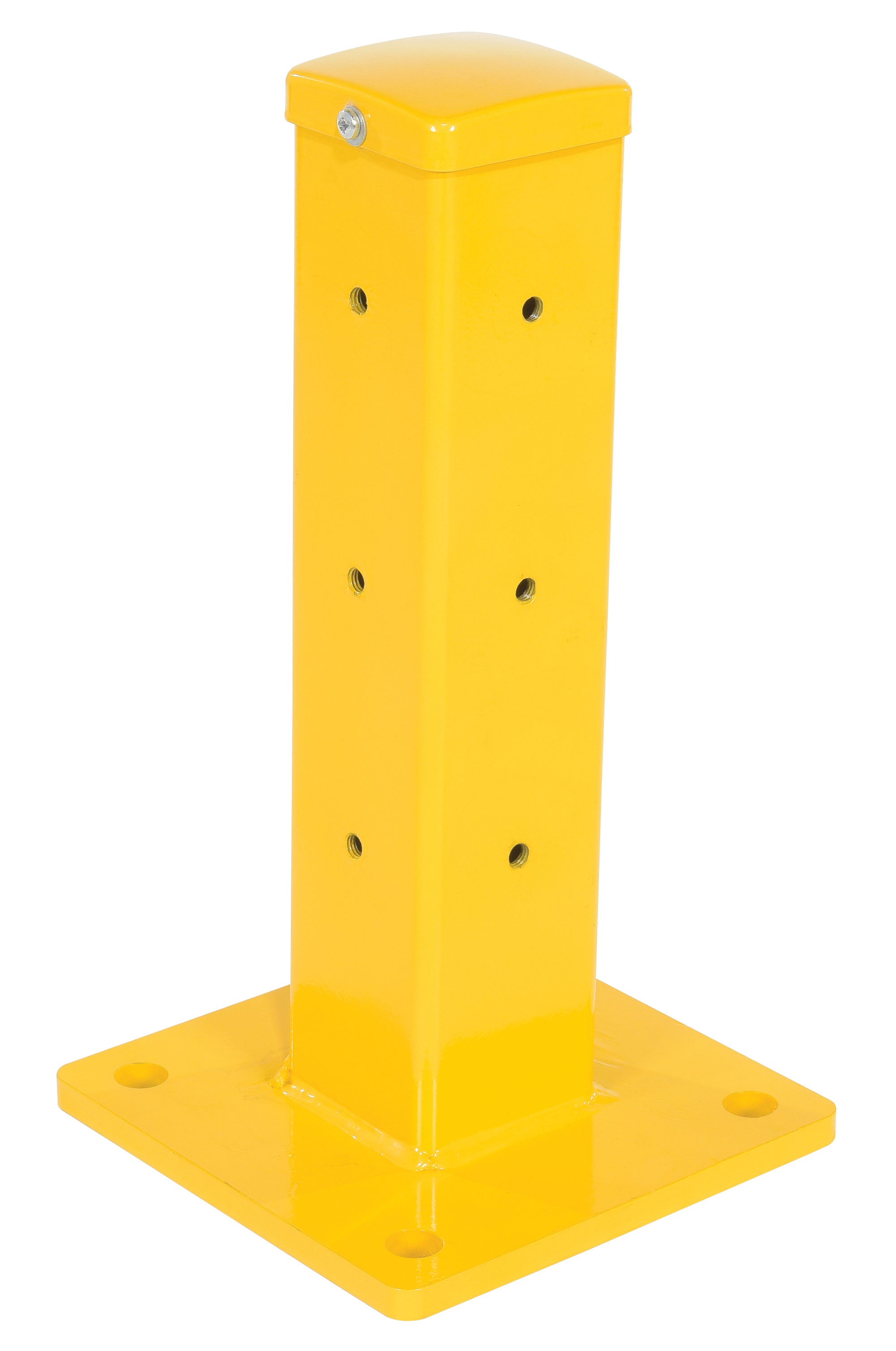
Guard rail systems put a line of bolted structural steel between your forklift traffic and everything a wandering truck bends: rack uprights, machinery, dock edges, walls, and the people working next to them. Everything in this collection is Vestil, built from corrugated ribbed steel rail on 1/4 inch round-corner posts that bolt to 10 inch square base plates, and the range runs from an $8 reflector or plastic end cap up to heavy-duty sections rated at 12,000 lb. The organizing question is how the rail attaches and how hard it has to hit back. Bolt-together and bolt-on rib rail handle the everyday warehouse aisle, drop-in bracket highway rail takes the harder knocks and lifts out for fast replacement, wall-mount rail protects where there is no floor to sink a post, and structural channel covers the lighter guidance runs. Colors go from standard safety yellow to galvanized for outdoor and washdown lanes. The guide below works through the mounting choice, the rib count, and the capacity math before you specify a run.
Compare Guard Rail Systems
| Model | Price | Overall Length | |
|---|---|---|---|
| Vestil Heavy Duty Guard Rails | $1,683 | 48-144 in | View → |
| Vestil Drop-In Bracket Highway Guard Rail Systems | $371 | 18-144 in | View → |
| Vestil Structural Channel Guard Rail Systems | $281 | 18-124 in | View → |
| Vestil 3-Rib Bolt-On Structural Guard Rail Systems (Rail) | $278 | 12-120 in | View → |
| Vestil 2-Rib Bolt Together Structural Guard Rail Systems (Post) | $224 | 18-108 in | View → |
| Vestil 3-Rib Bolt-On Structural Guard Rail Systems (Post) | $132 | 18-72 in | View → |
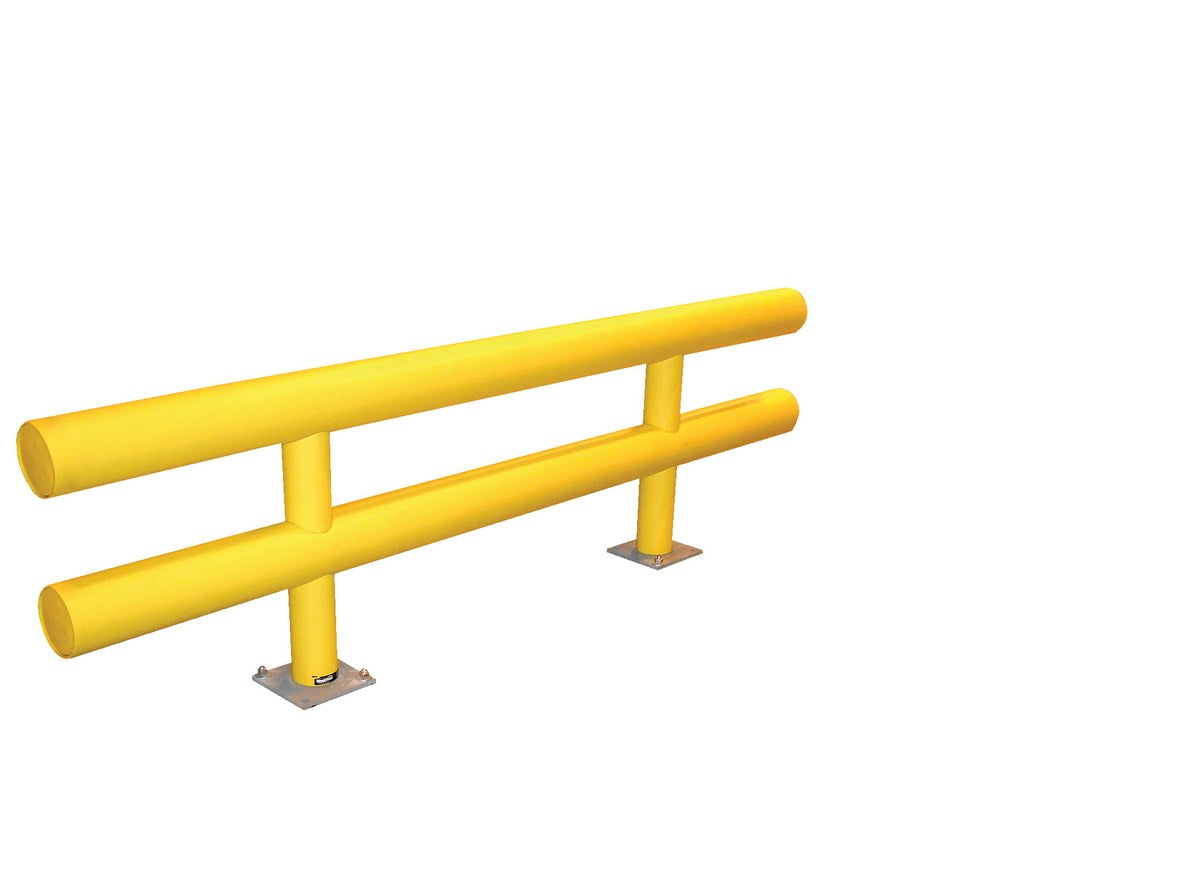 In Stock
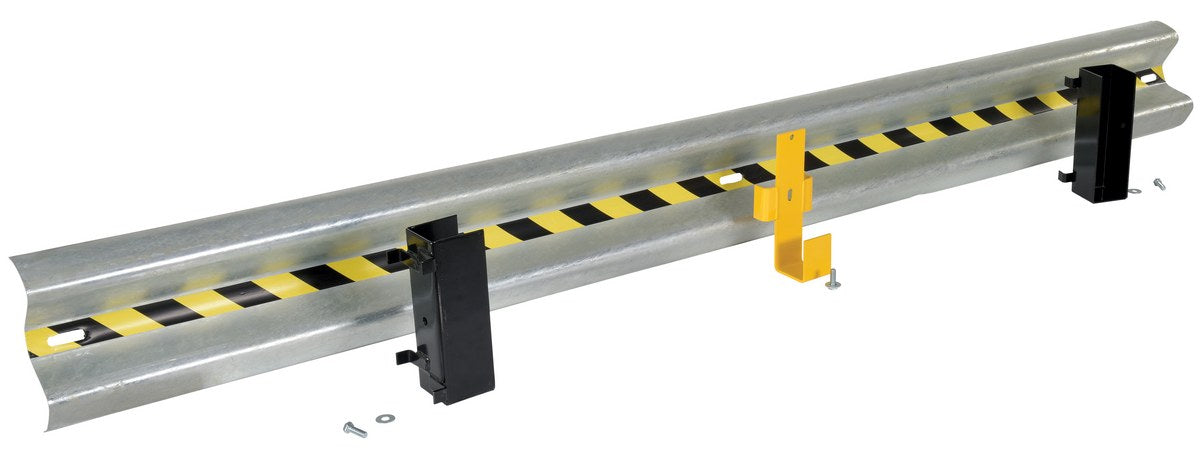 In Stock
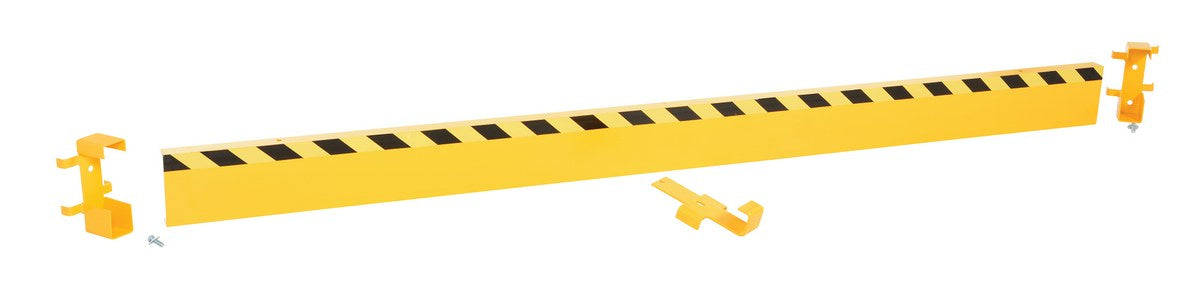 In Stock
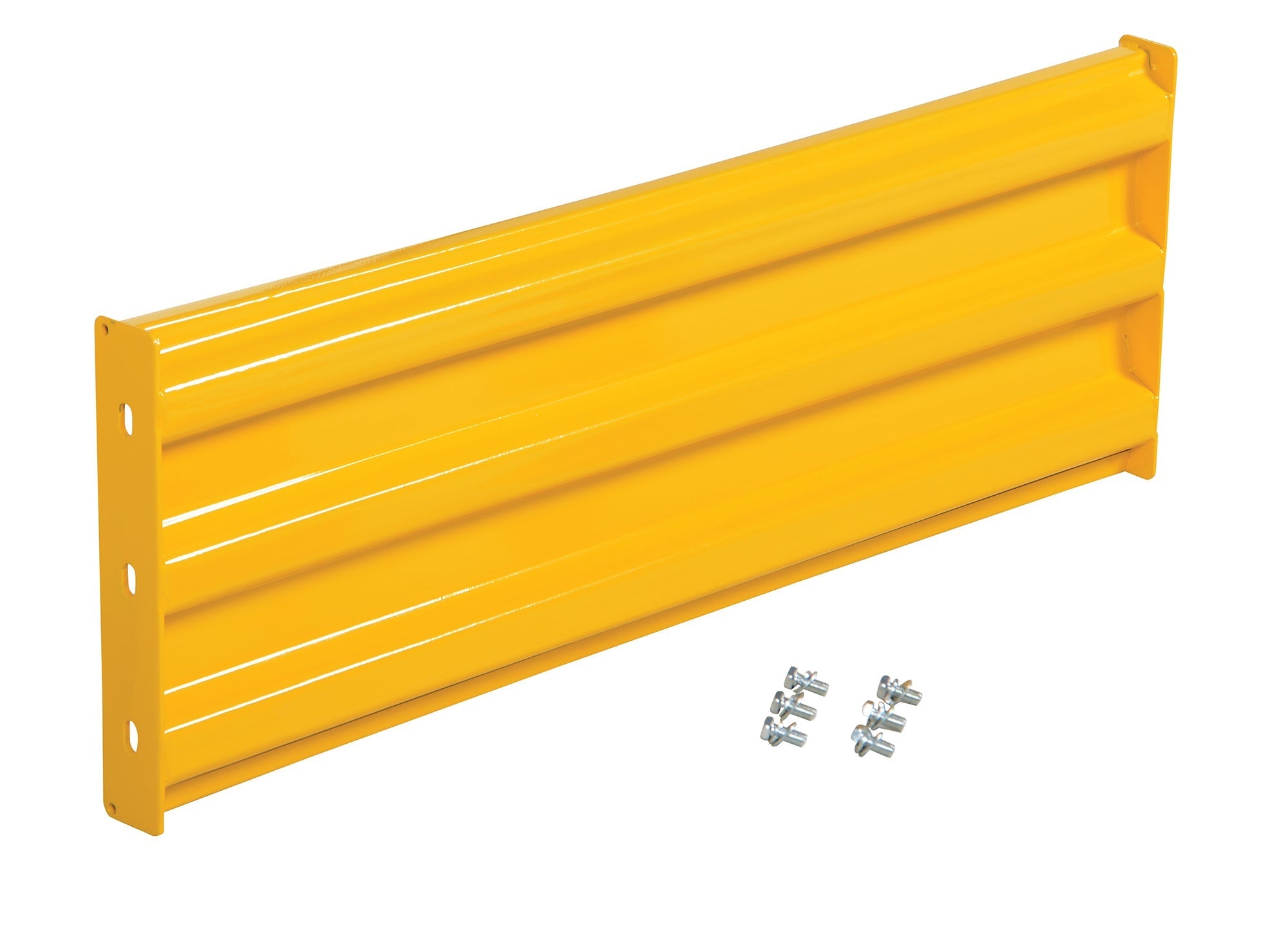 In Stock
 In Stock
 In Stock
 In Stock
 In Stock
 In Stock
 In Stock
Guard Rail Systems Buying Guide
Impact rail is not fall railing: know which one you need. The phrase guard rail covers two unrelated jobs, and buying the wrong one is a common mistake. OSHA 1910.29(b) sets fall-protection guardrail at 42 inches, plus or minus 3, above the walking surface to keep a person from going over an edge; that is a people-height railing and it lives in safety railings. The systems here do the opposite job. They sit low, at bumper-to-knuckle height, and take the hit from a moving vehicle so the rack or machine behind them does not. There is no single federal impact number for traffic guard rail, so the spec that matters is capacity and how the rail is anchored, not a code height. If the goal is walling a forklift away from a machinery guard or a rack run, you want structural impact rail. If the goal is keeping a worker from falling off a mezzanine, you want the 42 inch railing instead.
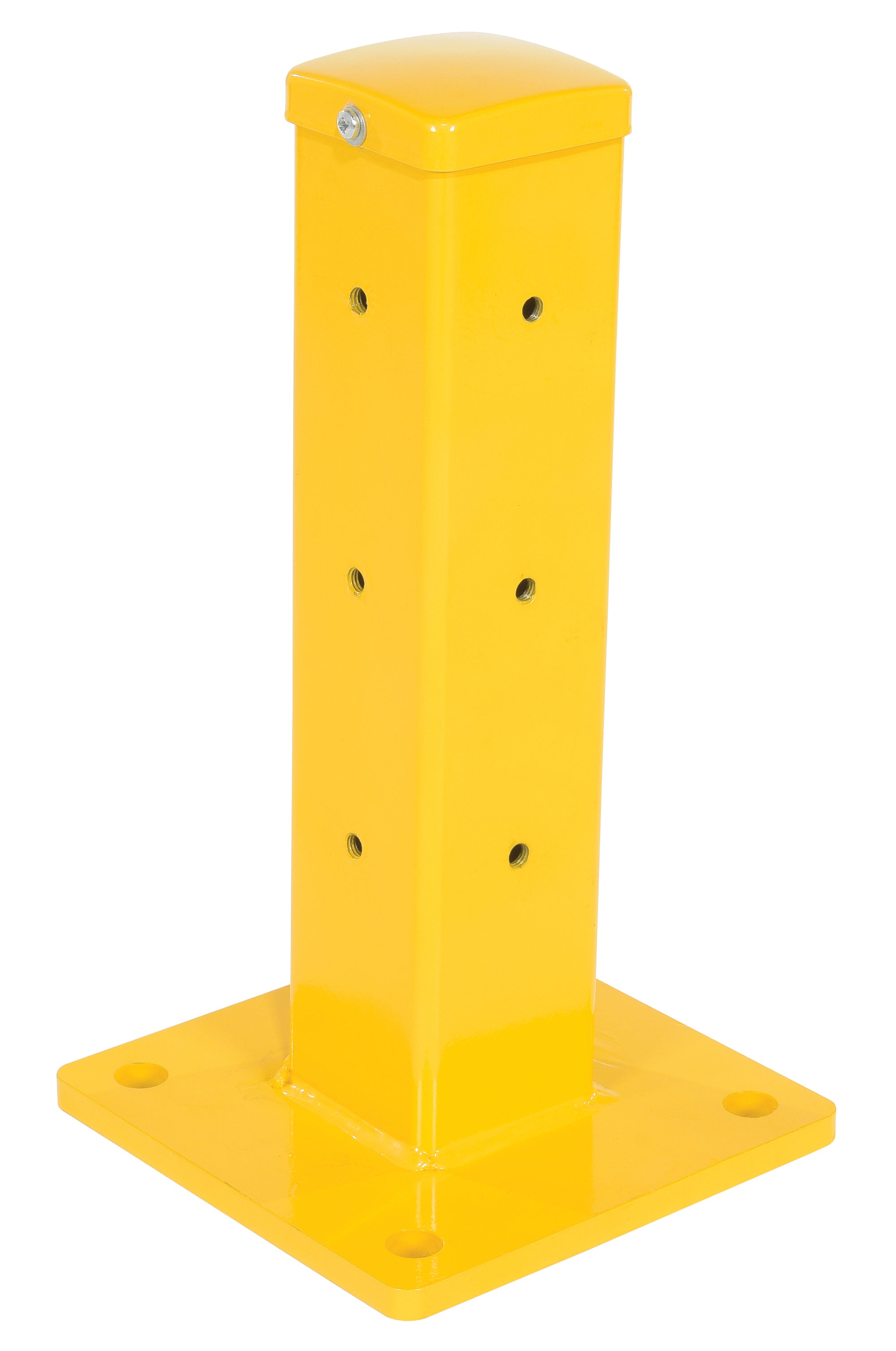
Bolt-together, bolt-on, or drop-in bracket. Three mounting styles cover most installs. The 2-rib bolt-together and 3-rib bolt-on rib rail fasten the corrugated rail straight to the post, with rail mounting hardware included; the posts are 1/4 inch round-corner steel welded to a 10 inch square, 5/8 inch thick base plate that anchors into the slab. The drop-in bracket highway system uses a bracket that lets each rail seat into the post and lift back out, which speeds replacement after a strike and lets you pull a damaged section without unbolting its neighbors. Post lengths run from a short 18 inch single-rail post up to 72 inch posts that carry two or three levels of rail. On any shared post where two rails overlap, deduct 5 inches from your run math. Floor mounting hardware ships separately on the highway systems, so add it to the order rather than assuming it is in the box. This whole family sits under protective barriers alongside the bollards and rack guards that finish a layout.
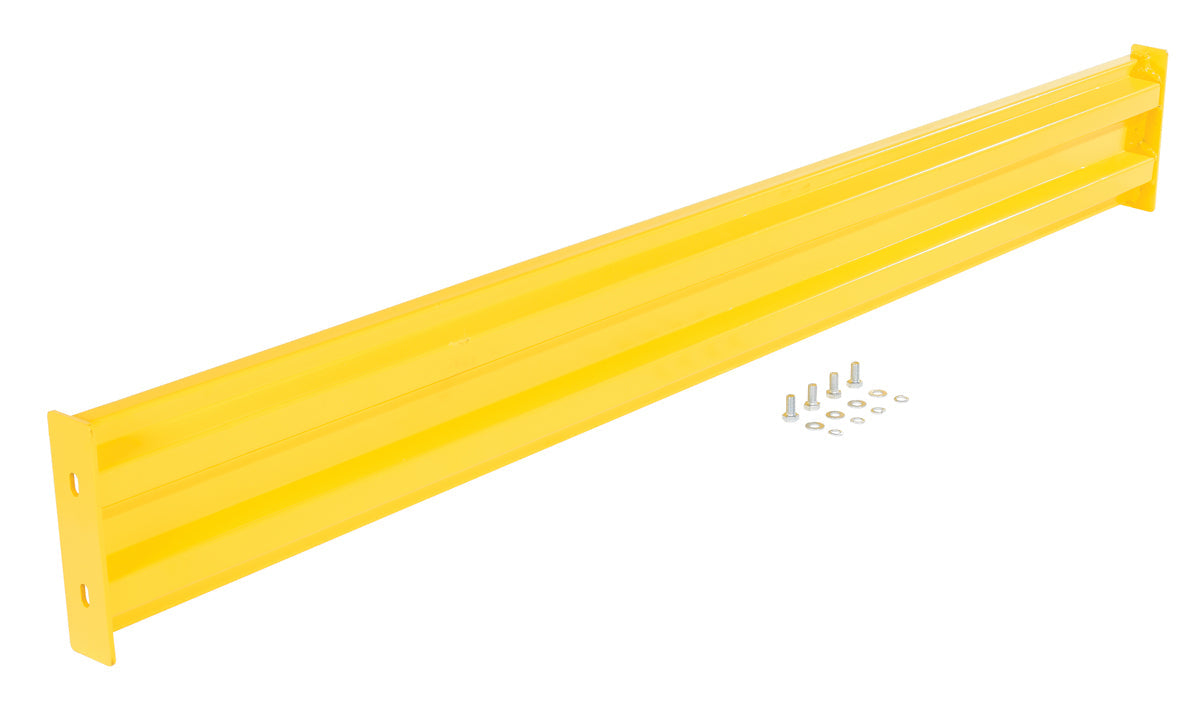
Two rib or three rib, and the highway option. Rib count is corrugation, and corrugation is strength. Two-rib rail is the standard warehouse choice and covers most aisles. Three-rib rail adds a corrugation for more impact resistance on the corners and lanes forklifts actually clip. Both mount as post and rail. The drop-in bracket highway rail uses the W-beam profile familiar from roadsides and is rated for 4,000 lb at 4 mph, which is the working assumption for typical counterbalance traffic at aisle speed. That 4,000 lb figure is the standard rating across the rib and highway systems, so treat it as your baseline unless a lane clearly needs more. Match rail length to the span between posts, with rail sections from 12 to 120 inches, and note that the slotted mounting holes, 3/4 by 2-1/2 inches, give a little adjustment when the post spacing does not land perfectly.
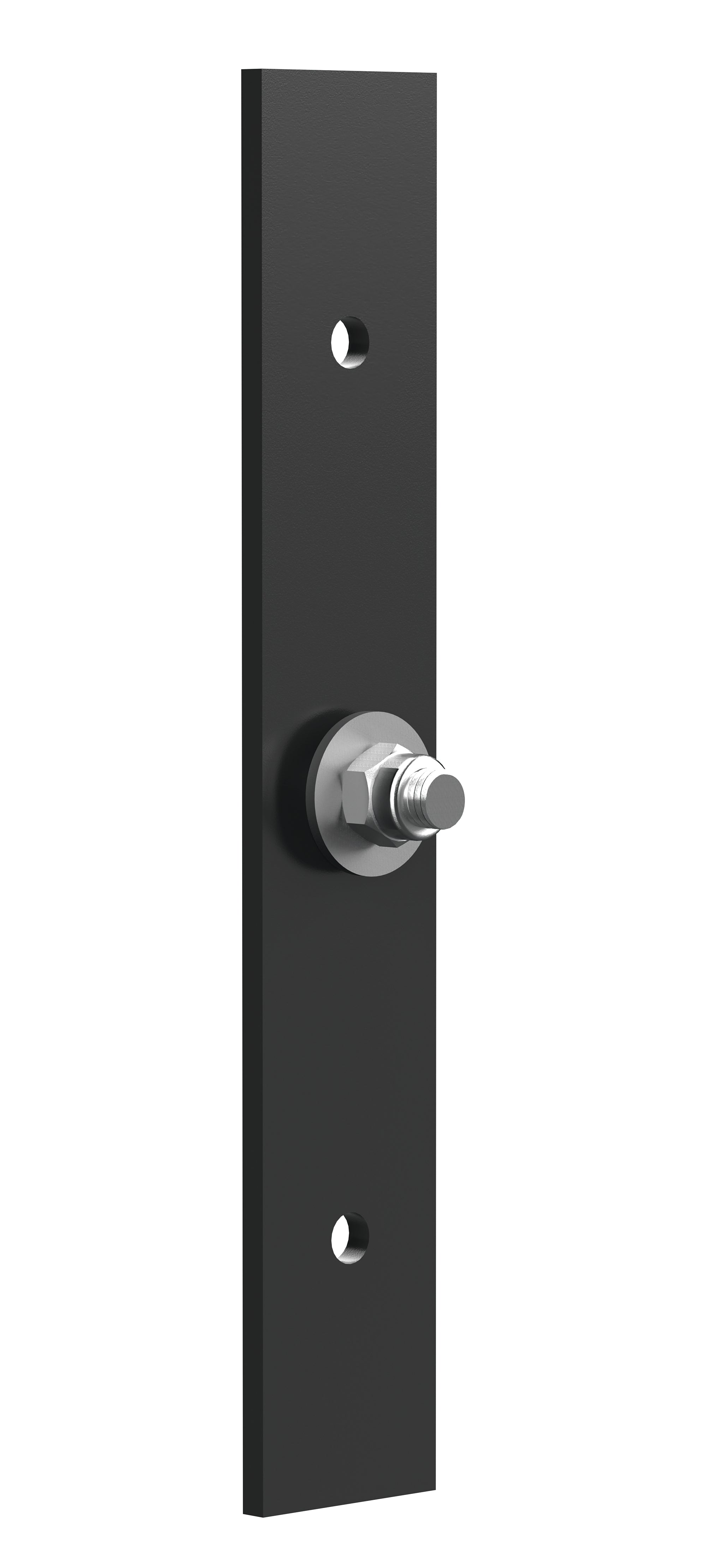
When a post system will not fit: wall mount and channel. Not every run has an open slab to bolt a base plate to, and not every run needs corrugated highway rail. Wall-mount guard rail fastens the rail straight to the wall on mounting plates, which frees the floor and lets you set the exact height you want, since there is no fixed post dictating it. Reach for it in tight aisles where a base plate would be a trip hazard or eat into forklift clearance. Structural channel guard rail swaps the corrugated rib for a steel channel rail on posts and support brackets, a lighter, cleaner-looking run for walkway edges and low-speed guidance where you are steering foot and cart traffic more than stopping a loaded truck. Pair either one with safety bollards at the corners that take a direct, head-on hit rather than a glancing scrape along the rail.
Heavy duty when 4,000 lb is not enough. The 4,000 lb rating covers ordinary forklift traffic at aisle speed, but some lanes see bigger equipment or faster travel. The heavy-duty guard rail steps the rating up to 12,000 lb, in 27, 36, and 42 inch heights and 48 to 144 inch lengths, for loading-dock approaches, battery rooms, transformer and switchgear enclosures, and anywhere a reach truck or tow tractor can build real momentum before it arrives. Spend the money where a miss is expensive. A bent section of standard rail is cheap to replace, but the thing behind it, a main electrical panel or a gas line, may not be, and neither is the downtime. Everywhere the consequence of a strike is a scuffed wall and a work order, standard rib or highway rail is the right and cheaper call.
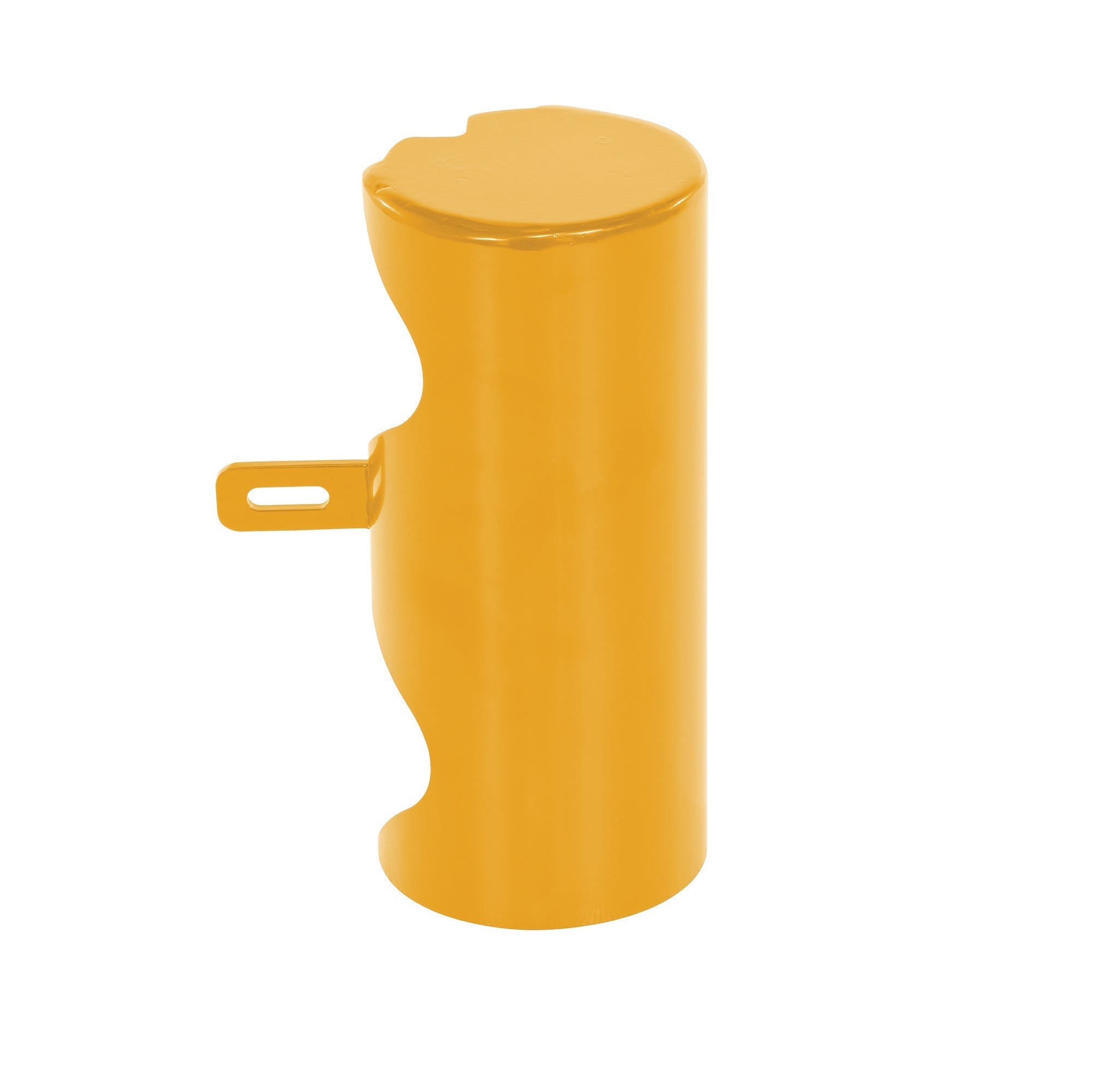
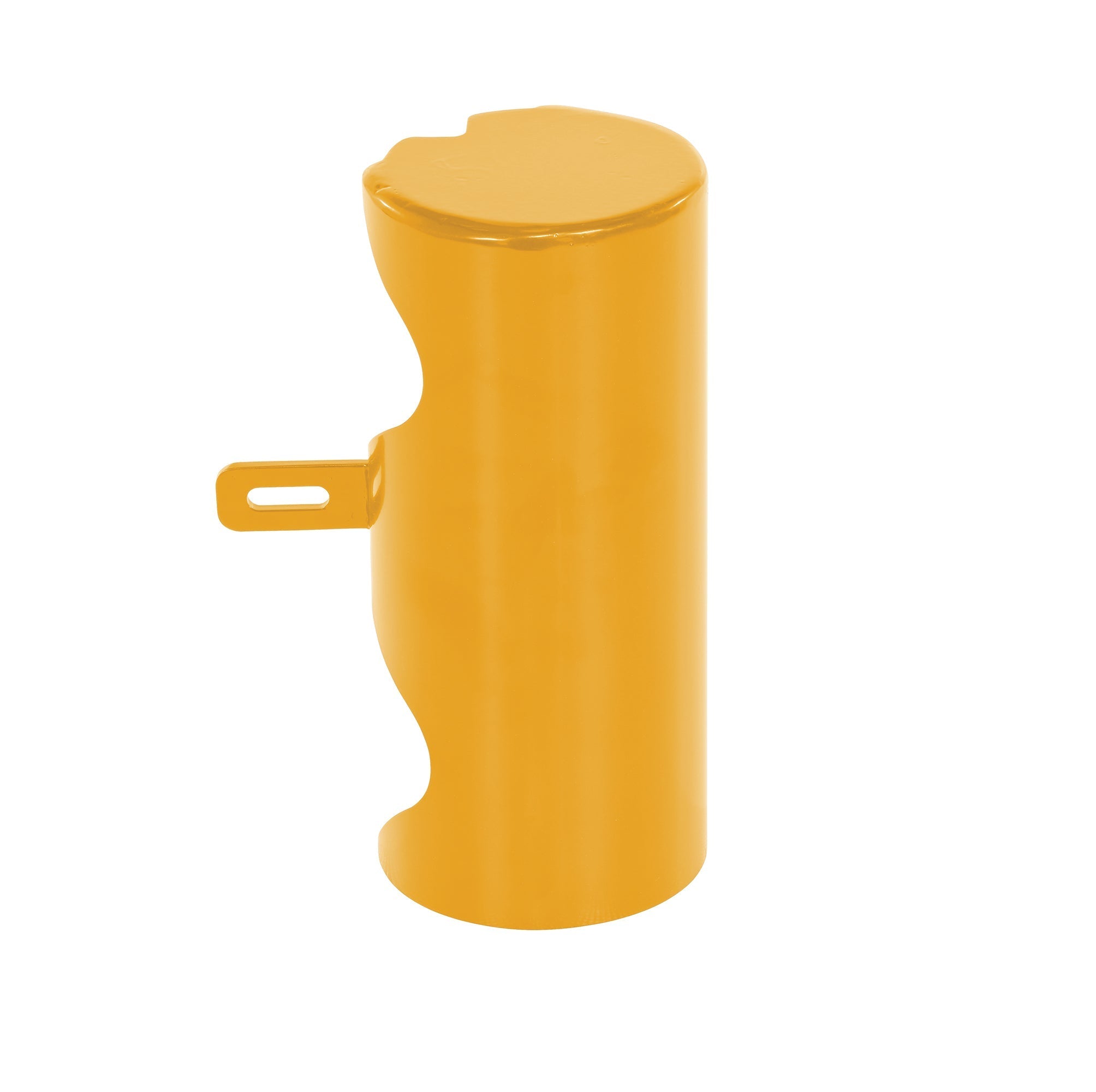
Ends, corners, color, and specifying the run. A finished run is posts plus rail plus the parts that make it safe to stand next to. The accessory sets cover plastic and steel end caps, buffer and flared end guards that keep a raw rail end from becoming a spear, 90 degree corner caps for turns, adjustable and U-brackets, and reflectors for visibility in low light. Color is a safety decision as much as a finish: standard safety yellow reads as caution and is the default, galvanized is the pick for outdoor, wet, and washdown lanes where powder coat would chip and rust, and blue, gray, red, and the rest let you code lanes by department or hazard. Before you order, measure the run, subtract 5 inches for every shared-post overlap, confirm you have floor mounting hardware, and match the color to the environment. For the corners and edges that take a glancing brush rather than a full strike, corner and edge guards and rack guards round out the protection.
Frequently Asked Questions
They do opposite jobs. These are impact barriers that sit low, around bumper height, and take a hit from a forklift or cart to protect the rack, machine, or wall behind them. OSHA 1910.29(b) fall-protection railing sits at 42 inches, plus or minus 3, above the walking surface and exists to keep a person from falling off an edge or mezzanine. If you need to stop a vehicle, buy structural guard rail. If you need to protect a person at height, buy the 42 inch railing in our safety railings collection instead.
The standard rib and highway systems are rated for 4,000 lb at 4 mph, which covers typical counterbalance forklift traffic at aisle speed. When a lane sees heavier equipment or faster travel, the heavy-duty guard rail steps up to a 12,000 lb rating in 27, 36, and 42 inch heights. Rate the rail to the equipment and speed in that specific lane, and put the heavy-duty sections where a miss reaches something expensive like electrical gear or gas lines.
Rib count refers to the corrugations pressed into the steel rail, and more corrugations mean more impact resistance. Two-rib bolt-together rail is the standard warehouse choice for general aisle protection. Three-rib bolt-on rail adds a corrugation for the corners and high-traffic lanes forklifts clip most often. Both install as post-and-rail systems on the same style of 1/4 inch round-corner posts and 10 inch square base plates.
On the highway and drop-in bracket systems, yes. Rail mounting hardware is included with the posts, but the floor anchoring hardware that fastens the base plate to your slab ships separately, so add it to the order. Confirm the fastener type against your floor, since a poured slab and a thinner topping anchor differently.
The drop-in bracket highway system. Its rails seat into a bracket on the post and lift out, so you can pull and replace a bent section without unbolting the rails on either side. Bolt-together and bolt-on rib rail hold up just as well but take more wrenching to swap a damaged length. If a lane gets hit often, the drop-in design pays back the difference in downtime.