Machine Guards
Machine guards in this collection are the steel and padding that stand between a forklift and the equipment it can wreck: the press, the CNC, the compressor, and the building columns those machines sit against. This is impact protection, and it is a separate job from the point of operation guarding that keeps an operator's hands out of the moving parts inside a machine. OSHA 1910.212(b) requires any machine built for a fixed location to be anchored so it cannot walk or move, and an anchored machine cannot dodge a lift truck either, so a perimeter guard bolted to the slab is what actually takes the strike. Everything here is Vestil, in welded steel pipe and molded protective pads, running from a low profile guard section around forty dollars to column pads near eight hundred. The organizing question is what you are protecting and from which side the hit comes, and the guide below works through the families in that order.
Compare Machinery Guards
| Model | Price | Overall Width | |
|---|---|---|---|
| Vestil Square Column Protective Pads | $640 | — | View → |
| Vestil iBeam Protective Pads | $523 | — | View → |
| Vestil Gantry/Jib Guard | $411 | — | View → |
| Vestil Low Profile Machinery Guards | $349 | 36-144 in | View → |
| Vestil Surface Mounted Removable Machinery and Rack Guards | $258 | 36-48 in | View → |
| Vestil 90 Degree Triple Elbow Guards | $196 | 24-30 in | View → |
 In Stock
 In Stock
 In Stock
 In Stock
 In Stock
 In Stock
 In Stock
Machinery Guards Buying Guide
Impact protection, not point of operation guarding. Two different pieces of hardware get called a machine guard, and buying the wrong one is common. OSHA 1910.212(a)(1) requires guarding that protects operators and nearby employees from point of operation, ingoing nip points, rotating parts, and flying chips and sparks; that is the built-in barrier on the machine, and it faces inward at the moving parts. The guards in this collection face outward. They protect the machine, and the people working at it, from the traffic in the aisle. Because 1910.212(b) anchors a fixed machine to the floor so it cannot move, the machine has no way to give when a forklift drifts into it, and a steel guard ringing the base is the only thing that absorbs the hit. Pair that with the marked clearances 1910.176(a) requires wherever mechanical handling equipment runs, and you have both the paint line and the physical stop behind it.
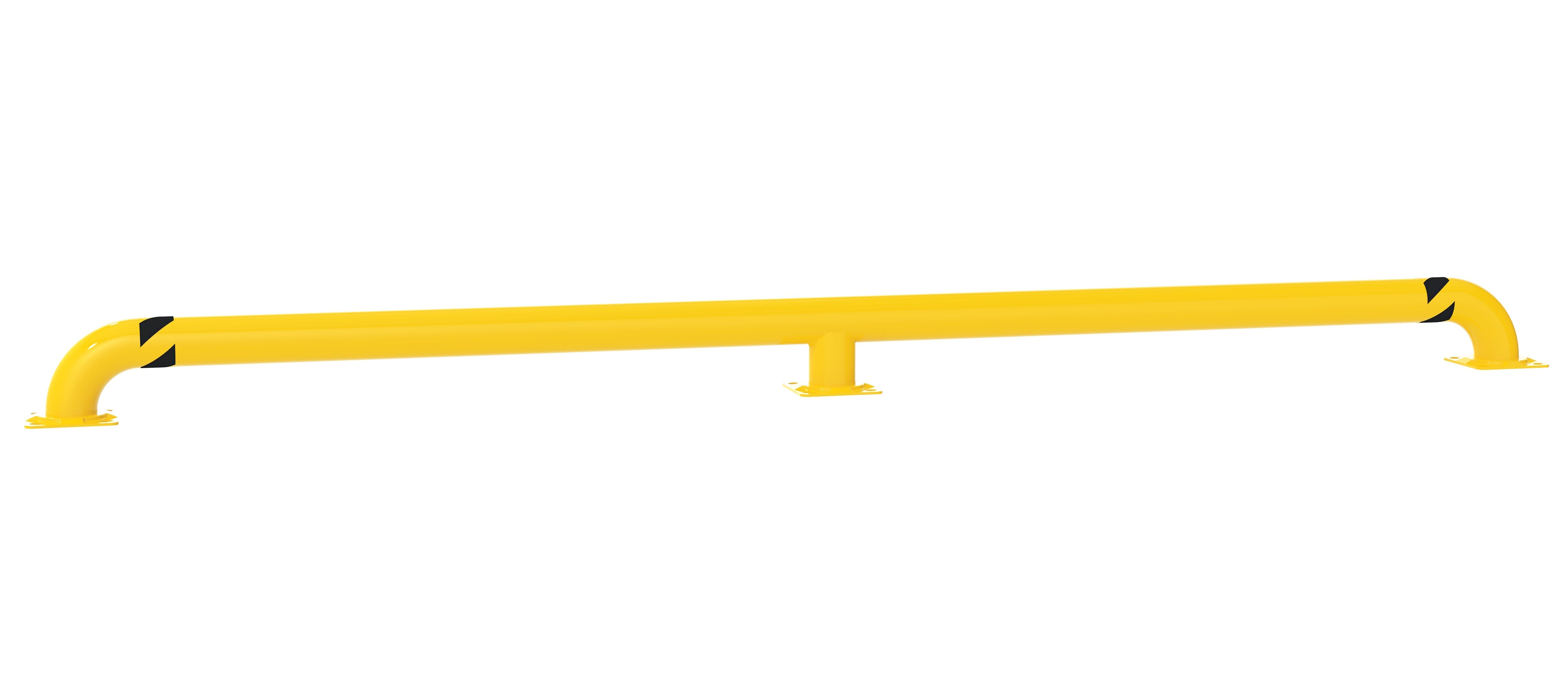
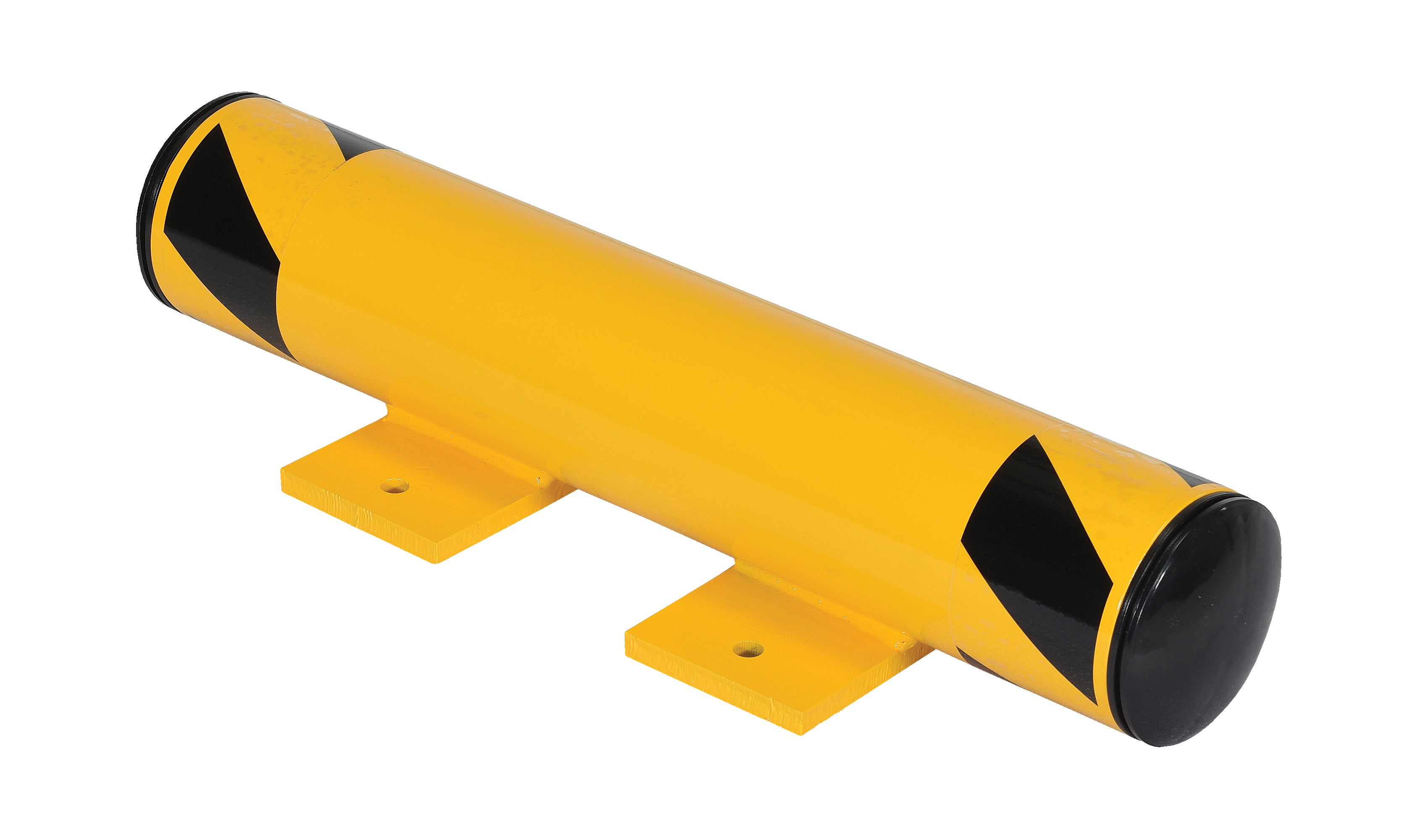
Low profile guards ring the machine base. The low profile machinery guards are the workhorse of the category and the cheapest insurance a base casting can carry, starting around $41 a section. They bolt to the floor and follow the footprint of the machine, with widths from 36 up to 144 inches so sections chain around the perimeter you actually have. The 9 and 16 inch heights are set to catch the forklift wheels and the mast before either reaches the equipment, and a removable base option lets a section come up when the layout changes. Pipe diameter is the strength dial: 2 inch pipe suits foot traffic and light pallet jacks, while the 4.5 and 5 inch pipe goes on the lanes loaded trucks travel. It is the same welded construction as the rack guards that protect pallet uprights, aimed at machinery instead. Guard the travel facing side first, since the back of a machine against a wall almost never gets struck.
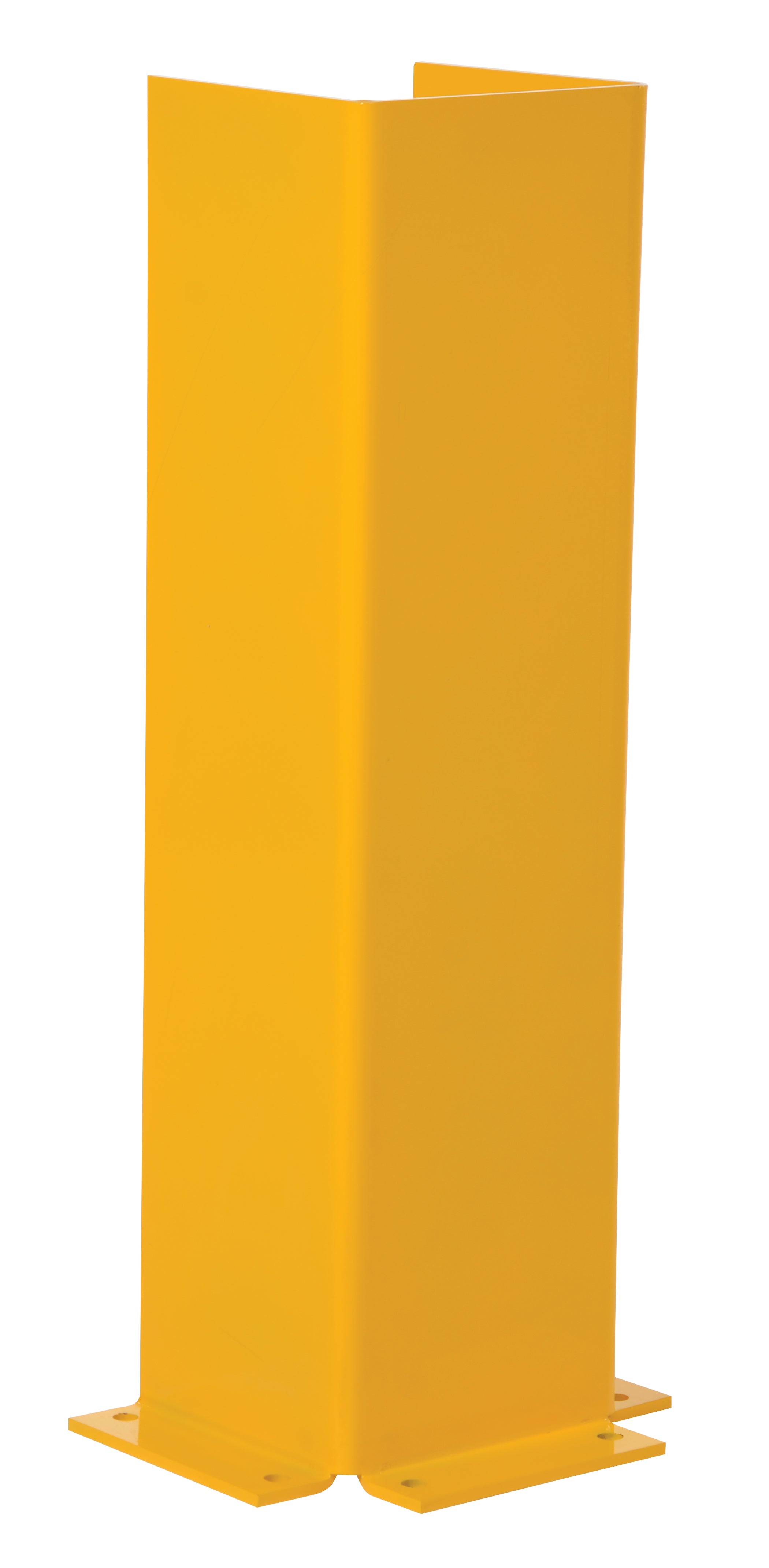
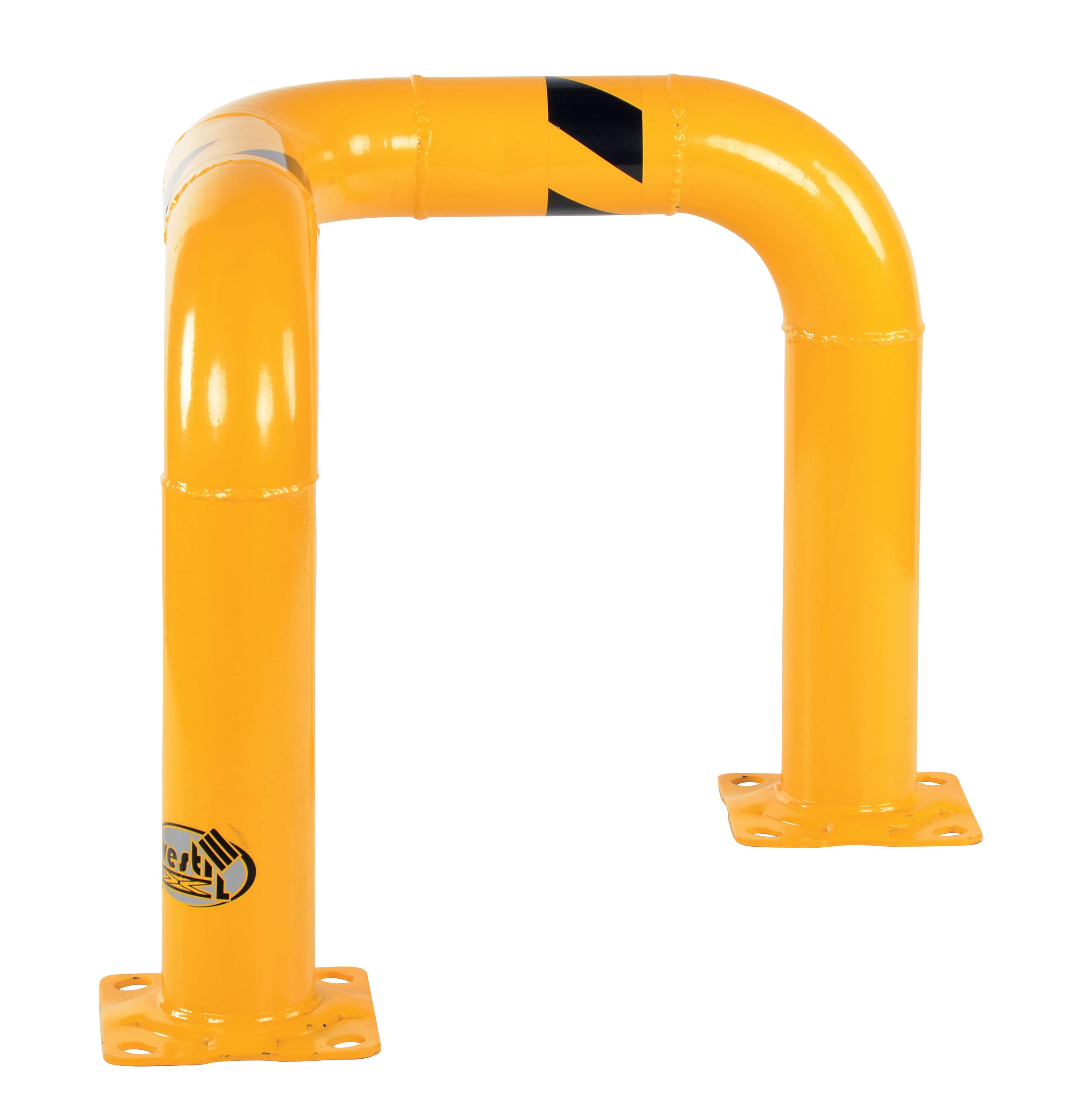
Corners take the worst of it. A forklift cuts corners, so the outside corner of a machine base or a floor mounted control cabinet is where the damage concentrates. The 90 degree triple elbow guards wrap that corner, three bends forming the return around both faces, in 24, 36, and 42 inch heights and 24 or 30 inch widths from about $195. That is structural steel for a real strike. For the lighter problem, the painted edge that gets scraped and the sharp corner a passing worker catches a shoulder on, the foam and PVC in corner and edge guards is the cheaper and softer answer, and the two often go on the same machine at different heights.
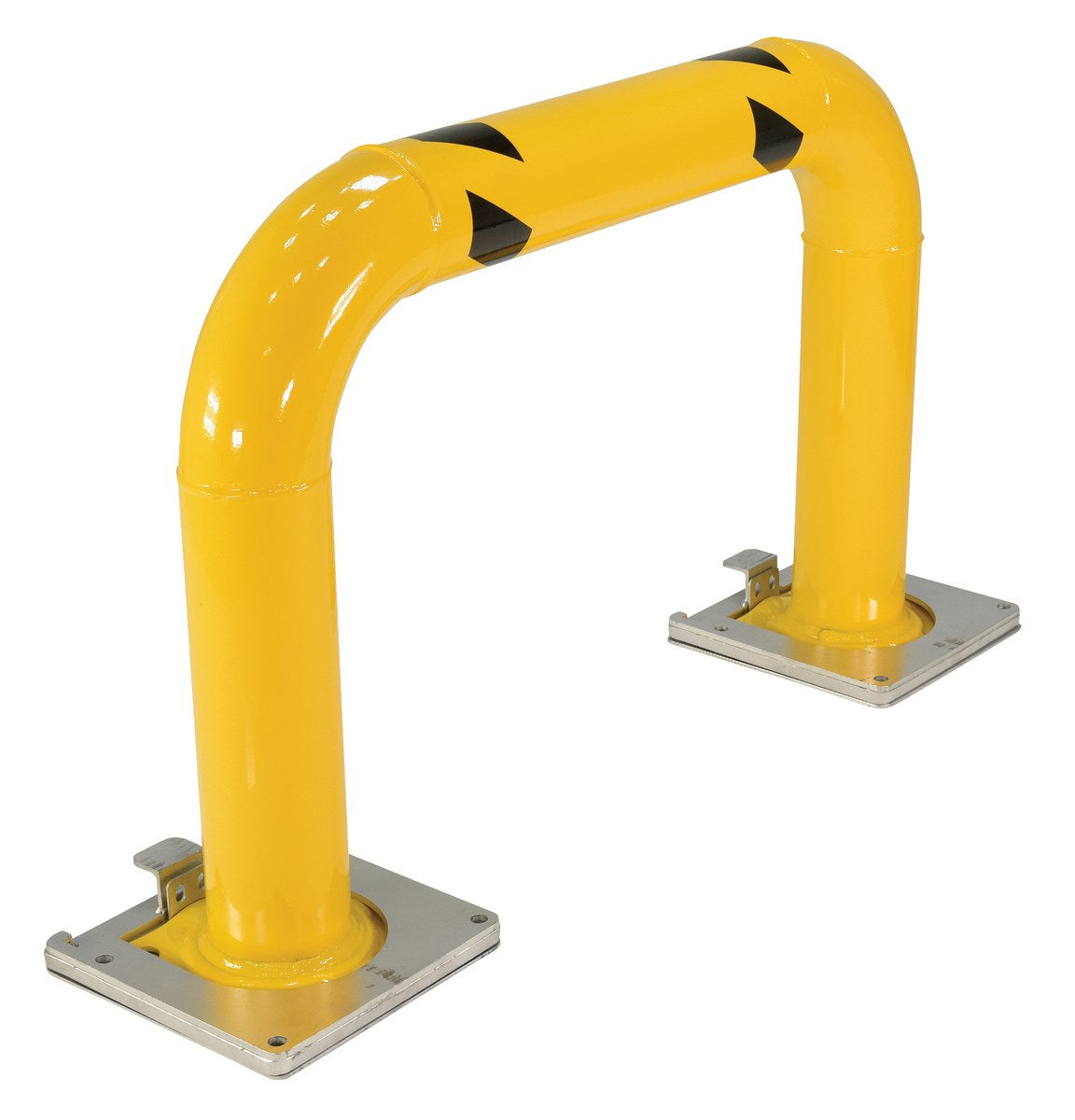
Removable guards keep the machine serviceable. A guard that a technician has to unbolt every service call gets left off, so the surface mounted removable machinery and rack guards bolt a receiver to the slab and let the guard lift straight out when someone needs to pull a panel or roll the machine, then drop back in afterward. They come in 9 to 42 inch heights and 36 or 48 inch widths from about $230. The floor stop bollards do the single point version of the same idea, one post planted at the exact corner a fork keeps clipping, in lengths from 24 to 72 inches with an optional handrail top that doubles as a grab point, from about $77. When the need grows past one machine to a whole aisle or work cell, step up to guard rail systems, and for a hard fixed point like a panel box, a concrete filled safety bollard outlasts everything.
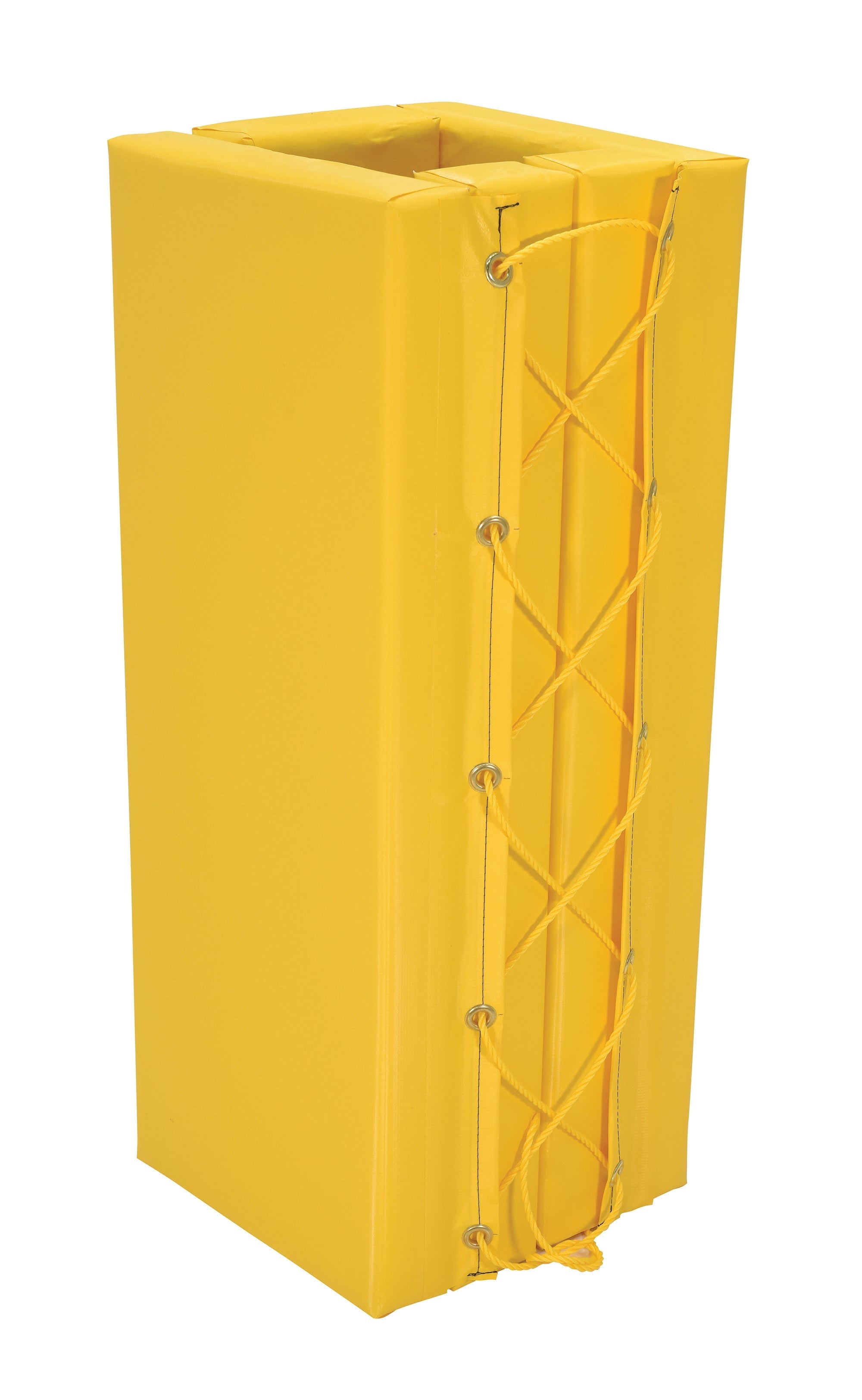
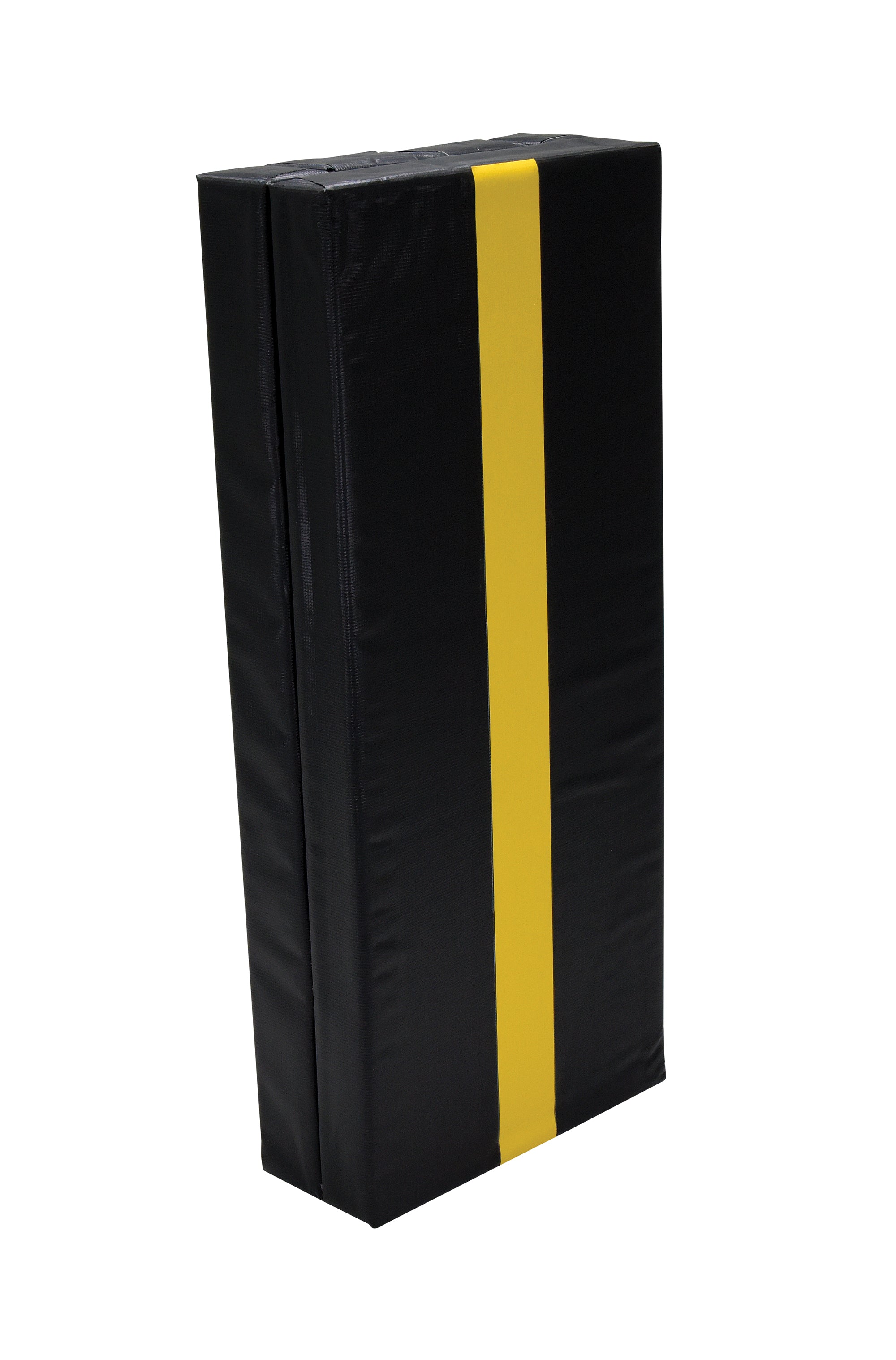
Pad the building steel the machine leans on. The iBeam protective pads and square column protective pads wrap the structural steel that sits next to the equipment, in black or yellow, at 36 or 72 inches tall. The beam pads fit flange widths from 4 to 12 inches and the column pads fit square sections from 4 by 4 up to 12 by 12, so they are sized to the steel rather than universal. They earn their $460 to $790 range by working in both directions: the forklift that glances the column does not transfer the shock into whatever casting sits behind it, and the worker squeezing past the flange in a tight aisle hits closed cell foam instead of a sharp rolled edge. Measure the flange or the column face before ordering, because a pad a size off will not close around the steel.
Crane columns are their own part. A crane column is the one piece of building steel where a strike does more than cosmetic harm, because a bent leg throws the whole span out of plumb and the hoist stops tracking true. The gantry and jib guard is built for that base, whether it is the leg of a portable gantry crane or the mast of a jib crane, ringing the column at $411 and anchoring to the slab the same way the machinery guards do. On any crane that shares floor space with lift truck traffic it is the cheapest way to protect a column that costs far more to straighten than to guard.
Frequently Asked Questions
They are two different things that share a name. Machine guarding under OSHA 1910.212(a)(1) is the barrier built onto a machine to keep operators and nearby workers away from the point of operation, nip points, rotating parts, and flying chips and sparks; it faces the machine's own hazards. The machine guards in this collection are impact protection that faces outward, steel and padding that keep forklifts and foot traffic from damaging the equipment and the building steel around it. Most plants need both, and they are separate hardware.
Yes, for anything meant to stop a vehicle. A guard that is not bolted down slides on contact and just carries the impact into the machine it was supposed to protect. The low profile guards, elbow guards, floor stop bollards, and the gantry guard all anchor to the slab. It follows the same logic as 1910.212(b), which requires a fixed machine to be securely anchored so it cannot walk or move; the guard around it needs to be just as fixed.
Match it to what travels the aisle. The 2 inch pipe handles foot traffic, hand carts, and light pallet jacks, where the guard is mostly a visual and low speed stop. Step up to the 4.5 or 5 inch pipe on lanes where loaded counterbalance forklifts run, since a loaded lift truck commonly weighs around 9,000 pounds before its cargo and needs real steel to turn it. When in doubt on a mixed traffic aisle, size up.
The surface mounted removable models are made for exactly that. A receiver bolts to the floor and the guard lifts out of it, so a technician can open a panel, pull a cover, or roll the machine for service, then set the guard back in when the work is done. The low profile fixed guards bolt down permanently and are meant for machines that stay put, so choose the removable style wherever routine access matters.
Measure the steel first. The iBeam pads are ordered to the flange width, offered from 4 up to 12 inches, and the square column pads are ordered to the section size, from 4 by 4 up to 12 by 12 inches. Then pick the height, 36 inches to cover the strike zone at forklift and shoulder level, or 72 inches to run the pad higher up the member. A pad sized off the steel will not wrap it correctly, so confirm the dimension before buying.