Rubber Speed Bumps
Rubber speed bumps slow vehicles to a crawl on private property, and this page is the molded rubber traffic-calming line from Vestil: speed bumps, full modular speed humps, and the interlocking end and middle sections that let you build a crossing to any width. Everything here is molded from a durable rubber compound rated to 40,000 lb, anchors to either asphalt or concrete, and reads in the black-and-yellow scheme drivers recognize on sight. The range covers short, abrupt bumps for parking lots and drive aisles, gentler full-width humps for longer approaches, and a rubber car stop for marking the end of a parking space. Prices run from around thirty-some dollars for a single hump end section up to a few hundred for a complete hump kit. The guide below sorts the choice by the two questions that actually decide it: how hard you need to slow traffic, and what you are bolting the rubber down to.
Compare Speed Bumps & Car Stops
| Model | Price | Overall Length | |
|---|---|---|---|
| Vestil Rubber Speed Humps | $299 | 4-32 in | View → |
| Vestil Molded Rubber Speed Bumps for Asphalt | $147 | — | View → |
| Vestil Car Stops | $101 | 48-96 in | View → |
| Vestil Rubber Speed Humps - Middle Section | $76 | 16-32 in | View → |
| Vestil Modular Guard Curbs | $69 | — | View → |
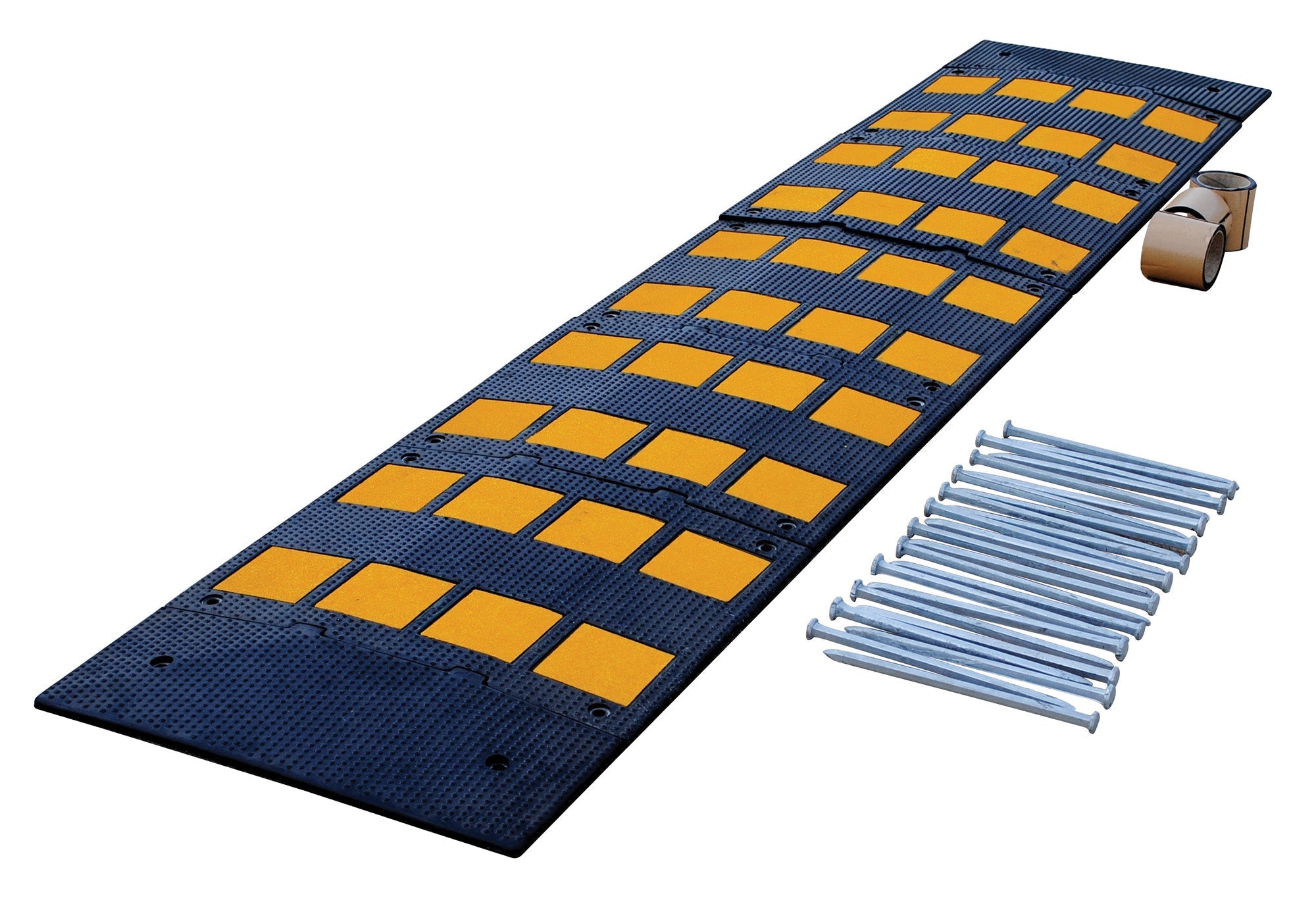 In Stock
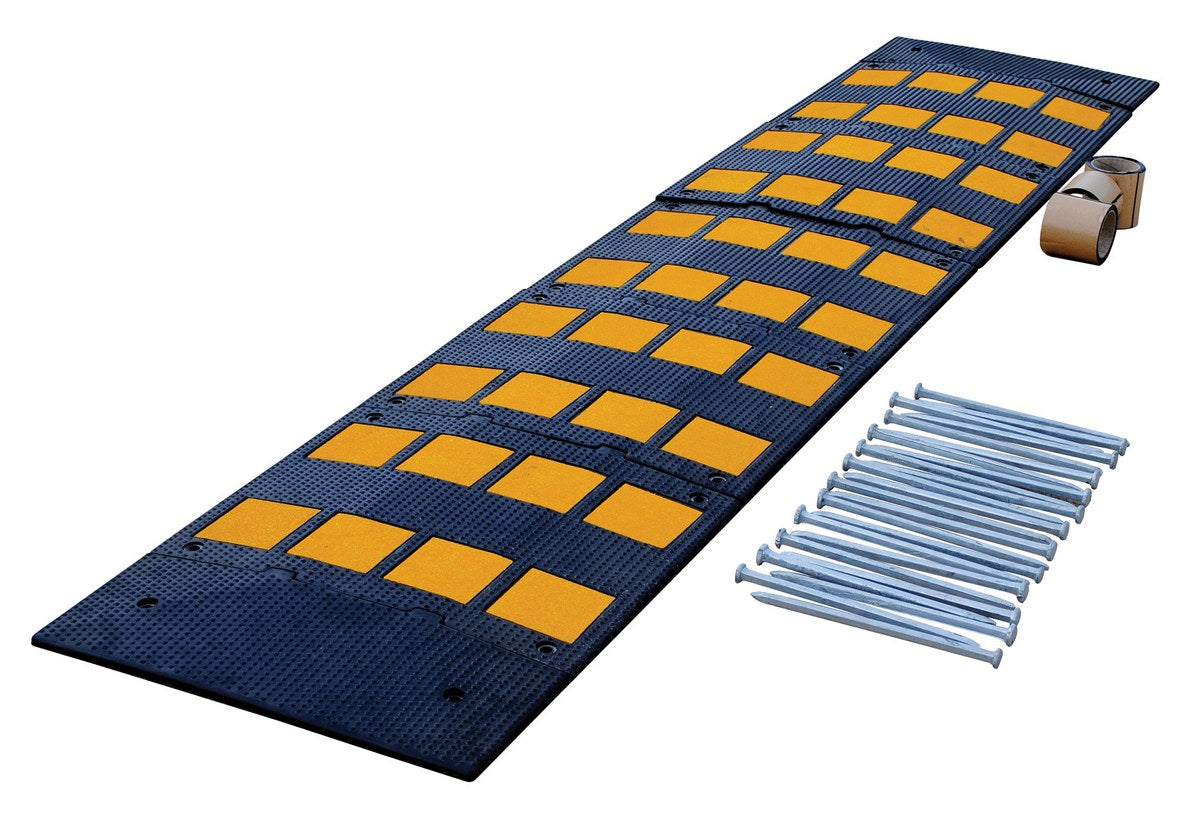 In Stock
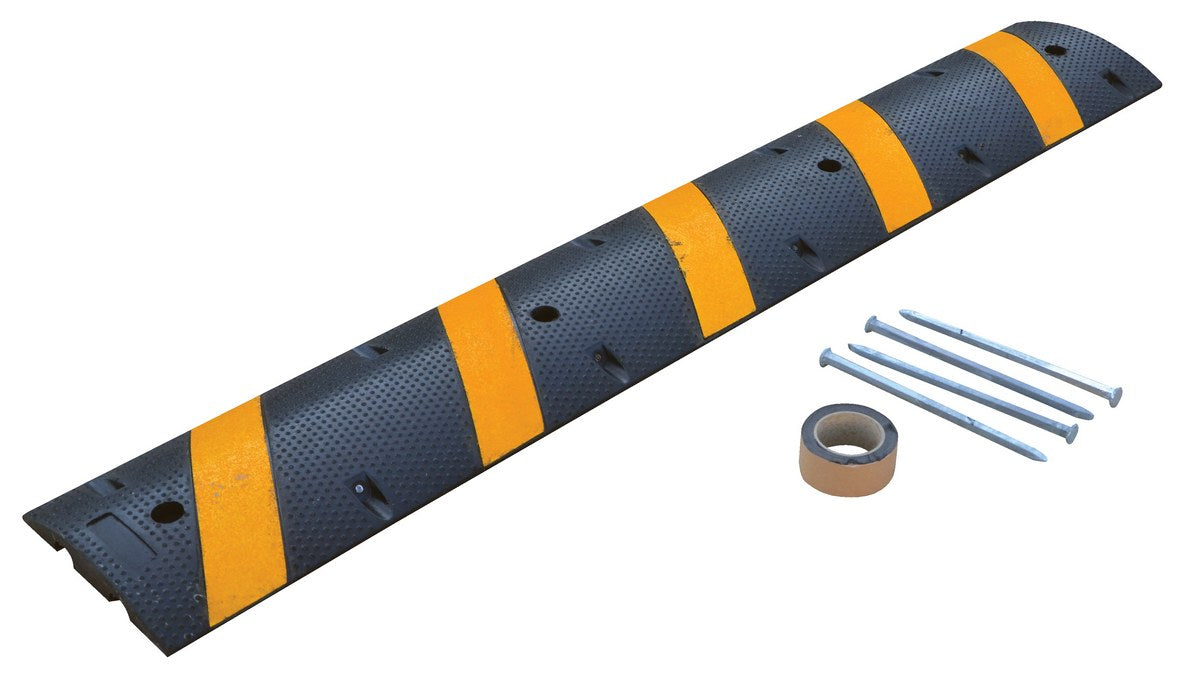 In Stock
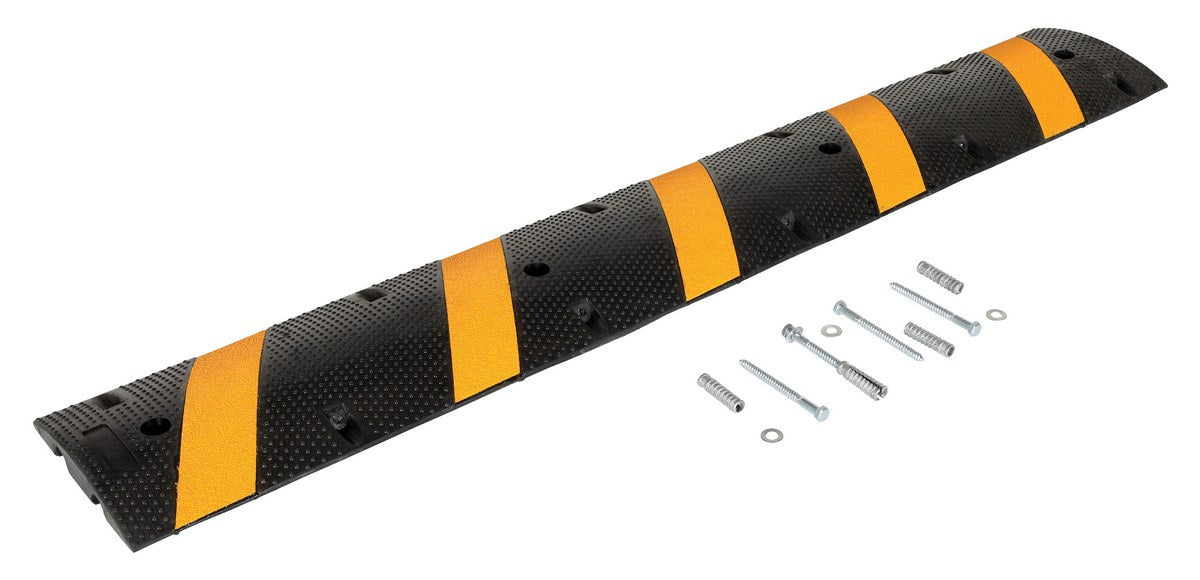 In Stock
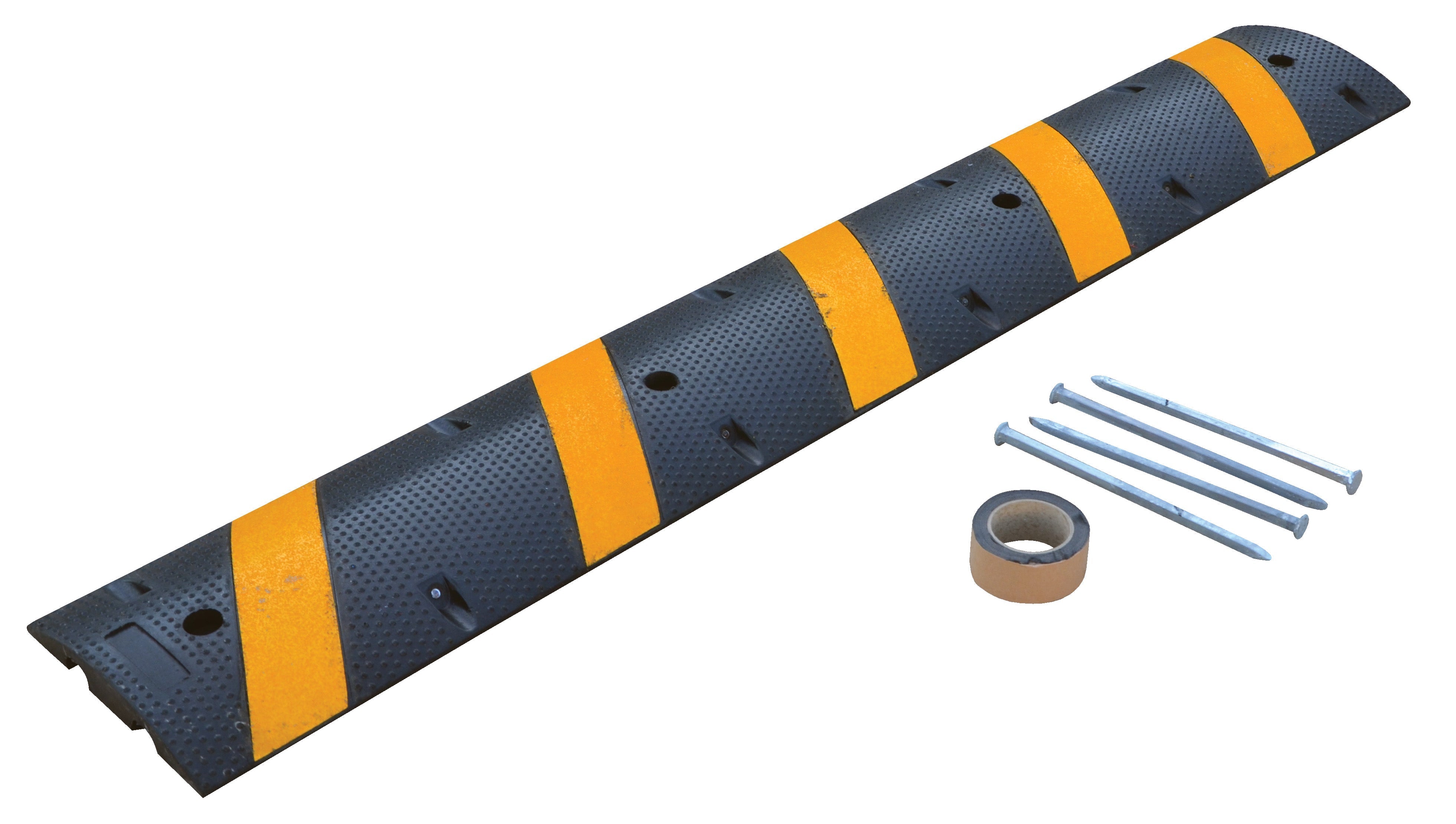 In Stock
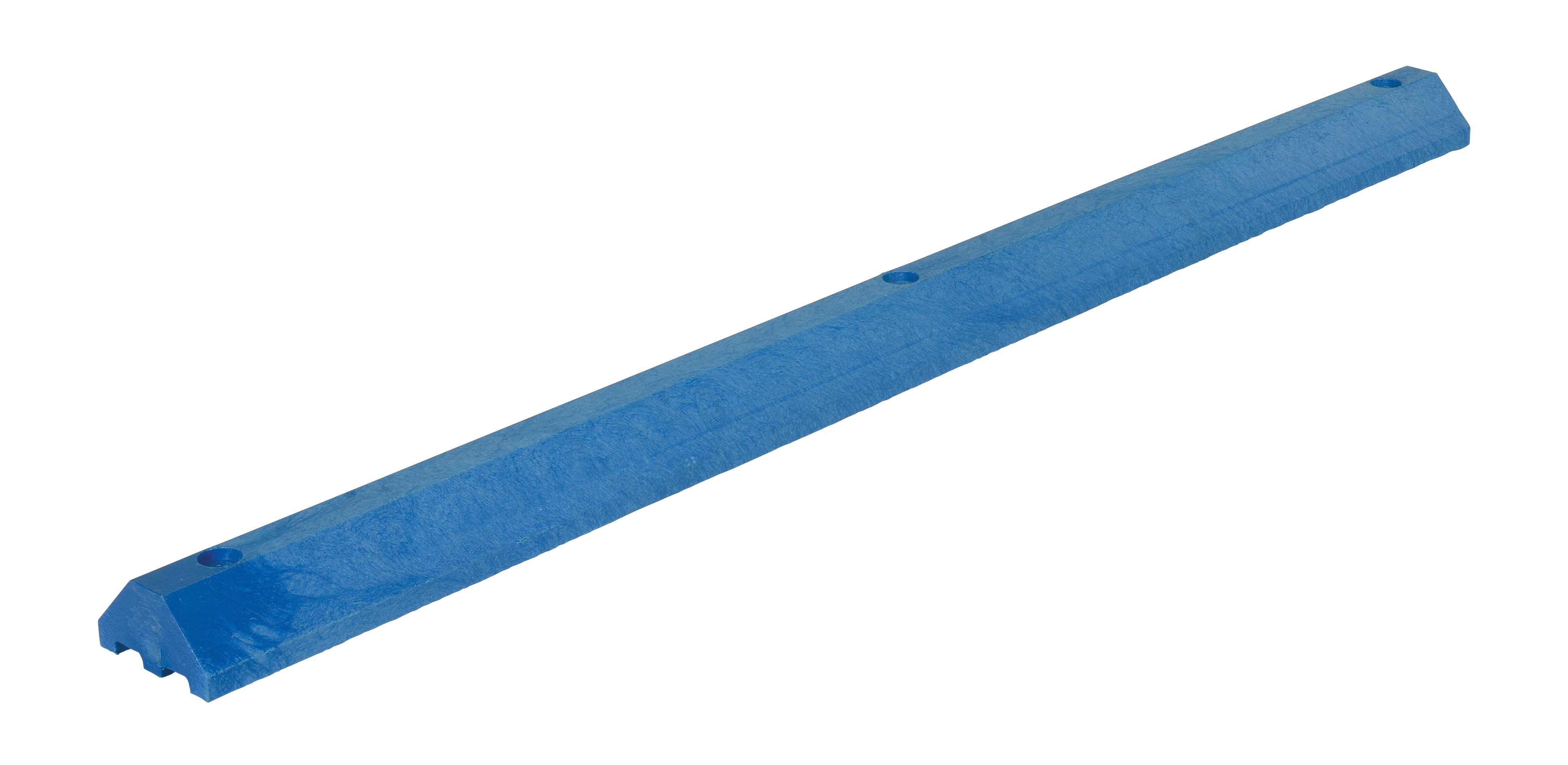 In Stock
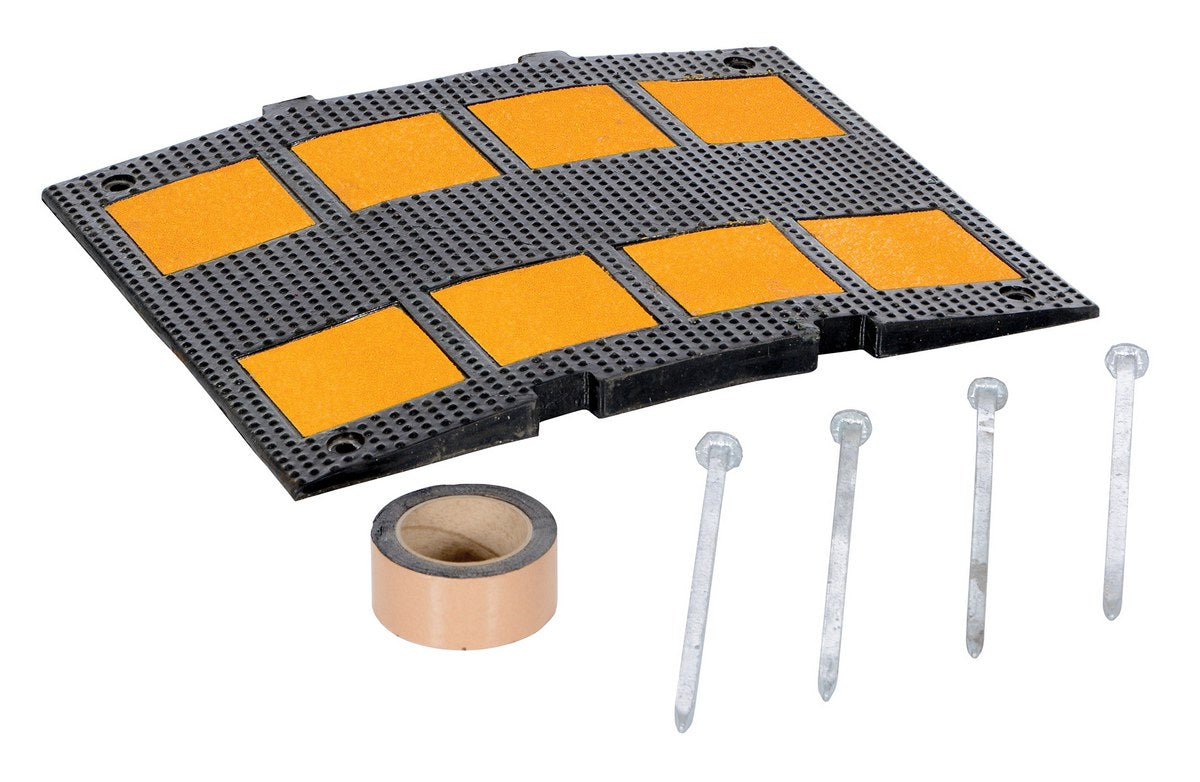 In Stock
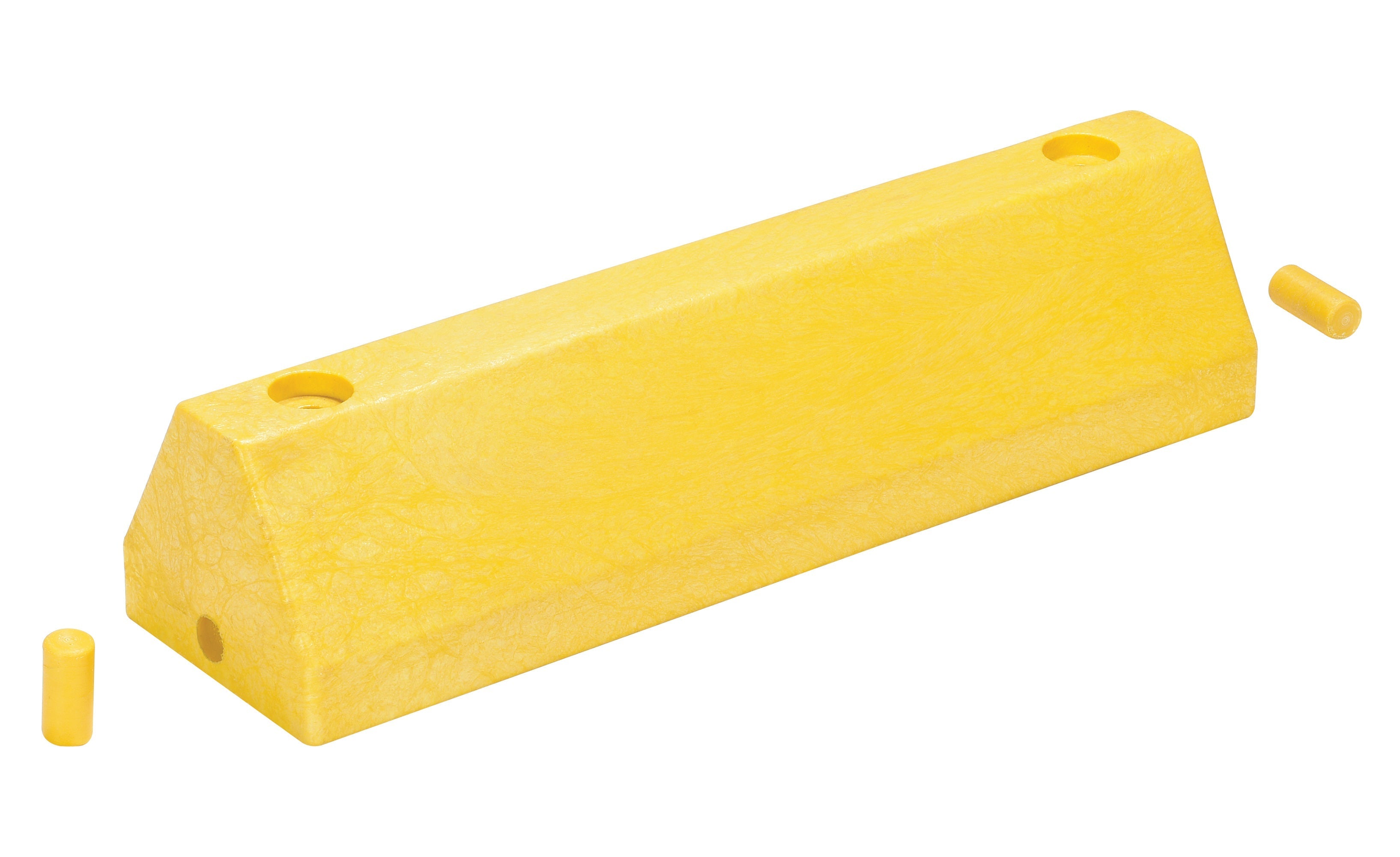 In Stock
 In Stock
 In Stock
Speed Bumps & Car Stops Buying Guide
Bump or hump: the target speed sets the shape. Speed bumps are the short, tall, abrupt version, roughly 3 to 6 inches high with a narrow travel distance, so a tire is on and off in less than half a wheel rotation. That jolt forces vehicles down to about 5 to 10 mph, which is why bumps belong in parking lots, garages, and private drive aisles where you want traffic near a walking pace. Speed humps are lower and much longer front to back, giving a gentler rise that lets a vehicle hold a steadier speed over a longer approach, so they suit internal roads rather than tight lots. On this shelf the molded speed bumps handle the parking-lot job, and the modular speed hump sections build the longer, wider crossings. Match the device to the speed you actually need, because a hump where a bump belongs will not slow anyone, and a bump on a long approach just gets driven around.
Why molded rubber instead of a concrete or asphalt speed table. Rubber is the practical choice for a bump that has to survive weather and traffic without a construction crew. Vestil's speed bumps and humps are molded from a solid rubber compound rated to 40,000 lb, so a loaded truck rolls over without cracking the unit the way a poured concrete or asphalt speed table eventually spalls. The rubber shrugs off UV, oil, road salt, and freeze-thaw, and it will not rot or splinter like timber. Just as useful, a rubber bump bolts down in an afternoon and lifts back out when a lot gets restriped or a drive aisle moves, where a concrete hump is permanent and costly to remove. For most private-property jobs that combination, no pour, no cure time, and the option to relocate, is what puts rubber ahead of the built-in alternatives.
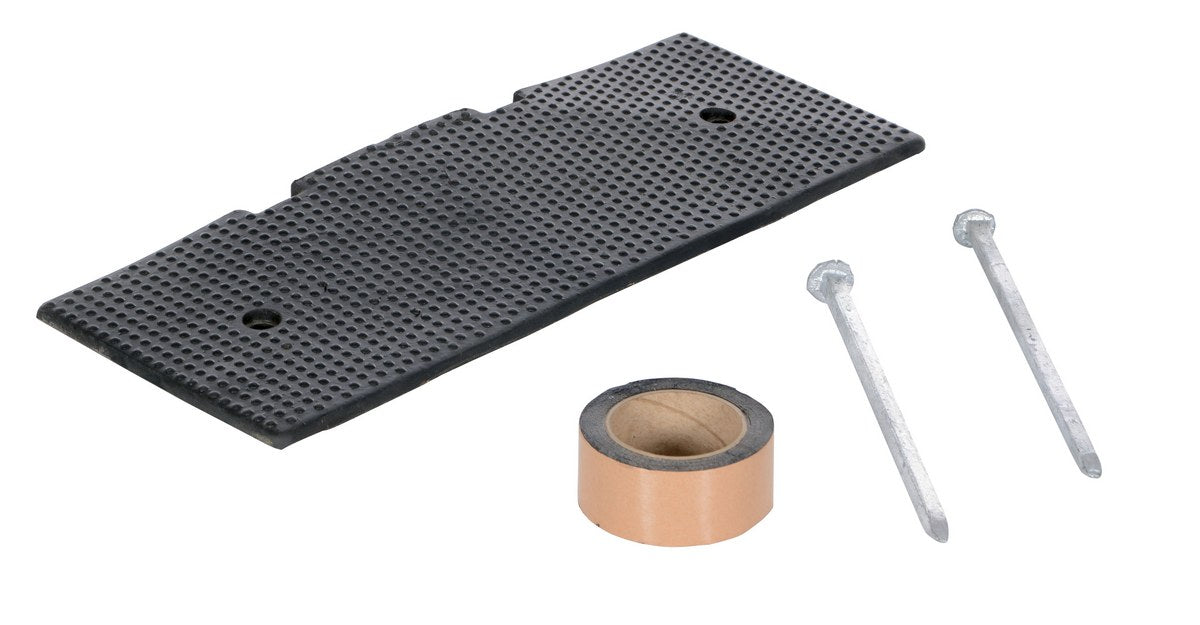
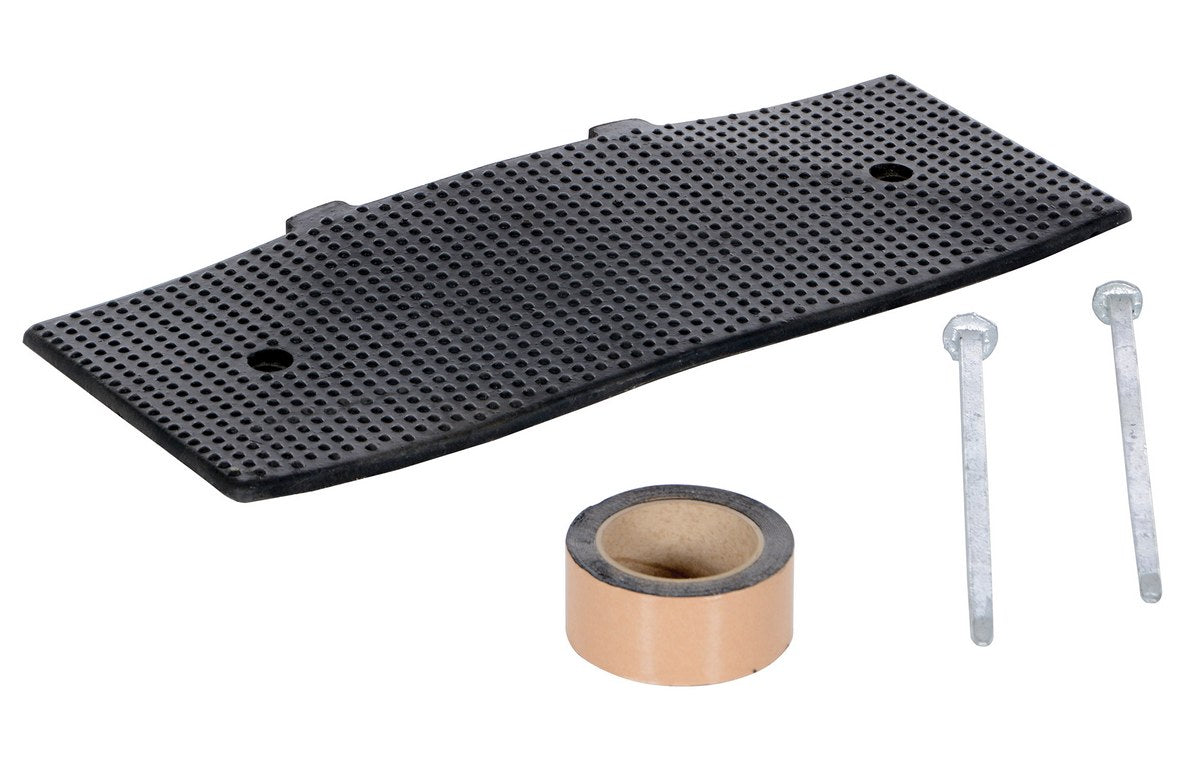
Mounting: asphalt or concrete decides the hardware. Every bump and hump section here is ordered for one of two surfaces, and the choice sets the anchor. The asphalt version installs with spikes driven through the bolt holes into the pavement, while the concrete version uses lag bolts set into shielded holes for a firmer hold in the harder surface. Pick the mounting style that matches your lot before you order, since the hardware and base geometry differ between them and the two are not interchangeable. Drill on the marked centers, seat every anchor snug against the counterbore, and check the fasteners on a schedule, because a bump that works loose becomes its own hazard. On older or thin asphalt, buttering the spikes with epoxy helps keep the surface from cracking around the anchor.
Building a run: male, female, and middle sections. The speed humps here are a modular system rather than a single fixed length. A hump kit gives you a complete crossing out of the box, and the separate female end, male end, and middle sections let you extend or repair a run to fit the exact width of your road or gate approach. The ends interlock with the middle pieces so the finished hump reads as one continuous ramp with no gap for a tire to catch. Two width families are offered, a roughly 23-1/2 inch deep profile and a wider 35-1/4 inch profile, so you can pick the footprint that suits the speed you want and the room you have. Order the male and female ends as a matching pair, count your middle sections against the crossing width, and keep the mounting style consistent across every piece in the run.
Cable channels and staying visible. Two details separate a speed bump that does its job from one that draws complaints. The first is visibility: the molded units carry the yellow markings drivers expect, and keeping that contrast clean is what makes a bump register at night and in rain instead of getting hit at speed. The second is what runs underneath. Rubber bumps are molded with channels along the base, which lets temporary power, air, or data lines cross a drive aisle inside the bump rather than lying exposed on the pavement, so the same unit that slows traffic also protects the cable a concrete hump would leave in the open. If you route lines under a bump, size the channel to the bundle and keep the anchors clear of it.
Car stops and guard curbs on this shelf. Alongside the bumps and humps, this page carries a molded rubber car stop and a modular guard curb, the pieces that steer and stop vehicles rather than slow them. The car stop marks the end of a parking space, keeping bumpers off the sidewalk, the wall, or the next car, and it comes in lengths from about 31 to 96 inches and heights up to 7 inches, in colors including the blue used for accessible ADA stalls. The modular guard curb builds low perimeter runs from end, L, and T sections to channel traffic away from an edge. Both are molded rubber like the bumps, both bolt down with the same asphalt or concrete hardware, and both belong to the same parking-lot toolkit even though they do a different job from the speed bump next to them.
Frequently Asked Questions
A speed bump is short front to back and taller, roughly 3 to 6 inches, so a tire drops off it quickly and traffic slows to about 5 to 10 mph. That abrupt action suits parking lots, garages, and private drive aisles. A speed hump is lower and much longer, giving a gentler rise that holds a slightly higher steady speed over a longer approach, which is why humps go on internal roads. Pick by the speed you need and the length of the run you have to work with.
Order by the surface you are anchoring to. The asphalt version uses spikes driven into the pavement; the concrete version uses lag bolts set in shielded holes for the harder surface. The hardware and base differ, so the two are not interchangeable. Match every section in a run to the same surface, and recheck the anchors periodically, since a loose bump is a hazard of its own.
The humps are modular. A hump kit covers a standard crossing out of the box, and the separate female end, male end, and middle sections let you extend or repair a run to any width. The ends interlock with the middles so the finished hump has no gap. Choose one of the two width profiles, order the ends as a matching pair, and add middle sections until the run spans your road or gate opening.
Vestil's molded rubber speed bumps and humps are rated to 40,000 lb, so loaded trucks and delivery vehicles cross them without damaging the unit. As with any anchored device, that rating assumes the bump is properly bolted down on the correct surface and the fasteners are kept tight.
Yes. The rubber units are molded with channels along the base for exactly that, letting temporary power, air, or data lines cross a drive aisle protected inside the bump rather than exposed on the pavement. Size the channel to your cable bundle and keep the anchor points clear of the line when you set the bump.