Fall Protection Lanyards
A fall protection lanyard is the tether between your harness D-ring and the anchor, and on most jobs it is the component that decides how far you fall and how hard you stop. Every lanyard here is KStrong, and they split into two jobs that get confused at real cost: shock absorbing lanyards that arrest a fall and spend its energy tearing open a folded energy absorber, and work positioning lanyards that hold you against the structure so both hands stay free. Prices run from about $31 for a web positioning lanyard to roughly $249 for a twin leg arc flash rated model, with internal, clear pack, elasticated, tie-back, and leading edge designs in between. The right one comes down to the fall clearance under your feet, the anchor you actually have, and whether the job is arrest or positioning. The sections below work those decisions in order and flag the ANSI and OSHA numbers to check before anyone clips in.
 In Stock
 In Stock
 In Stock
 In Stock
 In Stock
 In Stock
 In Stock
 In Stock
 In Stock
 In Stock
 In Stock
 In Stock
 In Stock
 In Stock
 In Stock
 In Stock
 In Stock
 In Stock
 In Stock
 In Stock
 In Stock
 In Stock
 In Stock
 In Stock
Lanyards Buying Guide
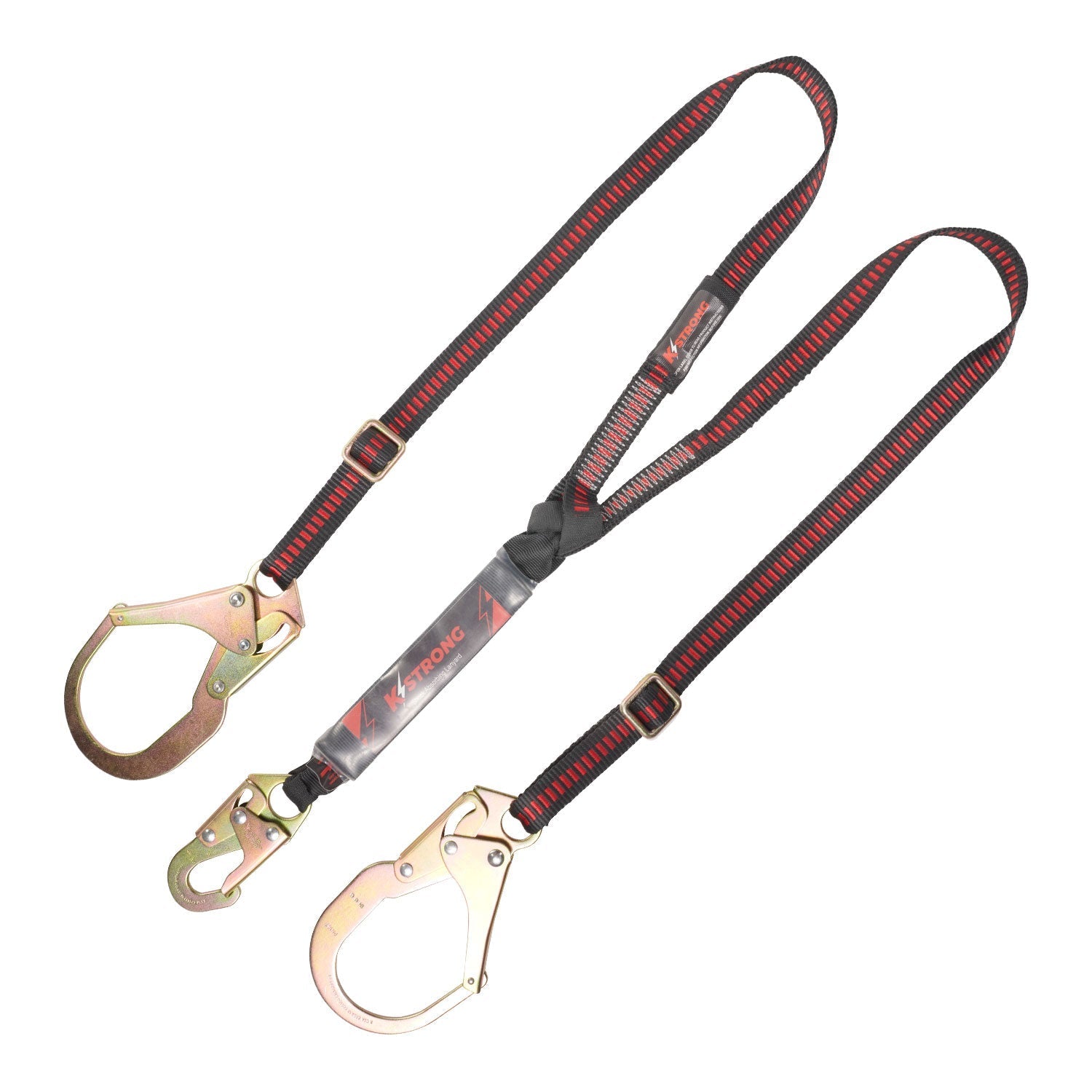
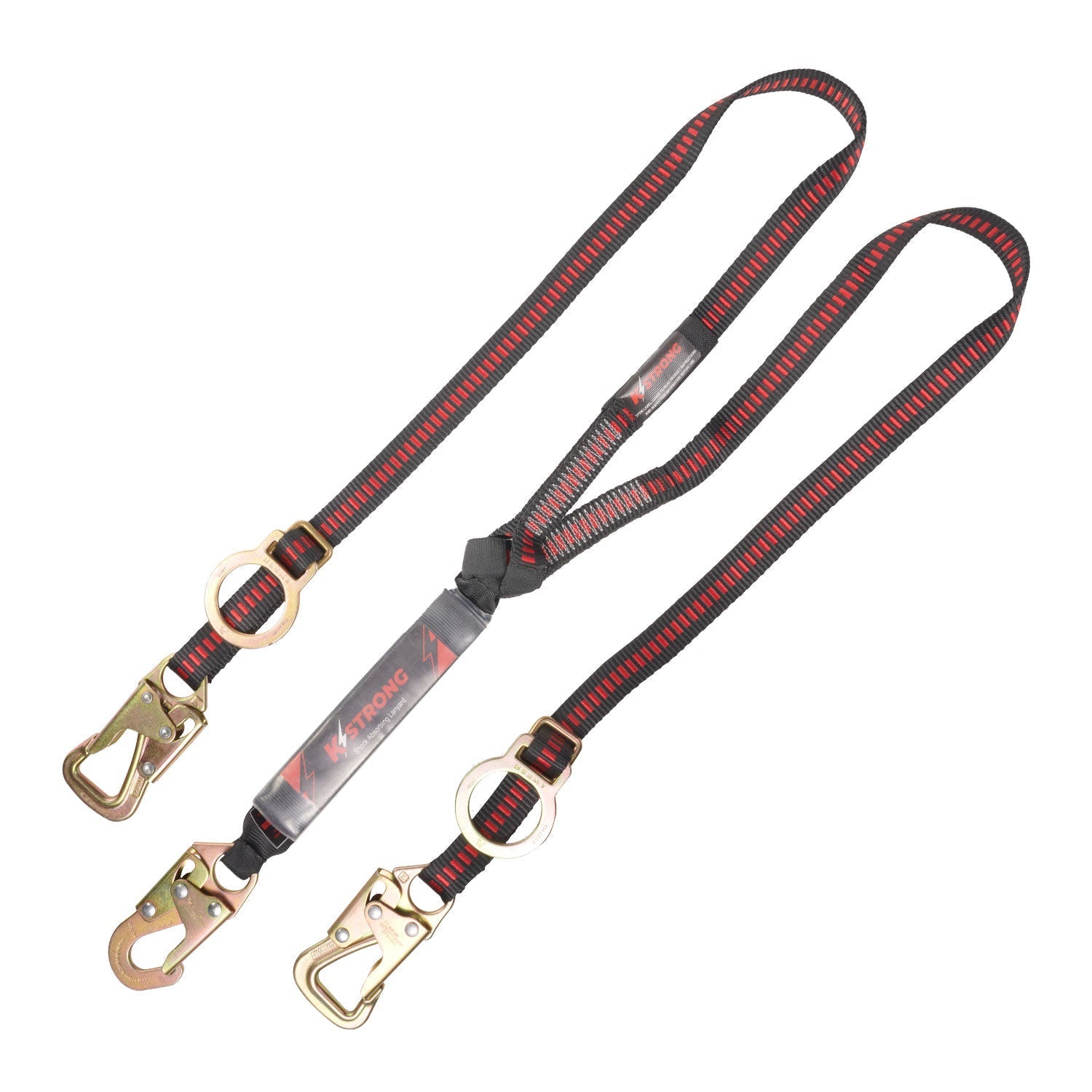
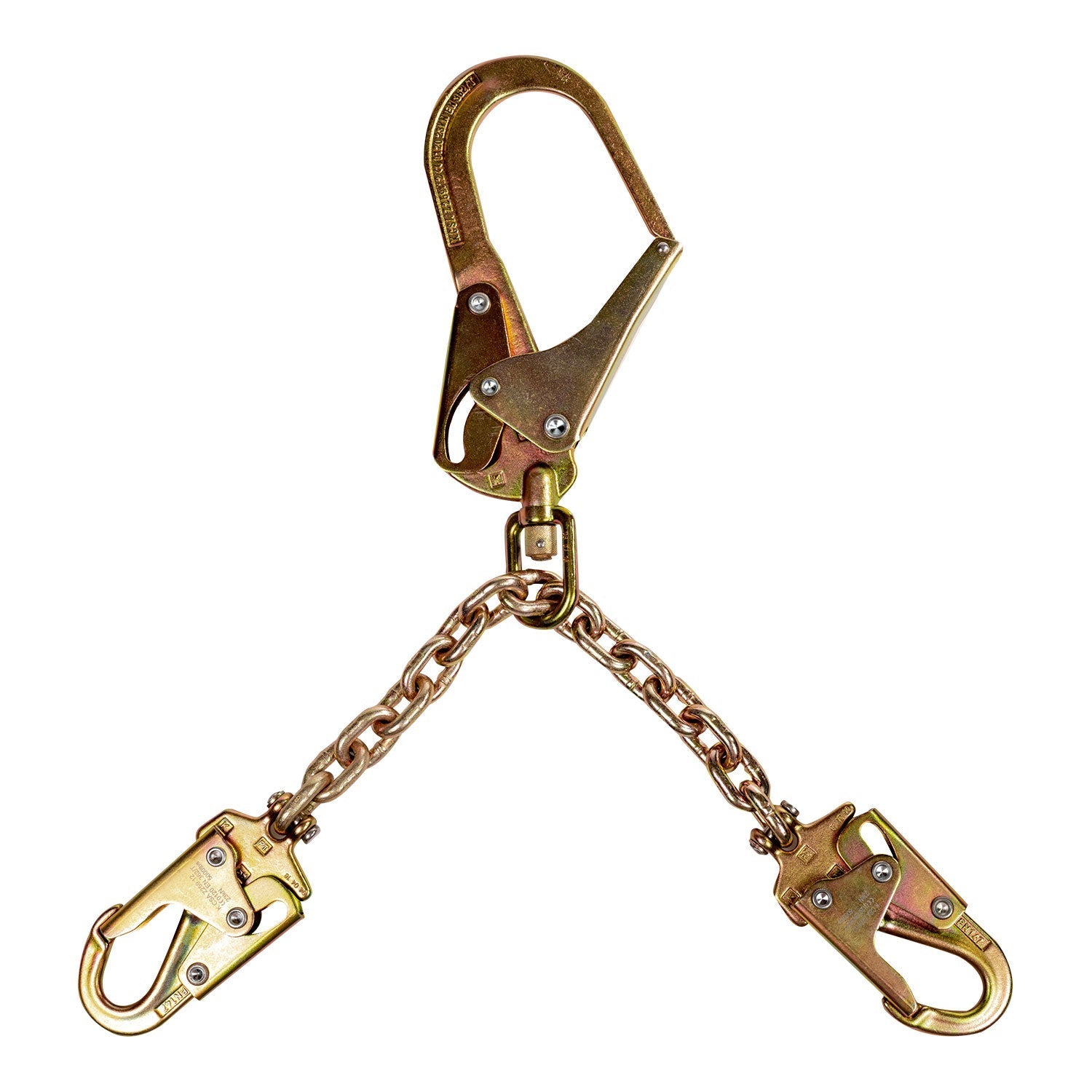
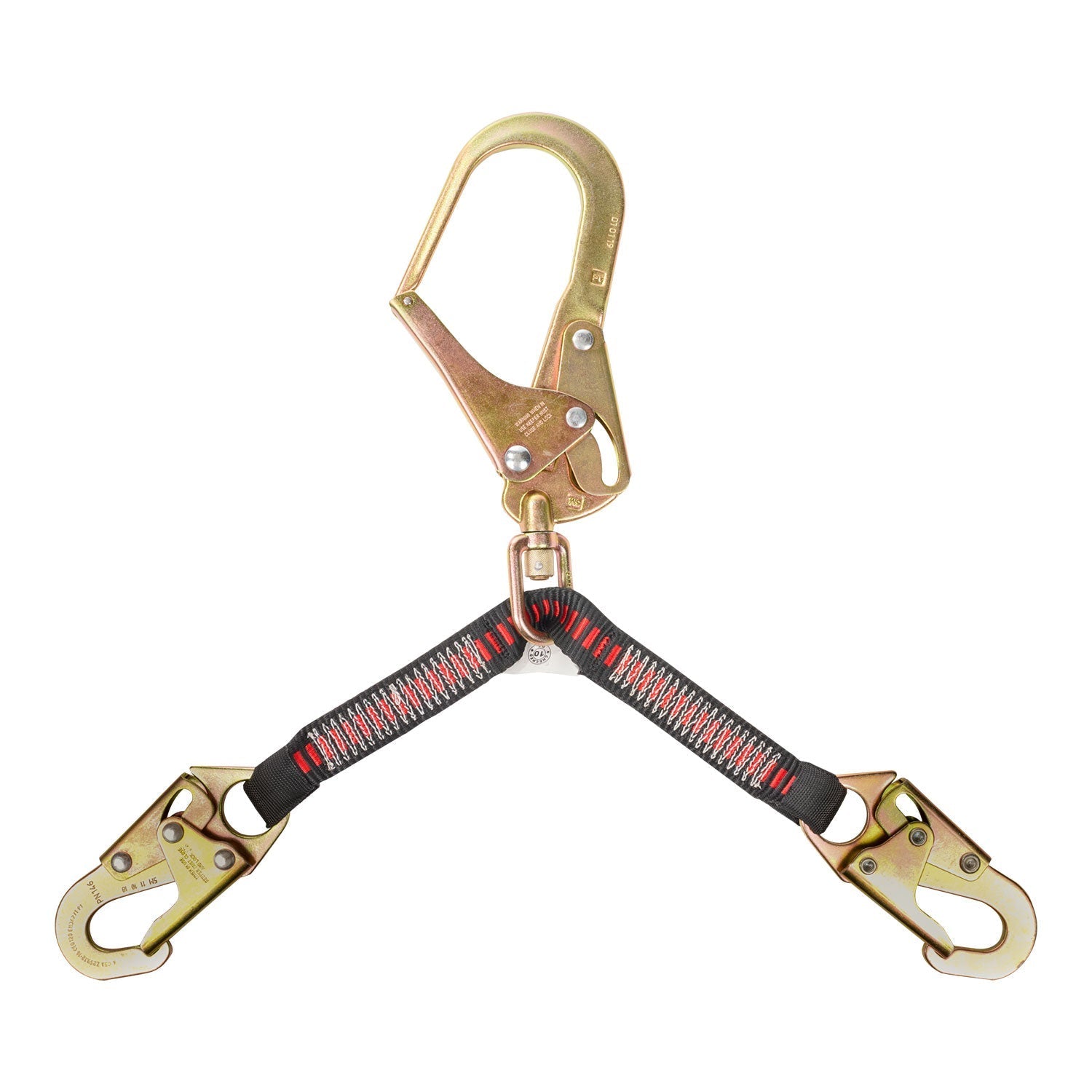
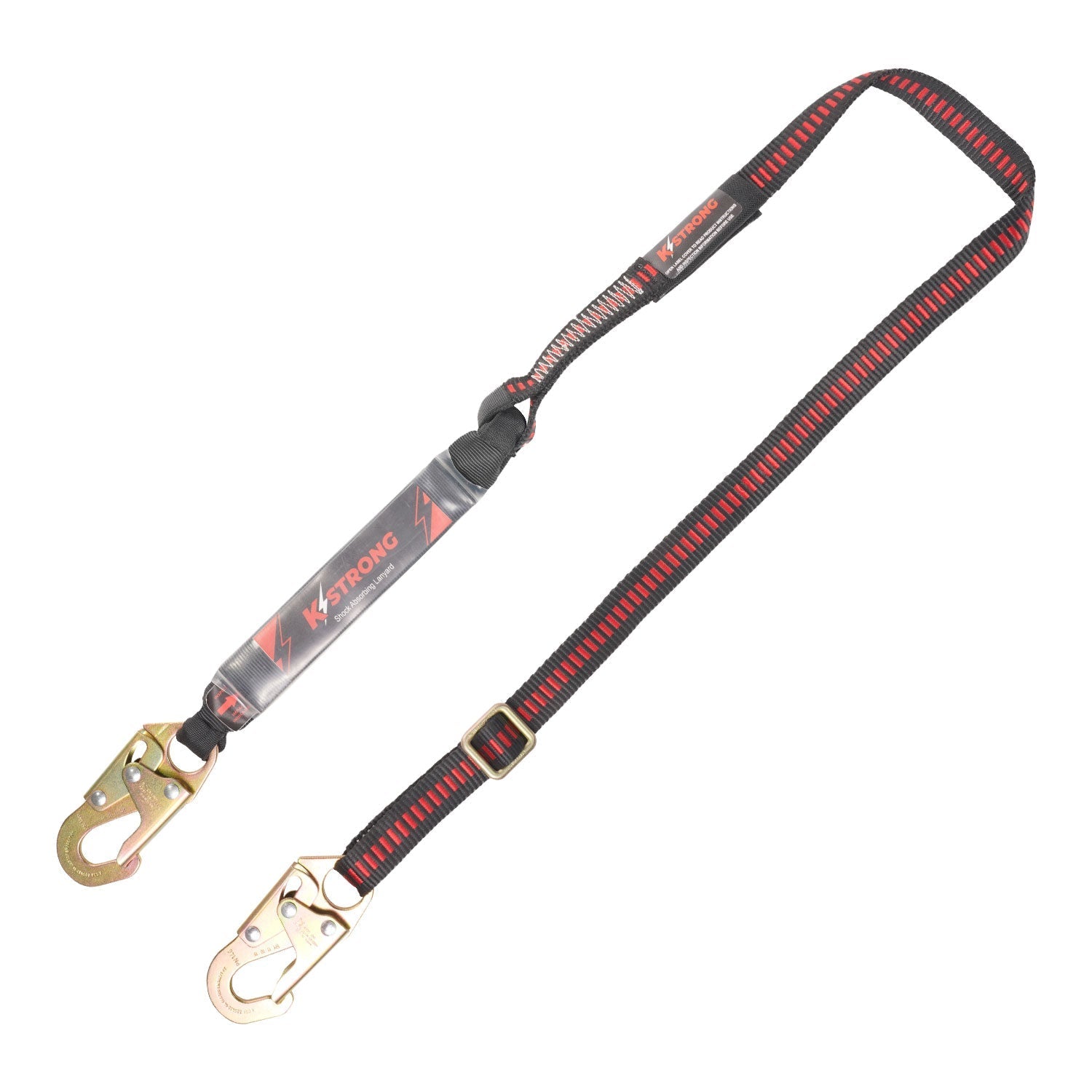
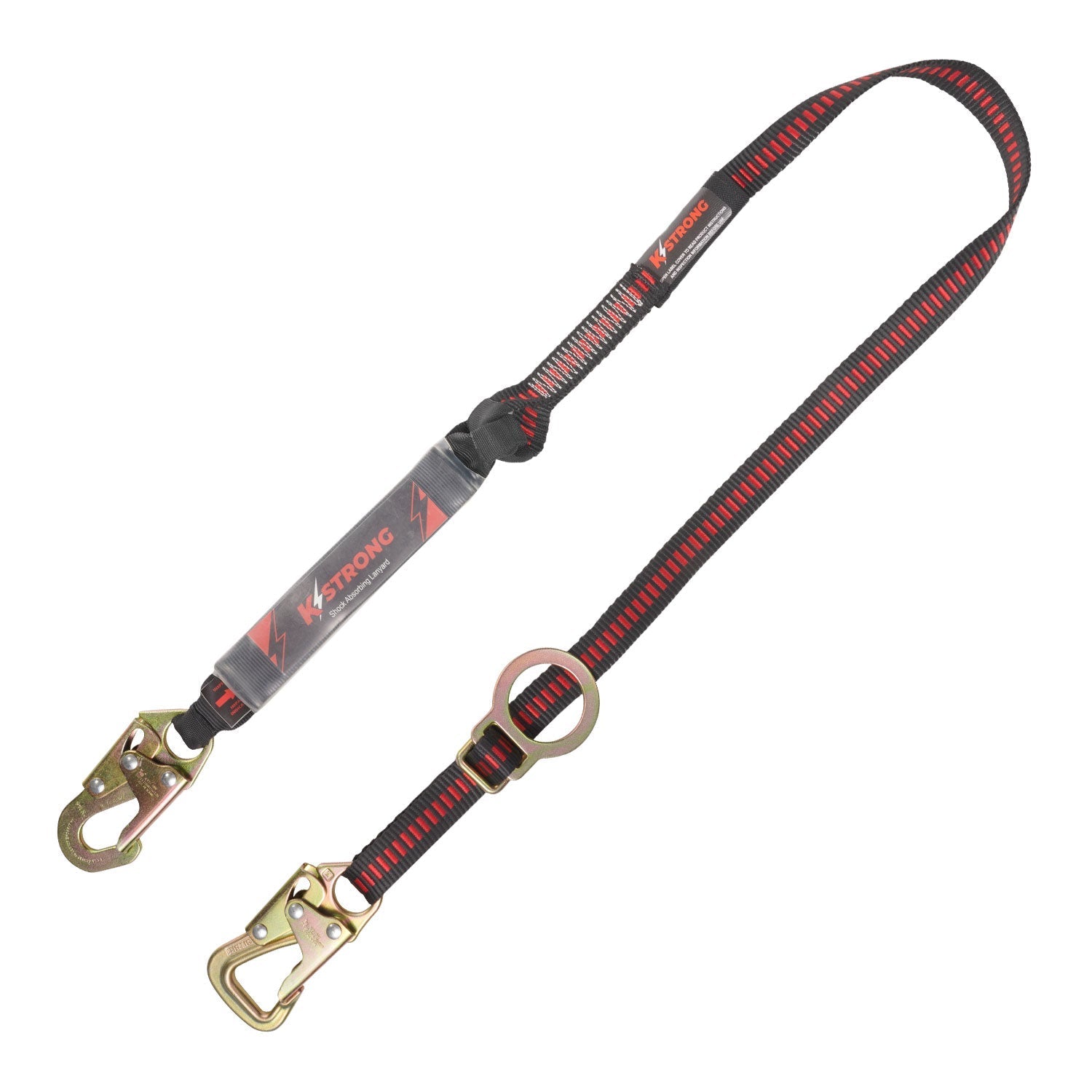
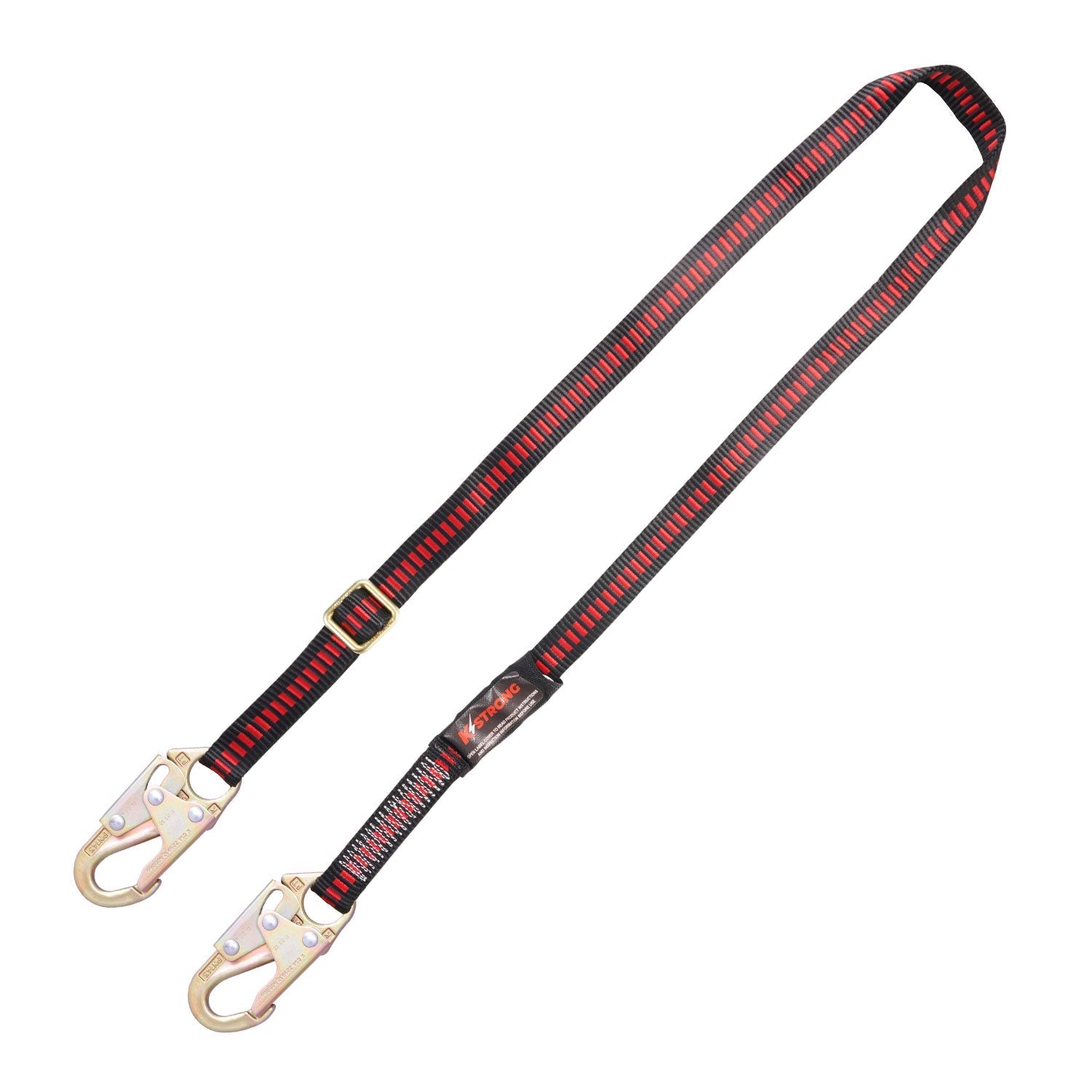
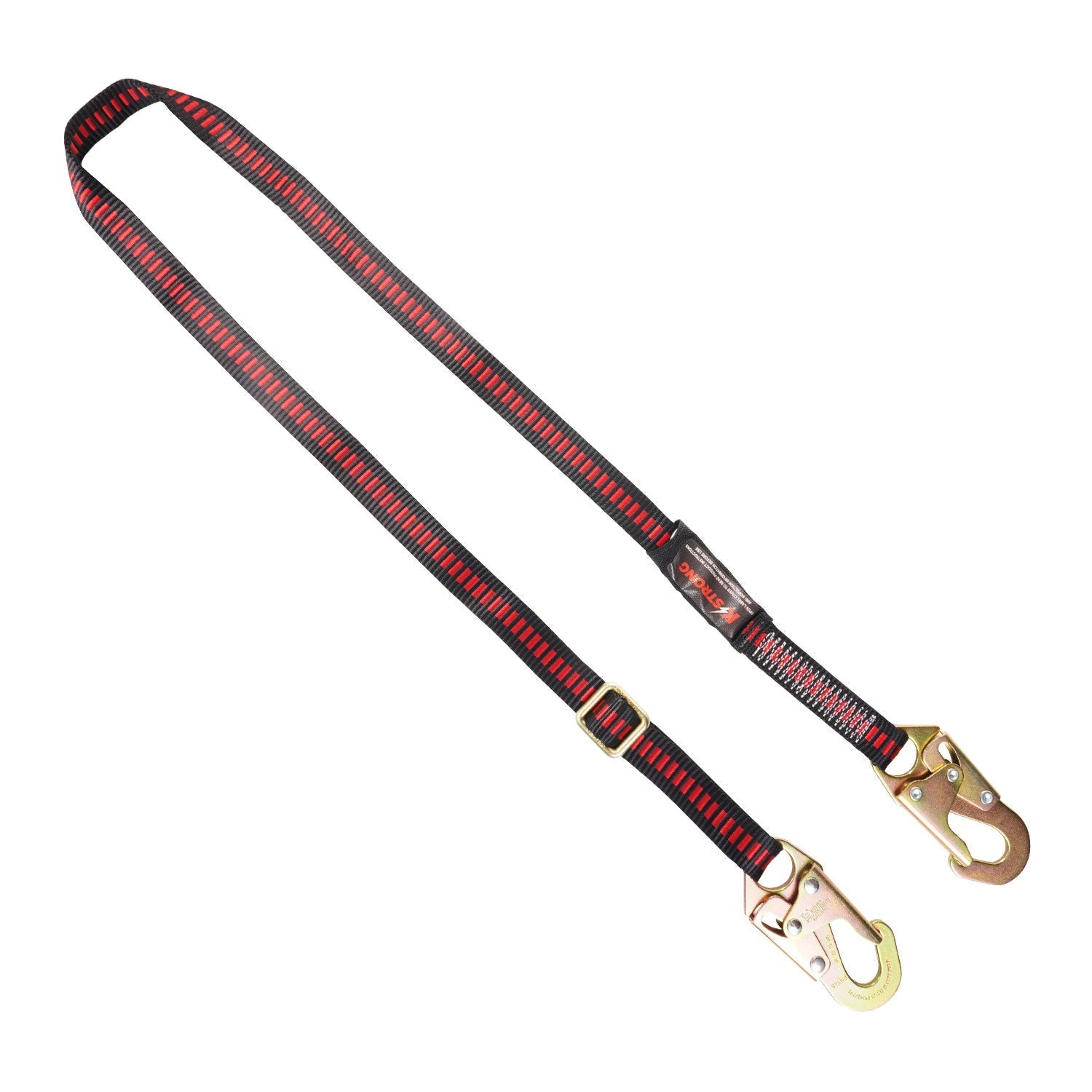
Shock absorbing or positioning: two jobs that look alike. A shock absorbing lanyard is fall arrest gear: it connects to the dorsal D-ring between the shoulder blades and its job is to catch a fall that has already started. A work positioning lanyard connects to the side D-rings at the hips, takes your weight while you lean back, and frees your hands for the rebar or the pole. The mistake that gets people hurt is treating positioning as arrest. OSHA 1926.502(e) requires positioning devices to be rigged so a worker cannot free fall more than 2 ft, and ANSI Z359.3 governs the hardware, but neither makes positioning a substitute for arrest. The web positioning lanyard from $30.93, the adjustable version from $42.97, the swivel rebar hook assembly, and the $70.09 rebar chain assembly that shrugs off abrasion all hold you in place while an independent arrest system, anchored to the dorsal D-ring, rides along as the backup. Two lanyards, two D-rings, both on the body at once.
The energy absorber, and the two free-fall classes. The absorber is the whole point of a shock absorbing lanyard. In a fall it tears a folded pack open and burns the energy off over that distance instead of on your spine. ANSI Z359.13 splits absorbers into two classes by how much free fall they are tested for: a 6 ft free fall pack and a 12 ft free fall pack, both required to hold the maximum arresting force under 1,800 lb, the same cap OSHA 1926.502(d)(16) sets when the lanyard is used with a full body harness. The trade is deployment distance. A 6 ft class absorber pays out up to about 3.5 ft, a 12 ft class up to about 5 ft. Use the 6 ft class when your anchor sits at or above the dorsal D-ring, and reach for the 12 ft class only when the higher free fall is unavoidable, because the extra deployment eats clearance you may not have.
Fall clearance is the number that keeps you off the ground. Before you buy a length, do the clearance math, because a 6 ft shock absorbing lanyard needs far more than 6 ft of open air below the working surface. Add it up: 6 ft of free fall, up to 3.5 ft of absorber deployment, the roughly 5 ft from the dorsal D-ring down to your boots, plus harness stretch and a safety margin. That lands near 18.5 ft of required clearance below your feet, and if a lower level or obstruction sits inside that number, a lanyard is the wrong tool. The answer is a self-retracting lifeline from the lifelines collection, which stays tensioned to the D-ring and locks within inches, not a shorter lanyard and optimism. Measure the drop first, then pick the connector that fits it.
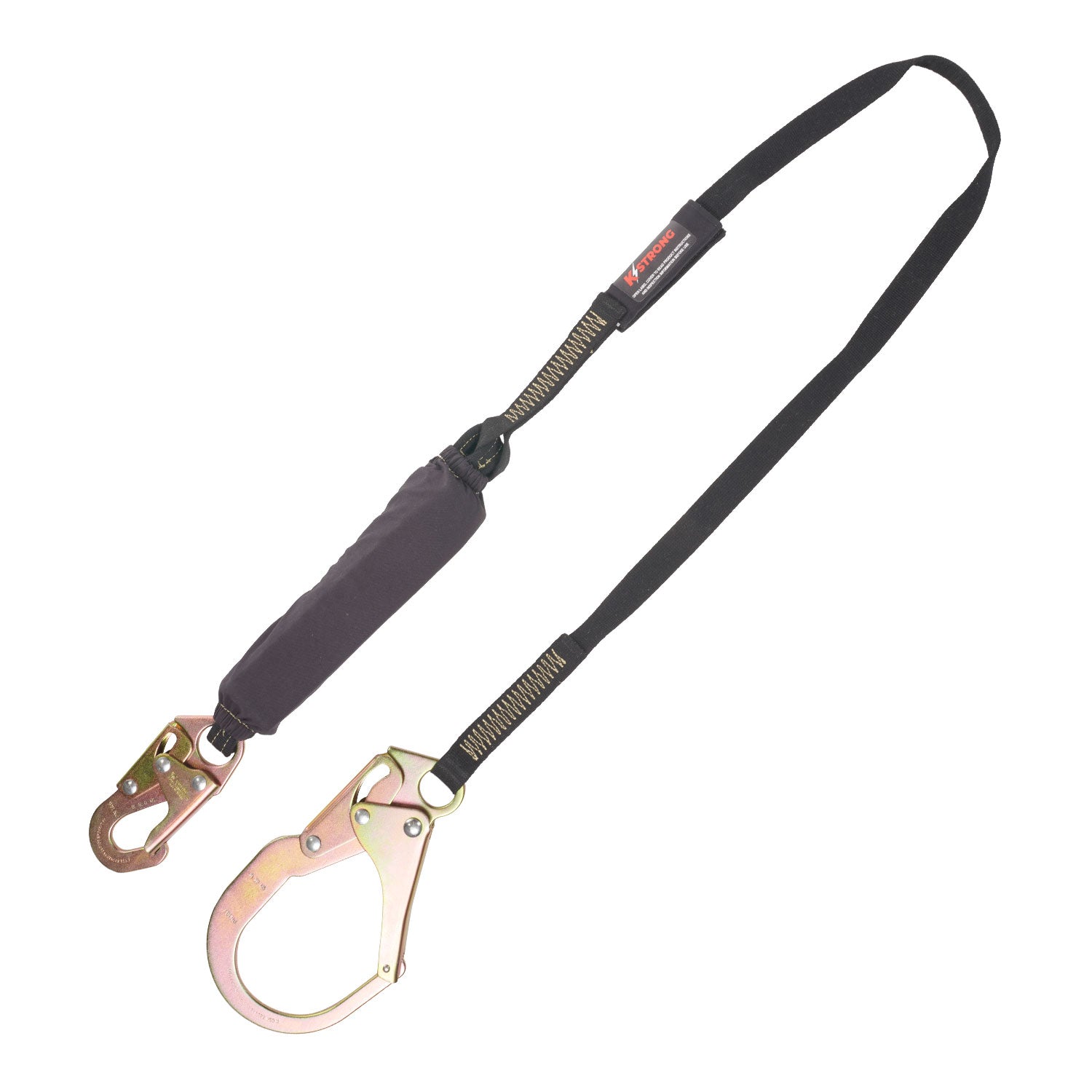
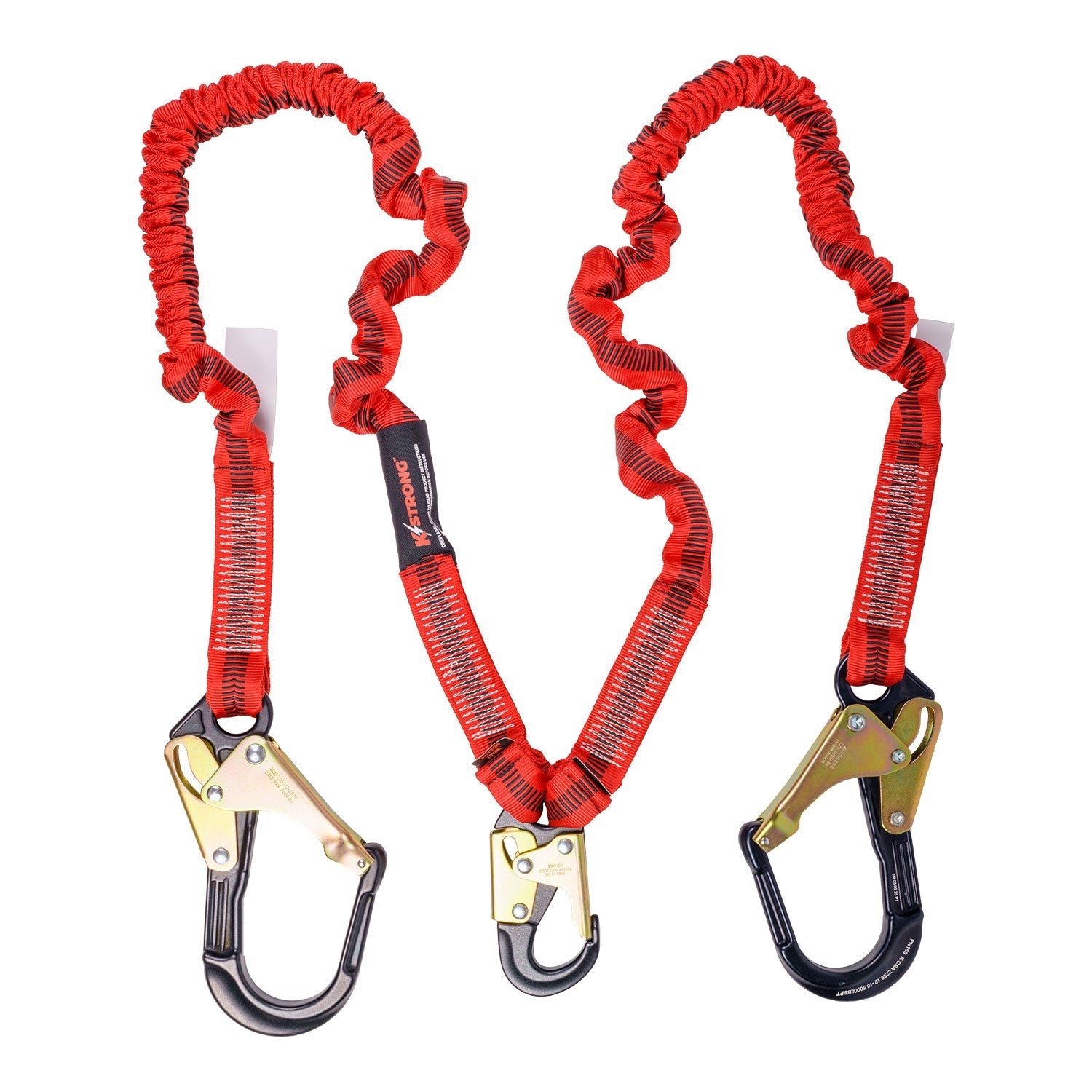
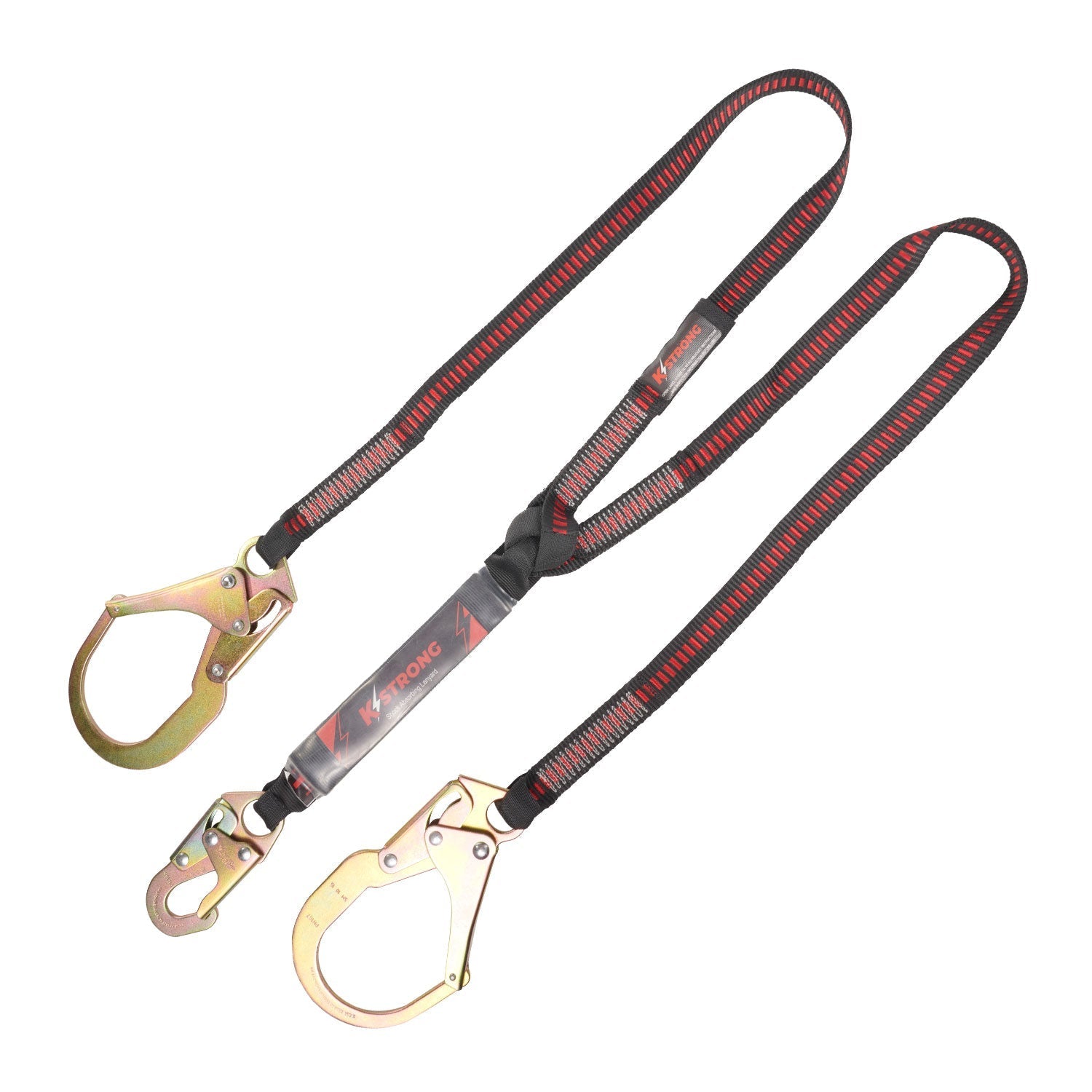
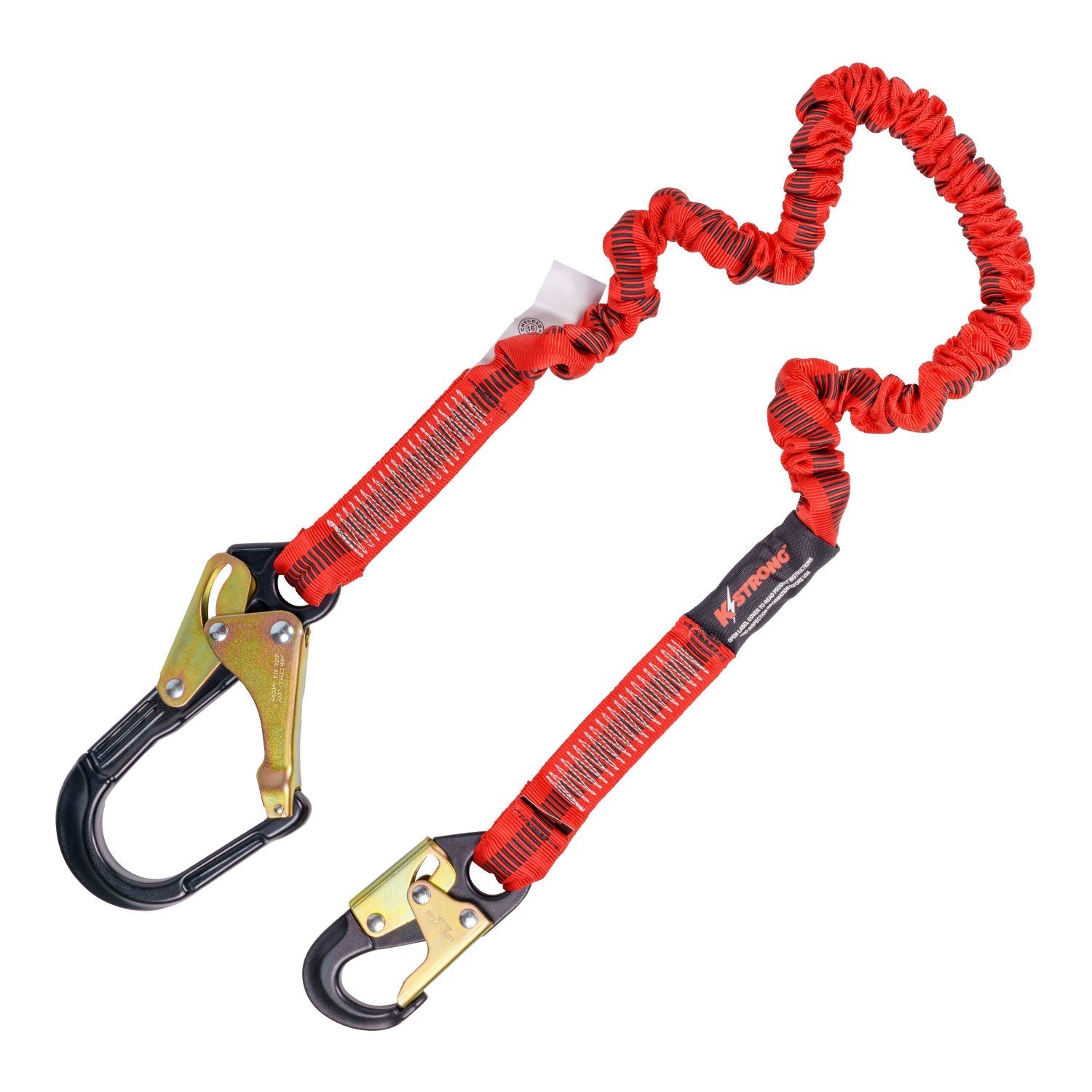
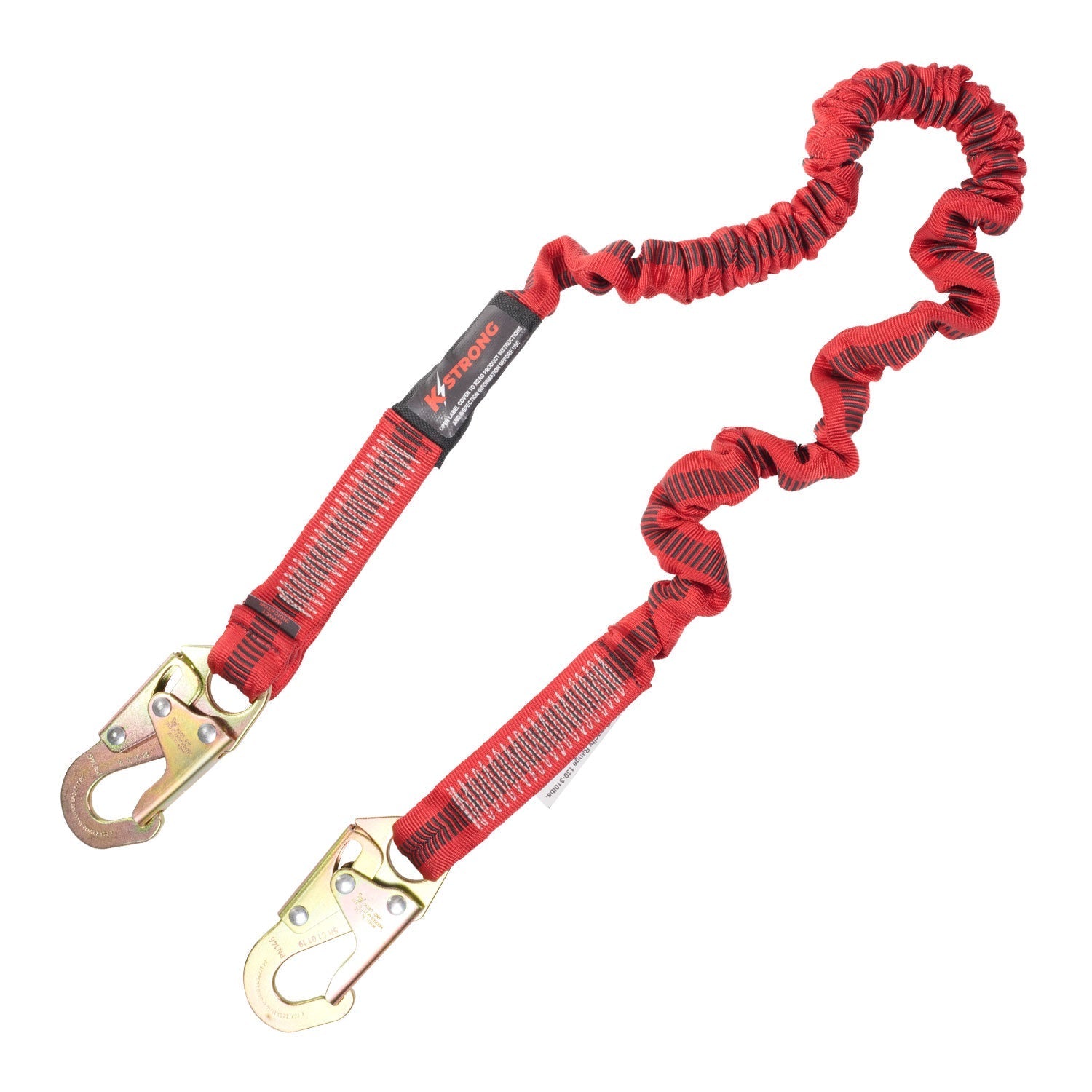
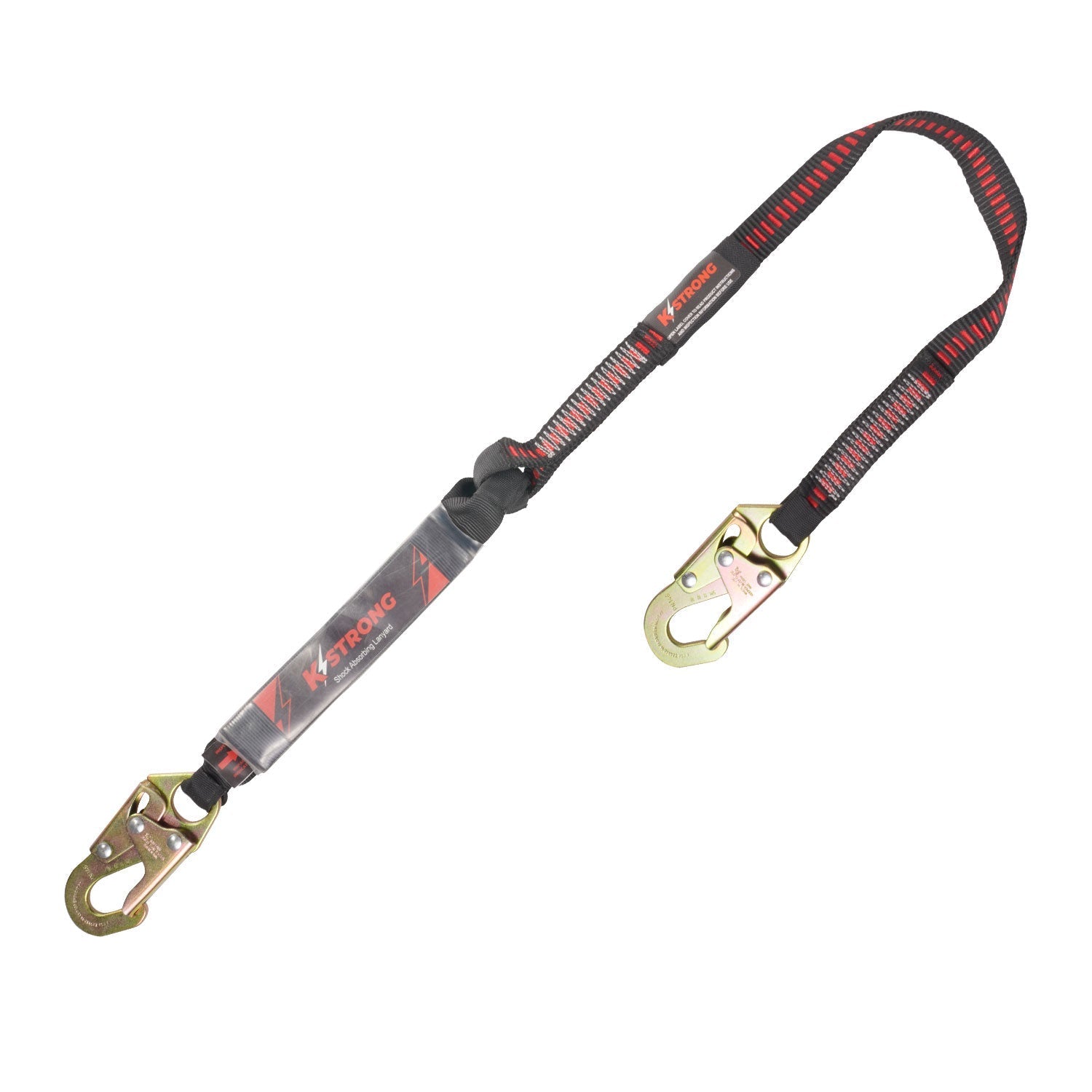
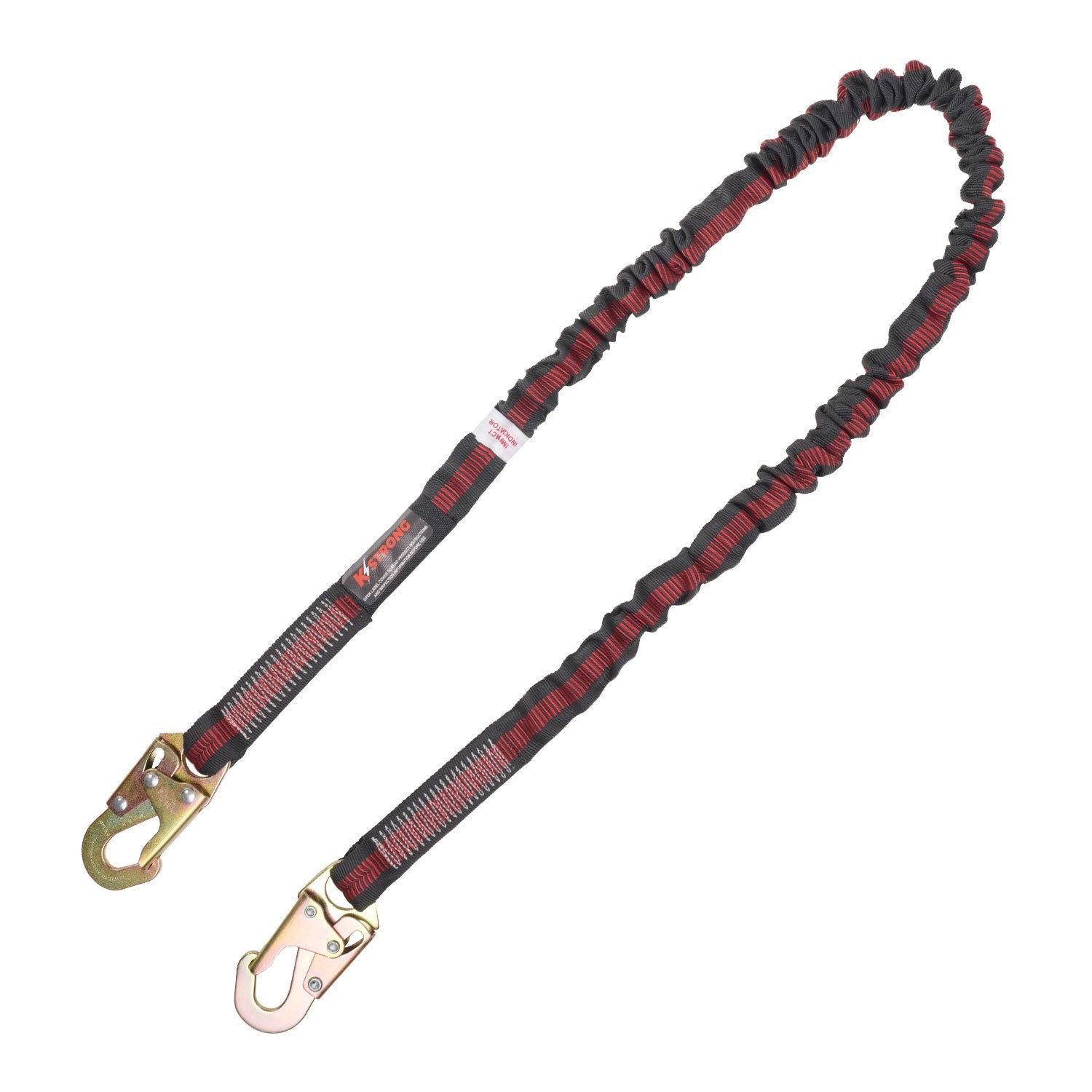
Absorber pack designs, and why they differ. The three shock absorbing designs here solve different annoyances. The internal design from $43.99 sews the absorber inside the webbing for the lowest profile and the least to snag. The clear pack design from $52.91 wraps the absorber in a transparent cover so a competent person can see whether it has started to deploy without opening anything, which turns the pre-use inspection into a glance. The elasticated design from $53.76 contracts when it is unloaded so the lanyard rides short and tight instead of dragging at your knees and catching underfoot all shift, then stretches to length under load. Pick by your real problem: inspection discipline points to clear pack, trip hazard and housekeeping point to elasticated, tight quarters point to internal.
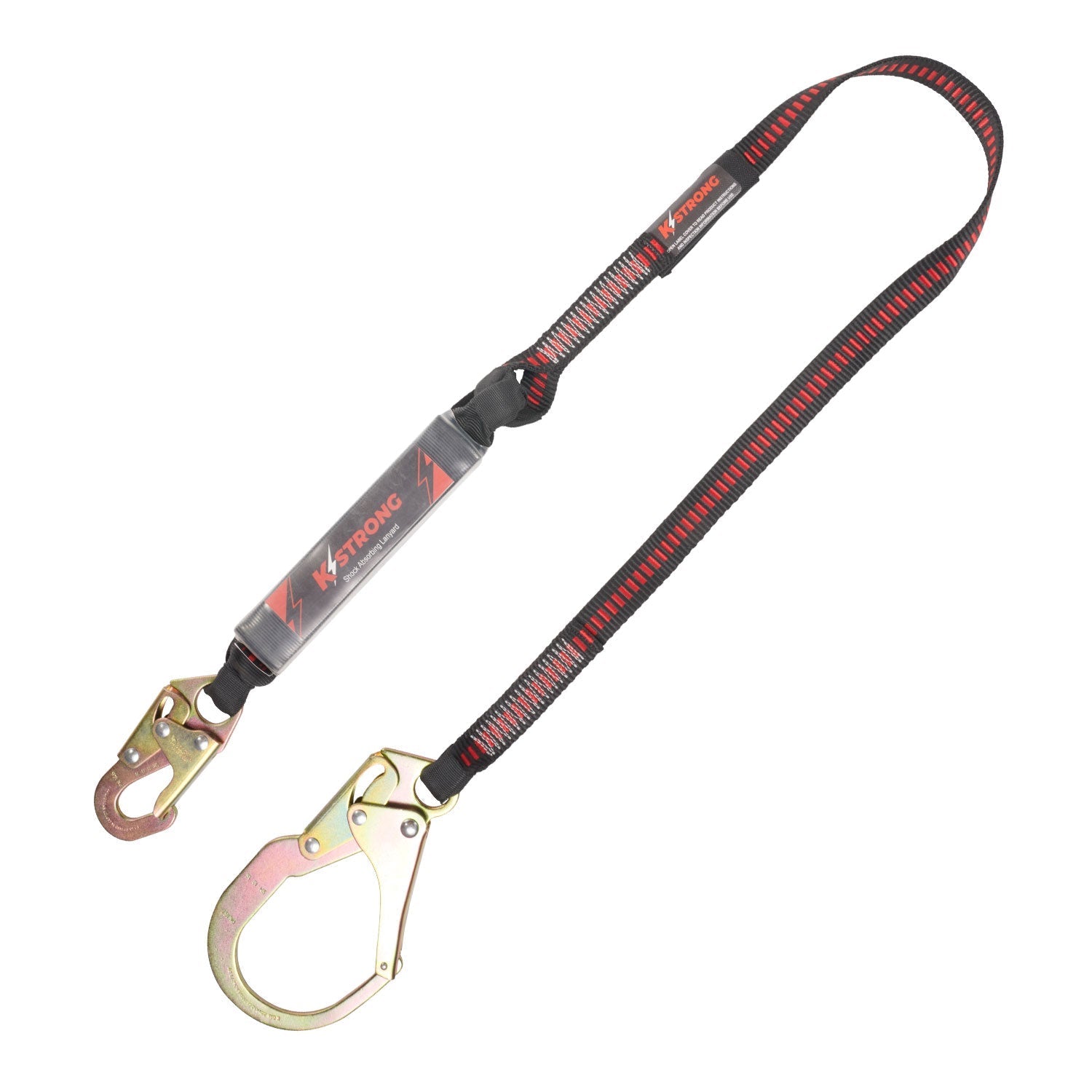
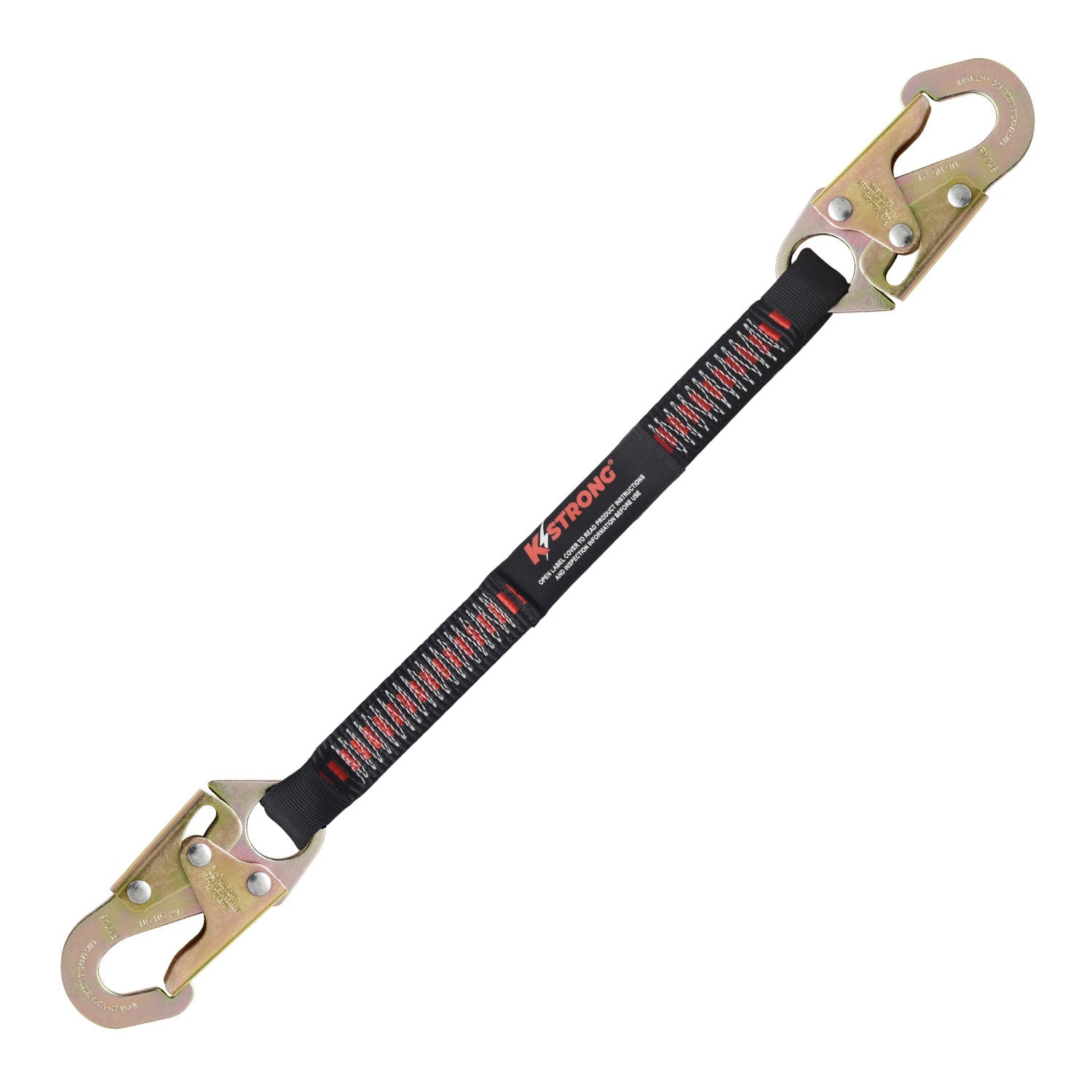
Connectors: snap hook, rebar hook, aluminum, and the gate. The hooks on the ends decide what you can actually anchor to. ANSI Z359.12 requires every snap hook and carabiner to carry a 3,600 lbf gate, tested on the face and the side so it cannot roll open under a twist, and every KStrong end connector meets it. A standard self-locking snap hook fits D-rings and anchor eyes. A rebar hook, the wide scaffold or pelican style, opens far enough to close directly around a beam, rebar cage, or structural member a snap hook cannot reach, which is why the clear pack model pairs one snap hook with one rebar hook from $61.23. Aluminum versions of both cut the dead weight hanging off your back on an all-day climb. Never choke a snap hook back on its own line or clip it to a D-ring it was not built for, and reach for the anchors in connectors and accessories when the structure gives you nothing rated to tie to.
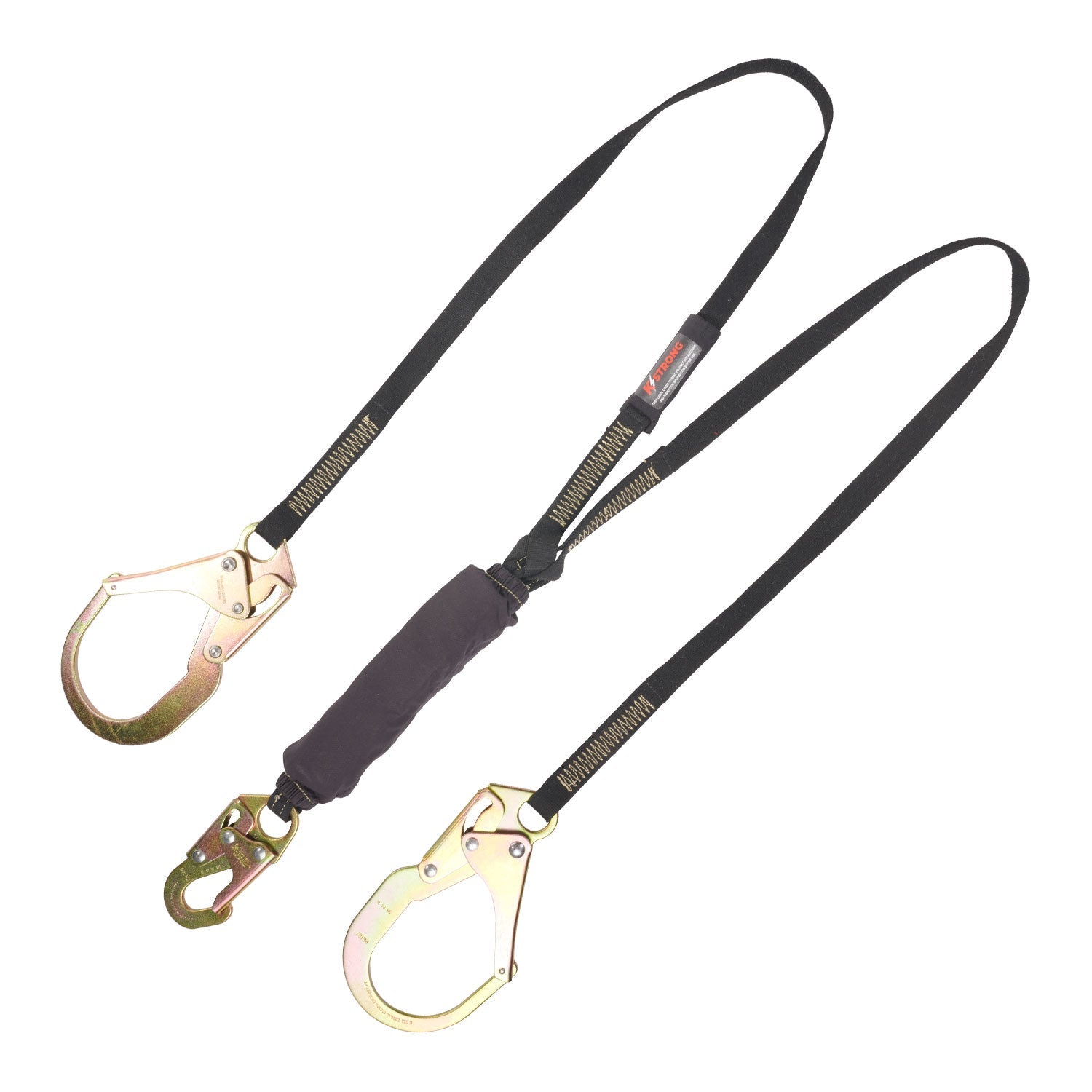
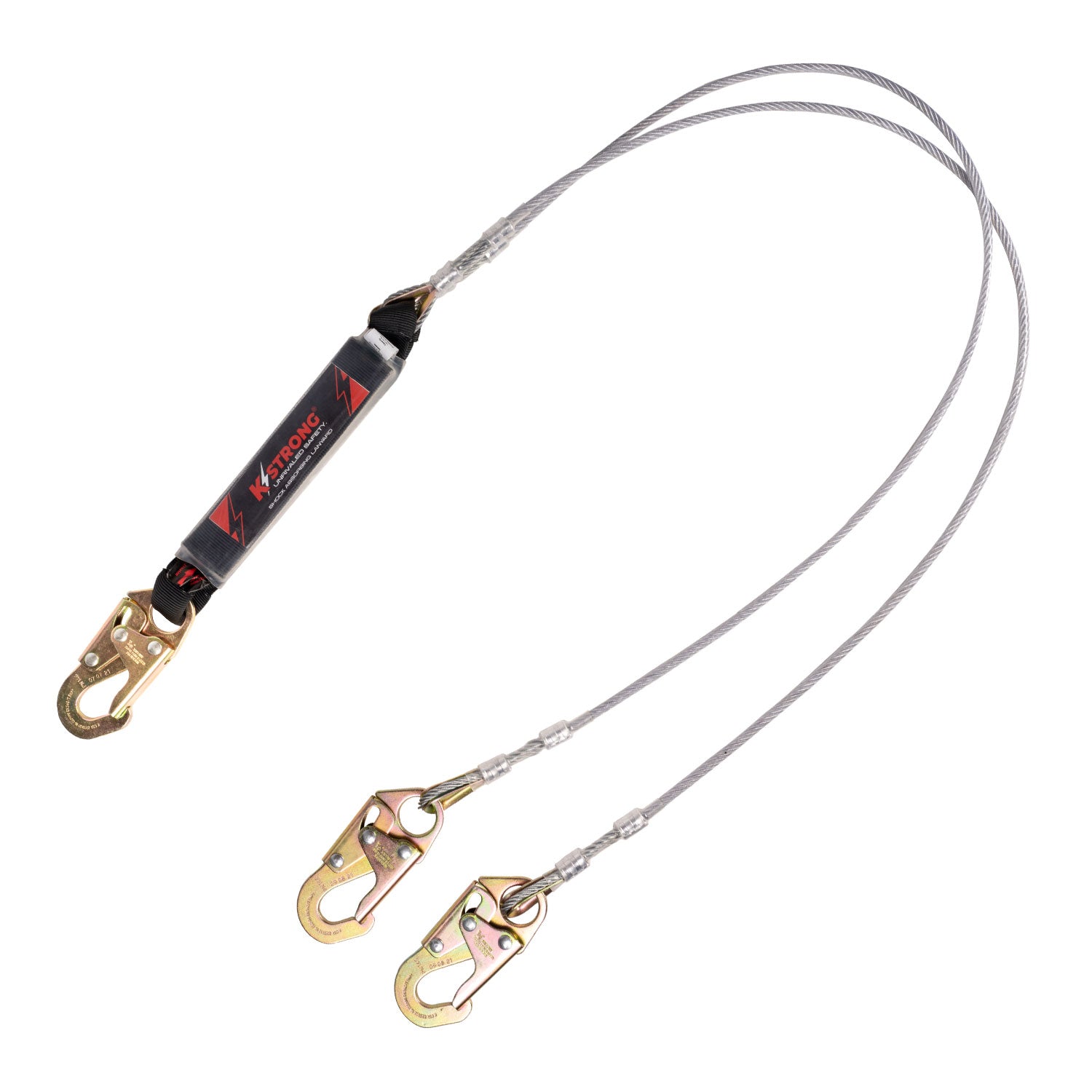
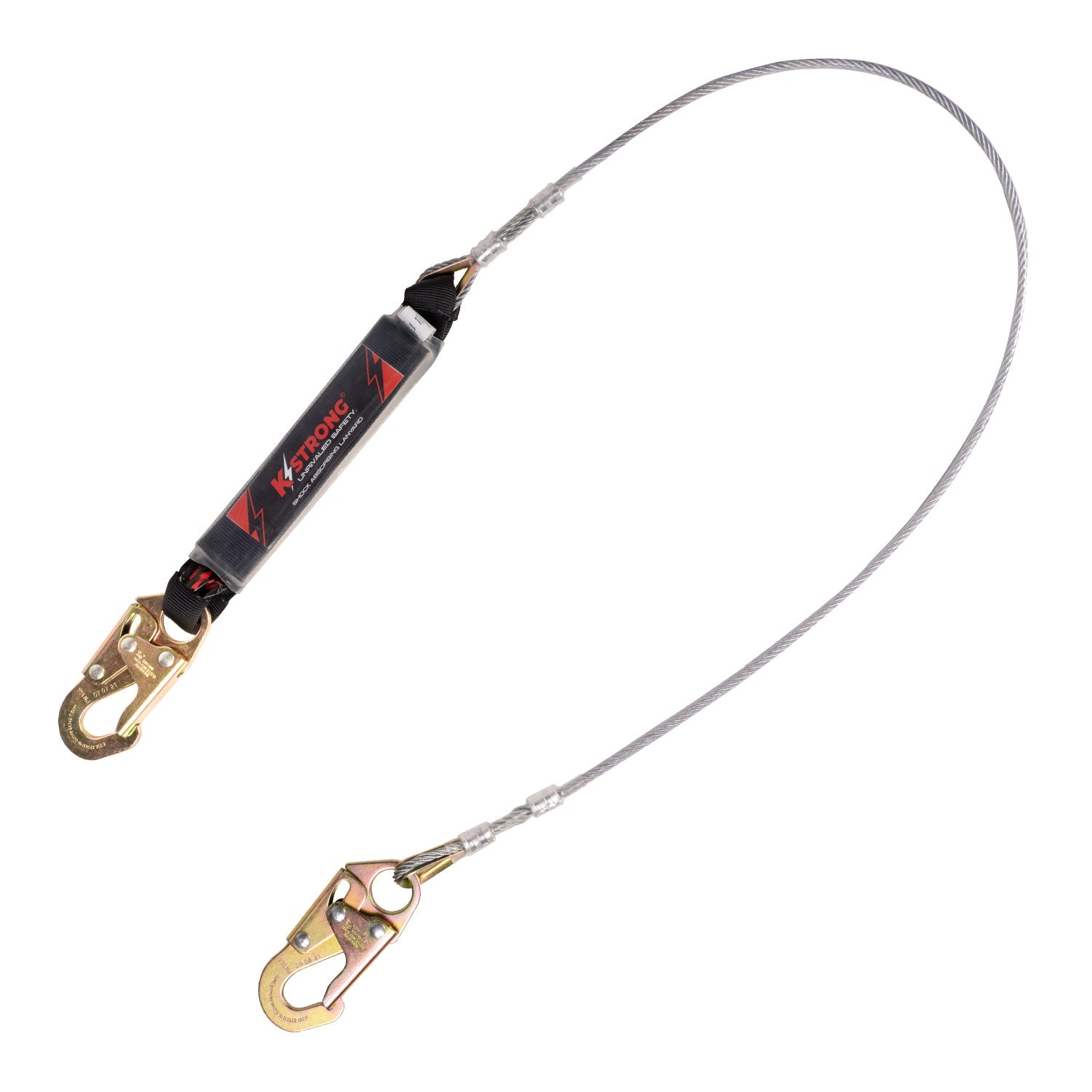
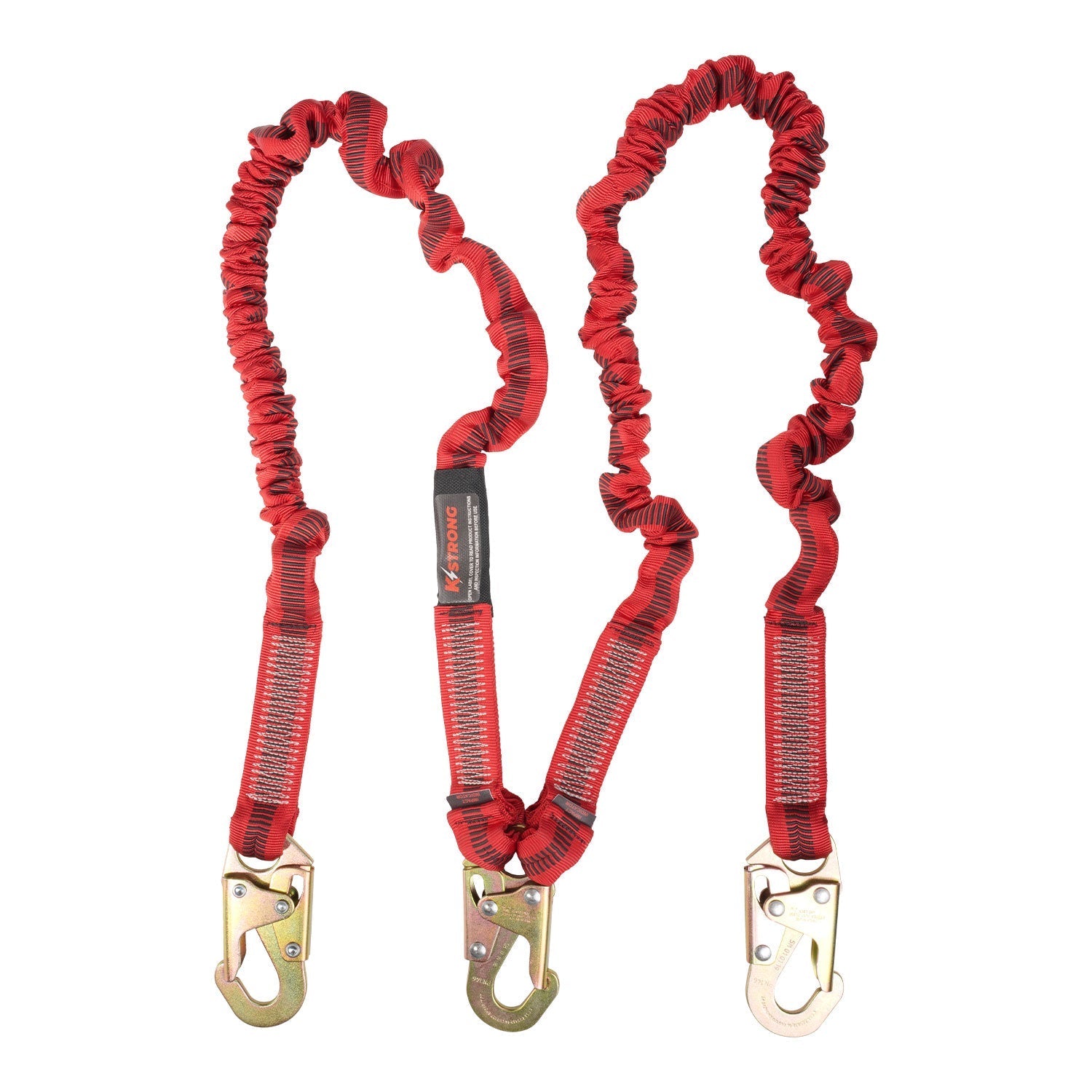
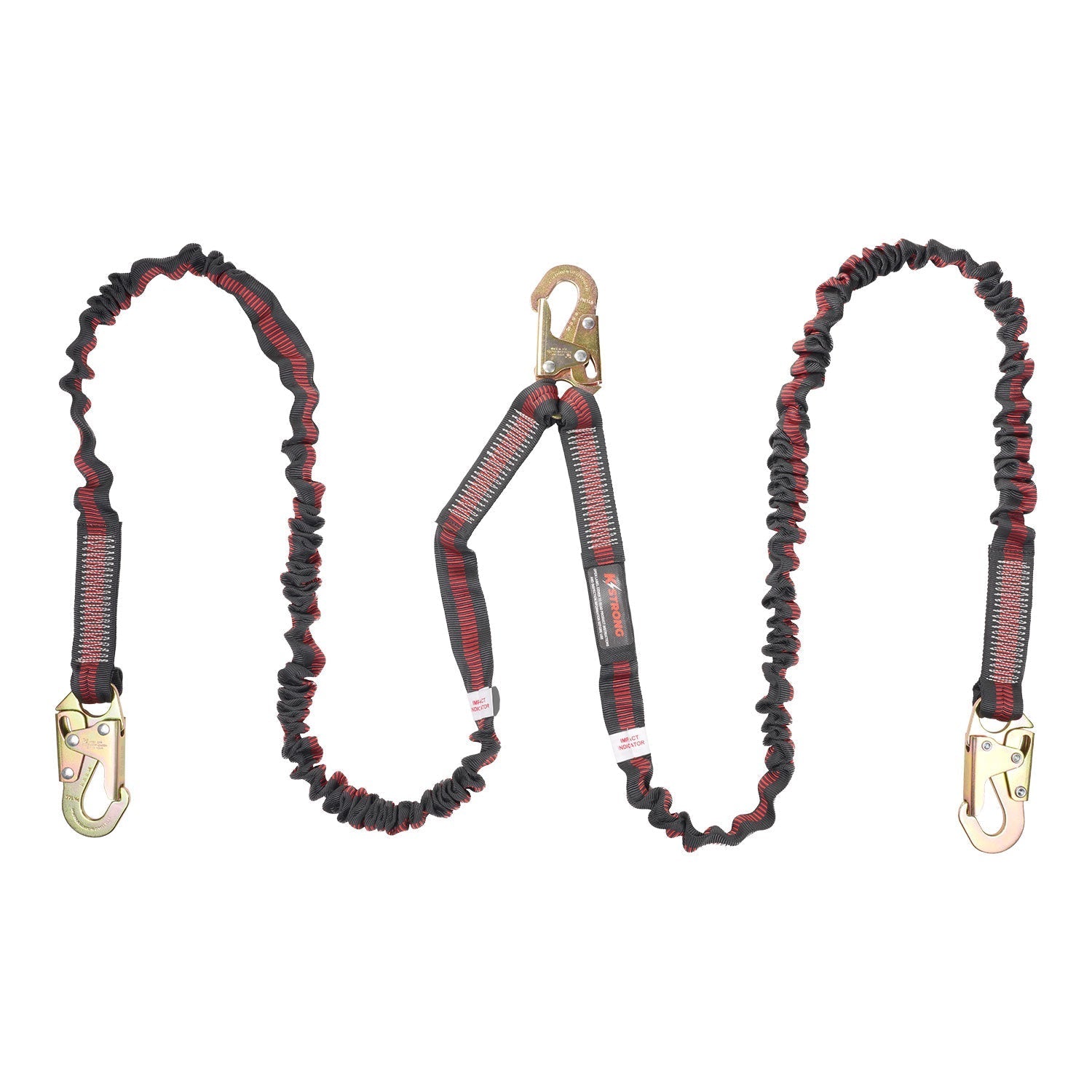
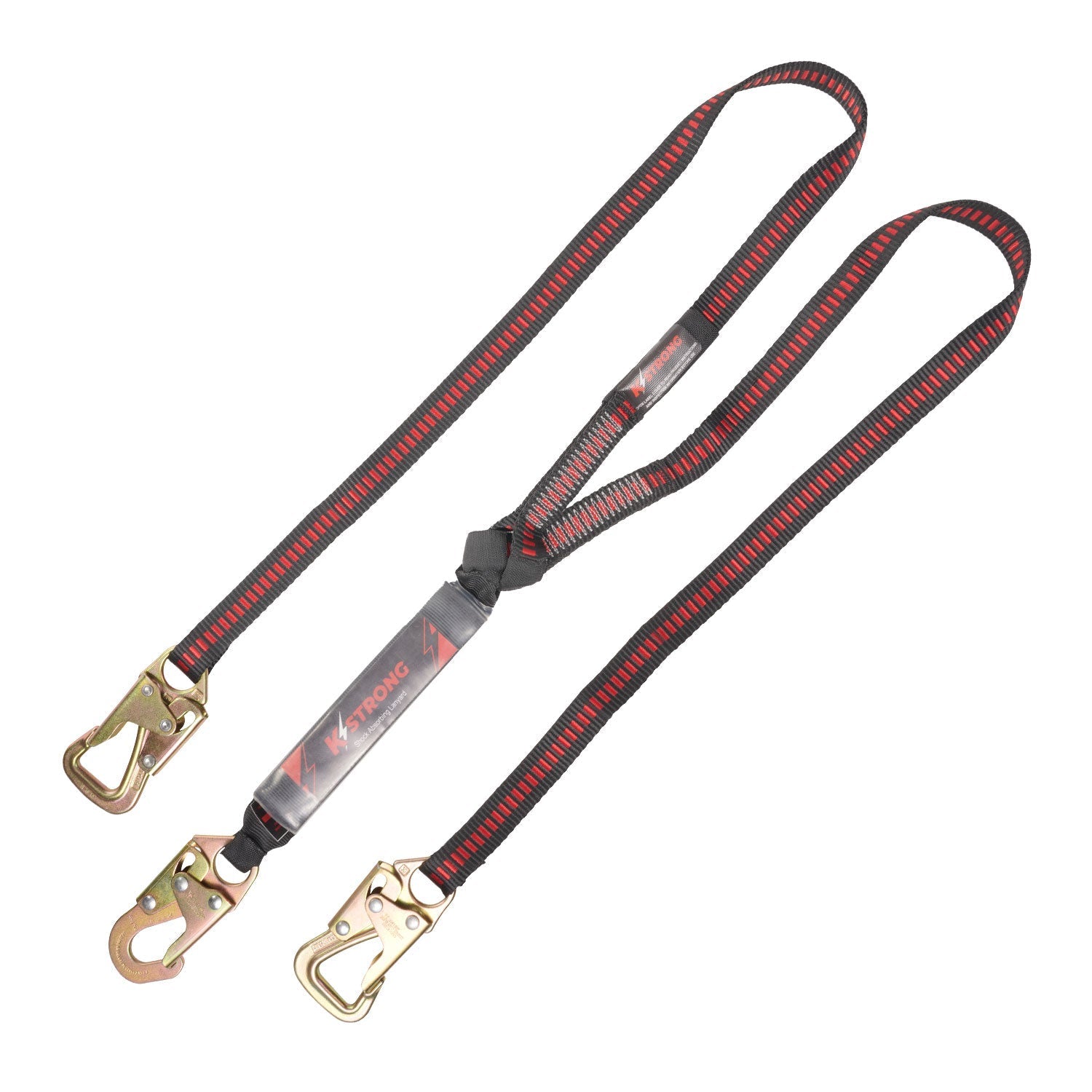
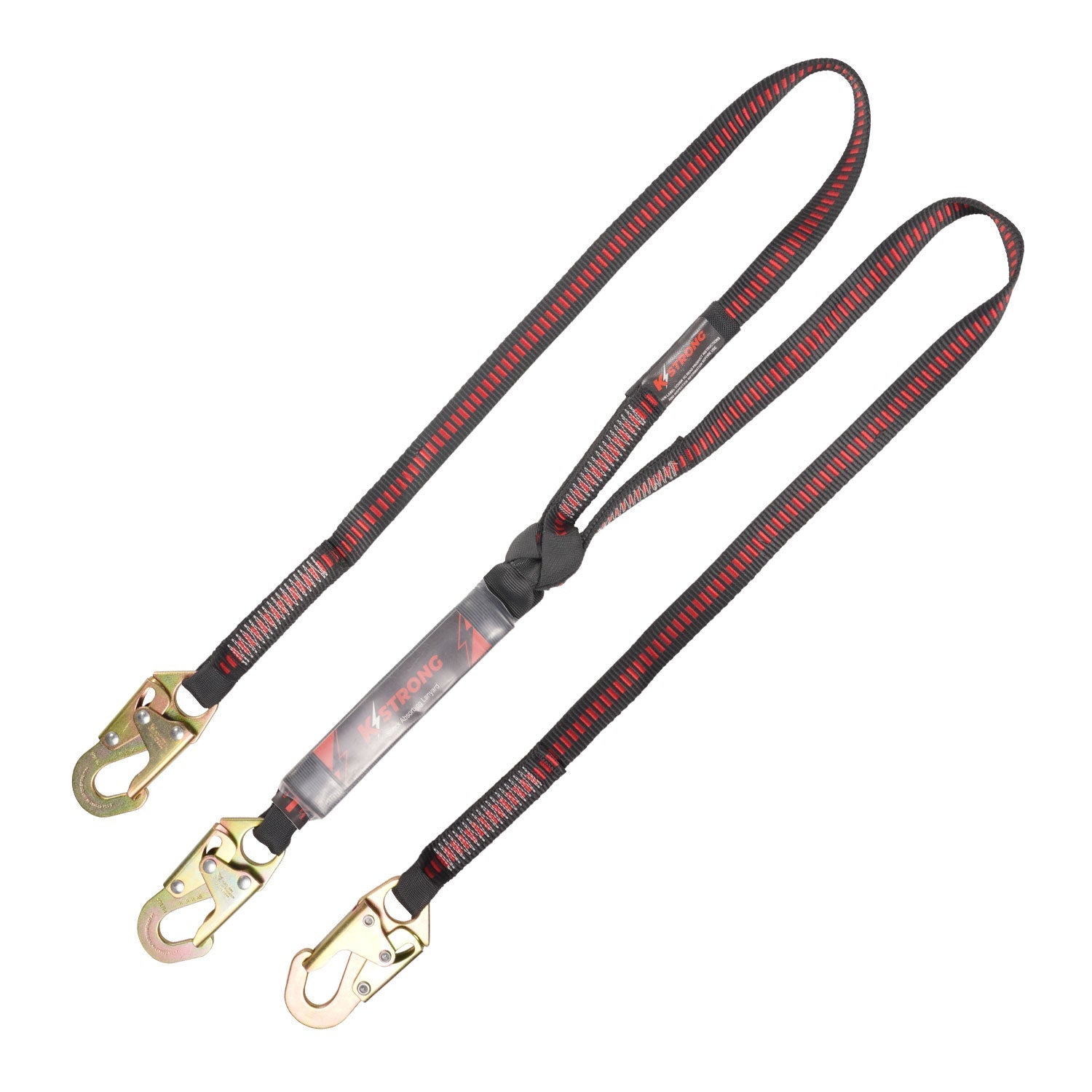
Twin leg, tie-back, leading edge, and arc flash. Four specialty builds cover the jobs a single leg cannot. A twin leg 100 percent tie-off lanyard from $70.33 gives you two absorber legs so one stays anchored while the other reaches the next point, and you are never unclipped while moving at height. A tie-back design from $52.30 carries a hook specifically rated to wrap the structure and clip back onto its own lanyard, so you anchor without a separate connector. A leading edge coated wire lanyard from $71.58 is built for anchors at foot level and lines that can drop across a sharp deck edge, the same exposure that puts a self-retracting device into the leading edge class. Arc flash rated lanyards from $170.58 single and $249.06 twin leg use Nomex and Kevlar construction tested to ASTM F887 so they survive electrical hot work that destroys standard webbing.
Inspection and the one-fall retirement rule. Fall protection has one hard rule with no exceptions: any lanyard that has arrested a fall comes out of service immediately, because a deployed energy absorber cannot be reset and the tell-tale flag or torn pack shows it fired. Short of that, inspect before every use. Run the webbing through your hands for cuts, snags, abrasion, heat glaze, and UV chalking, check the stitching for pulled or cut threads, and work each hook to confirm the gate closes and locks and the throat is not sprung or corroded. A missing or illegible tag is its own removal reason, since you cannot verify the class or the rating without it. Put everything through a documented periodic inspection by a competent person on a schedule set by how hard the gear works, and when any of it is in doubt, retire it. A lanyard is the cheapest part of the system it protects. For the harness it clips to, see safety harnesses.
Frequently Asked Questions
A shock absorbing lanyard is fall arrest gear. It clips to the dorsal D-ring between your shoulder blades and its absorber tears open to catch a fall that has already started, holding the arresting force under 1,800 lb per ANSI Z359.13 and OSHA. A work positioning lanyard clips to the side D-rings at your hips, takes your weight while you lean into the harness, and keeps both hands free for the work. Positioning gear is limited by OSHA 1926.502(e) to a 2 ft free fall and is not a fall arrest system, so it always rides alongside an independent arrest lanyard or lifeline, never in place of one.
Plan on roughly 18.5 ft of open space below the working surface. That is 6 ft of free fall, up to about 3.5 ft of absorber deployment for a 6 ft free fall class pack, roughly 5 ft from your dorsal D-ring down to your feet, plus harness stretch and a safety margin. If a lower level or obstruction sits inside that distance, the lanyard is the wrong choice and you should use a self-retracting lifeline, which locks within inches instead of paying out a full 6 ft.
Only if it is built for it. A standard lanyard is meant for an anchor at or above your dorsal D-ring on a clean surface. Anchoring below your shoulders adds free fall, and a line that can load across a sharp deck edge can be cut, which is the leading edge exposure. For those jobs use the leading edge rated coated wire lanyard, which pairs an edge-resistant cable with an absorber sized for the higher energy of a foot-level tie-off. Confirm the label rates it for leading edge or foot-level use before you trust it.
It keeps you continuously connected while you move. A twin leg lanyard has two independent absorber legs, so you keep one leg clipped to its anchor while you reach the next anchor with the other, and you are never unhooked at height. It matters most on ladders, towers, and structural steel where a single leg would force you to unclip to advance. When one leg is idle, park its hook on the harness keeper meant for it rather than clipping it back to a load-bearing D-ring.
Immediately after it arrests a fall, no exceptions, because the energy absorber deploys in a way that cannot be reset and its tell-tale indicator will show it fired. Short of a fall, retire a lanyard for cuts, snags, heavy abrasion, heat glaze, or chemical damage on the webbing, pulled or cut stitching, cracked or corroded hooks, a gate that will not close and lock, or a missing or illegible tag. Inspect before every use and add a documented periodic inspection by a competent person scaled to how hard the gear works.