E-Track Straps
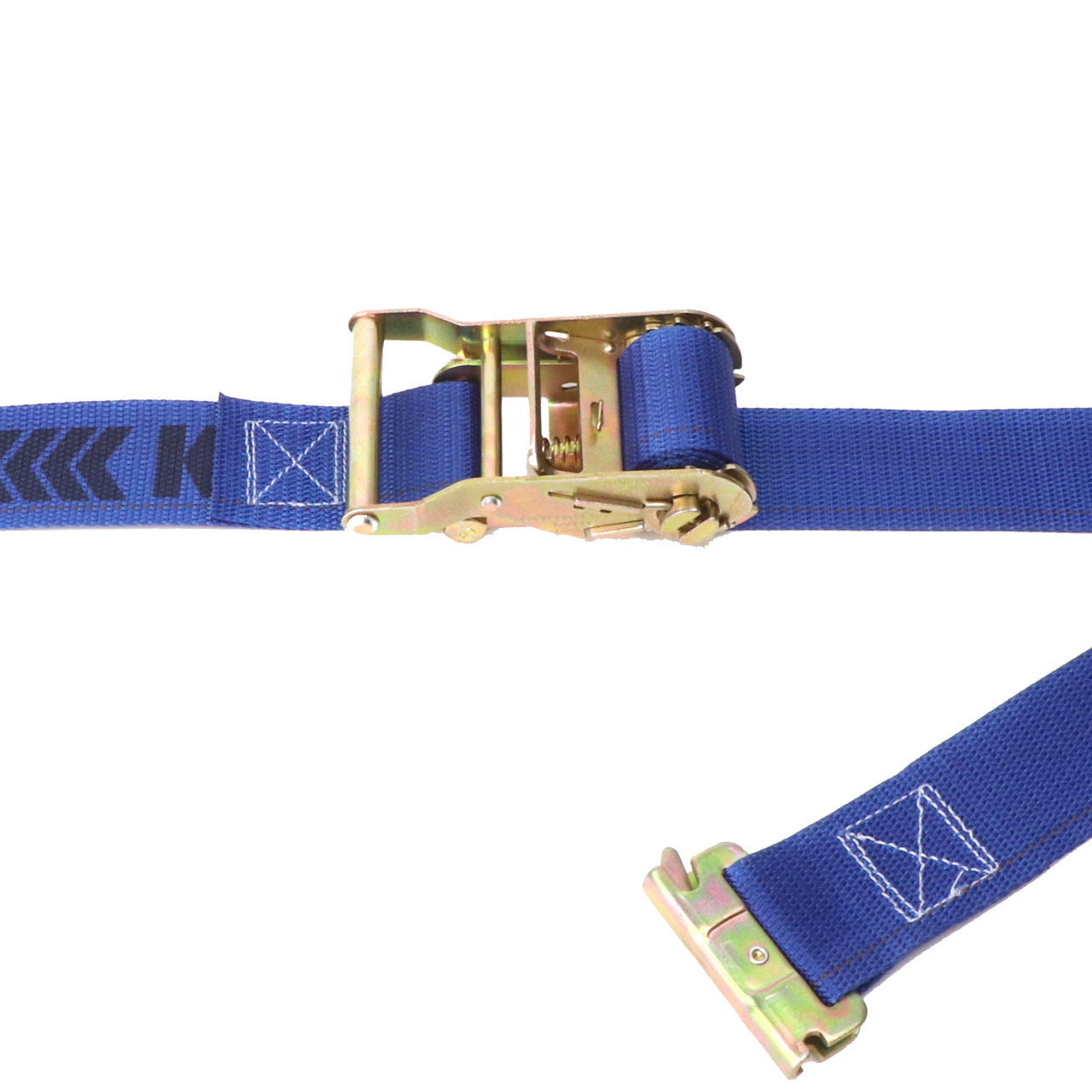
E-track straps are the tie-downs that lock straight into the slotted logistic track lining an enclosed trailer or box truck, turning a bare wall into an anchor point wherever you need one. This collection runs Kinedyne's 2 inch logistic straps in the fittings that matter: spring-loaded ends for slotted Series E and A track, butterfly plates for round-hole Series F, and the versatile plate trailer hook and narrow wire hook that drop into nearly any track you already have bolted to the wall. Both mechanisms are stocked, the ratchet for tension you crank and lock and the cam buckle for quick hand-tight work that cannot over-crank a light load, in 12, 16, and 20 foot lengths. Working load limits run from 500 lb on the light utility straps up to 1,500 lb on the K-FORCE spring-loaded ratchet, and most sit under $25. Pick the fitting your track accepts first, then the mechanism the load wants, then a length that reaches with a little to spare.
Compare Logistics Straps
| Model | Price | Overall Length | Capacity | |
|---|---|---|---|---|
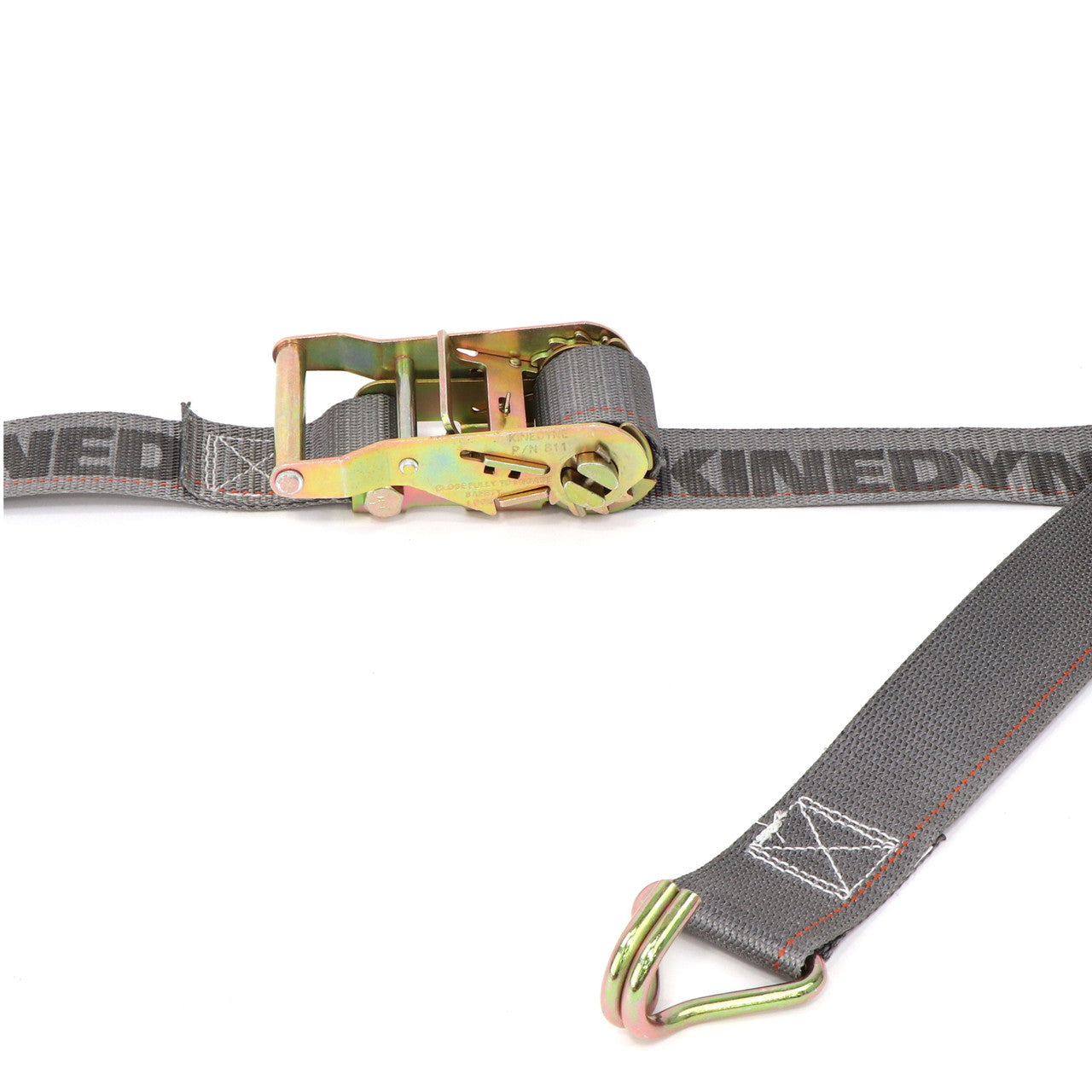
| Kinedyne 2" Plate Trailer Hook Logistic Ratchet Strap | $24 | 12-20 ft | 735 lb | View → |
| Kinedyne 2" Butterfly Logistic Ratchet Strap | $24 | 12-20 ft | 500 lb | View → |
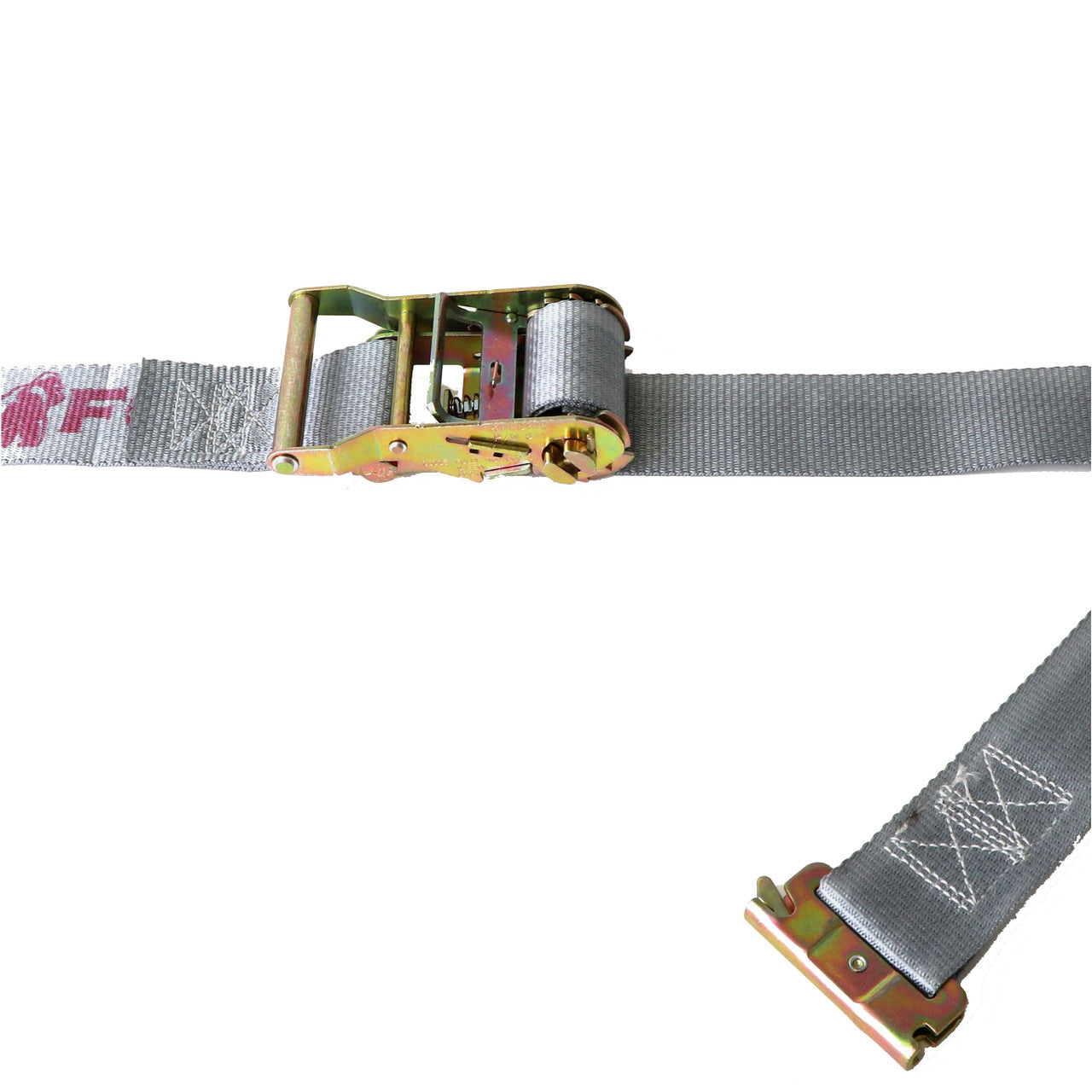
| Kinedyne 2" K-FORCE™ Spring Loaded Logistic Ratchet Strap | $17 | 12-20 ft | 1,500 lb | View → |
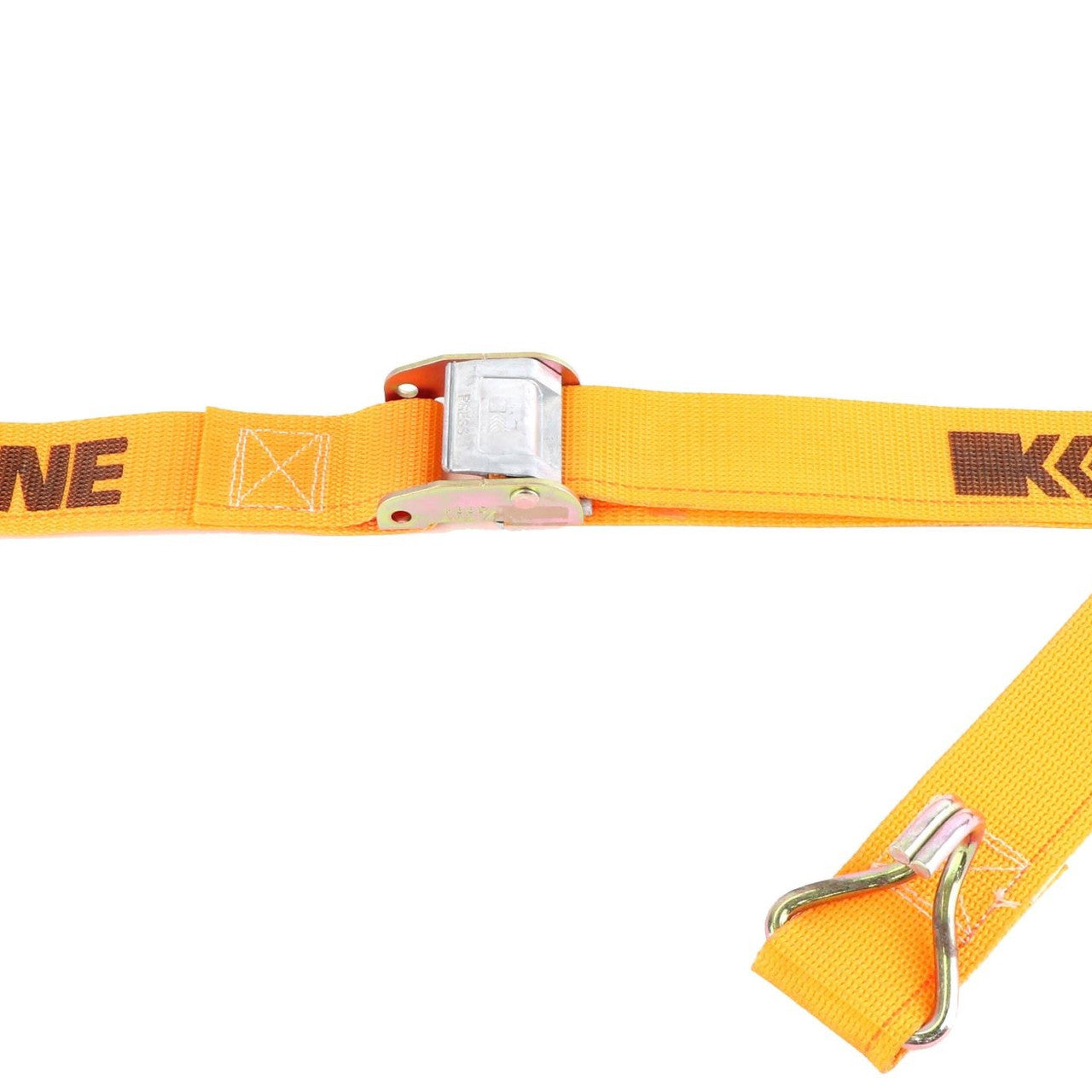
| Kinedyne 2" Spring Loaded Logistic Cam Buckle Strap | $10 | 12-20 ft | 835 lb | View → |
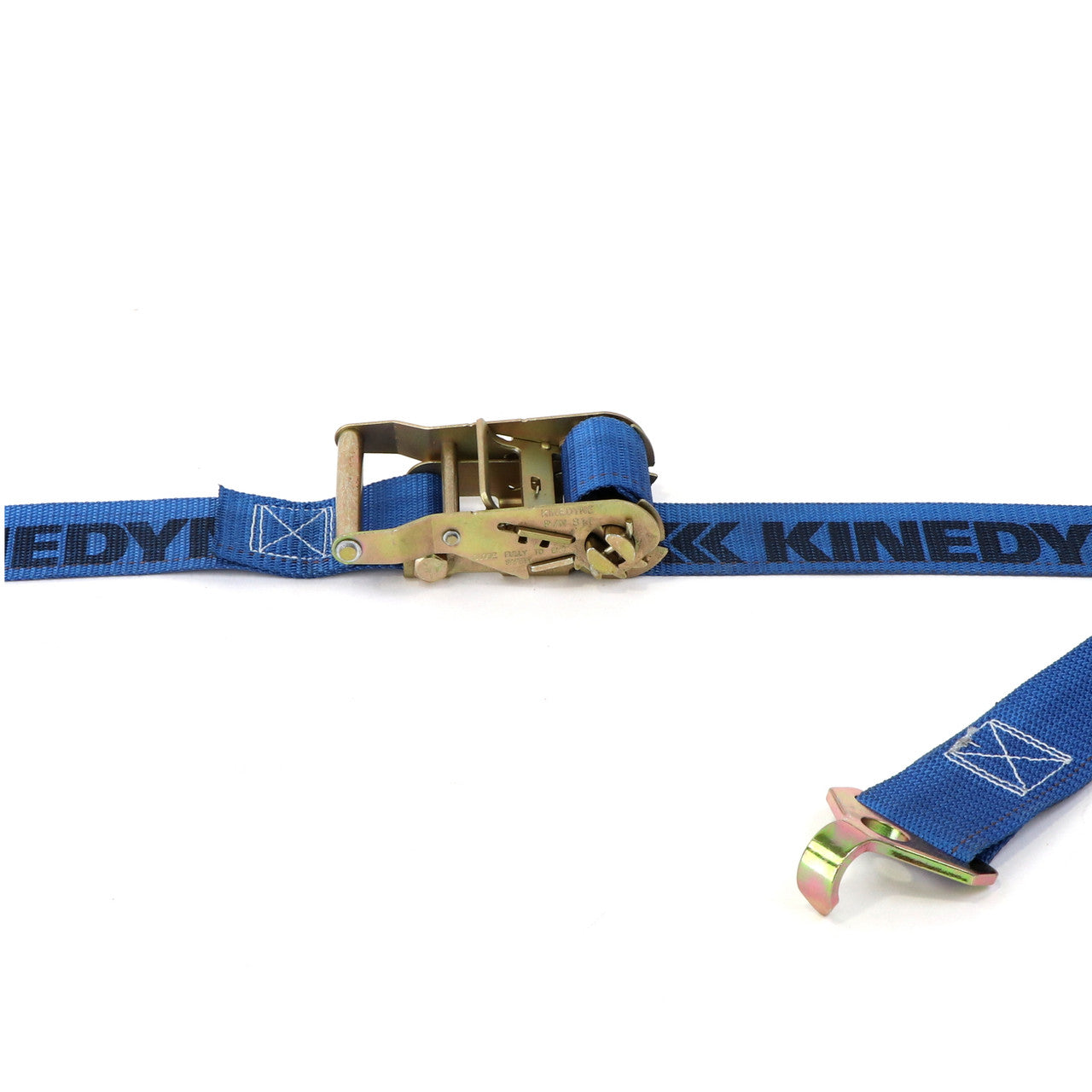 In Stock
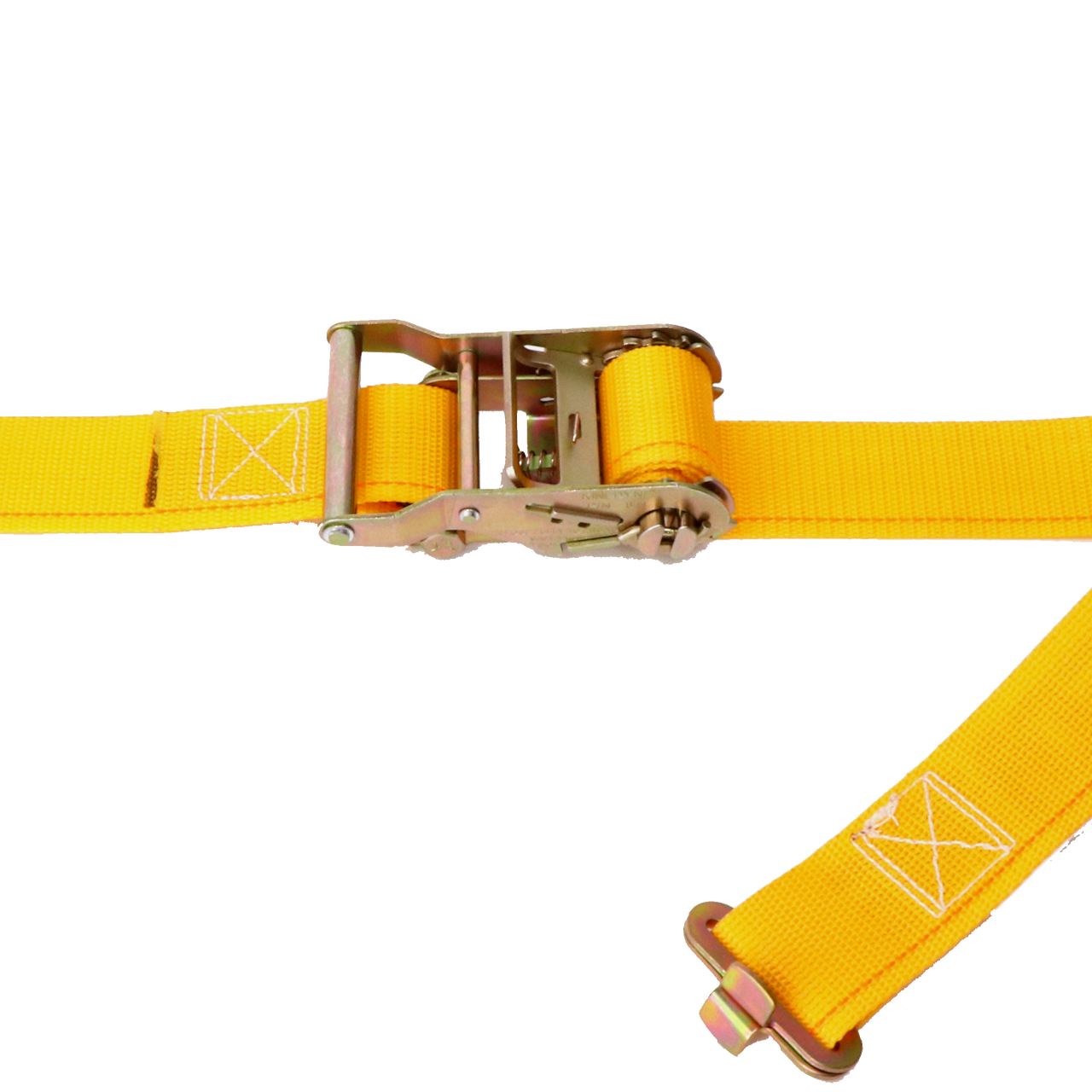 In Stock
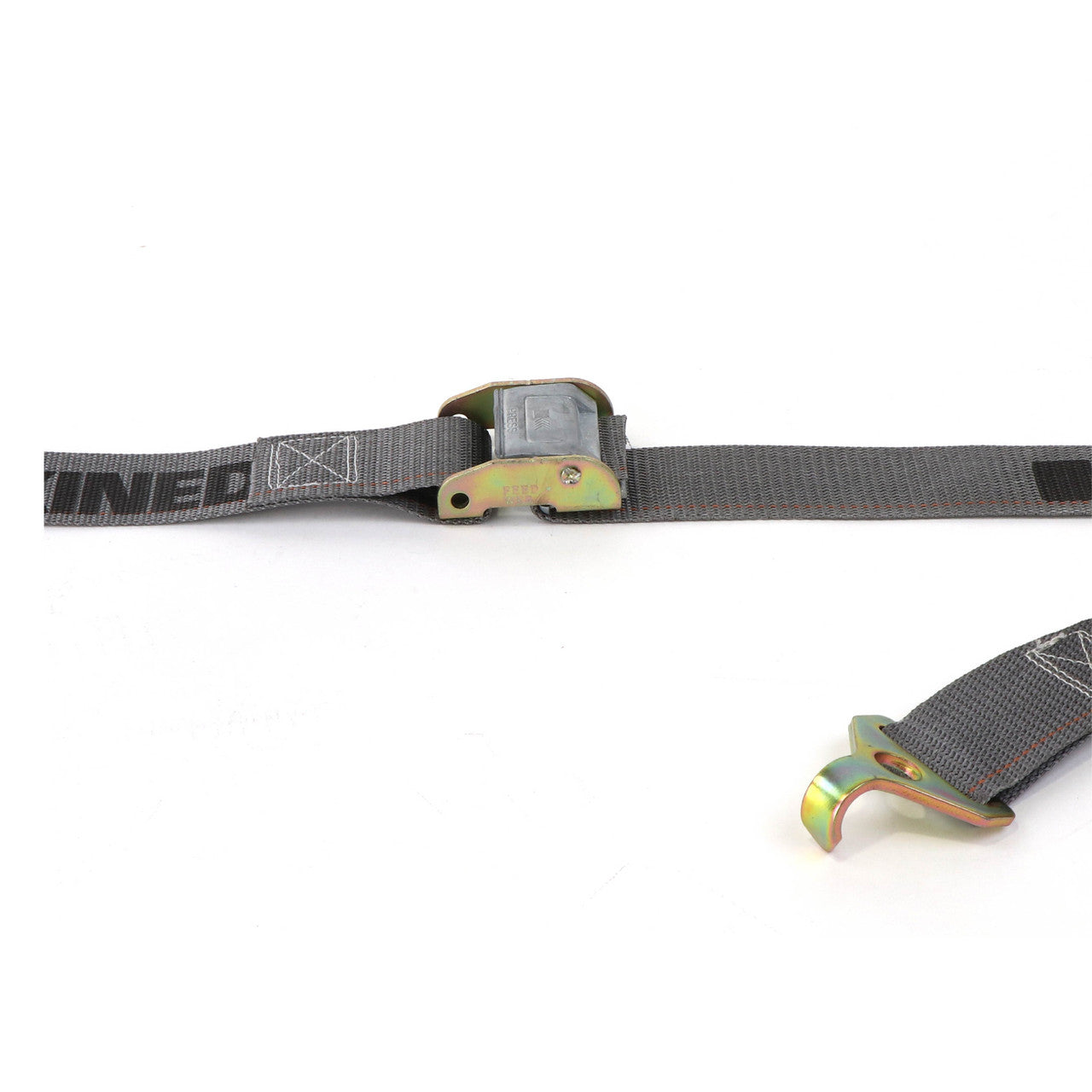 In Stock
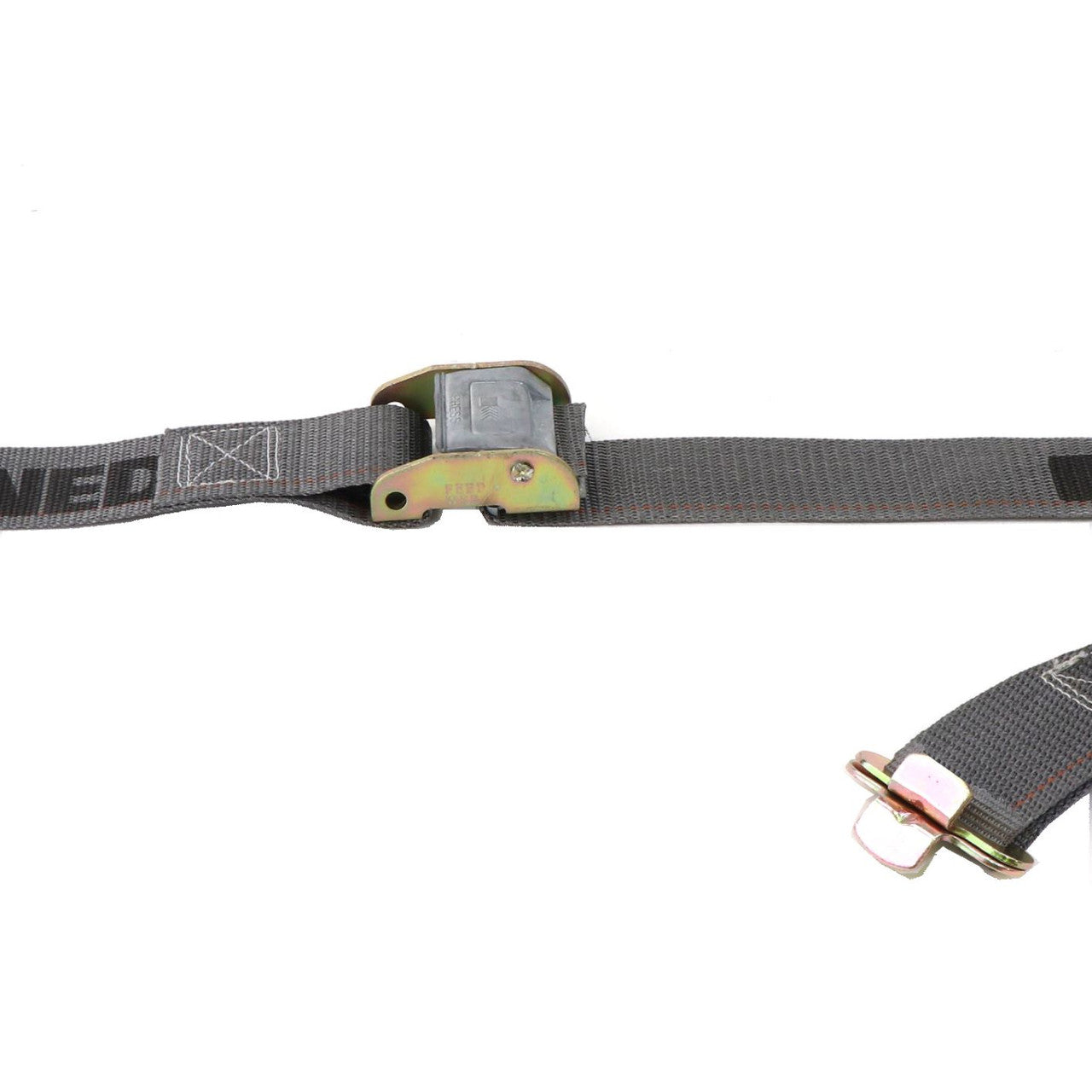 In Stock
 In Stock
 In Stock
 In Stock
 In Stock
 In Stock
Logistics Straps Buying Guide
The fitting decides which track it locks into. A logistic strap is a length of polyester webbing with a tensioner in the middle and a track fitting on each end, and the fitting is the part that makes it an E-track strap rather than a hook strap. Spring-loaded fittings carry a long flat spring that presses into a slot and snaps home, the standard end for slotted logistic tracks in Series E and Series A. Butterfly fittings are flat plates sized for the round holes of Series F track, 3/4 inch in the US pattern and 1 inch in the Canadian one. The plate trailer hook and the narrow wire hook are the versatile pair: Kinedyne builds them to seat in nearly any logistic track, so they are the safe buy when a fleet runs mixed track or you are not certain what is already mounted in the trailer. Match the fitting to the track before anything else, because a spring end will not seat in a round Series F hole and a butterfly plate will not lock a slotted E rail.
Ratchet for tension, cam buckle for speed. Every strap here comes in two mechanisms. The ratchet version threads through a heat-treated steel ratchet that multiplies hand force, so you crank it to the tension the load needs and the pawl holds it there, the right pick for heavier freight and anything that will ride hard miles. The cam buckle version tensions by hand and locks with a spring-loaded cam, which is faster to set and release and, because it only reaches hand-tight, cannot over-crank a light or crushable load the way a ratchet can. On the spring-loaded fitting the split shows in the ratings: the ratchet strap carries a 1,000 lb working load limit against the cam buckle's 835 lb, and the K-FORCE spring-loaded ratchet climbs to 1,500 lb for the loads that need every pound. It is the same hand-tension logic behind the flatbed cam buckle straps. Run ratchets on pallets, appliances, and stacked freight, keep cam buckles for boxes, totes, and interior loads you tension by feel.
Read the working load limit, then do the DOT math. The number on the strap is a working load limit, not a break strength. Synthetic web tie-downs are rated under the WSTDA standard at no more than one third of the assembly's break strength, so the 500 to 1,500 lb ratings across this collection already carry a two-thirds reserve for shock, abrasion, and age that you do not get to spend. Those ratings also feed the federal count. Under 49 CFR 393.106 the aggregate working load limit of the tie-downs on an article has to reach at least half its weight, and 393.110 sets the minimum number of straps regardless of the math. Logistic straps earn their keep here because the track gives you anchor points every couple of inches, so hitting the aggregate is a matter of adding straps along the run rather than hunting for a place to hook, the same arithmetic that governs the flatbed ratchet straps. Keep the tags legible, because an unmarked strap drops to the low default rating the FMCSA assigns in 49 CFR 393.108.
Length and width, and where the run gives out. Every strap here is 2 inch webbing, the general logistic width, in 12, 16, and 20 foot lengths. Pick the length that crosses the load and still leaves slack to reach an anchor slot on each side and take up tension, because a strap stretched to its last inch has nothing left to cinch. In an enclosed van, run horizontal track at two heights and a 16 or 20 foot strap throws over a pallet stack and catches a slot on both walls, while a 12 foot strap is the one for narrow aisles, single cartons, and cross-ties between opposing rails. The 2 inch width is the workhorse for palletized freight and appliances; step to a spring-loaded ratchet when the load rides all day rather than a short local run.
Build the system, then protect the webbing. Straps are one layer of an interior securement system. Set across opposing rows of track, decking and shoring beams drop into the slots to build a second freight level or a bulkhead that stops a load from sliding forward, so the straps hold what the beams divide. And every strap here dies at the same place, an edge, so keep the corner and web protection sleeves and guards on the truck: webbing that frays over a pallet corner or a steel lip has no honest rating left at any discount. Inspect before every load and pull any strap with cuts, burns, UV bleaching, a bent hook, or a fitting that will not lock cleanly into the slot.
Frequently Asked Questions
It is a logistic tie-down strap with a track fitting on each end that presses into the slots or holes of logistic track mounted inside an enclosed trailer, box truck, or cargo van. Instead of hooking a rub rail or stake pocket the way a flatbed strap does, it locks into an anchor point anywhere along the rail, which is why it is the standard securement strap for interior freight where there is nothing on the wall to hook onto.
The spring-loaded fitting has a long flat spring that snaps into slotted Series E and Series A track. The butterfly fitting is a flat plate made for the round holes of Series F track, 3/4 inch in the US and 1 inch in the Canadian pattern. The plate trailer hook and narrow wire hook are the versatile options that Kinedyne builds to seat in nearly any logistic track, so they are the choice when your trailer runs mixed or unknown track.
Use the ratchet version for heavier freight and long hauls, since the ratchet multiplies your hand force and holds high tension against road vibration. Use the cam buckle for lighter interior loads you want to set and release quickly, and for anything crushable, because a cam only reaches hand-tight and cannot over-crank the way a ratchet can. On the spring-loaded fitting the ratchet is rated 1,000 lb and the cam buckle 835 lb.
The straps in this collection carry working load limits from 500 lb on the light utility fittings up to 1,000 lb on the spring-loaded ratchet and 1,500 lb on the K-FORCE spring-loaded ratchet. Those are working load limits set at no more than one third of the webbing assembly's break strength under the WSTDA standard, so the reserve above the rating is built in for shock and wear, not spare capacity to use.
Not by fitting. A spring-loaded end cut for slotted Series E track will not lock into a round-hole Series F rail, and Series A hardware does not drop into Series E slots. If you are not sure what track is in your trailer, or you run several patterns across a fleet, the plate trailer hook and narrow wire hook straps are the safe buy because they seat in nearly any logistic track.