Cam Buckle Straps
Cam buckle straps tension by hand: you feed the webbing through a spring-loaded cam, pull until the load sits snug, and the cam's toothed jaw grips the strap and holds it. There is no ratchet handle and no lever, so there is no way to crank past what your arm can pull, and that ceiling is the whole point. It makes a cam buckle the right tool for finish-sensitive and lighter cargo, the places where a ratchet's mechanical advantage would dent a gunwale, crush a fairing, or bow a panel before you felt the resistance. This collection runs on Kinedyne webbing in two families: light 1 inch straps for boats, personal watercraft, and powersports, with S hooks, snap hooks, and sewn loops in single and paired sets; and 2 inch logistic cam straps that click into E track and A track walls inside enclosed trailers. Capacities sit between 500 and 835 pounds, and prices run from about ten dollars for a single logistic strap to the high fifties for a boxed pair. The guide below covers the ratings, the fittings, and where a cam earns its place over a ratchet.
Compare Cam Buckle Straps
| Model | Price | Overall Length | Capacity | |
|---|---|---|---|---|
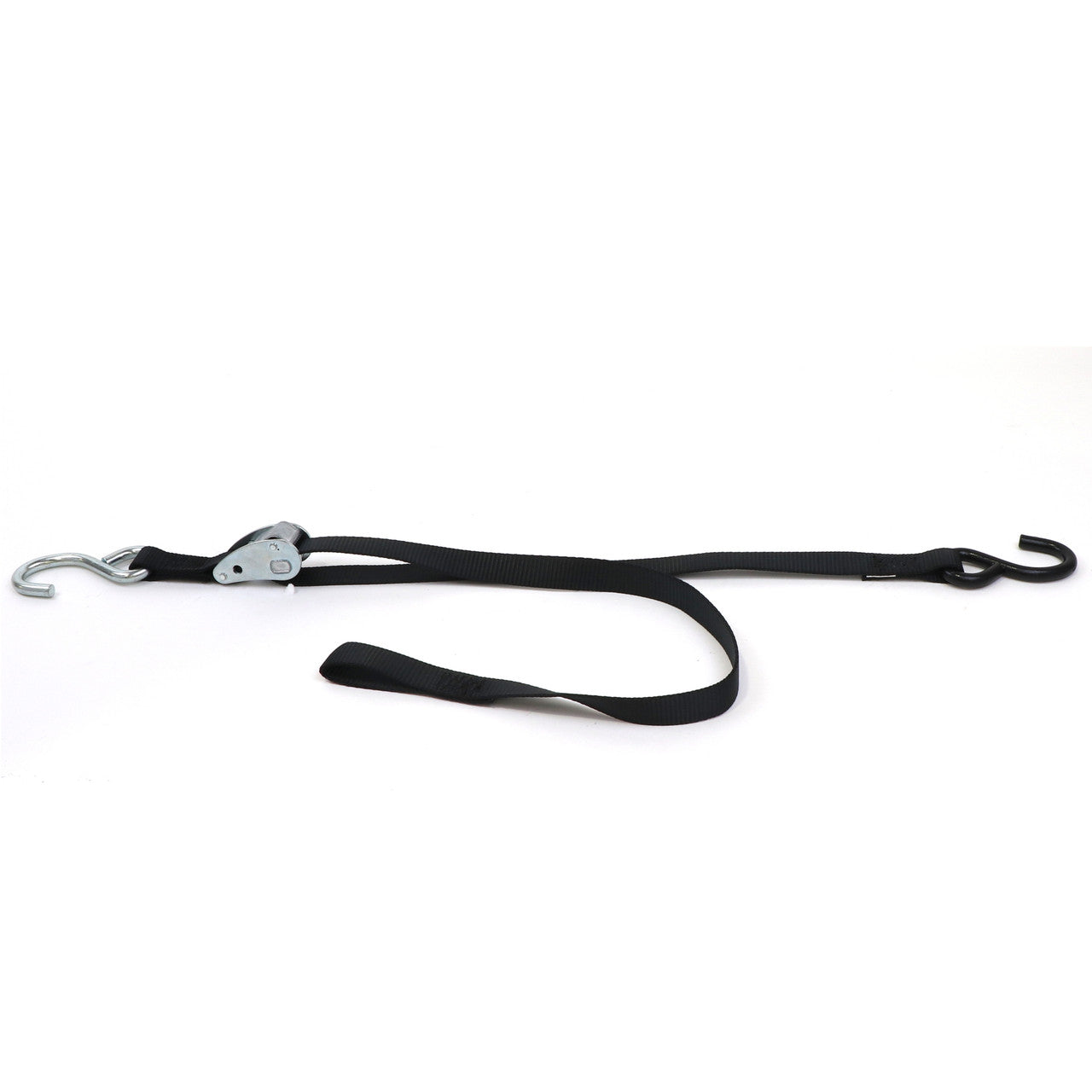
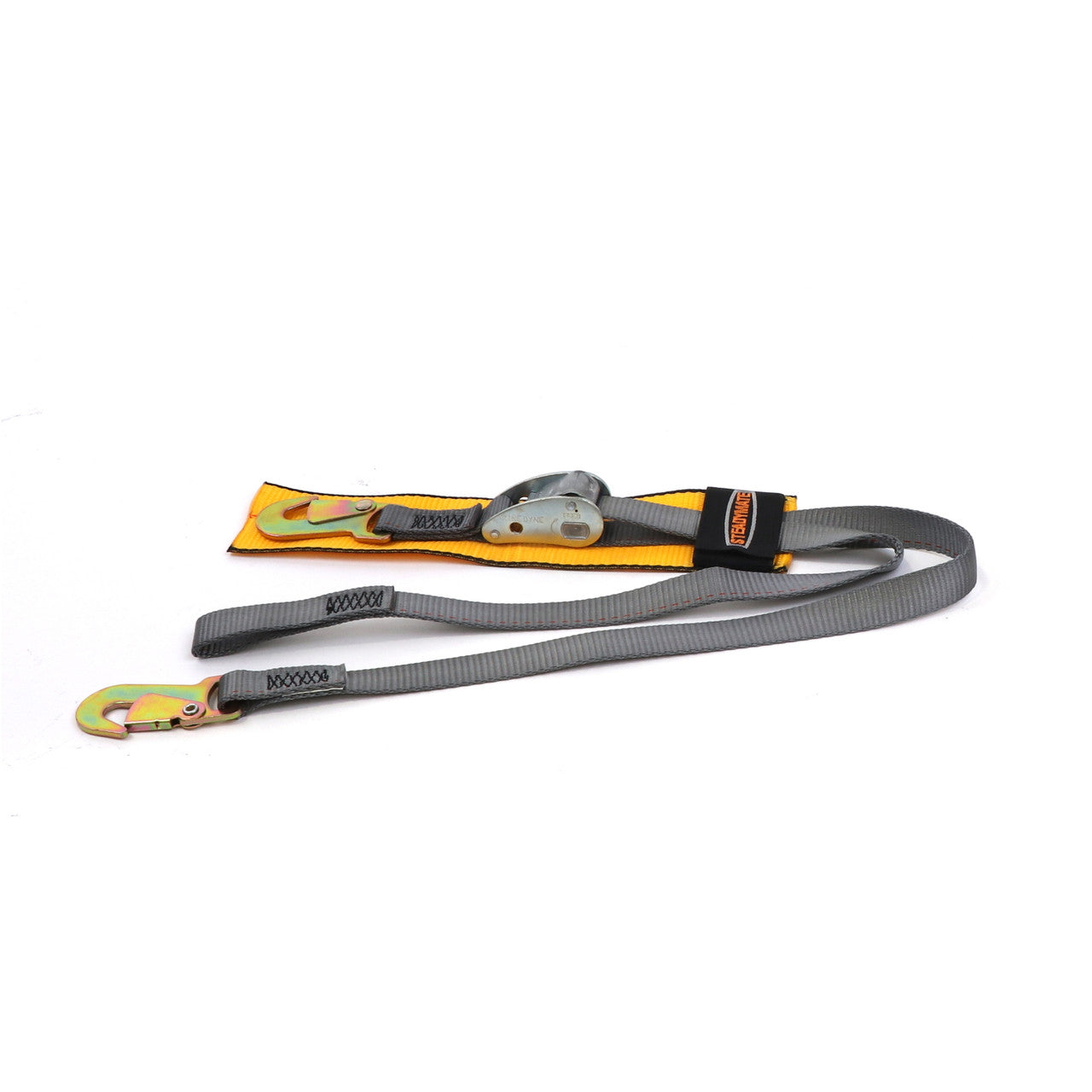
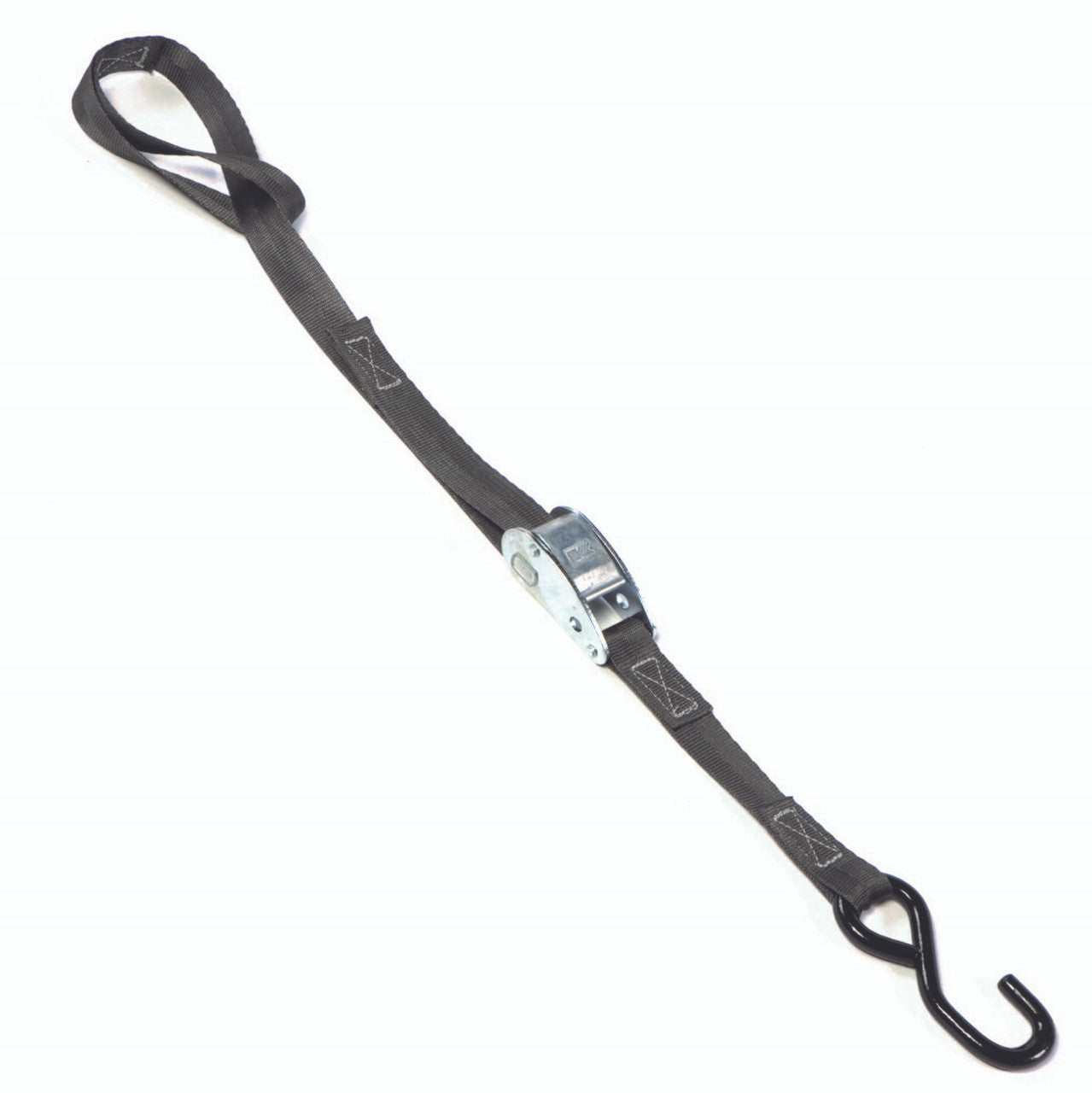
| Kinedyne Pair of 1" S Hook Cam Buckle Straps | $58 | 5-6 ft | 835 lb | View → |
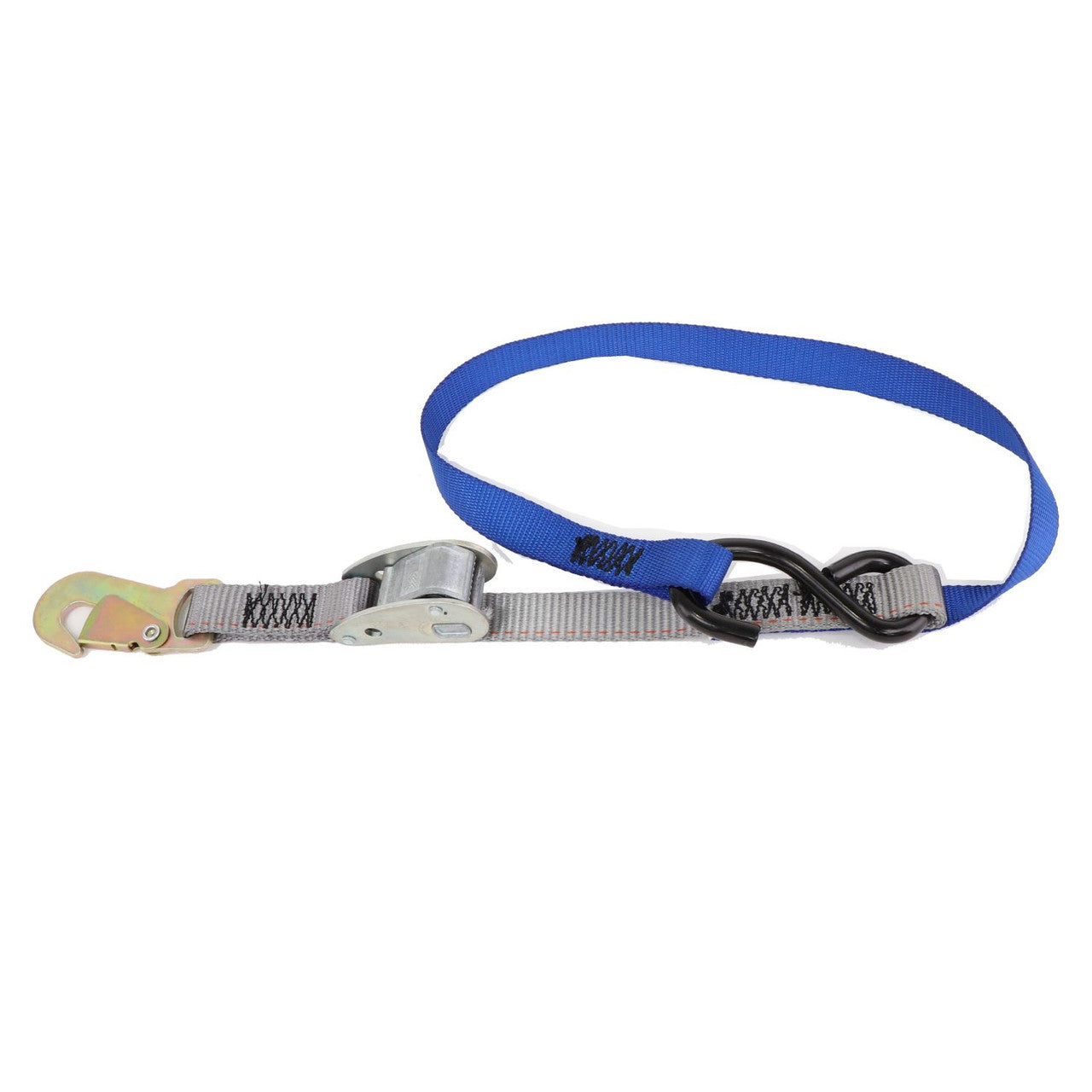
| Kinedyne 1" by 90" S Hook and Snap Hook Cam Buckle Personal Watercraft Strap | $27 | — | 835 lb | View → |
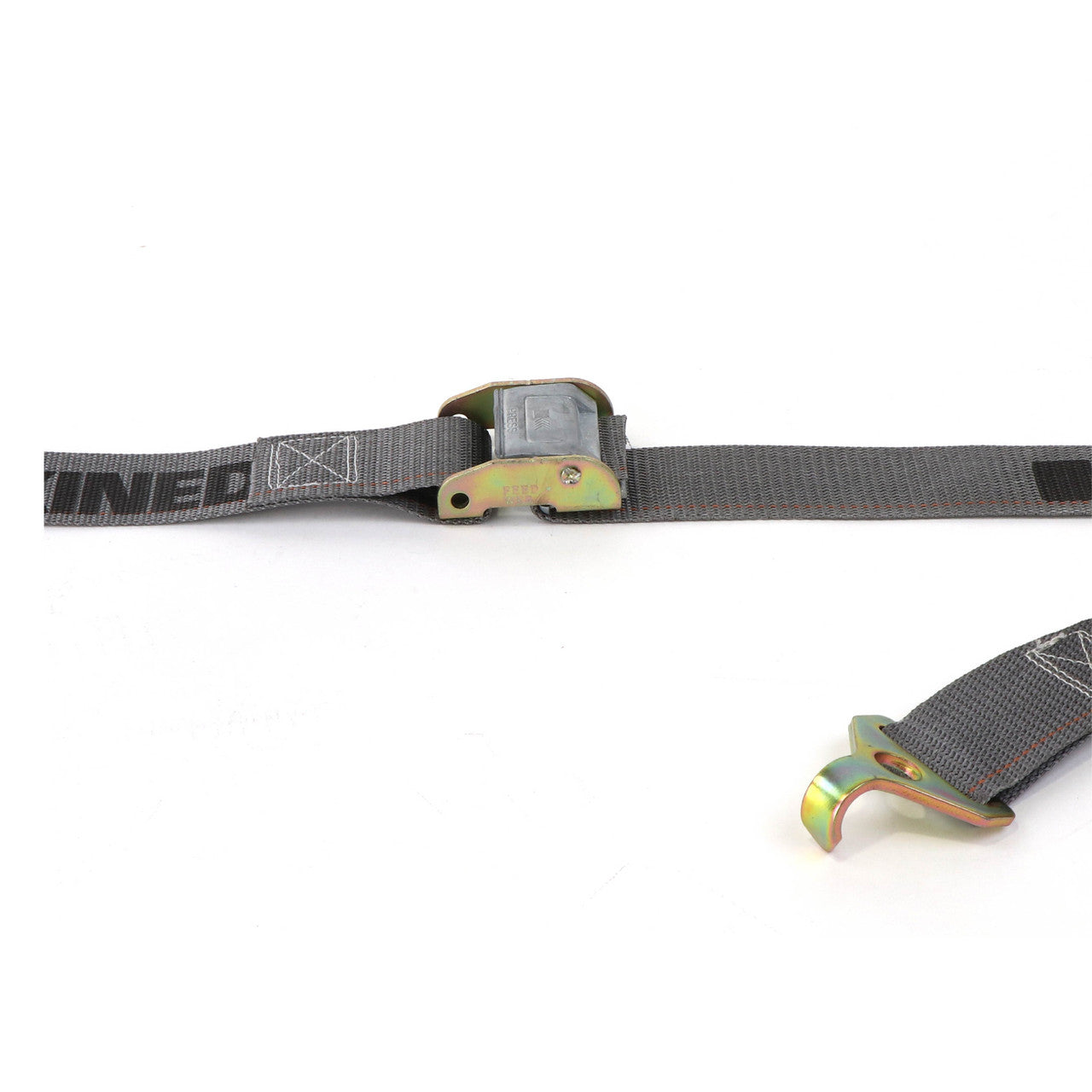
| Kinedyne 2" Plate Trailer Hook Logistic Cam Buckle Strap | $20 | 12-20 ft | 735 lb | View → |
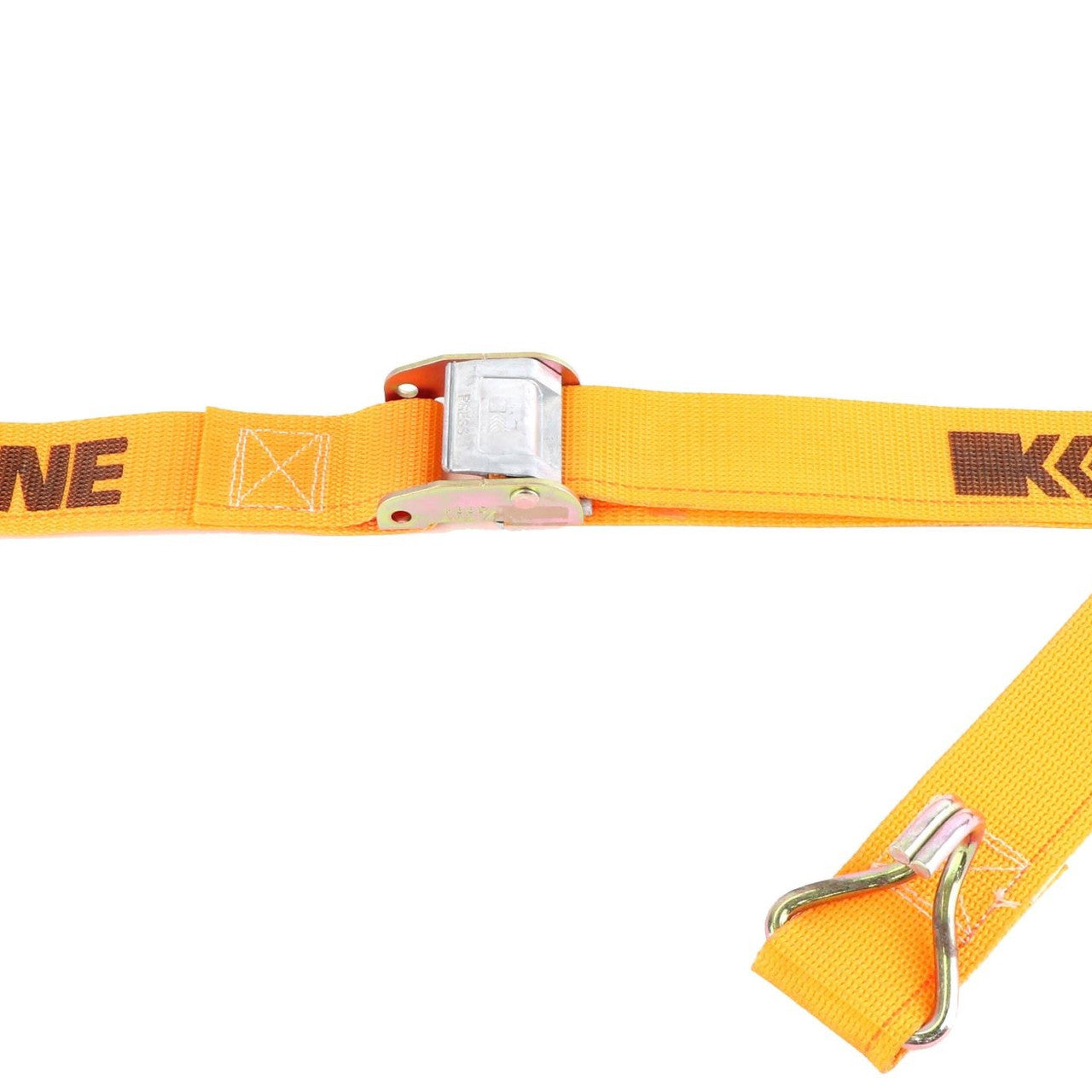
| Kinedyne 2" Butterfly Logistic Cam Buckle Strap | $20 | 12-20 ft | 500 lb | View → |
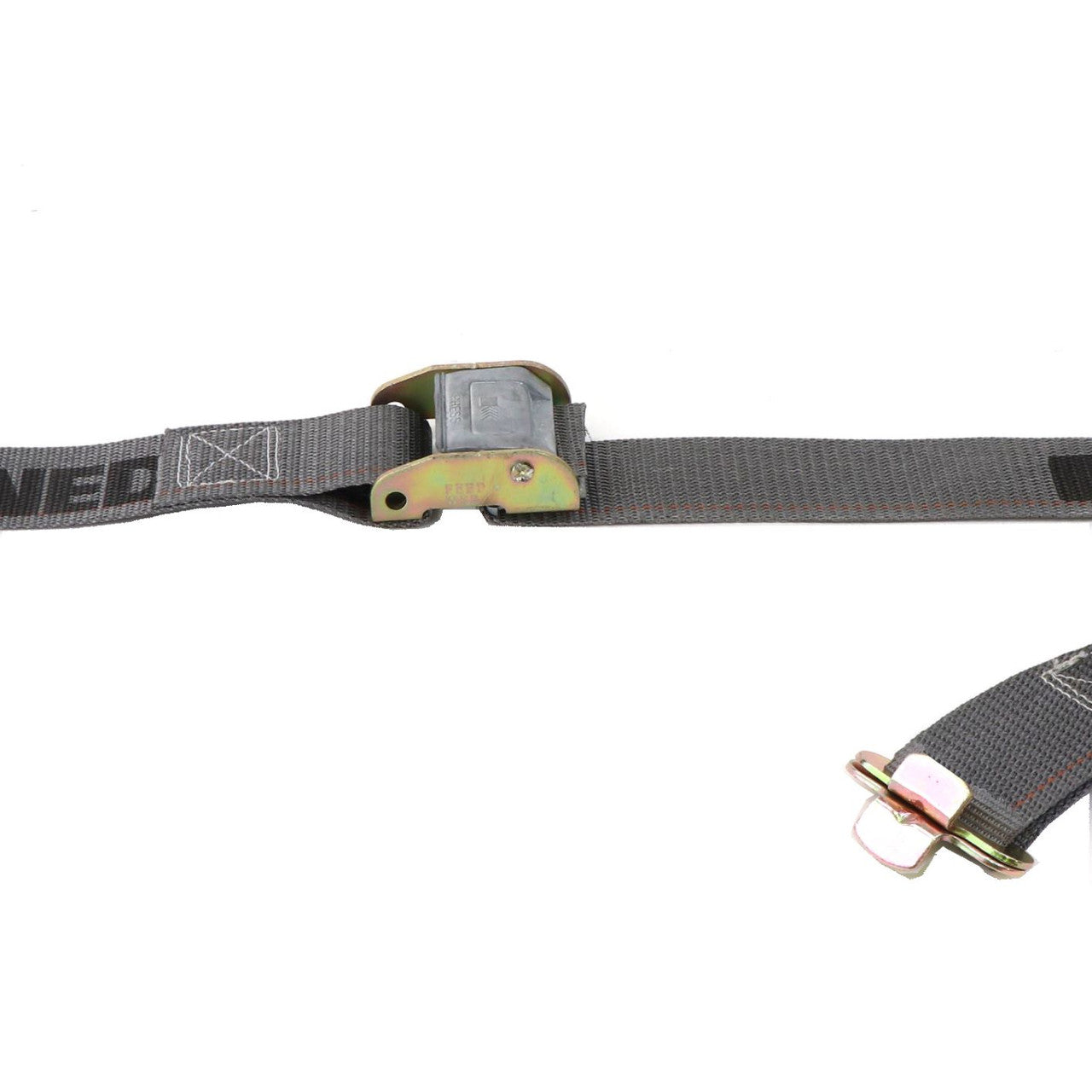
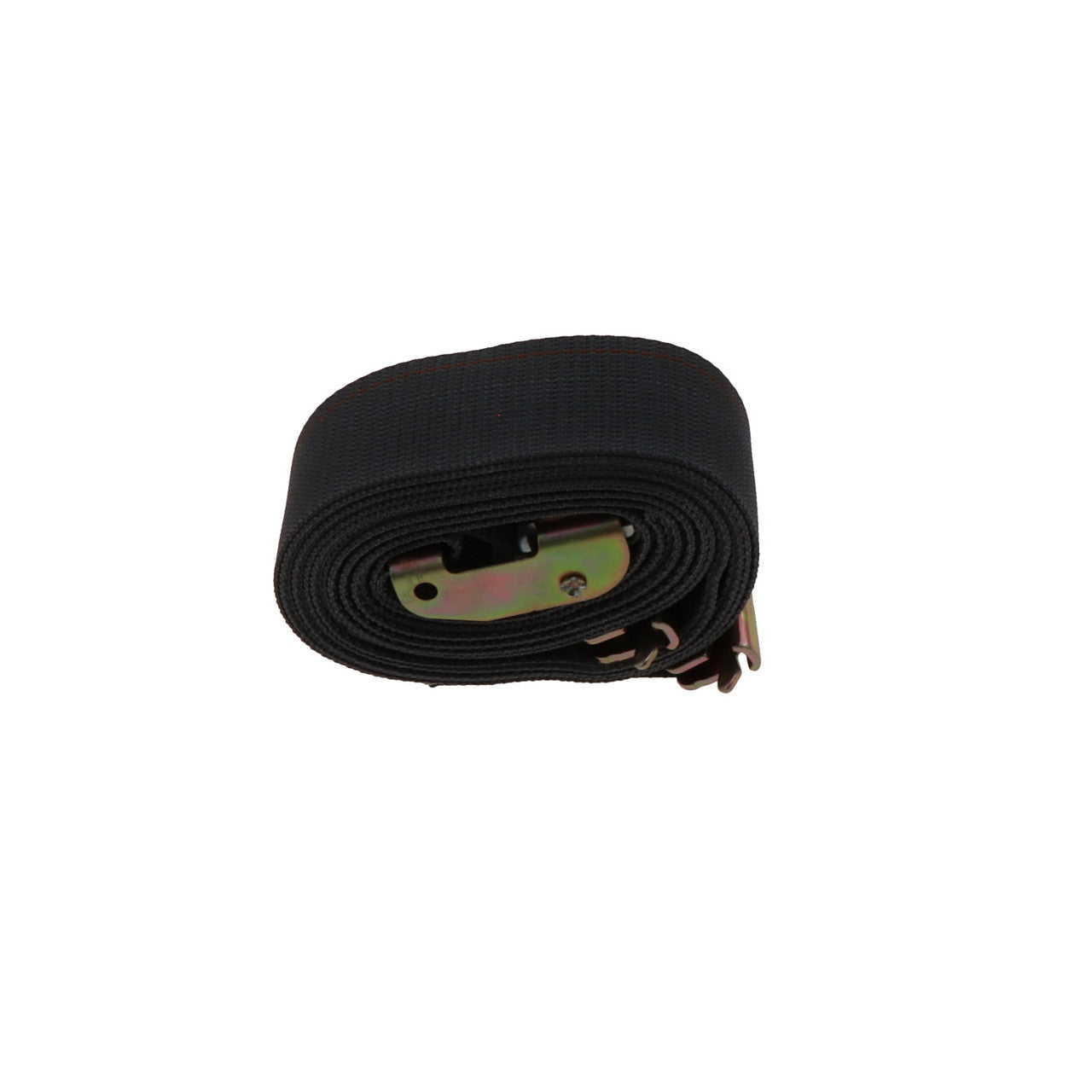
| Kinedyne 2" Spring Loaded Logistic Cam Buckle Strap | $10 | 12-20 ft | 835 lb | View → |
 In Stock
 In Stock
 In Stock
 In Stock
 In Stock
 In Stock
 In Stock
 In Stock
 In Stock
Cam Buckle Straps Buying Guide
How a cam buckle holds, and what it will not do. A cam buckle is a one-way clamp. Press the lever, thread the loose webbing through the slot, pull it to the tension you want, and release: spring pressure and a toothed bar bite the strap so it can move to tighten but not to loosen. Tension tops out at your own pull, which is the feature, because you cannot lever a delicate load past the point where it starts to deform. That is also the limit. When the securement math calls for real clamping force on a machine, a pallet of steel, or anything heavy enough to shift a truck, a cam is the wrong tool and a ratchet strap with its geared mechanism is the right one. Read a cam buckle as fast, gentle, and repeatable rather than strong, and match it to loads that reward those traits.
The rating is still one third of break strength. A hand-tensioned strap carries a working load limit exactly like a geared one, assigned under the WSTDA standard at no more than one third of the assembly's break strength. Assembly means webbing, stitching, cam, and hooks together, and the weakest part sets the number. The straps here run 500 to 835 pounds of working load limit, which places them squarely in the light-cargo lane and out of the machinery lane. The tag still governs on the road: FMCSA rules under 49 CFR 393.108 assign an unmarked tiedown a low default working load limit from the federal tables, so a cam strap with a missing or unreadable tag is downgraded on the spot regardless of what it can actually hold. If your load weight pushes the aggregate math past what these ratings supply, step up to heavy duty ratchet straps rather than adding more light cam straps to reach the number.
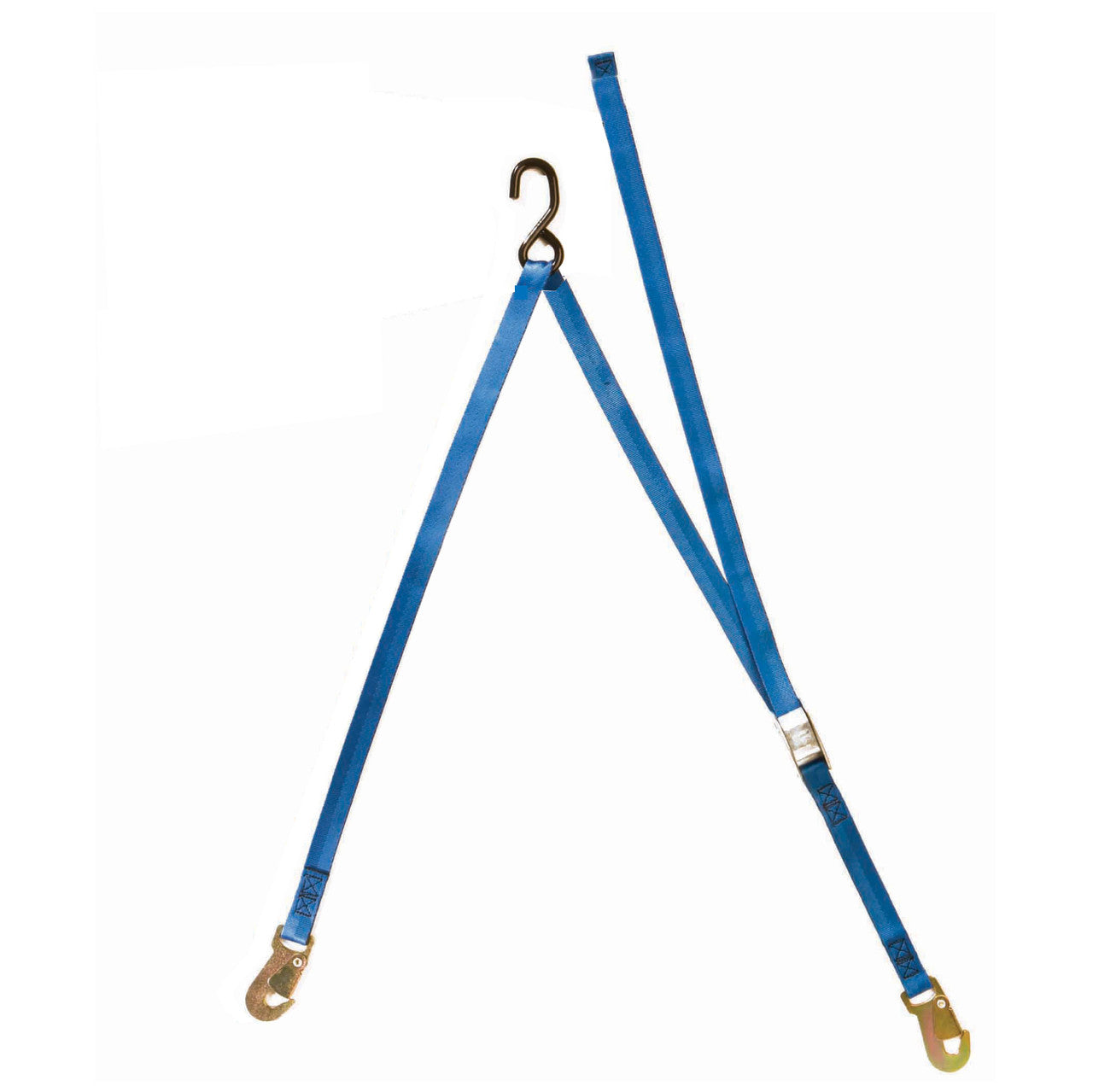
The 1 inch family: boats, watercraft, and powersports. The 1 inch straps are built for finish-sensitive recreational transport, all rated at 835 pounds. The 55 inch S hook and sewn loop boat safety strap runs about $24 and loops around a bow eye or trailer frame, and the 90 inch S hook and snap hook personal watercraft strap at about $27 reaches over a ski to a distant anchor. Snap hooks close over transom D rings and rule marine work, which is why the paired 54 inch snap hook marine transom strap sells as a matched set near $40, tensioned the same on both sides of the stern. S hooks suit general utility anchoring, sold as the 6 foot S hook and snap hook pair around $35 and the standard 1 inch S hook pair from roughly $35 to the high fifties depending on length. Buy the pattern that matches your anchor point, and buy in pairs where symmetry matters, because a transom or a trailer bunk wants even tension left and right.
The 2 inch logistic family: van interiors. The 2 inch straps are cam-tensioned versions of the fittings that click into wall track inside enclosed trailers and box trucks. The spring loaded logistic cam strap is the volume buy near $10 at 835 pounds, the plate trailer hook version holds 735 pounds around $20, and the butterfly and narrow wire hook models sit at 500 pounds from about $17 to $20. They lock into the same logistic tracks that the logistics straps use, so match the fitting to your Series E or Series A profile because the two do not interchange. The cam version trades the ratchet's holding power for speed: on light, repetitive loads inside a van, a driver strapping and unstrapping all day gets snug securement with a pull and a release instead of a crank and a cam release, which is why fleets keep both patterns on the shelf and reach for the cam when the freight is light and the pace is high.
Inspect the webbing and the cam every trip. Nearly every strap failure starts where webbing crosses an edge, so run the load through corner and web protection wherever it bends over a sharp point, and inspect before you drive. Cuts, fraying, burns, UV bleaching, and crushed hooks retire a strap, because damaged webbing has no honest rating at any discount. A cam buckle adds two checks a ratchet does not: the spring has to snap the cam closed with force, and the teeth on the bar have to be sharp and clean. A weak spring or worn, packed teeth let the webbing creep under load, which on a cam strap is a slow release rather than a sudden break, and just as capable of loosening a bike or a boat on the highway. At these prices no load is worth defending a strap that will not bite.
Frequently Asked Questions
A ratchet strap uses a geared handle to multiply your hand force, so it can apply high, controlled tension for heavy freight. A cam buckle strap is tensioned purely by pulling the webbing through a spring-loaded cam, so its holding force stops at what your arm can pull. That makes the cam gentler and faster but weaker, which is why it belongs on light and finish-sensitive loads and the ratchet belongs on machinery, steel, and anything heavy enough to shift a vehicle.
For a motorcycle, boat, or powersports load a cam buckle works well because you cannot over-crank and crush bodywork, and the 1 inch straps here are rated for that duty at 835 pounds. For genuinely heavy cargo, machinery, or steel, a cam does not apply enough tension and its working load limit is too low. Use ratchet straps or transport chain and size the aggregate working load limit to the federal half-weight rule instead.
The straps in this collection run from 500 to 835 pounds of working load limit. Under the WSTDA standard that number is set at no more than one third of the strap assembly's break strength, covering the webbing, stitching, cam, and hooks as a unit. The rating only counts while the tag is legible, because federal rules assign an unmarked tiedown a low default working load limit regardless of its true capacity.
The 2 inch logistic cam straps come in fittings that match specific wall systems: spring loaded and butterfly fittings, plate trailer hooks, and narrow wire hooks. Series E and Series A track do not interchange, so order the strap fitting that matches the profile already mounted in your trailer. If you are outfitting a new van, coordinate the strap fittings with your logistic track and any decking beams so everything clicks into one system.
Check the webbing for cuts, fraying, burns, crushed hooks, and heavy UV fading, and retire the strap if you find any. Then check the cam, which a ratchet does not have: the spring should snap the jaw shut firmly, and the toothed bar should be sharp and free of packed debris. A weak spring or worn teeth let the webbing slip under load, which loosens the cargo slowly rather than breaking, so a cam that does not bite hard comes out of service.