Panel Carts
A panel cart is a wheeled steel frame that carries sheet goods upright or flat: drywall, plywood, paneling, doors, MDF, and any other stock too long and too tippy to ride safely on a plain platform truck. The carts here are Vestil steel, and they split cleanly by how the load travels. Vertical and drywall carts stand sheets on edge against a spine, which keeps a 4 by 8 panel stable and takes little floor. Horizontal carts lay the same sheets flat across two decks for stacking and staging. Ratings run to a few thousand pounds of uniform static capacity, and prices sit in the low-to-mid hundreds, so the deciding questions are load orientation, sheet length, and the floor the cart rolls on rather than budget. Name those three and the shortlist gets short fast.
Compare Panel Carts
| Model | Price | Capacity | |
|---|---|---|---|
| Vestil Vertical Panel Cart | $548 | 2,000 lb | View → |
| Vestil Drywall & Panel Carts | $398 | 3,000 lb | View → |
Panel Carts Buying Guide
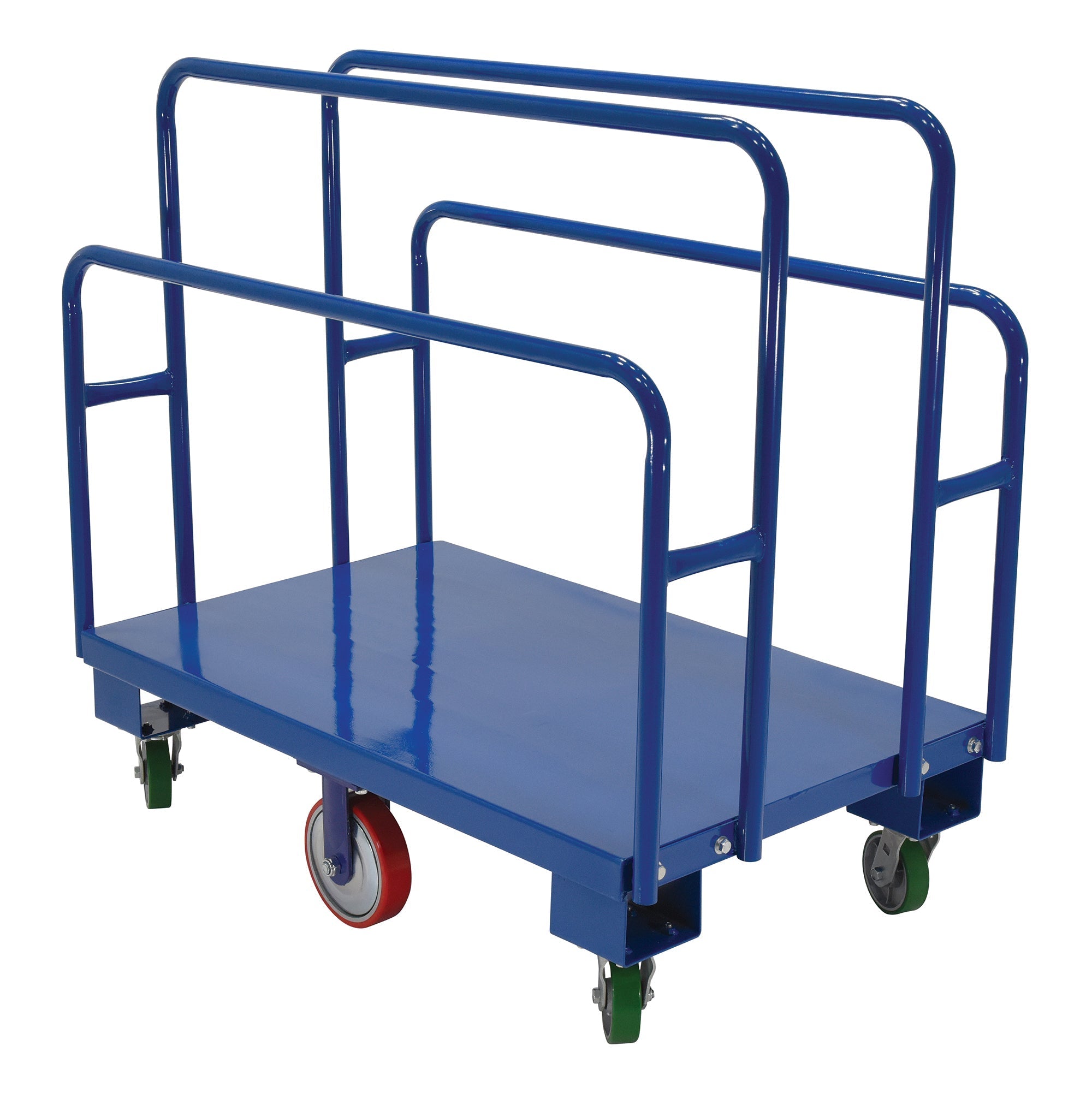
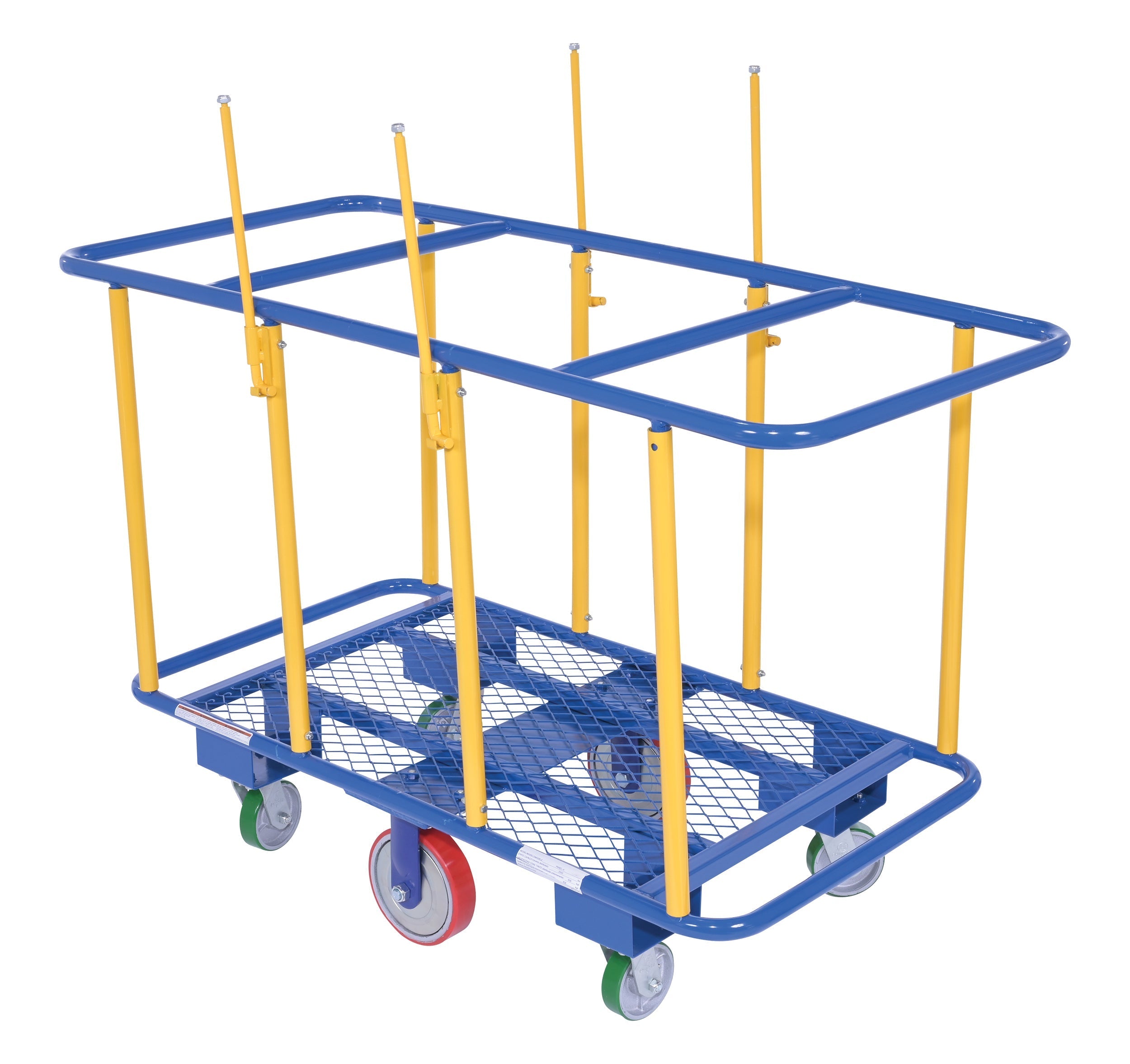
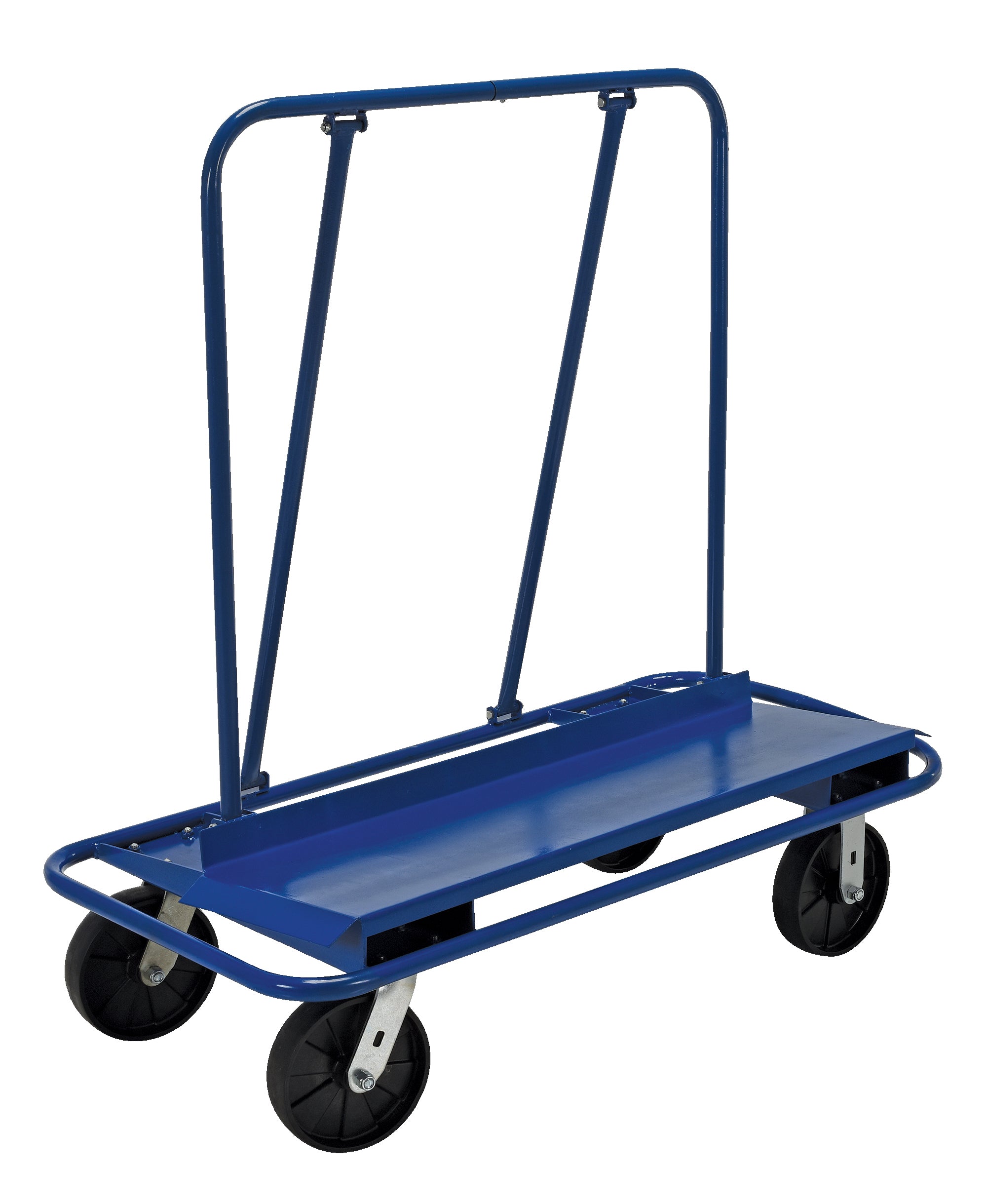
Vertical or horizontal: the load decides. Orientation is the first fork, and it follows the load, not preference. Sheets carried on edge stay stable, take a narrow footprint, and load one at a time by tipping the panel against a spine. The Vertical Panel Cart holds stock upright on a 51 inch deck, and the Drywall and Panel Cart takes panels up to 60 inches of usable height on a compact 23 by 48 inch base. Both suit a wall of same-size sheets moved through a shop or job site. Lay the load flat instead when you are staging mixed lengths or stacking finished pieces: the Horizontal Panel Cart carries sheets across two decks, with sliding posts that lock up to stop a stack from creeping off the deck in transit.
Read the capacity as static, then derate for rolling. Vestil rates these carts by uniform static capacity, the weight the frame holds while parked. The Drywall and Panel Cart carries 3,000 lb; the Vertical, Horizontal, and standard Panel Carts each carry 2,000 lb. That number is not the rolling figure. A caster's dynamic rating, the load it takes while the cart moves over seams and dock plates, typically runs 50 to 75 percent of its static rating under ANSI MH28.3, so a cart parked at its limit is closer to the edge once it rolls. Stack a lift of half-inch drywall, about 50 to 57 lb per 4 by 8 sheet, and a 2,000 lb cart holds roughly thirty sheets stationary. Keep real moving loads well under the plate rating and the casters last.
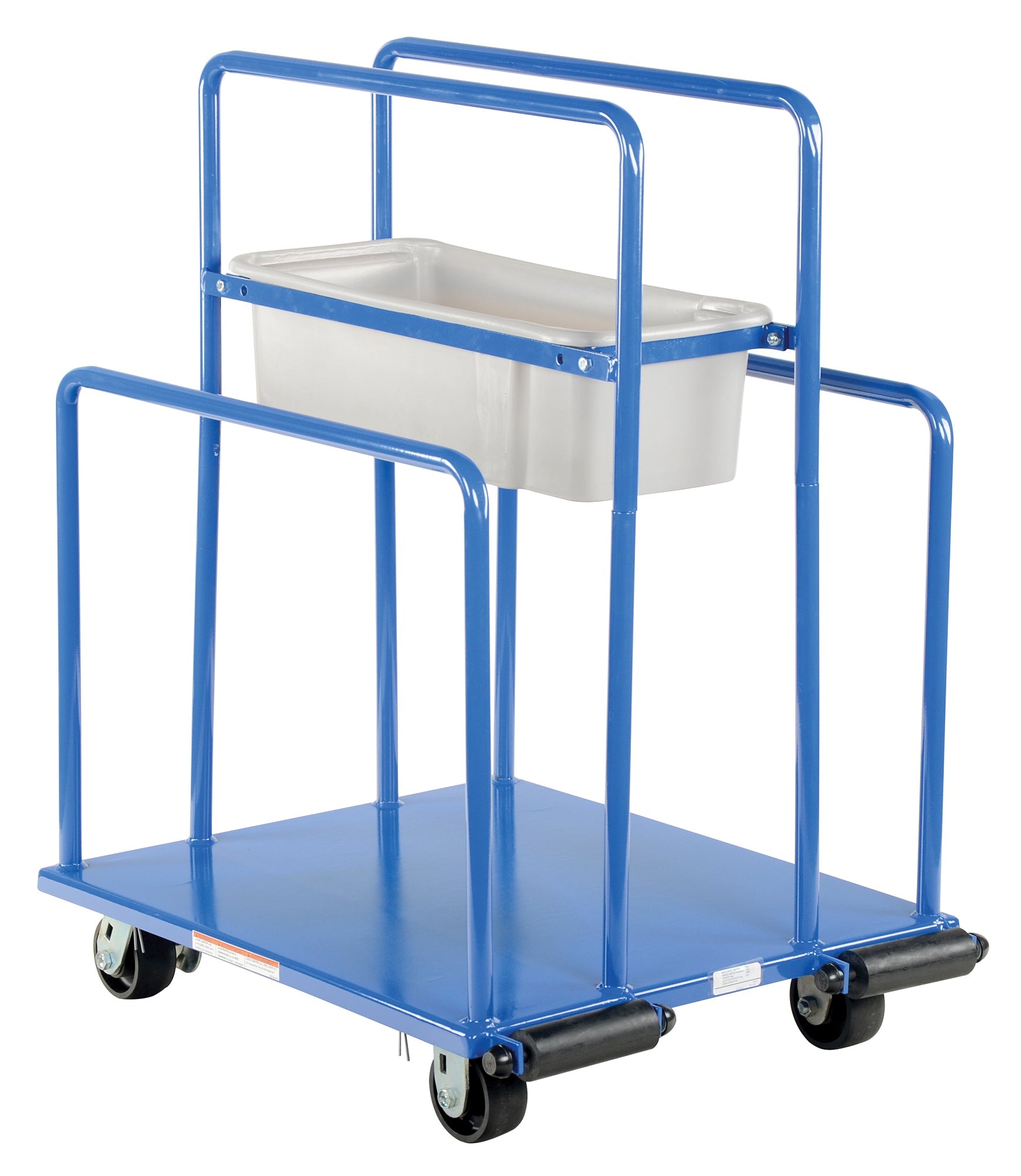
Deck length and usable panel height. Capacity rarely runs out first; length does. Measure the longest sheet you move and match the deck to it. The Vertical Panel Cart's 51 inch deck and the Horizontal cart's roughly 63 inch top deck handle full 8 foot sheets with overhang, while the compact Panel Cart runs a 26 by 30 inch deck for shorter stock, doors, and cut pieces, and it ships with a removable plastic basket for the fasteners and tools that otherwise ride loose on top of the panels. For drywall specifically, the Drywall and Panel Cart's 60 inch usable height clears a sheet stood on its 48 inch edge with room above. Buy the deck your longest stock needs and no more, because a longer cart is harder to thread through a doorway.
Casters and the floor. The floor sets the wheel. Poly-on-steel and glass-filled nylon casters roll hard and easy on smooth concrete, which is what the Vertical and Panel Carts ship with; they are quiet and low effort but transmit shock and can mark soft floors. The Drywall cart offers a choice: glass-filled nylon at the lower price near $322, or a rubber-wheel version that costs a little more and rolls quieter over rough or seamed slabs while protecting a finished floor. Several models add a fifth and sixth caster at the center of the frame, which shortens the effective wheelbase and lets a long cart pivot in a tight aisle. Two swivel and two rigid is the standard pattern, and the Panel Cart's swivels include brakes to park a loaded cart on a slope.
Panel cart, A-frame cart, or panel dolly. Three collections cover sheet goods, and they are not interchangeable. A panel cart here is a full frame with a base, meant to hold a wall of stock upright or flat and roll it across a plant. An A-frame cart leans panels, glass, and doors against both sloped sides of a rolling A, which spreads a mixed load and suits a two-sided pick. A panel dolly is a low four-wheel platform that walks a single door or panel a short distance, the cheapest answer when the load is one piece and the trip is short. Reach for the panel cart when the job is a stack of same-size sheets moving together, the A-frame when the load is mixed and picked from both sides, and the dolly when it is one panel at a time.
Why a cart beats carrying it. A single 4 by 8 sheet of 3/4 inch plywood runs 60 to 70 lb, and 5/8 inch fire-rated drywall reaches about 70 to 74 lb, both well past the 51 lb load NIOSH treats as the ceiling for a safe lift under good conditions. Sheet goods are also awkward, wide, flexible, and quick to drop, which turns a borderline lift into an injury. A panel cart removes the carry: the sheet slides on and rolls, and the operator steers instead of hauling. Manual carts carry no OSHA operator-certification requirement, unlike powered trucks, so the only real training is loading the cart balanced and keeping the stack within the rating. For a crew moving sheets all day, that is the difference between a productive shift and a strained back.
Frequently Asked Questions
Follow the load. A vertical cart stands sheets on edge against a spine, which keeps them stable, saves floor space, and loads one at a time, so it wins for moving a wall of same-size panels. A horizontal cart lays sheets flat across two decks, which is better for staging mixed lengths, stacking finished pieces, or keeping fragile faces from leaning. The Vertical and Drywall carts here handle upright loads; the Horizontal Panel Cart handles flat ones.
These Vestil carts carry 2,000 lb of uniform static capacity, with the Drywall and Panel Cart rated to 3,000 lb. Static is the parked rating. Once the cart rolls, the working figure is lower, since a caster's dynamic rating typically falls to 50 to 75 percent of its static rating, so leave headroom for real moving loads over rough floors and dock plates.
A panel cart is a full-frame cart that rolls a stack of sheets upright or flat. An A-frame cart leans mixed panels, glass, and doors against both sloped sides of a rolling A for a two-sided pick. A panel dolly is a low platform that moves a single door or panel a short distance. Match the tool to whether the load is a stack, a mixed set, or one piece.
Yes, within reason. The cart carries the weight; the operator only pushes and steers. A balanced load on smooth concrete moves easily by hand, and center casters help pivot a long cart in tight aisles. Loading is the two-person part, since a 5/8 inch drywall sheet near 74 lb is over the NIOSH single-lift ceiling, so stage heavy sheets with a partner, then let the cart do the travel.
No. Panel carts are manual equipment, so they carry none of the operator training and certification OSHA requires for powered industrial trucks under 29 CFR 1910.178. The safe-use basics are loading the cart balanced within its rated capacity, using the caster brakes on any slope, and lifting heavy sheets onto the cart with correct technique or a second person.