A-Frame Carts
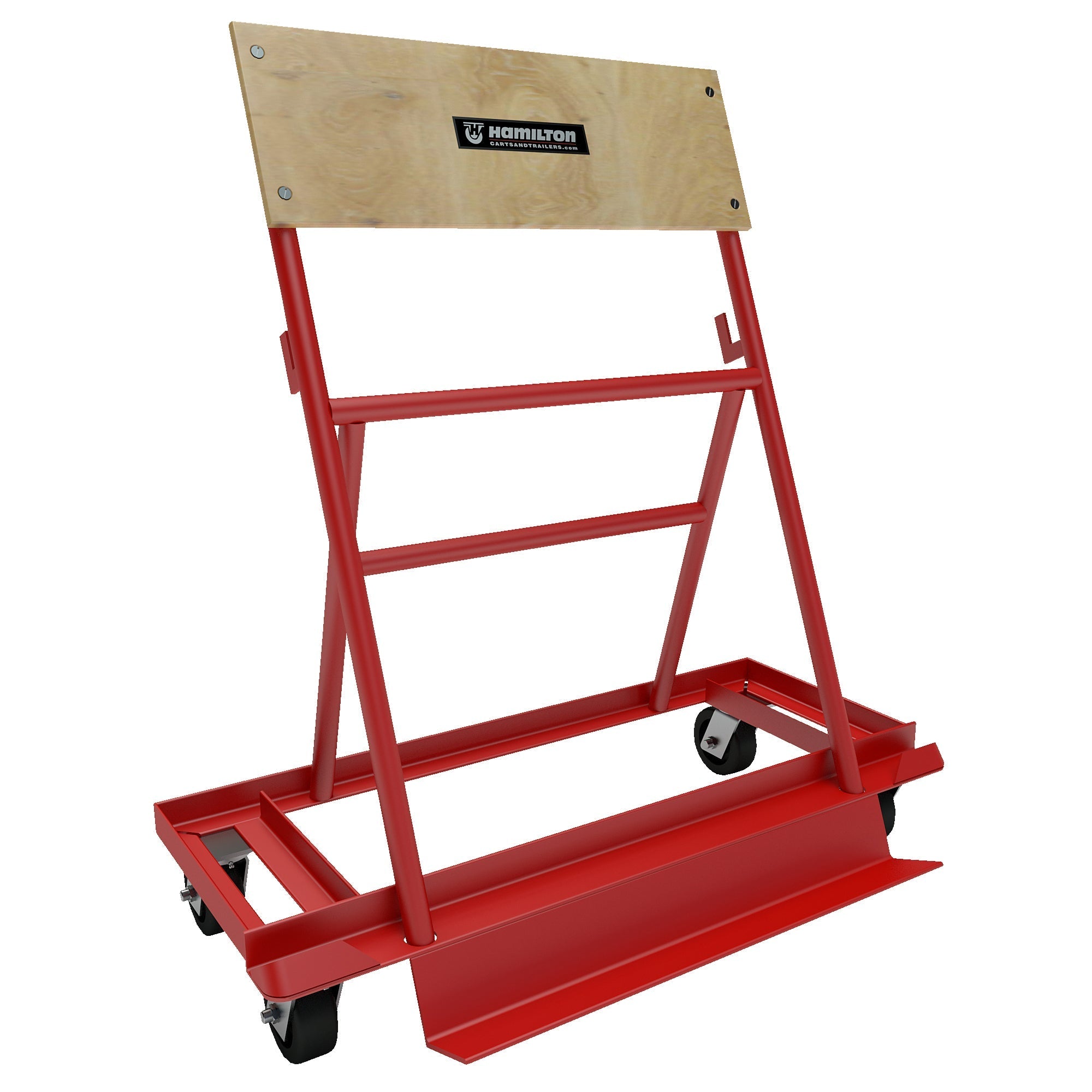
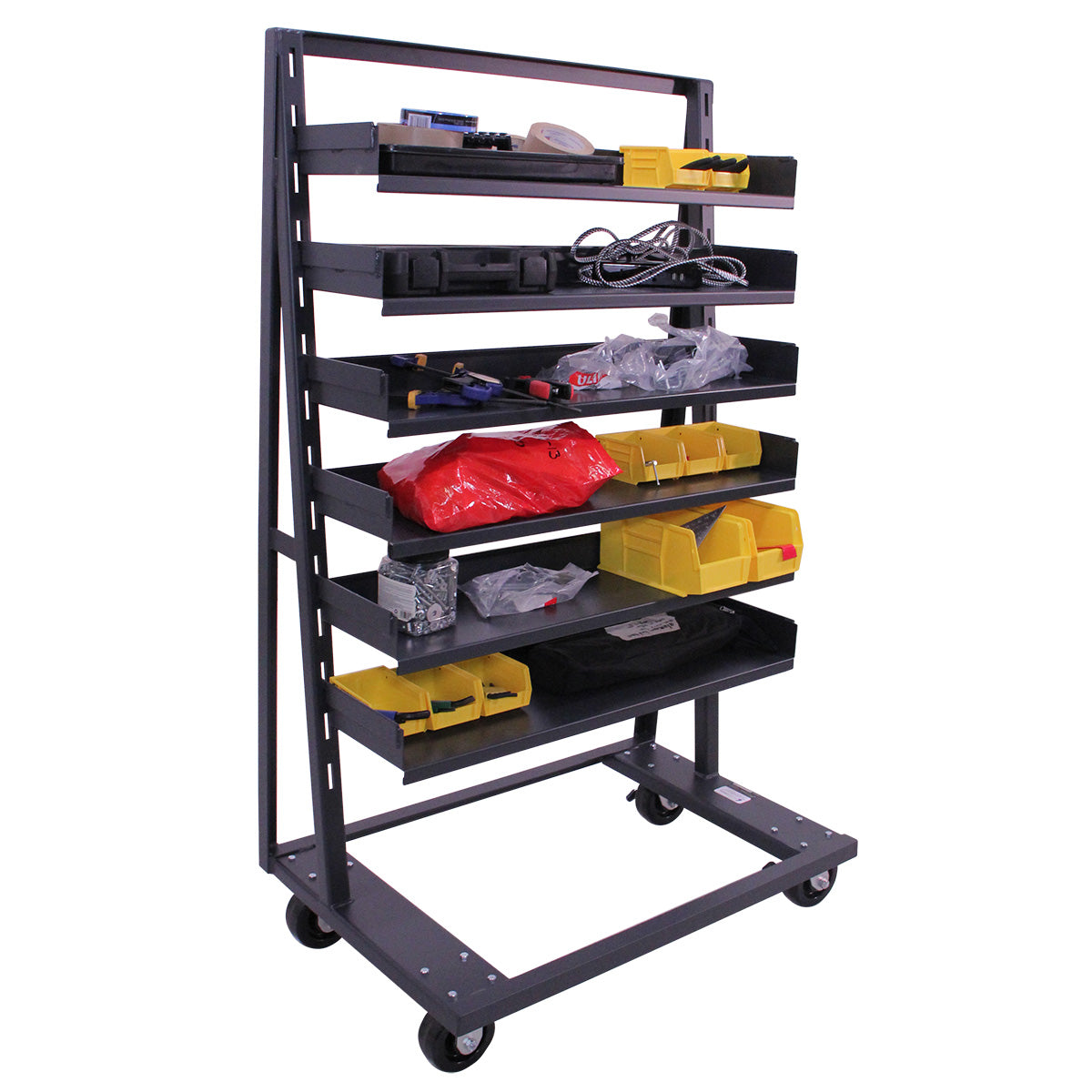
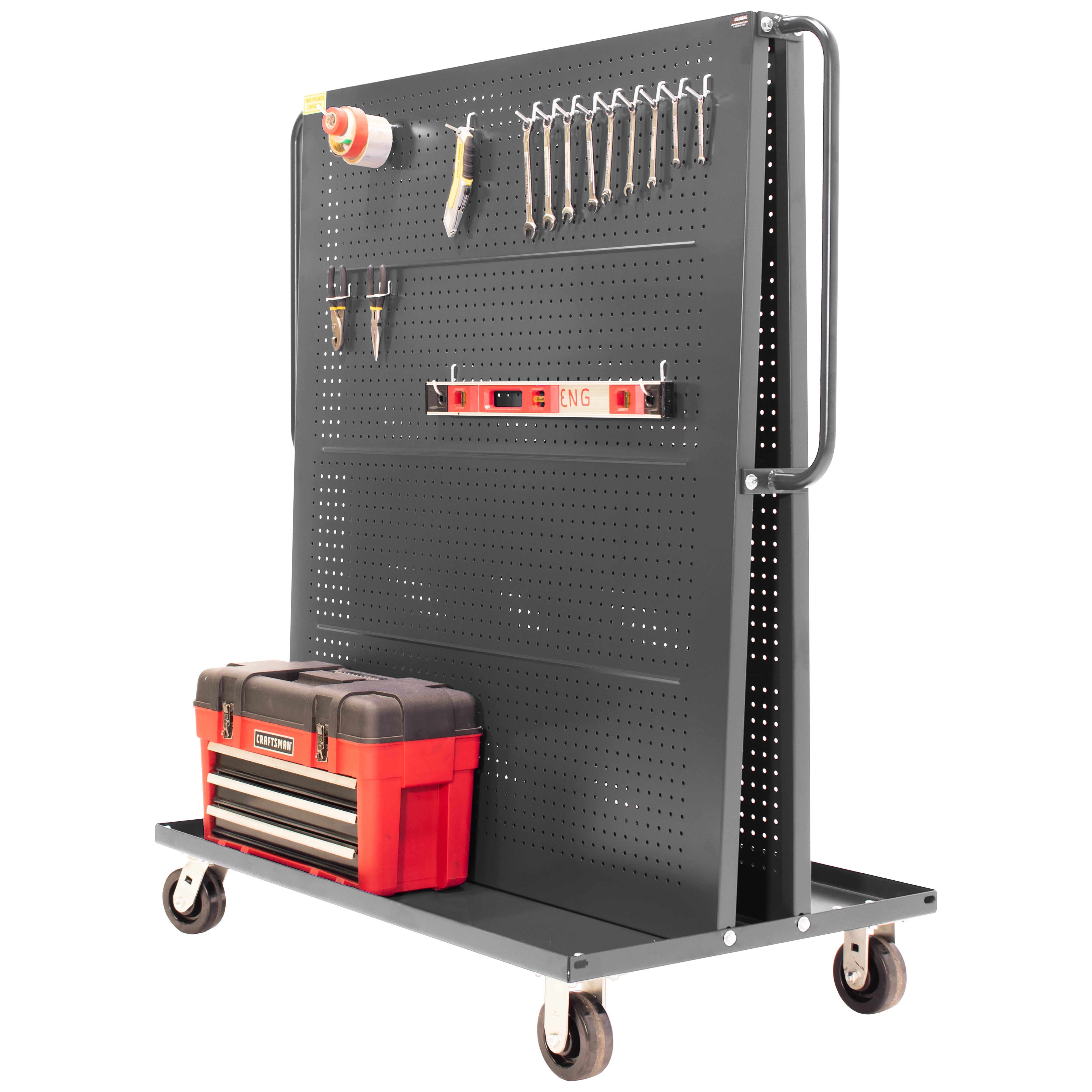
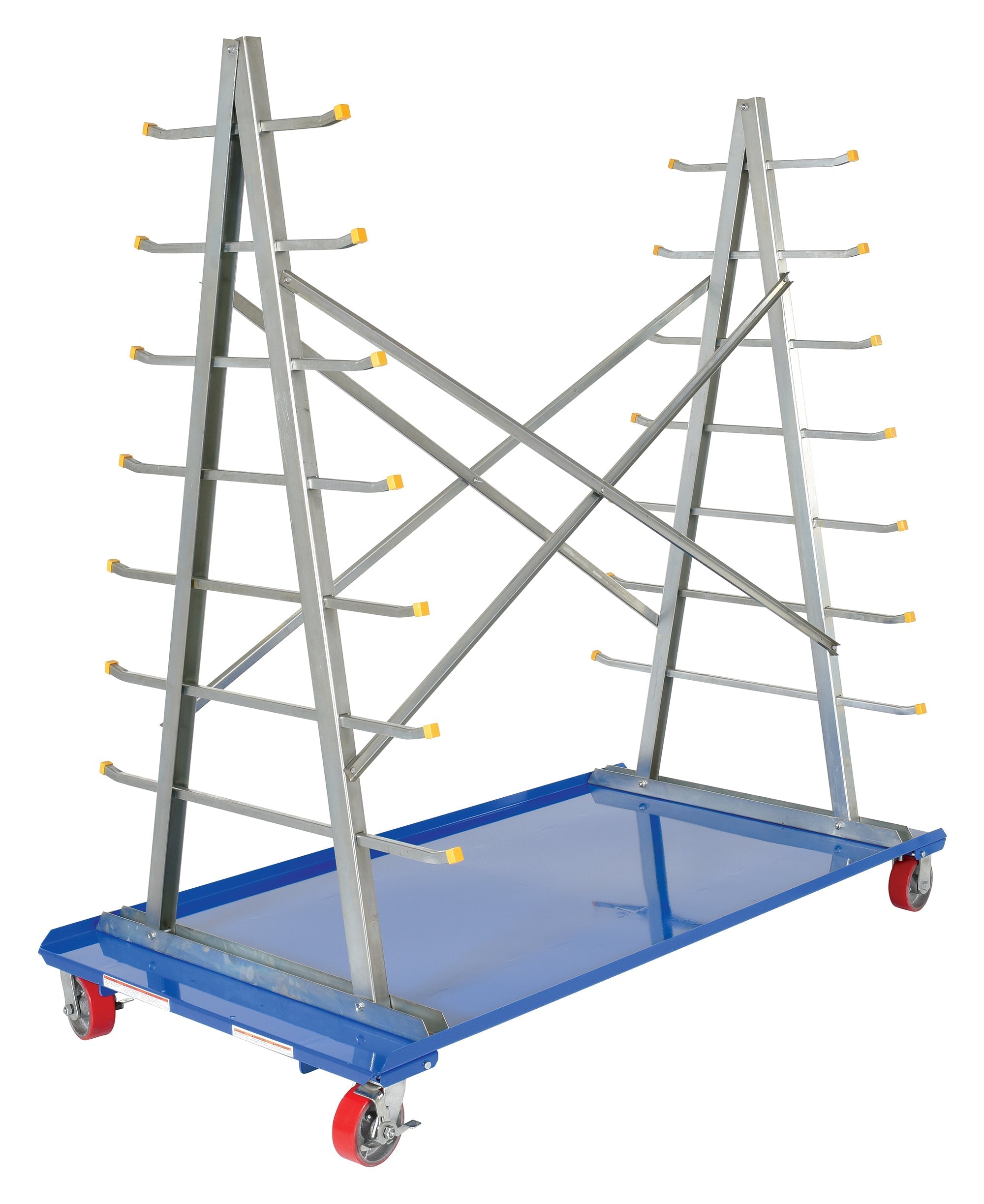
A-frame carts move flat, heavy, awkward loads by leaning them against a rolling A instead of stacking them on a deck. That one idea covers two different jobs in this collection. On one side are the sheet movers, steel trucks that carry drywall, plywood, paneling, and sheet metal upright so a two-person lift becomes a one-person push. On the other are double-sided workstation carts, mobile pegboard and tray racks that put tools, bins, and parts on both faces of the same A. Capacities run from about 800 lb on a light panel truck to 2,500 lb on a fully welded workstation, with prices from roughly $500 to around $2,000. The build is plant grade throughout: welded steel and structural tubing, powder coat finish, and 5 inch industrial casters rated to the load. The guide below sorts the carts by what you are actually moving, because the drywall truck and the tool cart share a silhouette and almost nothing else.
Compare A-Frame Carts
| Model | Price | Capacity | |
|---|---|---|---|
| Vestil A-Frame Steel Trucks | $1,982 | 800-1,500 lb | View → |
| Valley Craft Heavy-Duty A-Frame Carts | $1,045 | 2,500 lb | View → |
| Valley Craft Bin & Tool A-Frame Carts | $572 | 1,000 lb | View → |
| Vestil A-Frame Storage Cart | $555 | 2,000 lb | View → |
 In Stock
 In Stock
 In Stock
 In Stock
 In Stock
A-Frame Carts Buying Guide
Sheet goods: lean it, do not carry it. The original A-frame job is moving flat stock that a platform deck cannot hold upright: drywall, plywood, paneling, and sheet metal. The Vestil A-Frame Cart with tool tray is the workhorse here, a poly-on-steel truck rated to 2,000 lb with a one inch lip running the length of the deck so sheets cannot slide off, a parts tray slung between the uprights, and a foot-operated caster brake to lock it for loading. Deck sizes run from 24 by 36 inches up to about 36 by 72 inches, so you match the cart to the longest sheet you cut. If your loads are single doors or one panel at a time, a low panel dolly is cheaper and turns tighter, and for drywall and sheet stock carried in volume the panel carts collection holds dedicated racks.
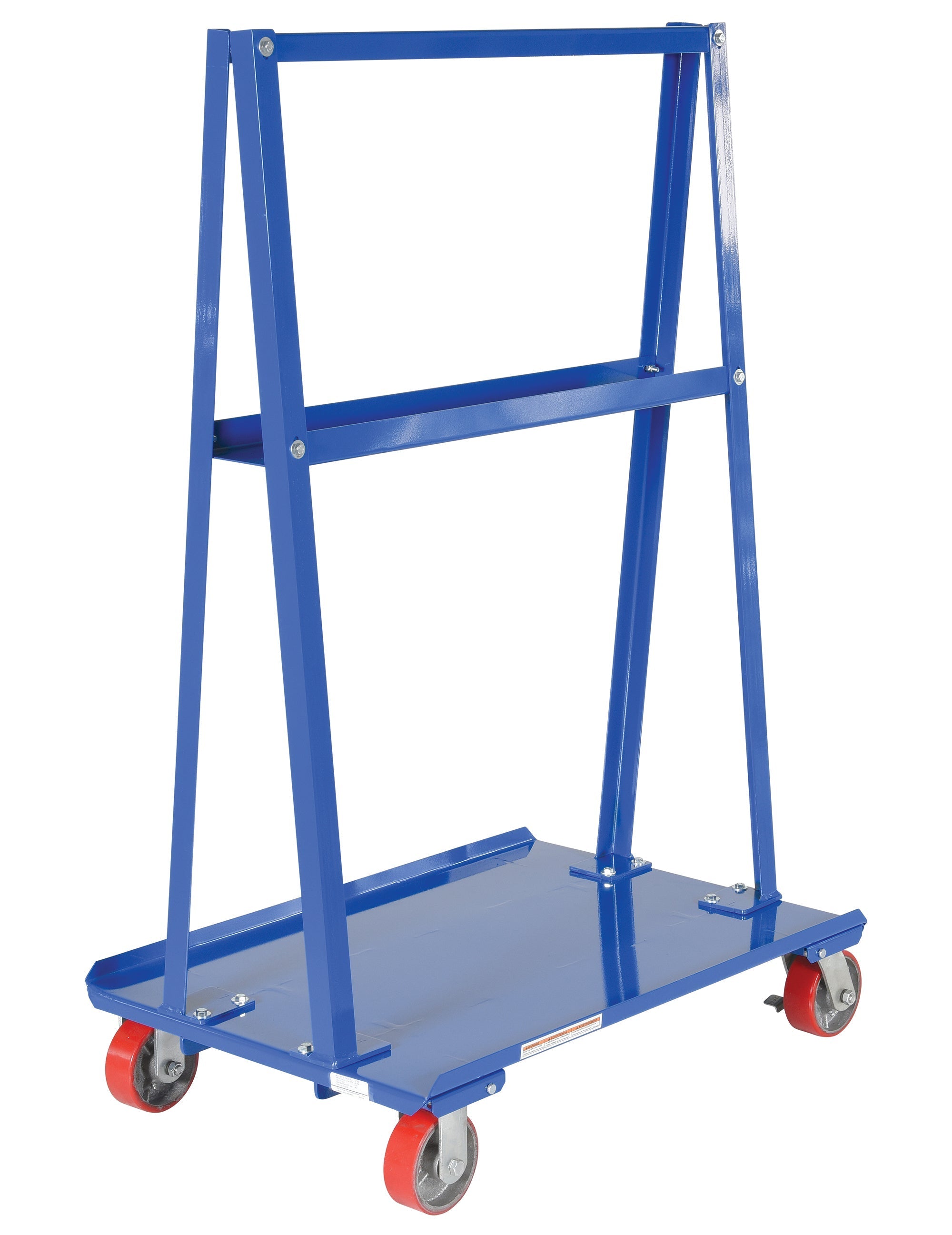
The steel trucks, built for the heaviest sheets and long pipe. When the sheets get heavy or the loads run long, the Vestil A-Frame Steel Trucks step up. The frame is structural tubing on a 3/16 inch angle base, and L-shaped lugs on the rear accept a length of pipe so extra-long stock can be supported past the ends of the cart, something the standard sheet truck will not do. It rides on four swivel 5 inch casters for tight, all-directional moves in a fabrication bay. One catch worth reading before you buy: the rated capacity is set by the wheel you choose, not the frame. Mold-on rubber tops out at 800 lb and is gentle on finished floors; phenolic and steel wheels take the same frame to 1,500 lb but transmit more shock. Pick the wheel to the weight first, then to the floor.
The double-sided workstation carts. Not every A-frame carries sheets. Valley Craft builds the shape into mobile double-sided workstations, where the two faces of the A hold tools and parts instead of drywall. The Bin and Tool cart is the lighter of the pair, a 1,000 lb, 12 gauge base with 18 gauge pegboard or louvered panels on each side; pegboard takes standard hooks, louvered panels take hang-on plastic bins, and the 11 inch shelf under each face has a raised lip to keep small parts from walking off. It comes in 36 or 48 inch lengths, both 30 inches wide and 62 inches tall, in grey, blue, or red. The Heavy-Duty version is fully welded to 2,500 lb and configures with 9 inch or 15 inch trays, lipped or flush, plus hanger bars and spindles for spooled stock. Both ship assembled and suit a 5S line, where a cart that rolls the tools to the work beats sending the worker back to a bench.
Long stock: pipe, conduit, and bar. For pipe, conduit, EMT, and bar stock, the A-frame turns into a rolling rack. The Vestil A-Frame Storage Cart carries long material on arms that extend 12 inches past each side of the frame, with about 7 inches of clearance between arms so bundles load and unload without fighting each other. It is rated to 2,000 lb on a 36 by 72 inch base, rolls on 5 inch poly-on-steel casters with brakes, and pairs a powder-coated frame with a zinc-plated rack that shrugs off the scuffing long metal stock delivers. If your long loads are pipe that needs to travel on its side rather than stand in a rack, the V-groove movers and cradle carts in specialty carts are the better tool. Settle whether the stock rides vertical or horizontal before you buy.
Load both faces and respect the rating. An A-frame is stable because weight leans against both sides of the center spine. Load one face of a double-sided cart and leave the other empty and you have built a top-heavy tip risk; balance the sheets or the trays across both faces and keep the heaviest material low and centered over the wheelbase. Rated capacities on these carts are static, meaning the cart at rest on level floor, so leave margin for the push, the door threshold, and the ramp. Set the caster brakes before you load or unload, because a cart that rolls while a sheet of drywall is half on it is how sheets and shins get broken. None of this is exotic; it is the same discipline that keeps any tall, narrow load upright.
Assembly, and where the A-frame stops. Read the assembly line before you order. The Vestil sheet trucks ship knocked down and need bolt-up on arrival, while the Valley Craft workstation carts arrive fully assembled and made in the USA. Because every cart in this collection is muscle-powered, none of it carries an OSHA operator-certification requirement; that rule, 29 CFR 1910.178, attaches to powered industrial trucks, not hand carts. When the load outgrows a lean-and-push A-frame, or you need a flat deck, shelves, or a hopper instead, step back up to the parent industrial carts and dollies collection, where platform trucks, service carts, tilt trucks, and powered options cover the loads an A-frame was never shaped to move.
Frequently Asked Questions
An A-frame leans sheets against both sides of a central spine, which balances the load and lets one person move stock that normally takes two. A panel cart usually carries drywall or sheet stock flat or upright in a single-sided rack, and a panel dolly is a low platform that walks one door or panel at a time. For heavy two-sided loads the A-frame wins on balance; for a single sheet moved a short distance, the dolly is cheaper and turns tighter.
It depends on the model. The panel and sheet trucks here run from about 800 lb, on the mold-on rubber wheel option, up to 2,000 lb on poly-on-steel wheels. The double-sided workstation carts range from 1,000 lb on the bin-and-tool cart to 2,500 lb on the fully welded heavy-duty frame. Ratings are static capacities on level floor, so buy above your heaviest real load.
You do not have to, but you should keep the cart balanced. Loading one face heavily and leaving the other empty makes a tall, narrow cart top-heavy and prone to tip on a turn or a threshold. Split the load across both faces where you can, keep the weight low and centered over the wheelbase, and set the caster brakes before loading.
Yes, with the right model. The Vestil A-Frame Storage Cart is built as a rolling rack with arms that extend past the frame to support long pipe, conduit, and bar, and the Vestil steel sheet trucks have rear lugs that accept a length of pipe for extra-long loads. If the pipe needs to travel on its side, look at the V-groove movers in our specialty carts collection instead.
It varies by line. The Valley Craft workstation carts ship fully assembled and are made in the USA. The Vestil sheet and panel trucks generally ship knocked down and require bolt-up assembly on arrival, which keeps freight cost and damage down on a large steel frame. The product page notes the assembly state for each model.