Landscape Cart
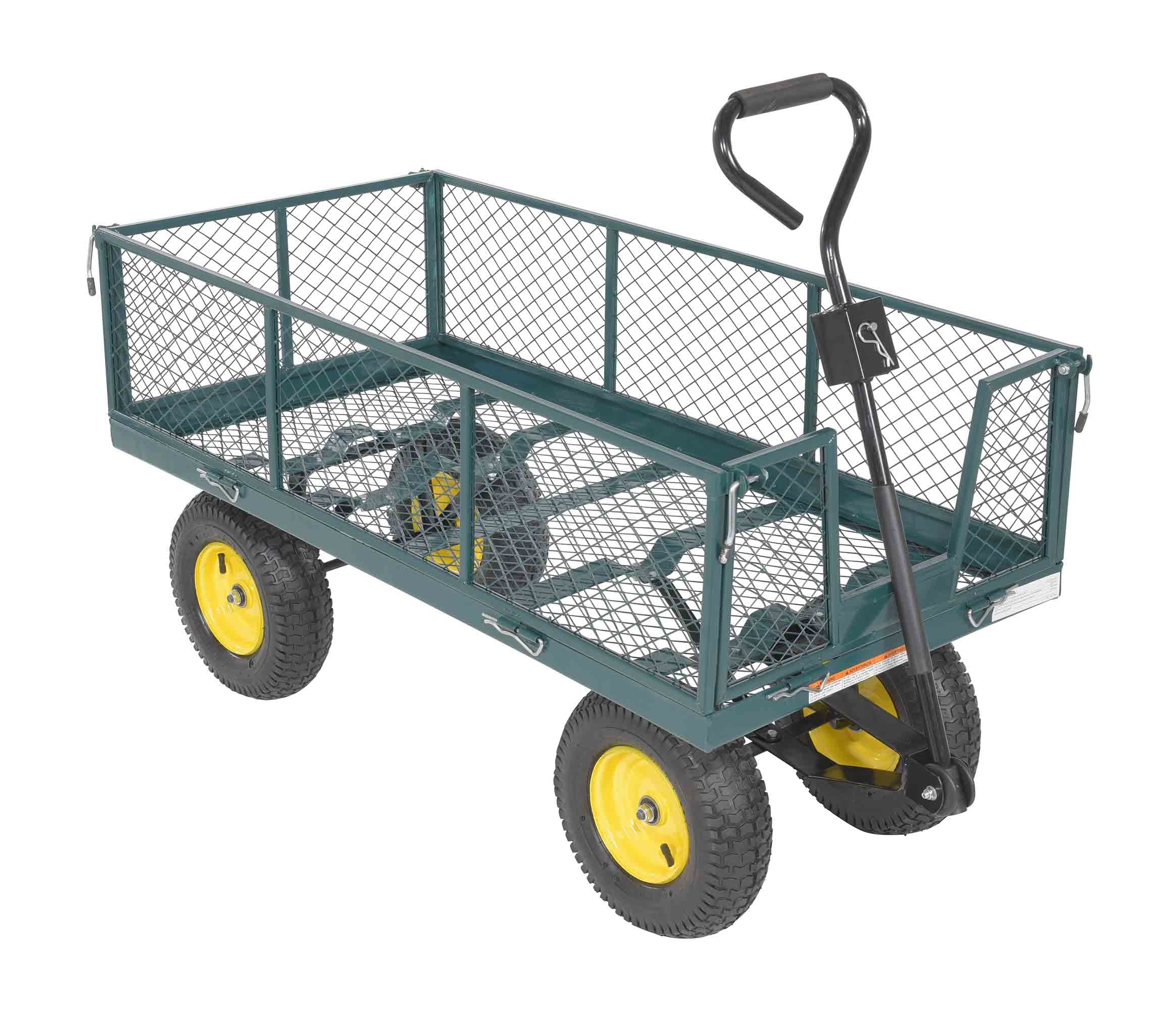
A landscape cart is a steel wagon built to roll a load of plants, mulch, stone, or tools across grass, gravel, and soft ground that would stall a hard-caster shop cart cold. This collection carries Vestil's LSC series, and the feature that defines it sits under the deck: large pneumatic tires that float over turf and uneven yards instead of digging in, plus mesh sides and a mesh bottom that let soil, small rock, and rain water drain straight through. The same 24 by 48 inch platform comes in several styles, and each one answers a different nursery or grounds job, from a 1,000 lb fold-down-side wagon to a low-profile tilt cart that dumps its load. A standard tow coupler lets you pull it behind a tractor or utility vehicle. Prices run from about $145 for the tilt cart to roughly $280 for the plastic-crate model.
Landscaping/Agriculture Carts Buying Guide
What makes it a landscape cart, not a shop cart. The part that matters sits under the deck. The industrial carts and dollies hub is full of platform trucks and service carts on hard polyurethane or phenolic casters, and those wheels are right for a smooth plant floor and wrong for a nursery yard, where they stall in gravel and sink in wet turf. The Vestil LSC carts ride on large pneumatic tires that spread the load and roll over grass, mulch beds, and rough ground the way a wheelbarrow does. The deck and sides are steel mesh, so dirt, small stone, and water drain through instead of pooling on the load, and you can hose the whole cart clean at the end of the day. Every model ships knockdown for assembly, and steel construction means it lives outdoors.
Pick the style by what you are hauling. The 24 by 48 inch deck comes in styles that trade capacity for how the load gets on and off. The fold-down-side cart is the workhorse at 1,000 lb, with four drop sides that pen in loose material like pots or bagged mulch and fold flat to load long stock. The platform cart is the open flatbed at 500 lb for boxed and stacked goods. The two-shelf cart, rated 300 lb, doubles the surface for trays of flats and small plants where you want two levels instead of one deep pile. The low-profile tilt cart, the lowest price in the group at about $145, dumps its 500 lb load by tipping the bed, which suits soil, gravel, and debris. And the plastic-crate model on a larger 30 by 52 inch base carries 1,000 lb in a molded tub for wet or dirty bulk. Name the material and the load-and-unload motion and one style stands out.
Read the rating for a moving load on rough ground. Those capacities are static figures for a cart standing still. Outdoors the number that bites is the dynamic load, the weight a wheel carries while it rolls, which ANSI MH28.3 typically puts near half to three-quarters of the static rating. A pneumatic tire adds its own variable, since an underinflated tire squats and steers hard under load, so check the pressure before a heavy haul. Load to the sticker on a flat floor and you are fine; load to the sticker and drag it across a rutted yard behind a tractor and you are asking the frame and axle for margin they do not have. Keep real field loads comfortably under the rating.
Towing, and when a smooth-floor cart is the better tool. A standard tow coupler lets you hitch the cart behind a compact tractor, utility vehicle, or garden tractor and pull it down a row, which is the point in a production nursery. Keep tow speeds to a walk, since pneumatic tires and a tall load want to sway on turns. If the work is actually indoors on a finished floor, the pneumatic tire is the wrong wheel, and a hard-caster platform truck or a shelved service cart rolls easier and steers tighter. This cart earns its keep the moment the route leaves the concrete.
Frequently Asked Questions
It moves the loads a grounds or nursery crew handles all day: plants, flowers, trees, shrubs, bagged mulch, rock, soil, and tools. The Vestil LSC carts are built to do that over grass, gravel, and uneven ground rather than on a smooth plant floor.
Yes. That is the reason for the large pneumatic tires. They spread the load and roll over turf, mulch beds, and rough yards where the hard casters on an indoor cart would dig in or stall. Keep the tires properly inflated so they do not squat under load.
A tow coupler is standard, so you can hitch the cart behind a compact tractor, utility vehicle, or garden tractor and pull it down a row. Keep the speed to a walk, because a tall load on pneumatic tires can sway on turns.
The fold-down-side cart and the plastic-crate model are both rated 1,000 lb. The platform and low-profile tilt carts carry 500 lb, and the two-shelf cart is rated 300 lb because its capacity is split across two levels.
The mesh lets dirt, small stone, and water drain through instead of collecting on the load, which matters when you are hauling wet soil, freshly watered plants, or muddy stock. It also means you can hose the whole cart clean at the end of the day.
No. These carts ship knockdown to keep freight down, so some assembly is required out of the box. The build is steel throughout, so once together it holds up to daily outdoor use.