Platform Trucks
A platform truck is the workhorse of flat freight: a rated deck on four wheels with one or two push handles, built to move hundreds or thousands of pounds behind a single person. We stock Vestil's full line plus Valley Craft's caged carts, and the deck is where the money and the decision both start. Hardwood decks begin around $266 and take decades of shop abuse cheaply. Steel decks, smooth or treadplate, carry the heaviest duty and run past $2,000 at the top. Aluminum cuts push effort and never rusts, plastic runs quiet and washes clean, and stainless steel handles washdown and food areas. Capacities span roughly 1,200 lb on the light trucks up to 3,000 lb on the heavy plastic units, with specialty decks, deep box, tilting, double and triple decker, nesting, and lockable cage, for loads a flat deck cannot hold. Name the deck, the handle, and the wheels in that order and the shortlist falls out fast.
Compare Platform Trucks
| Model | Price | Overall Length | Overall Width | Capacity | |
|---|---|---|---|---|---|
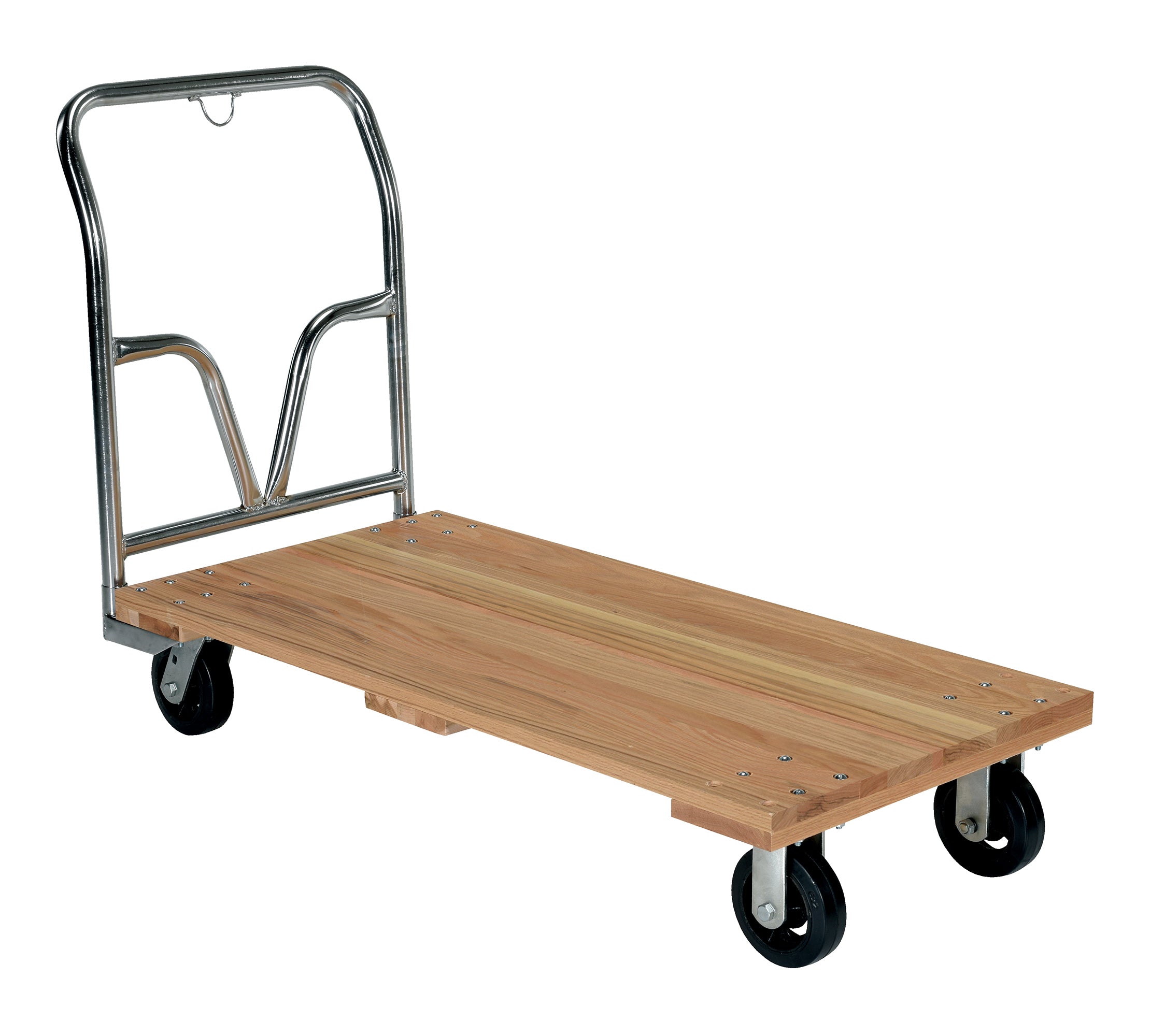
| Vestil Tilting Wood Platform Trucks | $1,431 | 48-72 in | 24-36 in | 2,200 lb | View → |
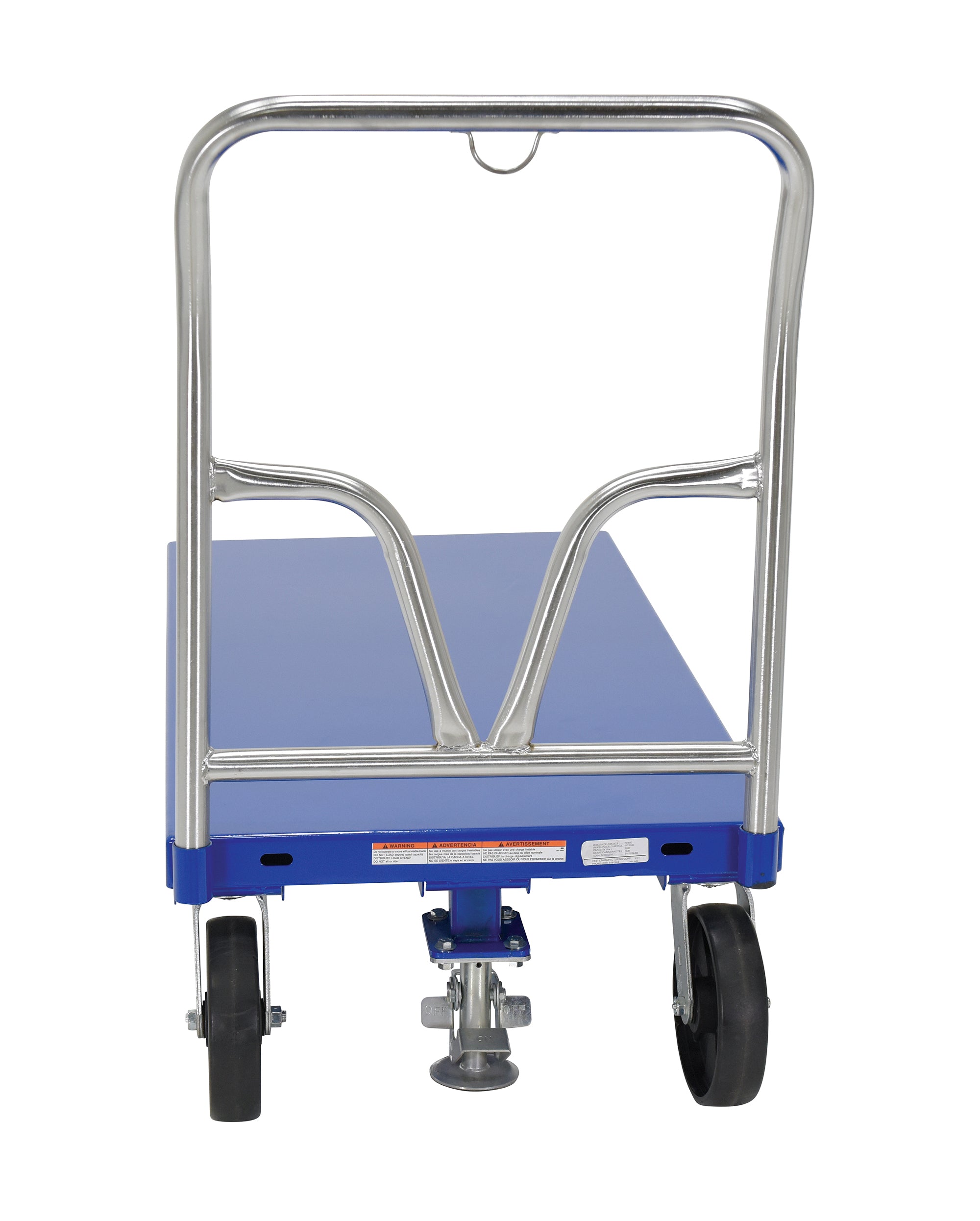
| Vestil Heavy Duty Stackable Material Cart | $1,023 | — | — | 5,000 lb | View → |
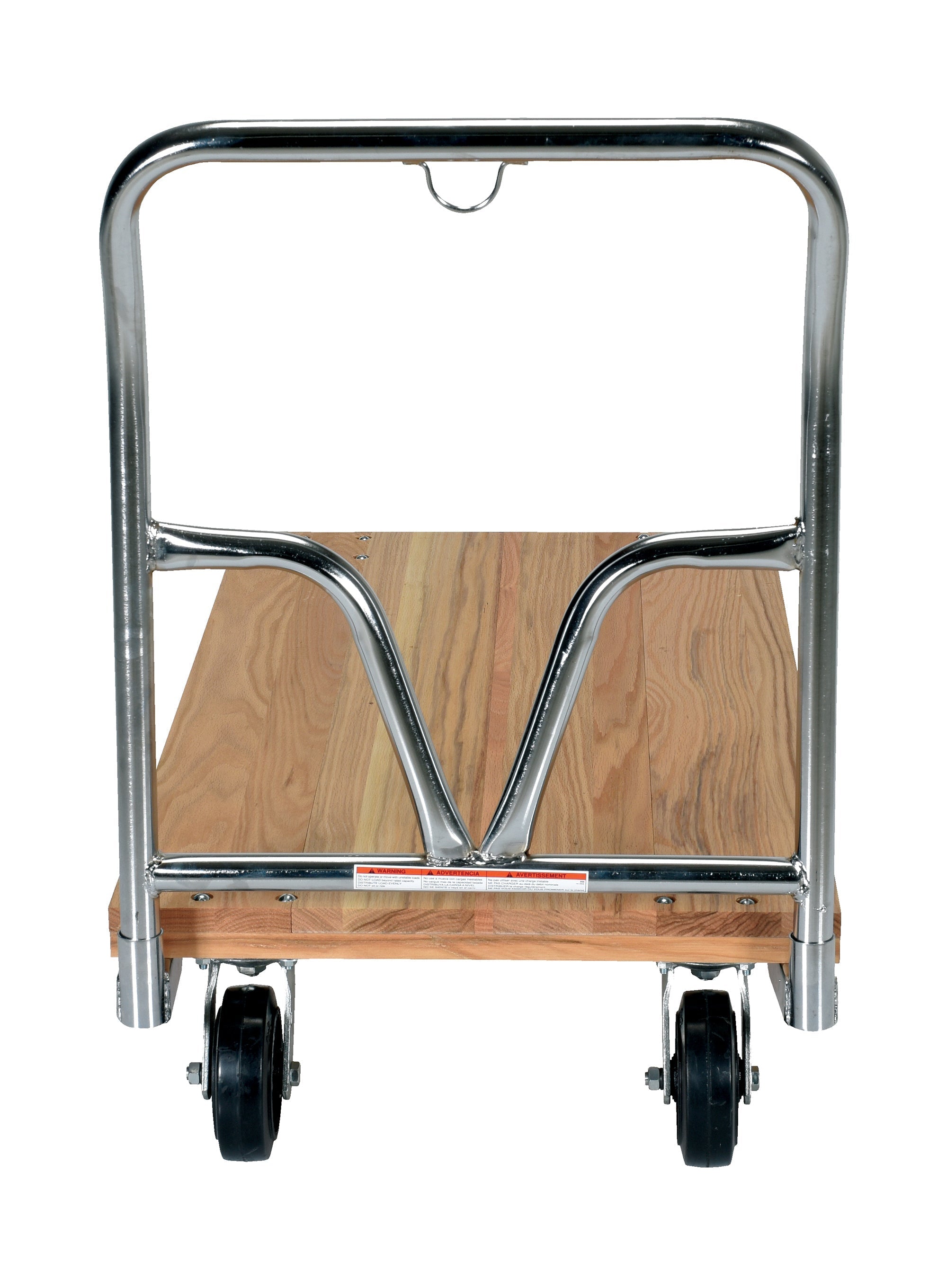
| Vestil Stainless Steel Platform Trucks | $801 | 36-72 in | 24-36 in | 2,000 lb | View → |
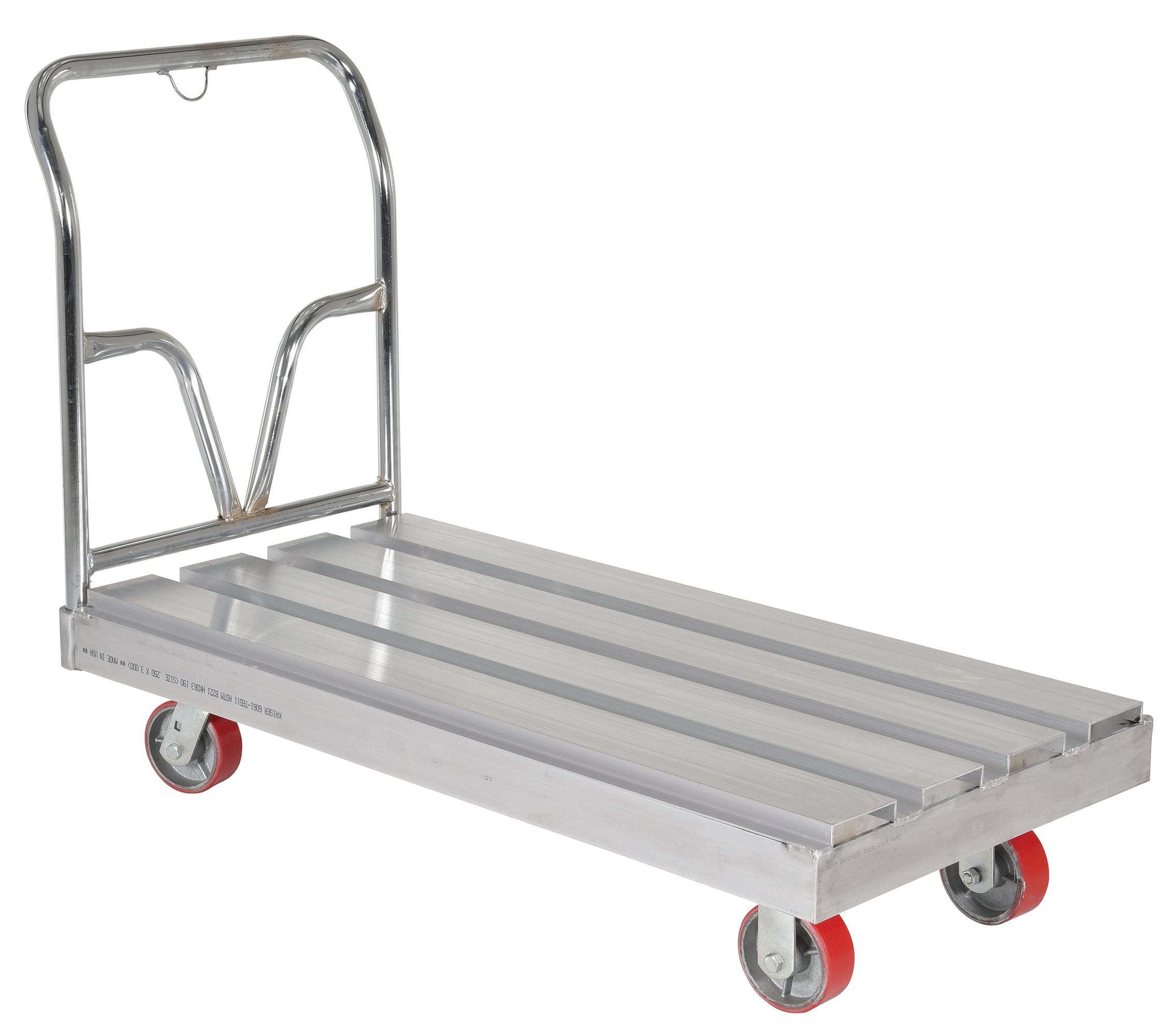
| Vestil Heavy-Duty Extruded Aluminum Platform Trucks | $675 | 48-72 in | 24-36 in | 4,800 lb | View → |
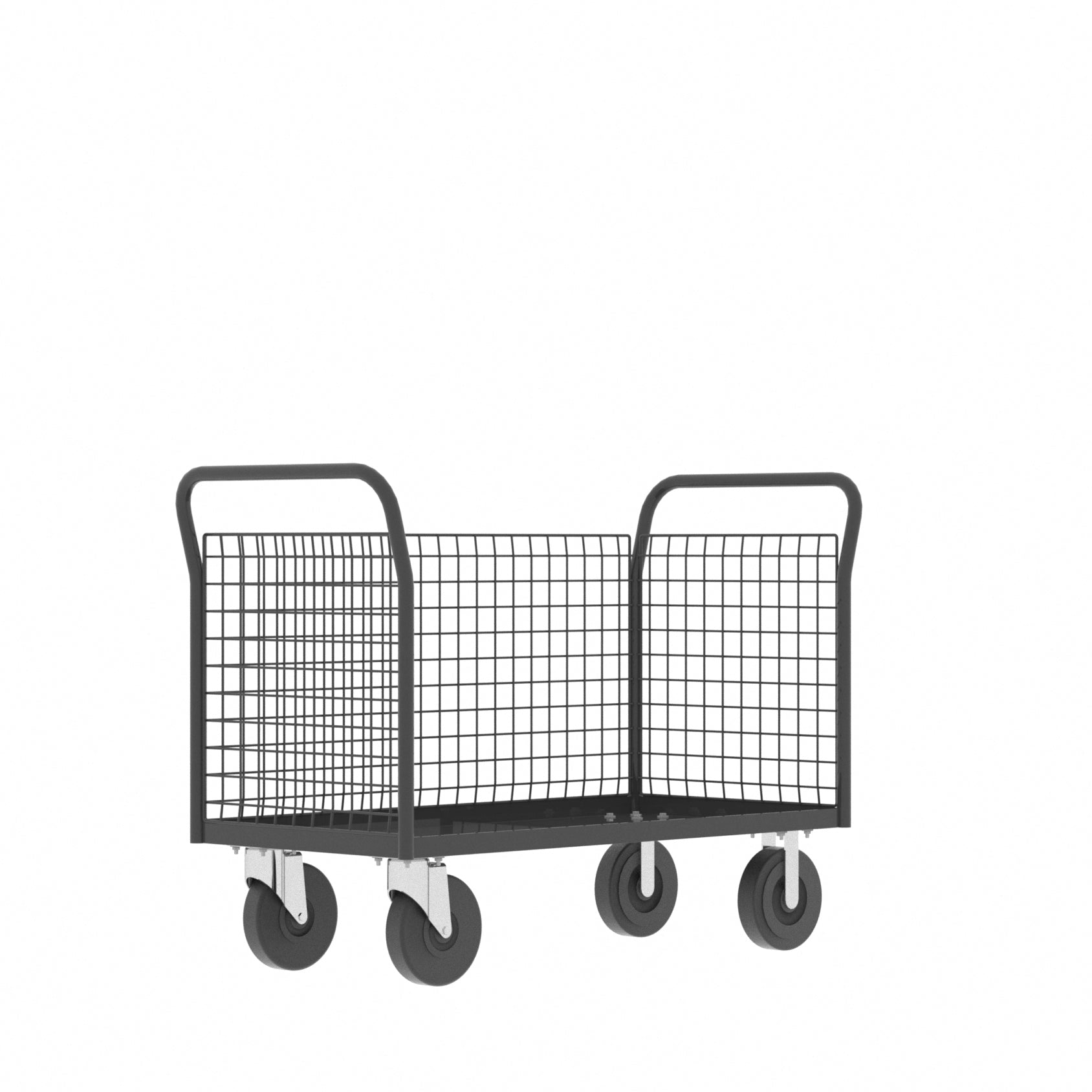
| Valley Craft Platform Cage Carts | $645 | 48-60 in | — | 1,600 lb | View → |
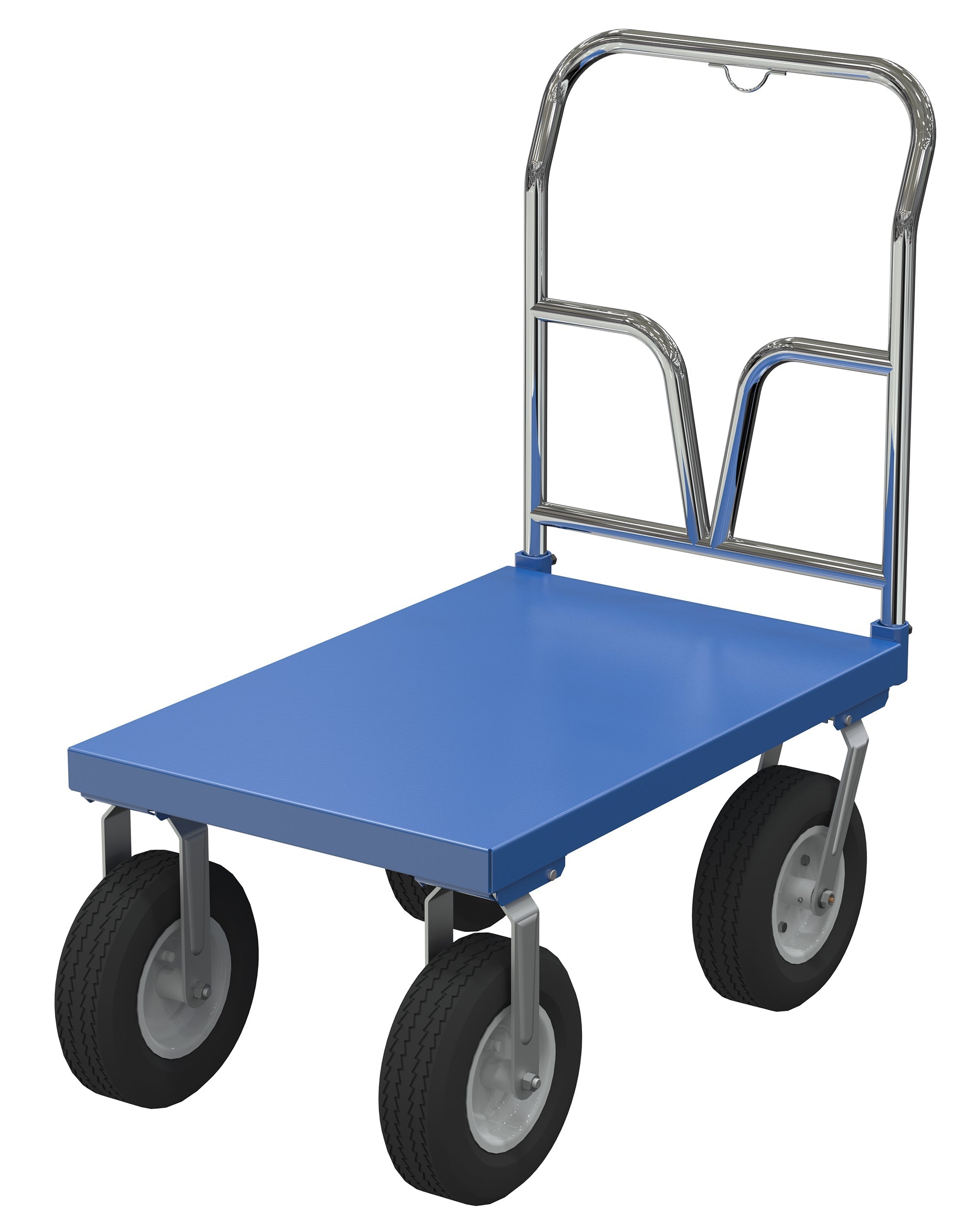
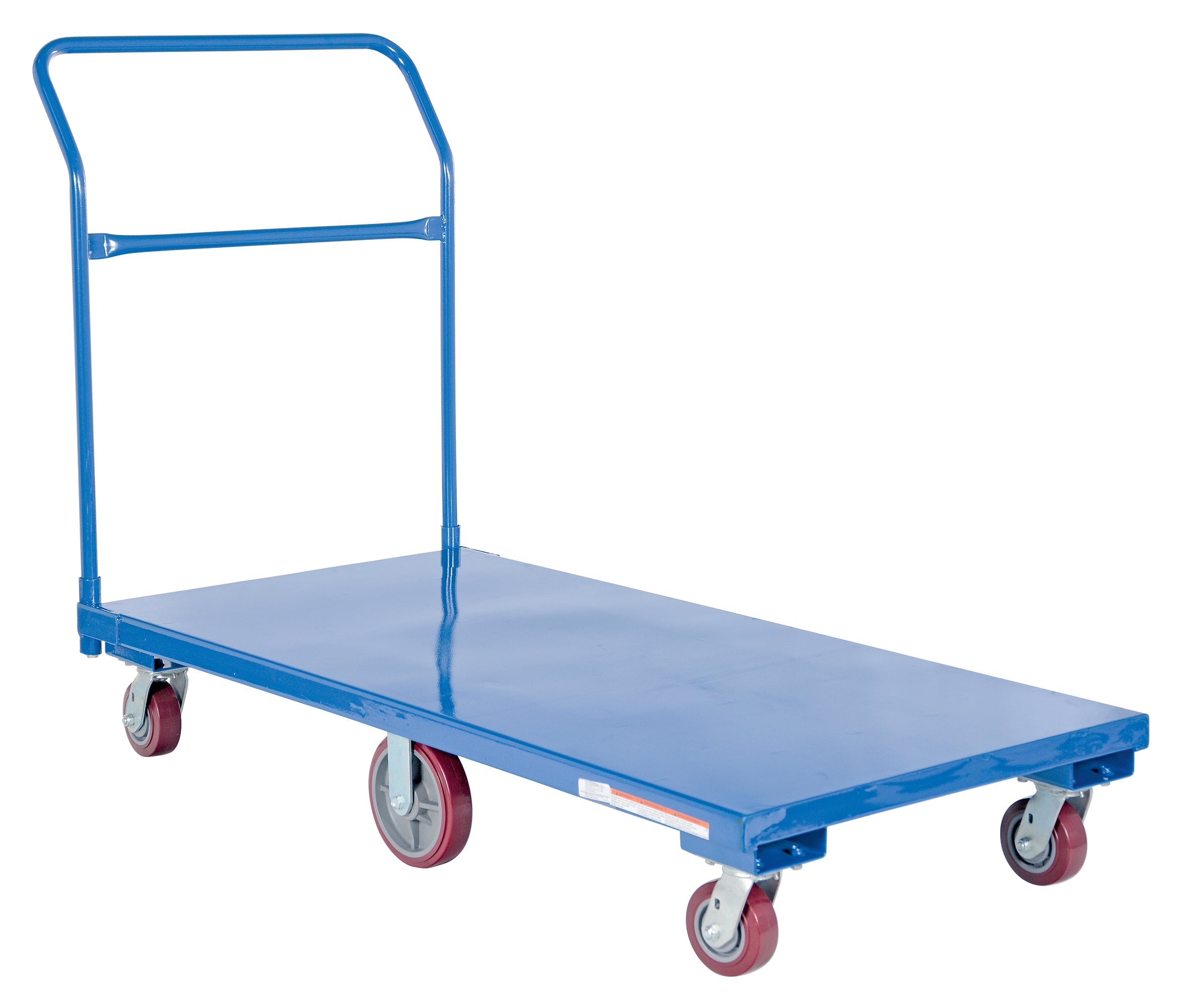
| Vestil Pneumatic Tire Steel Platform Trucks | $587 | 36-96 in | 24-48 in | 1,500 lb | View → |
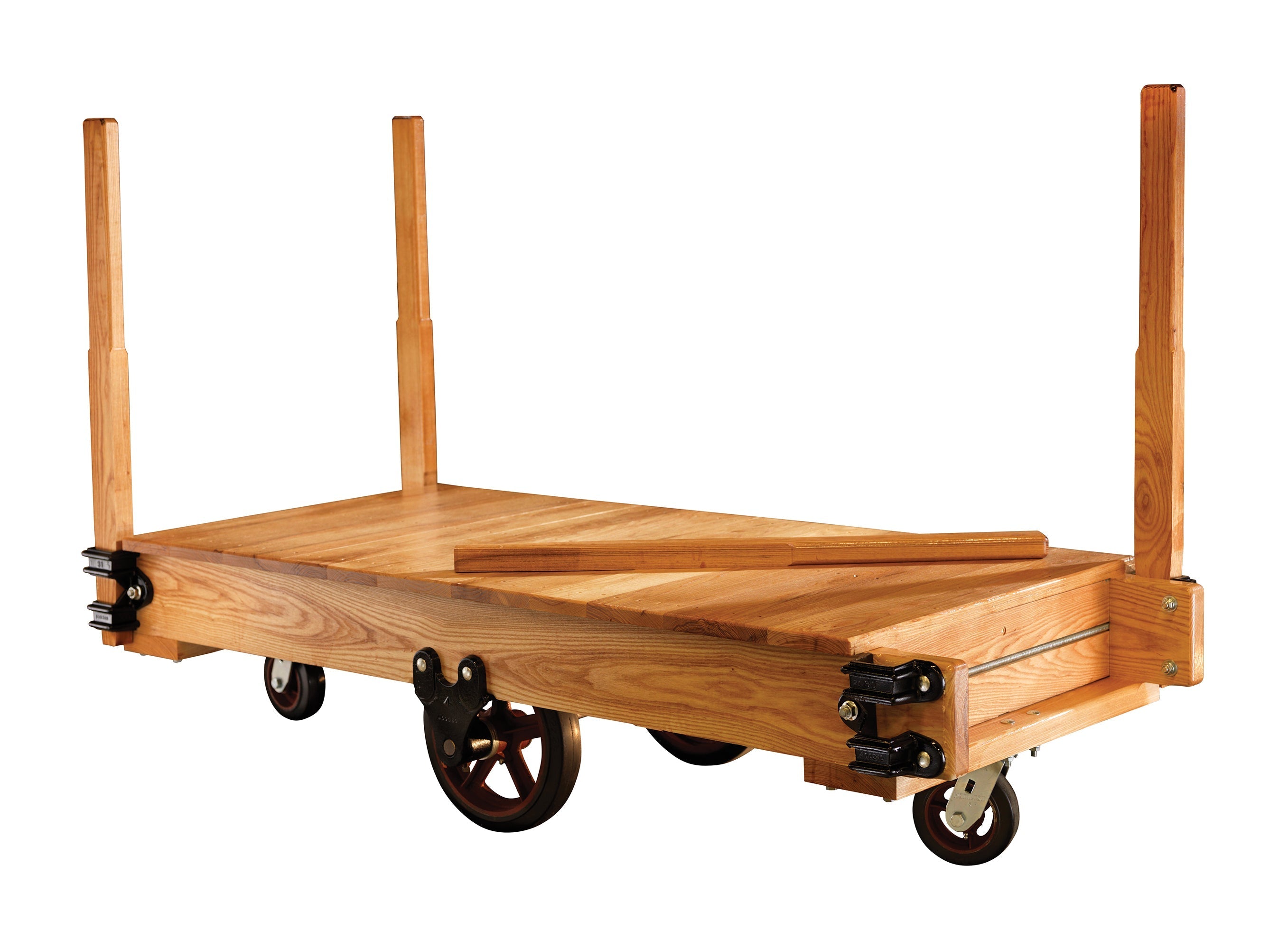 In Stock
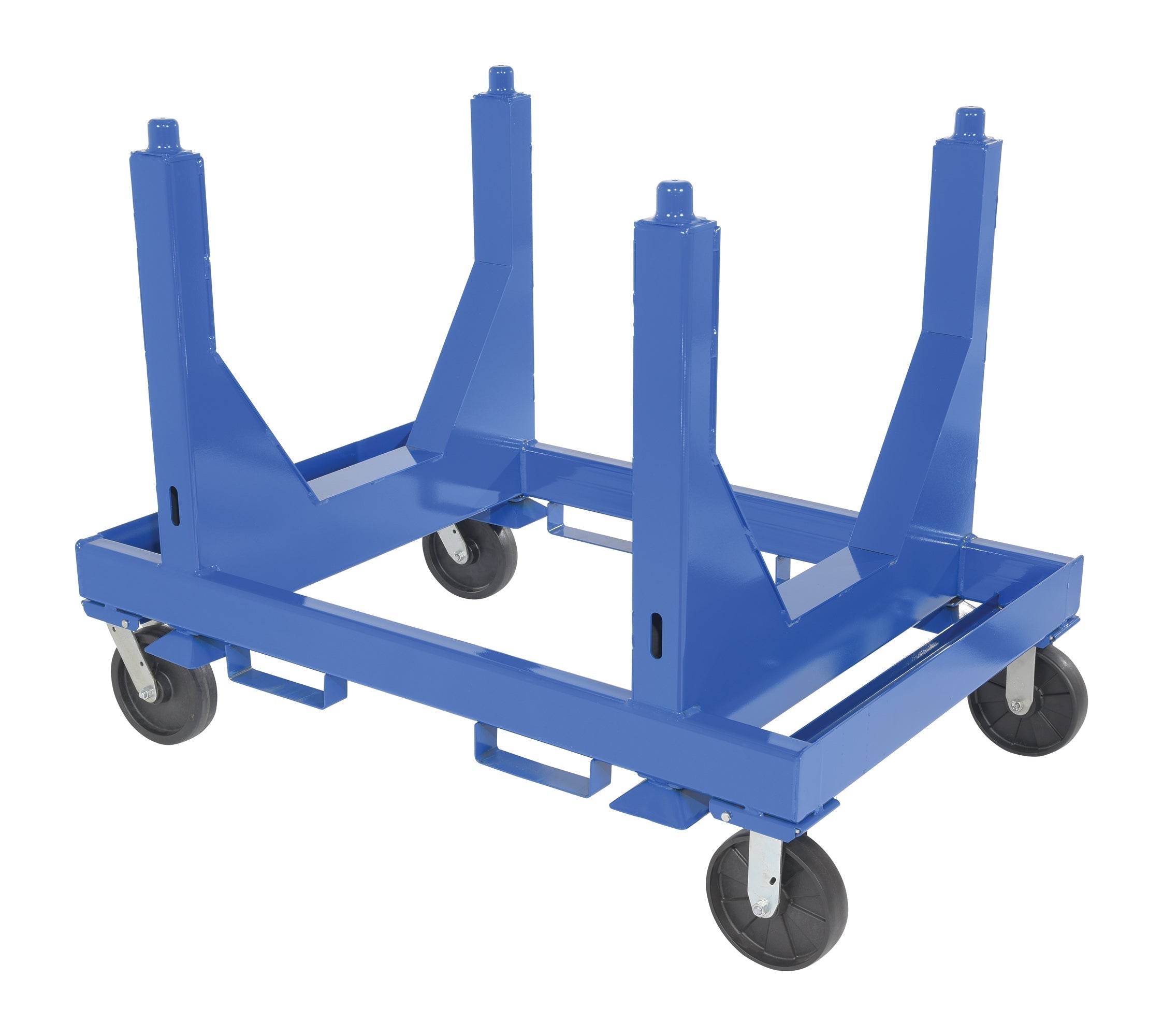 In Stock
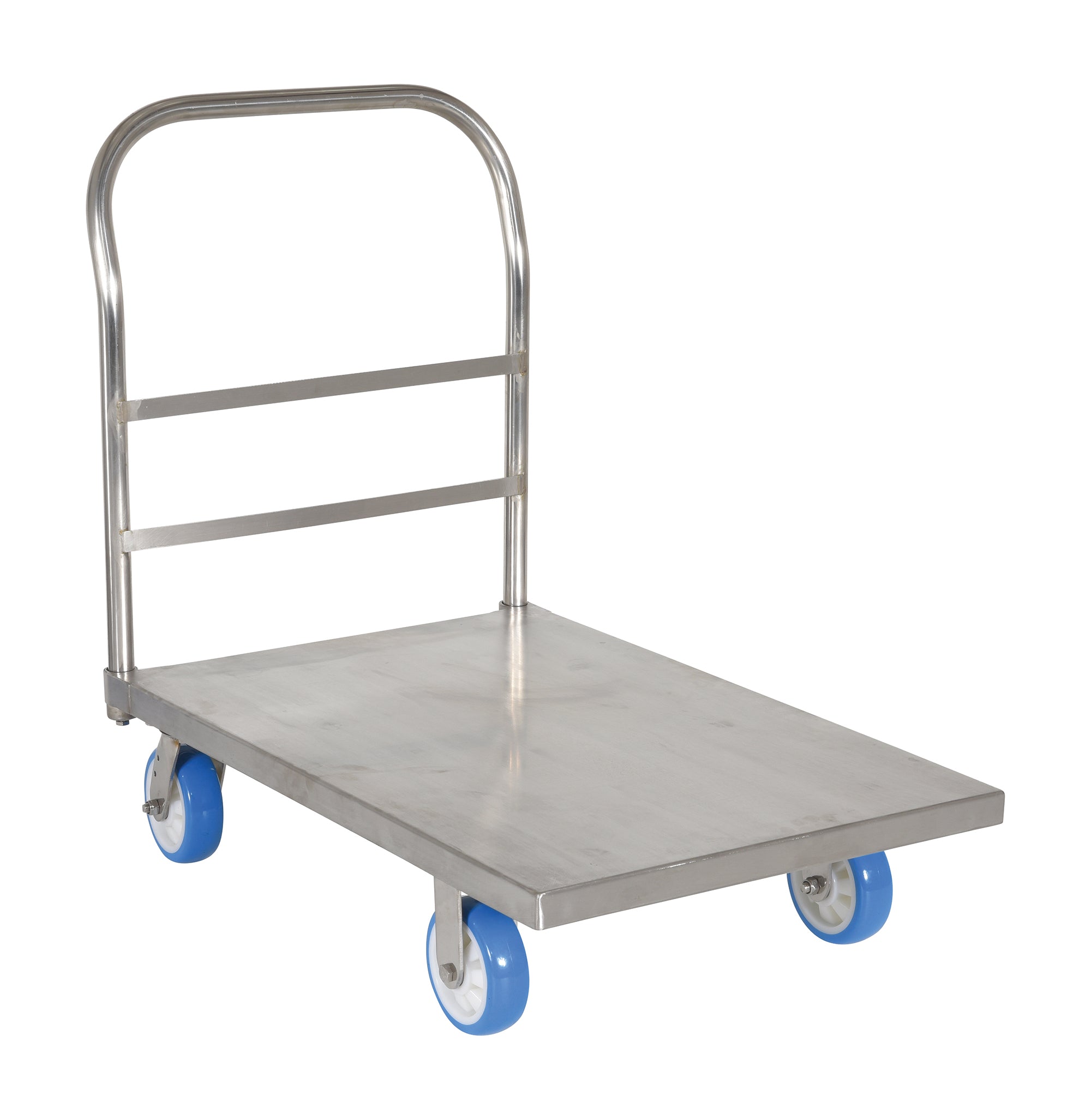 In Stock
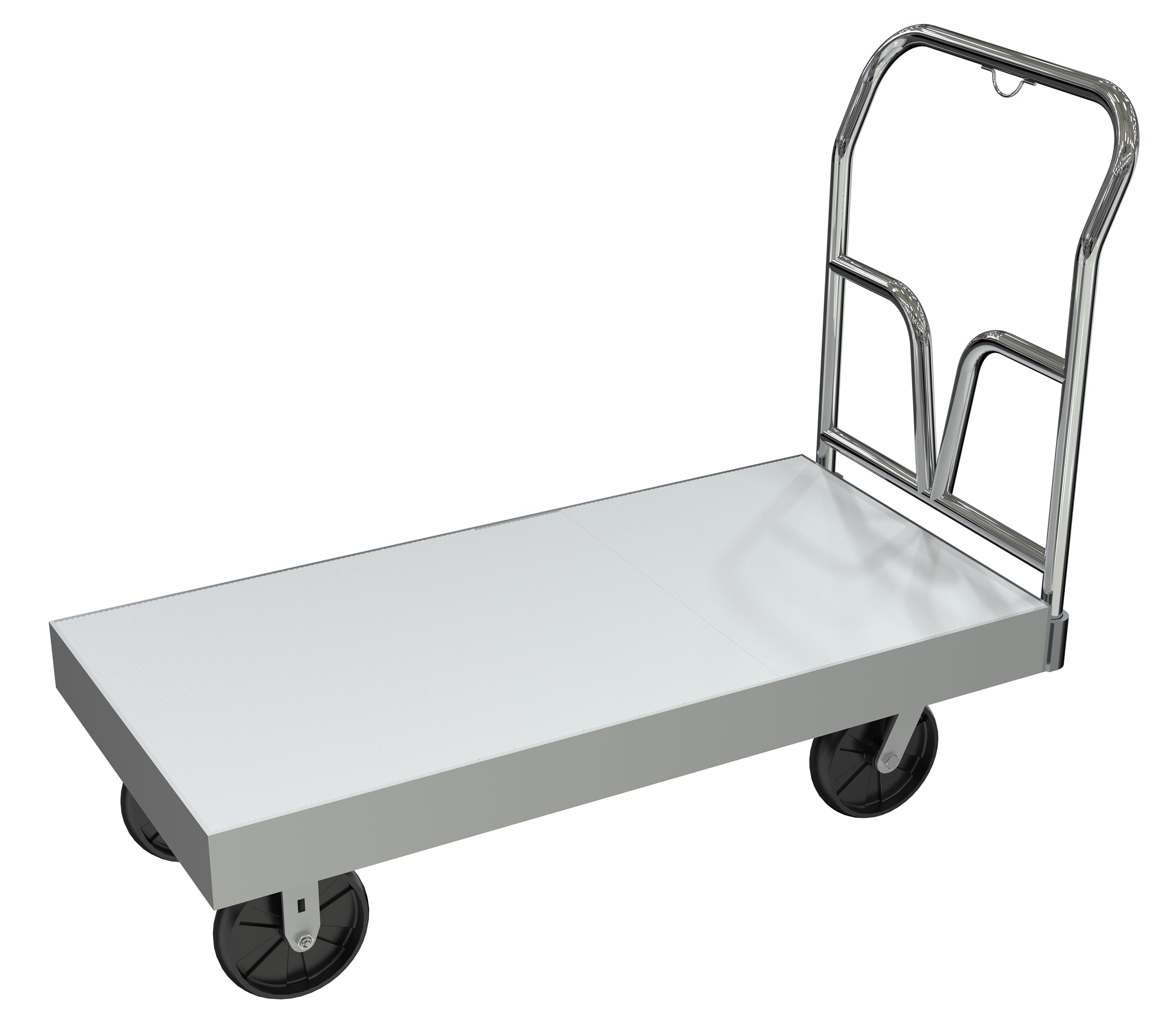 In Stock
 In Stock
 In Stock
 In Stock
 In Stock
 In Stock
 In Stock
 In Stock
 In Stock
 In Stock
 In Stock
 In Stock
 In Stock
 In Stock
 In Stock
 In Stock
 In Stock
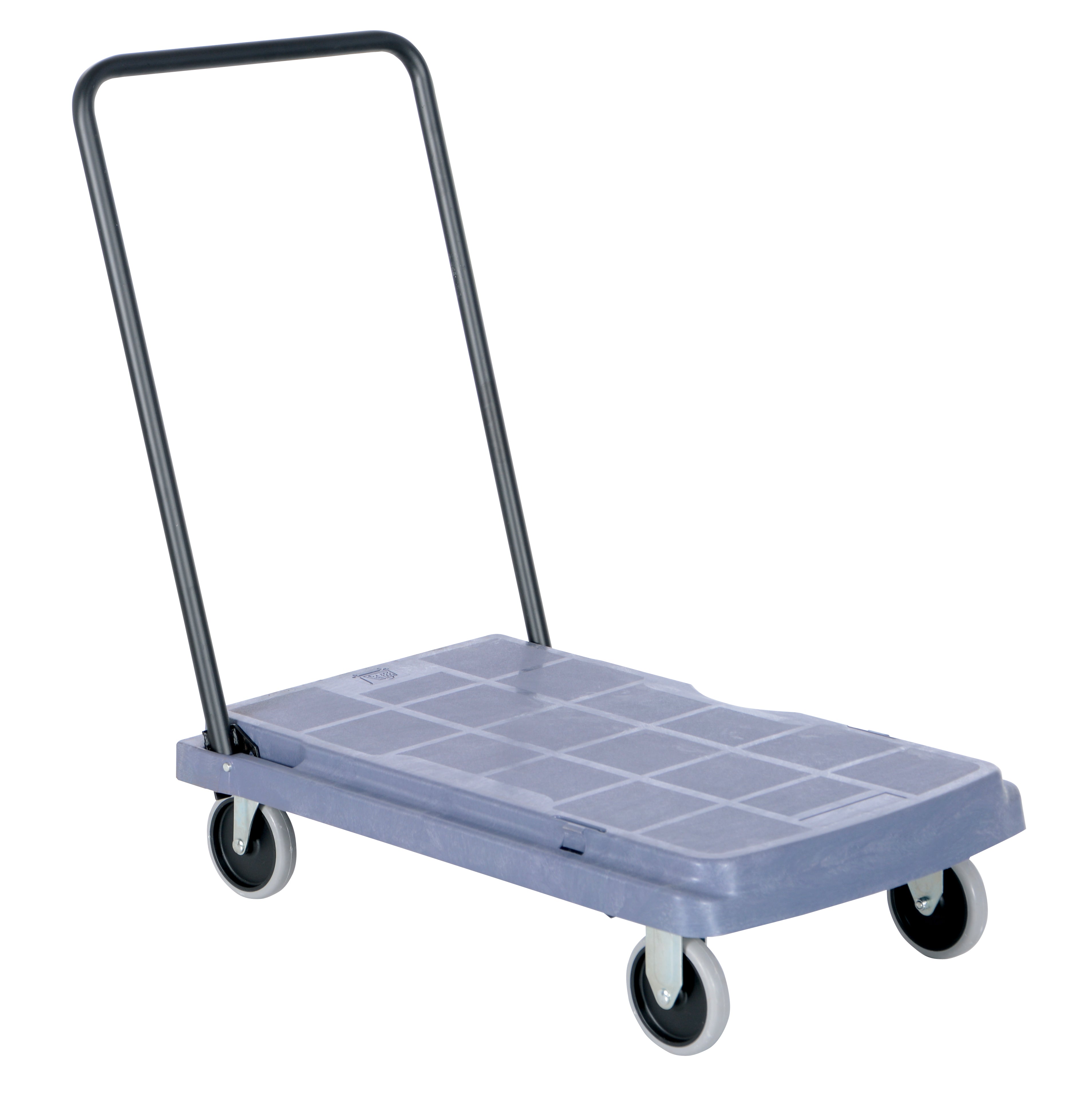 In Stock
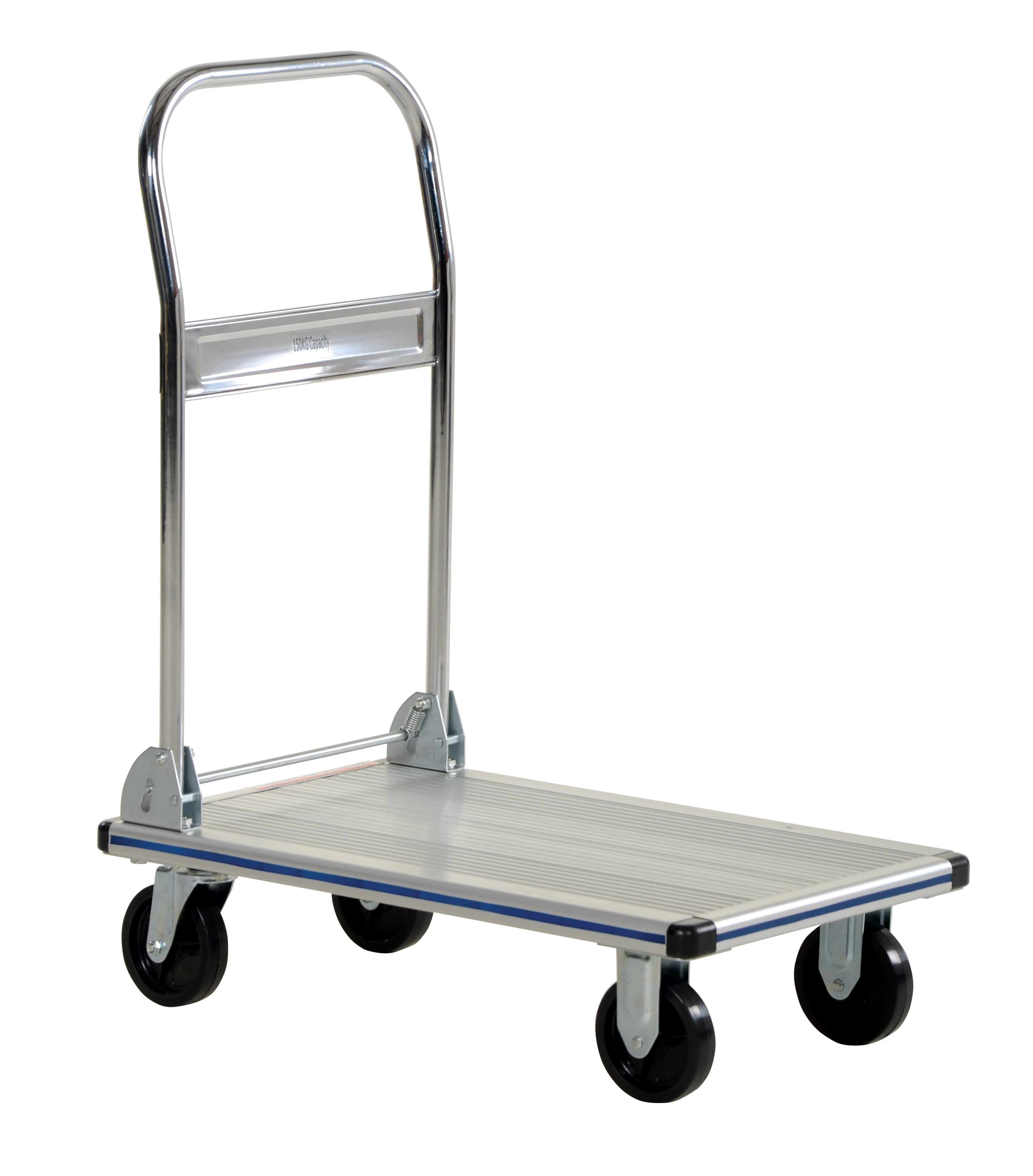 In Stock
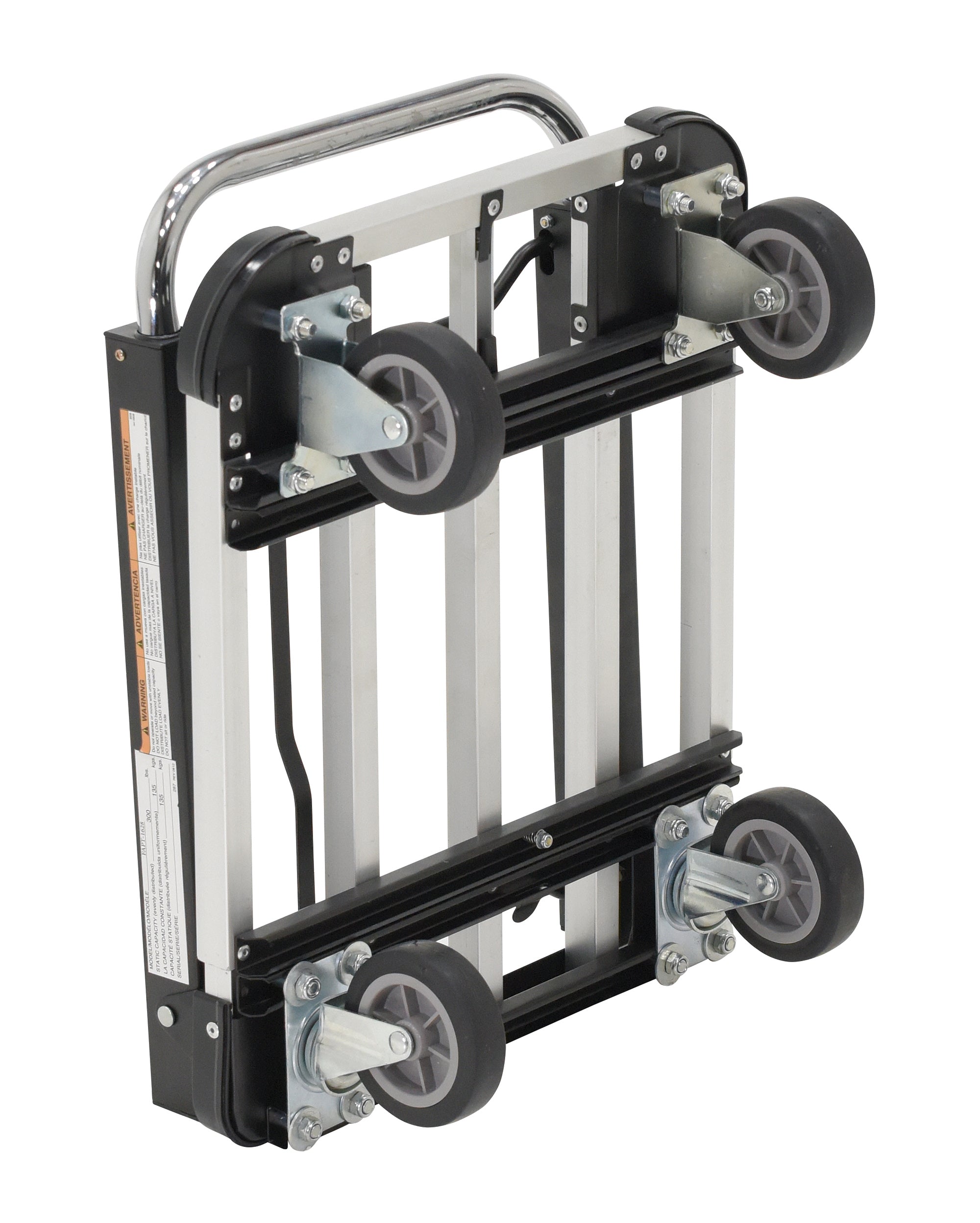 In Stock
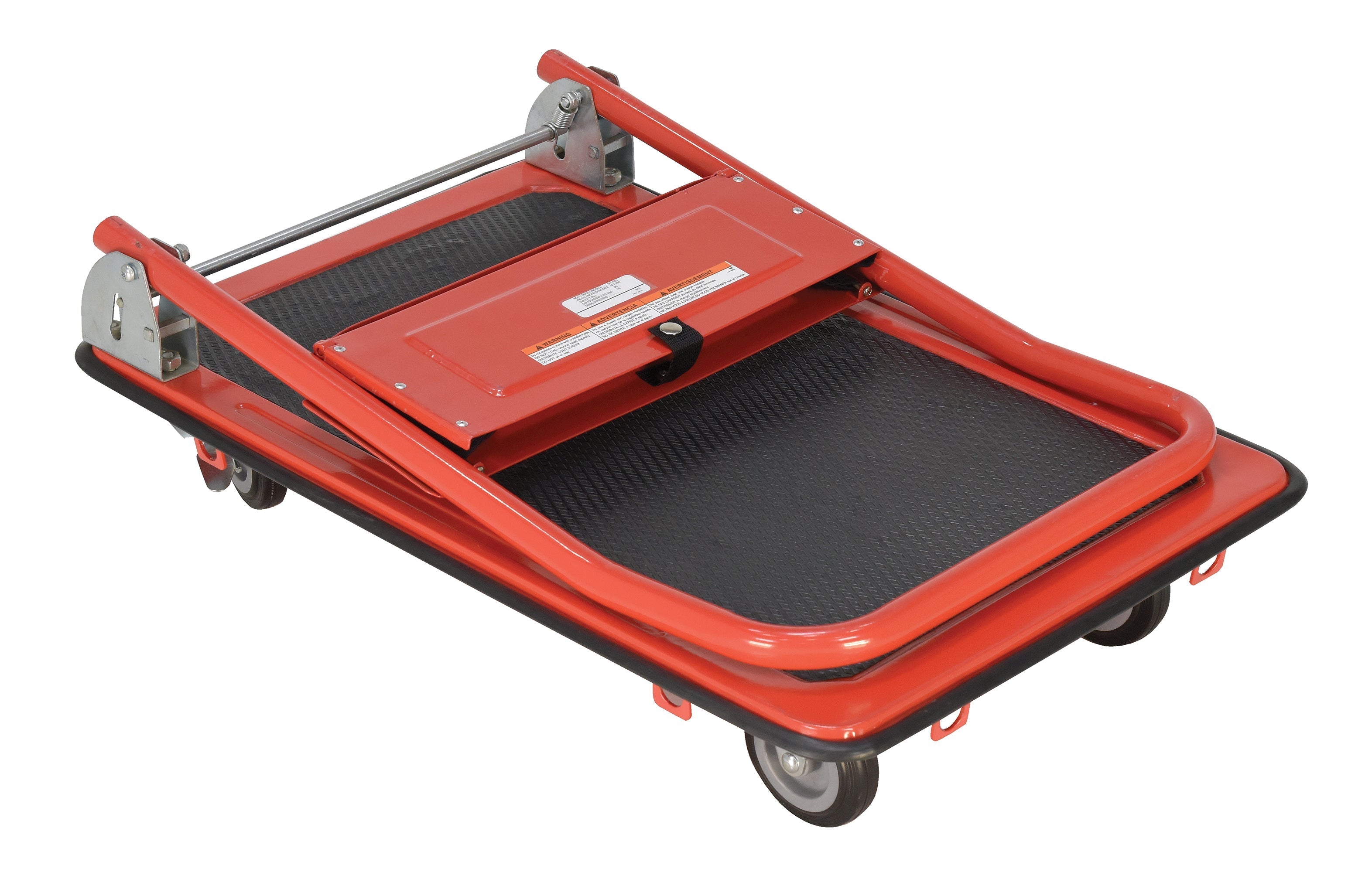 In Stock
Platform Trucks Buying Guide
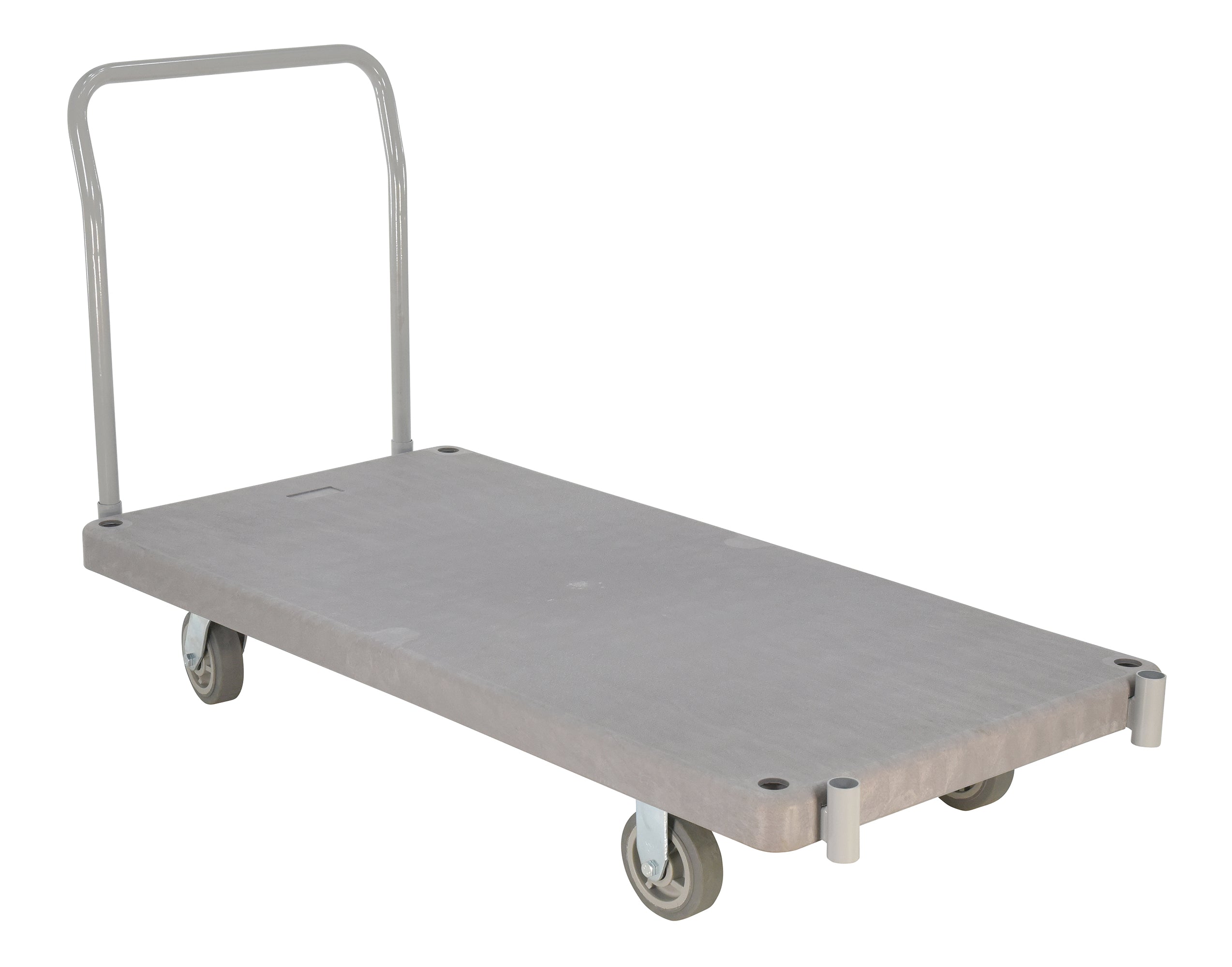
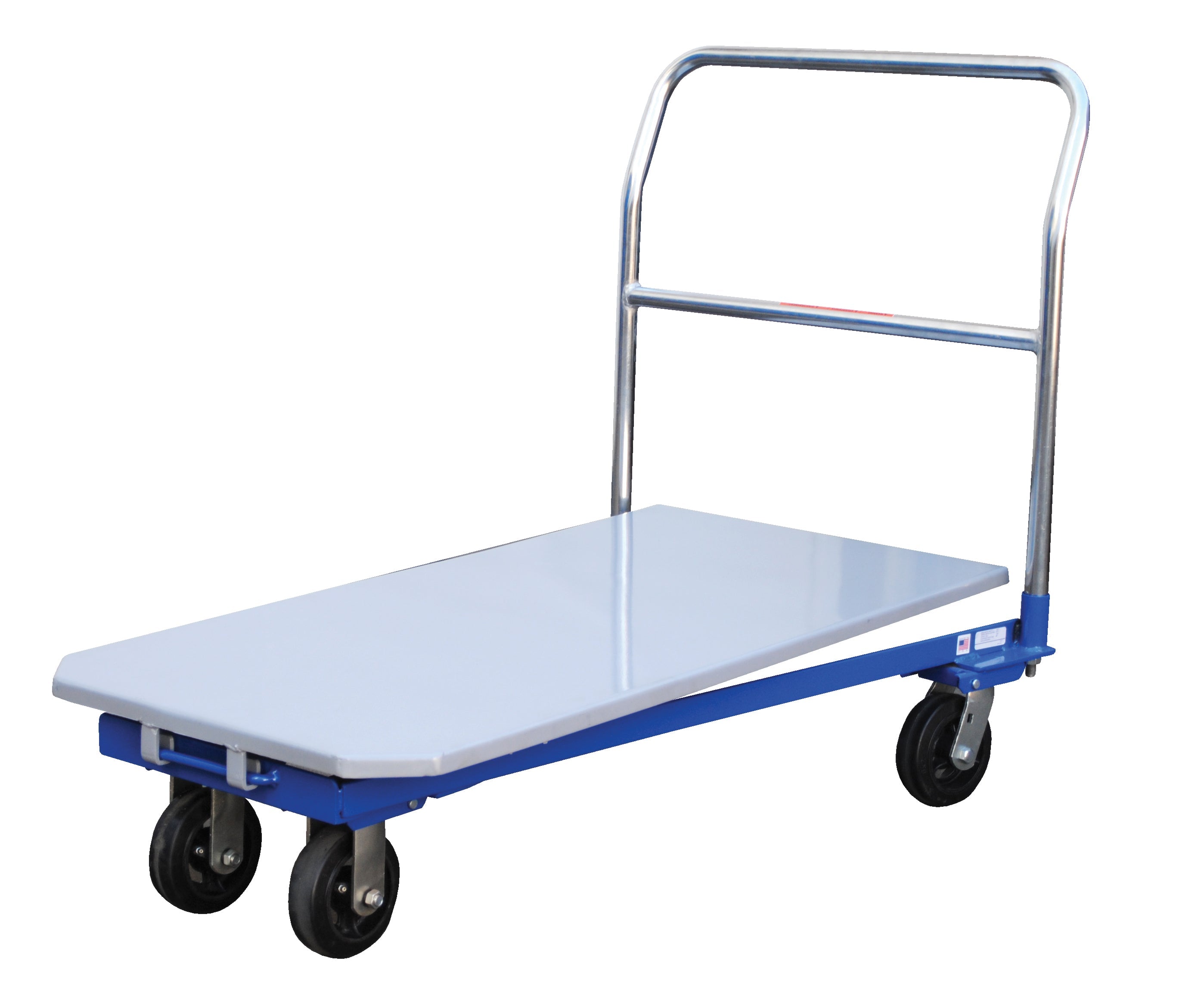
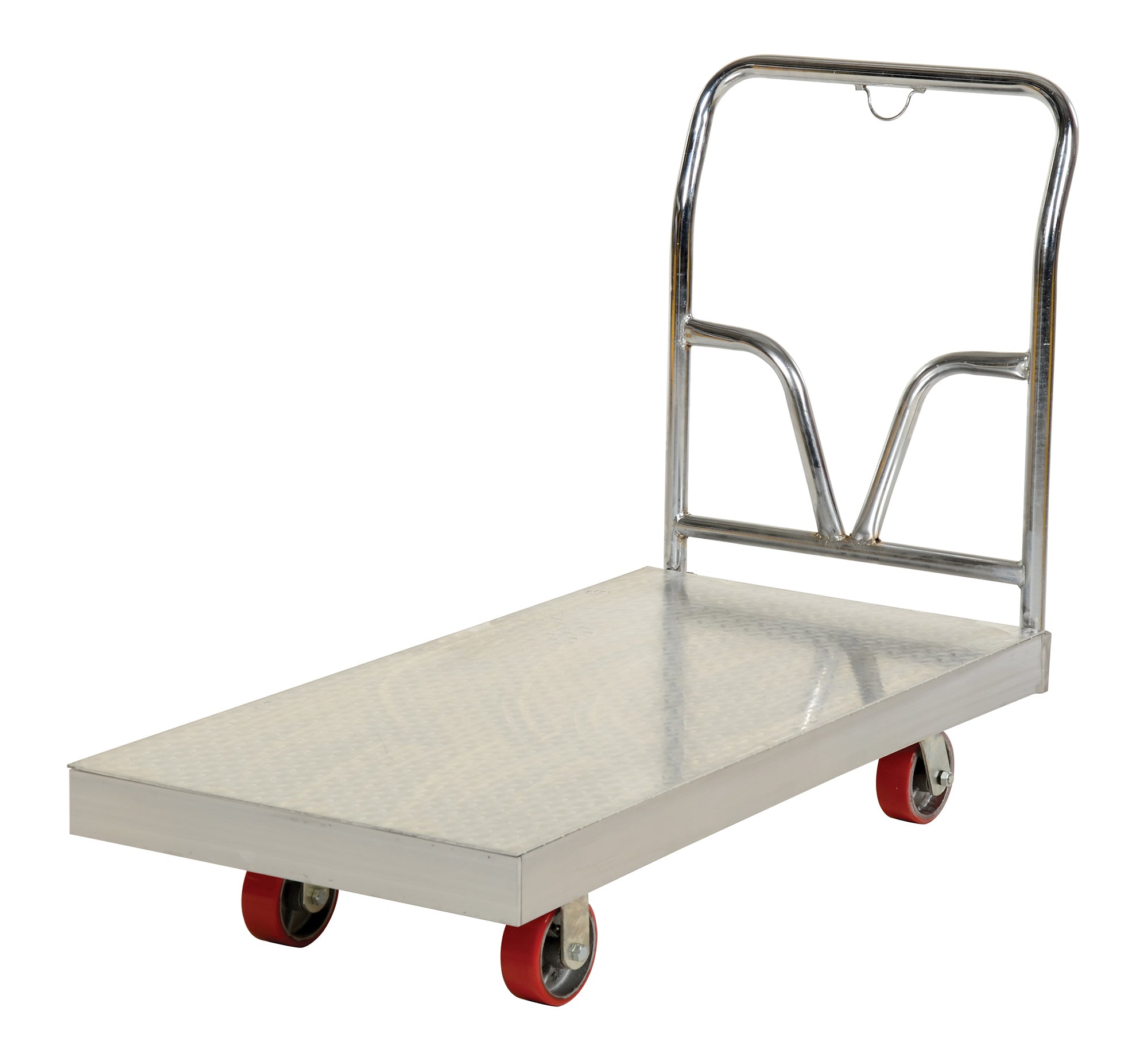
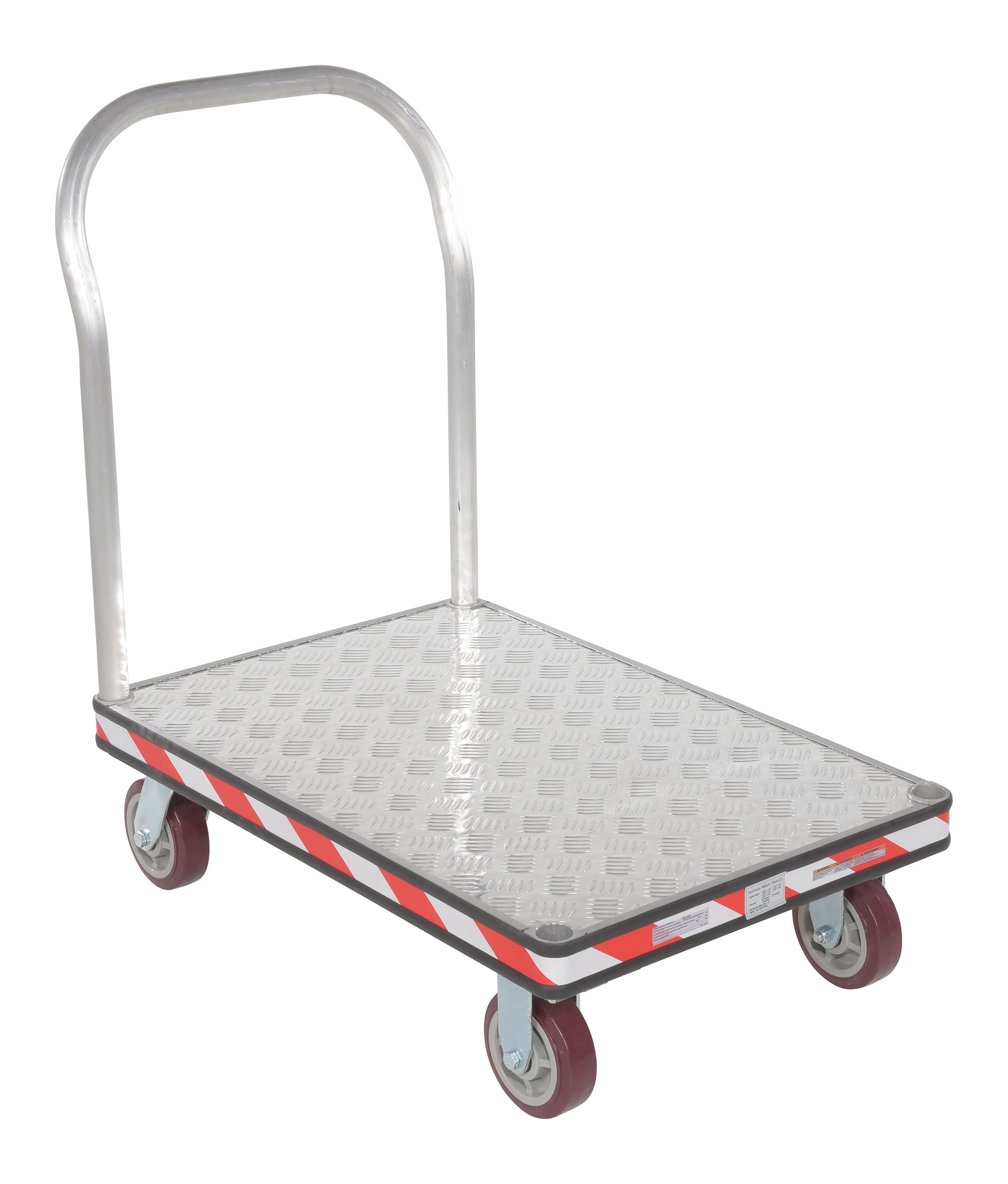
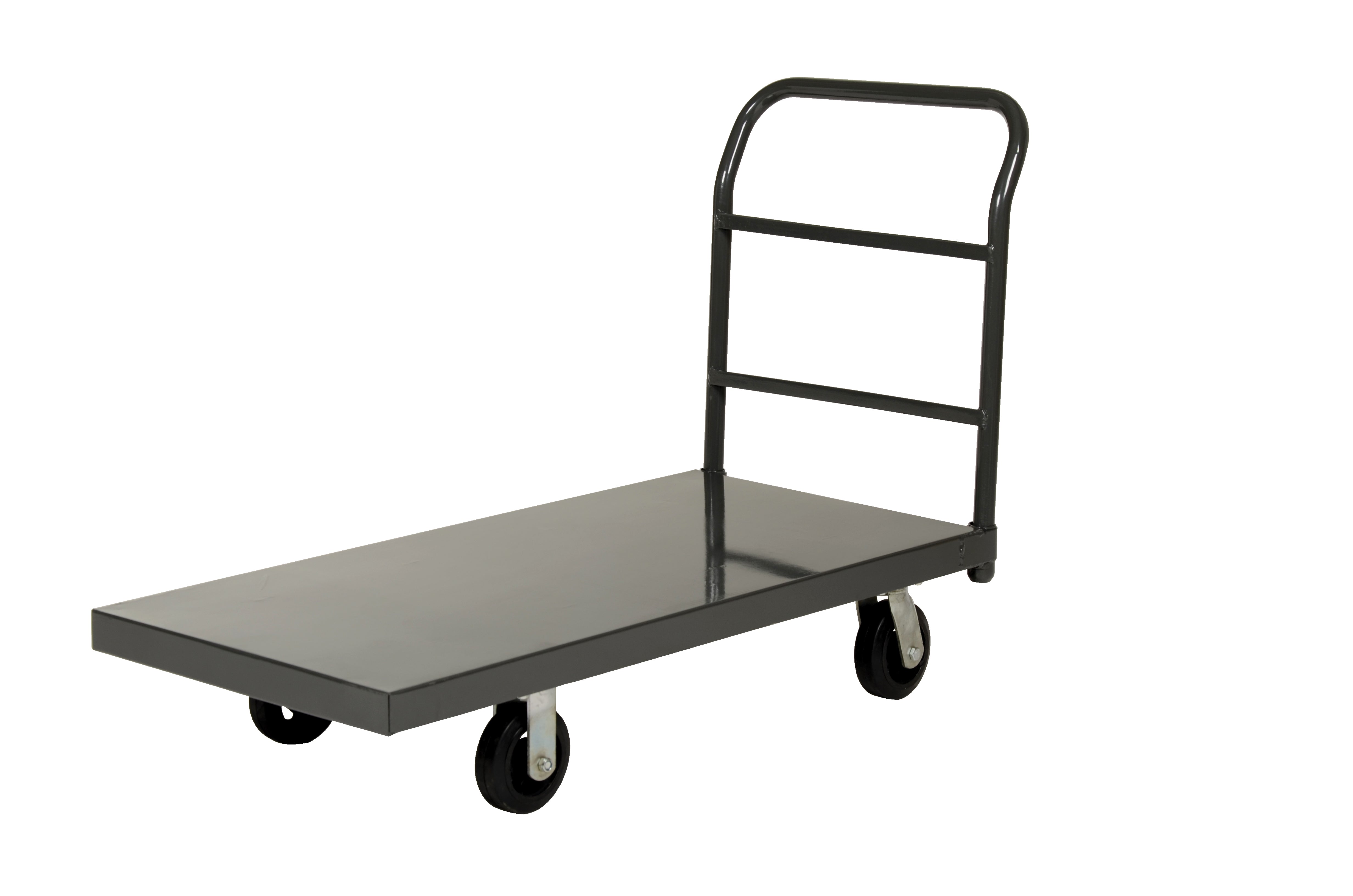
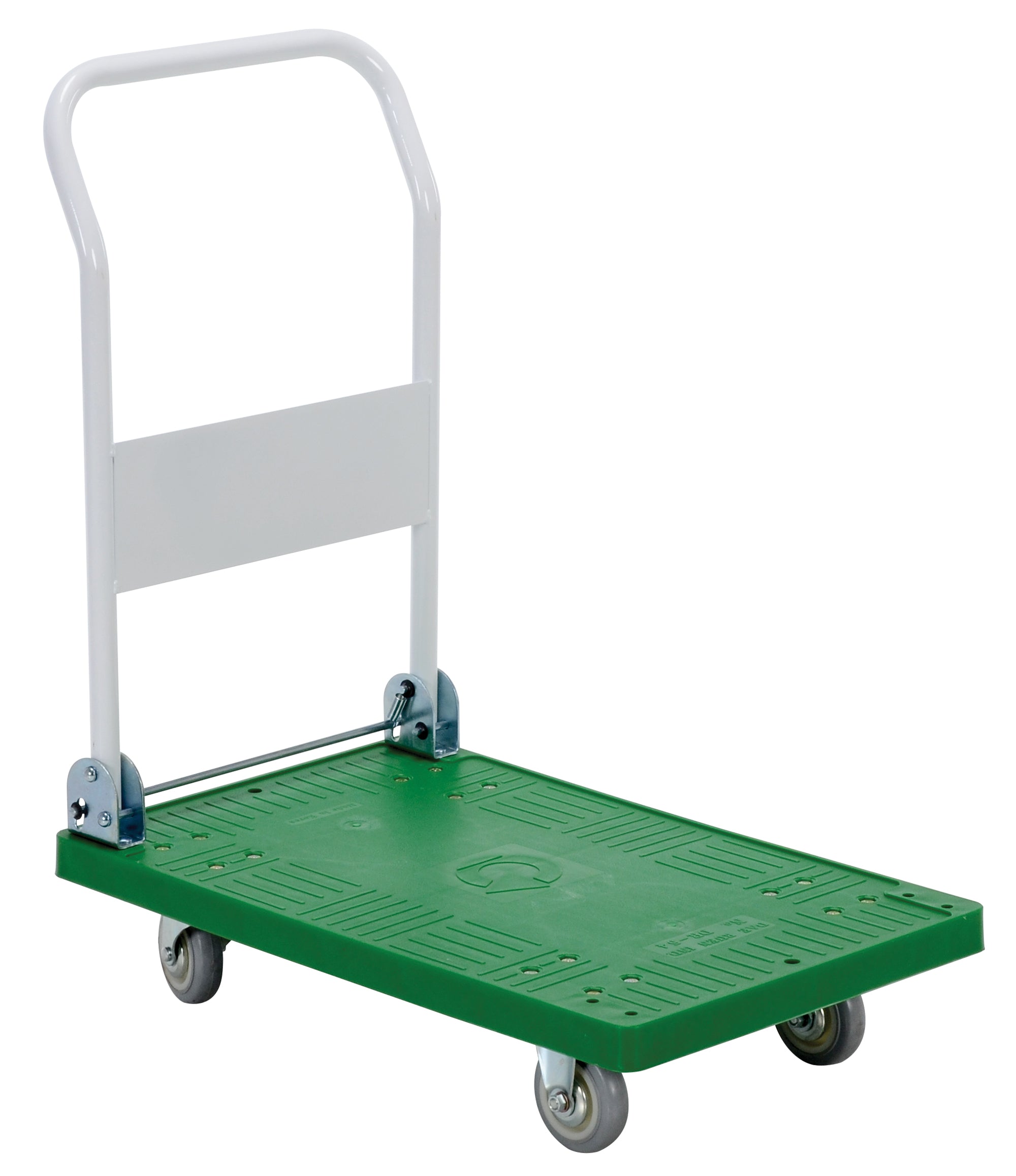
Start with the deck material. Deck material sets the price, the weight rating, and where the truck can work, so decide it first. Hardwood is the value pick, starting near $266, quiet underfoot, and forgiving of dropped loads and gouges. Steel goes to the heaviest duty, with smooth decks for clean stacking and treadplate for grip on oily or wet loads; the Vestil steel line runs from about $357 to just over $2,000. Aluminum, from the extruded and treadplate trucks at $500 to $1,200, cuts tare weight so the operator pushes less dead mass and the deck never rusts. Plastic decks run quiet and hose clean, which is why they sit in the $150 to $700 range for light and heavy duty alike. Stainless steel, $800 and up, is the washdown and food-plant answer where rust and cleaning chemicals rule out everything else.
Size the deck to the load footprint, not the weight. Weight decides the rating; the load's footprint decides the deck. A truck rated for 2,000 lb still fails you if the crate hangs off both ends. Vestil's steel and pneumatic decks come in lengths from 36 to 96 inches and widths from 24 to 48 inches, and the hardwood and stainless lines cover the common 24 by 48 through 36 by 72 sizes. Measure the largest thing that rides flat, add a few inches so nothing overhangs the bumper, and buy that size rather than the biggest available. An oversized deck costs more, weighs more, and turns wider in an aisle, so match the platform to the freight you actually move and stop there.
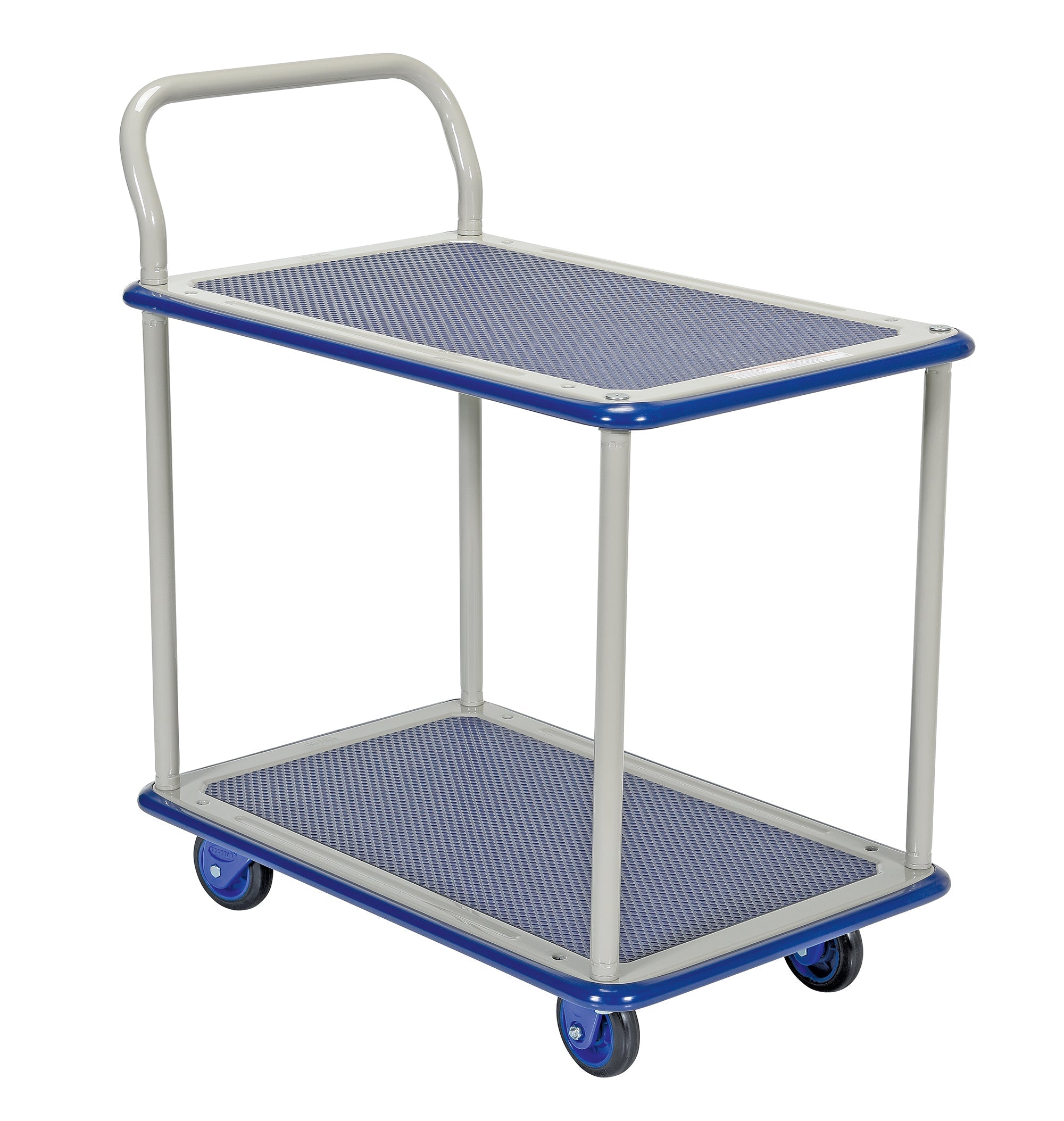
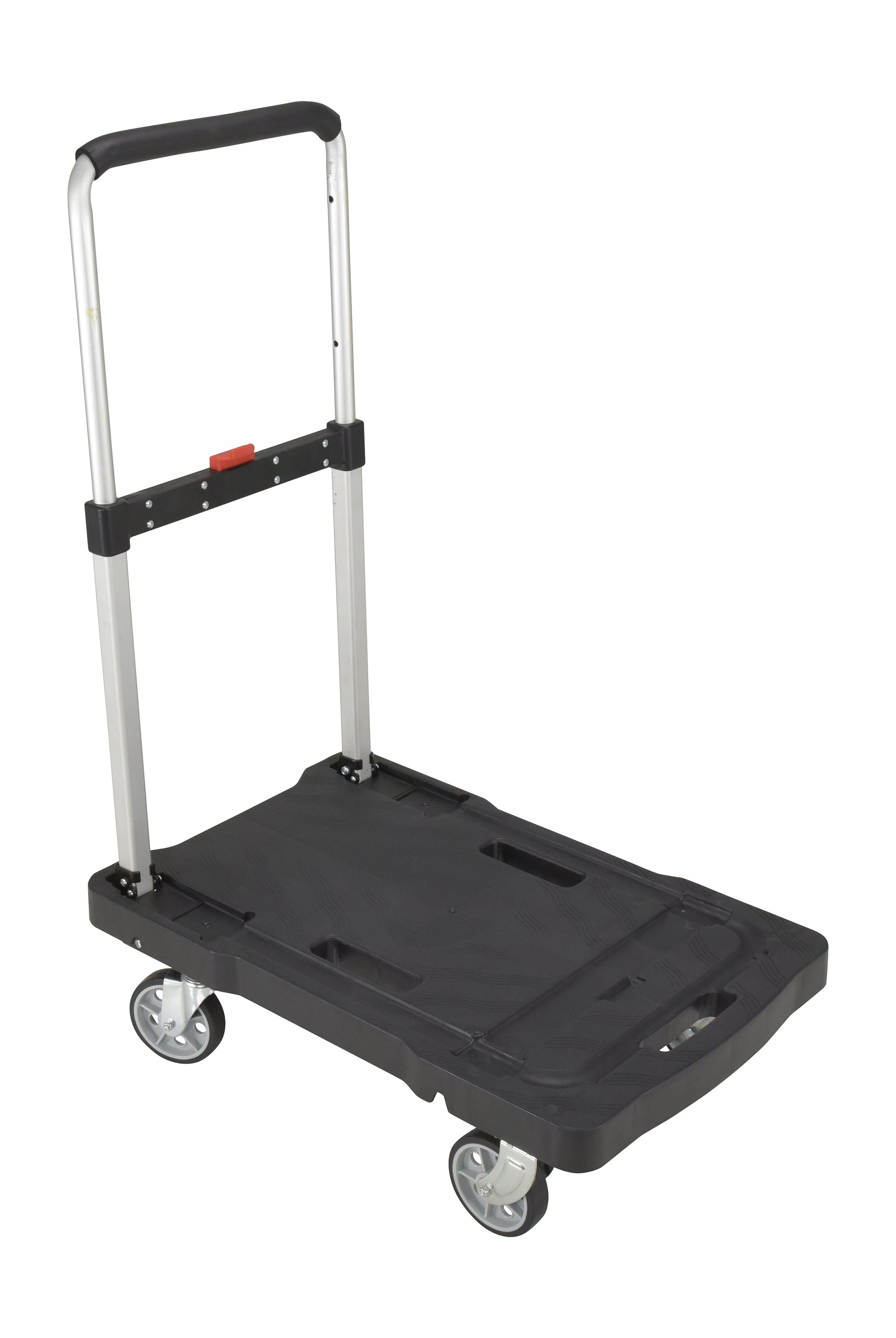
Handles: fixed, folding, single or double. The handle decides storage and who pushes. A fixed handle is the simplest and strongest, right for a truck that lives on one route. Folding and fold-down handle models, from the $85 steel folder and the $100 fold-up aluminum truck to the $143 versatile plastic units, drop flat so the truck stores against a wall or rides in a van. Some of those versatile trucks offer a standard or ergonomic handle grip, which matters on an all-day route. For long or heavy loads that two people steer, the double-handle plastic trucks put a push point at each end so the load tracks straight instead of fishtailing behind one operator.
Wheels are the spec that decides push effort. Casters are the quiet spec that separates an easy truck from a fight. Wheel material comes first: phenolic carries the highest loads cheaply on hard, smooth concrete; polyurethane protects finished floors, runs quieter, and resists oil; soft rubber and TPR dampen noise and reject debris; and pneumatic air-filled tires cushion the load over gravel, grass, and expansion joints where a hard wheel would jar the cargo. Diameter matters as much as material, because bigger wheels roll over cracks and thresholds with far less effort; moving from 4-inch to 6-inch wheels typically drops starting push force by 25 to 35 percent at the same load. Layout is the last piece: the standard four-caster setup pairs two rigid wheels for straight tracking with two swivels for steering, while an all-swivel arrangement turns in tight spaces at the cost of wandering on a straightaway. The low-noise steel trucks and pneumatic-tire trucks in this collection are built around exactly these tradeoffs.
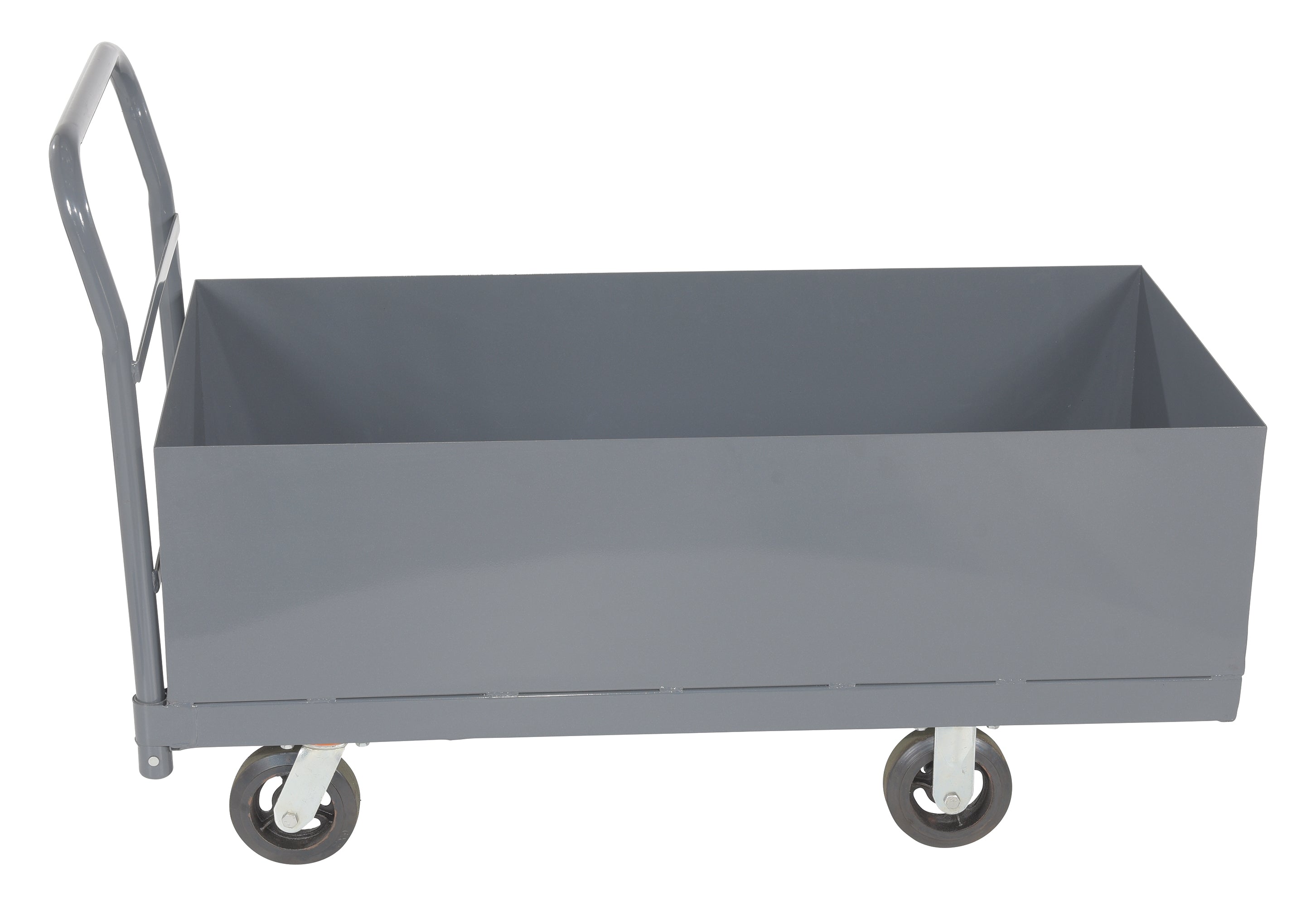
Capacity, the scale option, and the specialty decks. Read the rating, then leave headroom. The light steel and folding trucks sit around 1,200 lb, the mainstream steel and hardwood decks carry 2,000 lb, and the heavy plastic trucks are rated to 2,000 or 3,000 lb depending on model. Valley Craft's caged carts add mesh sides at a 1,600 lb rating for loose or high-theft loads. Vestil's steel trucks offer a built-in scale option, the SCL models, that weighs the load on the deck; expect to pay roughly $1,000 over the plain truck for the onboard scale. Past the flat deck sit the purpose-built shapes: a deep box truck at $470 corrals loose parts, tilting wood trucks from $1,320 pivot the deck so long stock slides off, double and triple decker carts stack picking tiers, and nesting and fold-flat carts collapse for storage when the shift ends.
Push and pull it the safe way. A manual platform truck carries no operator certification, unlike the powered tuggers that fall under OSHA's powered-industrial-truck rule, but the ergonomics still decide whether it hurts someone. The force to move a loaded truck splits into initial force, the peak needed to break it into motion, and sustained force, the steady effort to keep it rolling; the Liberty Mutual and NIOSH push-pull tables set the limits most safety plans cite. Keep them low by loading heavy items over the axles and centered side to side, buying the largest practical wheel diameter, and keeping casters clean and floors smooth. Push rather than pull whenever the route allows, so the load stays in front of you and your body weight does the work instead of your lower back.
Frequently Asked Questions
Moving bulk flat freight that travels together, boxes, crates, machines, panels, and stock, hundreds to thousands of pounds behind one or two push handles. Where a hand truck tips a single load onto two wheels through tight routes, a platform truck rolls a full deck of freight on four wheels. It is the tool for repeated floor moves of heavy loads that do not sit on a pallet.
Hardwood for value and quiet everyday duty, from about $266. Steel, smooth or treadplate, for the heaviest loads and abuse, up past $2,000. Aluminum when you want less tare weight and no rust, roughly $500 to $1,200. Plastic when the truck needs to run quiet and wash clean. Stainless steel for washdown, food, and chemical areas where rust rules the rest out.
Match the wheel to the floor. Phenolic for high loads on hard, smooth concrete; polyurethane for floor protection, quiet, and oil resistance; pneumatic air-filled tires for gravel, grass, and rough ground. Then size up the diameter, since going from 4-inch to 6-inch wheels can cut starting push force by 25 to 35 percent. Two rigid plus two swivel casters track straight and steer; all-swivel turns tighter but wanders on a straightaway.
It depends on the model. The light steel and folding-handle trucks run near 1,200 lb, the mainstream steel and hardwood decks carry 2,000 lb, and the heavy-duty plastic trucks are rated to 2,000 or 3,000 lb. Valley Craft's caged carts are rated 1,600 lb. Always total the real load, including any rigging or bins on the deck, and stay under the marked rating with margin to spare.
Vestil's steel platform trucks are available as SCL models with a scale built into the deck, so the truck weighs the load as it carries it. That saves a trip to a separate floor scale when you need shipping weights or batch checks. The scale adds roughly $1,000 over the plain truck at the same deck size, which pays back quickly on any workflow that weighs loads all day.
No. A manual platform truck carries no OSHA certification requirement, unlike the powered tuggers and motorized trucks that fall under the powered-industrial-truck rule. That said, the load and push forces are real, so follow basic ergonomics: load heavy items low and centered, keep wheels and floors clean, and push rather than pull so the load stays in front of you and off your back.