Reach Trucks
A reach truck is the narrow-aisle answer to a problem every packed warehouse runs into: how to store pallets high and still drive between the racks. Instead of carrying the load out front on a counterweight, it straddles the aisle on two baselegs and pushes the forks forward into the rack, then pulls the load back over the wheelbase to travel. That trade buys aisle width and lift height a sit-down counterbalance truck cannot touch. This page is the EKKO walkie reach truck line, every unit pedestrian-controlled from a tiller and rated 3,300 lb on 24V power. Two builds share the shelf: a pair of moving-mast trucks that anchor the entry price near $24,000, and a lithium-ion ER15 series whose lift height climbs with the model number, from roughly 11.5 ft up to about 18 ft on the tallest, topping out near $30,000. Read the guide to pick lift height, power, and reach style before you compare the exact trucks.
Compare Reach Trucks
| Model | Price | Capacity | Power | |
|---|---|---|---|---|
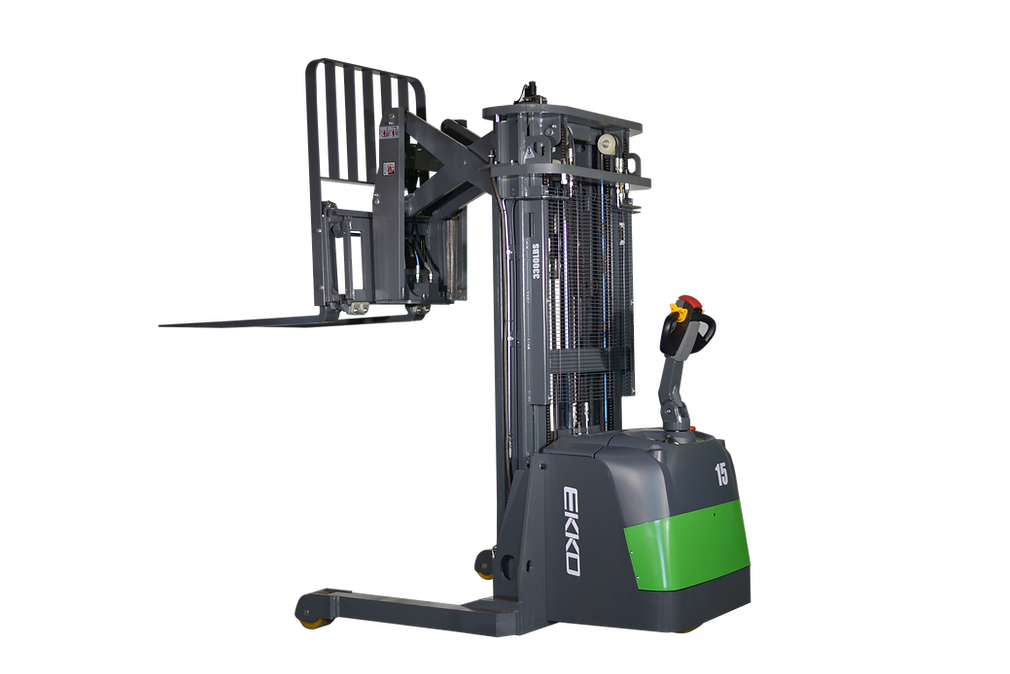
| EKKO ER15-216LI 3300lbs Walkie Reach Truck (LI-ION) 216" Lift | $29,999 | 3300 lb | 24V | View → |
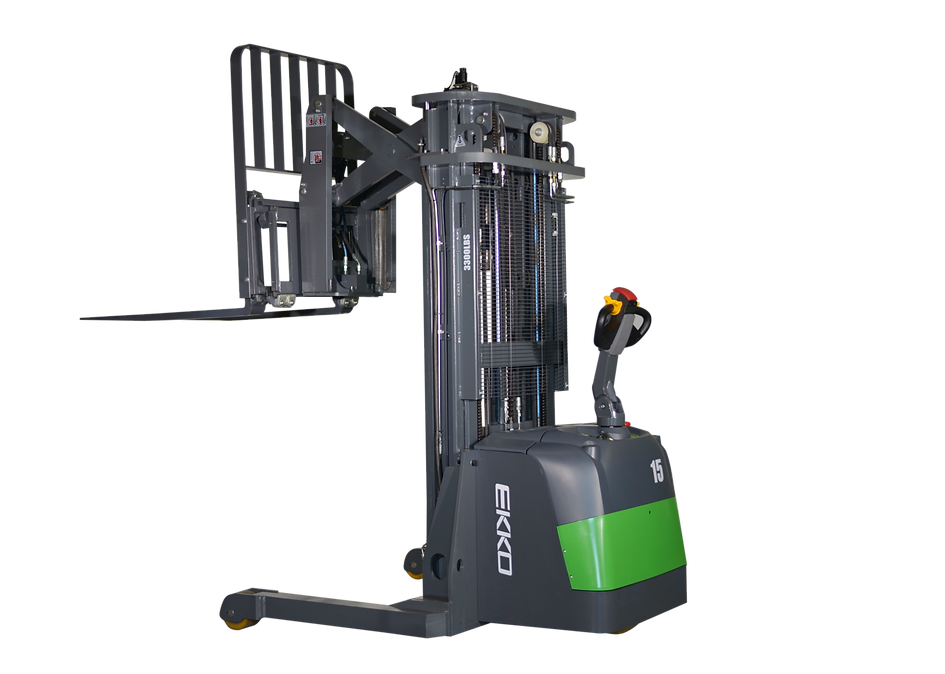
| EKKO ER15-189LI 3300lbs Walkie Reach Truck (LI-ION) 189" Lift | $28,499 | 3300 lb | 24V | View → |
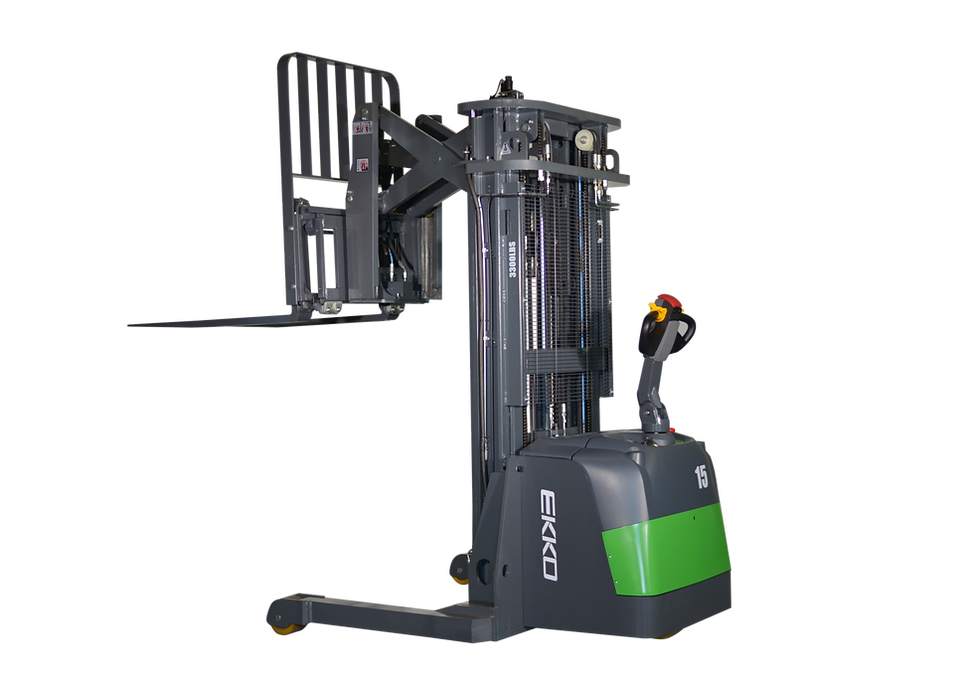
| EKKO ER15-177LI 3300lbs Walkie Reach Truck (LI-ION) 177" Lift | $26,999 | 3300 lb | 24V | View → |
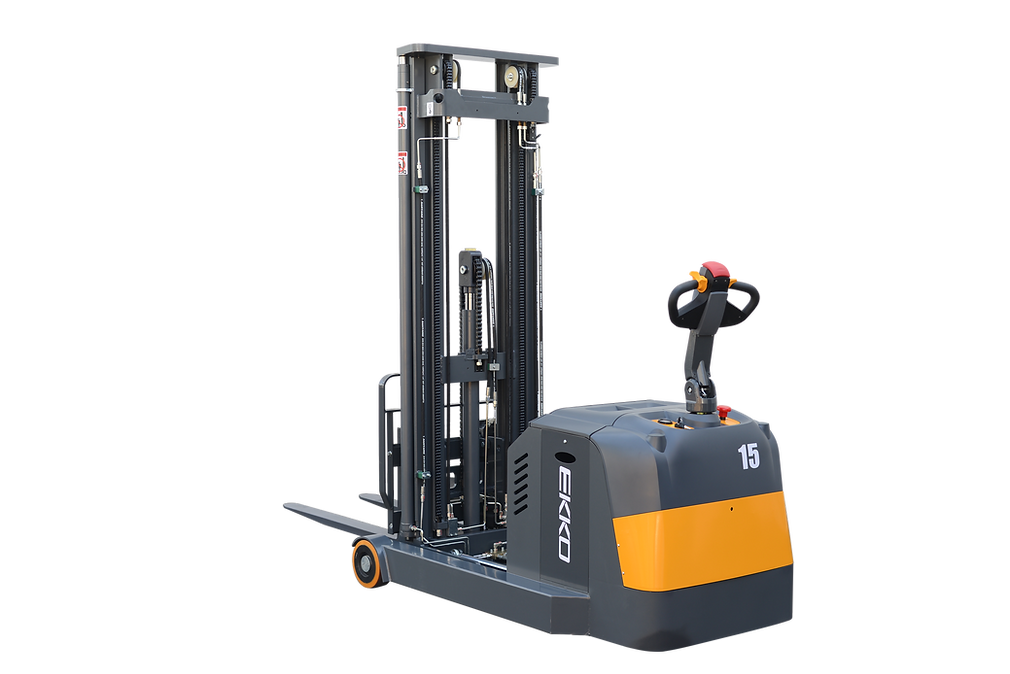
| EKKO EH15TH 3300lbs Moving Master Walkie Reach Truck | $25,499 | 3300 lb | 24V | View → |
| EKKO EH15T 3300lbs Moving Mast Walkie Reach Truck | $23,999 | 3300 lb | 24V | View → |
 In Stock
 In Stock
 In Stock
 In Stock
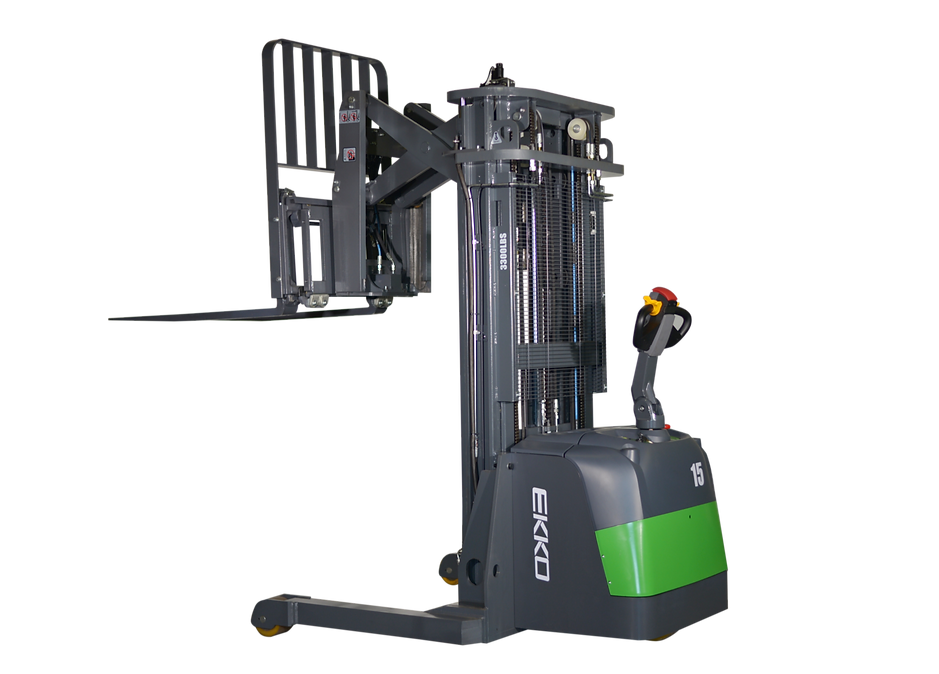 In Stock
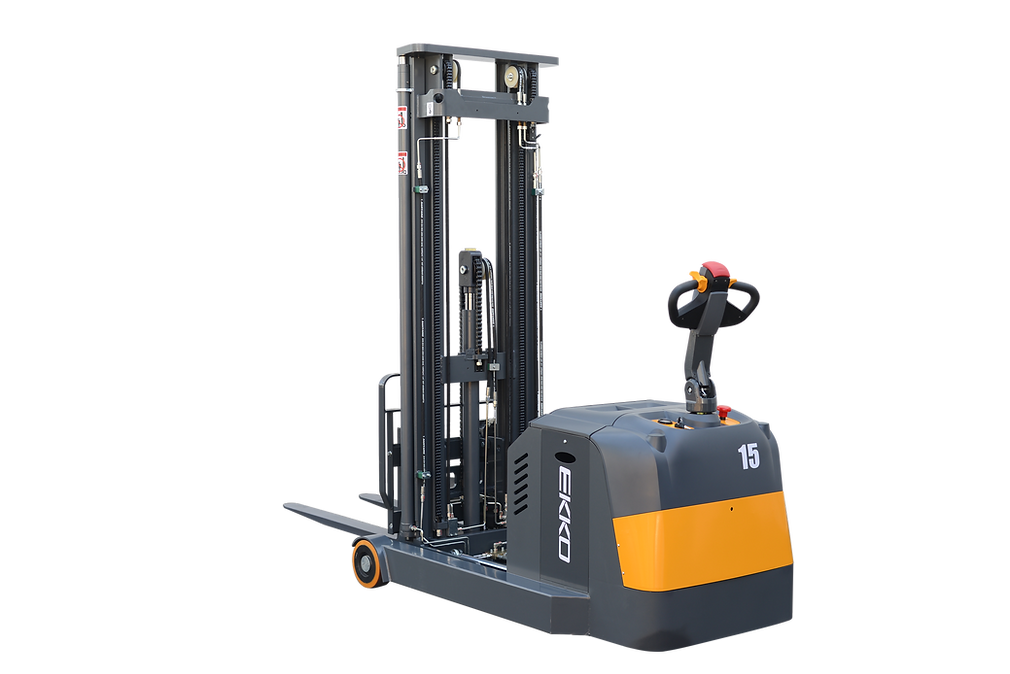 In Stock
Reach Trucks Buying Guide
Why a reach truck instead of a counterbalance forklift. A sit-down counterbalance forklift carries its load out ahead of the front wheels and balances it with weight packed into the back of the truck. That works on an open floor, but the counterweight forces a wide turning circle and caps practical lift height around 20 ft. A reach truck deletes the counterweight and replaces it with two baselegs that straddle the bottom of the racking, so the load wheels sit under the first pallet position rather than behind it. With the weight supported that far forward, the truck holds a load steady at height in an aisle a counterbalance machine could never turn in, and it lifts higher for the same footprint. If your bottleneck is aisle width or beam height rather than raw tonnage, this is the class to shop. The rest of the forklift truck range covers the open-floor and outdoor work reach trucks are not built for.
Walkie means the operator walks behind it. Every truck on this page is a walkie, meaning it is pedestrian-controlled: the operator walks behind or beside it and steers from a tiller arm that carries the travel, lift, and reach controls. There is no cab and no rider platform, which keeps the truck short, cheap to buy, and easy to step away from between moves. That suits stock rooms, dock work, and lower-throughput putaway where an operator is not in a seat all shift. When pallets move constantly and the aisles are long, a stand-up rider reach truck earns its higher price by carrying the operator at travel speed. And when you only need to move pallets across a flat floor without lifting to height, a pallet jack is the cheaper tool. Match the control style to how many hours the truck actually runs.
Lift height is written in the model number. On the lithium ER15 line the number after the dash is the maximum fork height in inches, and it is the spec that separates the models. The ER15-138 tops out at 138 inches, roughly 11.5 ft; the ER15-177 reaches about 14.75 ft, the ER15-189 about 15.75 ft, and the ER15-216 climbs to 216 inches, close to 18 ft. Price tracks height, from about $25,500 at the short end to roughly $30,000 at the tall end, because a taller mast needs more steel and tighter deflection control. Buy for your top occupied beam plus the lift the pallet itself needs to clear it, not for the tallest number on the page. An over-tall mast costs more, weighs more, and can foul a low door on the way to the rack.
Moving mast or fork reach: the two builds here. The two EH15 trucks are moving-mast reach trucks: the whole mast assembly slides forward on rails to place the load, then retracts to travel. The EH15T is the entry point on this shelf near $24,000, with the EH15TH a step up. Both run a conventional battery. The ER15 series instead carries the LI-ION designation, and lithium changes the duty cycle: it takes a fast opportunity charge on a break instead of a full swap, holds voltage as it drains, and needs no watering or ventilated charging room, which is why lithium is the pick for multi-shift operations. Whichever build you choose, the reach action is the point of the truck, so confirm the reach stroke covers the depth of your racking, single-deep or double-deep, before you commit. A truck that reaches one pallet deep cannot service a two-pallet-deep rack.
Reach truck or order picker. Reach trucks and order pickers are the narrow-aisle pair, and they solve opposite jobs. A reach truck moves a whole pallet in and out of the rack, so it is the tool for putaway and full-pallet retrieval at height. An order picker raises the operator to the shelf to pick individual cases by hand, which is what you want when orders ship in eaches rather than full pallets. Plenty of operations run both in the same aisle: the reach truck restocks the pallet positions, the picker works the pick faces below. If you are buying one, decide first whether your work is pallet-in-pallet-out or hand-picking, because the wrong machine turns every task into a fight.
Aisle, floor, and the rules. Before you buy, measure the right-angle stacking aisle the truck needs to turn and reach, and check it against your narrowest aisle with pallet overhang included. Reach trucks want smooth, level, sealed concrete: their small load wheels and cushion tires ride hard on broken floors and are not made for the yard, so this is indoor equipment. On the compliance side, a reach truck is a powered industrial truck under OSHA 29 CFR 1910.178, so 1910.178(l) requires every operator to be trained and evaluated on this specific truck type before running one, with a re-evaluation at least every three years. The design and maintenance side is governed by ANSI/ITSDF B56.1, the safety standard for low and high lift trucks that covers walk-behind and rider machines alike. Keep the training records current, because certification is one of the first things an inspection asks to see.
Frequently Asked Questions
A reach truck is a narrow-aisle electric truck that straddles the racking on two baselegs and pushes its forks forward to place or retrieve a pallet, then pulls the load back to travel. A standard counterbalance forklift instead carries the load out front and offsets it with a rear counterweight. Dropping the counterweight lets a reach truck work aisles far too tight for a counterbalance machine and lift higher in the same footprint, which is why warehouses use them for high-density storage.
On the EKKO ER15 line the model number is the lift height in inches: the ER15-138 reaches 138 inches (about 11.5 ft) and the ER15-216 climbs to 216 inches (close to 18 ft), with the 177 and 189 in between. Always size the mast to your top occupied beam plus clearance for the pallet, not to the tallest model available, since an over-tall mast costs more and can foul low doorways.
Walkie means pedestrian-controlled: the operator walks behind or beside the truck and drives it from a tiller arm rather than a seat or a stand-on platform. Walkie reach trucks are shorter, cheaper, and well suited to stock rooms and lower-throughput putaway. If pallets move constantly all shift, a stand-up rider reach truck that carries the operator is usually worth the extra cost.
No. Reach trucks are built for smooth, level, sealed concrete indoors. Their small load wheels, cushion tires, and low ground clearance ride poorly on gravel, broken asphalt, or wet yards, and the electric drive is not sealed for weather. For outdoor and rough-ground work, a pneumatic-tire counterbalance forklift is the right tool.
Yes. A reach truck is a powered industrial truck under OSHA 29 CFR 1910.178, so 1910.178(l) requires each operator to be trained and evaluated on this truck type before operating one, with a re-evaluation at least every three years. Certification is specific to the truck and the workplace, so a reach truck operator is not automatically cleared to run a sit-down counterbalance truck. Budget the training alongside the machine and keep the records.