Fall Protection Kits
A fall protection kit puts the three parts of a personal fall arrest system in one box: the full body harness on the worker, the shock absorbing lanyard or lifeline behind its dorsal D-ring, and the connector or anchor at the far end, all sized and rated to work together. Every kit here is KStrong Kapture, so the harness meets ANSI/ASSP Z359.11 and rates for users from 130 to 310 lb, matched to a lanyard, rope, or self retracting lifeline that shares the same connectors and clearance math. Prices run from around $62 for a 3-point harness with an internal-design lanyard up past $230 for a roofers system or an aerial kit built around a Micron SRL. Buying the kit instead of piecing it together removes the most common jobsite mistake, a harness and connector that were never rated as a pair. The sections below sort the kits by the job they were built for and the numbers to check before anyone clips in.
Compare Safety Harness Kits
| Model | Price | Capacity | |
|---|---|---|---|
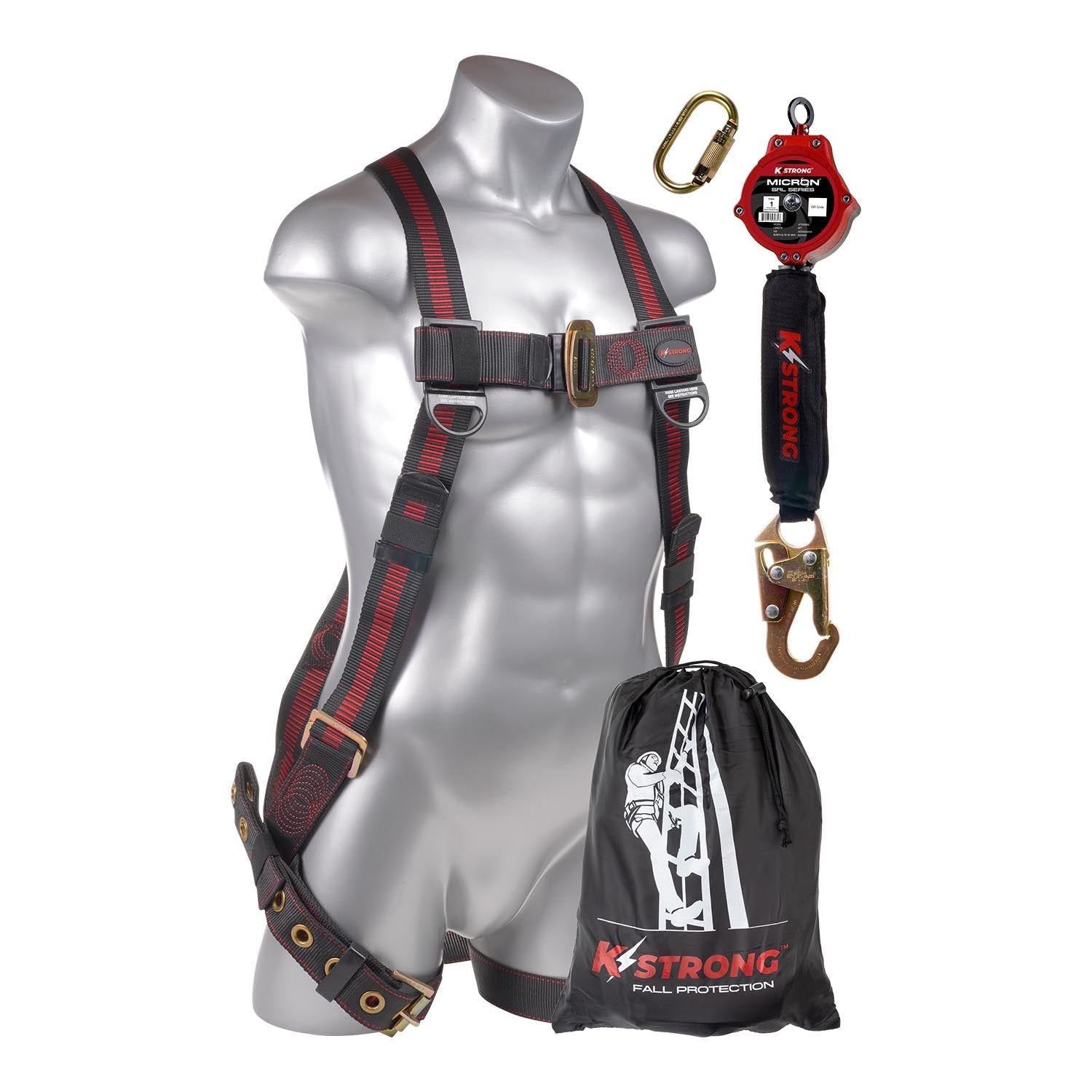
| KStrong® Aerial Kit with Elite™ 5-Point Full Body Harness, Dorsal D-ring, TB Legs and a Micron™ 6 ft. SRL with Snap Hook. Includes storage bag. (ANSI) | $235 | 310 lb | View → |
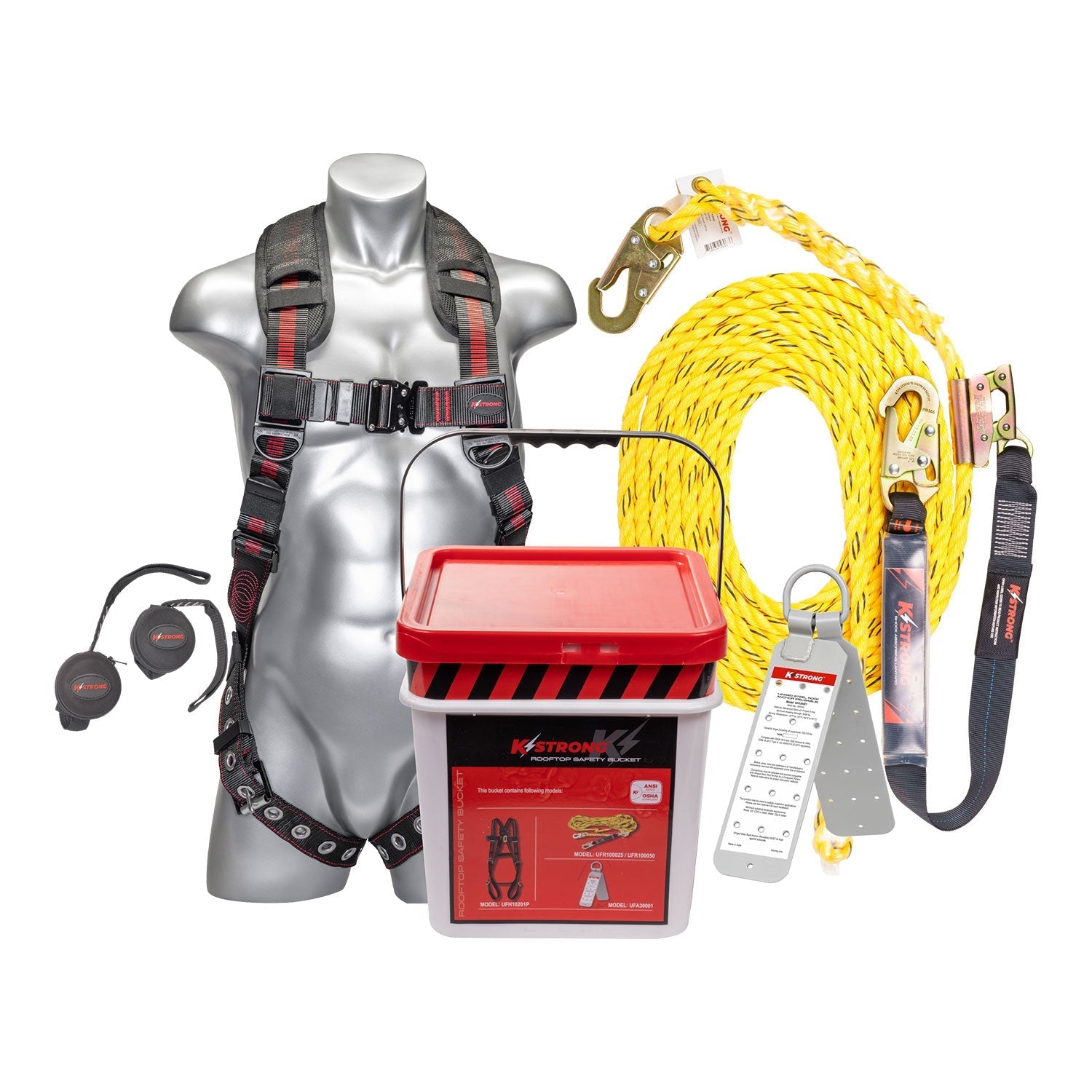
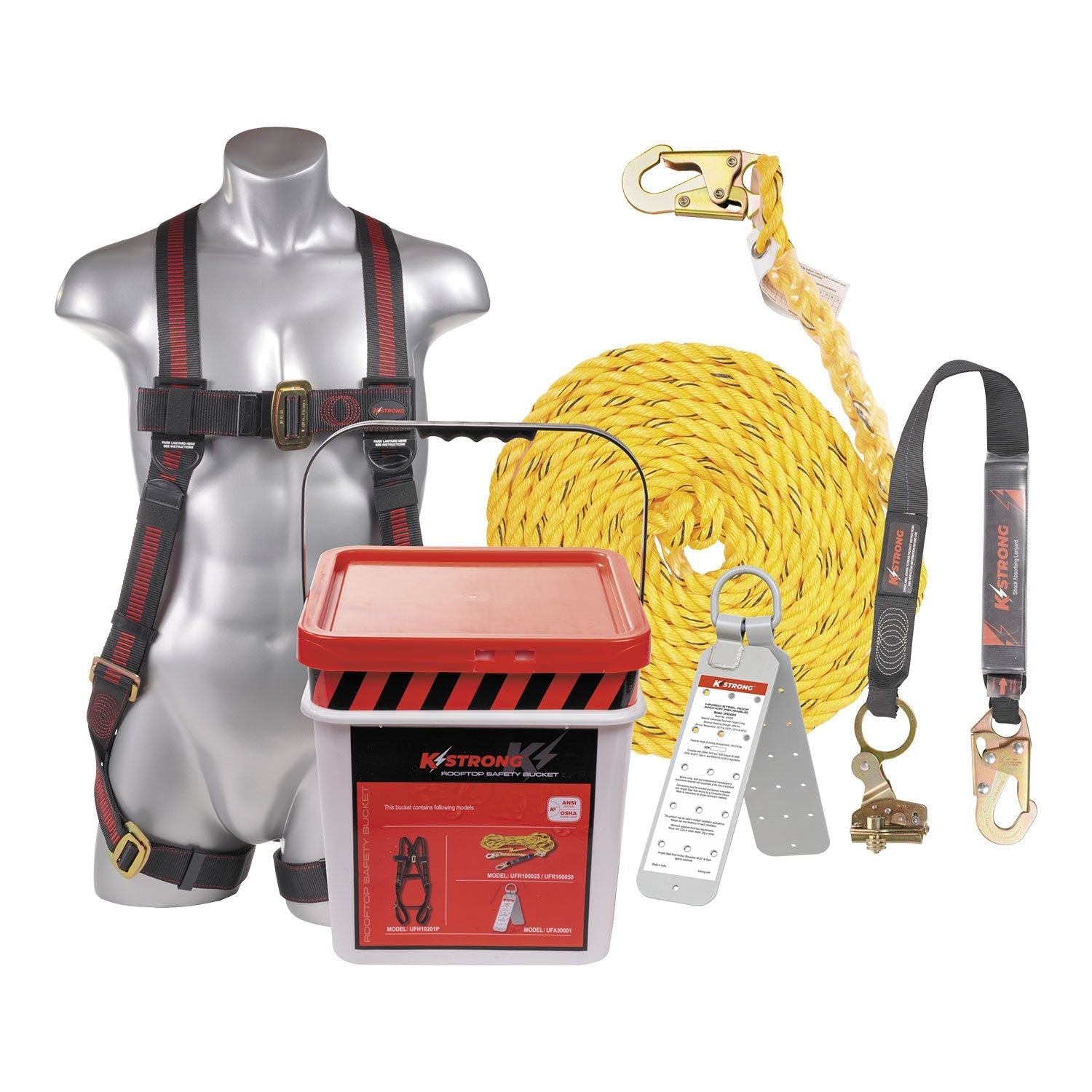
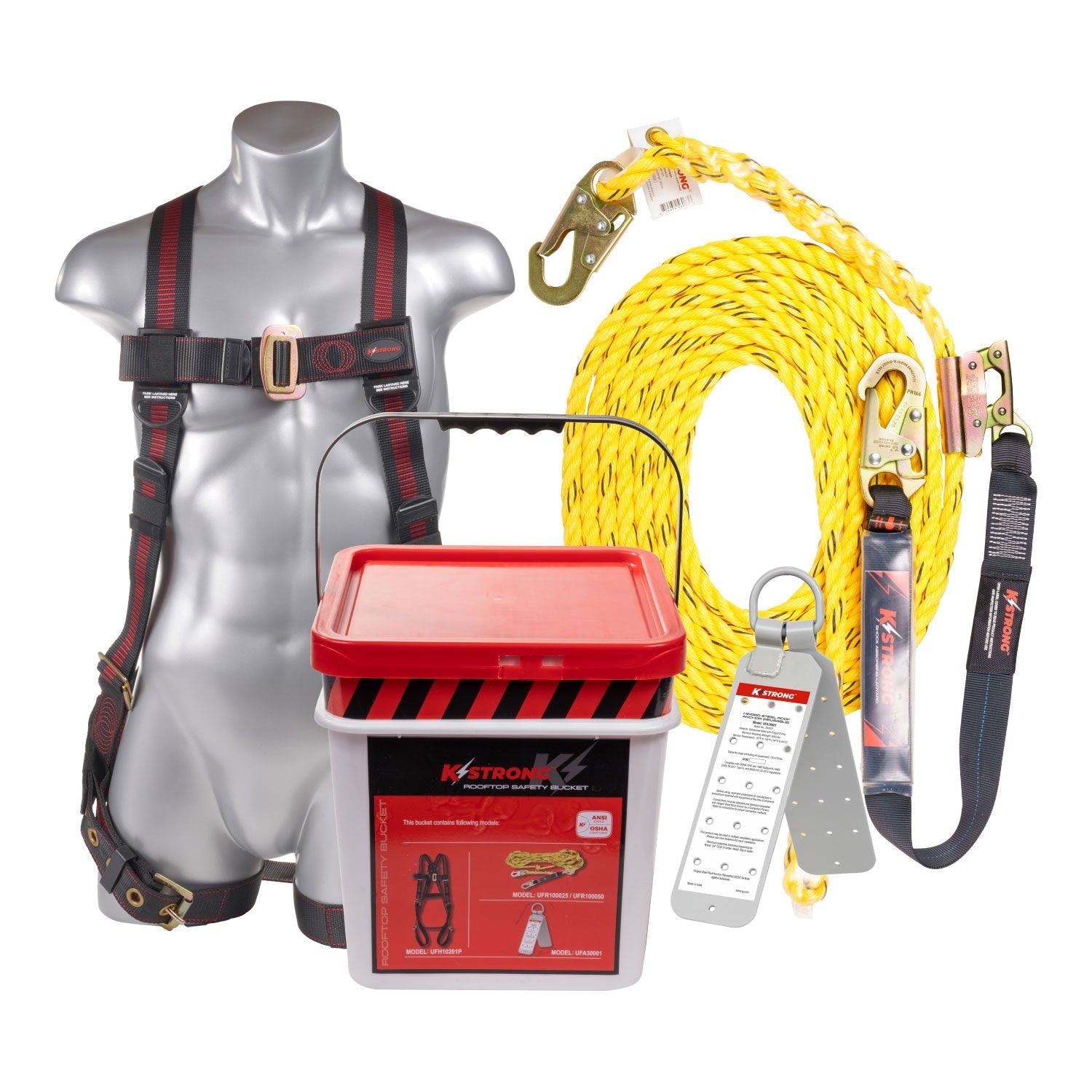
| KStrong® 25 ft. Deluxe Roofers Kit with Elite+ 5-Point Harness (M-L) | $227 | — | View → |
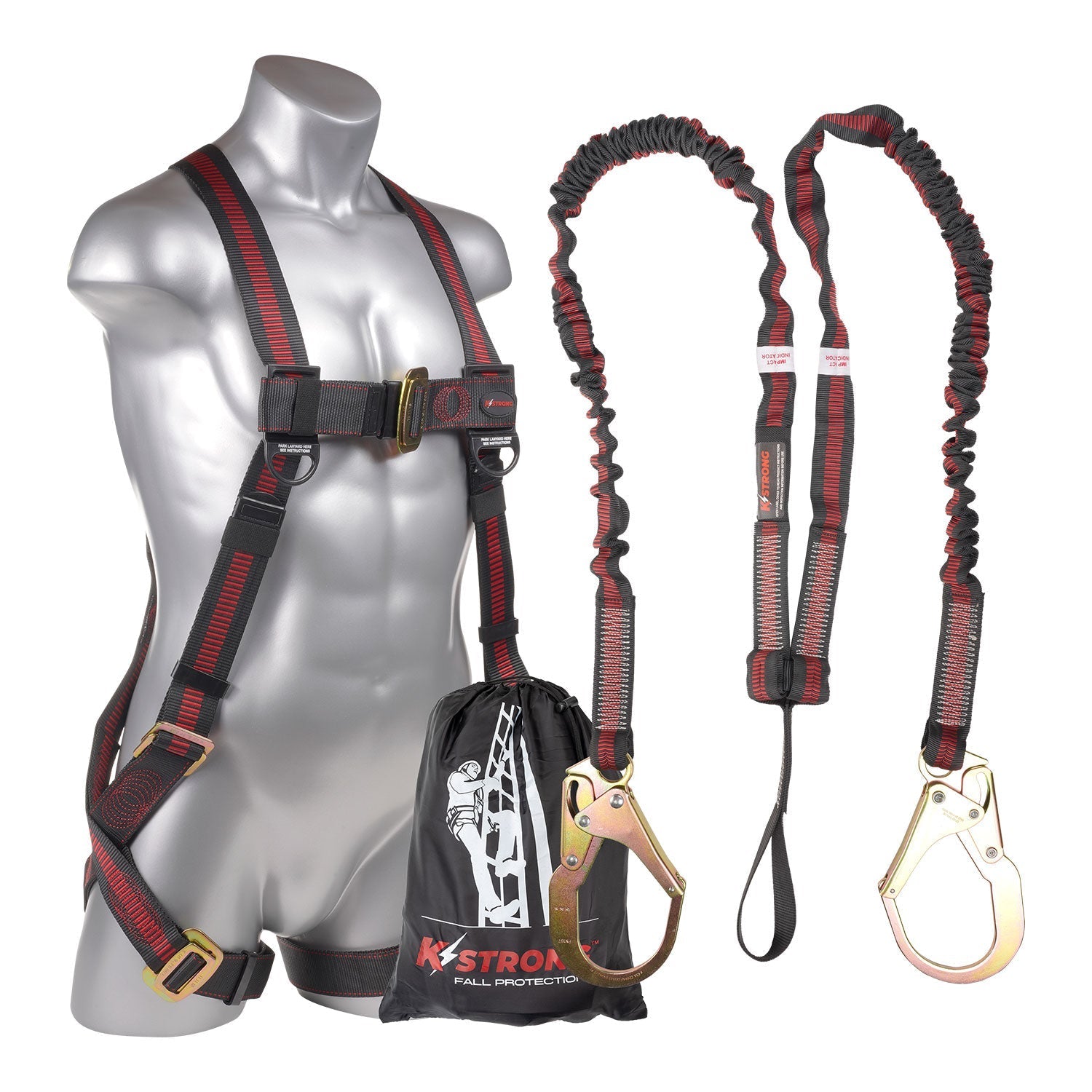
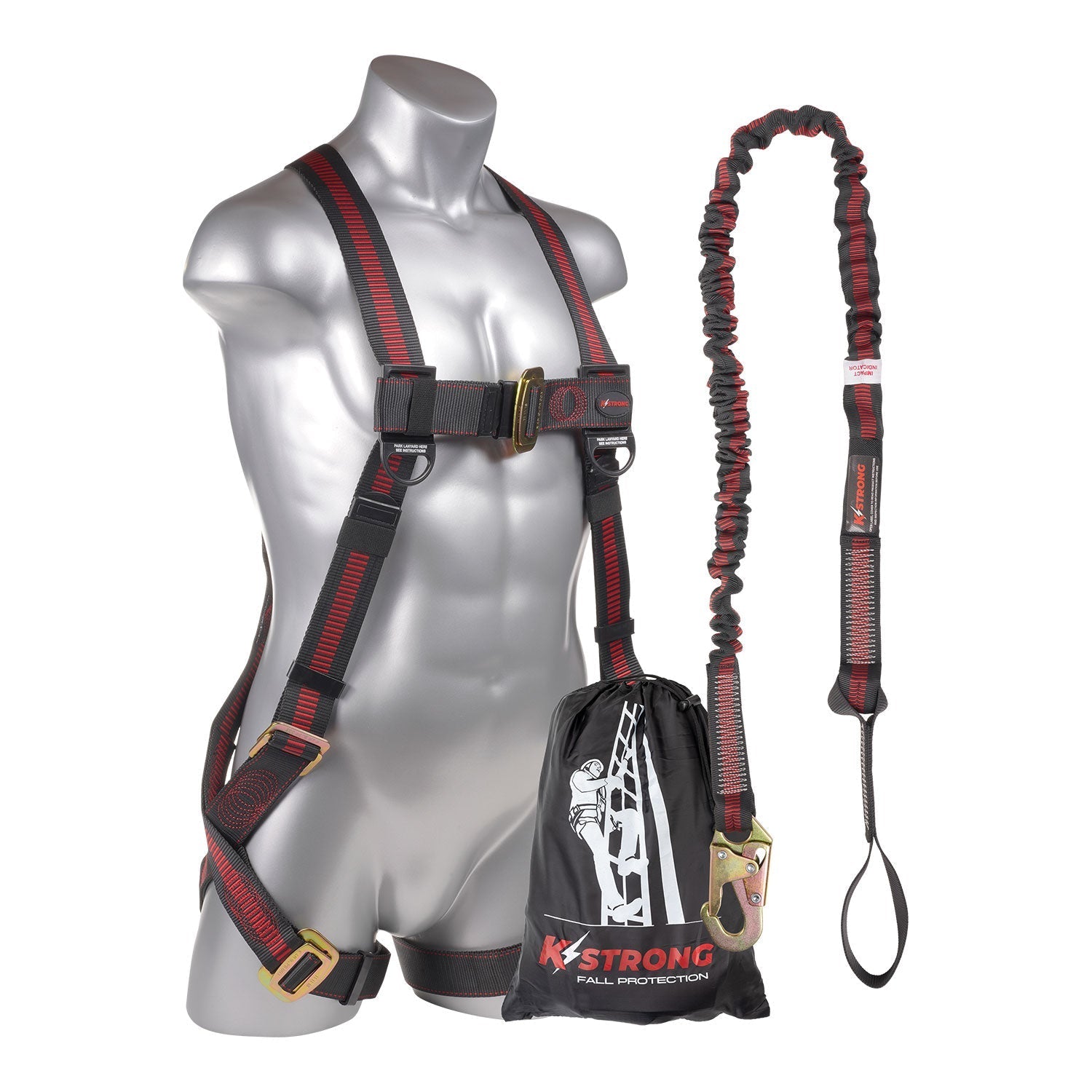
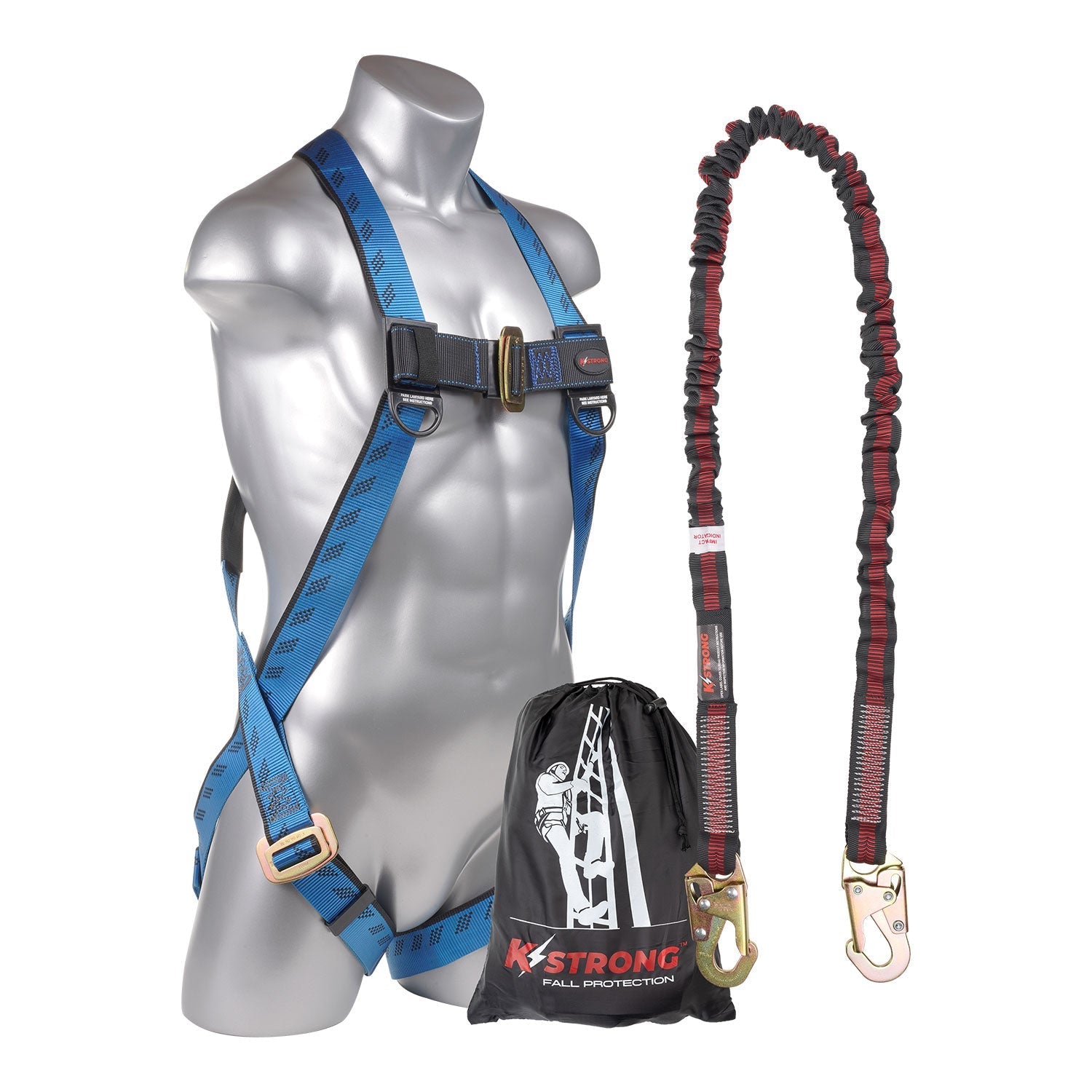
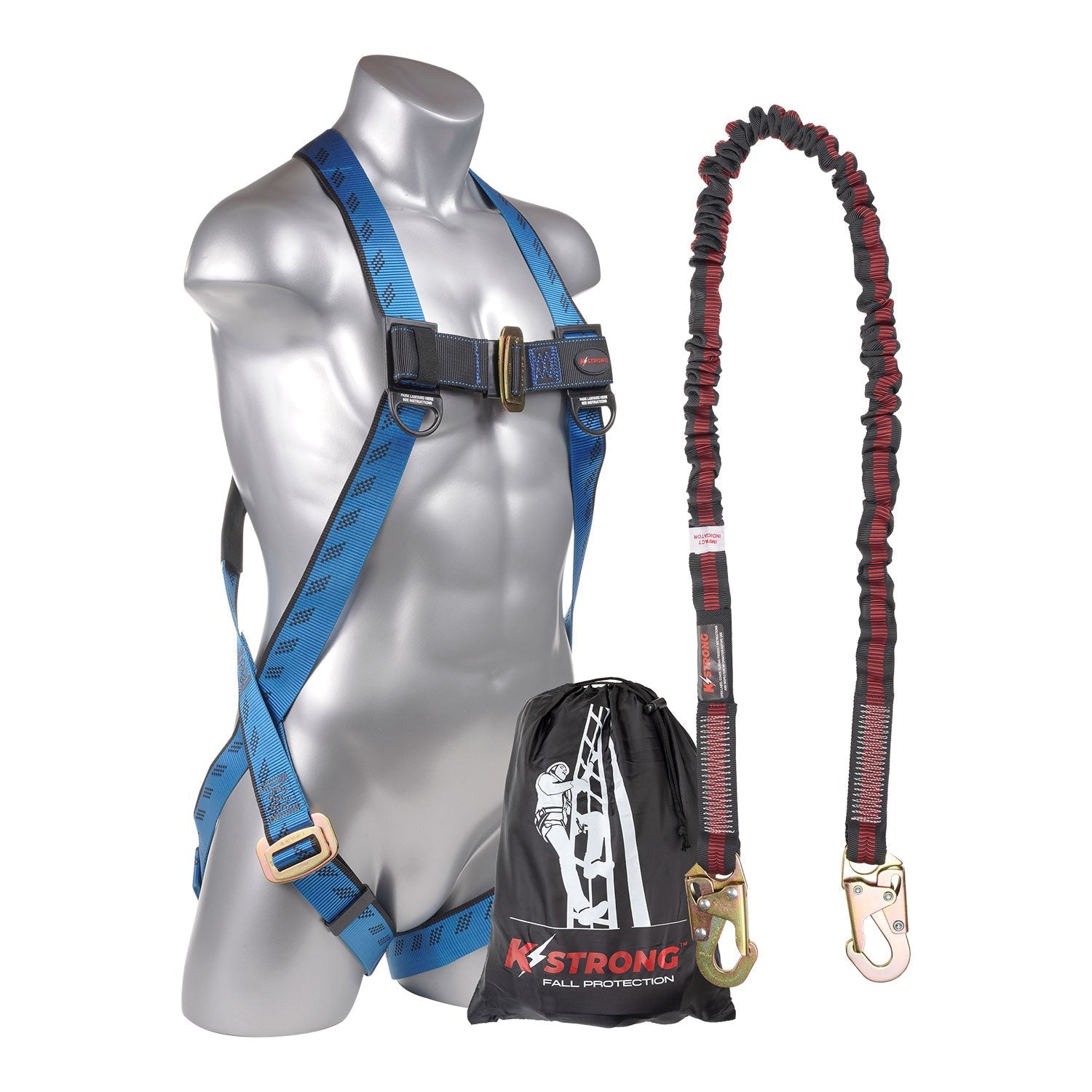
| KStrong® Kapture™ Essential 3-Point FBH, Dorsal D-ring, MB Legs and a 6 ft. Twin Leg Internal Design SAL with Loop and Rebar Hooks (ANSI) | $104 | 420 lb | View → |
 In Stock
 In Stock
 In Stock
 In Stock
 In Stock
 In Stock
 In Stock
 In Stock
 In Stock
 In Stock
 In Stock
 In Stock
 In Stock
 In Stock
 In Stock
Safety Harness Kits Buying Guide
A kit is a system, not a bundle. A personal fall arrest system is three parts working as one: the harness, the connecting lanyard or lifeline, and the anchorage at the far end. A fall protection kit ships those parts pre-matched so the connectors fit, the ratings agree, and the clearance math has already been done. The failure this prevents is the common one, a harness bought one week and a connector bought another that were never tested as a pair. If you already own a harness and need only the link and anchor, the standalone Individual Safety Harnesses and loose connecting gear live in their own collections; the kits on this page are for the worker who wants the whole system in one box, sized and ready. Every kit is KStrong Kapture, which means the harness meets ANSI/ASSP Z359.11, rates for users from 130 to 310 lb, and carries an OSHA capacity to 420 lb with tools.
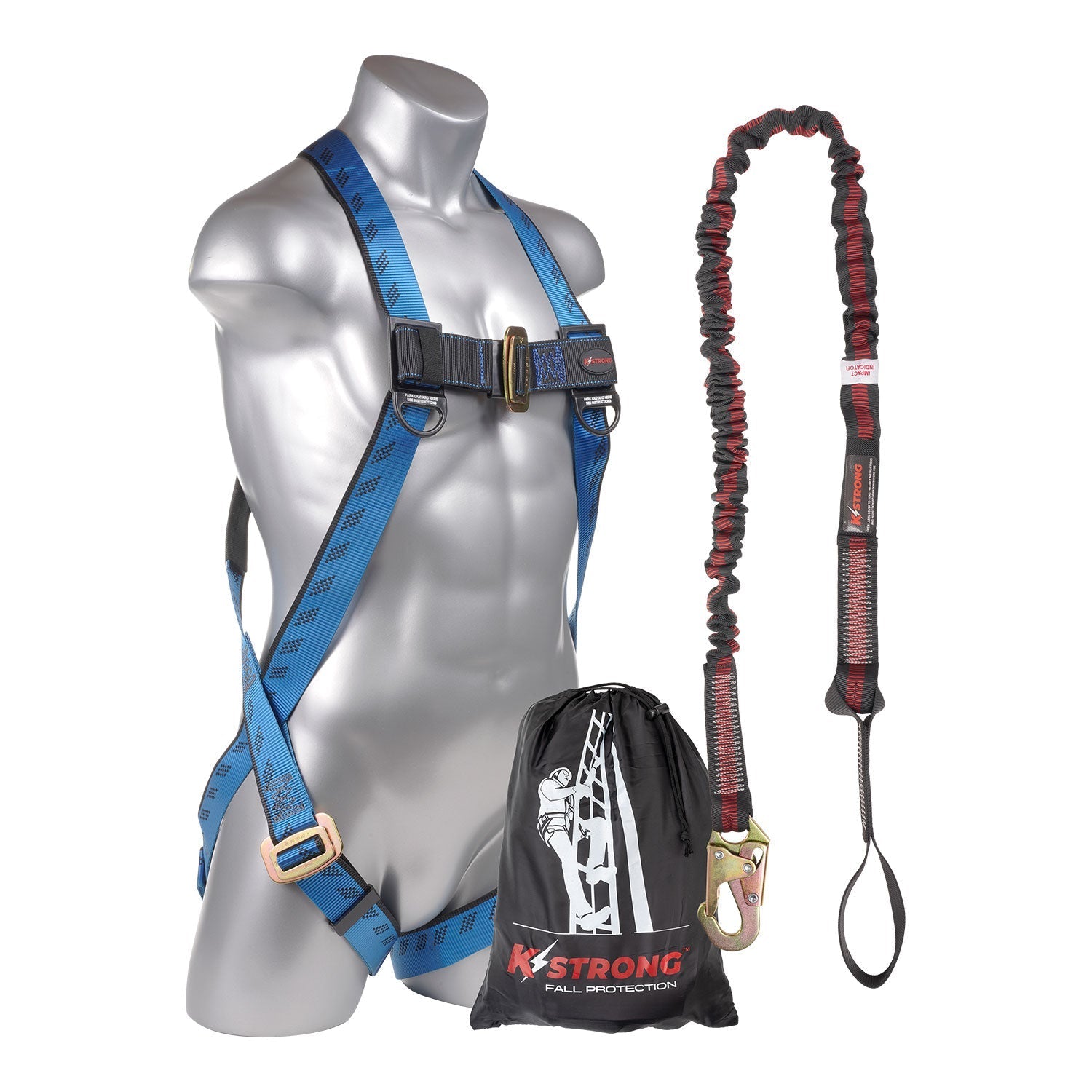
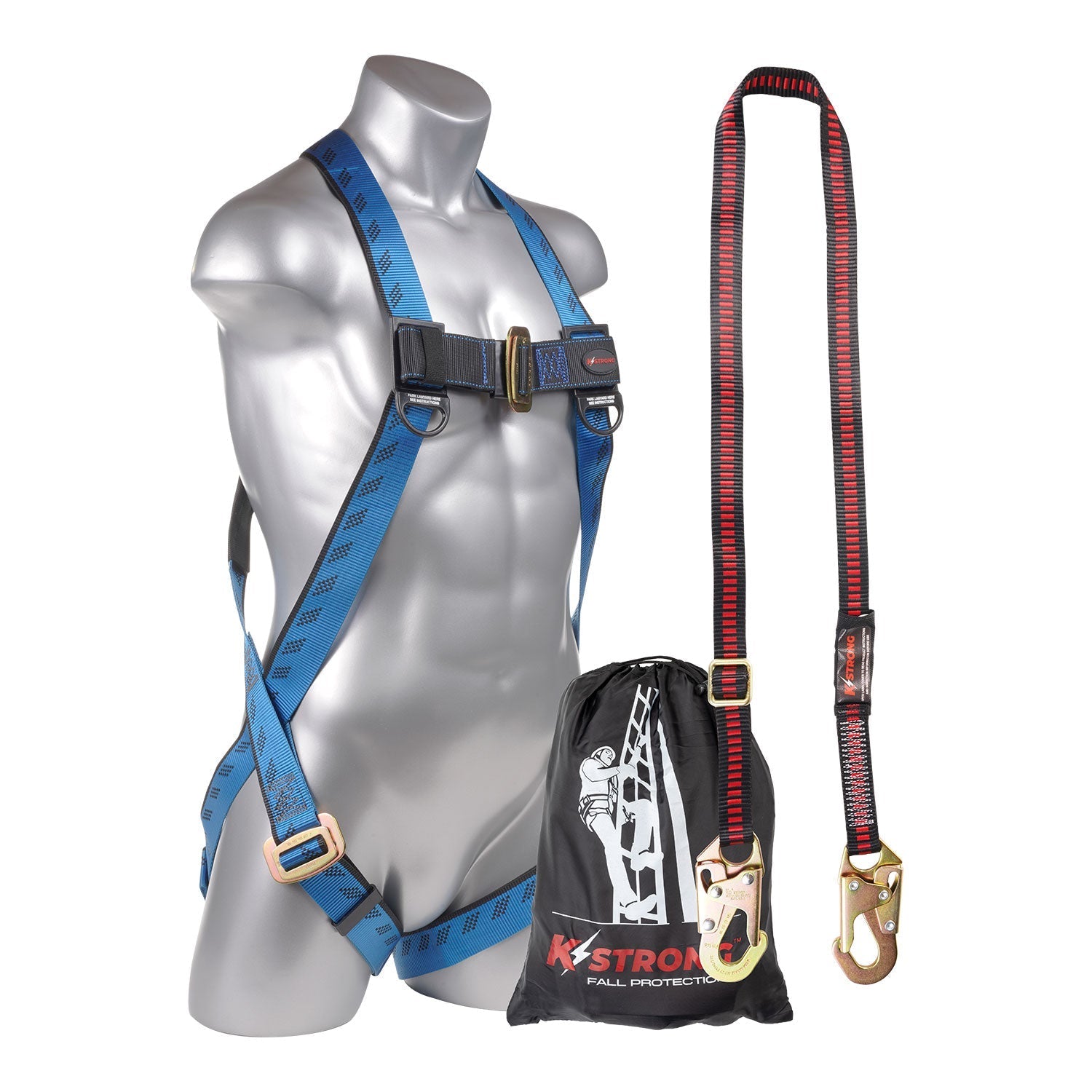
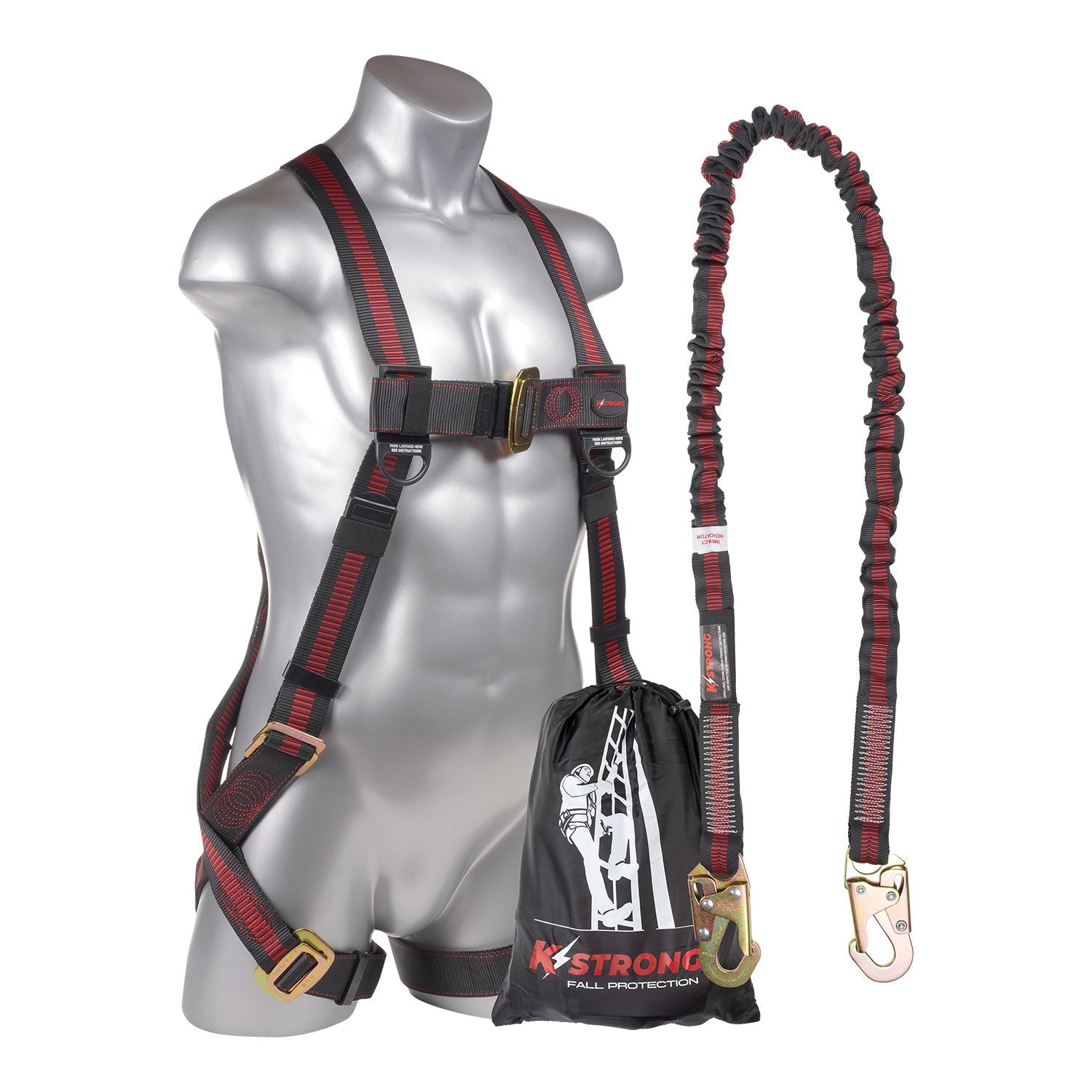
Start with the harness: Essential or Elite. The harness sets both the price and the all-day comfort of the kit. KStrong's Essential is a 3-point adjustment harness, lighter and quicker to don, and it anchors the value kits. The Elite is a 5-point adjustment harness, with the extra shoulder and torso adjustment that keeps the dorsal D-ring centered on a long shift and stops the webbing from riding. Both carry a single dorsal D-ring for fall arrest and the same 5,000 lb webbing rating, so the difference between them is fit, not strength. Leg closures come two ways: mating buckle (MB) legs pass through and click for fast on and off, while tongue buckle (TB) legs work like a belt through grommets and hold one set size. For the full range of standalone harnesses and their D-ring layouts, work up from the Safety Harnesses hub.
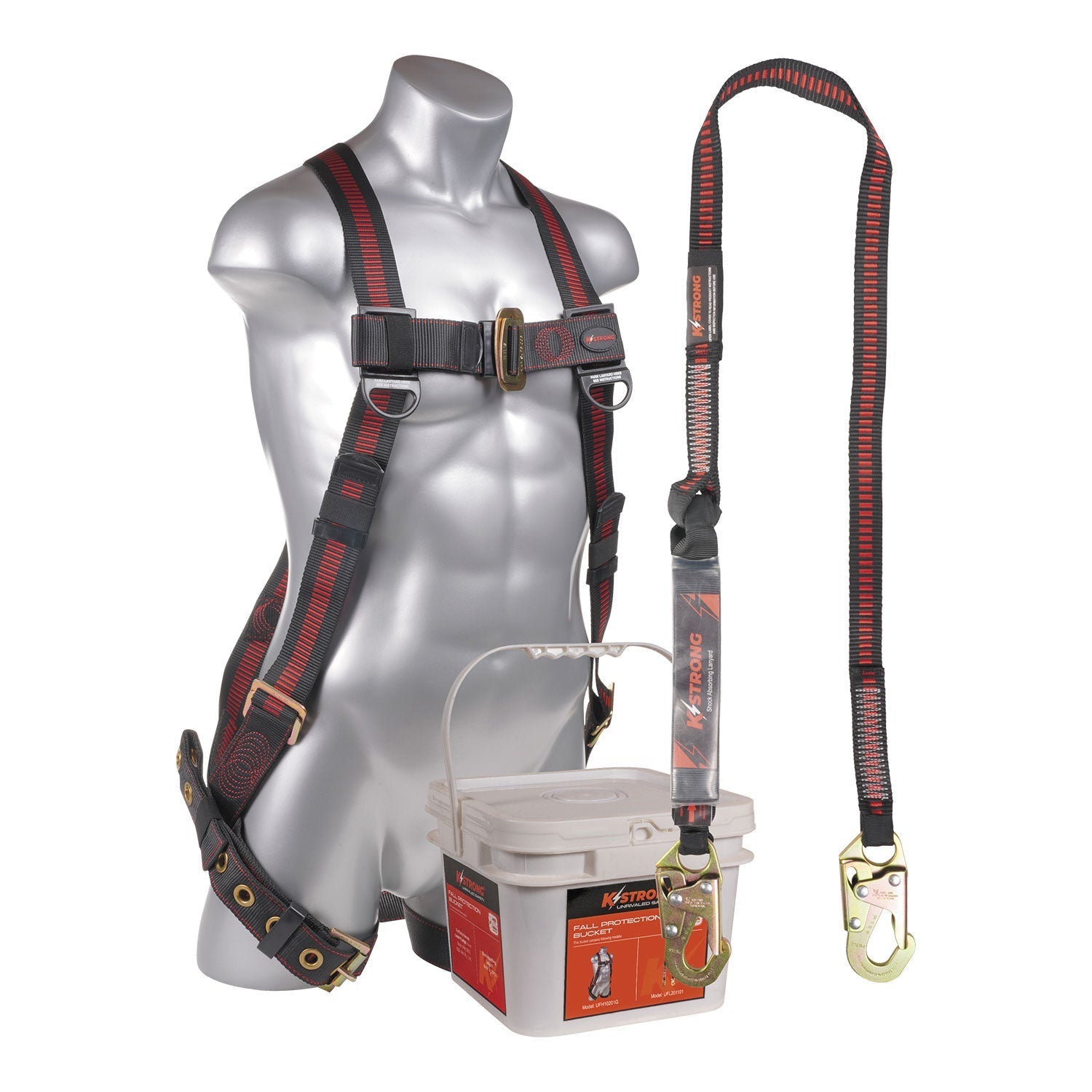
Construction kits: harness plus shock absorbing lanyard. The most common kit pairs a harness with a 6 ft internal-design shock absorbing lanyard, the everyday tool for tie-off on structural steel, decking, and concrete forms. Single-leg versions cover a fixed anchor overhead. Twin-leg versions give you 100 percent tie-off, so one leg stays clipped while you move the other between anchor points and you are never disconnected in transit. Connector choice matters here: snap hooks seat on D-rings and standard anchors, while rebar hooks open wider to capture scaffold tube, rebar cages, and large structural members. KStrong's clear pack lanyards leave the energy absorber visible so a pre-use inspection can confirm it has not already deployed. One number to respect: a 6 ft shock absorbing lanyard needs roughly 18.5 ft of clearance below the anchor to arrest a fall safely, so if that height is not there, the job wants an SRL instead. Loose connecting gear in every configuration sits in Fall Arrest & Restraint Gear and the Lanyards collection.
Aerial lifts and bucket trucks. OSHA 29 CFR 1926.453 requires a body harness with a lanyard attached to the boom or basket any time a worker is in an aerial lift, with no height threshold, and body belts are no longer accepted for this. Two kit styles serve the job. The aerial kit with an adjustable 4.5 to 6 ft work positioning lanyard keeps a worker snug to the basket rail and is the economical choice for routine platform work. The aerial kit built around a Micron 6 ft self retracting lifeline is the safer pick where there is real fall distance to manage: an SRL begins braking within a foot and needs far less clearance than a 6 ft lanyard, often 9 to 13 ft against the lanyard's 18.5. Retractable lifelines on their own, in longer lengths, are in Lifelines.
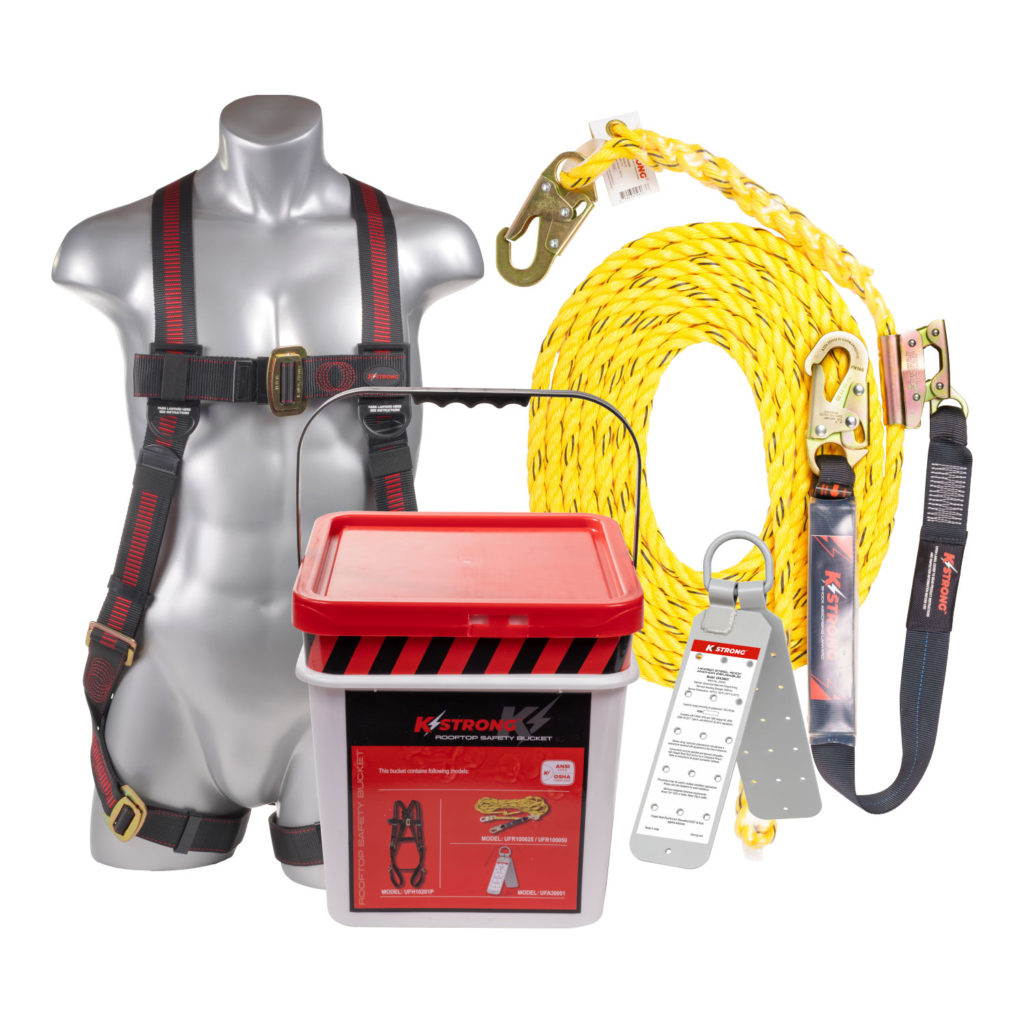
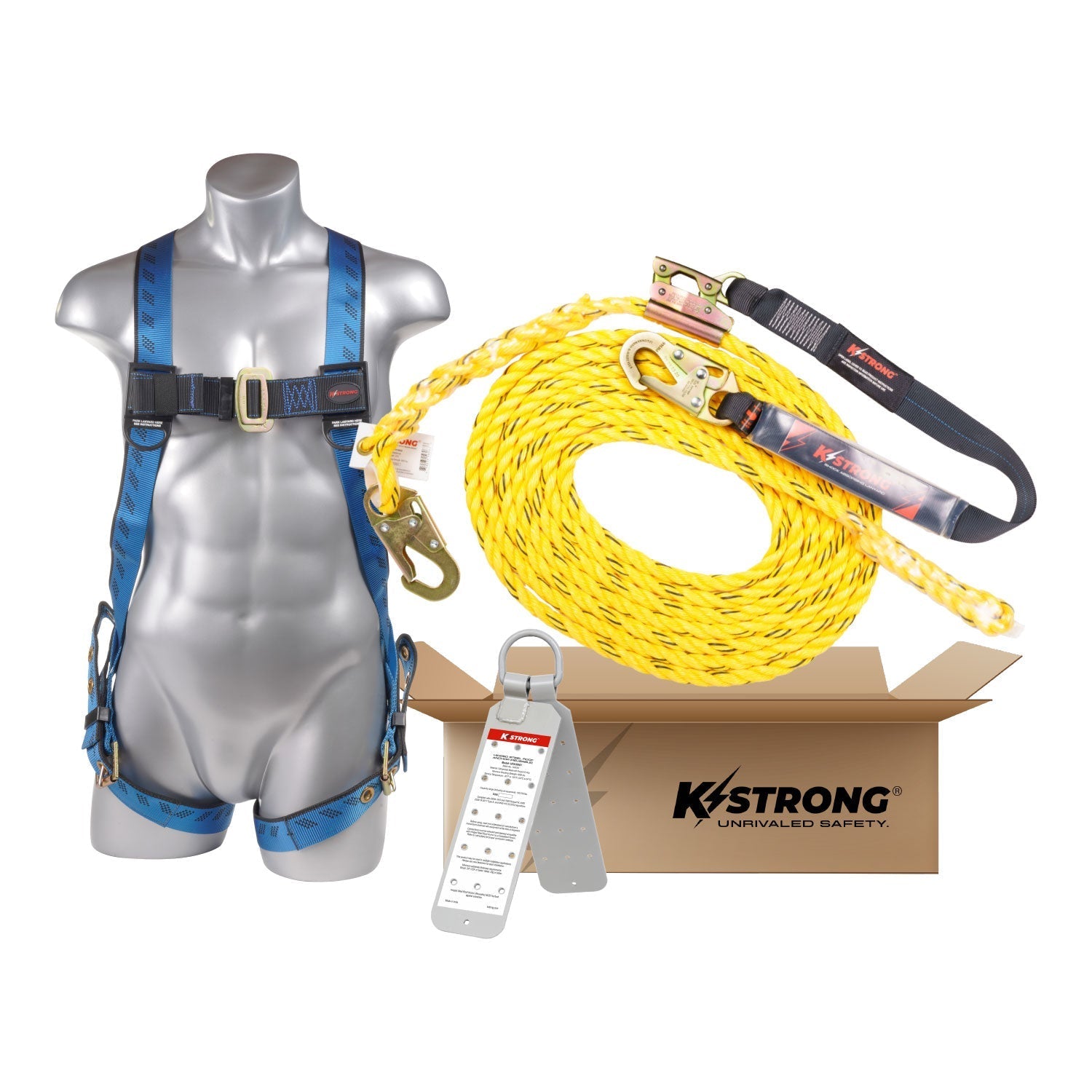
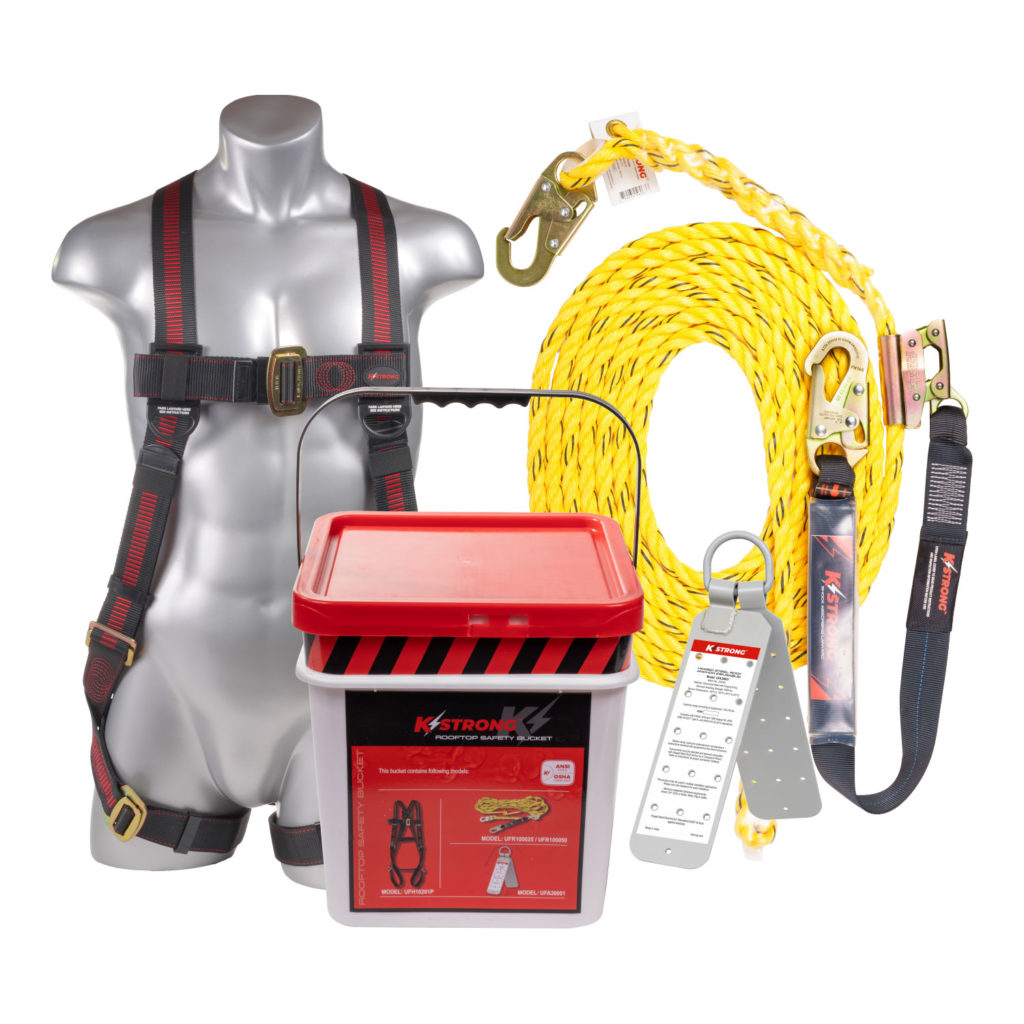
Roofing kits. A roofers kit is a different animal from a lanyard kit because a sloped roof rarely offers an anchor beside the worker. The system runs vertical: a harness, a reusable roof anchor fastened to the deck near the ridge, a 25 or 50 ft vertical lifeline rope dropped down the slope, and a rope grab that slides with the worker and locks under load. The 25 ft kits suit single-story and shorter runs, while the 50 ft kits reach steeper, taller roofs; deluxe versions step up to an Elite+ harness and add a storage bag. Because these bundles overlap with the dedicated Roofers Kits collection, check both if you are outfitting a crew and want to compare rope lengths and grab styles side by side.
Anchors, connectors, and the clearance check. Whatever the kit, the anchorage has to hold 5,000 lb per worker or be engineered by a qualified person to a 2:1 safety factor, and the connector has to match what it clips to. Before the first use of any kit, run the clearance number: lanyard length, plus the roughly 3.5 ft the energy absorber pays out, plus the worker's height below the D-ring, plus a safety margin, all measured from the anchor to the nearest surface below. Beam clamps, concrete anchors, and D-ring adapters that turn a fixed point into a rated tie-off are in Connectors & Accessories. Match the kit to the job first, then confirm the anchor rating and the clearance, and the system does what it was built to do.
Frequently Asked Questions
A matched personal fall arrest system: a full body harness, plus a connecting shock absorbing lanyard, work positioning lanyard, or self retracting lifeline, and in roofing kits a vertical lifeline rope, a rope grab, and a roof anchor. Every part is rated to work with the others, which is the whole point of buying the kit rather than assembling parts separately and hoping they match.
Both meet ANSI Z359.11 and share the same 5,000 lb webbing and dorsal D-ring, so the choice is fit, not strength. The Essential 3-point is lighter and cheaper for occasional or short-duration work. The Elite 5-point adds shoulder and torso adjustment that keeps the D-ring centered and stays comfortable across a full shift, which matters most for daily wear.
OSHA 1926.453 requires a harness with a lanyard tied to the boom or basket in any aerial lift, at any height. The aerial kit with a work positioning lanyard is the economical option for basket work. The aerial kit with a Micron SRL is the safer choice where there is fall clearance to manage, because a self retracting lifeline arrests in a much shorter distance than a 6 ft lanyard.
A 6 ft shock absorbing lanyard needs roughly 18.5 ft of clear space below the anchor once you add the lanyard length, about 3.5 ft of energy-absorber deployment, the worker's height, and a safety margin. If you do not have that height, use a kit built around a self retracting lifeline, which often needs only about 9 to 13 ft.
Snap hooks are sized to seat on D-rings and standard anchor points. Rebar hooks open wider to capture scaffold tube, rebar, and large structural members. Match the hook to what you will actually clip to; many lift and equipment makers specifically require snap hooks or carabiners rather than rebar hooks on their anchor points.
Yes. Standalone harnesses live in the Individual Safety Harnesses collection, and loose lanyards and lifelines are in Fall Arrest & Restraint Gear. The kits on this page exist to remove the guesswork of matching the harness, connector, anchor, and clearance yourself.