Fall Protection Harness
A fall protection harness is the body support a worker straps on to catch a fall, and this collection is the harness on its own, the body-only piece with no lanyard, lifeline, or anchor in the box. Every model here is a KStrong Kapture full body harness built to ANSI/ASSP Z359.11 and rated for users from 130 to 310 lb combined weight, and the line climbs from the value Essential 3-point in the mid $50s up to arc flash and oil-and-gas derrick builds past $500. Because compliance is a given on every model, the real decision is fit, D-ring layout, buckle style, and whether the webbing has to survive heat, an arc flash, or drilling fluid. If you already run your own lanyards and anchors, this is where you buy the piece that goes against the body. If you would rather the whole system arrive matched, the [safety harness kits](/collections/safety-harness-kits) pair each harness with its connecting device and anchor. The guide below walks the harness-specific choices in the order they change the price.
Compare Individual Safety Harnesses
| Model | Price | Series | Adjustment | Standard | D-ring Configuration | |
|---|---|---|---|---|---|---|
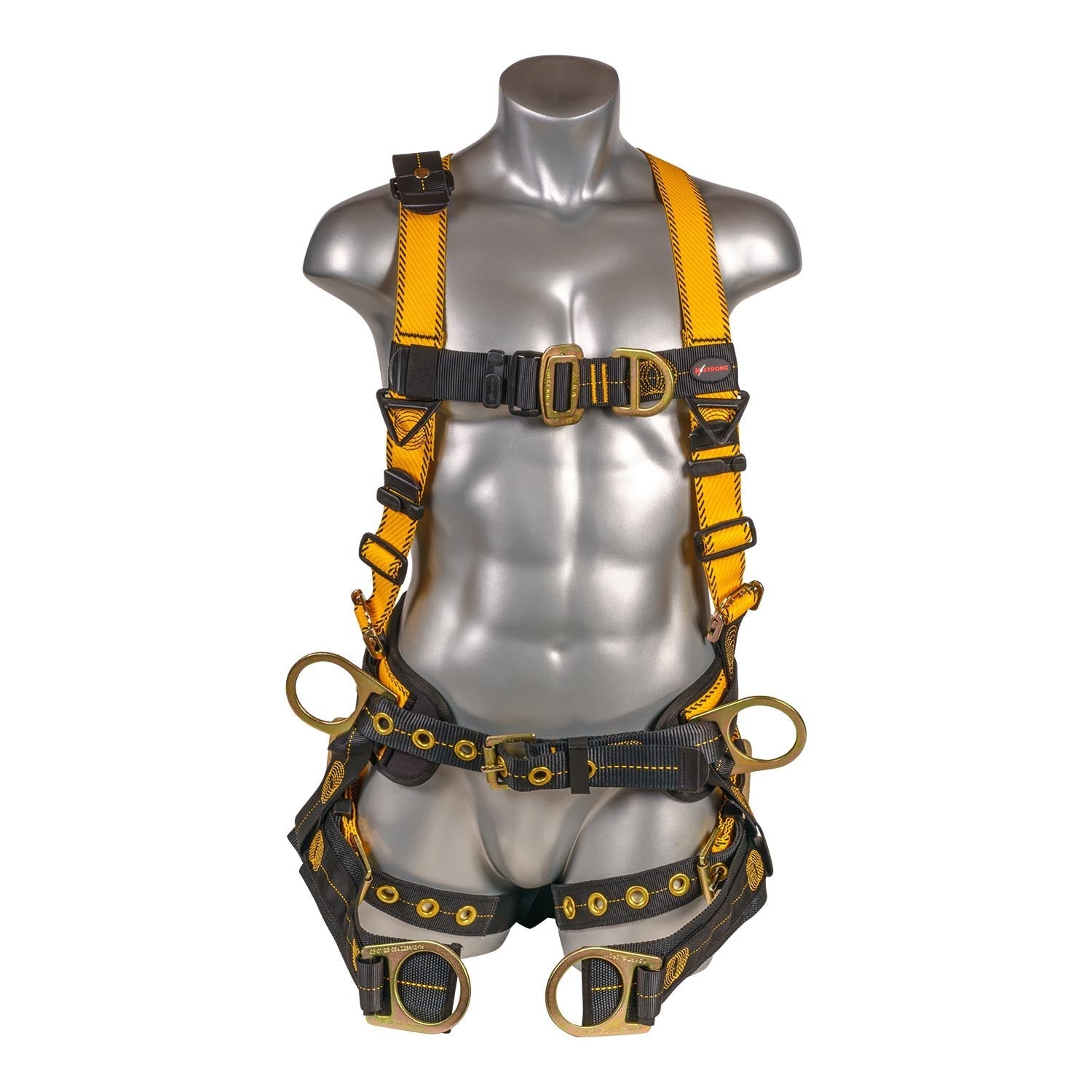
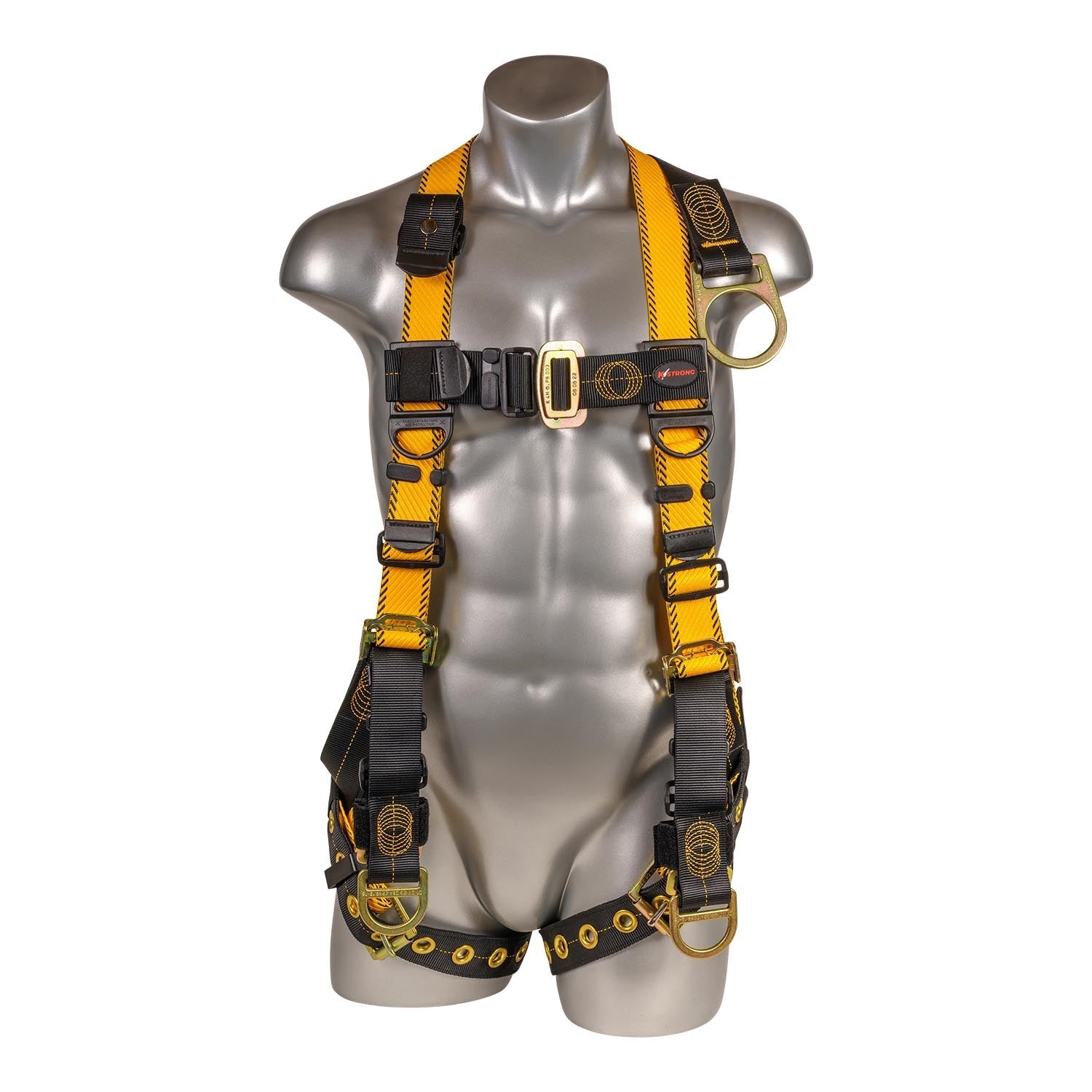
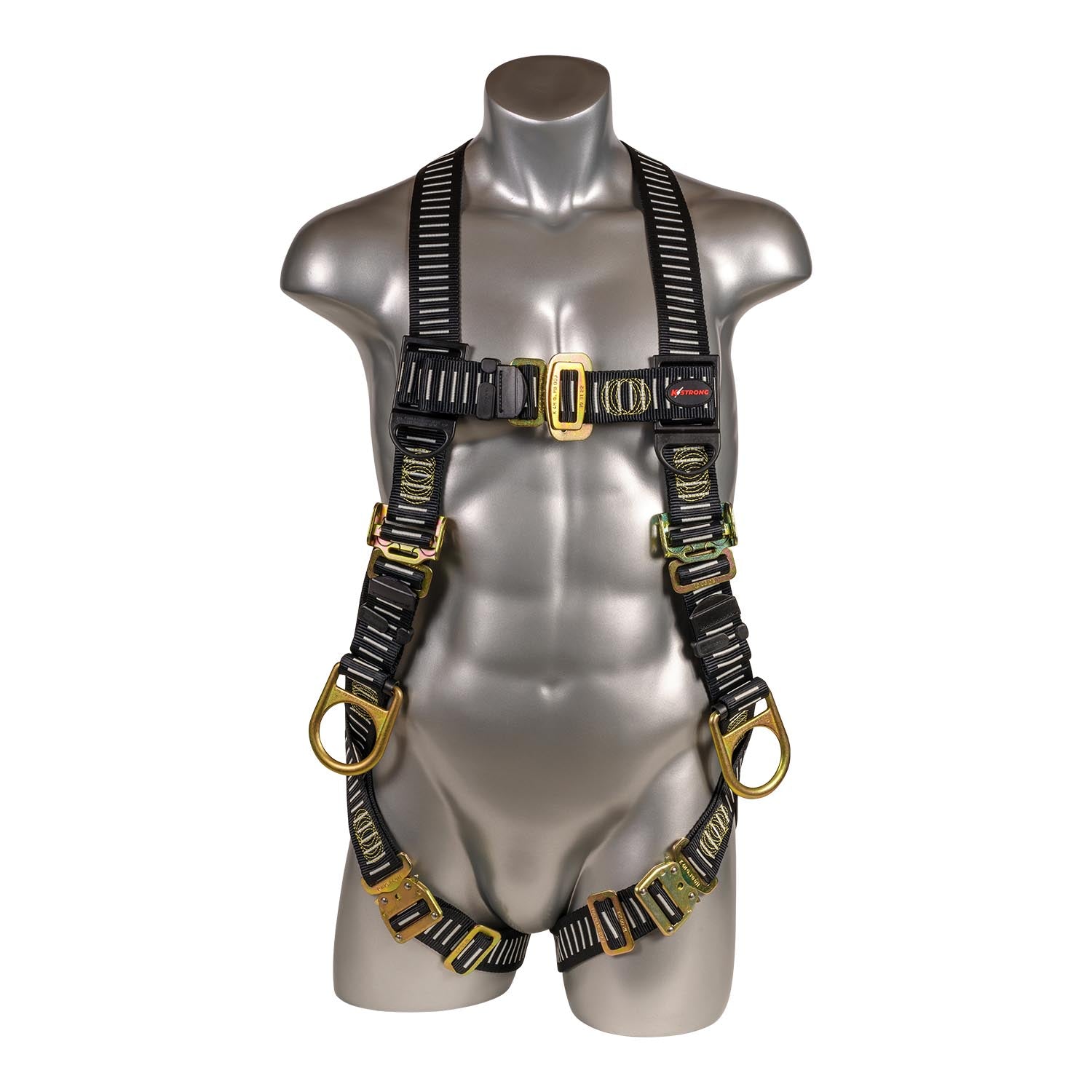
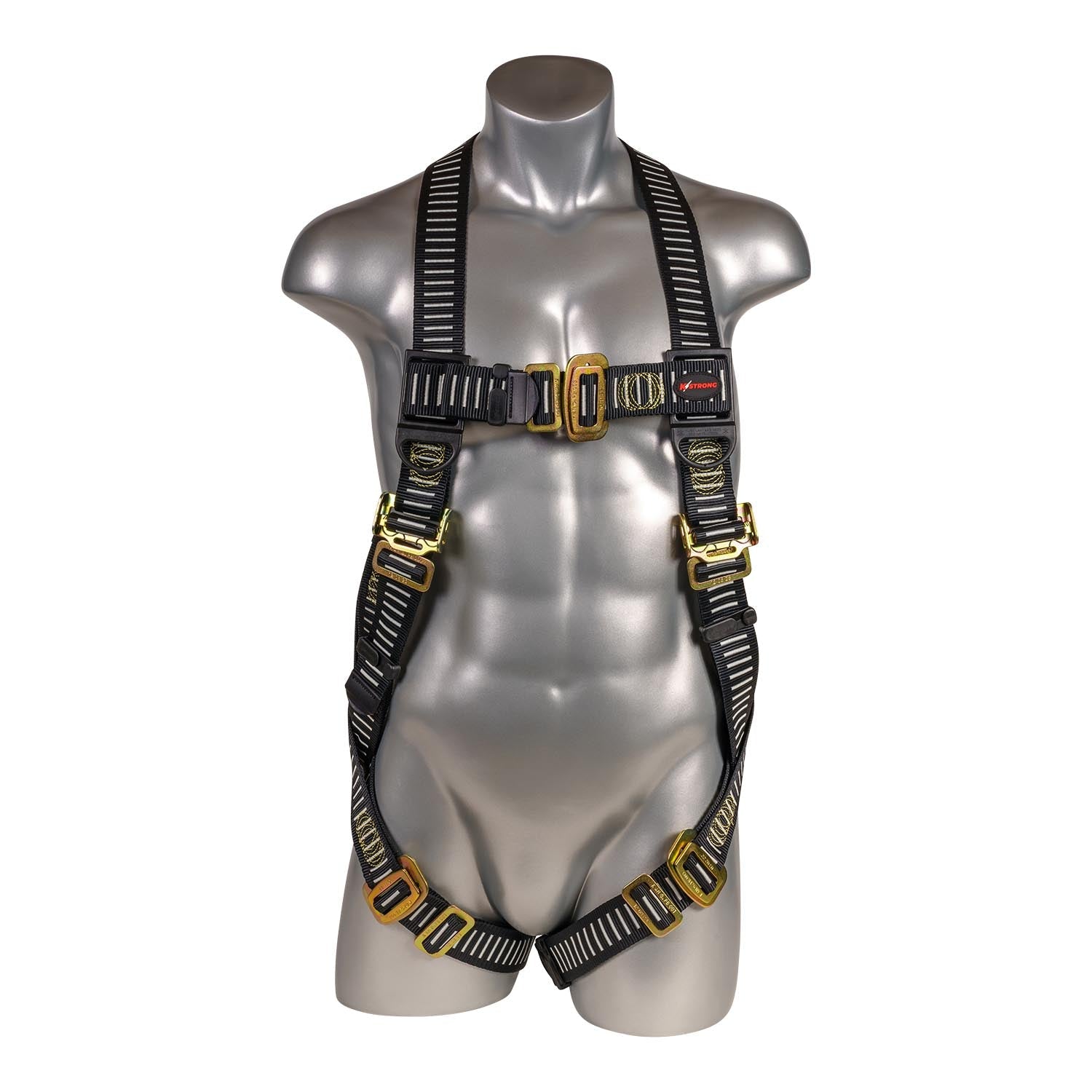
| KStrong® Kapture™ Element Oil and Gas Derrick Deluxe Harness with 7 D-Rings and Removable Bosun Chair | $428 | Kapture Element Oil & Gas Derrick Harness | 5-point | OSHA & ANSI Z359.11-2021 | — | View → |
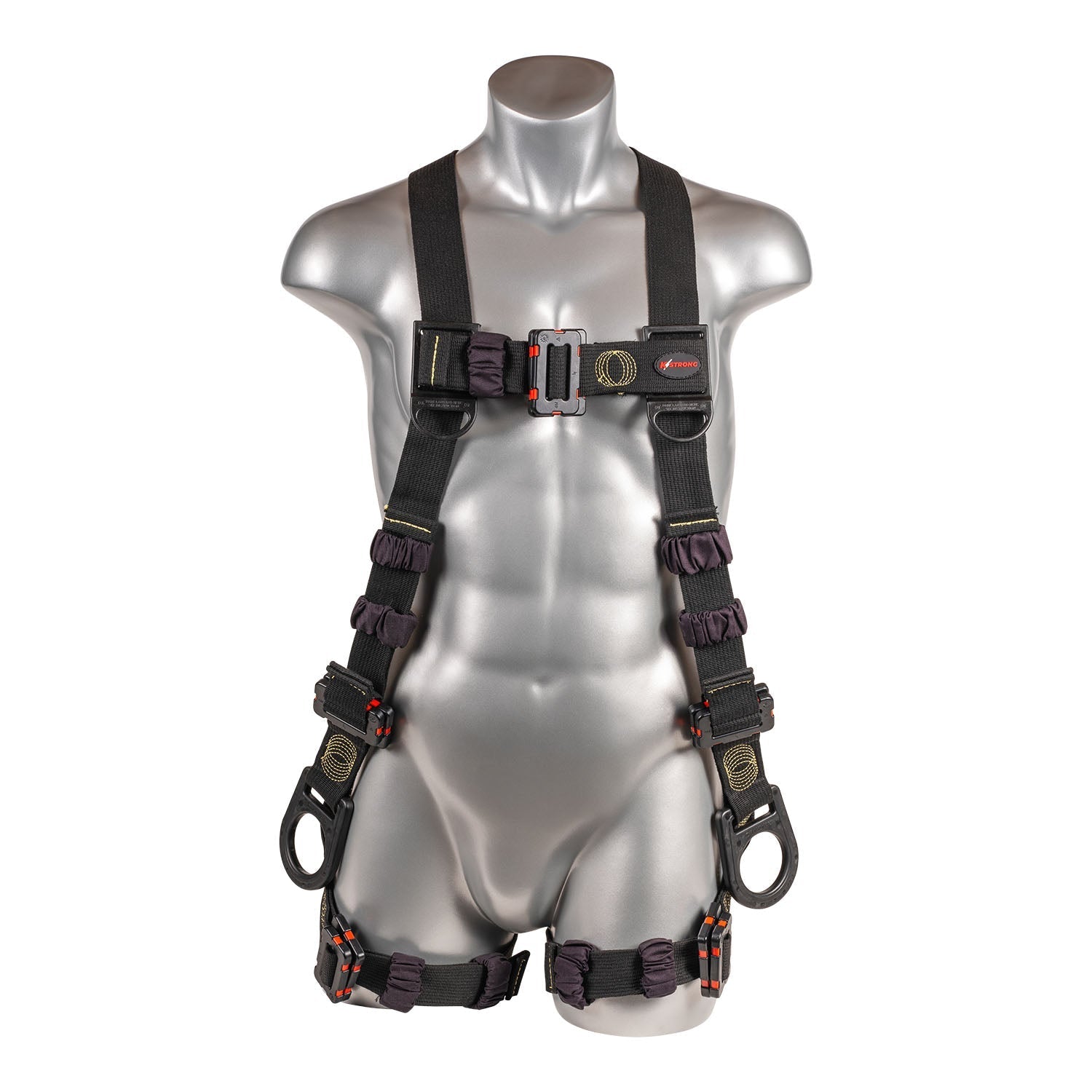
| KStrong® Kapture™ Element 5-Point Full Body Harness with Revolta™ Oil and Water Repellent Webbing, 1 Enhanced Dorsal D-ring Plus™, Back/Shoulder Pad, Trauma Relief Straps, QC Chest and Legs (ANSI) | $181 | — | — | — | — | View → |
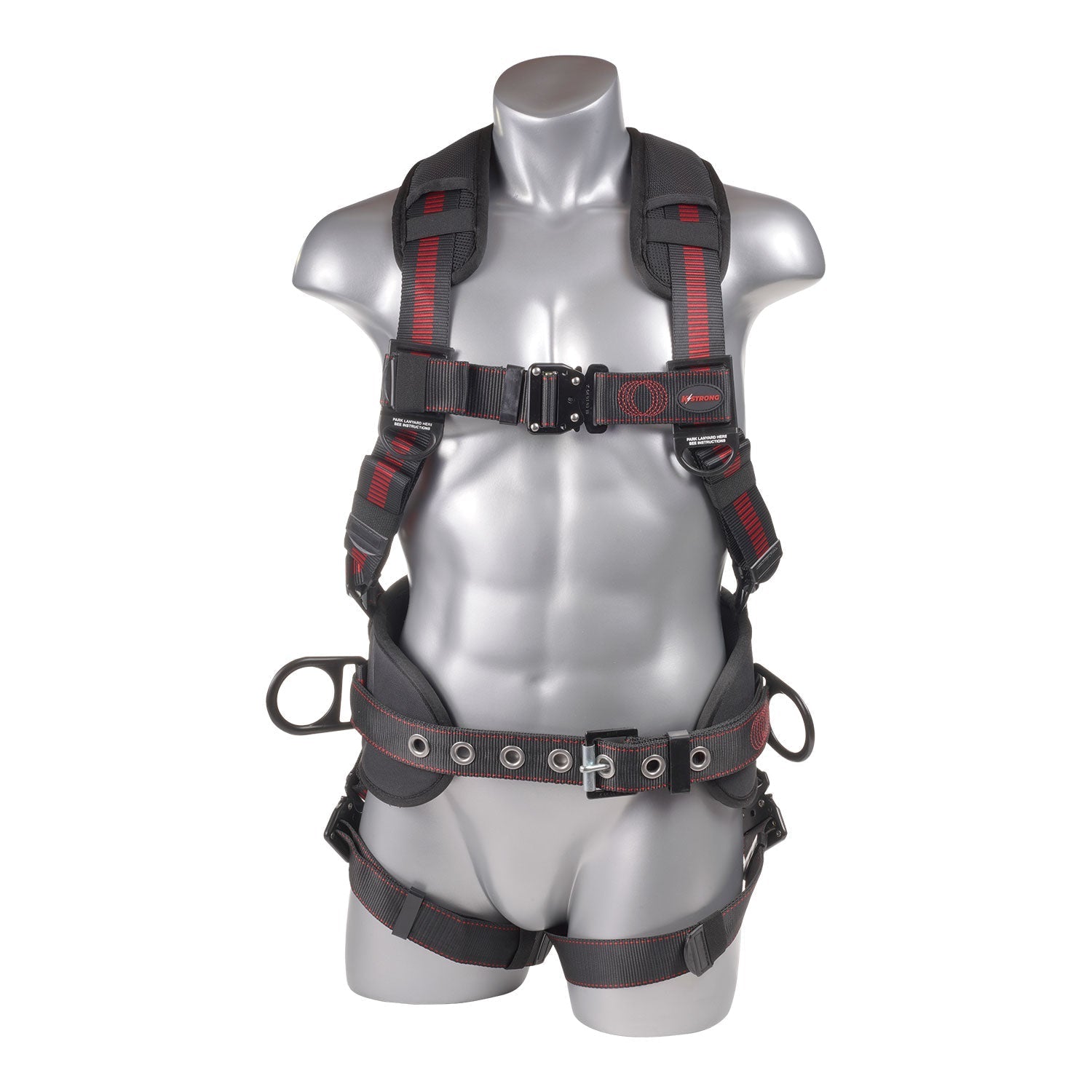
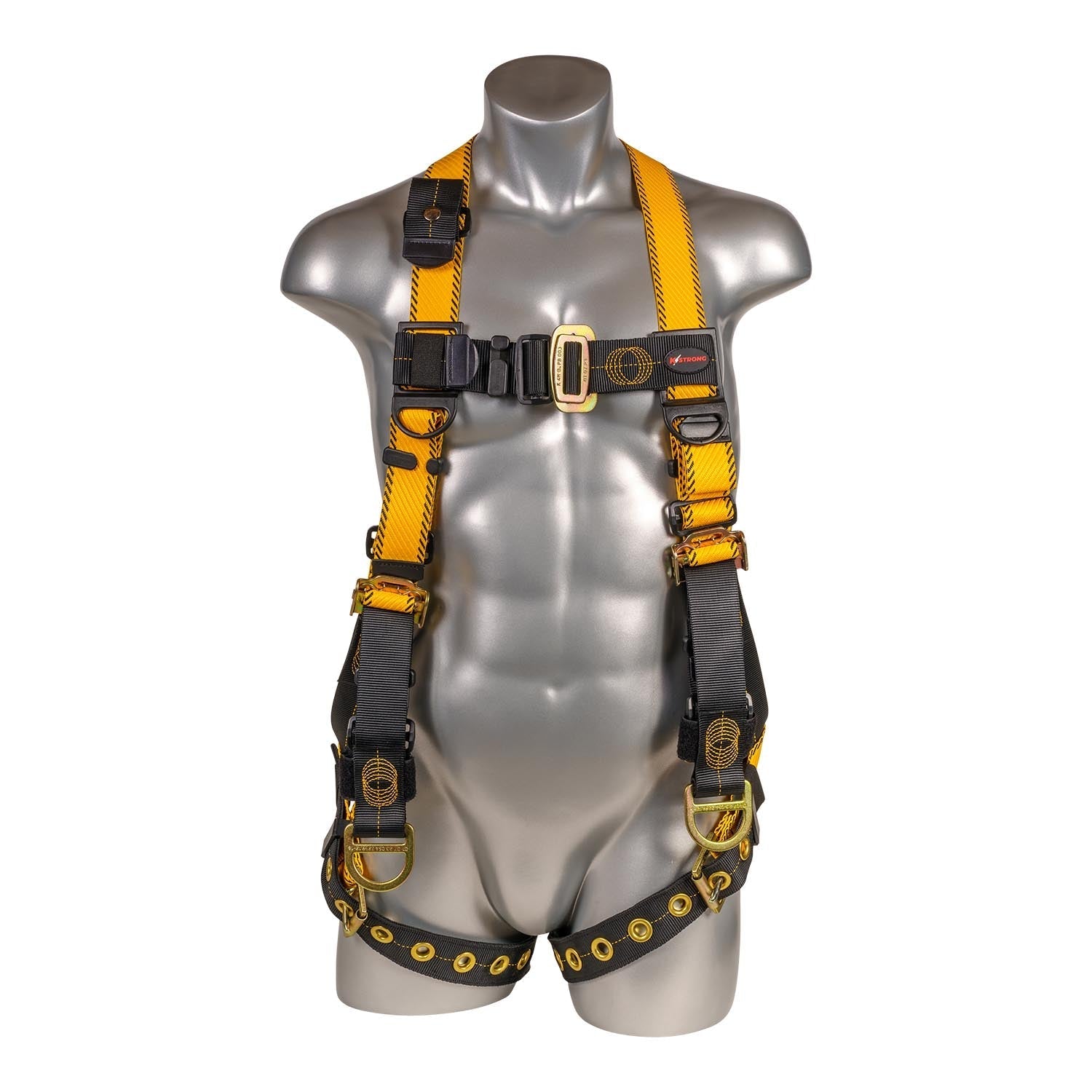
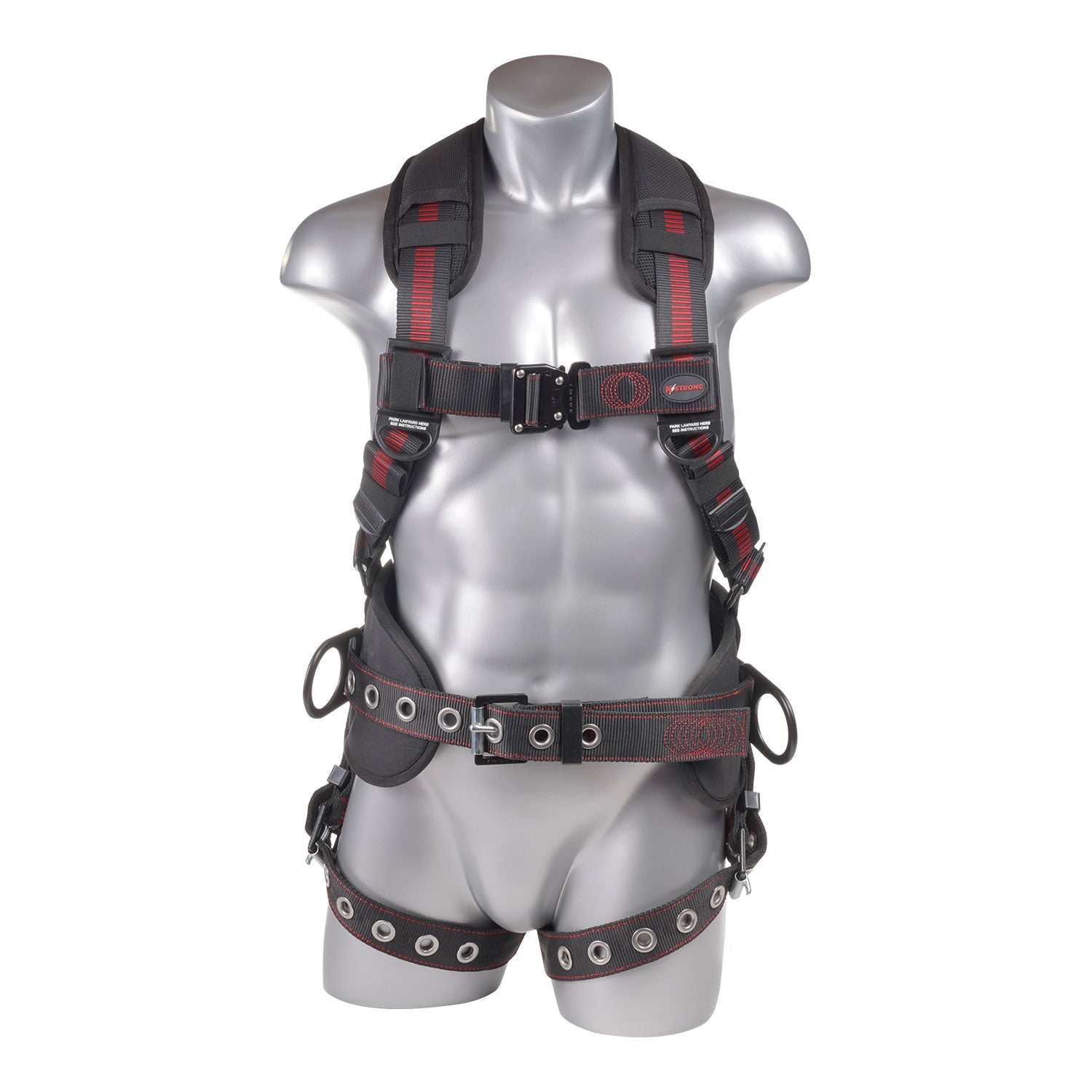
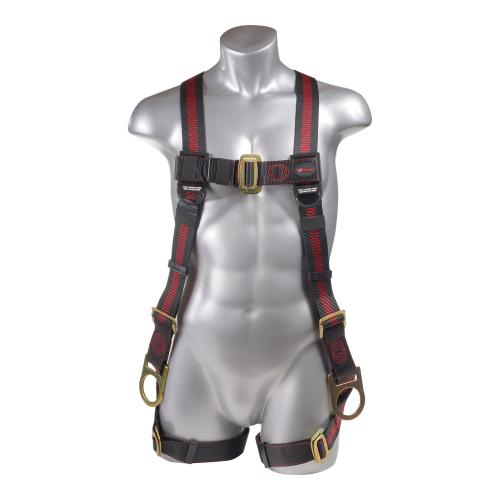
| KStrong® Kapture™ Epic+ 5-Point Full Body Harness, Waist Pad w/ Removable Tool Belt, Back/Shoulder Pad, Enhanced Dorsal D-ring, 2 Side D-rings, QC Chest and Legs (ANSI) | $148 | Kapture Epic+ | 5-point | OSHA & ANSI Z359.11-2021 | Enhanced Back (Dorsal) & Sides | View → |
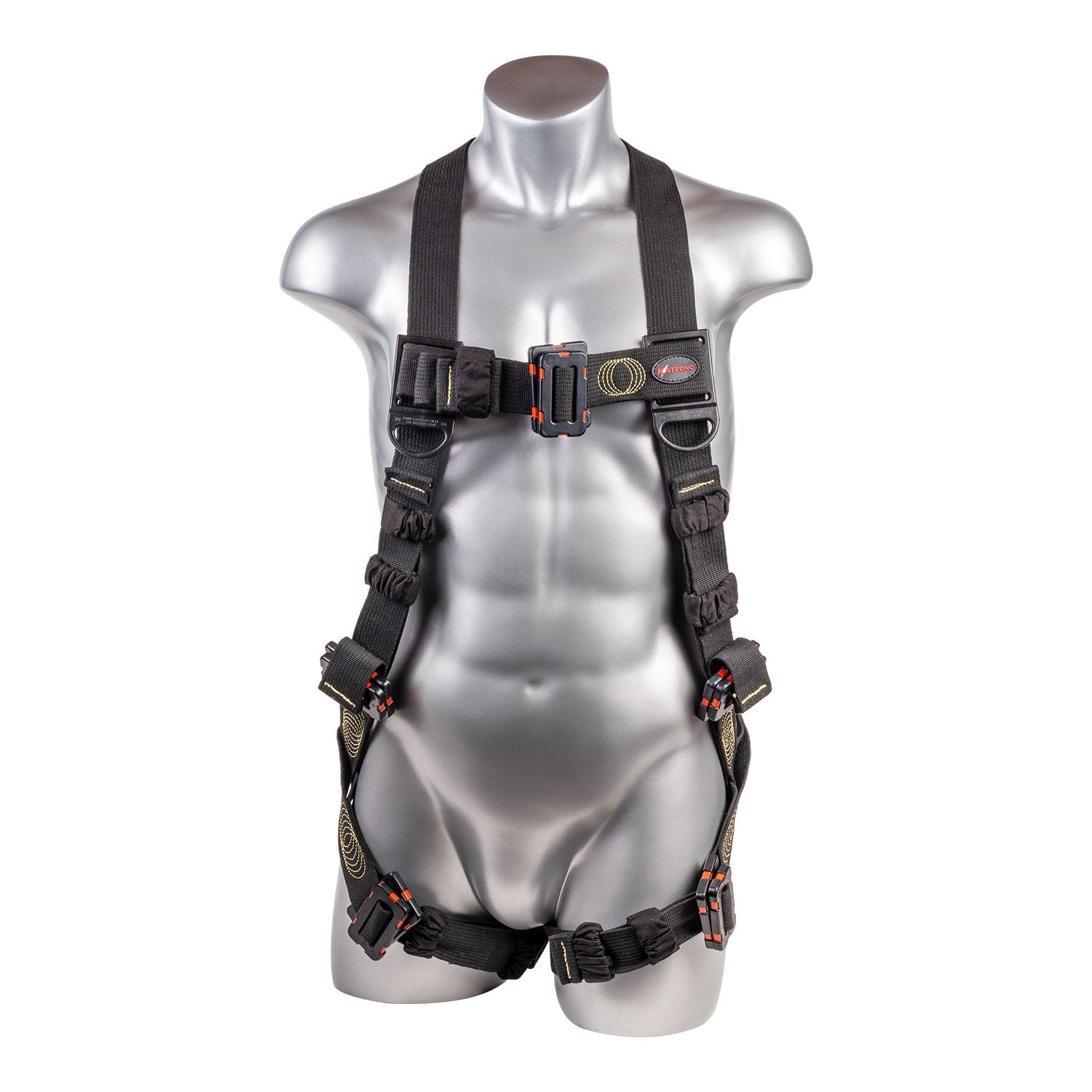
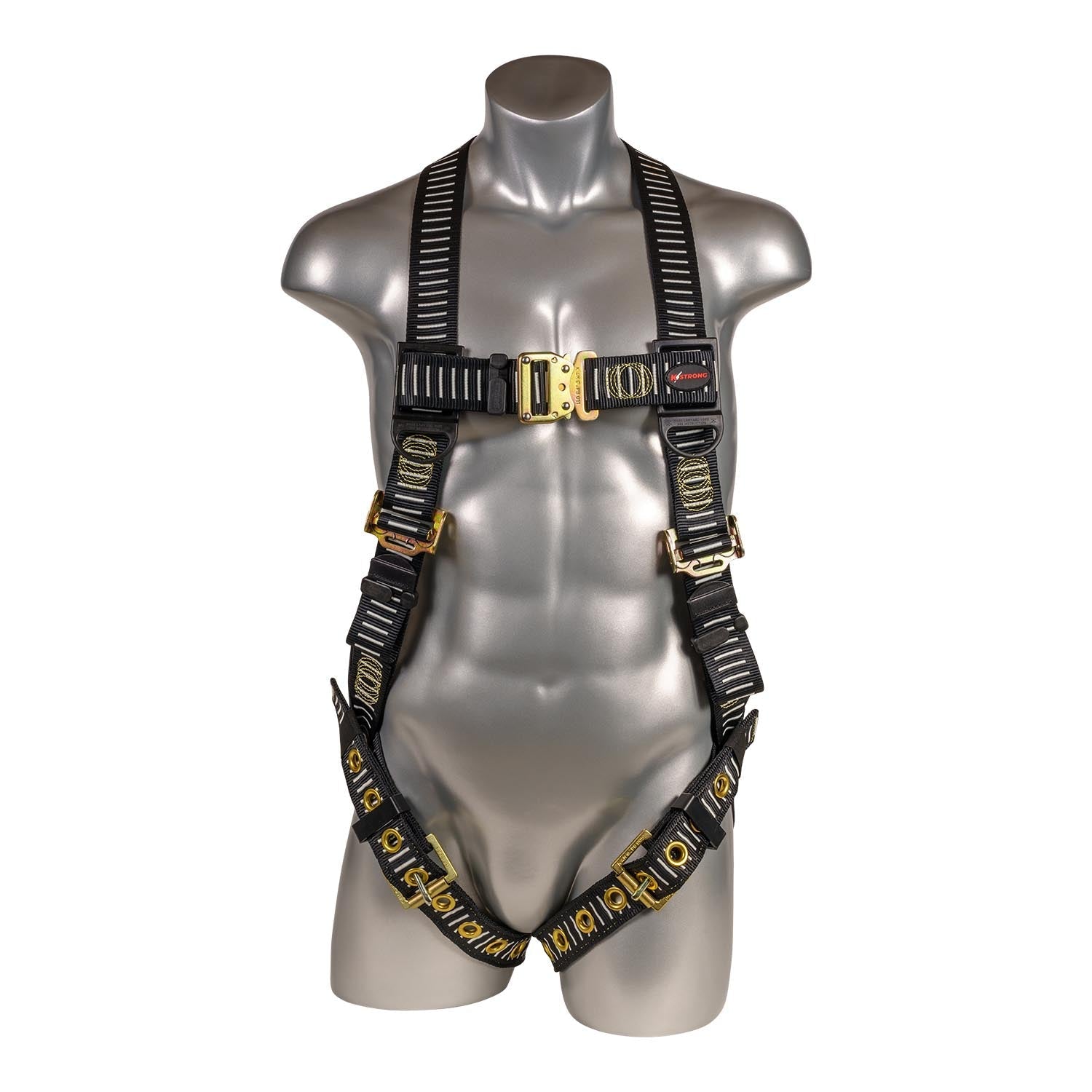
| KStrong Kapture Elite 5-Point Full Body Harness | $70 | Kapture Elite | 5-point | OSHA & ANSI Z359.11-2021 | Back (Dorsal) | View → |
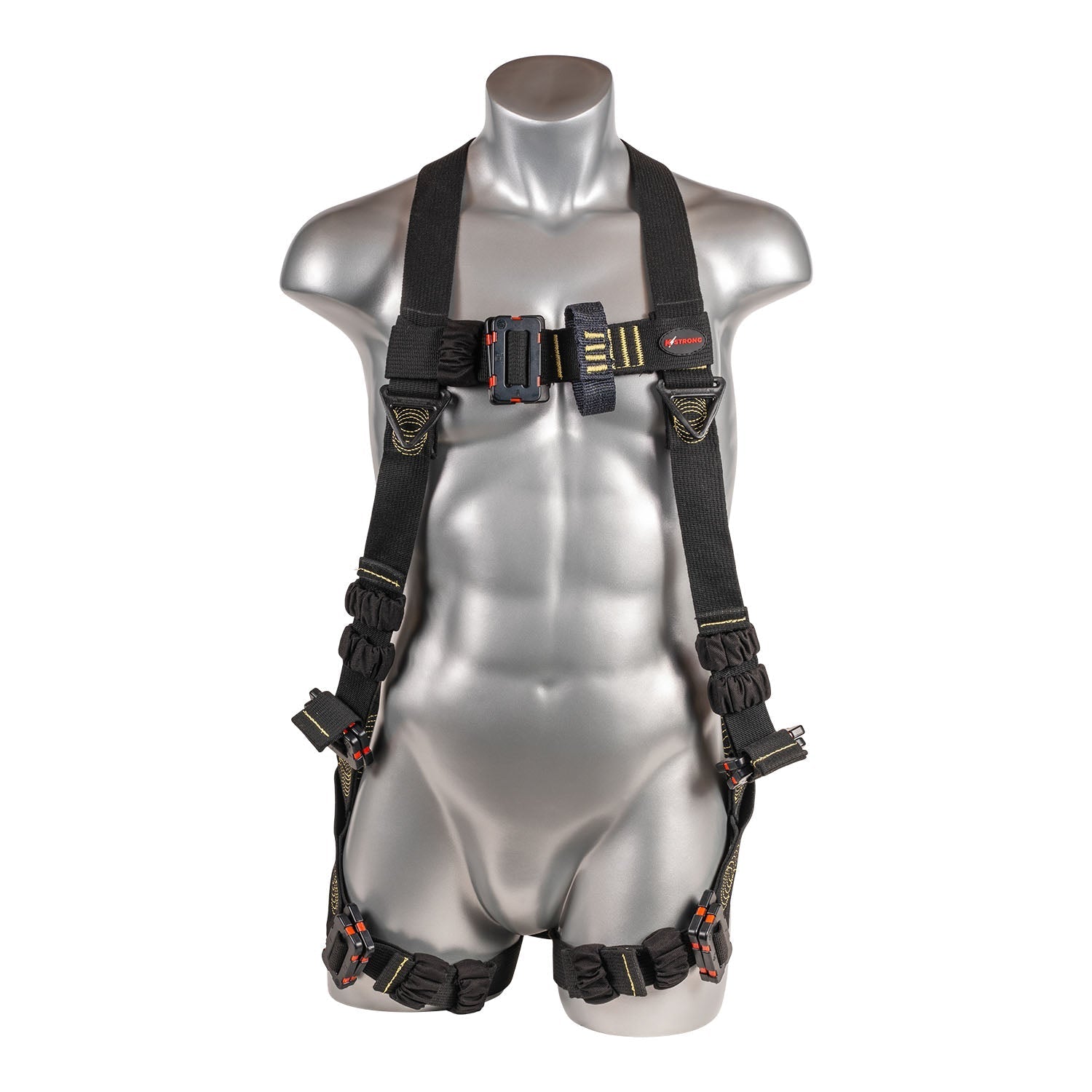
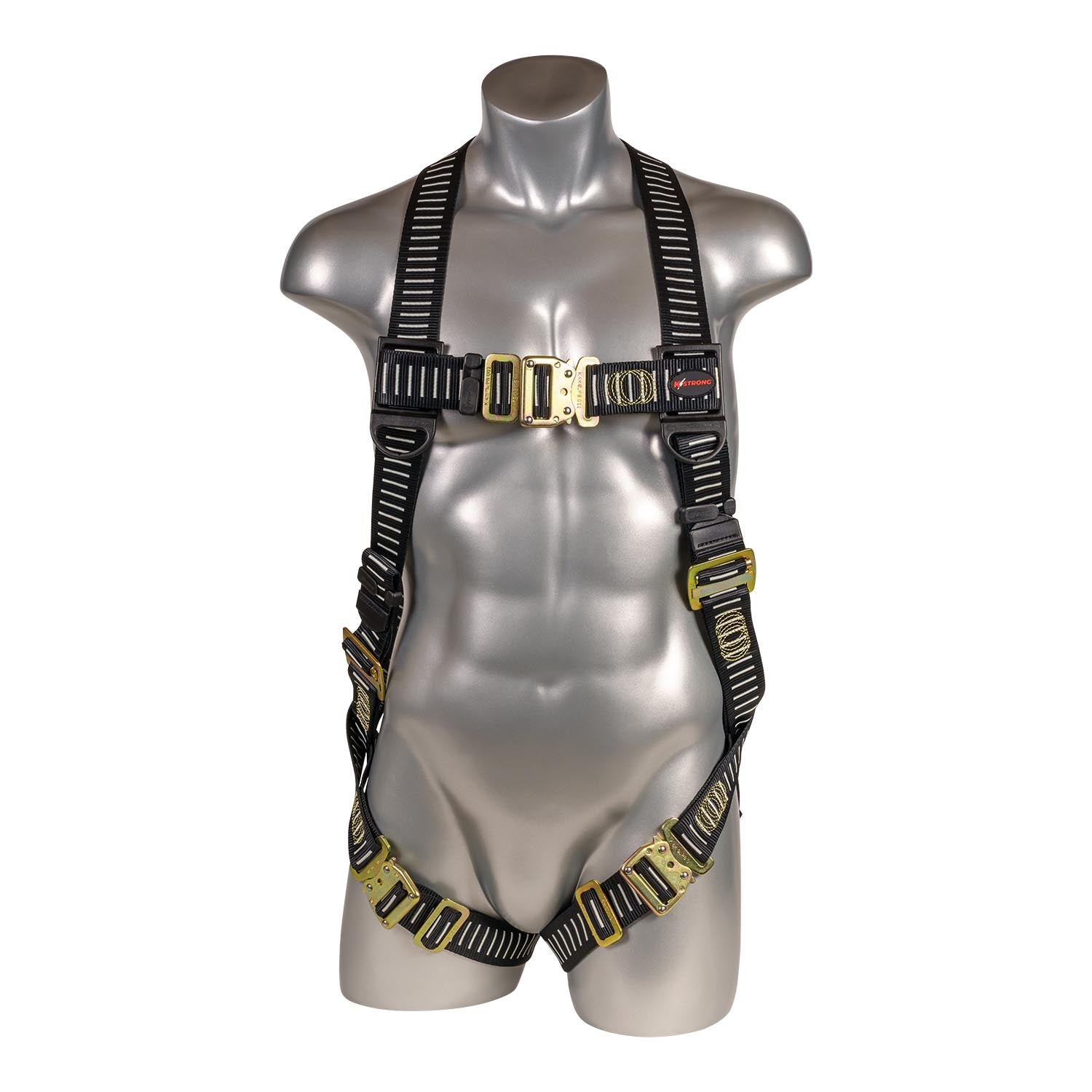
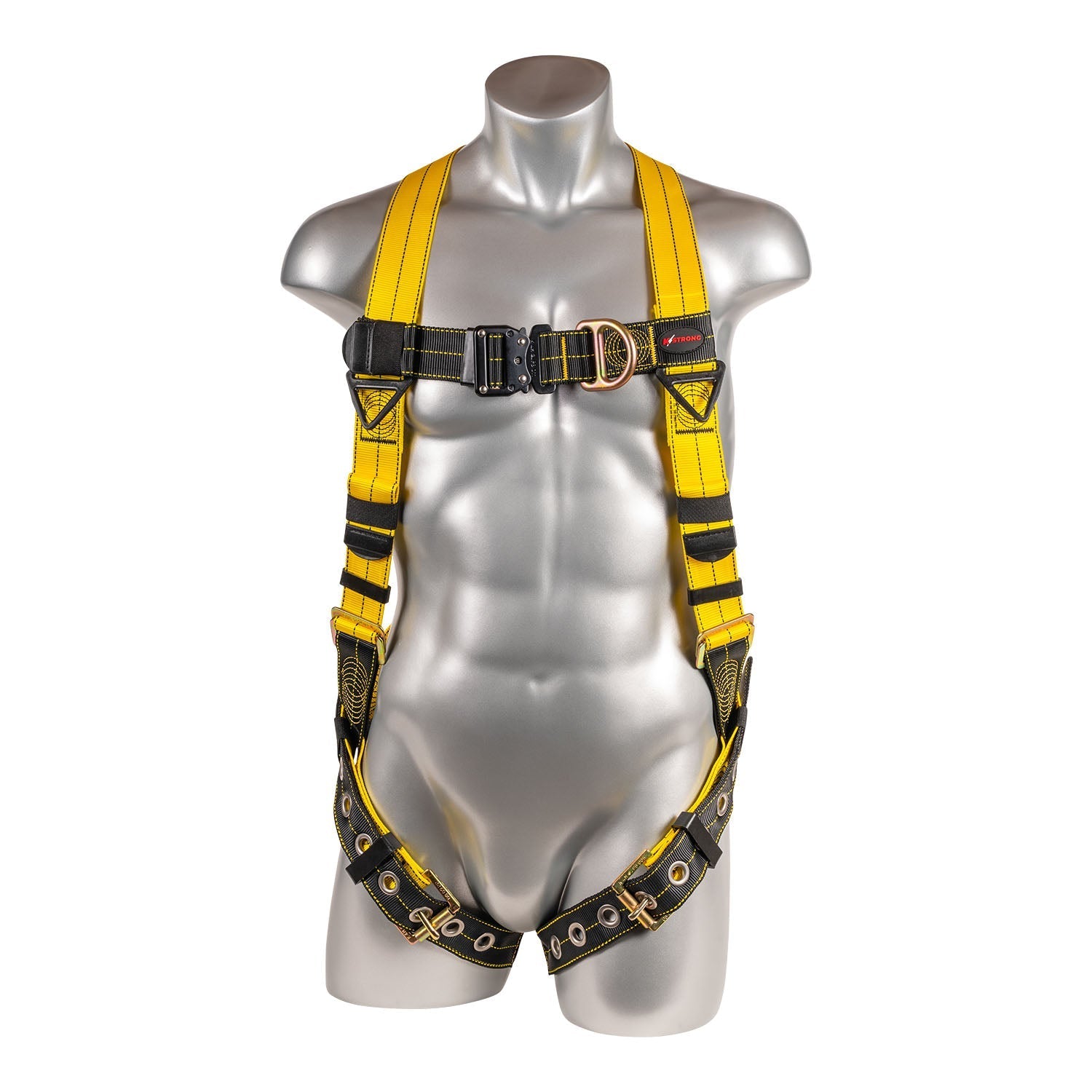
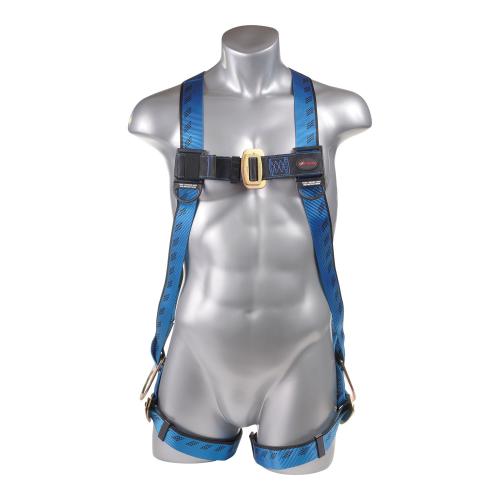
| KStrong Kapture Essential 3-Point Full Body Harnesses | $55 | Kapture Essential | 3-point | OSHA & ANSI Z359.11-2021 | Back (Dorsal) | View → |
 In Stock
 In Stock
 In Stock
 In Stock
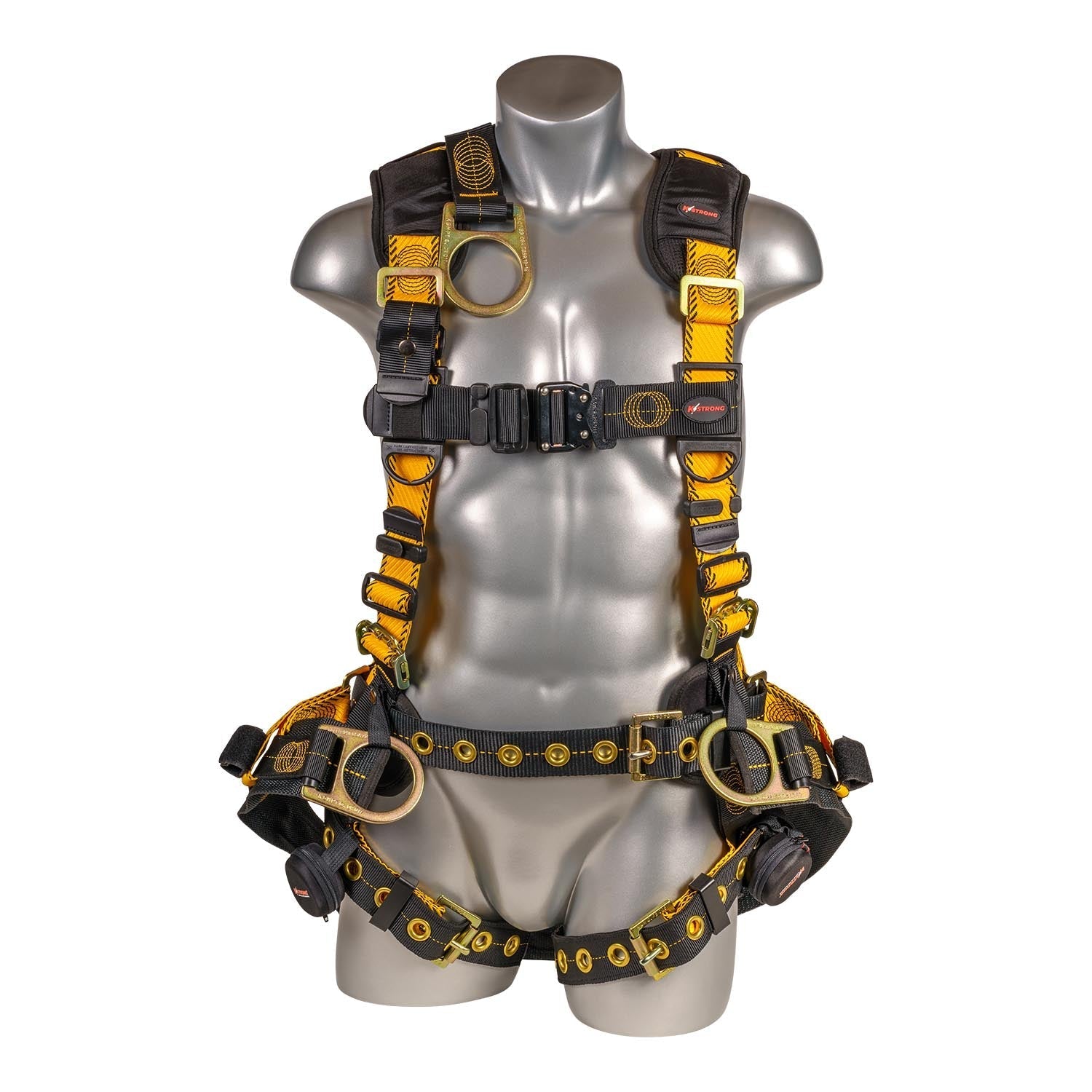 In Stock
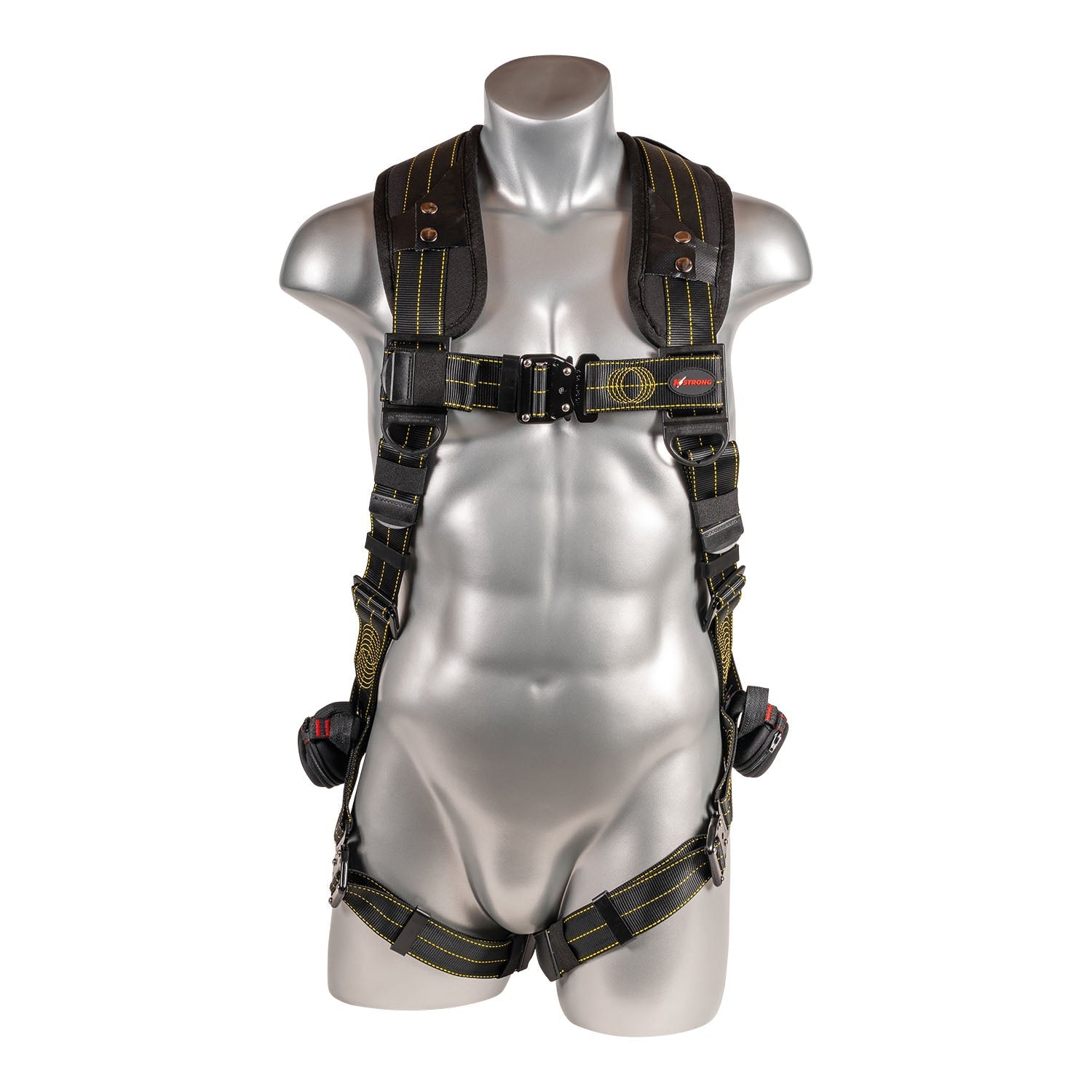 In Stock
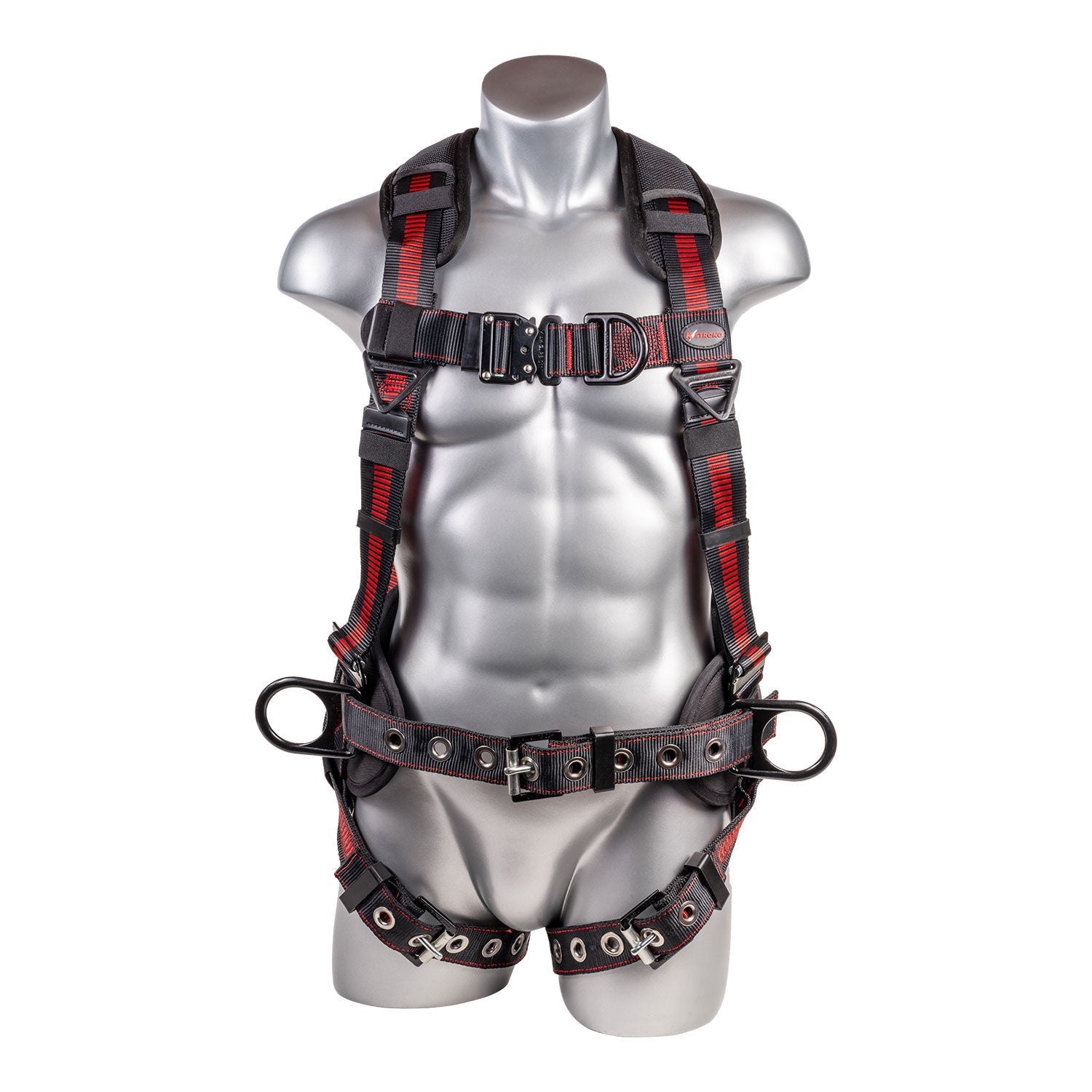 In Stock
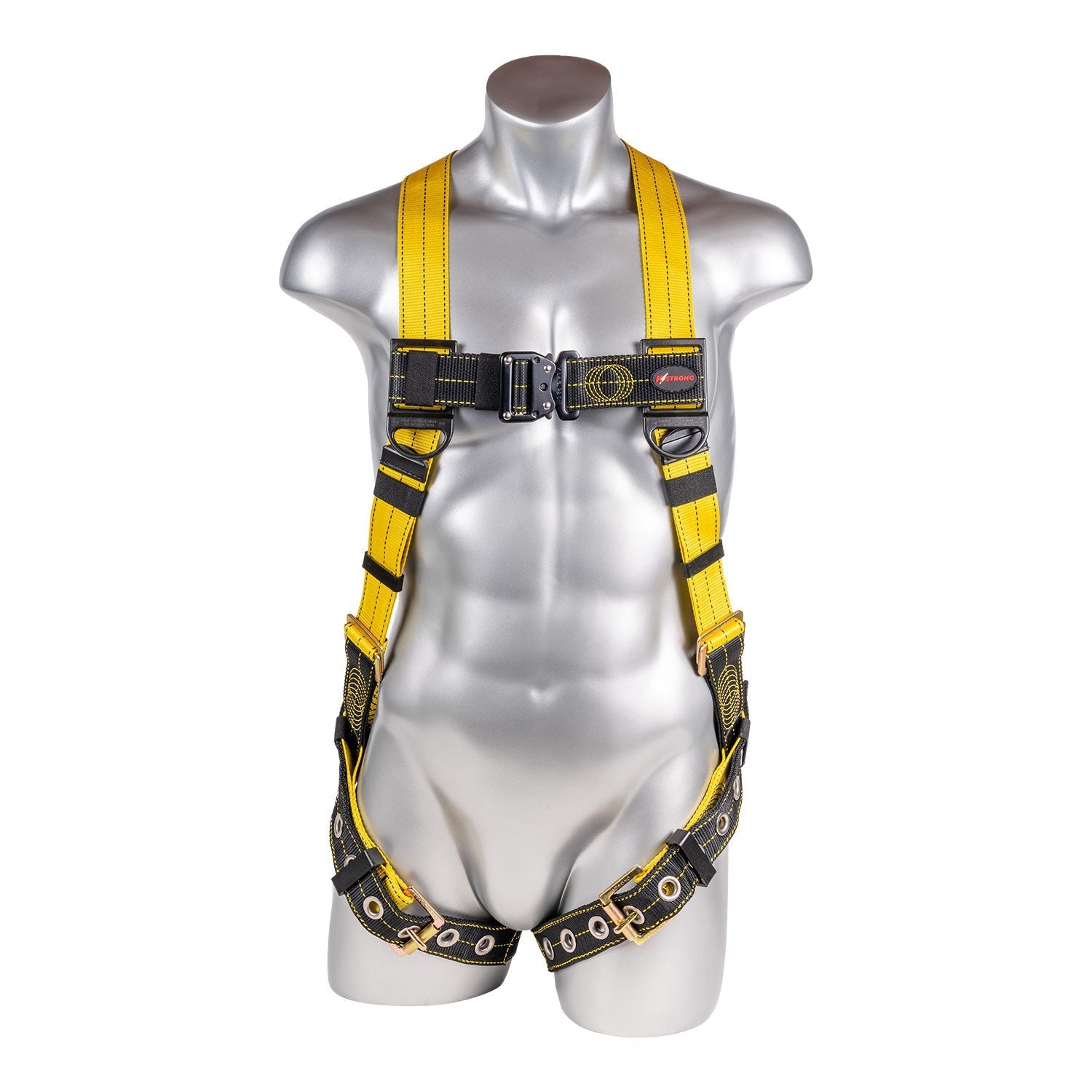 In Stock
 In Stock
 In Stock
 In Stock
 In Stock
 In Stock
 In Stock
 In Stock
 In Stock
 In Stock
 In Stock
 In Stock
Individual Safety Harnesses Buying Guide
The line from Essential to specialty. This collection is a ladder, and the rungs are real. At the bottom is the Kapture Essential 3-point at $54.88, a single dorsal D-ring harness that covers a straight fall arrest job and nothing fancier. The Elite 5-point at $70.07 adds a front D-ring and two side D-rings for positioning. From there the Epic+ models, from $130, build in a back and shoulder pad, trauma relief straps, and a waist pad with a removable tool belt for crews who hang tools off the harness all day. Above the general-purpose builds sit the specialty lines: Revolta oil and water repellent models from around $129, welding harnesses from about $119, and the arc flash and oil-and-gas derrick harnesses that run past $500. Every rung carries the same Z359.11 rating and the same 5,000 lb rated hardware, so you climb the ladder for comfort, attachment points, and hazard protection, not for a higher safety margin. If you would rather buy the harness already matched to a lanyard and anchor, the safety harness kits do that instead.
What the D-rings do, and why the count sets the price. The attachment points are the biggest driver of what a harness costs, and each ring has one job. The dorsal D-ring on the back is the only connection OSHA allows for fall arrest, and 29 CFR 1926.502(d) is specific about where it sits: the center of the wearer's back near shoulder level, or above the head, so a fall keeps the body upright instead of folding. A front or sternal D-ring handles ladder climbing and controlled descent. Side D-rings at the hips are for work positioning, taking the worker's weight while both hands stay free on rebar or a pole, and they are never rated to stop a fall. That is why the count climbs with the work: the Essential carries the dorsal ring alone, the Elite and Epic+ add front and side rings for positioning, and the oil-and-gas derrick harnesses go all the way to a belted seven D-ring build for the derrick board. Buy the layout the task uses, because every extra ring adds cost and weight an occasional-use crew will leave in the truck.
Mating, tongue, and quick connect buckles. The buckle style shows up in the product codes as MB, TB, and QC, and the choice is donning speed against fit precision. A mating buckle (MB) interlocks two matched halves and threads the webbing through, a clean low-profile closure that stays where you set it. A tongue buckle (TB) works like the belt on your pants, a tongue through a grommet hole, which lets a worker set an exact leg-strap length and return to the same hole every shift, the best pick when one person wears one harness. A quick connect buckle (QC) snaps closed with an audible click and releases with a two-tab squeeze one-handed, which wins on shared harnesses and gloved hands. Many models here mix the two, QC at the chest for speed and TB at the legs for a repeatable fit, and the product code spells out which combination you are getting so you can match it to how the harness gets worn.
Sizing, and the case for padding. Harnesses ship in ranges, typically S-M, M-L, L-XL, and XL-2XL, and fit is a safety setting, not a comfort preference. The dorsal D-ring has to ride high between the shoulder blades and the leg straps have to be snug, because a low ring or loose legs let the body fold and drive arrest forces where they injure. Padding matters most on the harness that has to hold a worker after a fall. Suspension trauma, also called orthostatic intolerance, sets in when a motionless worker hangs in the leg straps and blood pools in the legs; OSHA's safety bulletin on it warns the effects can turn serious inside 15 to 30 minutes, well before some rescues arrive. The Epic+ and padded Element models add back and shoulder padding plus trauma relief straps, the deployable loops a suspended worker can stand in to keep blood moving until help gets there. On a harness worn eight hours a day, the padding is what keeps it snug, and a snug harness is the one that works when it is asked to.
Welding, arc flash, and oil-and-gas webbing. Standard polyester webbing fails fast around specific hazards, so several lines here swap it out. The welding harnesses, from about $119, use flame resistant webbing and heat tolerant, non-sparking hardware so a slag drip or spark does not eat through the strap holding the worker; they come in dorsal-only and 3 D-ring layouts with MB, QC, or TB buckles. The arc flash rated Element harnesses, from $309 up to about $535, are built and tested to ASTM F887, arc-tested at a 40 cal/cm2 exposure with dielectric hardware, for utility and energized work, in dorsal, dorsal-plus-two-side, and web-loop dorsal-and-front layouts. The Revolta models, from around $129, use oil and water repellent webbing that shrugs off the drilling fluid and grime that soak and stiffen ordinary straps. And the oil-and-gas derrick harnesses run from a non-belted 3 D-ring build up to the $428 deluxe with seven D-rings and a removable bosun chair for long suspended work on the derrick board. Match the webbing to the hazard the worker actually faces; a general harness in a hot or energized zone is the wrong tool, not a cheaper one.
The harness is half a system, and it gets inspected. A harness on its own arrests nothing; it is body support waiting for a connecting device and an anchor. Pair it with a shock absorbing or twin-leg lanyard where clearance below allows, a self-retracting lifeline where a lower level sits close beneath the work, and the beam, concrete, or roof anchors in connectors and accessories. Once it is in service, the harness follows one hard rule: any harness that has arrested a fall comes out of service on the spot, because it may have taken loads that leave no visible mark. Short of that, inspect before every use, webbing for cuts, burns, and UV chalking, stitching for pulled threads, and D-rings and buckles for cracks and corrosion, and pull any harness whose Z359.11 label has gone unreadable. A competent person runs documented periodic inspections on a schedule set by how hard the harness works. A $55 Essential is never worth defending against a doubt.
Frequently Asked Questions
The number counts the harness's points of adjustment and attachment. The 3-point Essential is the simplest build, a dorsal D-ring for fall arrest with leg and torso adjustment, and it covers a straight arrest job at $54.88. The 5-point Elite and the Epic+ add a front D-ring and two side D-rings plus a chest adjustment, which gives you positioning capability and a closer all-day fit. If the work is pure fall arrest, the 3-point is enough. Add points when the task calls for positioning or the harness is worn all shift.
Yes. Everything in this collection is the harness by itself, with no connecting device or anchor in the box, so the harness cannot arrest a fall until you add both. Pair it with a shock absorbing or twin-leg lanyard where you have the clearance below, or a self-retracting lifeline when a lower level sits close beneath the work, plus an anchor rated for the structure. If you would rather skip the matching and buy it as a set, the safety harness kits ship the harness, connector, and anchor already sized to each other.
They are the buckle styles. MB is a mating buckle, two matched halves that interlock with the webbing threaded through, low profile and quick to close. TB is a tongue buckle, a tongue through a grommet hole like a pants belt, which lets one worker set and return to an exact leg fit. QC is a quick connect, a buckle that snaps shut with a click and releases one-handed with a two-tab squeeze, best for shared harnesses and gloved hands. Several models mix them, such as QC chest and TB legs.
Our harnesses come in ranges like S-M, M-L, L-XL, and XL-2XL, and Z359.11 rates them for a combined weight of 130 to 310 lb, meaning the worker plus clothing and tools. Set the fit so the dorsal D-ring rides high between the shoulder blades and the leg straps are snug with no more than a flat hand of slack. A loose harness lets the body fold during arrest and pushes forces where they injure, so fit is a safety setting, not a comfort preference. When a worker sits between ranges, size to keep the dorsal ring high.
Every model here meets ANSI/ASSP Z359.11, so each harness is a compliant component. Compliance on the job, though, is about the whole system: OSHA requires fall protection at 6 ft in construction and 4 ft in general industry, and that means the harness plus a connecting device that caps arresting force at 1,800 lb and free fall at 6 ft, an anchor rated for the work, plus training and a rescue plan. The harness is one part of that system, so buy the connecting device and anchor, or a kit, to complete it.