Trailer Jacks
A trailer jack does two jobs that people often confuse: it lifts the coupler on and off the hitch ball, and it holds the tongue level while the trailer sits unhitched. This is a small, focused catalog built entirely on Vestil, split between crank-style tongue jacks in the common mounting patterns and a heavier high-lift farm jack for field lifting and recovery. The tongue jacks come in top crank, side crank, A-frame, side swivel, and tube-ring mounts, priced well under sixty dollars, so the choice is mostly about how your frame is built and where you have room to turn the handle. The farm jack is a different tool for a different day. The guide below sorts out which is which and how to size one to your trailer.
Trailer Jacks Buying Guide
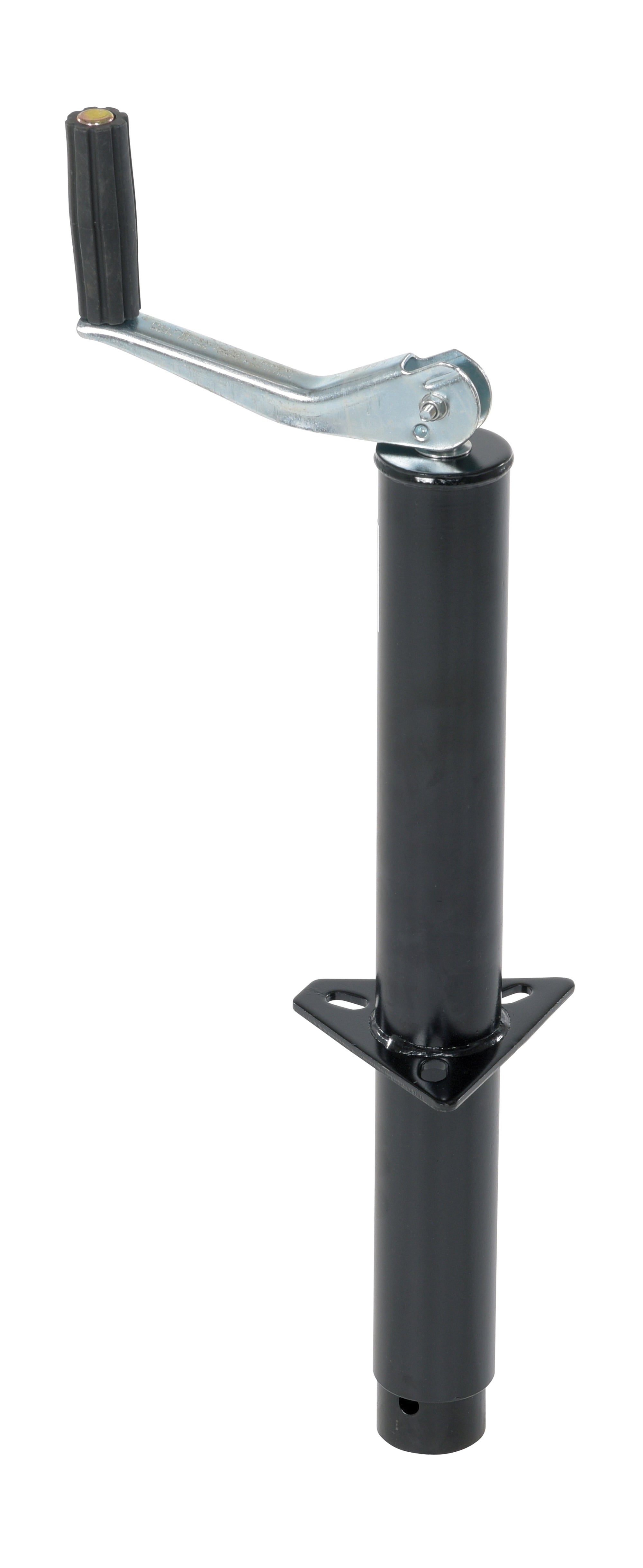
Tongue jack or high-lift: two different tools here. This collection holds two Vestil tools that share a name and not much else. The crank trailer jacks are tongue jacks: they raise and lower the coupler so it clears the hitch ball, then hold the front of the trailer level while it is parked and unhitched. The Vestil farm jack is a mechanical high-lift, a tall ratcheting bar you would reach for to lift a wheel out of a rut, hand-winch a stuck trailer, or spread and clamp during a field repair. Both are useful around a trailer, but one lives on the tongue and the other lives in the toolbox. Sort out which job you are solving before you compare prices.
Match the tongue jack to tongue weight, not trailer weight. A tongue jack carries tongue weight, the download the trailer puts on the hitch, which for a properly balanced load runs about 10 to 15 percent of the gross trailer weight. A 7,000 lb loaded trailer therefore parks roughly 700 to 1,050 lb on its jack, not 7,000. Size the jack to that number with margin, and keep the load balanced so tongue weight stays in range: too little and the trailer sways, too much and it overloads both the hitch and the jack. If you need to lift the whole trailer or a full axle clear of the ground, that is a floor jack or the farm jack, not the tongue jack.
Top crank, side crank, swivel, or A-frame: pick by clearance. The tongue jacks come in the standard mounting patterns, and the right one is mostly set by your frame and your clearance. Top crank jacks turn from a handle on top and suit an A-frame where nothing blocks the top of the post. Side crank jacks wind from the side when a battery box, propane tank, or toolbox sits over the jack and fouls a top handle. A-frame jacks bolt to the angled members at the front of an A-frame coupler. The side swivel model pivots up and out of the way for travel so the foot is not hanging in the road, and the tube-ring mount clamps to a round jack post. Measure your mount and your obstructions first, then choose the crank you can actually turn.
The farm jack is for the field. The Vestil farm jack is the odd one out and the most versatile item here. It is a high-lift with raised heights of 42 or 53 inches, far more travel than any tongue jack, and it earns its keep off the trailer entirely. Use it to lift a stuck wheel high enough to crib or deck under it, as a hand winch to drag a load with a chain off the top clamp, or as a clamp and spreader during a repair. It is a two-hand tool that demands respect: keep clear of the handle, which snaps back hard under load, and set the base on something solid. Near a hundred and thirty dollars, it is cheap insurance for anyone who tows off pavement.
Frequently Asked Questions
A trailer jack, or tongue jack, raises the coupler on and off the hitch ball and holds the tongue level while the trailer is parked. A farm jack is a tall mechanical high-lift for field work: lifting a wheel out of a rut, hand-winching a stuck load, or clamping and spreading during a repair. This collection carries both from Vestil. The tongue jack lives on the trailer; the farm jack rides in the truck.
Enough for your tongue weight, which for a balanced load is about 10 to 15 percent of the gross trailer weight. A 5,000 lb loaded trailer puts roughly 500 to 750 lb on the jack. Size the jack above that with margin, and keep the load balanced so tongue weight stays inside the 10 to 15 percent window, since too little makes the trailer sway and too much overloads the hitch.
It depends on clearance. A top crank turns from a handle on top and works when nothing sits over the jack post. A side crank winds from the side and is the answer when a battery box, propane tank, or toolbox would block a top handle. Check what sits above your mount before choosing, because a handle you cannot swing is a jack you cannot use.
A swivel jack pivots on its mount so you can raise the foot and swing the whole jack up and out of the way for travel, instead of leaving it hanging near the road. It sets up the same as a fixed jack when you park, then folds clear when you tow, which protects the foot on rough or low ground.
No. A tongue jack is built to raise the coupler and support the front of a parked trailer, not to lift an axle or the full weight off the ground. For that, use a rated floor jack under the axle or frame, or the farm jack in this collection for field lifts, and always support a raised trailer on stands or cribbing before you work under it.